
Rental Car Across the US-Canada Border: Rules by Company
Can you drive a rental car across the US-Canada border? What Enterprise, Avis and Budget say, Hertz's clause, the yellow card, one-way limits.

Yes, you can take a rental car across the US-Canada border, but only some cars, from some branches, with the company’s blessing. Enterprise, Avis and Budget all say so on their own pages, and none of them promises it for every car at every branch. What they rarely publish is the price of leaving the car in the other country, so treat any one-way crossing as a quote you’ll have to ask for, not a box you can tick.
Which direction you drive changes the rules
Two different questions hide under “cross-border rental”. The common one is a US renter driving north: you land in Buffalo, Seattle or Detroit, pick up a car and head for Niagara, Vancouver or Toronto. The other is a Canadian rental driven south.
Enterprise, National and Avis allow both directions on their own pages; Budget’s FAQ covers only the trip north, though Budget Canada advertises one-way rates “from Canada to U.S. destinations”. Enterprise says “most vehicles rented from Enterprise in Canada can be driven into the United States”, and Avis Canada says Canadian vehicles may be driven into the US. The restrictions bite on the way north, because a US rental in Canada falls under Canada’s temporary vehicle-import rules. Transport Canada explains the legal side: visitors may bring US rental vehicles into Canada, and residents of Canada may do the same for non-commercial use for up to 30 days. Everything after that is company policy, and it’s stricter than the law.

For the documents you need yourself (passport, ID, what to declare), the US-Canada border crossing guide covers the border itself; this page covers the contract.
Company rules, read page by page
Each company’s own FAQ page was read on 8 November 2026. They change, so don’t treat the table as a substitute for the page: it’s a checklist of what to ask.
| Company | US rental into Canada | Canadian rental into the US |
|---|---|---|
| Enterprise | Most vehicles allowed; exotics, large passenger or cargo vans and other specialty vehicles may not leave the US. Contact the renting location for cross-border restrictions. | ”Most vehicles” allowed; no excluded classes named. Ask the renting location. |
| Avis | ”Certain cars”, with arrangements made in advance; a Non-Resident Insurance Card at pickup. Many US locations allow Canada trips with no restrictions, per Avis; rules vary by location. Avis’s Canadian FAQ words the same rule as US cars “driven into Canada by U.S. residents”, so if you live outside the US, get the branch’s yes in writing before you book. | Canadian vehicles may be driven into the US, per Avis Canada; ask the counter about cross-border restrictions. |
| Budget | At “many U.S. Budget locations”; free non-resident insurance card at the counter; tell the agent in advance. | Not stated on the FAQ page read. Budget Canada advertises one-way rates “from Canada to U.S. destinations” between participating locations; ask whether your pickup and drop-off qualify. |
| Hertz | Hertz’s US site returned no readable cross-border answer when it was loaded on 8 November 2026; ask the renting branch. | Hertz’s Canadian rental terms (the version dated 24 August 2021, still online on 8 November 2026) bar taking the car “anywhere outside of Canada or the United States” except as expressly permitted, so the US is not ruled out; ask the branch for the current rule. |
National’s Canadian FAQ, read the same day, reads like Enterprise’s: most US rentals “can be driven throughout US and Canada”, exotics, large passenger or cargo vans and other specialty vehicles may not be allowed out of the US, and “Vehicles rented in Canada can be driven throughout Canada and the US”. A rental comparison site’s “cross-border” filter is a search aid at best, because permission is set by the supplier and, at the larger brands, by the individual branch.
The yellow card, and whose insurance covers you
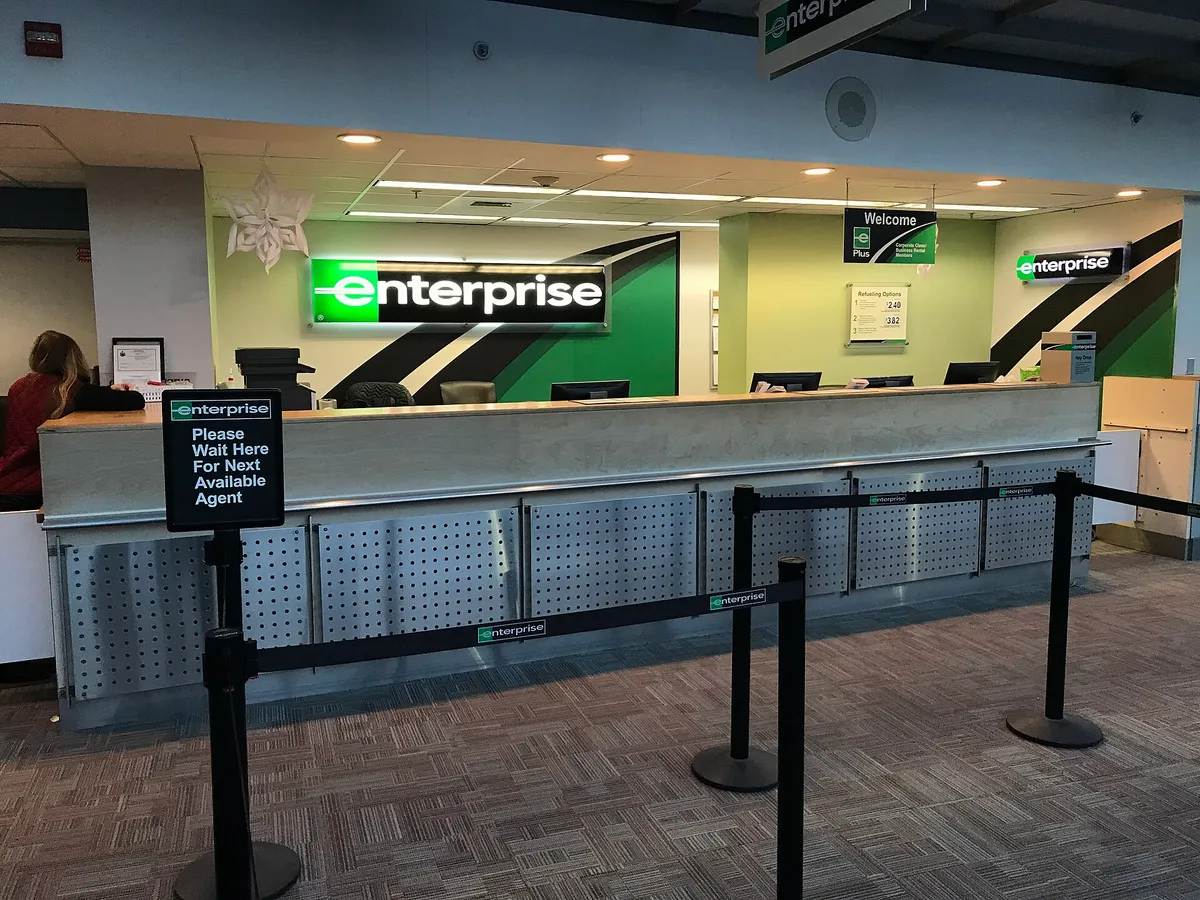
Budget and Avis both tell US renters to collect a Canadian non-resident insurance card, the “yellow card”, at the counter. Budget issues it free and says to keep it in the car at all times. Avis on its US page says you’ll need one; on its Canadian page it says one may be required. Either way it’s a piece of paper that proves the car has auto insurance valid in Canada. Ontario’s page for visiting drivers asks for “proper insurance coverage” without naming the card, so here it’s Budget and Avis that ask for it, and the agent has to know your plans to hand it over. If you don’t mention Canada at the counter and drive north anyway, you may be on the road without the paperwork the company expects.
The card doesn’t answer the other insurance question: what pays for damage to the rental. Budget tells renters to check their personal insurance before they travel, and says it can sell them cover. Whether a US credit-card benefit or home policy applies in Canada is a question for the card issuer or insurer; ask by email, so you’ve got the answer saved before you reach the counter. For the Canadian rental market in general, including winter tire rules that apply in Quebec and British Columbia, see renting a car in Canada.
Canadian residents driving a US rental home
This is where company policy and the law disagree. Under Transport Canada’s rules a resident of Canada can bring a US rental into Canada for non-commercial use for 30 days or less, and Budget repeats the 30-day rule, adding that an agent will give a Canadian-plated car if one is available. Avis Canada, though, says that “due to Canadian law, a Canadian resident is restricted from driving a U.S. owned vehicle into Canada”. Same border, two answers, and it’s the contract you sign that counts. If you live in Canada and are renting in the US for a trip home, settle the question with the renting branch before you book.
Drop-offs in the other country
A one-way rental that ends in the other country is the hard case. Avis says one-way travel from the US to Canada is permitted only at select locations near the border. Budget says it may be allowed depending on availability at each location. Transport Canada adds that a one-way trip that ends at a Canadian location needs the rental company’s consent. Budget Canada advertises one-way rates “when traveling from Canada to U.S. destinations” (budget.ca, read 8 November 2026), but only between participating locations, on compact, midsize, full-size and intermediate SUV cars, with holiday blackouts; the page names no locations and no fee. None of these pages gives a cross-border fee, so there isn’t one to quote here; the only way to see the charge is a quote built on your real pickup and drop-off cities. How the same fee behaves inside Canada is in the one-way rental guide, and the Toronto airport counters are covered in renting at Toronto Pearson.

Buffalo, Seattle, Toronto: when the trip turns one-way
The rules are the same on every route; what changes is how much a mistake costs you.
Fly into Buffalo, see Niagara Falls, Ontario, fly home from Buffalo. It’s a round trip, so the other-country drop-off never comes up. What you need is the cross-border permission, the yellow card and the passport. Ask for a vehicle class the branch allows across: an economy car or a standard SUV is a safer ask than a van. If the trip falls between mid-November and early January, the Niagara Falls in winter guide has the festival nights worth timing the drive around.

Fly into Seattle, drive to Vancouver, fly home from Seattle. Same shape: one country of rental, a visit north and back. If you decide halfway that you’d rather fly home from Vancouver, the rental becomes a one-way into Canada, and Avis limits that to select locations near the border. Decide before you book, not at the counter, or price the Canadian side separately.
Fly into Toronto, drive to the US, fly home from a US city. A Canadian rental is allowed south by Enterprise and Avis, but a drop in the US is a one-way across a border, and the pages read give no fee. If the trip has to end at a US airport, price two options: a Toronto round trip plus a separate US rental for the last leg, and a one-way to your US airport, which Budget Canada sells only where both branches take part in its Canada-to-US offer. Take the lower total once the drop line is in the quote.
What the signed agreement allows
A counter agent can say “yes, no problem” while the paper agreement says something narrower. Look for the clause on where the car may go: Hertz’s Canadian terms, for example, bar taking the car “anywhere outside of Canada or the United States” except as expressly permitted, so a trip into either country may be covered while a third country is not. Look too for vehicle-class wording that matches what you were promised. If the agreement and the counter disagree, ask the agent to note the cross-border permission on the contract.
Read also

Car rental · 8 min read
Car Rental at Victoria Airport (YYJ): Tofino, Winter Tires
Verified · November 11, 2026Renting a car at Victoria Airport (YYJ): five brands in arrivals, two that meet you at the crosswalk, the drive to Tofino and BC winter-tire rules.

Car rental · 9 min read
Car Rental at Edmonton Airport (YEG): Winter, Jasper Drive
Verified · November 6, 2026Renting a car at Edmonton Airport (YEG): eight brands in the parkade, counter hours to 1 am, Alberta winter-tire rules and the 395 km drive to Jasper.

Car rental · 9 min read
Car Rental at Kelowna Airport (YLW): Winter Tires, Big White
Verified · October 31, 2026Renting a car at Kelowna Airport (YLW): four terminal counters and their closing times, BC winter-tire rules, and the 61 km drive up to Big White.

Car rental · 11 min read
Car Rental at Halifax Airport (YHZ): Hours and Winter Tires
Verified · October 30, 2026Renting at Halifax Stanfield (YHZ): counters in the parkade, hours by brand (6 am to 2 am at Avis and Budget), Nova Scotia's winter-tire rules and fees.