
Johnston Canyon: Catwalks, Ink Pots and Beating the Crowds
Johnston Canyon parking fills fast - the Roam Route 9 shuttle, the Bow Valley Parkway closure, trail distances and the winter ice walk, mechanics first.
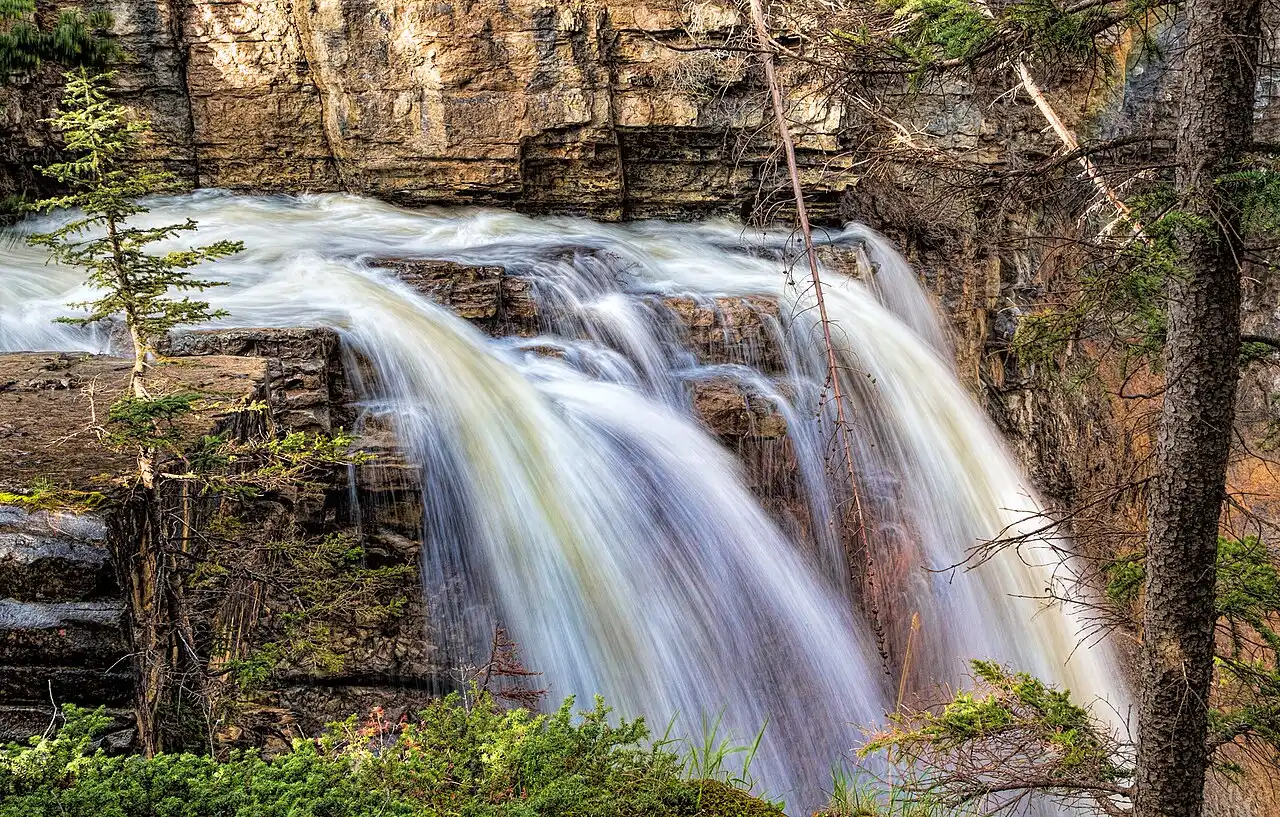
The parking lot at Johnston Canyon is smaller than the crowd that wants it, and driving there without a plan B is how a free hike turns into an hour of circling gravel. The actual fix isn’t a secret: Roam Transit runs a C$5 bus straight from Banff for part of the year, the road itself is legally closed to cars at certain hours on part of the route, and the trail past the falls has federal fines attached to leaving it. None of that shows up on a typical postcard of the place.
The parking lot is not the plan
Johnston Canyon’s trailhead lot sits on the Bow Valley Parkway, and it’s genuinely small for how famous the hike is. Once it’s full, the realistic options are circling for a spot that isn’t coming, parking further down the shoulder and walking in, or having taken the bus instead of the car in the first place. Widely reported experience from regular visitors puts the lot at capacity well before mid-morning in July and August, though no Parks Canada page states an exact fill time, so treat it as a strong pattern, not a guaranteed hour. Either way, the lot isn’t the part of the trip you should be planning around. The bus is, when it’s running.
Take the shuttle instead: Roam Route 9
Roam Transit’s Route 9 runs directly between Banff and Johnston Canyon, and it solves the parking problem outright by removing the car from the equation, for exactly one part of the year - in 2026 that was 18 June to 12 October, and outside it no shuttle runs at all -. Roam doesn’t publish a spring or winter timetable for this route at all, so outside that window this section doesn’t apply to you - you’re driving, and the closure rules further down do. Within the season, the fare is C$5 for an adult and C$2.50 for seniors and youth, with children 12 and under riding free, each way; a same-day round trip costs C$10 as an adult day pass rather than two single fares. It’s a non-reservable, first-come-first-served service, so there’s no app to fight with the night before, only a queue at the stop.
The bus runs seven departures a day from the Banff High School Transit Hub: 9:00am, 10:25am, 11:55am, 1:55pm, 3:25pm, 4:55pm and 6:25pm, arriving at Johnston Canyon roughly 35 minutes later each time. Return buses leave the canyon anywhere from 1 to 10 minutes after they arrive depending on the run, not a flat five, with the last one pulling out of the canyon at 7:10pm and reaching the Banff hub at 7:45pm marked drop-off only. That 9am departure is the only early option on the timetable, and it earns the trip: it lands you at the canyon before the day-trip crowd from Calgary has even found the parkway.
Why the road itself can lock you out
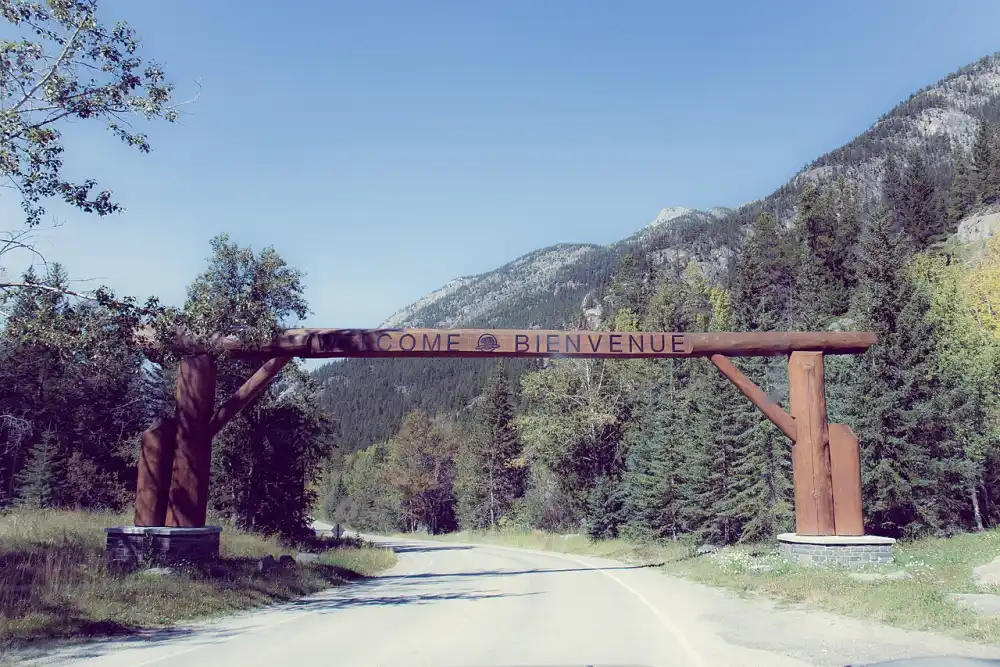
Self-driving visitors run into a trap the bus never touches. The Bow Valley Parkway’s eastern 17 km, the stretch from Fireside Picnic Area to Johnston Canyon Campground, closes to all travel, not just vehicles, from 1 March to 25 June, 8pm to 8am. Layered on top of that, an extended cycling pilot running through 2030 shuts that same stretch to motor vehicles entirely during the day for two windows: 30 April to 25 June, 8am to 8pm, and again 1 September to 6 October. During those hours the road belongs to cyclists, not drivers, on that specific section.
Drive the parkway directly from Banff townsite during one of those windows and you’ll hit a closed road. The way around it isn’t a secret workaround, it’s the standard route: approach from Castle Junction instead, off Highway 1, and take the short stretch of parkway eastbound from there. That’s not a guess. It’s the exact route Roam’s own bus takes, “via Highway 1 and Castle Junction,” which is precisely why the shuttle never runs into this closure at all. Cyclists who want to ride the closed section as a car-free road are told to park at the Banff Train Station lot instead, a different move for a different kind of visitor.
Lower Falls, Upper Falls, the Ink Pots: what the numbers are
From the trailhead, Banff & Lake Louise Tourism puts the Lower Falls at 1.2 km one way, an easy hour round trip. The Upper Falls sit at 2.5 km one way, 120 metres of elevation gain, about two hours round trip and still rated easy. Both numbers come from the destination’s own tourism board, not a hiking blog’s guess, which matters here because the figures you’ll see quoted elsewhere drift by a few hundred metres depending on where they start counting.
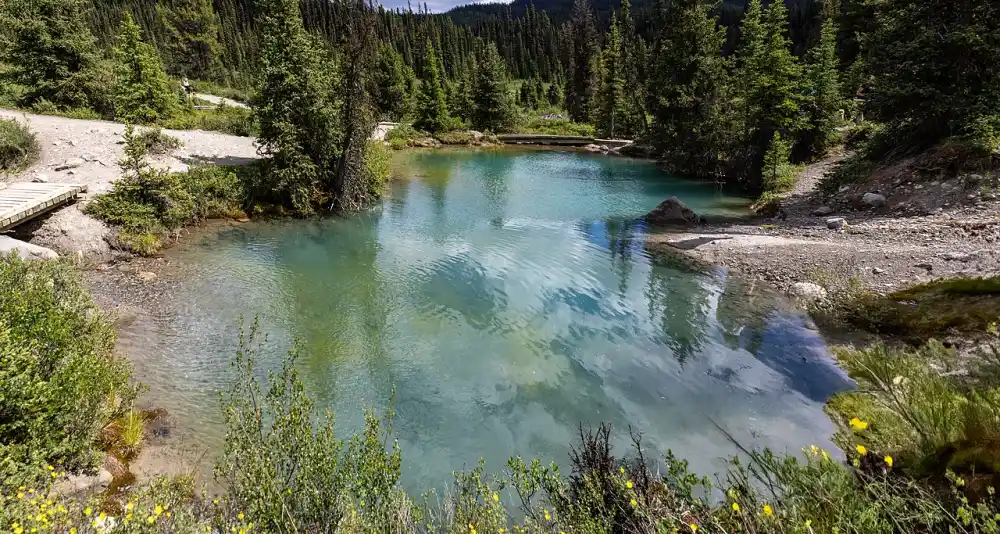
Push on past the Upper Falls and the trail changes character, forested and quieter, climbing toward the Ink Pots, a meadow of small mineral springs where cold water bubbles up through sand in shifting patterns. The trailhead’s own posted Parks Canada sign puts this leg at 5.7 km one way, suggesting around four hours for the round trip - a distance taken from the sign at the trailhead itself, not averaged from hiking blogs. Budget half a day if the Ink Pots are the goal, not just an afternoon.
Stay on the boardwalk, literally
The steel catwalks bolted to the canyon walls aren’t just there for photos. Parks Canada’s current bulletin closes the ground beside the Johnston Canyon Trail to off-trail travel outright, covering the stretch from the lower trail sign up to the Ink Pots/Moose Meadows junction, to protect black swifts, a bird species that nests on these cliffs and has seen its numbers decline sharply. The restriction runs every year - 15 May to 15 November in 2026 - and the penalty for scrambling off the catwalk to get a better angle isn’t a warning, it’s a charge under the Canada National Parks Act with a maximum fine of C$25,000.
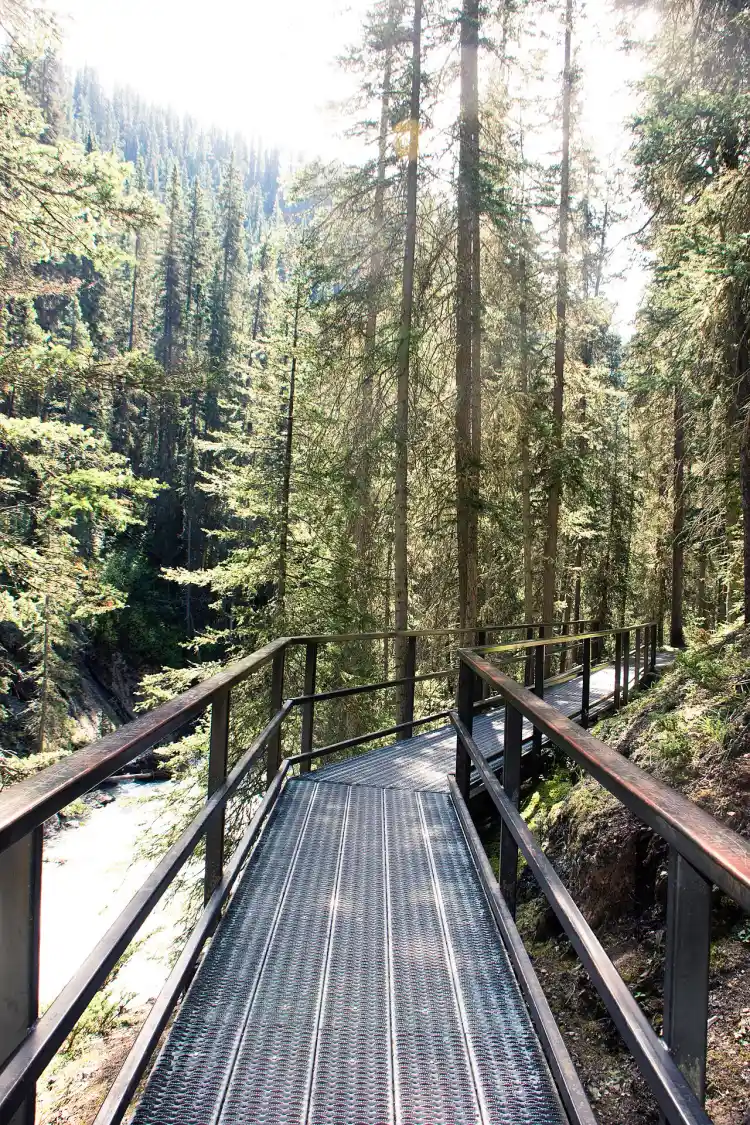
Nobody checks tickets on the boardwalk, but the restriction is enforceable and the fine is real. Treat the boardwalk as the only legal path here, not just the recommended one.
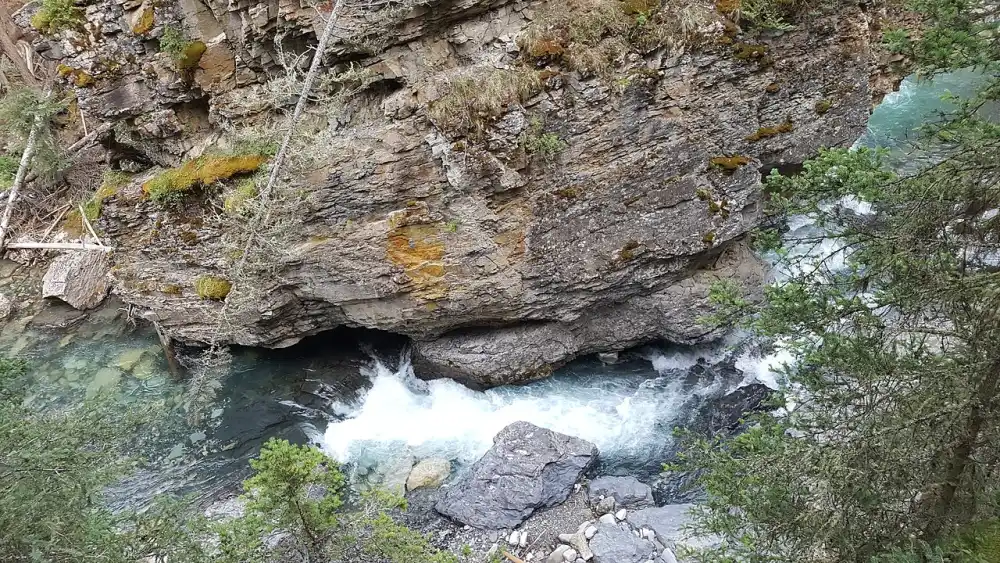
Winter turns the catwalks to ice
Johnston Canyon keeps something almost nothing else nearby does: it stays open through winter while the schedule built around it shuts down. The trail isn’t gated and the same steel catwalks carry you through, bolted to the rock exactly as they are in July. What changes is the creek itself, locking into thick ice against the limestone, and two practical things alongside it. The off-trail restriction above ends on 15 November, so there’s no fine for stepping off the boardwalk once the swifts have left for the season - though the ice underfoot makes that a bad idea for entirely different reasons. And Route 9 has already stopped running by then: a winter trip here is a car trip, full stop, not a bus trip.
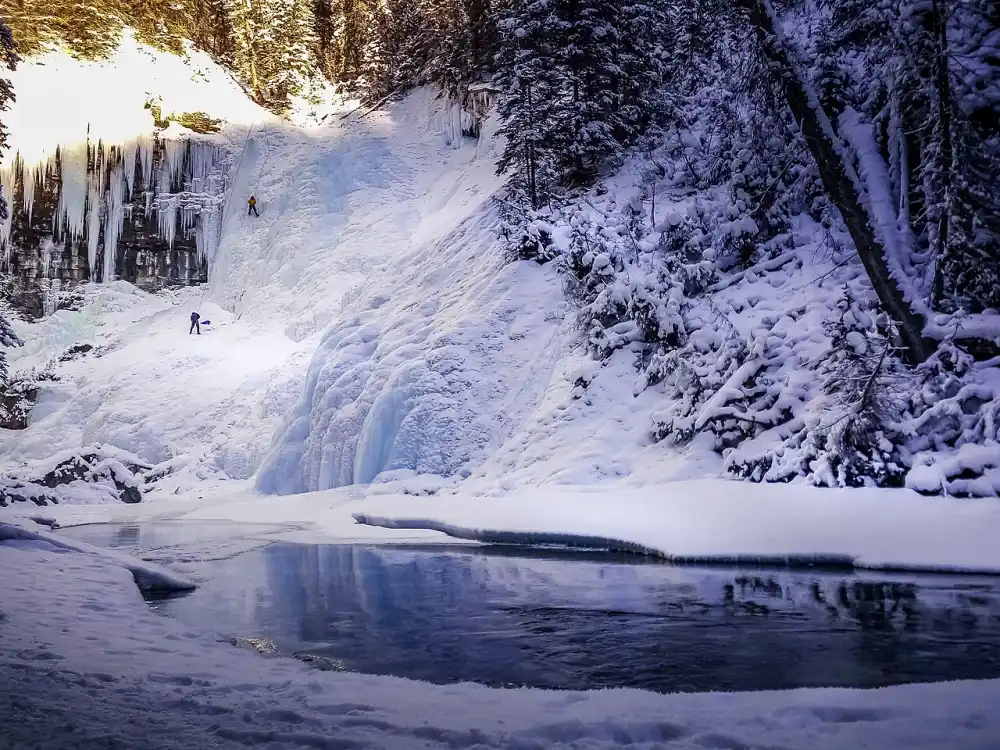
You need ice cleats or microspikes. Not hiking boots with good tread, not careful footwork - by mid-morning the catwalks polish into something close to glass, and a fall onto steel grating above a frozen creek is a bad place to learn that the hard way. Cleats aren’t a legal requirement, but treat that as a technicality rather than permission to skip them; gear shops in Banff and Canmore rent them for far less than a guided tour costs.
A guided ice walk solves the gear question for you instead. Several licensed operators run small-group tours through the canyon, and some continue further than a solo hiker should go alone, toward pitches where climbers work the ice with axes and crampons. Compare what’s running on your dates rather than booking the first name you see - tour length, how far into the canyon you go, and whether gear is included all vary between operators.
When to go, given all of this
Weigh the whole picture and the right plan depends on which season also decides how you’re getting there. Visiting between 18 June and 12 October, the 9am Roam bus is the strongest move available - it beats the parking problem and the catwalk crowd in a single decision, and that window covers essentially all of summer plus the first half of autumn. Outside it - late autumn through spring - you’re driving regardless, so plan around the parkway’s own restricted hours instead of a bus schedule that doesn’t apply: the spring cycling closure in particular (30 April to 25 June, daytime) lands before the bus has even started for the year. Winter earns its own visit no matter what the calendar says elsewhere - once you’ve sorted proper traction, the frozen falls belong to you in a way no July morning ever will.
A Banff National Park pass still applies here the same as anywhere else in the park - the daily rate or a Discovery Pass if you’re stacking up multiple stops, both covered in our Discovery Pass guide. Between 19 June and 7 September 2026 admission itself was waived under the Canada Strong Pass - exactly when the Roam bus runs and the lot fills fastest, so the free window and the busy window were the same one; from 8 September 2026 the pass is charged again. For where to base yourself before an early departure, where to stay in Banff breaks down the town-versus-Canmore-versus-Lake-Louise choice, and our full Banff National Park guide covers everything else worth building around the same trip.
On the map
The map loads on click - to keep the page lightweight.
The map didn’t load. Check your connection and refresh the page.
Admission and opening hours
- Admission price
- Johnston Canyon itself has no separate admission - a Banff National Park pass covers it: adult C$12.25/day, senior C$10.75, family/group C$24.50, free for everyone 19 June-7 September 2026 under the Canada Strong Pass (parking not included) and charged again from 8 September 2026. Roam Route 9 from Banff is C$5 single adult fare, C$2.50 senior/youth, free under 12; an adult day pass is C$10 (C$5 senior/youth). The trailhead lot itself is free to park in, just small and prone to filling on summer mornings.
- Opening hours
- Trail open year-round, no gate. Roam Route 9 shuttle runs only 18 June-12 October 2026, seven return trips a day - no spring or winter service is published, so do not plan a car-free winter or spring visit around this bus.
Park entry and the Canada Strong Pass window from parks.canada.ca/pn-np/ab/banff/visit/tarifs-fees and canada.ca/en/canadian-heritage/campaigns/canada-pass.html; Roam fares, day pass and the Route 9 season dates from roamtransit.com/fares and the operator's own 2026 Route 9 schedule PDFs. Checked 2026-08-22.
Details checked: August 22, 2026
Read also

What to see · 10 min read
Notre-Dame Basilica Montreal: Tickets, AURA Show, Worth It?
Verified · October 17, 2026Notre-Dame Basilica in Montreal: what the day visit and the AURA light show cover, the combined ticket, Sunday hours and when a guide helps.

What to see · 9 min read
Journey Behind the Falls: Tickets, Hours and Is It Worth It
Verified · October 10, 2026Journey Behind the Falls is C$33 an adult before tax (October 2026): hours into winter, the night ticket, stairs, strollers and the 2027-28 rebuild.

What to see · 14 min read
Skylon Tower: Tickets, Observation Deck and Dining
Verified · October 3, 2026Skylon Tower from C$18 per adult online before tax (October 2026): deck or dinner, day or night, and when eating upstairs beats buying the ride.

What to see · 13 min read
Jasper SkyTram: Tickets, Season and the Summit Trail
Verified · October 2, 2026Is the Jasper SkyTram worth it? Seven minutes up to 2,263 m, the 1.4 km summit trail, cloud and cold at the top, and how the 2026 season ends.