Banff National Park: The Complete Guide 2026
Banff in 2026: park fees after the free-entry window, the Moraine Lake shuttle rules, Lake Louise parking, when to go and what to see beyond the lakes.
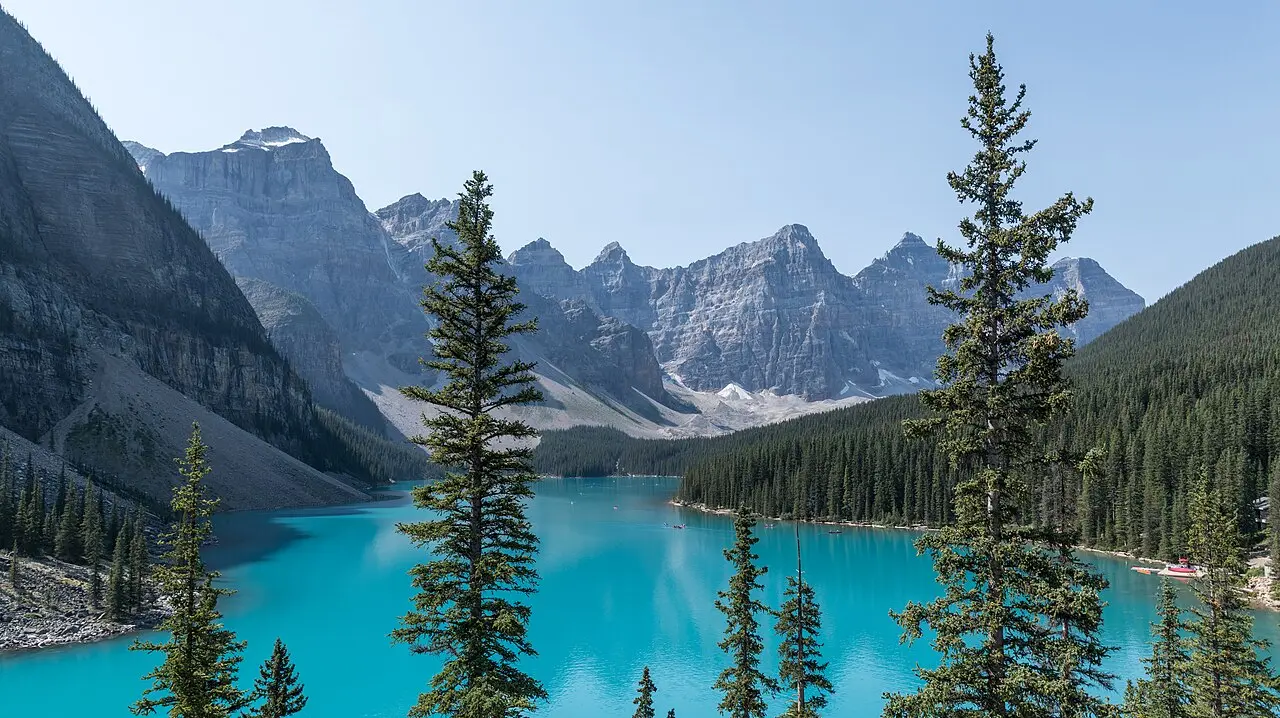
Banff is Canada’s first national park and, by a wide margin, its busiest: 4,558,171 visits in the 2025-26 fiscal year, up from 4,230,156 the year before. Two decisions shape the whole trip - which pass you buy, and how you get to the two famous lakes, because you can’t drive to Moraine Lake at all. Get those right and Banff is a much simpler place than the forums make it sound.
Those counts come from Parks Canada’s own attendance data, which runs on a fiscal year from April to March - worth knowing, because calendar-year totals and the inflated figures that circulate in the press don’t match it. The park covers 6,641 km2 of the Alberta Rockies, but the part that fills up is a thin corridor: the town of Banff, the Bow Valley, and the Lake Louise end 55 km up the highway. Calgary is only about 128 km and an hour and a half away, which is why a July Saturday here feels like a city that drove to the mountains for the day.
What you pay at the gate
Individual daily admission is charged per person. The family/group daily rate is separate and covers up to seven people arriving together in one vehicle; either option covers Parks Canada admission for that date.
| Pass | 2026 price |
|---|---|
| Adult (18-64), daily | C$12.25 |
| Senior (65+), daily | C$10.75 |
| Youth 17 and under | Free |
| Family/group, daily (up to 7 people in one vehicle) | C$24.50 |
| Discovery Pass, annual, adult | C$83.50 |
| Discovery Pass, annual, family/group | C$167.50 |
The annual Discovery Pass pays for itself on the seventh day, so any road trip that also takes in Jasper, Yoho or Kootenay is an easy call - you’ll feel that on day seven. 2026 also had a bigger break: under the Canada Strong Pass, admission to every Parks Canada place was free from 19 June to 7 September 2026 - no registration, no app, the gate simply waved you through. From 8 September 2026 the fees above apply again.
The free window was narrower than it sounded. It waived the gate and discounted Parks Canada camping, but the C$42 to park at Lake Louise, camping reservation fees, the hot springs and any guided tour all still landed on the bill. Now that the gate fee is back, those costs sit on top of it, so don’t budget as if the gate is the whole cost. If a campsite is part of the plan, our camping in Canada guide covers when Banff’s booking window opens.
One more pass trips up drivers coming from Calgary, and it applies before the park gate even appears - that’s the Kananaskis one. Kananaskis Country and the Bow Valley provincial corridor are the mountains you drive through on the way in, and a Parks Canada pass counts for nothing there. To park you need an Alberta Kananaskis Conservation Pass: C$15 a day for one vehicle, C$90 a year for up to three, tied to a licence plate. A rental earns no exemption, the plate is logged wherever you stop, and turning up without a pass runs to C$150 plus a 20% surcharge. The reprieve is that you can register online right up to 11:59 pm on the day of the visit - don’t leave it until you’re already parked.
Lake Louise and Moraine Lake: the part that catches people out
Moraine Lake Road has been closed to personal vehicles year-round since 2023. No exceptions for early risers, no gambling on a 4 am arrival. Your options are the Parks Canada shuttle, a licensed commercial operator, a bicycle up a narrow road with no shoulder, or a room at Moraine Lake Lodge. The booking field that actually decides the day, and why Moraine has to be the first destination, is in Moraine Lake.
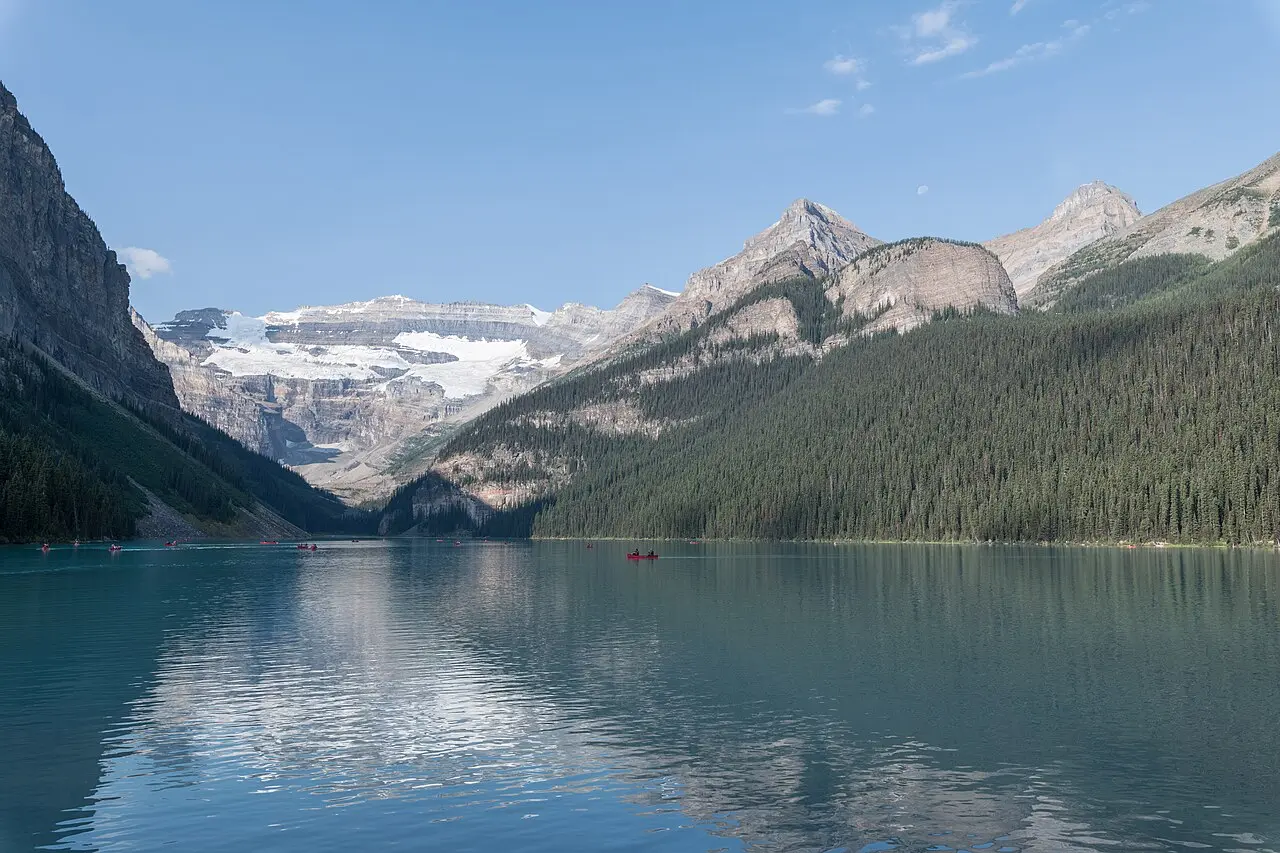
The Parks Canada shuttle runs from a Park and Ride at 1 Whitehorn Road, up at the Lake Louise Ski Resort, where parking is free for reservation holders between 6 am and 8 pm. In 2026 the Lake Louise Lakeshore shuttle runs 15 May to 12 October and the Moraine Lake shuttle 1 June to 12 October, weather permitting. Fares are C$12.75 adult, C$6.00 senior, C$4.00 for youth 17 and under, plus a non-refundable booking fee of C$3.50 online.
One reservation covers both lakes. The Lake Connector bus shuttles between Lake Louise Lakeshore and Moraine Lake every 30 minutes from 7 am to 6 pm, first come first served, with no time slot to pick - so the sensible plan is Moraine early, Lake Louise late morning, and back down whenever you’ve had enough.
Here’s the detail that saves most trips. Seats opened on 15 April 2026 and sold out in minutes, but only 40% of them were released that day. The other 60% go on sale at 8 am MDT two days before departure. If you’re reading this with a trip already booked, that two-day window is your real shot, not the April scramble everyone writes about.
Driving yourself to Lake Louise is still legal, and it’s the option that goes wrong most often. Parks Canada is blunt about it: the lots “fill up before sunrise and remain full until sunset”, and general parking costs C$42 per vehicle from 15 May to 12 October. Two adults on the shuttle pay C$29 including the booking fee, get Moraine Lake thrown in, and skip the queue of cars being turned around at the top of the hill.
The third route is public transit. Roam Transit Route 8X runs year-round from downtown Banff to the Lake Louise Lakeshore at C$12.50 adult, C$6.25 senior or youth, free for under-12s, with reservations recommended in summer. It doesn’t go to Moraine Lake, but it does get you to the lakeshore without a car at all. The parking, shuttle windows and which trails are worth the climb are in the dedicated Lake Louise page.
The town of Banff
The townsite sits at 1,383 m, hemmed in by Cascade Mountain at one end and Sulphur Mountain at the other, and it’s small enough to cross on foot in twenty minutes. The whole park started here: a hot spring found on the flank of Sulphur Mountain led to a 26 km2 reserve on 25 November 1885, which grew into today’s 6,641 km2 park and a UNESCO World Heritage listing.
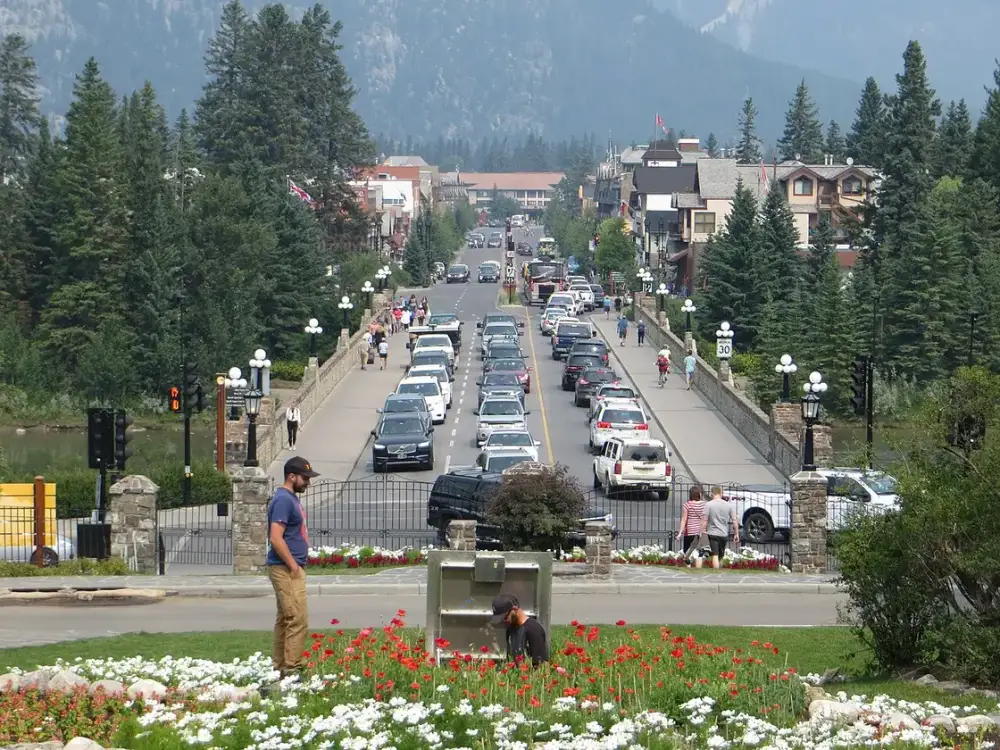
Banff Avenue is unashamedly a tourist street, with the gondola up Sulphur Mountain and the Banff Upper Hot Springs a few minutes’ drive above town, and Bow Falls and the Fairmont Banff Springs a walk from the bridge. The trick locals use is simple: park once, then walk or take a Roam bus. Don’t try to move a car around town between 11 am and 4 pm in summer - it’s a slow way to spend a vacation.
Johnston Canyon and the parkway trap
Johnston Canyon is the park’s most popular short walk, and deservedly so: steel catwalks are bolted to the limestone walls a few metres above the creek, leading to the Lower Falls first and the Upper Falls after a longer climb. In winter the same route becomes an ice walk, with the falls frozen into blue columns.
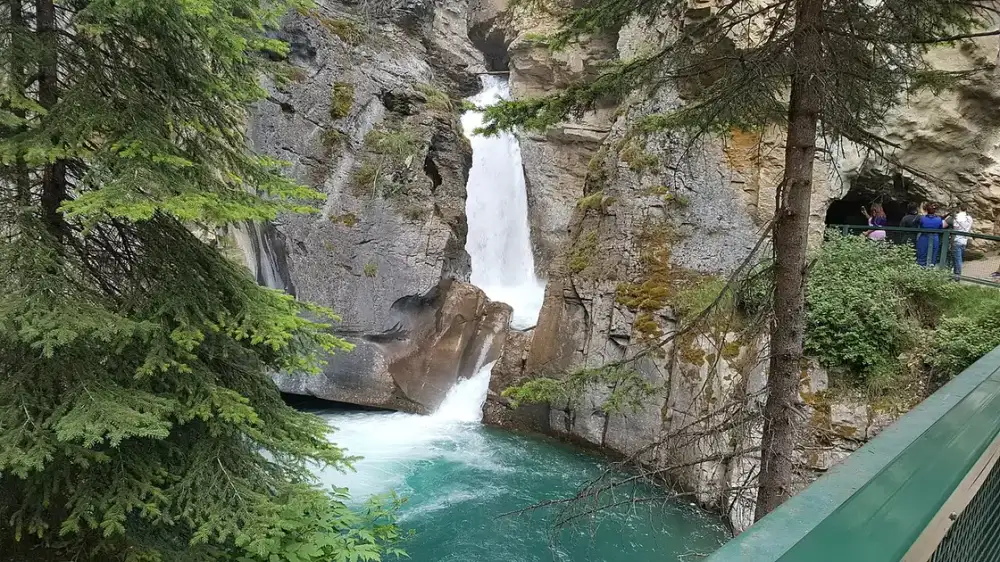
The canyon sits on the Bow Valley Parkway (Highway 1A), the old road between Banff and Lake Louise, and this is where visitors get caught. From 1 March to 25 June nobody travels the 17 km eastern section between the Fireside Picnic Area and Johnston Canyon Campground between 8 pm and 8 am - not by car, bike or on foot. On top of that, a cycling pilot now running to 2030 closes the same stretch to motor vehicles in daylight, 30 April to 25 June and again 1 September to 6 October.
None of that closes Johnston Canyon itself. You reach it by staying on the Trans-Canada and exiting at Castle Junction instead. And if you’ve got a bike, those closure weeks hand you a paved mountain road with no traffic on it - that’s one of the better cycling days in the Rockies.
The trailhead lot is the part that actually catches people out, not the road closures. Our Johnston Canyon guide has the Roam Route 9 shuttle schedule and fare, the Lower Falls, Upper Falls and Ink Pots distances, and what changes when the catwalks ice over in winter.
Beyond the postcards
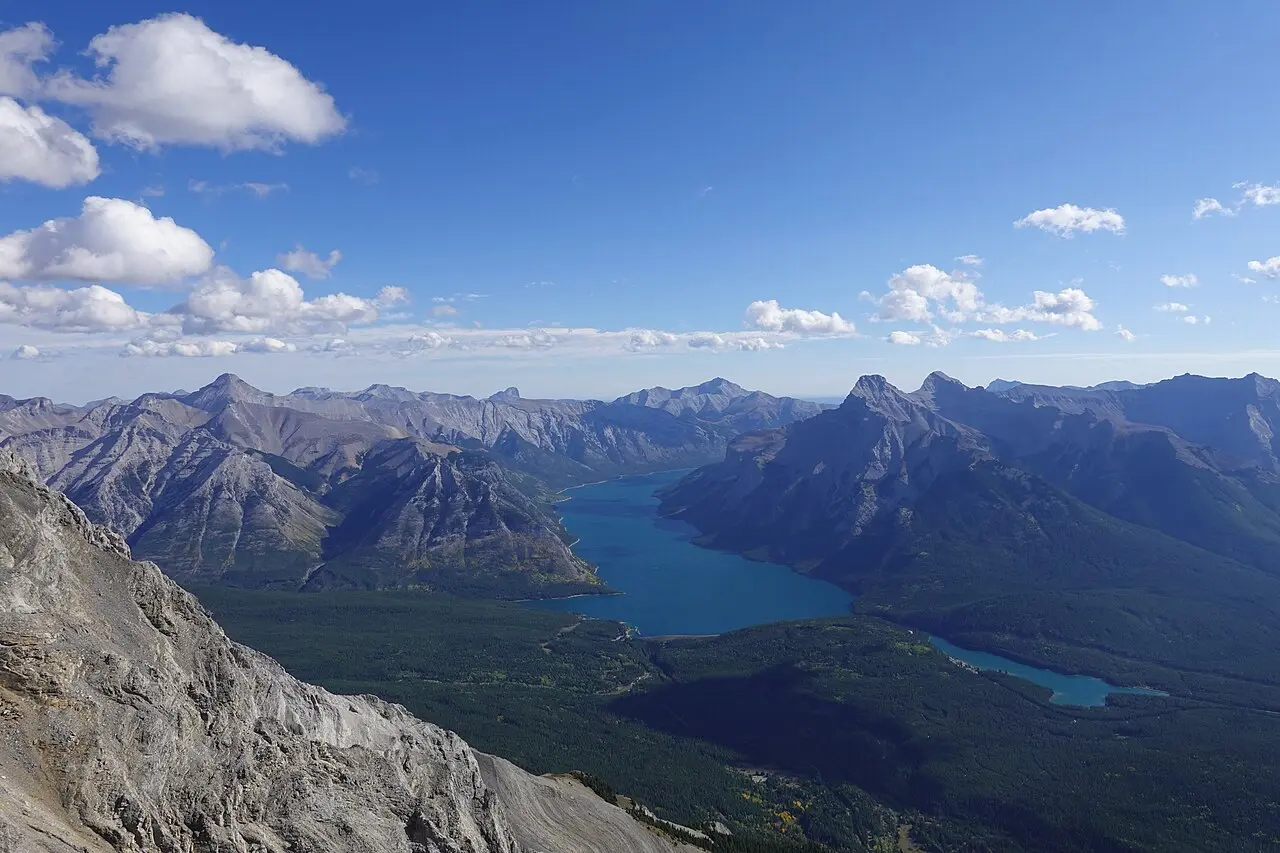
Lake Minnewanka is the largest lake in the park and a fifteen-minute drive from town, with a loop road past Two Jack Lake, a lakeshore trail and an interpretive boat cruise. You’ll rarely feel the crush you get at Lake Louise, partly because the shoreline keeps going long after most people turn back.
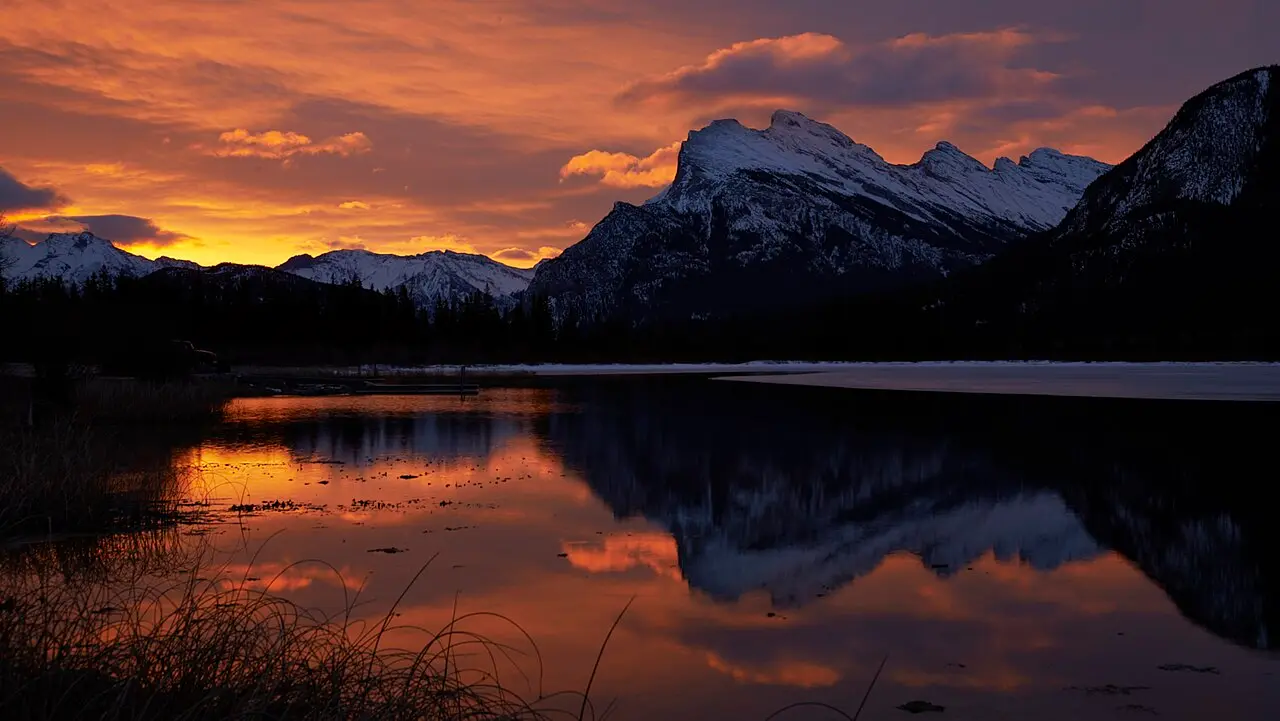
Vermilion Lakes, 4 km from Banff Avenue, is the cheapest good decision in the park: a dead-end road along three shallow lakes with Mount Rundle reflected in them, free to drive, no shuttle, no reservation. Sunrise is when it earns its reputation.
North of Lake Louise the Icefields Parkway climbs toward Jasper past Bow Lake, Peyto Lake and the Columbia Icefield - 232 km of it, and a full day if you drive it properly. With over 1,600 km of maintained trails in Banff alone, the park rewards anyone willing to walk twenty minutes further than the parking lot.
When to go
July and August are the warmest and the busiest, and late summer carries a real risk of wildfire smoke turning the mountains into grey silhouettes - it happens most years somewhere in the Rockies. September - that’s the pick of the seasons here: the shuttles still run to 12 October, the crowds thin after Labour Day, and in the last week of the month the larches turn gold above Moraine Lake.
Late May and June bring long days, loud waterfalls and the highest chance of a lake still partly frozen. The tea houses at Lake Agnes and Plain of Six Glaciers open in mid-May and close just after Canadian Thanksgiving. October to April is winter: three ski areas, ice walks, frozen lakes with skating rinks cleared on them, and no Moraine Lake access at all. What that season costs, which of the three ski hills suits which traveller, and why the buses get easier rather than harder are covered in Banff in winter.
Wildlife rules that carry real fines
Elk walk through the townsite, bears use the valley bottom in spring, and bighorn sheep stand on the road at Lake Minnewanka. Parks Canada sets the distances in bus lengths so they stick: 30 m from deer, elk, sheep and moose, 100 m from bears, wolves, cougars and coyotes. Feeding, enticing or disturbing an animal is an offence that carries a court appearance and fines up to C$25,000, and the same maximum applies to flying a recreational drone anywhere in the park.
If a wildlife jam forms on the highway, don’t stop - keep driving. Report a bear, cougar, wolf or coyote encounter to Banff Dispatch on 403-762-1470. Carry bear spray on trails, know how to use it, and make noise on blind corners.
How long you need
Three full days covers the core without rushing: one for the Lake Louise end with a shuttle booking, one for the town, the gondola and Vermilion Lakes, and one for Johnston Canyon plus Lake Minnewanka. Five days lets you add the drive north to Jasper or a proper alpine hike. Anything under two days and you’ll spend most of it in a parking lot.
Read also
- Cheaper beds east of the gate: Canmore
- Shuttle, first destination and sunrise: Moraine Lake
- Shuttle, bus or rental from the city: Calgary to Banff
- Arriving by luxury daylight train from Vancouver: is Rocky Mountaineer worth it
- Tickets, hours and whether it’s worth the price: Banff Gondola
- Annual entry math: Parks Canada Discovery Pass
- On the Icefields and park roads: driving in Canada
- The drive north, stop by stop: Icefields Parkway
- Its neighbour at the other end of that road: Jasper National Park
- Every park we cover: the national parks hub
- The province around it: Alberta and every other province
- Getting behind the wheel here: car rental in Canada
On the map
The map loads on click - to keep the page lightweight.
The map didn’t load. Check your connection and refresh the page.
Admission and opening hours
- Admission price
- Daily park pass C$12.25 adult, C$10.75 senior, C$24.50 family/group (up to 7 people in one vehicle); free for visitors 17 and under. Free for everyone 19 June - 7 September 2026 under the Canada Strong Pass; standard fees again from 8 September 2026.
- Opening hours
- Park open year-round. Moraine Lake Road is closed to personal vehicles all year; the Parks Canada shuttle season there is early June to mid-October (1 June - 12 October 2026), and outside those dates no shuttle runs and the road stays shut to cars. Lake Louise shuttles run mid-May to mid-October (15 May - 12 October 2026); out of season the lakeshore is still reachable by car or on Roam Transit Route 8X, which runs year-round.
Fees from parks.canada.ca. Prices and dates change - confirm before you travel.
Details checked: July 24, 2026
Distance
- Vancouver ≈850 km · ~10-11 h via Hwy 1 through Kamloops, Revelstoke and Golden
- Calgary ≈128 km · ~1 h 30 min west on the Trans-Canada (Hwy 1) Calgary International (YYC) is the main gateway airport.
Read also

National parks · 11 min read
Point Pelee: Birding, Monarchs and Canada's Southern Tip
Verified · August 29, 2026Point Pelee in practice: the shuttle to the Tip, monarch season timing, Festival of Birds dates, 2026 fees, and why free admission ended before the peak.

National parks · 8 min read
Kluane: Icefields, Flightseeing and Mount Logan
Verified · August 28, 2026Kluane National Park 2026: Kathleen Lake trails, C$30 camping, Rocking Star flights from C$250, and Mount Logan at 5,959 m.

National parks · 7 min read
Riding Mountain National Park: Bison, Clear Lake & Highlands
Verified · August 27, 2026Riding Mountain in 2026: Lake Audy bison from your car, Clear Lake beaches, Wasagaming camping fees and the drive from Winnipeg.

National parks · 8 min read
La Mauricie National Park 2026: Parkway, Lakes & Camping
Verified · August 26, 2026La Mauricie NP: two hours from Montreal or Quebec City. 2026 gate C$10, 64 km Parkway, camping from C$33.75, Navette Nature shuttles.