Camping in Canada: National Parks, Reservations & Costs
National park sites from C$22 a night. The hard part is the winter launch morning: how the queue works, the real costs and BC's new C$20 non-resident fee.
Banff’s campgrounds went on sale for the 2026 summer at 8 am Mountain Time on Thursday 12 February, and you joined an online queue before you could even search. Jasper’s frontcountry had opened on 27 January, Kootenay’s a week before that, and the Rockies backcountry permits went in a single release on 26 January. Every park sets its own morning like that, and the stagger is what shapes a camping trip here: in the parks everyone has heard of, a site isn’t something you book when you plan the trip. It’s something you win on a particular winter morning, months before you fly.
The money is the easy part. A national park site runs C$22 to C$47 a night for the standard types, C$15 per person in the backcountry, and the provincial systems hold thousands more that never see a queue at all. Miss the launch, though, and you’re paying hotel rates in Canmore. So this starts with the calendar.
What a campsite actually costs
Fees vary park by park, but Banff publishes its full schedule and covers every site type, so it works as the yardstick. All figures are 2026 Parks Canada rates, per night.
| Site type | Per night | Where |
|---|---|---|
| Primitive (no services) | C$22.00 | Mosquito Creek, Rampart Creek, Silverhorn Creek |
| Unserviced, toilets only | C$26.75 | Two Jack Main, Castle Mountain, Protection Mountain |
| Unserviced, toilets and showers | C$34.00 | Tunnel Mountain, Lake Louise, Johnston Canyon, Two Jack Lakeside |
| Electrical | C$40.00 | Tunnel Mountain, Lake Louise |
| Water, sewer and electrical | C$47.25 | Tunnel Mountain |
| Equipped site (gear supplied) | C$86.50 | Two Jack Main |
| oTENTik (furnished cabin-tent) | C$147.50 | Two Jack Lakeside, Tunnel Mountain Village II |
| Overflow | C$13.50 | Lake Louise |
So the C$22 to C$47 band covers the ordinary site types, the ones you pitch your own tent on. Arrive with no gear and the same park sells you an equipped site at C$86.50 or an oTENTik at C$147.50 - a different budget entirely.
Then the extras that people forget:
- Reservation fee: C$11.50 online, C$13.50 by phone. Charged again if you change or cancel.
- Fire permit: C$12.00 a day in Banff, C$17.00 in the Lake Louise area and along the Icefields Parkway. It’s per day, not per stay, and a fire ban overrides it.
- Backcountry: C$15.00 per person per night, valid across Banff, Jasper, Kootenay and Yoho.
- Park admission on top: adult C$12.25 a day, or the Discovery Pass at C$83.50 for a year.
One large break applied in summer 2026. Under the Canada Strong Pass, admission was free and camping 25% off from 19 June to 7 September 2026; from 8 September 2026 the standard admission and camping rates apply again. Read the exclusions, though: parking, the hot springs, guided tours and the camping reservation fee were all outside it. The C$11.50 lands either way.
The reservation launch is the whole game
Parks Canada takes bookings for 40 destinations, and it does not open them all at once. Each park gets its own launch date and time, posted on the reservations page months ahead, and on the busy ones you’re put into an online queue before you can even search.
Here’s how the 2026 season opened, because the pattern repeats:
| Park | Opened | Local time |
|---|---|---|
| Kootenay frontcountry | Tuesday 20 January 2026 | 8 am MT |
| Banff, Kootenay and Yoho backcountry (one launch) | Monday 26 January 2026 | 8 am MT |
| Jasper frontcountry | Tuesday 27 January 2026 | 8 am MT |
| Jasper backcountry | Wednesday 28 January 2026 | 8 am MT |
| Pacific Rim, Glacier, Mount Revelstoke, Gulf Islands | Thursday 29 January 2026 | 8 am PT |
| Waterton Lakes, Elk Island, Rocky Mountain House | Tuesday 3 February 2026 | 8 am MT |
| West Coast Trail | Thursday 5 February 2026 | 8 am PT |
| Fundy | Friday 6 February 2026 | 8 am AT |
| Cape Breton Highlands, Prince Edward Island | Monday 9 February 2026 | 8 am AT |
| Lake O’Hara overnight camping | Tuesday 10 February 2026 | 8 am MT |
| Gros Morne, Kejimkujik | Wednesday 11 February 2026 | 8 am / 8:30 am local |
| Banff frontcountry | Thursday 12 February 2026 | 8 am MT |
Three things fall out of that table.
The times are local to the park, not to you. Banff’s 8 am MT is 07:00 in Vancouver, 10:00 in Toronto and 15:00 in London. Set the alarm in the right time zone.
Read your own park’s row rather than a rule of thumb. Banff’s backcountry opens weeks before its frontcountry, on a single date shared with Kootenay and Yoho. In Kootenay, Yoho and Jasper the order is reversed and the drive-in campgrounds go first. Get that backwards and you’ll wake up for the wrong morning.
Some things aren’t a race at all. The Lake O’Hara day-use bus in Yoho is allocated by random draw, with applications open 2 to 23 March 2026. Turning up early does nothing there; you apply and you wait.
Before launch day, have an account created and a card saved, know your exact dates and party size, and have a second and third campground picked. The 2027 dates are not out yet. They go on the same reservations page as this year’s, so set a reminder for the autumn and check the page rather than assuming these dates repeat.
Frontcountry, backcountry, or a bed in a tent
Frontcountry is what most visitors mean: drive to the site, park beside it, use a washroom block, sometimes with showers. This is where the C$26.75 to C$47.25 range lives and where the competition is fiercest.
Backcountry is a permit and a pack. At C$15 per person per night across the four Rocky Mountain parks it’s the cheapest way to sleep in the mountains, and quotas keep it quiet. It also means you carry your water filter, your food and your garbage, and there’s nobody to call.
oTENTiks are the middle option and the one worth knowing about if you’re flying in. Parks Canada calls them a cross between an A-frame cabin and a prospector tent on a raised wooden floor: two queen beds and a bunk, heating, a table, a deck and a firepit with the permit and firewood included. You bring bedding and a cooking kit. C$147.50 a night in Banff, more than a campsite and far less than a hotel, and they exist at national historic sites too, not just the big parks.
Provincial parks run on different rules
Every province runs its own system, its own booking window and its own fees. Mixing them up is a common way to lose a booking.
British Columbia takes reservations three months ahead, released daily at 7 am Pacific. Want 25 July? You book on 25 April. There’s a trap in the fine print: if you book on the very first day of that window, you’re in the restricted booking window and cannot change your dates or the length of your stay afterwards. You have to cancel and rebook, paying the fee twice.
BC also changed the deal for visitors this year, and this is the single most expensive detail on this page for anyone arriving from abroad. From 15 May 2026 there’s a C$20 non-resident fee on top of the base camping fee for anyone who doesn’t live in British Columbia. It applies to reservations, backcountry permits, first-come-first-served sites, cabins, moorage and dock use, and it shows up as its own line rather than disappearing into the nightly rate. Children and youth are exempt. From 2027 it spreads to group sites, picnic shelters, the Berg Lake Trail and the Bowron Lake Canoe Circuit. On top of that, BC’s booking fees are C$6 a night to a maximum of C$18, plus C$6 to change and C$6 to cancel, and those are non-refundable.
Ontario is the opposite extreme on timing: five months in advance, which means the popular Algonquin and Killarney sites go in the depths of winter for a July trip. Ontario also blocks changes and cancellations more than four months out, so an early booking is a committed one.
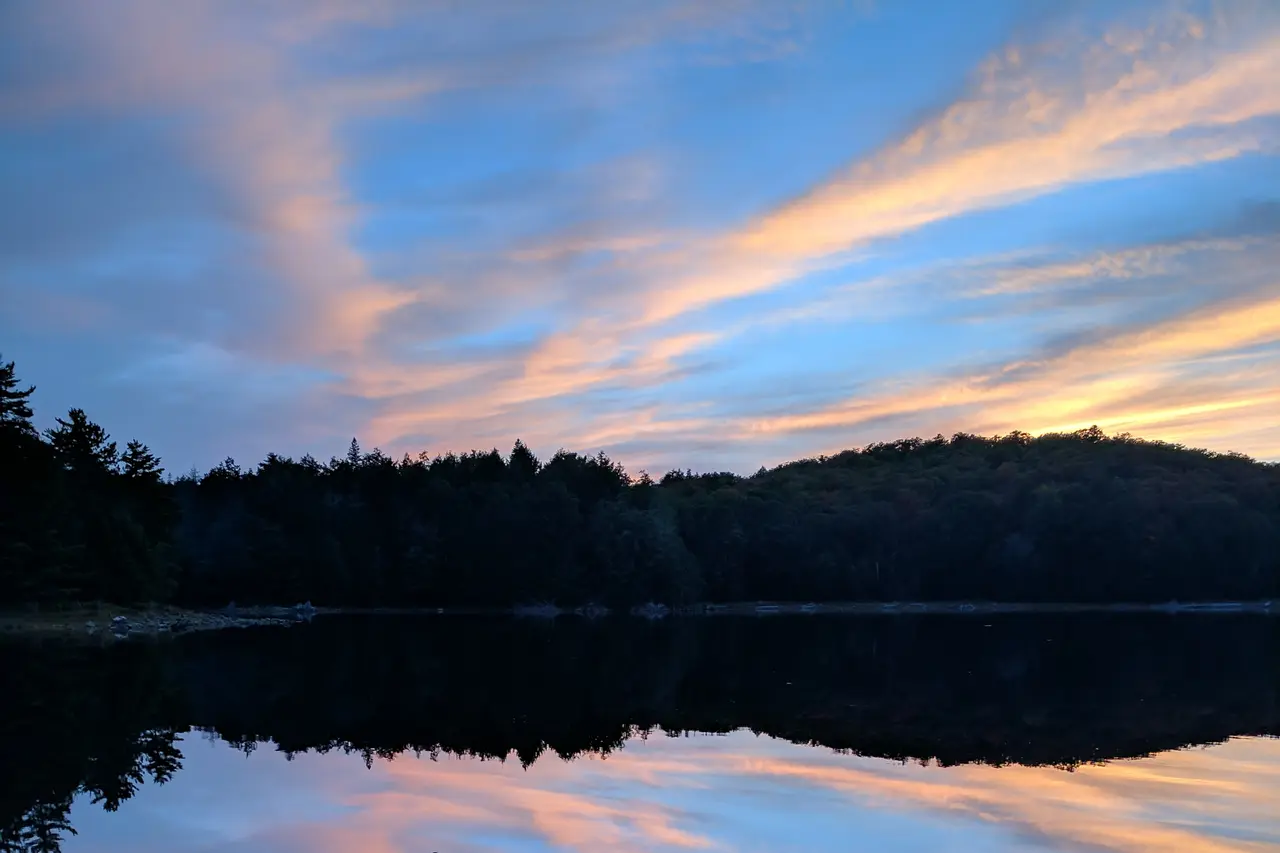
The upside is scale. BC’s 2026 fee rises hit four backcountry areas and 59 high-use frontcountry parks; base fees at 388 others didn’t move. Those quiet ones are the answer when the famous parks are gone.
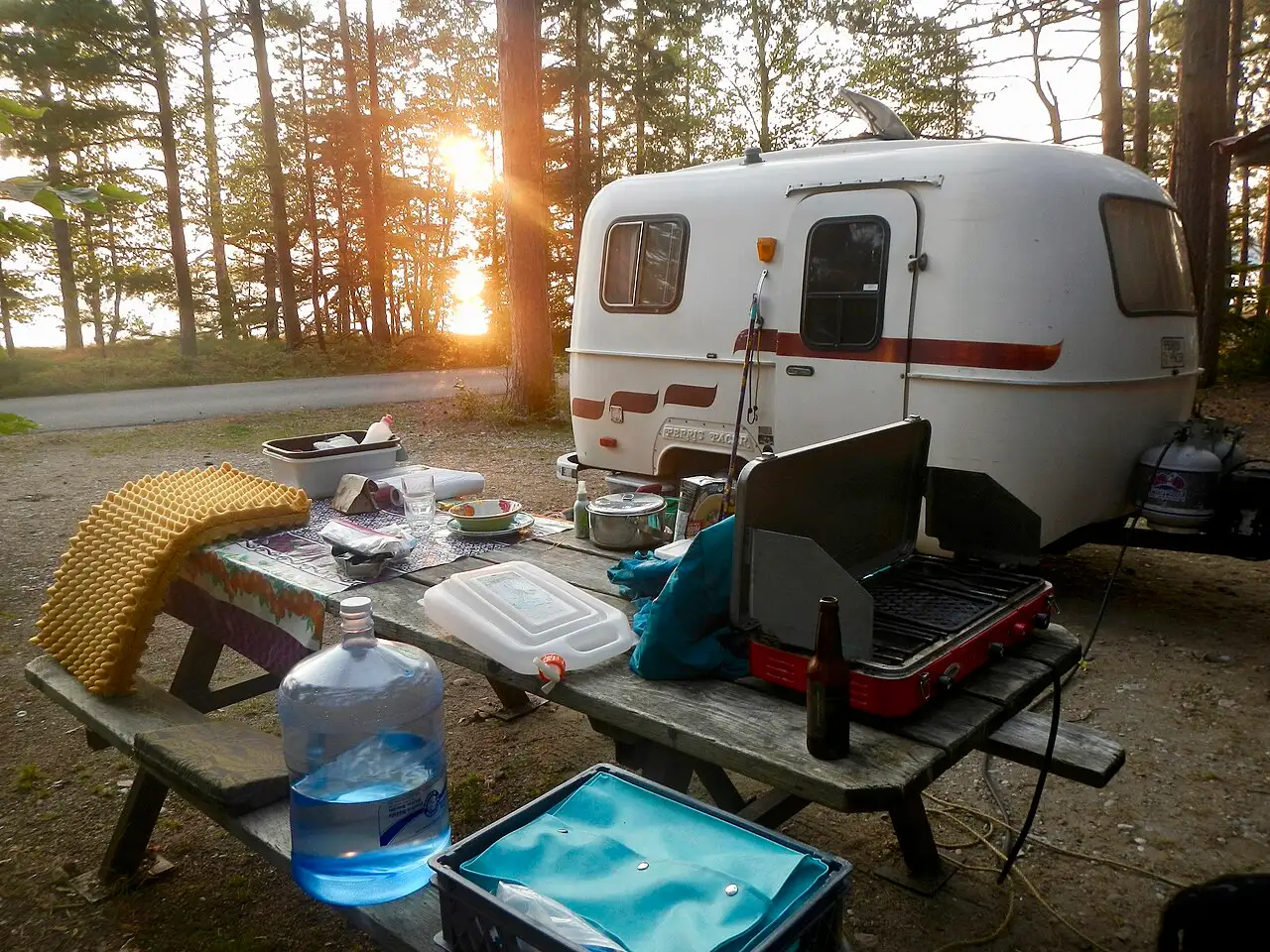
If the launch went badly
Nobody gets everything on launch morning. The recovery options, roughly in order of how well they work:
- Watch for cancellations. Sites come back into the system as plans change, and there’s no queue for those. Check daily rather than once.
- Move your dates by a week. Early June and the second half of September are a different market from the third week of July.
- Take the overflow. Lake Louise Overflow is C$13.50 a night and it is exactly what the name says, but it’s a legal place to sleep inside the park when nothing else is.
- Go one park sideways. Kootenay and Yoho fill later than Banff and sit an hour or two down the road, not a day. Waterton’s booking window also opens nine days before Banff’s frontcountry release, but the park sits far south on the Montana border, so it belongs in the plan as its own leg rather than as a substitute.
- Use the provincial and private grounds around the park gates. They aren’t as pretty and they’re rarely full in the same way.
- Remember Jasper is still short of sites. Frontcountry campgrounds there are running at 77% of pre-wildfire capacity, with Wabasso and the Whirlpool group campground closed for 2026, so demand there is heavier than the map suggests.
Bears, fire and the rules that carry fines
The wildlife rules are not decorative and they are enforced. In the national parks you stay 30 m from deer, elk, sheep and moose and 100 m from bears, wolves, cougars and coyotes - three bus lengths and ten bus lengths, which is how Parks Canada puts it. Feeding, enticing or disturbing an animal brings charges and fines up to C$25,000. Recreational drones are banned park-wide, same ceiling.
At the campsite the practical version is simpler: nothing with a smell stays outside your vehicle or the food locker. That includes the cooler, the dishwater, the toothpaste and the garbage. A bear that learns a campground is worth visiting usually ends up dead, which is why park wardens are blunt about it.
Fire is the other one. Your fire permit is a fee, not permission - when a ban is on, and in a dry August it usually is somewhere, the permit means nothing. Check the park’s alerts page the morning you arrive, not the week you booked.
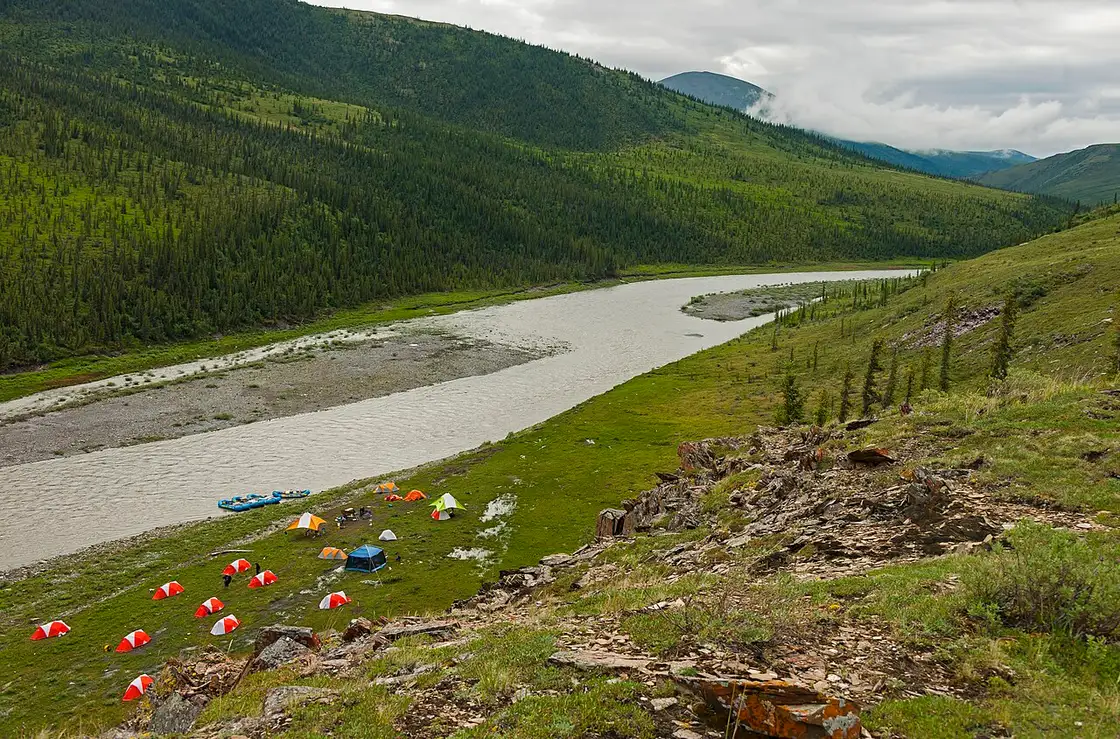
Flying in without a tent
Arriving from overseas with no gear is normal and workable. Three routes through it.
Rent a car and buy cheap gear on arrival. Canadian Tire is in most towns of any size and MEC is in the bigger cities, so a tent, two pads and a stove are an afternoon’s shopping. It’s the cheapest route if you’re out for a week or more, and you can resell or donate what you don’t want to fly home with.
Book oTENTiks and skip the gear entirely. At C$147.50 a night this only makes sense for two or three nights, but it removes the whole equipment question.
Take an RV, a decision with its own costs - deposit, kilometre packages, one-way fees - all laid out in our RV rental guide. Book the campsite before the vehicle: an RV that can’t get a serviced site is an expensive van.
Whichever you pick, you need wheels: almost no Canadian campground is reachable on transit, and the ones near a bus route aren’t the ones you came for.
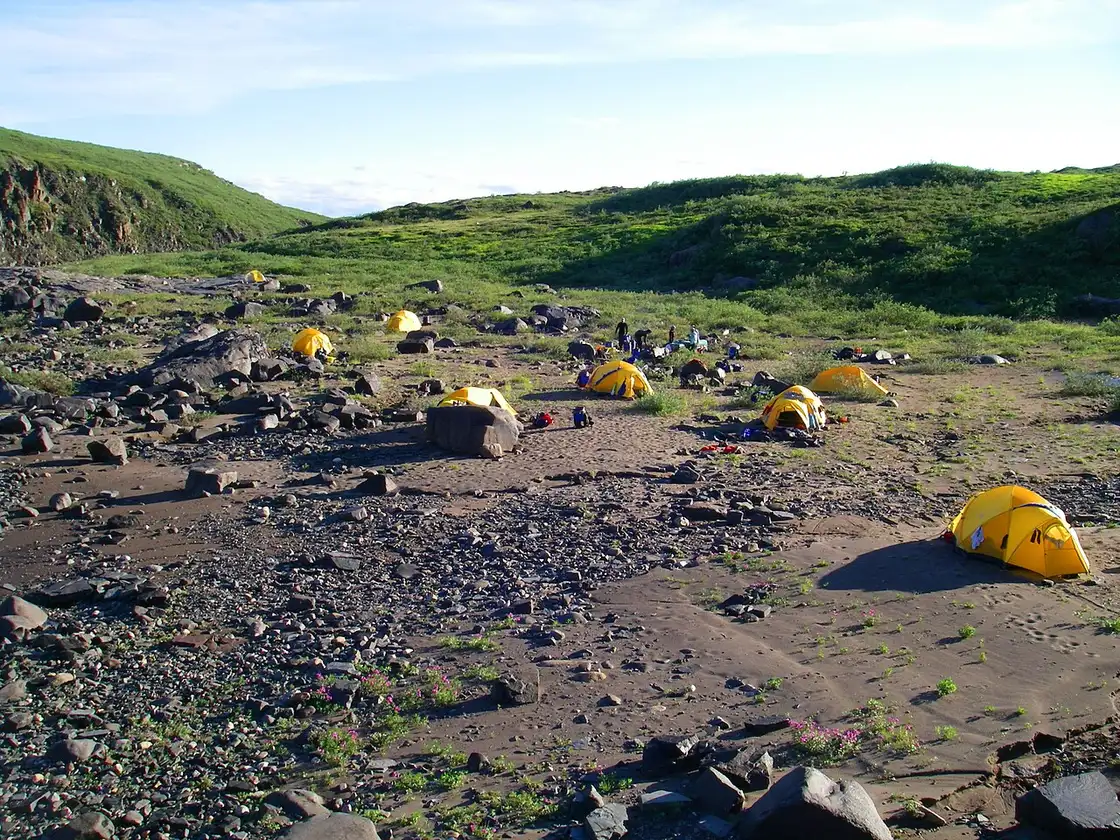
When the season actually runs
Most national park campgrounds typically open around mid-May and close in early or mid-October, with a handful of serviced loops kept open year-round. At altitude the usable window is shorter still, and snow can sit on Rockies backcountry passes well into June, so check the park’s own opening dates for the year you’re going.
July and August are the peak in every sense - warm nights, full campgrounds, and wildfire smoke as a real possibility in the west. Early June and the second half of September are the sweet spot: the same scenery, cool nights, far fewer people and much better availability. Our Banff, Jasper and Pacific Rim guides cover what’s open when in each of them, and the trip cost breakdown puts camping next to hotels for a whole trip.
The short version
- A serviced national park site is C$34 to C$47 a night; primitive is C$22; backcountry is C$15 per person. Gear supplied costs far more: C$86.50 for an equipped site, C$147.50 for an oTENTik.
- Add C$11.50 to book, a fire permit if you want one, and park admission.
- 19 June to 7 September 2026 (Canada Strong Pass): admission was free and camping 25% off, booking fee still payable; standard rates again from 8 September 2026.
- Parks Canada launches by park, late January to mid February, at 8 am local park time, with a queue.
- BC: three months ahead at 7 am Pacific, plus C$20 on top of the base fee if you don’t live there. Ontario: five months ahead.
- Book the site before the vehicle, and check the fire ban the morning you arrive.
Admission and opening hours
- Admission price
- Parks Canada 2026, Banff schedule as the worked example, per night: primitive C$22.00; unserviced with toilets only C$26.75; unserviced with toilets and showers C$34.00; electrical C$40.00; water, sewer and electrical C$47.25; equipped campsite (Two Jack Main) C$86.50; oTENTik C$147.50; Lake Louise overflow C$13.50. Fire permit C$12.00 per day in Banff, C$17.00 in the Lake Louise area and on the Icefields Parkway. Backcountry C$15.00 per person per night, valid in Banff, Jasper, Kootenay and Yoho. Reservation, change or cancellation C$11.50 online, C$13.50 by phone.
- Opening hours
- Reservations for the 2026 season launched between 20 January and 12 February 2026 depending on the park, at 8 am local park time, with an online queue on busy launches. Parks Canada reservation line 1-877-737-3783, or 1-519-826-5391 from outside North America.
Fees vary park by park; the Banff schedule is quoted because it is published in full and covers every site type. Figures from Parks Canada and BC Parks pages checked 3 August 2026 - confirm current rates before booking.
Details checked: August 3, 2026
Read also

Before you go · 11 min read
Canada eTA for UK Citizens: Entry Requirements
Verified · September 1, 2026UK air travellers need a CAN$7 eTA. Cost, validity, land exception, refusals and British passport types - checked on canada.ca, 1 Sep 2026.

Before you go · 9 min read
Calgary vs Vancouver: Which Airport for the Rockies
Verified · August 29, 2026Calgary puts Banff 140 km up the road; from Vancouver it's 850 km. What the drop fee, the domestic hop and the thinner route map actually cost you.

Before you go · 10 min read
Quebec City in Winter: Carnival, Ice Hotel, What to Wear
Verified · August 16, 2026Quebec City in winter: Carnival 5-14 Feb 2027, ice hotel from January, February nights -16 C, and what to pack.

Before you go · 8 min read
Canadian Rockies vs Vancouver Island: Which Trip to Take
Verified · August 14, 2026Rockies or Vancouver Island for one week: lakes and Icefields Parkway vs ferry, Victoria and Tofino - pick by trip shape, not Instagram.