How Much Does a Canada Trip Cost in 2026?
A Canada trip runs from backpacker to premium and the total swings with season and region. Real prices here for transit, hotels, food and the big sights.
There’s no honest single answer to what a Canada trip costs, and any site that gives you one number is guessing. What the trip costs depends on two things more than your hotel budget: which region you visit and which season you go in. A summer week in the Rockies and a shoulder-season week in Ontario are different trips at different prices. So instead of an invented average, here are the real numbers by category, each one either taken from an official source or clearly marked as varying, plus the quiet extras that inflate a Canadian bill.
Start with the levers that move the most. Flights swamp everything else and depend on where you fly from, so this guide leaves international airfare out and counts costs on the ground. After that, region and season do the heavy lifting: the same hotel in Banff can double between June and October, while a big-city museum charges the same in February as in July. The single strongest money-saver of summer 2026 was a date, not a discount code, and it had a name, the Canada Strong Pass, which is covered further down.
If you want a ballpark before the detail, here it is, per person, per day and before international flights: somewhere near C$100 to C$150 at the budget end, C$200 to C$350 mid-range, and C$400 and up for a premium trip. Those bands are built from the official prices quoted below, checked on 24 July 2026, and they’re a rough orientation, not a quote; the three sample days near the end show what goes into each one.
Currency converter
- CAD
- $139.95
- USD
- $100
- EUR
- €89.34
- GBP
- £74.80
Getting around: trains, flights and city transit
Between cities, your two realistic options are VIA Rail and flying, and both price like airlines: cheap if you book early, expensive at the last minute. Route by route, the rail side is in our guide to Canada by train. VIA’s Corridor trains between Quebec City, Montreal, Toronto and Windsor use dynamic fares, so there’s no fixed price to quote. The cheapest are the non-refundable Escape fares in Economy, and Business class costs more for a meal and a quieter car. Book weeks out and the train is often cheaper than the same-day flight; book the night before and it’s not. For flying, fares vary too, and one warning for budget-hunters: the low-cost carrier Swoop shut down in October 2023, so ignore any old guide that still recommends it.
If your trip is a Rockies or Yukon loop rather than a city hop, price a motorhome against hotels plus a car: the fixed costs are heavy and published in full, and our RV rental guide lays out the deposit, the kilometre packages and the one-way fees.
Inside cities, transit is cheap and worth using. Montreal charges C$3.75 for a single ride; the 747 airport bus does not take a single fare, so you pay C$11.25 for a 24-hour pass that covers it and pays for itself in three rides. Vancouver’s TransLink runs C$2.85 for a one-zone trip on stored value (C$3.50 if you just tap a card), up to C$4.20 across two zones, with a DayPass at C$12.55; leaving the airport adds a C$6.50 YVR fee, and kids 12 and under ride free. Toronto’s TTC sits in the same few-dollar band per ride, with a day pass for heavy sightseeing days. Confirm the current TTC fare on ttc.ca, since it’s the one number here that moves.
Where you sleep, and the hotel taxes nobody mentions
Accommodation is the line that varies most and the one no honest guide can pin down, because it swings with city, season and how far ahead you book. A hostel dorm, a roadside motel, a mid-range chain, an apartment rental and a downtown boutique are five different budgets, and prices in Banff, Lake Louise or a popular festival weekend behave like nothing else in the country.
What you can count on is the tax on top, and hotels carry more of it than shops do. Every province’s sales tax applies to a room, and several cities and provinces add a lodging or accommodation tax as well. Quebec is the clearest example: a 3.5 percent lodging tax stacks on the GST and QST, so a Montreal hotel bill can carry around 18 to 19 percent in tax before you have touched the minibar. Read the rate quoted as pre-tax and add roughly a fifth for the real figure. For where to base yourself, our guides to where to stay in Toronto and where to stay in Vancouver break the neighbourhoods down.
Eating: groceries to restaurants, plus tax and tip
Food scales cleanly from cheap to indulgent. A budget day runs on supermarket food and counter meals; a mid-range day is a casual lunch and one proper dinner; a splurge is restaurants for every meal. The trap is forgetting the two additions on every restaurant bill: sales tax, which is not in the menu price, and a tip of 15 to 20 percent. On a C$50 dinner for two in Ontario that’s about C$56.50 with tax and roughly C$66.50 once you tip, so pad every meal out by a quarter over the menu. The full mechanics, and how to avoid over-tipping on the after-tax total, are in our guide to tipping and sales tax in Canada.
What the famous sights actually cost
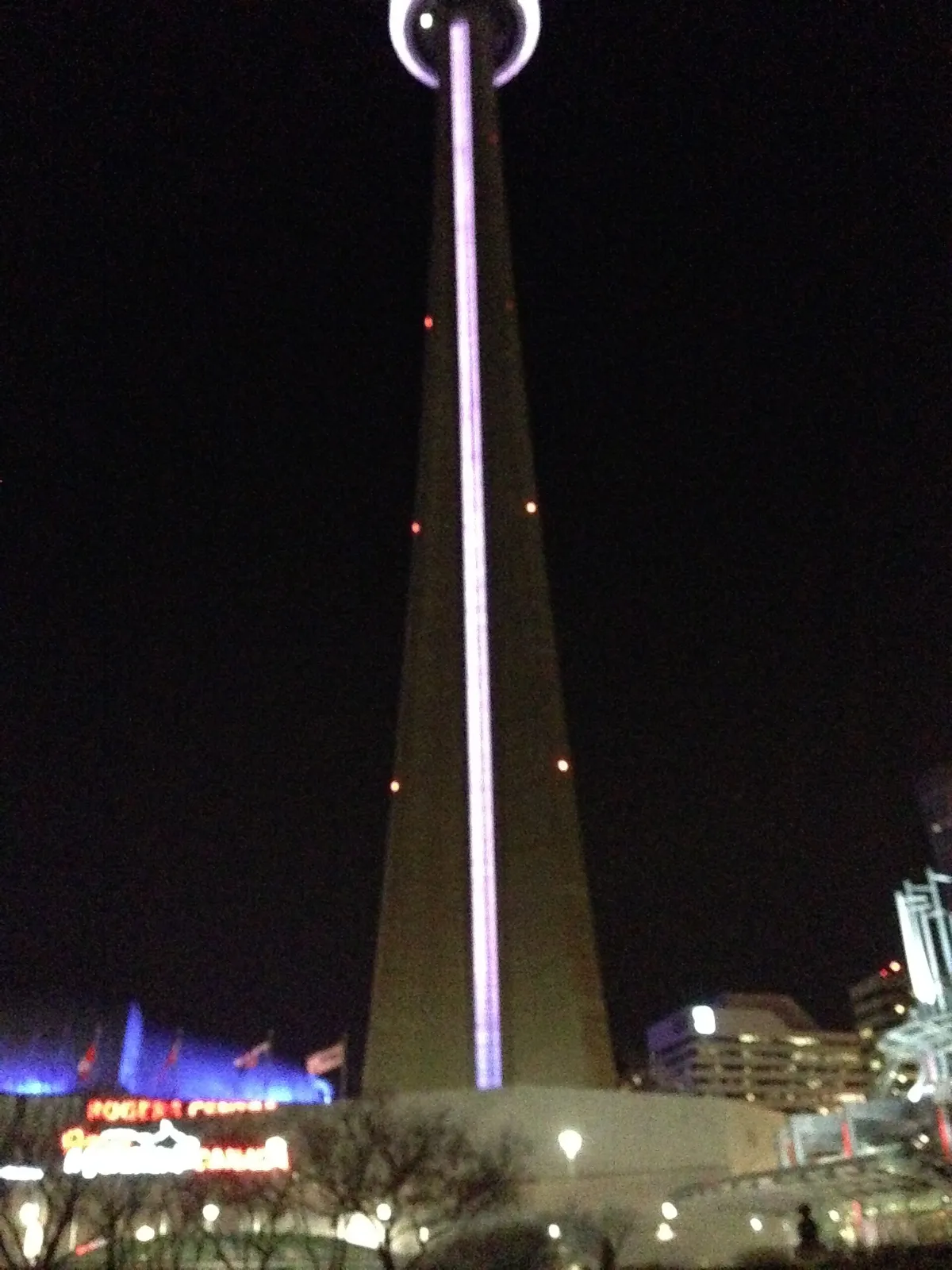
The headline attractions are less than people fear individually and more than they expect in a bundle. In Toronto, the CN Tower is C$47 for general admission, another C$12 to reach the upper “Top” level, and from C$199 for the EdgeWalk around the outside, according to cntower.ca when we checked on 24 July 2026. At Niagara, Journey Behind the Falls is C$33 on the Niagara Parks site, same check date, and the Niagara Falls Pass bundles several sites at C$89 to C$129 for the season, which in 2026 ran 20 April to 1 November; out of season the sites are ticketed one by one.
In Vancouver, Grouse Mountain is C$89, the Sea to Sky Gondola C$73.95, the Museum of Anthropology C$26, and the Vancouver Art Gallery C$35 for out-of-province visitors, though it’s free on the first Friday evening of the month. National parks are the bargain of the lot: adult daily admission is C$12.25 and a family C$24.50, but a Discovery Pass at C$83.50 (family C$167.50) covers unlimited parks for a year, so a family visiting parks for more than about seven days should buy the annual pass and stop paying daily. Set against those, the free sights carry a trip: Stanley Park, Mount Royal, the seawalls, the old towns and every waterfront cost nothing.
The things that quietly add 15 to 20 percent
Three costs hide from the sticker price and add up fast. Sales tax comes first, 5 percent federal GST plus a provincial share that runs to 13 percent in Ontario, about 14.975 in Quebec, and up to 15 in the Maritimes, applied to almost everything at the till. Tips are second, another 15 to 20 percent on meals and services. Lodging taxes are third, that extra few percent on hotel rooms. Alberta is the outlier that rewards you: with no provincial sales tax, you add only 5 percent there. Everywhere else, budget an extra tenth to a fifth on most spending and you’ll not be surprised at the till.
Two smaller ones round it out. A Canada eTA, needed by many visa-exempt travellers flying in, is CAN$7 and lasts five years, cheap but easy to overpay for on lookalike sites, as our eTA and visa guide explains. And a data plan matters more than you would think given the distances between towns: an eSIM for Canada is usually cheaper than roaming. Health cover is the one not to skip, since Canada’s public system doesn’t cover visitors, which is why travel insurance belongs in the budget rather than the optional column.
When to go to spend less, and the Canada Strong Pass
Season decides the bill more than any booking trick. Summer is the peak and the most expensive, especially for the Rockies, where Banff and Lake Louise beds sell out and shuttles fill. The shoulder seasons, late spring and September, give you the best mix of price and quiet, and winter is cheap in the cities even while ski resorts like Whistler and Tremblant charge their most. The whole calendar, region by region, is in our guide to the best time to visit Canada.
Summer 2026 had one genuinely large lever, and it has ended. The Canada Strong Pass waived national-park admission for everyone from 19 June to 7 September 2026, gave free VIA Rail travel to children 17 and under travelling with an adult, 25 percent off fares for ages 18 to 24, and 25 percent off Parks Canada camping; from 8 September 2026 standard fees and fares apply again. There was nothing to buy or register; the discount just applied. It did not cover parking, hot springs or private campground bookings, but for a family touring parks by train in that window it was worth real money. If a road trip is the plan instead, the drives and their running costs are laid out in the best Canada road trips.
Three sample days: budget, mid-range and premium
Here’s how it stacks up as a per-person, per-day picture, with international flights left out. Every “varies” below is genuine: those lines depend on your dates and choices, and pretending otherwise is how other guides invent totals.
| Per person, per day | Budget | Mid-range | Premium |
|---|---|---|---|
| Bed | Hostel or motel (varies) | 3-star or apartment (varies) | 4-star or boutique (varies) |
| Food | Groceries and counters (varies) | Casual plus one restaurant (varies) | Restaurants, with tax and tip |
| Getting around | Transit day pass (about C$11-13) | Pass plus the odd cab | Taxis, rideshare or a rental |
| Sights | Free: parks, seawalls, old towns | One or two paid (C$12-47) | Tours and a private guide |
Add tax to almost every line and a 15 to 20 percent tip to every meal and service. These lines are where the per-day bands at the top of this guide come from, and they’re a sanity check rather than a quote, because each figure above is a range for a reason. For a fully worked example with the sources attached, our two-week Canada itinerary prices a real trip line by line.
A note on the numbers: Every price here was taken from an official source and checked on 24 July 2026, or marked as varying where no fixed figure exists. Fares, admissions and taxes can all change, and dynamic pricing on trains and flights means your figure will differ from the day’s example. Use these as a planning baseline and confirm anything that matters to your budget on the operator’s own site before you book.
Trip budget calculator
Estimated total for the trip, flights excluded
- CAD
- $2,800-4,900
- USD
- $2,001-3,501
- EUR
- €1,787-3,128
- GBP
- £1,497-2,619
Read also

Before you go · 11 min read
Canada eTA for UK Citizens: Entry Requirements
Verified · September 1, 2026UK air travellers need a CAN$7 eTA. Cost, validity, land exception, refusals and British passport types - checked on canada.ca, 1 Sep 2026.

Before you go · 9 min read
Calgary vs Vancouver: Which Airport for the Rockies
Verified · August 29, 2026Calgary puts Banff 140 km up the road; from Vancouver it's 850 km. What the drop fee, the domestic hop and the thinner route map actually cost you.

Before you go · 10 min read
Quebec City in Winter: Carnival, Ice Hotel, What to Wear
Verified · August 16, 2026Quebec City in winter: Carnival 5-14 Feb 2027, ice hotel from January, February nights -16 C, and what to pack.

Before you go · 8 min read
Canadian Rockies vs Vancouver Island: Which Trip to Take
Verified · August 14, 2026Rockies or Vancouver Island for one week: lakes and Icefields Parkway vs ferry, Victoria and Tofino - pick by trip shape, not Instagram.