Calgary vs Vancouver: Which Airport for the Rockies
Calgary puts Banff 140 km up the road; from Vancouver it's 850 km. What the drop fee, the domestic hop and the thinner route map actually cost you.
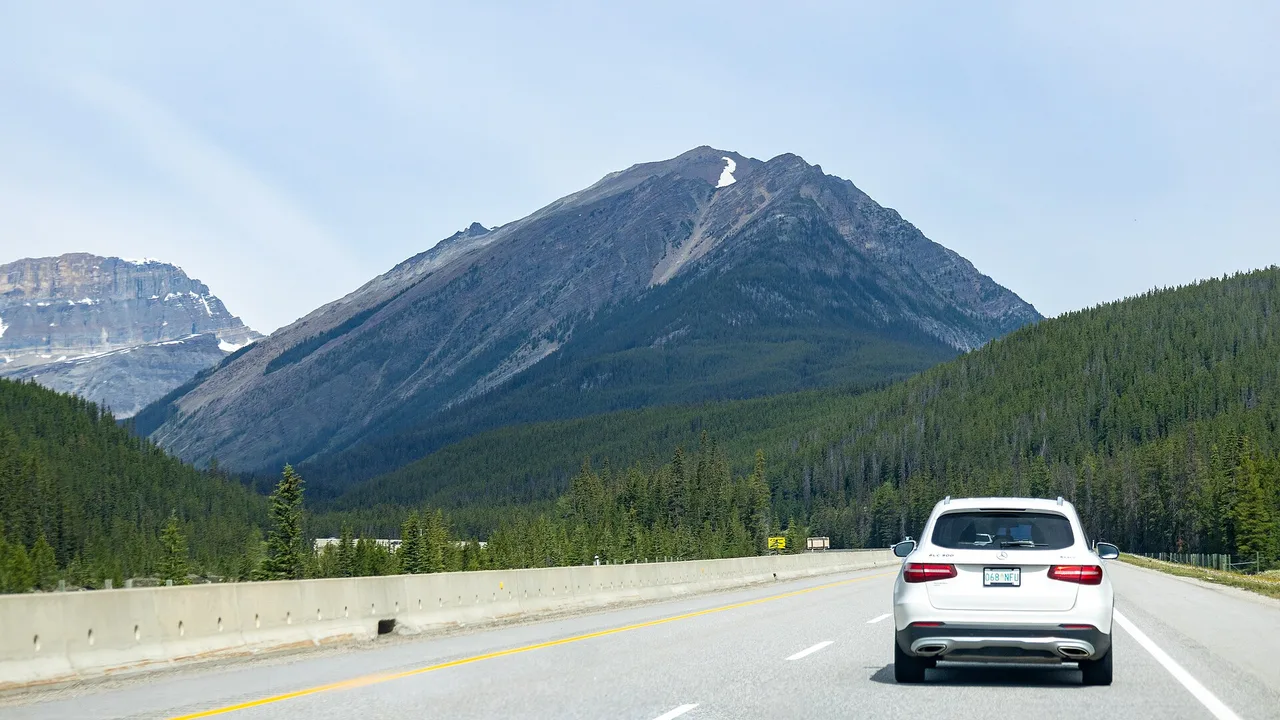
Fly into Calgary and Banff is 140 km up the road, about ninety minutes on the Trans-Canada Highway. Fly into Vancouver for the same trip and you’re looking at roughly 850 km of driving, the better part of a full day behind the wheel, or a short domestic flight to close the gap. If the trip is only Banff, Jasper and the Icefields Parkway, that distance alone settles it: book Calgary. Anyone doing something bigger has an actual decision to make: more flight choices from home, a night or two on the coast, or an open-jaw route that doesn’t backtrack.
Neither airport is a trap. The trade runs in opposite directions: Calgary sits at the door of the mountains but flies a thinner schedule home, while Vancouver has the bigger route map and more seats but leaves you a full driving day, or a second flight, before you see a lake. What follows is the arithmetic behind that trade, not another rundown of what to do once you’re in Banff - our Banff guide already covers the park itself, including the Moraine Lake shuttle rules that catch most first-time visitors.
The 90-minute airport and the 10-hour one
Calgary International sits close enough to the Rockies that the airport itself barely counts as a stop. Banff is 130 km west of the city on the Trans-Canada Highway, about ninety minutes if the road’s clear, and Lake Louise is another 55 km past that. Land at YYC in the morning and you can be at your hotel in the Bow Valley in time for a late lunch. One caveat on that 130, since it gets quoted everywhere: the Banff tourism board’s own page prints 81 miles for “Calgary” and 87 miles for Calgary International, because the airport sits on the far side of the city from the highway west. Call it 130 to 140 km depending on which curb you start from. The ninety minutes holds either way.
Vancouver doesn’t have that option. The Rockies aren’t on the way to anything from YVR, they’re the far side of British Columbia. Driving there means the Trans-Canada east through Kamloops, Revelstoke and Golden, and the same tourism board that quotes the Calgary distance puts the whole run at 528 miles - about 850 km - and ten hours. Run the same pair through an open routing engine and you get closer to eleven. Read that gap carefully: routing engines assume an empty road and no stops whatsoever, so the extra hour isn’t traffic, it’s the engine’s cautious highway speeds. The same one stretches the board’s ninety-minute Calgary drive to about an hour and fifty. Treat ten hours as the clear-road figure and put your own stops on top of it; either way it’s a full day behind the wheel. The 850 km lines up with the Calgary-Vancouver road distance already sourced elsewhere on this site (970 to 1,000 km) once you subtract the Calgary-Banff leg.
That single fact is why so many Rockies-only trips default to Calgary without much debate. A ninety-minute transfer versus a full driving day isn’t a close call if the mountains are the entire point of the visit.
How big is the gap, really
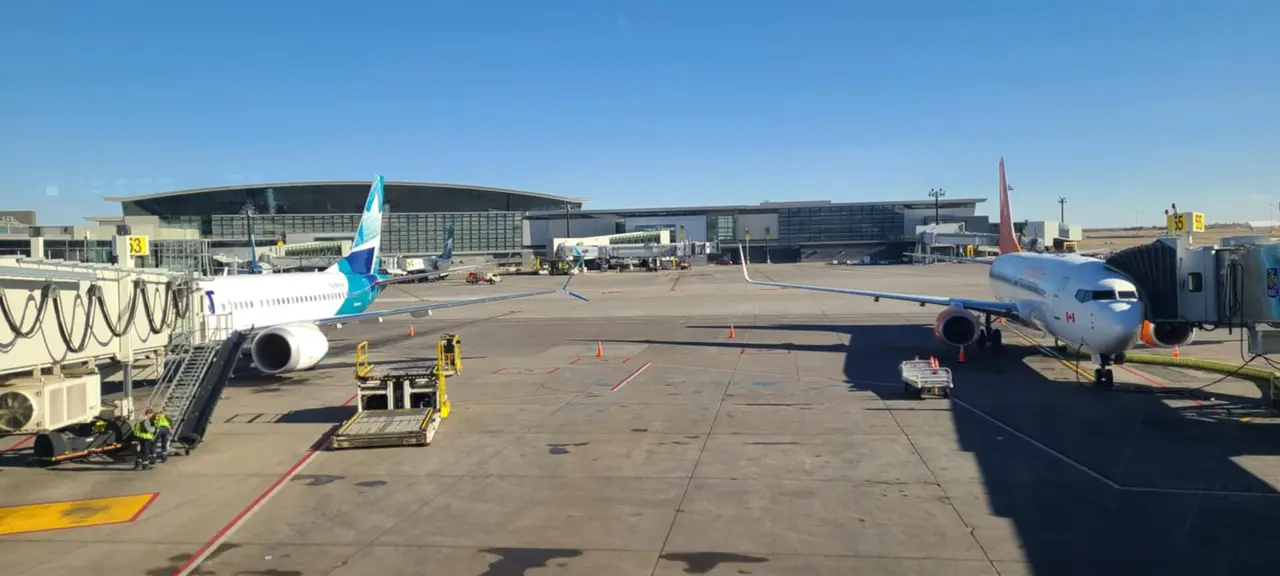
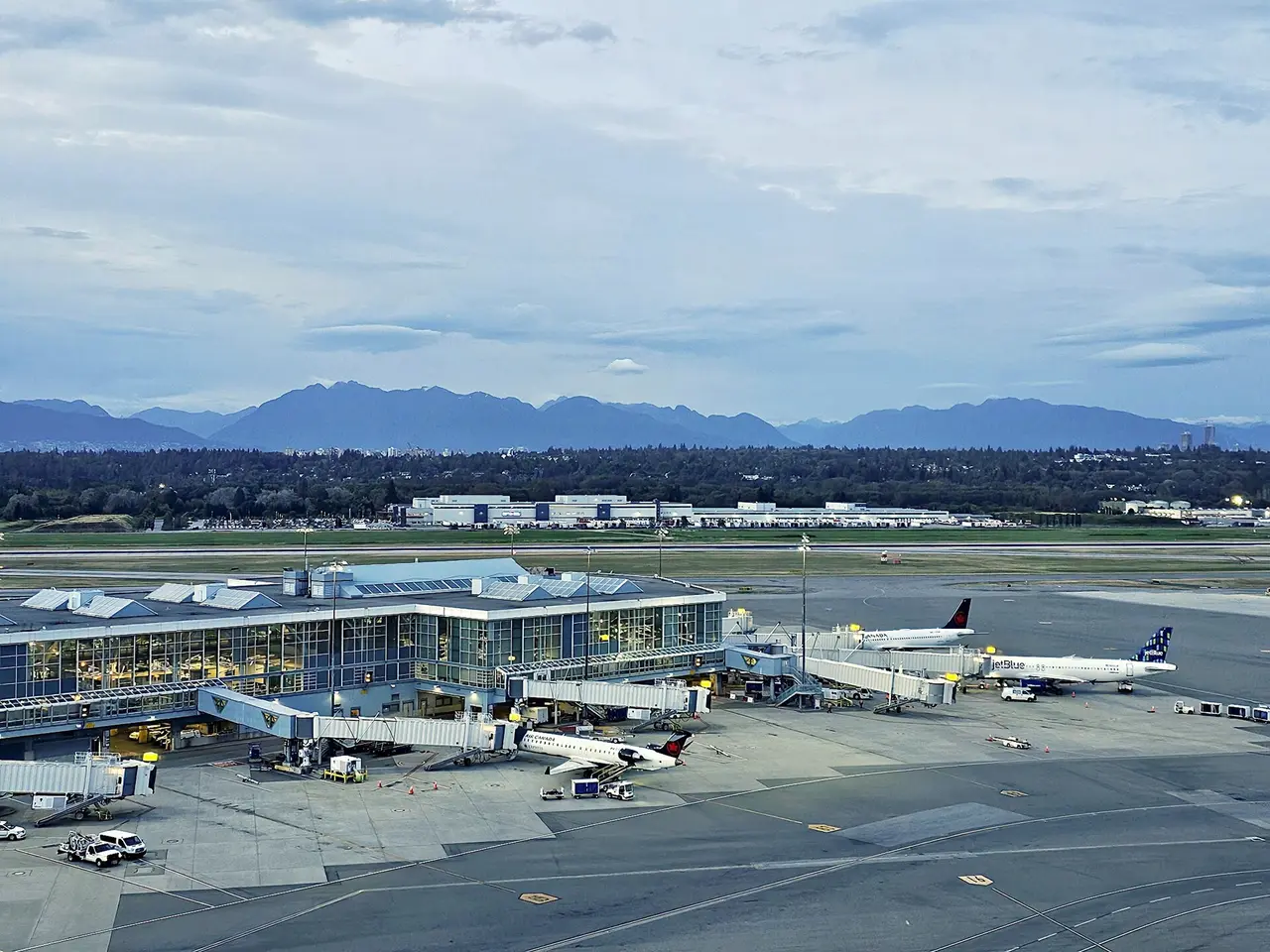
Vancouver is the bigger airport by any count, but the two aren’t as far apart as the passenger totals alone suggest. Statistics Canada’s 2025 count, which uses the same method for every Canadian airport, puts Vancouver at roughly 26.0 million enplaned and deplaned passengers against Calgary’s 18.8 million - Vancouver carries about 38% more passengers than Calgary, or, counted the other way, Calgary runs at roughly 72% of Vancouver’s size. Each airport also publishes its own number using its own accounting, and neither matches StatCan exactly: YVR claims a record 26.9 million travellers for 2025, while YYC claims 19.4 million, its fourth straight year of growth. Don’t be surprised the figures don’t line up. They’re measuring the same year with different rulers.
| Calgary (YYC) | Vancouver (YVR) | |
|---|---|---|
| 2025 passengers (StatCan, comparable) | 18.8 million | 26.0 million |
| Non-stop destinations | 110 (Jan 2026) | 129 |
| Growing long-haul network | Sao Paulo, Abu Dhabi (2026), Cancun, Puerto Vallarta | Strong in Asia-Pacific (+15.6% in 2025) |
| Drive to Banff | 130-140 km, ~90 min | 850 km, ~10-11 h |
The destination count tells a different story than the passenger count. YYC and its airline partners flew to 108 non-stop destinations in 2025, fifteen of them routes launched during that year, and the airport’s own count stood at 110 by 29 January 2026; YVR’s own year-end release puts itself at 129 destinations across 57 airlines around the same stretch. That’s a much narrower gap than the raw passenger numbers imply. Calgary isn’t a sleepy regional strip you settle for because the mountains are close. It added its first non-stop routes to South America and the Middle East for 2026 (Sao Paulo and Abu Dhabi), plus new Air Canada service to Cancun and Puerto Vallarta. Vancouver still wins if your flight from home only lands in one of those two cities, especially from Asia - and if Toronto or Montreal are also in the mix, Canada’s main airports, compared runs the same StatCan numbers across all four hubs. But “Calgary is the small airport” undersells what’s actually there.

Flying the gap instead of driving it
If you’d rather not spend a day of your trip on the Trans-Canada, there’s a third option neither city advertises loudly: fly the YYC-YVR route instead of driving it. It’s a domestic hop of roughly an hour and a half against eleven to twelve hours by road for the full Calgary-Vancouver corridor - a far bigger time gap than the airfare usually suggests, and the option that matters most on a tight calendar. On a slower trip where the drive itself is the point, none of this applies.
The open-jaw play, and its real cost
The cleanest way to get both a bigger flight network and a short drive to the mountains is an open-jaw: fly into Vancouver, spend a few days on the coast, drive the Trans-Canada into the Rockies, and fly home out of Calgary instead of backtracking. It avoids the wasted day of retracing your own route, and it’s the itinerary shape most people actually mean when they ask which airport to pick.
It isn’t free if you’re renting a car for the whole thing. Our breakdown of one-way rentals on this route has the full detail, but the short version is that Hertz is the only major brand that publishes an actual number for a one-way Calgary-Vancouver rental: C$200 on its core car classes, C$300 on the larger ones. That figure comes from the trade rate sheet Hertz issues to package resellers, not a guaranteed hertz.ca retail price, and the same document limits it to pickup at Hertz’s own corporate locations - one-way drops to licensee locations aren’t allowed at all. Don’t assume the popular direction (Calgary in, Vancouver out) is the cheaper one either: Hertz charges the same figure whichever way you drive it. Skip the one-way rental and pick up separate transport in each city, and the fee disappears completely. If a car is central to the trip, weigh the drop fee against what driving back to your start airport would cost: extra fuel, an extra hotel night, and a day you’d rather spend somewhere else.
Landing in Vancouver first also keeps the coast on the table in a way flying straight into Calgary doesn’t. Our Vancouver guide covers Stanley Park and Granville Island for a first day or two in the city itself; if Vancouver Island or Whistler might make the final cut, our regional comparison breaks down the BC Ferries crossing time and cost for that separate decision. This page only covers getting to the same Rockies trip by two different doors.
Three trips, three airports
A short, mountains-only trip of five to seven days points at Calgary every time. You lose almost nothing on flight choice for a focused Banff-Jasper loop, and you gain back an entire day you’d otherwise spend driving from the coast.
A longer trip that genuinely wants both the coast and the mountains, ten days or more, tends to work better landing in Vancouver first. You get the bigger flight network for the international leg, spend your early days near the water, then either drive the Trans-Canada east as part of the itinerary or take the short domestic hop and fly home out of Calgary. The open-jaw costs a rental drop fee if you’re driving the whole loop with one car, and costs nothing extra if you aren’t.
A trip built around a specific international route, Asia-Pacific especially, may not have much of a choice at all: if the only convenient non-stop from home lands in Vancouver, that decides your first night regardless of what the drive to Banff looks like. In that case, treat the YYC-YVR domestic flight as your real Rockies gateway - the road trip was never going to fit this itinerary shape anyway.
Whichever door you use, the mountains don’t care which airport delivered you. Only your first two days of the trip do. Once Calgary is the door you’ve chosen, the next step is the ticket itself - London to Calgary flights covers the Air Canada and WestJet nonstops from Heathrow.
Read also

Before you go · 11 min read
Canada eTA for UK Citizens: Entry Requirements
Verified · September 1, 2026UK air travellers need a CAN$7 eTA. Cost, validity, land exception, refusals and British passport types - checked on canada.ca, 1 Sep 2026.

Before you go · 10 min read
Quebec City in Winter: Carnival, Ice Hotel, What to Wear
Verified · August 16, 2026Quebec City in winter: Carnival 5-14 Feb 2027, ice hotel from January, February nights -16 C, and what to pack.

Before you go · 8 min read
Canadian Rockies vs Vancouver Island: Which Trip to Take
Verified · August 14, 2026Rockies or Vancouver Island for one week: lakes and Icefields Parkway vs ferry, Victoria and Tofino - pick by trip shape, not Instagram.

Before you go · 8 min read
Where to Stay in Edmonton: Downtown, Strathcona, Airport
Verified · August 14, 2026Edmonton lodging by base: downtown Ice District, Old Strathcona on Whyte, or the YEG strip - plus the 6% levy and Route 747 trap.