Canada eTA and Visas: Who Needs What
A Canada eTA costs CAN$7, lasts five years and is only for flying in. Who needs an eTA, who needs a visa, who needs neither, and the land-border trap.
You need either a visitor visa or an electronic travel authorization (eTA) to enter Canada, never both, and which one you need is decided almost entirely by the passport you hold. Travellers from visa-exempt countries such as the UK, most of Europe, Australia, Japan and South Korea need an eTA, and only when they fly. It costs CAN$7, it’s tied to your passport, and it lasts up to five years. Americans need neither an eTA nor a visa. Everything past that’s exceptions, and the exceptions are where trips go wrong. Travelling on from Canada into Europe? Balkan entry rules for US and UK passports sets out which countries share one Schengen clock and which count their own.
The one worth knowing before any other is that an eTA is for air travel only. A visa-exempt traveller who drives across the border from the United States, or arrives by boat, doesn’t need an eTA at all, only a valid passport. Book a flight and it becomes mandatory. A lot of guides get this backwards and tell everyone to buy one, so if you’re renting a car in Buffalo and driving to Toronto, you’re not one of the people who needs it.
eTA, visa, or nothing: the three groups
Every traveller falls into one of three buckets, and knowing yours answers most of the question.
Exempt. US citizens, and US lawful permanent residents, need neither an eTA nor a visa. They carry proof of status instead, which for Americans means a passport, and for green card holders a passport plus the card.
eTA-required. Citizens of most wealthy visa-exempt countries - British, French, German, Australian, Japanese, Korean and dozens more - need an eTA to board a flight to Canada. This is the largest group of ordinary tourists, and for almost all of them the process is seven dollars and a few minutes online. British passport types, refusals and the London-flight case are on Canada eTA for UK citizens: entry requirements.
Visa-required. Citizens of countries not on the visa-exempt list, including China and India, need a full visitor visa whether they fly or drive. There’s a narrow bridge out of this group, the eTA expansion program, covered further down, but it applies to a fixed list of countries and India and China aren’t on it.
The rule most guides get wrong: eTA is for flying only
Here’s the split that decides whether you need to do anything at all. If you’re visa-exempt and flying into Canada, you need an eTA and a valid passport, full stop. If you’re visa-exempt and arriving by land or sea - car, bus, train, or a boat including a cruise ship - you don’t need an eTA. You still need your passport, but there’s nothing to apply for and nothing to pay.
That means the classic North American road trip, driving up from Seattle, Detroit or Buffalo, needs no eTA for a European or Australian passport holder. Fly into Toronto the same week and you would.
One odd exception shows how specific the rule is: travel by sea from the French islands of Saint-Pierre-et-Miquelon, off Newfoundland, and not on a cruise ship, and you do need an eTA to board. Almost nobody reading this will touch that case, but it’s real.
The trap runs the other way for visa-required travellers, and it’s the more expensive mistake. If your citizenship needs a visa, an eTA isn’t an easier substitute at a land crossing. Arrive by car, bus, train or boat and you need the full visitor visa, not an eTA. So the visa-exempt traveller has it easier by land, and the visa-required traveller has it harder by land. Getting those two backwards is how people end up turned around at the line.
What an eTA costs, and how long it lasts
An eTA costs CAN$7. That’s the entire fee, paid once with a credit card on the official Government of Canada site, and it’s the number to anchor on. Most applications are approved within minutes. Some take up to a few days, and if the system wants more information you’ll get an email, usually within 72 hours, telling you what to send. Because of that tail, apply as soon as you book the flight rather than the night before you leave.
Once approved, the eTA is valid for five years or until your passport expires, whichever comes first, and you can enter Canada as many times as you like while it lasts. You don’t print anything: the airline scans your passport at check-in and reads the eTA off the passport number.
That last detail hides the one thing people forget: the eTA is linked to the specific passport you applied with. Get a new passport and you need a new eTA, even if the old one still had four years left. Renew your passport six weeks before a trip and the eTA you bought two years ago is now dead weight.
One warning that Canada itself prints on the page: the only official place to apply is canada.ca, and the fee is CAN$7. A crowd of lookalike sites will file the same application for you and charge many times more for the favour. If a site quotes anything other than seven Canadian dollars, it’s a middleman, not the government.
And a limit worth saying plainly: an approved eTA doesn’t guarantee entry, and it doesn’t let you work or study. It gets you onto the plane. A border services officer still decides whether you come in, and a study or work permit is a separate thing on top.
Americans and green card holders
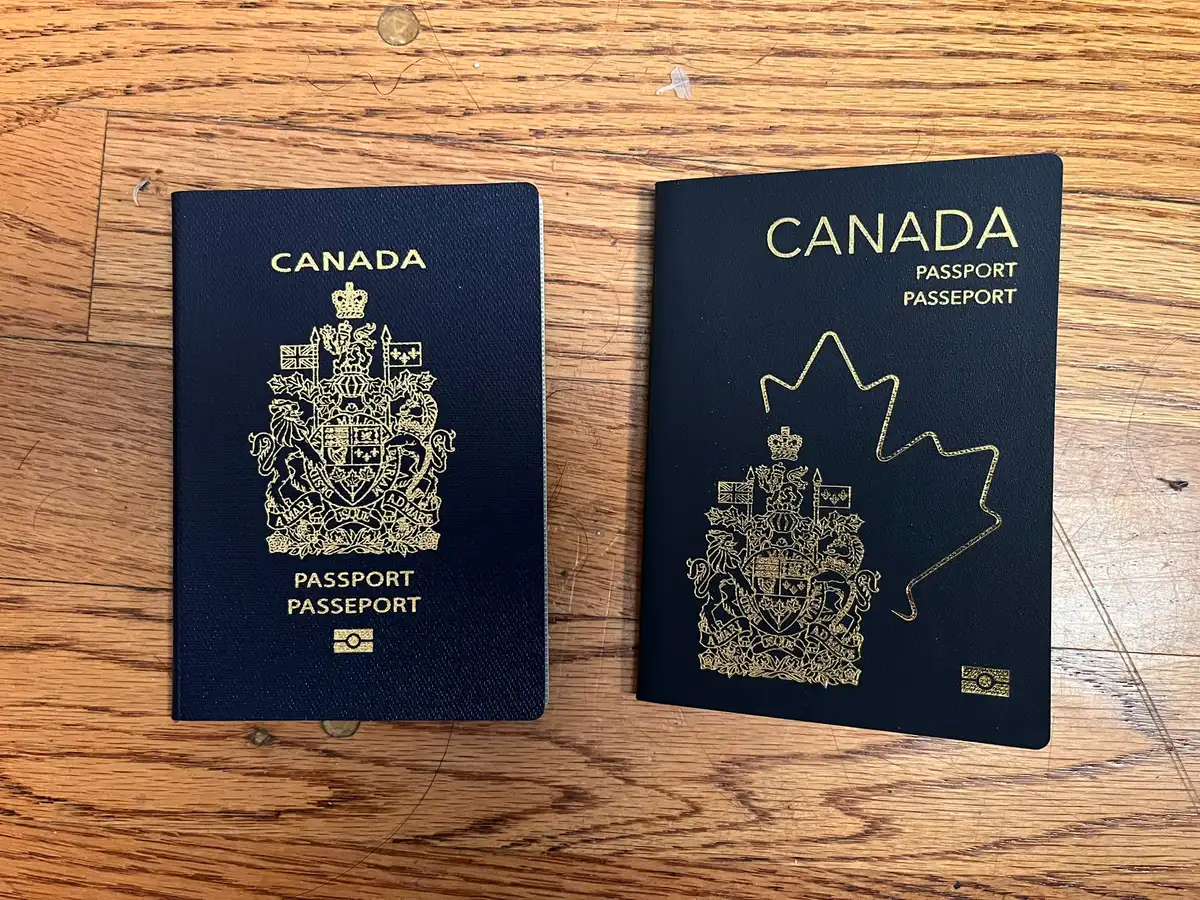
US citizens are the simplest case in the whole system: no eTA, no visa, ever. Carry a valid US passport, which Canada calls the only reliable and universally accepted travel document. Crossing by land without a passport, Americans can also use a combination of documents proving full name, date of birth and citizenship, but the passport removes every argument and you need it to get back into the United States anyway.
Green card holders - US lawful permanent residents - have been exempt from the eTA since 26 April 2022. Flying in, carry your passport from your country of citizenship plus your green card; both are expected at the airport. By land or water directly from the US, Canada’s own guidance says you can present just the green card and don’t strictly need the passport. Carry the passport regardless. It settles any doubt at the Canadian booth and, again, you need it to re-enter the US.
Dual citizens have their own footnotes. A Canadian dual citizen must enter Canada on a valid Canadian passport, with one exception: American-Canadians may travel on either a Canadian or a US passport. Canadian citizens and Canadian permanent residents can’t apply for an eTA at all, because the eTA is a document for foreign nationals.
Country by country: what you actually need
The full list runs past a hundred countries and shifts over time, so always check your own passport on the official tool before booking. As a map of the biggest travel markets, it looks like this.
| Citizenship | Flying in | By land or sea from the US |
|---|---|---|
| United States | Passport; no eTA, no visa | Passport, or documents proving name, birth date and citizenship |
| UK, France, Germany, Australia, Japan, South Korea | eTA + passport | Passport only, no eTA |
| Mexico, Brazil | eTA if you meet all three eTA-X conditions, otherwise a visitor visa | Visitor visa only |
| China, India | Visitor visa | Visitor visa |
A few passports split on their sub-type, which is easy to miss. A Romanian on an electronic passport is eTA-eligible while a non-electronic one needs a visa; an Israeli national passport gets an eTA while a travel document in lieu of one needs a visa; an ordinary Taiwan passport with a personal ID number qualifies. If yours is anything other than a standard national passport, check the specific rule.
What changed in 2024 and 2026
Two shifts have moved several large countries in the last couple of years, and both happened with almost no notice, which is exactly why you’ll want a fresh check of entry rules right before you travel.
Mexico, from 11:30 p.m. Eastern time on 29 February 2024, moved to a stricter regime. Mexican citizens now need a visitor visa unless they qualify for an eTA under the expansion rules below, and eTAs issued on Mexican passports before that cutoff were cancelled. It happened overnight.
Indonesia and Malaysia joined the eTA expansion at 5:30 a.m. Eastern time on 26 May 2026. This is often misreported as the two countries going “visa-free”, which is wrong - don’t rely on that headline. They remain visa-required; what changed is that some of their citizens can now apply for an eTA instead of a visa. Anyone already holding a valid Canadian visa can keep using it.
The mechanism behind all of this is the eTA expansion program, eTA-X. It lets citizens of a fixed list of otherwise visa-required countries apply for an eTA rather than a visa, but only if they meet all three conditions: they have held a Canadian visitor visa in the past ten years or currently hold a valid US non-immigrant visa; they’re coming for a temporary stay, normally up to six months; and they’re flying to or transiting through Canada. Miss any one condition and you’re back to needing a visa. Note the fine print Canada itself flags: having held an eTA before isn’t the same as having held a visa, and only a past visa counts.
The 17 eligible countries are Antigua and Barbuda, Argentina, Brazil, Costa Rica, Indonesia, Malaysia, Mexico, Morocco, Panama, the Philippines, St. Kitts and Nevis, St. Lucia, St. Vincent and the Grenadines, Seychelles, Thailand, Trinidad and Tobago, and Uruguay. India, China and most of the rest of the visa-required world aren’t on it.
If you need a visitor visa instead
A visitor visa is a bigger undertaking than an eTA - you’ll want to start early. The government fee is CAN$100, plus CAN$85 for biometrics in most cases, and most visas are issued as multiple-entry documents valid for up to ten years or until the passport expires. Unlike the eTA, a visa almost always means giving fingerprints and a photo at a collection point, so it can’t be done entirely online in an afternoon. Processing times swing with season and country, so don’t book anything non-refundable before you apply. If your case is at all unusual, a licensed immigration representative is worth the money.
Getting past the border officer
Whatever document you hold, none of it guarantees entry. The eTA or visa lets you travel; the officer at the border decides admission. In practice they’re checking that you have a valid travel document, that you’re in good health, that you have no criminal or immigration record that makes you inadmissible, that you have enough money for the trip, and that you intend to leave, which they judge from your ties at home, your job, your return ticket and how your story holds together.
Children under 18 face the same requirements as anyone else and may be asked for extra paperwork, especially if they’re travelling with only one parent or with an adult who’s not their guardian. The consent-letter question, and the documents a driver needs at a land crossing, are covered in our guide to crossing the US-Canada border by car.
Important: This article explains Canada’s entry requirements as published by Immigration, Refugees and Citizenship Canada (IRCC) and verified on 24 July 2026. Entry rules, fees and country lists change, sometimes overnight and with immediate effect, as they did for Mexico in February 2024 and for Indonesia and Malaysia in May 2026. This is general travel information, not immigration advice, and it cannot account for your own history or admissibility. Always confirm your own requirements on the official Government of Canada website before you book and again before you travel, and remember that the only official place to apply for an eTA is canada.ca, where the fee is CAN$7. If your case is complex, consult a licensed immigration representative.
Read also
- Documents, the consent letter and NEXUS at the line: crossing the US-Canada border by car
- Alcohol, tobacco, food and cash limits at the booth: Canada customs: what you can bring in
- Why the health system won’t cover you: travel insurance for a Canada trip
- Staying connected once you land: eSIM and SIM cards for Canada
- If you’re driving once you arrive: renting a car in Canada
Read also

Before you go · 11 min read
Canada eTA for UK Citizens: Entry Requirements
Verified · September 1, 2026UK air travellers need a CAN$7 eTA. Cost, validity, land exception, refusals and British passport types - checked on canada.ca, 1 Sep 2026.

Before you go · 9 min read
Calgary vs Vancouver: Which Airport for the Rockies
Verified · August 29, 2026Calgary puts Banff 140 km up the road; from Vancouver it's 850 km. What the drop fee, the domestic hop and the thinner route map actually cost you.

Before you go · 10 min read
Quebec City in Winter: Carnival, Ice Hotel, What to Wear
Verified · August 16, 2026Quebec City in winter: Carnival 5-14 Feb 2027, ice hotel from January, February nights -16 C, and what to pack.

Before you go · 8 min read
Canadian Rockies vs Vancouver Island: Which Trip to Take
Verified · August 14, 2026Rockies or Vancouver Island for one week: lakes and Icefields Parkway vs ferry, Victoria and Tofino - pick by trip shape, not Instagram.