The Best Time to Visit Canada 2026
Rockies and lakes: June to September. Fall colours and whales: September-October. Skiing, aurora and carnival: winter. Tulips and fewer crowds: spring.
For the Rocky Mountains and the turquoise lakes, come between June and September, when the ice is off the water and the shuttles are running. For fall colour and whales, come in September and October. For skiing, the northern lights and the winter carnivals, come in the depths of winter. And for tulips, cherry blossom and thinner crowds, come in spring. Canada is too big for a single best month, so the honest answer starts with what you want to see, then works back to when.
If you press one season, September is the quiet favourite. The summer heat has eased, the mountain trails and shuttles are still open, prices soften as the school holidays end, and the first colour appears in the maples. It’s the closest Canada comes to having everything at once. In 2026 there was also a money reason to time a summer trip well: the Canada Strong Pass made national parks free from 19 June to 7 September 2026, which pulled the crowds forward and the cost down at exactly the busiest time of year; from 8 September 2026 the standard park fees apply again.
Summer: the peak, the parks and the Strong Pass window
Summer, June through August, is when most of Canada is at its easiest and its busiest. The Rockies are the headline: Lake Louise and Moraine Lake have thawed to their famous blue, the high trails are clear of snow, and the Banff and Jasper shuttles run at full tilt. The Atlantic provinces warm up, the festival calendar fills, and even the far North opens for its short window of near-endless daylight. The cost is crowds and prices, both at their yearly high, and sold-out shuttles and beds around Banff and Lake Louise that need booking months ahead.
This is where 2026 rewarded planning. From 19 June to 7 September 2026, the Canada Strong Pass waived national-park admission for everyone, gave free VIA Rail travel to children 17 and under with an adult, and knocked 25 percent off camping; standard fees and fares apply again from 8 September 2026. It didn’t cover parking or hot springs, but for a park-heavy summer it was real savings. The mountain parks anchor most summer trips, and our guides to Banff and Jasper cover the passes, shuttles and timing in detail.
Autumn: colours, whales and the best value
Autumn is the season a lot of returning visitors rate highest, and for good reasons that go beyond the leaves. The maples and birches turn from late September into mid-October, running strongest through the Laurentians, the Eastern Townships, Ontario’s Algonquin country and Cape Breton, where the fire-coloured hills meet the sea. Our Canada fall colours guide covers where to be in which week, and the shuttle and permit details for each region.
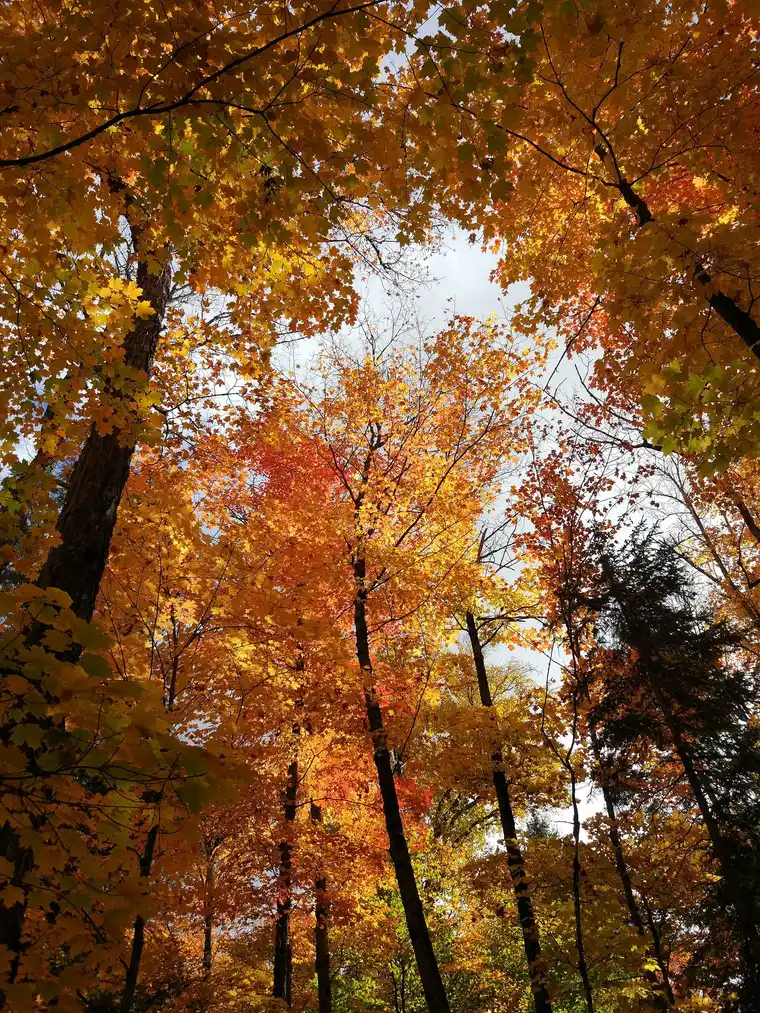
Two other things line up in autumn. Whale watching in the St. Lawrence, out of Tadoussac and the Gaspe, runs into the first days of November - the main Tadoussac operator sails to 1 November in 2026 - and is often at its best in late summer and early fall. If the whales are the point of the trip rather than a bonus, whale watching in Canada works through which coast suits which month. And the crowds thin while the weather stays mild, so this is frequently the best value of the year outside deep winter. The catch is timing the colour, which moves a week or two either way with the season, so build in flexibility rather than booking one exact weekend.
Winter: skiing, the northern lights and the carnivals
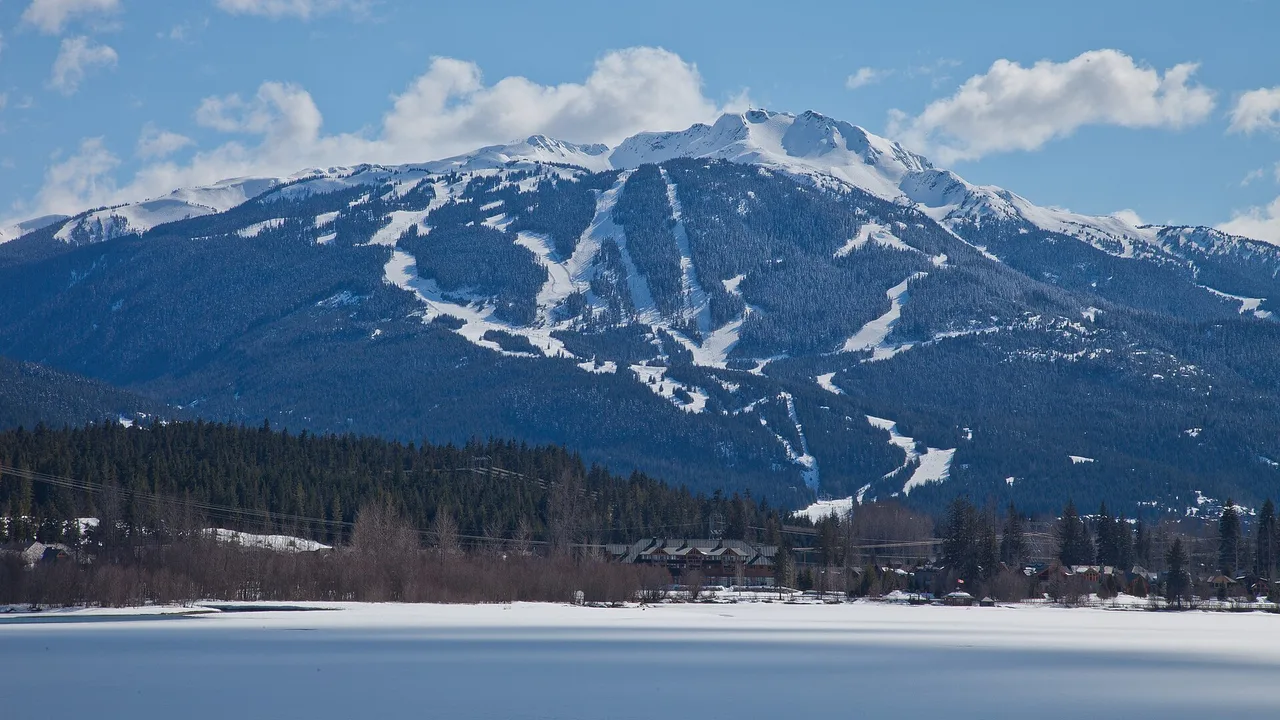
Winter isn’t a season to endure in Canada so much as a reason to come. The skiing is serious, from Whistler on the coast to Mont-Tremblant in Quebec and Lake Louise in the Rockies, and it runs from roughly December into spring. This is also aurora season: the northern lights are most reliable from late autumn through winter in the clear skies of Yellowknife, Whitehorse and the Yukon. Start with northern lights in Canada for the map, then Yellowknife aurora tours if that town is the pick.

Cities lean into the cold rather than hiding from it. Quebec City throws its Winter Carnival, Ottawa skates the Rideau Canal when it freezes hard enough, and Montreal and Toronto keep their restaurants and museums warm through the short days. The honest downsides are real cold, sharpest on the prairies and in the east, and daylight that runs short in December. Dress for it and winter is one of the country’s best-kept secrets.
Spring: tulips, blossom and the shoulder-season deal
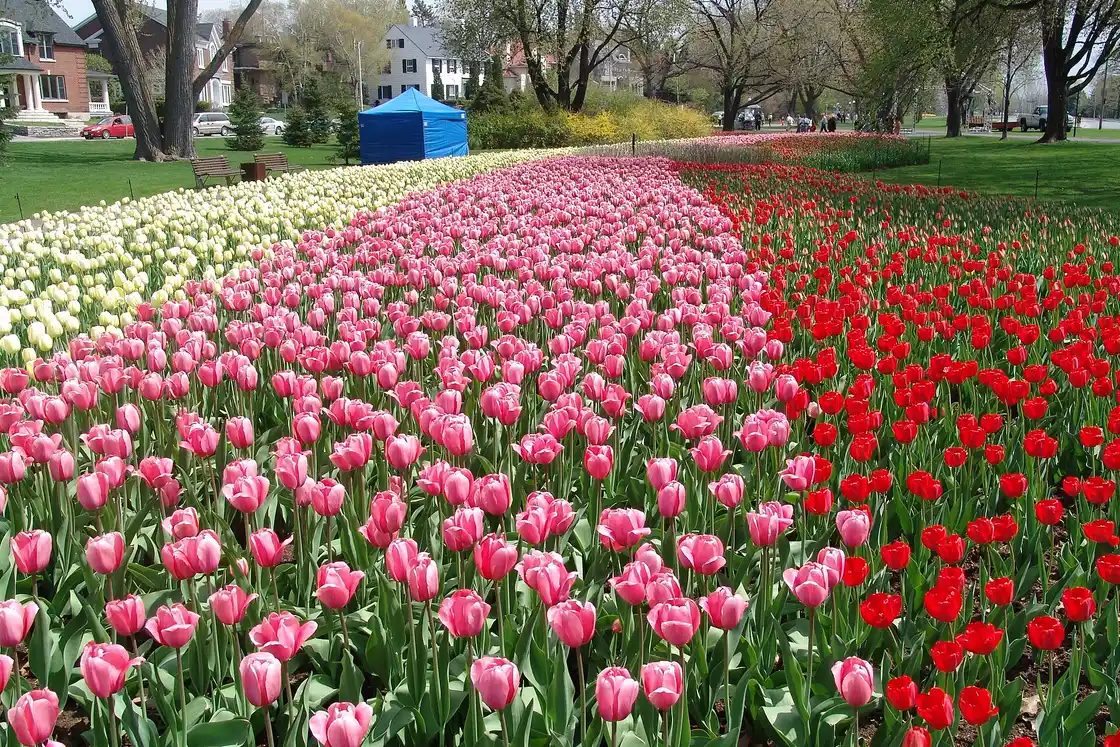
Spring is the underrated shoulder season: prices and crowds are down, and the country wakes up in colour. Ottawa’s Canadian Tulip Festival, born from a wartime gift of bulbs from the Netherlands, ran 8 to 18 May in 2026 and fills the capital with millions of blooms.
The trade-off is that spring is a transition, and the mountains are the last to catch up. High passes and some park trails stay closed into late spring, the Rockies go through a muddy thaw, and lake ice doesn’t fully clear until near the end of the season. So spring suits the cities, the gardens and the coast better than the high country. Toronto’s High Park draws crowds for its cherry blossom in early May, though that one is entirely weather-dependent and can arrive or vanish within a week.
The best time, region by region
Canada’s regions run on different clocks, so the right month depends on where you’re pointed.
| Region | Best window | For |
|---|---|---|
| Rockies (Alberta and BC) | June to September | Lakes, hiking, the Icefields Parkway |
| Atlantic Canada | Late summer to autumn | The Cabot Trail, colour, whales |
| Quebec | Autumn, winter and summer | Colour, the carnival, the Gaspe |
| Ontario | Summer and autumn | Lakes, Niagara, Algonquin colour |
| The North (Yukon, NWT, Nunavut) | Winter and short summer | Aurora, tundra, midnight sun |
| Pacific coast (BC) | Year-round, driest in summer | Vancouver, the island, Sea-to-Sky |
Because the drives follow the same seasons, timing matters as much for a road trip as for a city break; the mountain and coastal routes in the best Canada road trips are summer-and-autumn affairs, while the cost of it all shifts season by season in our guide to how much a Canada trip costs.
Events worth planning a trip around
Some events are worth building a trip around, but treat every date as a target to confirm, because they move and some are announced late. The Calgary Stampede runs in early July (3 to 12 July in 2026), the Montreal International Jazz Festival straddles late June and early July, and the Toronto International Film Festival takes over the city in mid-September (10 to 20 September in 2026). The Quebec Winter Carnival lands in early-to-mid February, with its next edition on 5 to 14 February 2027.

One trap to know about. The Honda Celebration of Light, Vancouver’s long-running three-night summer fireworks competition, was cancelled for 2026 after its funding collapsed, and the organizers called the cancellation indefinite. In its place the City of Vancouver has scheduled Summer Lights in English Bay, a free one-night show on Friday 31 July 2026, fired from a barge off English Bay Beach with food trucks on the sand and no tickets to book. Treat it as a single date for the B.C. Day long weekend, not the annual fixture the guidebooks still describe, and confirm the current status before you build a trip around it. It’s a clean example of why event dates deserve a fresh look right before you book: last year’s calendar isn’t this year’s.
A note on the weather, honestly
It is worth saying plainly that Canada doesn’t have pleasant weather year-round, and any guide that promises it’s selling something. The east and the prairies are sharply continental, with hot humid summers and hard winters that regularly drop well below freezing. The Pacific coast is the mild exception, but it pays for it in rain: Vancouver sees around 169 wet days a year. The mountains make their own rules, holding snow and closing passes well outside the summer season. None of that’s a reason to stay home. It’s a reason to match the month to the trip: the Rockies in July, Cape Breton in October, Yellowknife in February, Ottawa in May. Pick the season for what you came to see, dress for the one you get, and Canada delivers in any of them.
Read also

Before you go · 11 min read
Canada eTA for UK Citizens: Entry Requirements
Verified · September 1, 2026UK air travellers need a CAN$7 eTA. Cost, validity, land exception, refusals and British passport types - checked on canada.ca, 1 Sep 2026.

Before you go · 9 min read
Calgary vs Vancouver: Which Airport for the Rockies
Verified · August 29, 2026Calgary puts Banff 140 km up the road; from Vancouver it's 850 km. What the drop fee, the domestic hop and the thinner route map actually cost you.

Before you go · 10 min read
Quebec City in Winter: Carnival, Ice Hotel, What to Wear
Verified · August 16, 2026Quebec City in winter: Carnival 5-14 Feb 2027, ice hotel from January, February nights -16 C, and what to pack.

Before you go · 8 min read
Canadian Rockies vs Vancouver Island: Which Trip to Take
Verified · August 14, 2026Rockies or Vancouver Island for one week: lakes and Icefields Parkway vs ferry, Victoria and Tofino - pick by trip shape, not Instagram.