Northern Lights in Canada: Where and When
Where and when to see the northern lights in Canada: Yellowknife, Whitehorse, Churchill and Jasper, the honest odds, the cold, and how many nights to book.
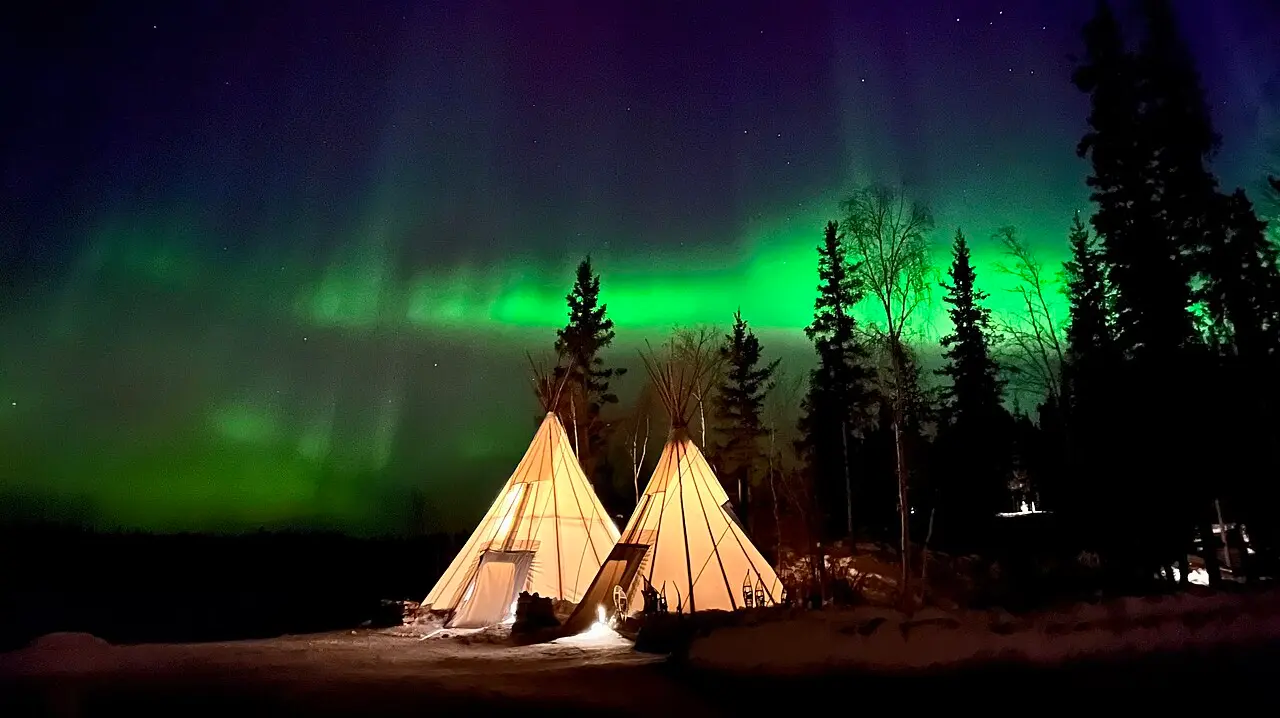
Four places give you a real chance of the northern lights in Canada: Yellowknife in the Northwest Territories, Whitehorse in the Yukon, Churchill in Manitoba, and Jasper in Alberta. The season runs in two stretches, late August into September and mid-November into early April, and the honest advice is to book at least three nights, because nobody can promise you the aurora on any single evening. The reason is worth stating up front: the best forecast anyone has works only 30 to 90 minutes ahead.
That gap between hope and certainty is what this guide is really about. Tour operators sell you a place and a number of nights; the sky itself is decided in the last hour or two, by cloud and moonlight as much as by the Sun. Understand that and you plan the trip that actually works, in the right town, for enough nights, at the right time of year, rather than pinning a bucket-list moment on one cold evening.
Why these four places, and not simply “further north”
The aurora does not happen “in the north” so much as in an oval ring around the geomagnetic pole. NOAA puts the quiet edge of that oval near 66 degrees of magnetic latitude, sliding a couple of degrees toward the equator each time geomagnetic activity, measured on the Kp scale, steps up. The practical consequence is the single most counter-intuitive fact in this whole subject: going further north doesn’t help. Past the oval the activity falls off, which is why the tourism board in the Northwest Territories counts up to 240 nights of aurora a year around Yellowknife against only about 50 in the high Arctic.
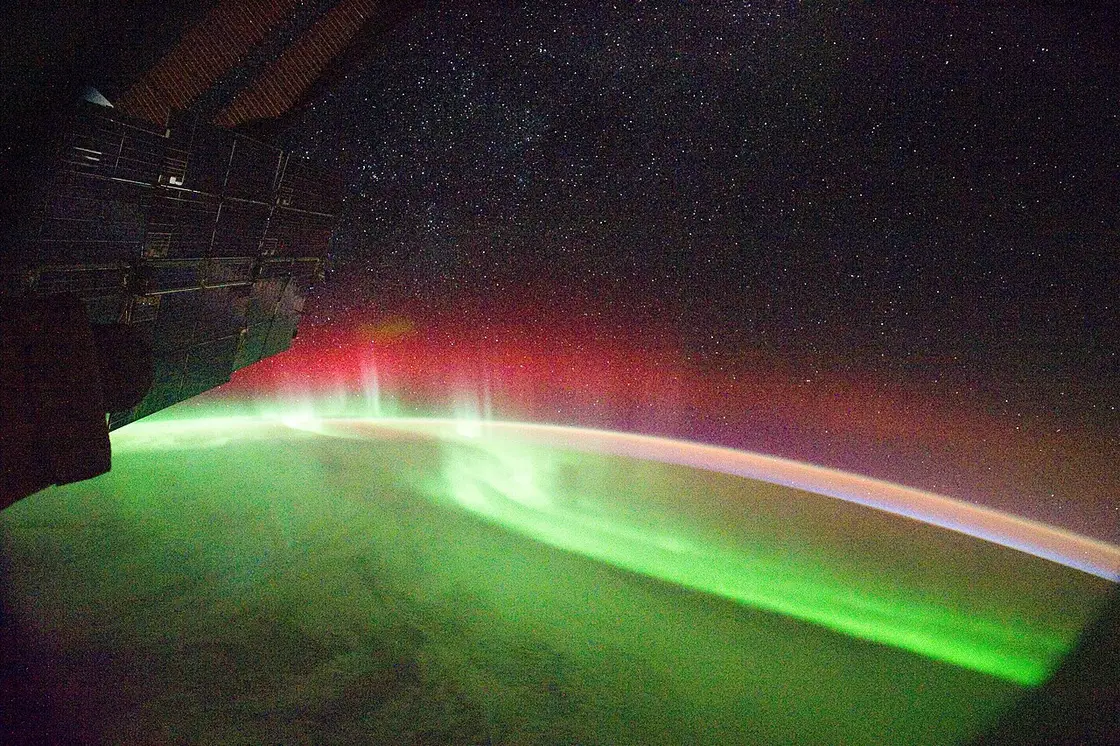
Canada has its own official framing worth knowing: Natural Resources Canada splits the country into a polar-cap zone in the far north, an auroral zone between Cambridge Bay and Meanook where activity peaks, and a quieter sub-auroral zone to the south. The four towns below sit in or near that auroral zone, which is exactly the point.
The four destinations
Yellowknife, Northwest Territories
Yellowknife is the headline: up to 240 aurora-active nights a year and a tourism-board 98 percent chance over three nights in season. For season windows, tour packages, cold-weather gear and what to book, use our dedicated Yellowknife aurora tours guide - this hub only keeps Yellowknife on the four-place map.
Whitehorse, Yukon
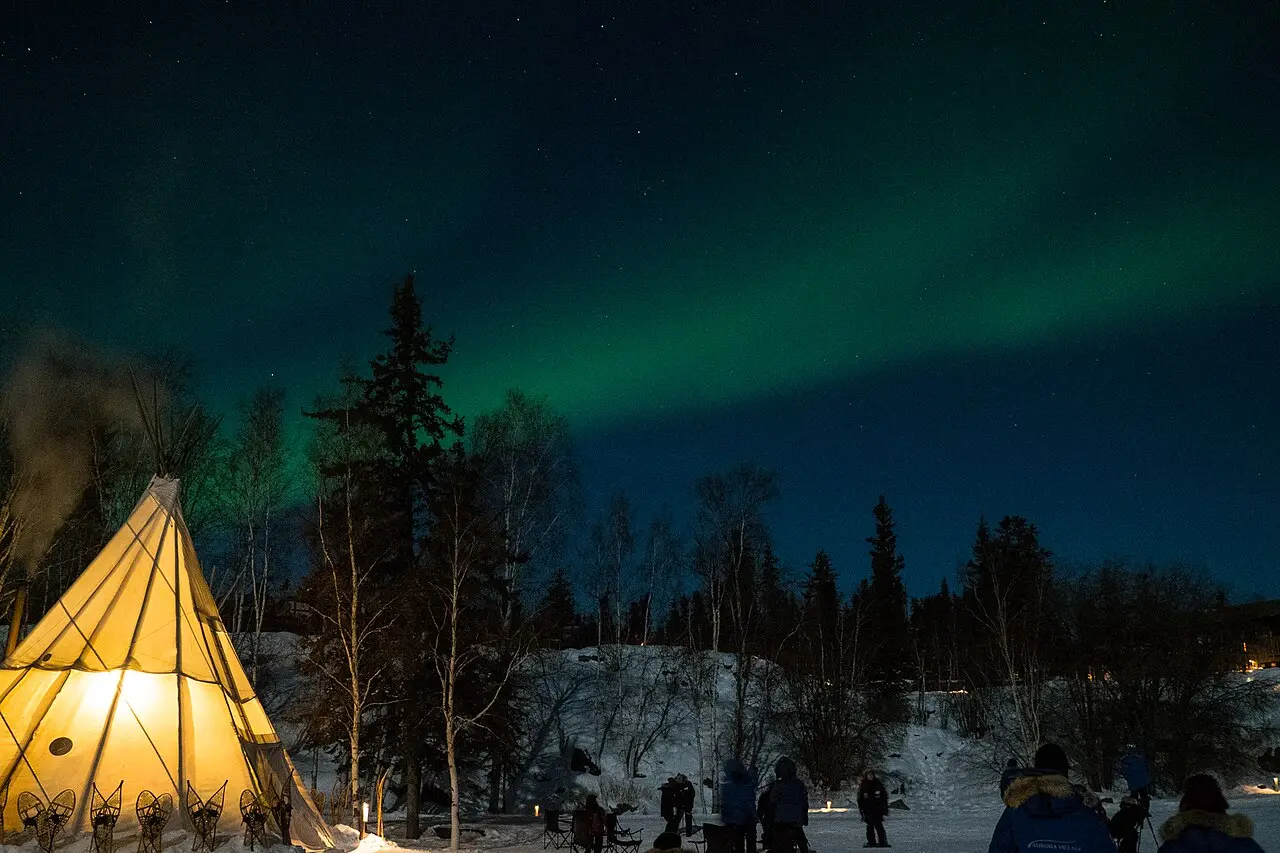
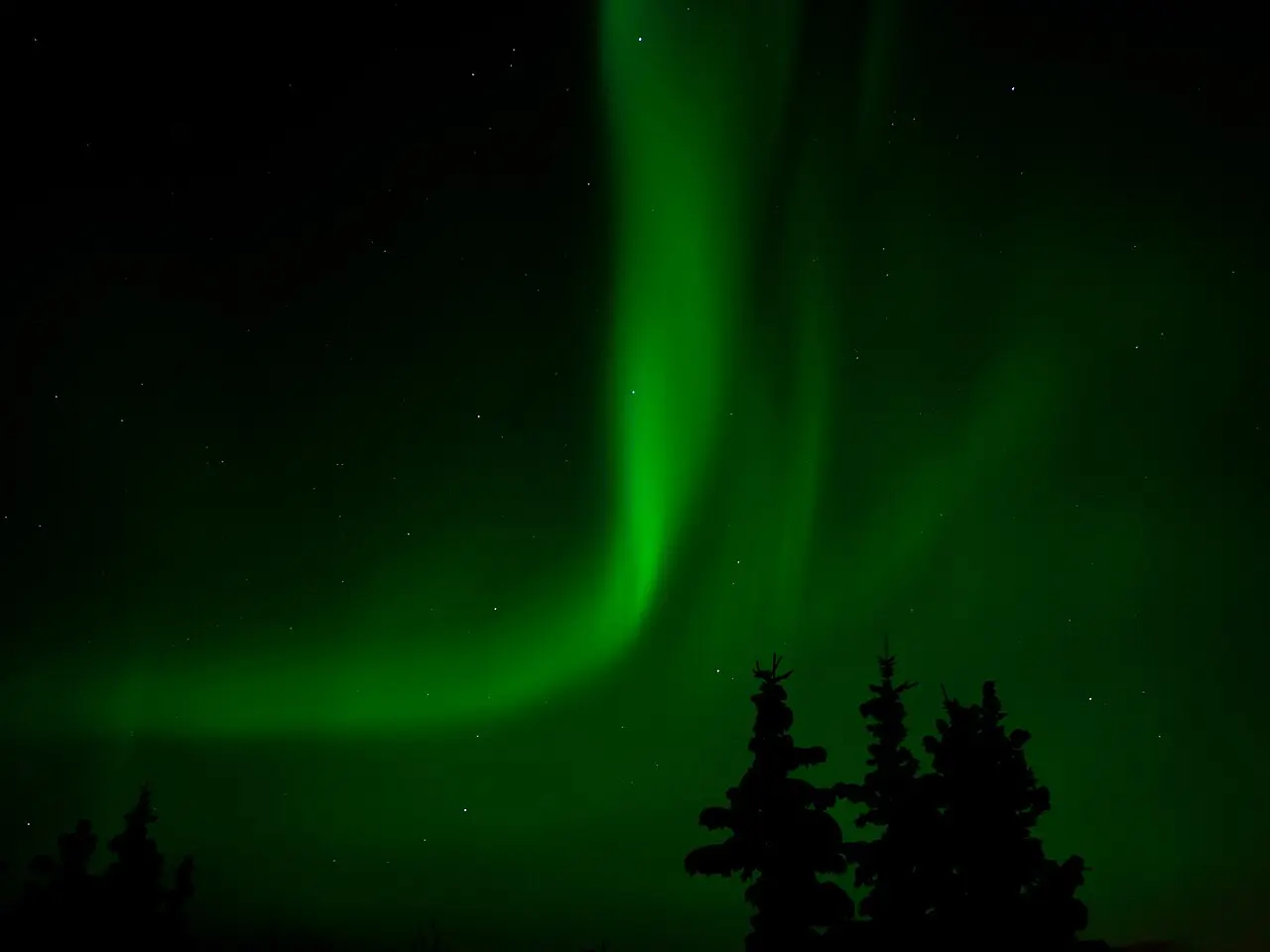
Whitehorse trades a little frequency for real comfort. Travel Yukon gives a season of mid-August to mid-April and a viewing window of roughly 10 pm to 3 am, and the autumn draw is the aurora mirrored in lakes that haven’t yet frozen, at spots like Fish Lake and Schwatka Lake. The deciding argument, though, is the cold, or the relative lack of it: January in Whitehorse averages about ten degrees warmer than Yellowknife, which for a first aurora trip or a family is a bigger deal than a few percentage points of frequency.
Churchill, Manitoba
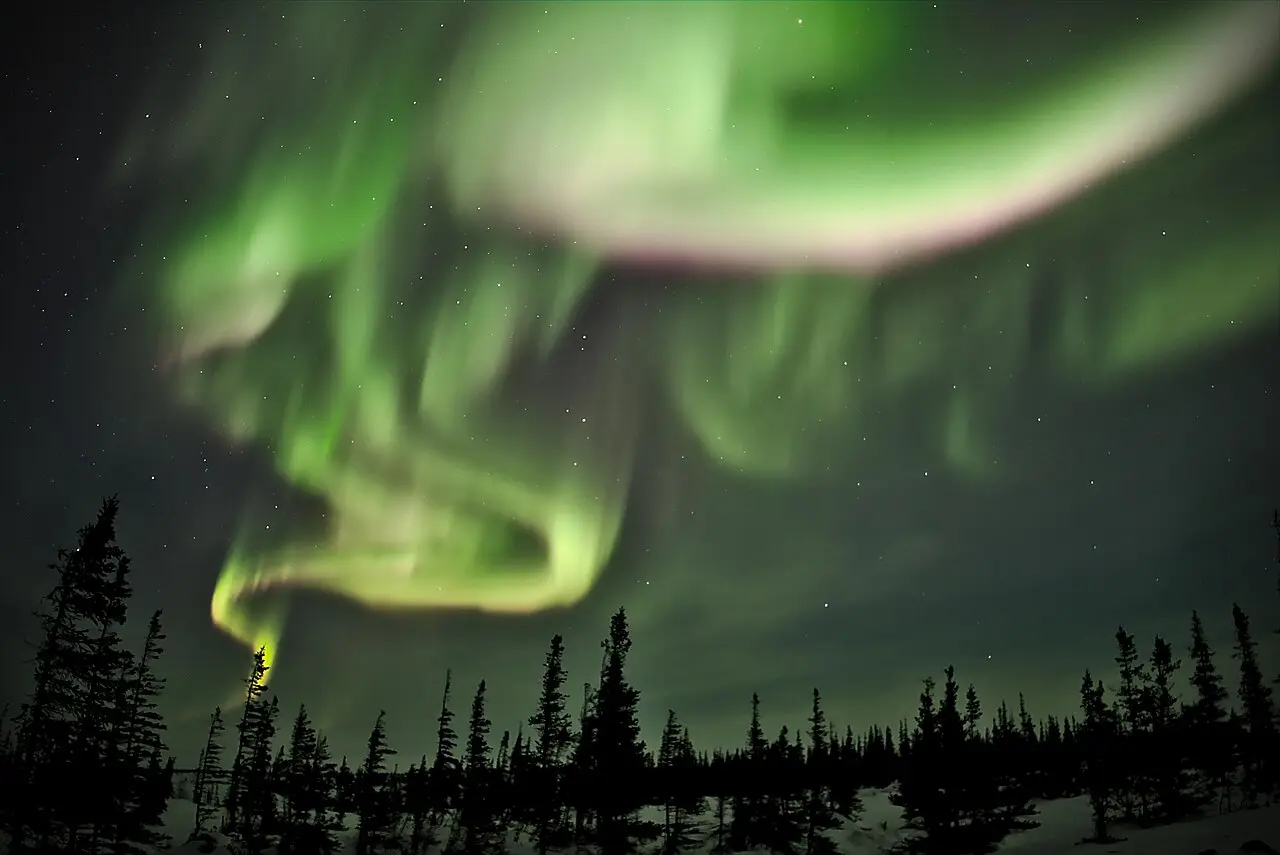
Churchill sits squarely under the oval, and Travel Manitoba claims up to 300 nights of activity a year, with February and March named among the best months. What makes Churchill different is the viewing setup, heated Aurora Domes, the Churchill Northern Studies Centre and a 360-degree Aurora Pod, and the chance to pair the lights with polar bears and beluga whales in other seasons. The catch is access: there is no road to Churchill, so you arrive by air or by the train from Winnipeg, and with polar bears about, the do-it-yourself night drive that works elsewhere is off the table here.
Jasper, Alberta: the darkest sky, the longest odds
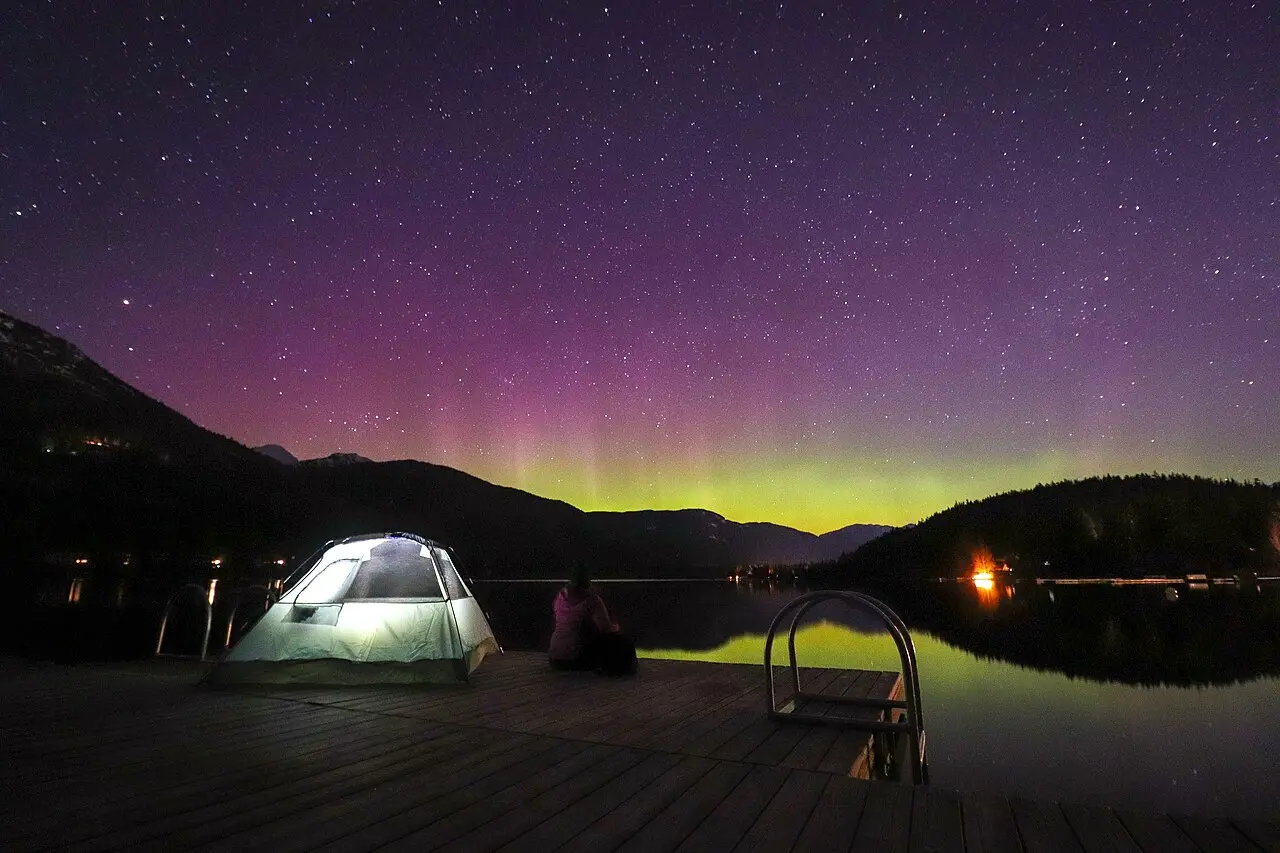
Jasper is the honest outlier. It was named a Dark-Sky Preserve in 2011, and at 11,228 square kilometres it’s the second-largest such place in Canada and the largest you can drive into, because the town sits inside it. So the sky is the best of the four. The trouble is that Jasper is the most southerly of them, which means the aurora needs stronger activity to reach it. Put simply: Jasper is where you go for the sky, Yellowknife is where you go for the odds. Treat it as a bonus on a Rockies road trip rather than a dedicated aurora target, and note that in 2026 parts of the park, including Maligne Canyon and the Cavell area, are closed, as our Jasper guide tracks.
When to go
The two seasons come down to darkness. High-latitude summers barely get dark, so the aurora is there but invisible; the lights return as the nights lengthen. NOAA points to the weeks around the spring and autumn equinoxes as the most active, and the sweet hours are within an hour or two of local midnight. September and March are the smart compromises: September is milder, March gives longer dark nights than April without January’s deep cold. Whenever you go, check the moon, because a full moon washes out all but the strongest displays.
A word on the Sun itself. On 15 October 2024, NASA and NOAA announced that the Sun had reached the solar-maximum period of its eleven-year cycle, so 2026 and 2027 are the gentle downslope from that peak. That is worth knowing but not worth over-reading: it doesn’t make any single year “guaranteed”, and NOAA updates its outlook every month. Check the current solar-cycle chart when you book, and do not build a trip around a promise no forecaster is making.
How many nights, and what the forecast can tell you
Three nights is the sensible minimum, four or five is better, and one night is a lottery. This is where the 98-percent figure earns its caveats: it counts aurora activity over three nights, not the separate questions of whether the sky is clear, whether the moon is up and whether it is dark enough. Book the extra night as insurance against cloud, not as a luxury.
The reason you can’t simply check a week ahead is physics. NOAA’s main aurora product forecasts only 30 to 90 minutes out, because that is how long the solar wind takes to reach Earth from the monitoring point. Canada’s own Space Weather Forecast Centre looks up to two days ahead, but it forecasts geomagnetic activity, not visibility, so it still can’t see your clouds. Plan the place and the number of nights in advance; let the actual night reveal itself an hour or two before it happens.
The cold, and dressing for standing still
Watching the aurora means standing outside, mostly still, for two to four hours in the deep cold, which is a different task from a daytime walk at the same temperature, because you’re not moving enough to keep warm. The numbers set the scene:
| January, daily mean | Daily minimum |
|---|---|
| Yellowknife -25.5 C | -29.4 C |
| Churchill -25.3 C | -29.2 C |
| Whitehorse -15.0 C | -18.9 C |
| Jasper -8.8 C | -14.4 C |
Dress in layers, a merino or synthetic base rather than cotton, an insulating mid-layer, and a windproof shell, with boots rated for the temperature and mittens rather than gloves. The cheaper and smarter move for a short trip is to rent the heavy Arctic gear from an operator rather than fly it in; Yellowknife outfitters build clothing rental into their packages. Keep camera and phone batteries in an inside pocket, because they fade fast in the cold, and bring a tripod. This is a cold-weather trip, so it is worth reading up on travel insurance for Canada before you go.
Guided tour or on your own
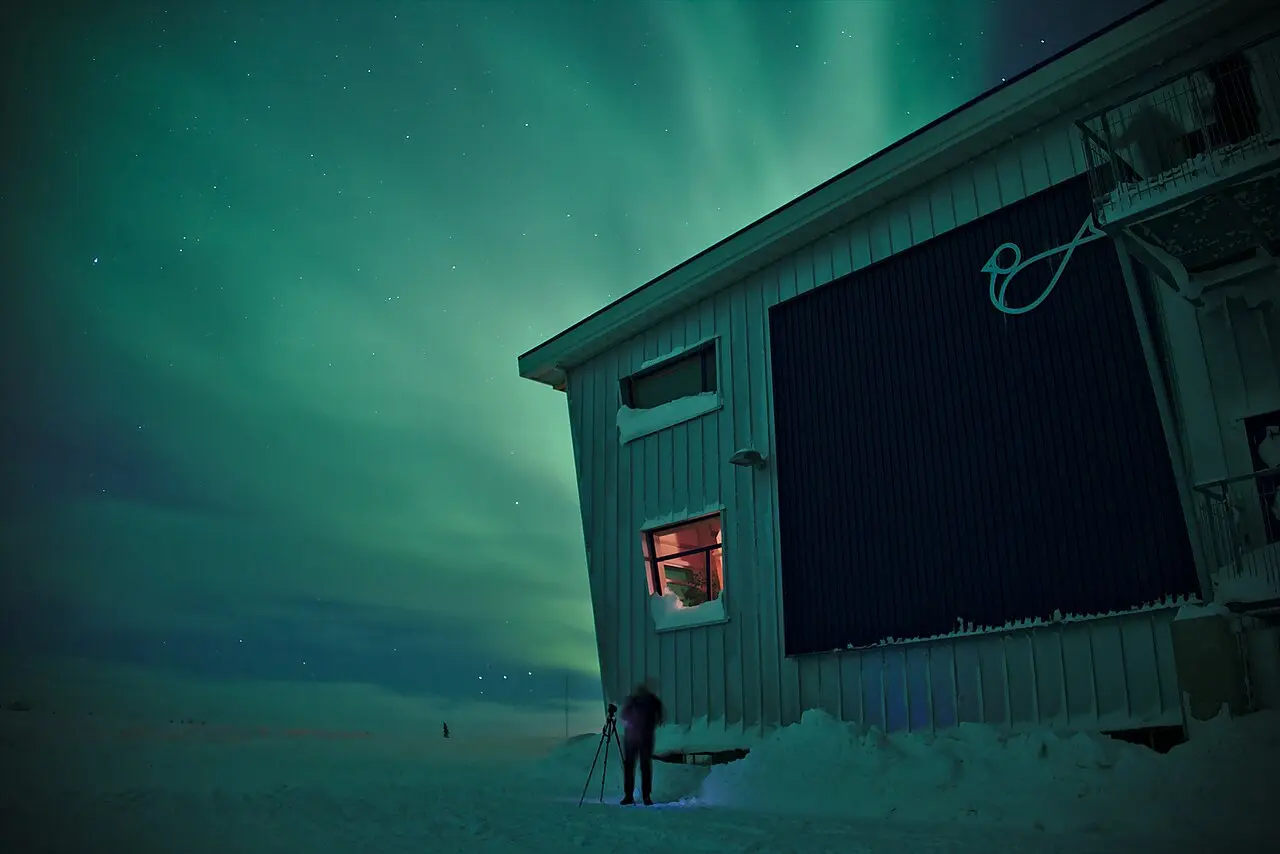
A tour buys you a heated shelter out beyond the town’s light, a driver who will chase a clear patch of sky, gear rental and help with the camera, at the cost of a fixed schedule and a night that usually runs four to four and a half hours. Going alone buys freedom, the ability to drive out the moment the 30-minute forecast jumps, for less money, but it asks for a winter vehicle and the confidence to drive icy roads, so read our guide to renting a car in Canada first. For a first trip, a family, anywhere in a hard freeze, or Churchill in any conditions, take the tour. For Whitehorse or Jasper on a longer stay, self-driving makes sense. Whichever you choose, no operator guarantees a sighting, and any that did would be overselling the sky.
If the aurora is the pull of a winter trip, it folds neatly into the cold-season version of our two-week Canada route; and the northern kitchens you’ll eat in, all game and bannock, are covered in the Canadian food guide.
Read also
- The darkest sky of the four: Jasper National Park
- The road trip Jasper sits on: Canadian Rockies in seven days
- The winter driving question: renting a car in Canada
- Fold it into a bigger trip: two weeks in Canada
Read also

Entertainment · 12 min read
Epic vs Ikon in Canada: Which Pass Covers Your Mountain
Verified · September 3, 2026Epic vs Ikon for a Canada ski trip: Whistler on Epic, Banff and Revelstoke on Ikon, current prices and the 7 September Epic increase.

Entertainment · 11 min read
Calgary Stampede: Tickets, Dates and Where to Stay
Verified · August 22, 2026Next Stampede is 9-18 July 2027: how tickets actually work, where hotels fill first, and when to skip town for Banff instead.

Entertainment · 12 min read
Skiing in Canada: Whistler, Banff & the Best Resorts
Verified · August 2, 2026Whistler, the Banff three, Revelstoke, Tremblant and Le Massif compared: terrain, snow, how they sell tickets and which one fits the trip you can take.

Entertainment · 13 min read
Whale Watching in Canada: Where, When & How to Choose
Verified · July 31, 2026Where to see whales in Canada and when: Victoria, Tofino, Tadoussac, the Bay of Fundy and Churchill belugas, with 2026 prices and the guarantee catch.