Two Weeks in Canada: Rockies and Eastern Cities
A realistic two-week Canada itinerary: drive the Rockies, fly east, then take the train through Toronto, Niagara, Ottawa, Montreal and Quebec City.
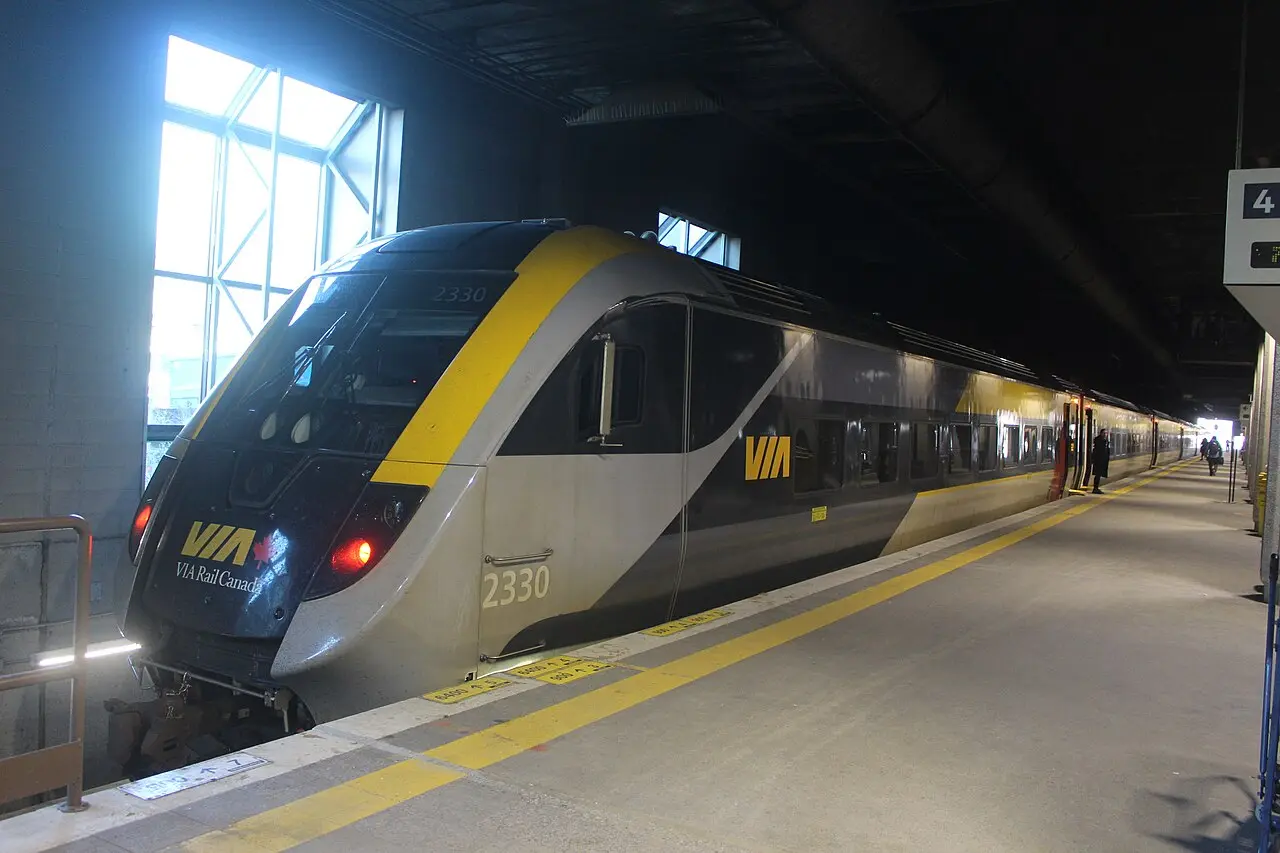
Two weeks is enough to see the best of Canada, but only if you accept that it’s really two trips glued together by a flight: a self-drive loop through the Rocky Mountains in the west, and a train run through the old cities in the east. There are 2,700 km and a four-hour flight between Calgary and Toronto, and pretending otherwise is how people end up spending half their vacation in transit. Rent a car in Alberta and give it back in Alberta; in Ontario and Quebec, let VIA Rail do the driving.
That single decision, car in the west and trains in the east, is what separates a workable two weeks from an exhausting one. The rail half is priced in Canada by train. The mountains reward a car and punish public transport; the eastern cities punish a car with parking fees and tolls and reward the train, which drops you in the centre of each town. Get the shape right and the rest is detail.
How the two weeks fit together
Pick up the car at Calgary airport and return it there, and you avoid the one-way drop fees that punish anyone crossing provincial lines. The whole western half is a loop, and our seven-day Rockies route covers it turn by turn, so this plan keeps the mountains short and spends its length on the part most itineraries skimp: the east.
There’s a case for running it the other way, east first. If you’re flying in from Europe or the UK, starting in Toronto shortens the first flight and softens the jet lag. The cost is the weather buffer. Everything that can be rained out or sold out, the shuttles and the mountain passes, sits in the west, so putting the Rockies first gives you room to shuffle a day if one goes wrong. Cities cope with bad weather; alpine lakes don’t.
One shortcut almost no one mentions: fly east out of Edmonton, not Calgary. Jasper to Edmonton is 370 km against 404 km back to Calgary, and more to the point you don’t retrace the Icefields Parkway you’ve already driven. If the flights line up, it saves roughly half a day. Check the Edmonton departure yourself, because nonstop times from Edmonton aren’t published as cleanly as the Calgary ones.
Dates: what the Canada Strong Pass changed in 2026
In 2026 the dates mattered more than the hotels. Under the Canada Strong Pass, admission to every Parks Canada place was free for everyone from 19 June to 7 September 2026, camping was 25% off, and on VIA Rail under-18s rode free while 18 to 24s got 25% off; standard park fees and rail fares have applied again since 8 September 2026. For a family travelling inside that window it quietly removed two whole line items: the park fees in the west and the children’s train fares in the east.
The catch was in what it left out: parking, camping reservation fees, the Banff and Miette hot springs and guided tours were all still charged, and the train discount went by age on Economy fares, not to everyone. The bigger catch was the calendar: that same window was peak season, when Banff shuttles and Jasper rooms sell out first. Free admission and the worst crowds arrived on the same dates.
What to book before anything else
Three things sell out, and none of them is a hotel. The Parks Canada shuttles to Lake Louise and Moraine Lake are the tightest: Moraine Lake Road is closed to private cars year-round, so the shuttle is the only way in, and the seats drip out in two batches, two-fifths on a fixed April date and the rest at 8 am Mountain time exactly two days before you travel. Miss both and you are relying on a tour. Book a Jasper room early too, because the town is still short of beds while it rebuilds after the 2024 wildfire. And reserve VIA Rail seats ahead in any case; when Strong Pass fares were on offer they were capped in number.
If you’ve not sorted where to sleep, our guides to where to stay in Banff and where to stay in Toronto weigh the trade-offs at each end.
Days 1 to 6: the Rockies by car
Land at Calgary, collect the car, and drive the 140 km to Banff in about ninety minutes. Give the mountains six days: two nights around Banff and Lake Louise, a full day on the Icefields Parkway (232 km, and Parks Canada says to allow a whole day one way, not the three hours the map promises), and two nights in Jasper. Top up the tank at Lake Louise, since the parkway has a single seasonal fuel stop and no phone signal through the middle of it.
The western half here is the compressed version of our seven-day Rockies route, which runs it day by day. One 2026 detail carries over either way: the wildfire recovery still keeps Maligne Canyon and Mount Edith Cavell shut for the whole season, though Maligne Lake, the Pyramid and Patricia lakes, the Valley of the Five Lakes and Miette Hot Springs are all open. The Icefields Parkway guide covers the drive between them. On day six, drive back to Calgary (404 km) or on to Edmonton (370 km) for the flight.
Day 7: the flight east
The Calgary to Toronto nonstop is about 4 hours 10 minutes, flown by WestJet and Air Canada, and it lands you 2,700 km and two time zones later. Take the morning flight. Calgary is two hours behind Toronto, so an early departure still leaves you an afternoon in the city, while an evening flight lands near midnight and burns a day at both ends. Ignore any old guide that suggests the budget carrier Swoop; it stopped flying in 2023 and was absorbed into WestJet.
Pearson is a long way out, but the UP Express train reaches Union Station in 28 minutes; see Toronto airport to downtown.
Days 8 to 9: Toronto and a Niagara day trip
Give Toronto two days. The CN Tower is the obvious start: timed general admission is C$47 for an adult, and the glass floor and the LookOut are enough for most people. Adding “The Top”, the higher deck, is C$12 more; it’s called The Top, not the SkyPod, whatever older pages say, and the EdgeWalk hands-free stroll around the rim starts at C$199. All the tower’s prices are quoted before tax.
Down at ground level, the St. Lawrence Market and the pedestrian brick lanes of the Distillery District are the better half of a Toronto day, and both are free to wander. Save an afternoon for the peameal bacon sandwich, which the Canadian food guide tracks to its Toronto source.
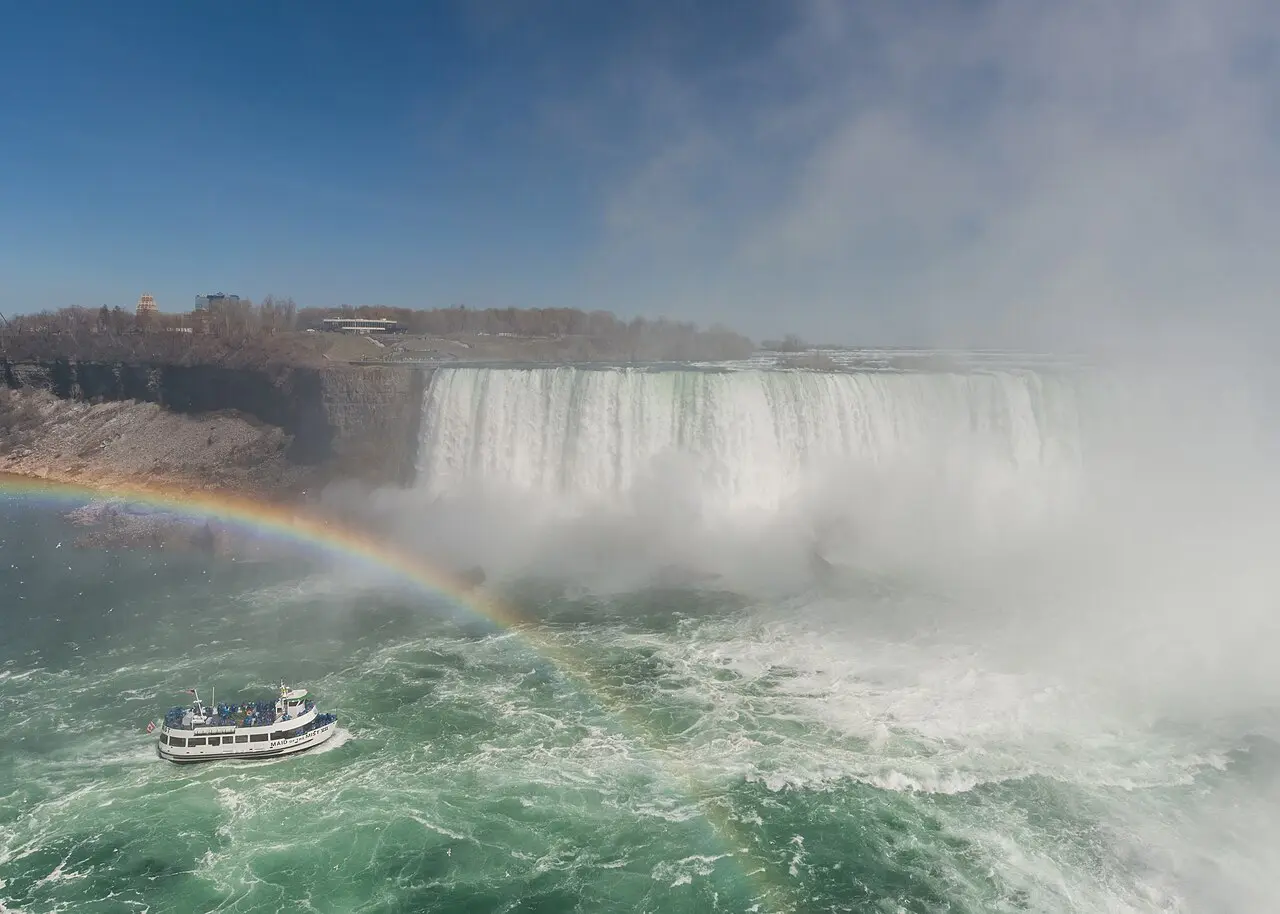
For Niagara, skip the car. GO Transit runs from Union Station to Niagara Falls year-round. Two things to know: the Canadian cataract is Horseshoe Falls, the wide curved one, not the smaller American Falls across the gorge; and the Niagara Falls GO station sits in the north of the city, not at the water, so pair the train with the local WEGO bus down to the parkway. Journey Behind the Falls, the tunnels behind the sheet of water, runs year-round at C$33. A full guide to the Canadian side is in our Niagara Falls article.
Day 10: Toronto to Ottawa by train
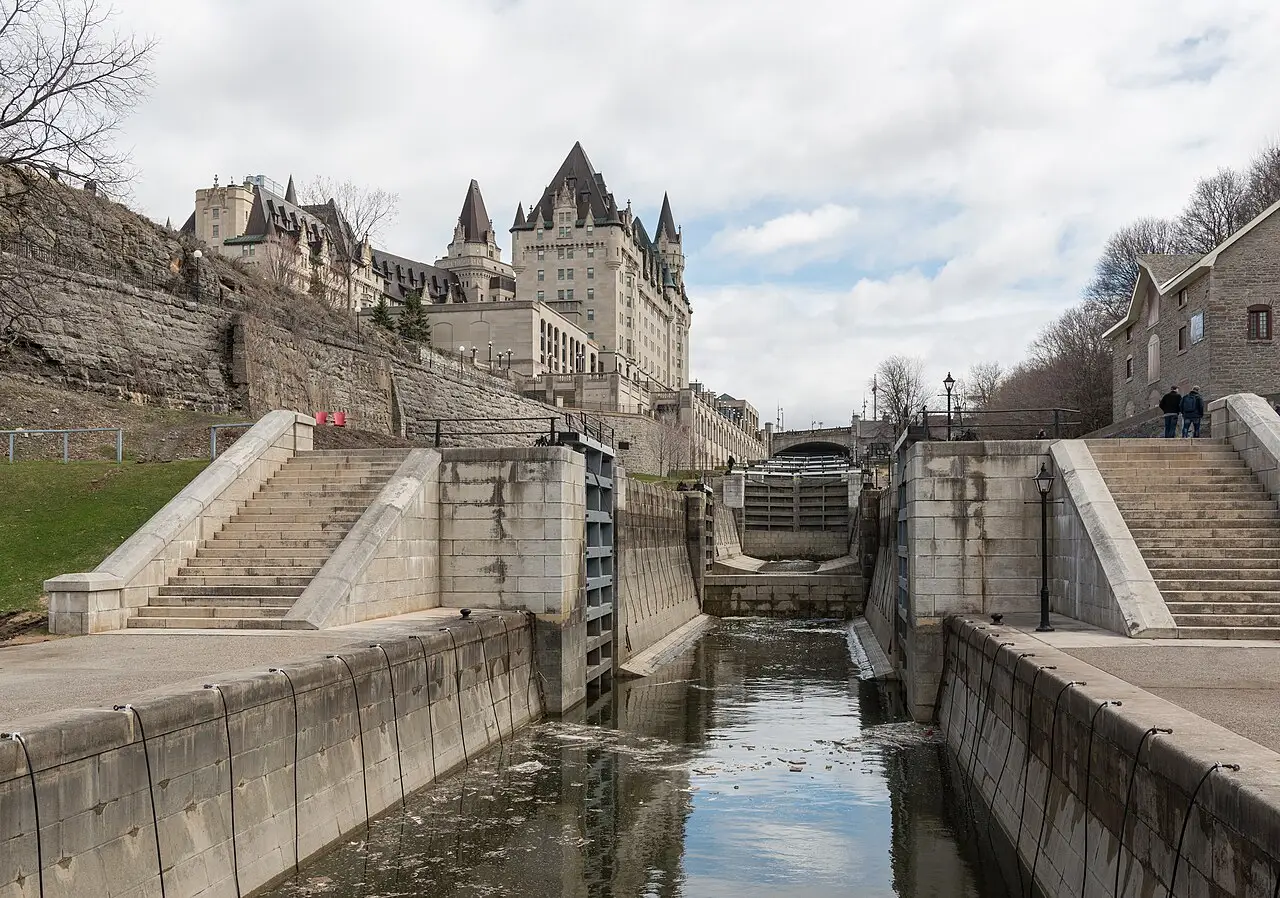
The train to Ottawa is 444 km and about four and a half hours, city centre to city centre, no airport and no parking. The capital is a compact day: Parliament Hill above the river, the Rideau Canal locks dropping to the water beside the Chateau Laurier, and the ByWard Market for lunch. The Canada Strong Pass season has ended, so the national museums charge full price again, though the War Museum and the Museum of History both keep free admission every Thursday evening, which makes Ottawa an easy stop to like regardless.
Days 11 to 12: Montreal
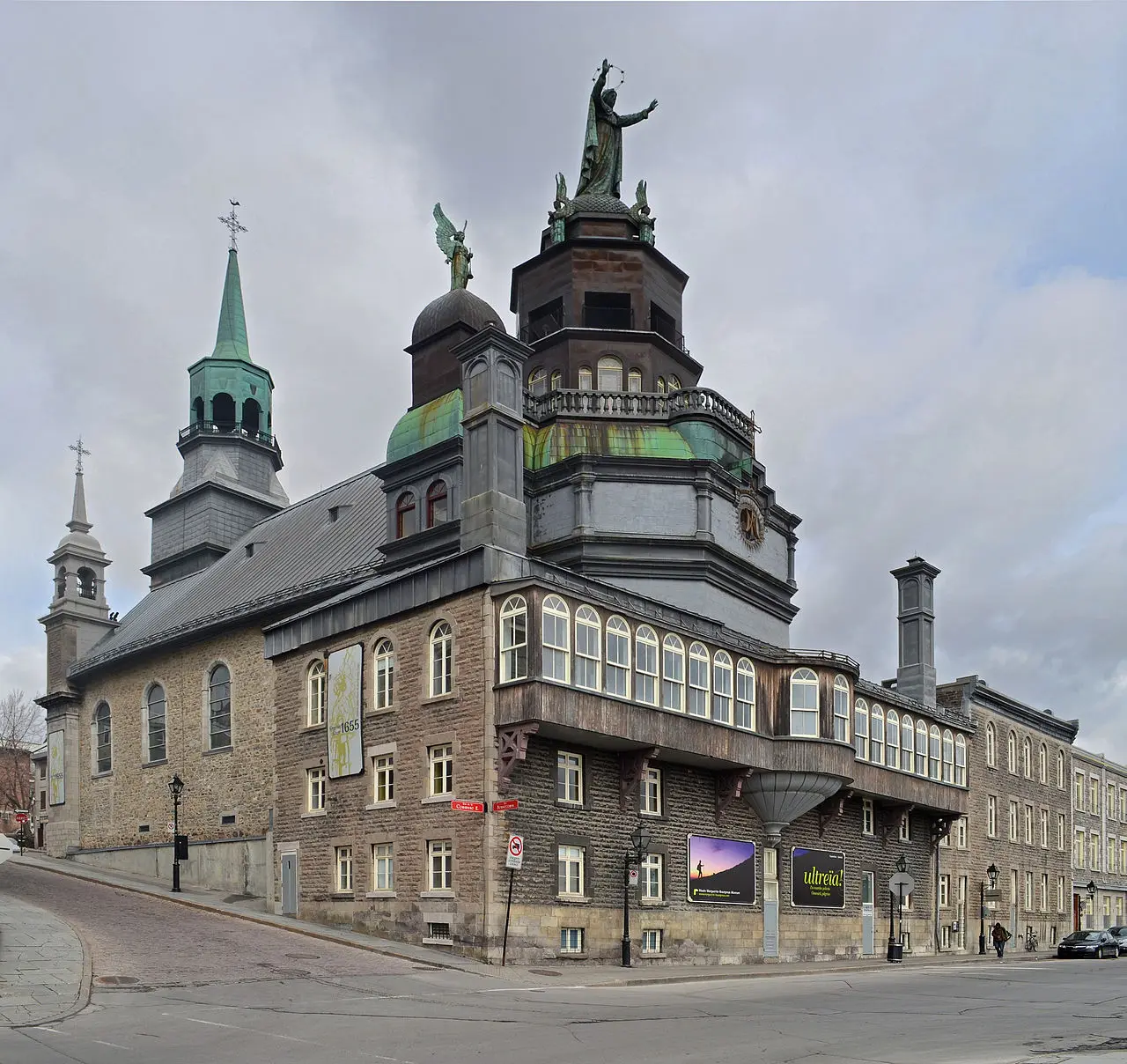
Ottawa to Montreal is a short 185 km, about two hours. Give the city two nights, because it’s the most European place in North America and the best of it’s eating and walking rather than ticking off sights. Old Montreal for the stone streets and the Old Port, Mount Royal for the view that explains the city, and the Plateau and Mile End for a food walk that strings a bagel, a smoked-meat sandwich and a late poutine into one afternoon. The Canadian food guide has the history behind all three, and the wider Quebec province guide covers the language question in plain terms. For the blue-and-gold interior of Old Montreal’s basilica, the Notre-Dame Basilica guide covers the day visit and the evening light show.
Days 13 to 14: Quebec City
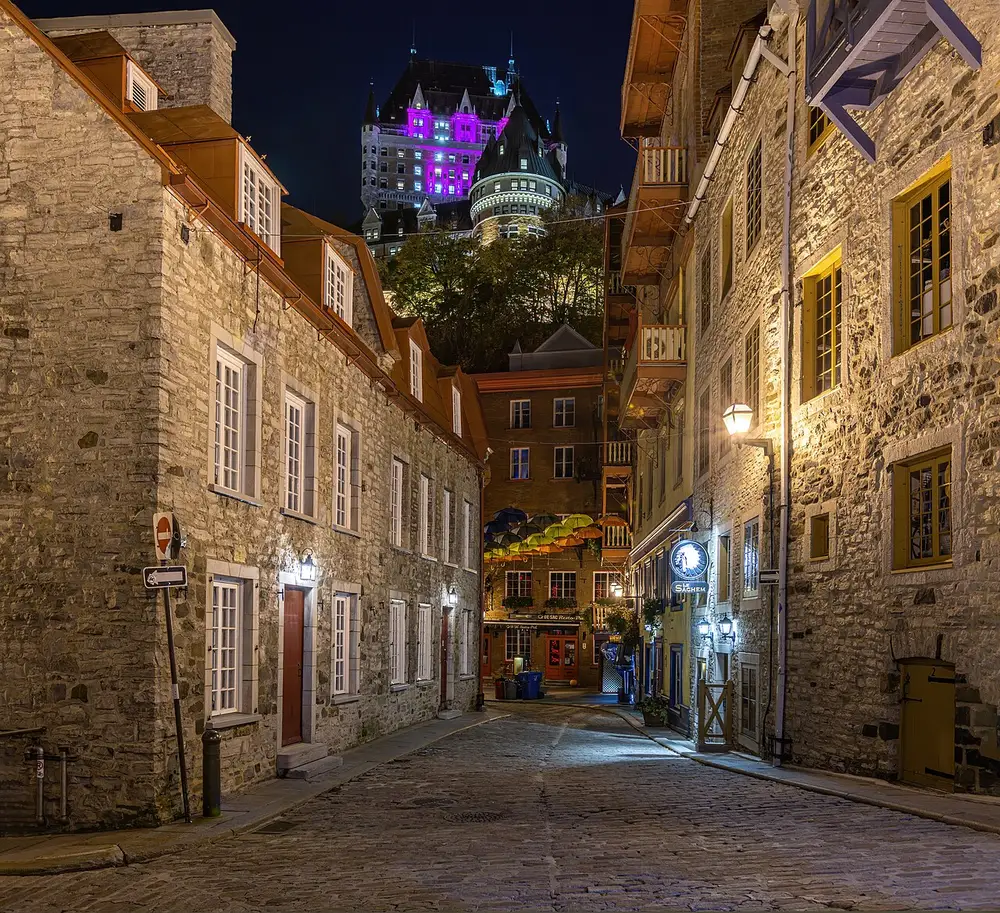
The last train, Montreal to Quebec City, is 270 km and about three and a half hours, and it saves the walled old town for the end. Vieux-Quebec is the only fortified city north of Mexico whose walls still exist, and the lower town around Petit-Champlain, all narrow lanes and stone houses under the Chateau Frontenac, is the picture most people carry home from Canada. Two nights is right; a day here’s a tease.
To get home, fly out of Quebec City (YQB), usually via a connection, or take the train back to Montreal-Trudeau for a wider choice of nonstops. For most long-haul routes the backtrack to Montreal is simpler.
What this trip costs
The plain answer is that the flights and the hotels decide it, and both swing too much to quote. What’s fixed is small and knowable. Park admission is C$12.25 a day or C$83.50 for the annual Discovery Pass (it was waived from 19 June to 7 September 2026 under the Canada Strong Pass, which has since ended). The CN Tower is C$47, Niagara’s Journey Behind the Falls C$33, and the eastern trains are dynamic but cheapest booked weeks out. As a floor, a camping-and-hostel version excluding international flights lands near C$2,000 a person; a hotels-and-restaurants version is well over double. The Banff hotel bill and the domestic flight move the total most, and both drop the earlier you book.
If you only have ten days
Cut the trip, do not stretch it thin. With ten days, keep the shape and trim the edges: four days in the Rockies instead of six (one night in Banff, the parkway, one full day in Jasper), the flight east, then Toronto, Ottawa and Montreal, dropping Quebec City. You lose the walled town, but you keep the spine. Do not try to add a third region, the Maritimes or Vancouver, onto two weeks; Canada is too big for it.
When to go
July and August are warm, long and busy - in 2026 the Strong Pass window and the peak-crowd window at once - with a real chance of wildfire smoke in the mountains. September is the one to aim for: the shuttles still run, the crowds thin after the first week, the Rockies larches turn gold, and the eastern cities are at their best. Whatever the month, US, UK and Australian travellers should check the entry rules before booking, and it is worth reading up on travel insurance for Canada for a trip this spread out.
Winter turns this into a different trip. The Icefields Parkway needs snow tires or chains and has no services, the mountain shuttles stop, and driving conditions want planning rather than nerve, so read our guide to renting a car in Canada first. The trade is real, though: a winter run swaps the lakes for the northern lights, and if that’s the pull, the northern lights guide explains where the odds are best.
Read also
- The western half, turn by turn: Canadian Rockies in seven days
- The drive at the heart of it: the Icefields Parkway
- The first eastern stop: things to do in Toronto
- The most walkable city: things to do in Montreal
- What to eat along the way: Canadian food and where to try it
- The car, the winter tires and the drop fees: renting a car in Canada
Route day by day
- Days on the road
- 14
- Distance
- ≈4840 km
- Budget from
- 2000 CAD
- Best season
- June, July, August, September
The route at a glance
-
Toronto
Route startstop ≈2880 min
The eastern leg begins here, after the roughly 980 km Rockies loop and the 2,700 km flight from Calgary. Two nights: the CN Tower, St. Lawrence Market and the Distillery District, with Niagara as a day trip.
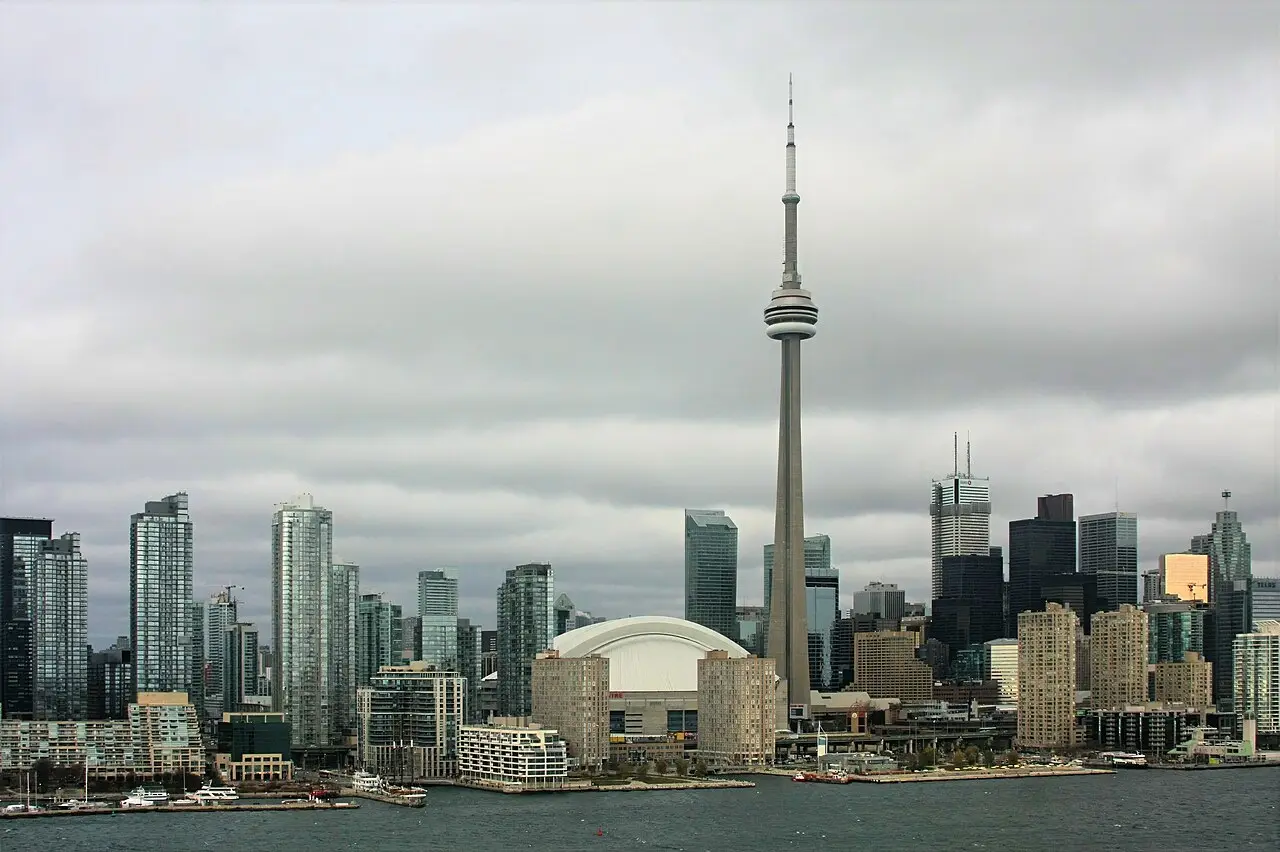
Photo: ImagePerson · CC BY 4.0 · Wikimedia Commons ( source) -
Niagara Falls
3810 km from the startstop ≈480 min
A day trip from Toronto Union Station on the GO train, then the WEGO bus along the parkway. The Canadian cataract is Horseshoe Falls; Journey Behind the Falls runs year-round at C$33 an adult.
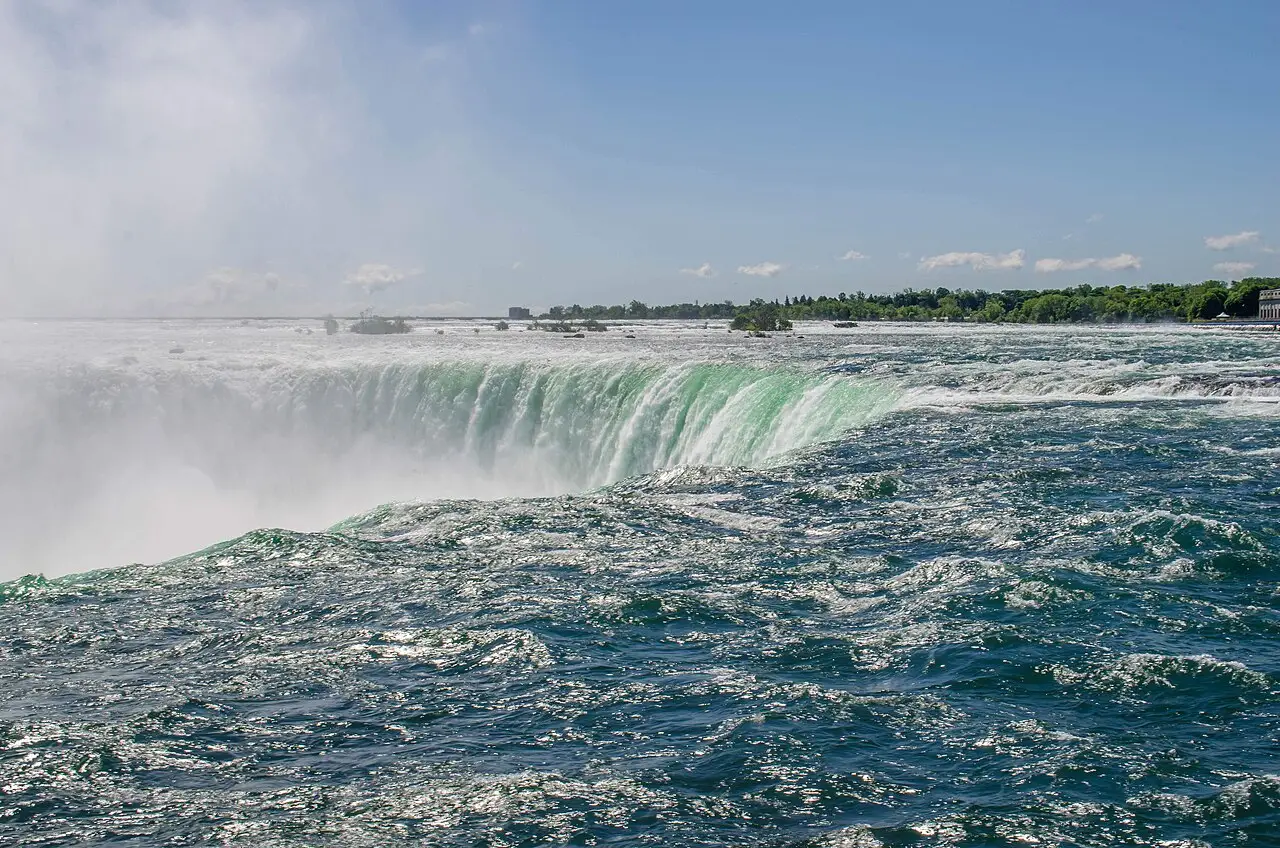
Photo: Ethan Sahagun · CC BY-SA 3.0 · Wikimedia Commons ( source) -
Ottawa
4384 km from the startstop ≈1440 min
Toronto to Ottawa is 444 km and about four and a half hours by VIA Rail. Parliament Hill, the Rideau Canal and the ByWard Market fill a day, and the national museums are back to charging regular admission, the Canada Strong Pass having ended.
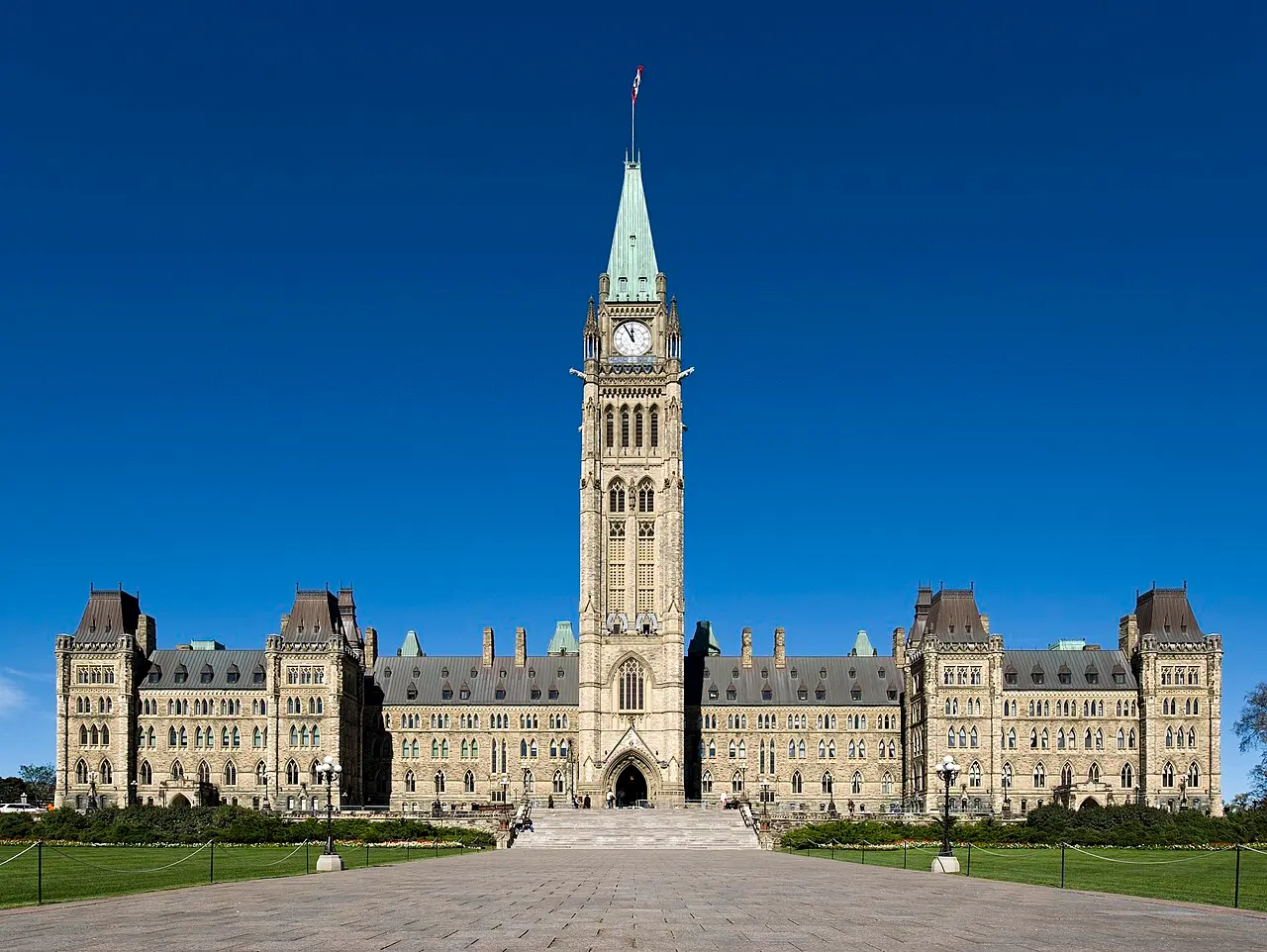
Photo: Saffron Blaze · CC BY-SA 3.0 · Wikimedia Commons ( source) -
Montreal
4569 km from the startstop ≈2880 min
Ottawa to Montreal is 185 km and about two hours. Two nights for Old Montreal, Mount Royal and a food walk of bagels and smoked meat through the Plateau and Mile End.
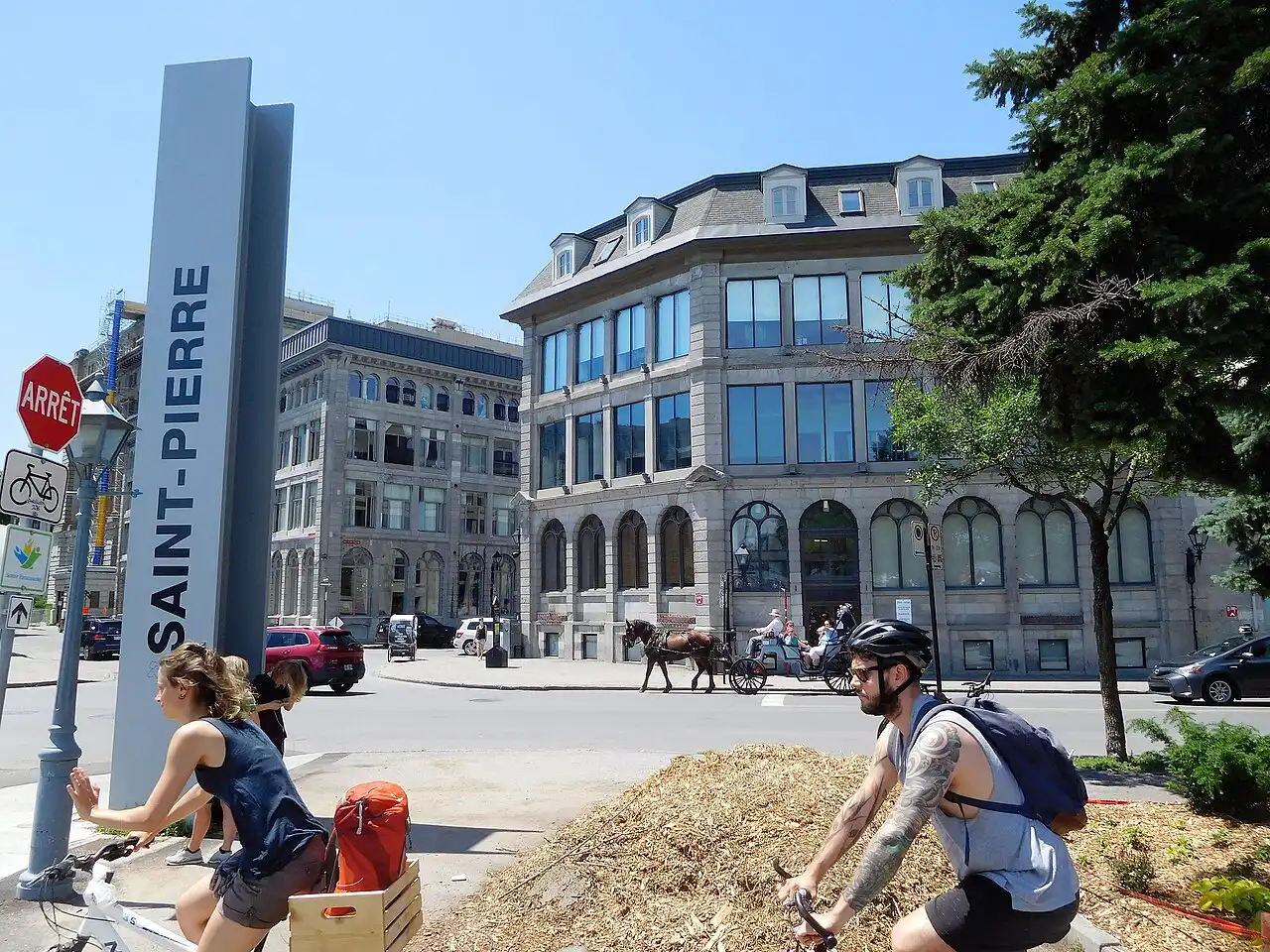
Photo: Jeangagnon · CC BY-SA 4.0 · Wikimedia Commons ( source) -
Quebec City
4839 km from the startstop ≈2880 min
Montreal to Quebec City is 270 km and about three and a half hours. The walled old town and Petit-Champlain end the trip; fly home from Quebec City (YQB) or take the train back to Montreal.
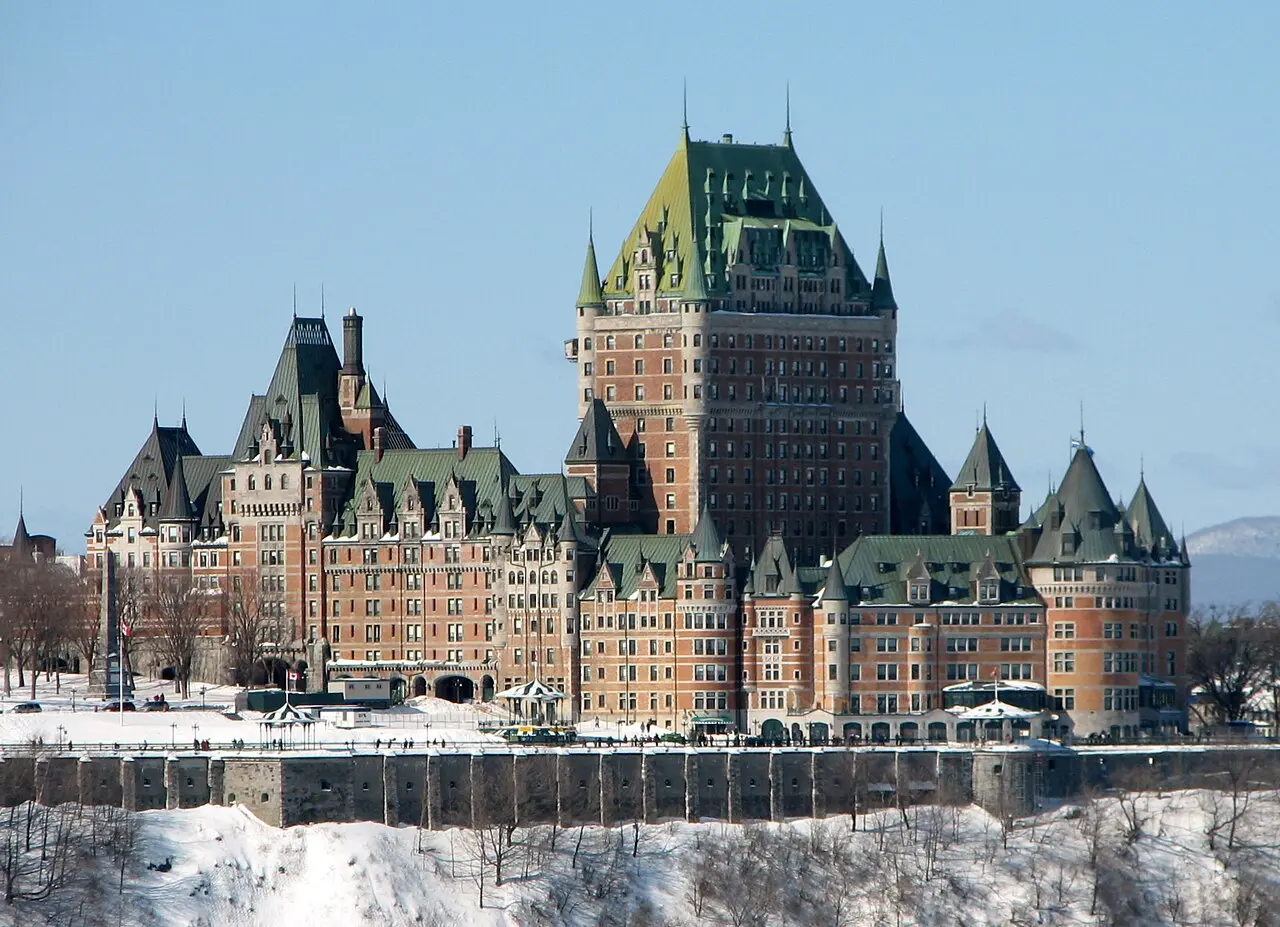
Photo: Bernard Gagnon · CC BY-SA 3.0 · Wikimedia Commons ( source)
Route map
The map with stops loads on click - to keep the page lightweight.
The map didn’t load. Check your connection and refresh the page.