Where to Stay in Banff: Town, Canmore or Lake Louise
Banff town, Canmore or Lake Louise: what each base costs you in money and driving, the transit that makes one work without a car, and what to book first.
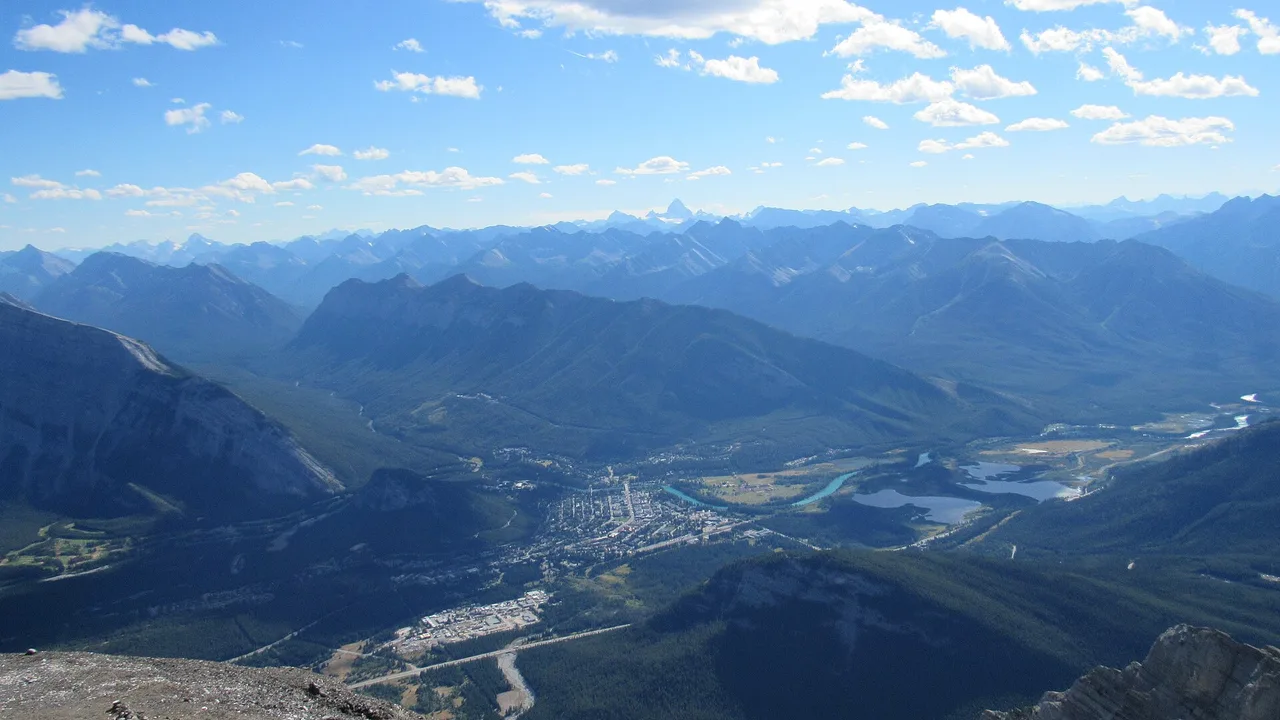
If it is your first trip to the Rockies, stay in Banff town: it’s the only base where you can park the car once and still reach the gondola, the hot springs and the Lake Louise bus. If you’re driving anyway and want the money back, stay in Canmore, 22 km east of Banff and outside the park gates. Lake Louise is worth the premium only if sunrise at the lakes is the point of the trip, because that’s essentially all you’re buying.
The reason this decision matters more in Banff than in most mountain towns is that the park rations access, not just beds. Parking at the famous lakes runs out before sunrise, the shuttles sell out weeks ahead, and Moraine Lake Road has been closed to private cars all year round, so where you sleep determines which buses you can realistically catch.
The three bases side by side
| Banff town | Canmore | Lake Louise | |
|---|---|---|---|
| Inside the national park | Yes | No | Yes |
| To Banff Avenue | - | 22 km, ~25 min drive | 55 km, ~45 min |
| To Lake Louise | 55 km, ~45 min | ~80 km | - |
| Park pass needed just to sleep there | Yes | No | Yes |
| Public transport | Roam, all routes | Roam Route 3 to Banff, C$6 | Roam 8X from Banff, C$12.50 |
| Choice of restaurants | Wide | Wide | Very limited |
| Best for | First-timers, no car, families | Value, longer stays, hikers | Sunrise at the lakes, skiers |
Parks Canada publishes the 55 km between Banff and Lake Louise, and Tourism Canmore publishes the 22 km between Banff and Canmore. The 25 minutes is the part nobody prints: it’s a road-routing figure for downtown to downtown, which runs a few kilometres longer than 22 once you count the streets at each end. Treat the distance as published and the clock as a good estimate.
Banff town: the default, and why
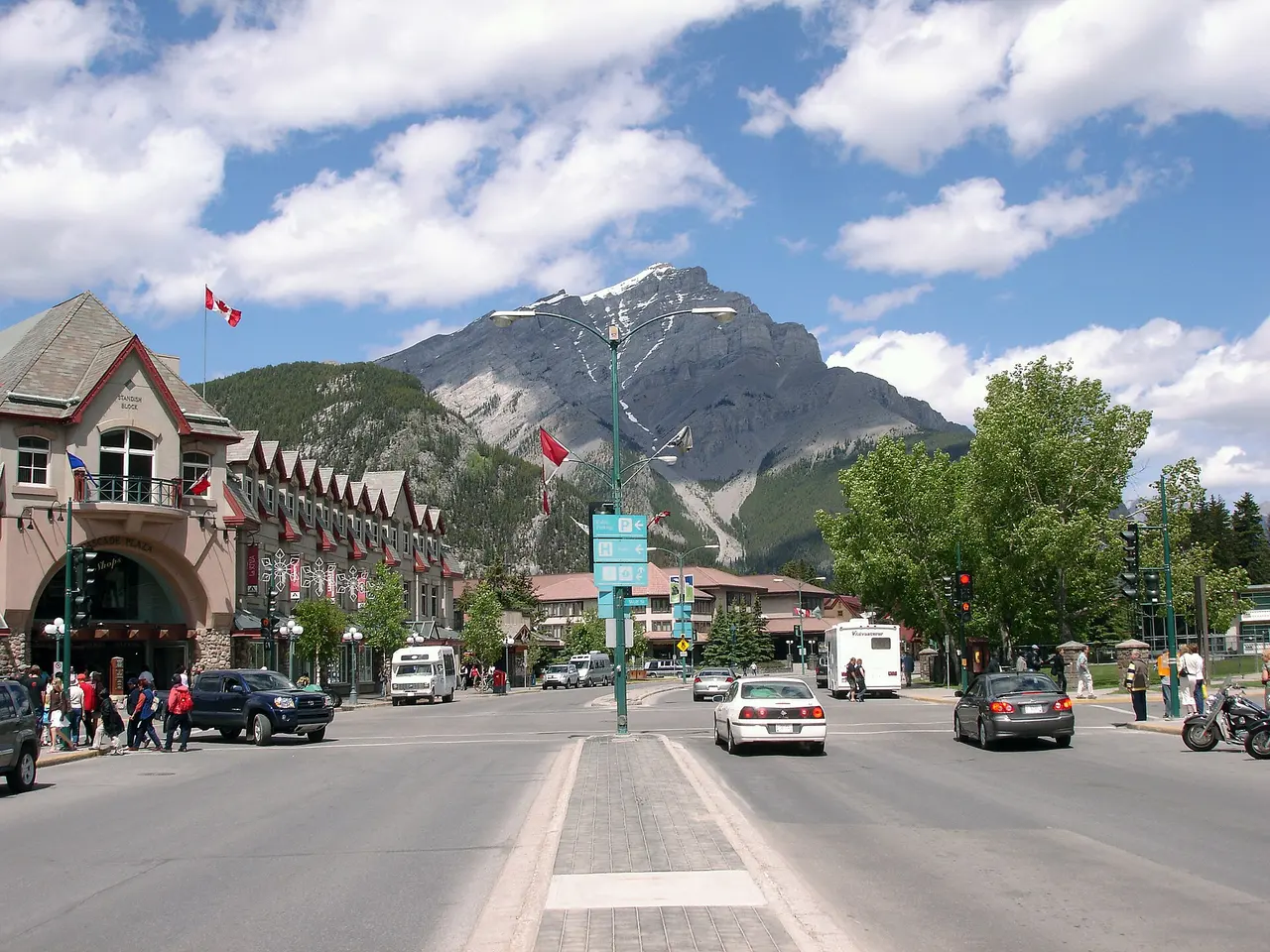
The townsite is small, walkable and stuffed with places to eat, which sounds like a modest advantage until you have spent a week driving to dinner. Everything is here: the Sulphur Mountain gondola, the Banff Upper Hot Springs, Bow Falls, the river path, a supermarket, and the Roam bus network that runs to Lake Minnewanka, up to the gondola and out to Lake Louise.
That last point is the one people underrate. From Banff you can do the entire trip without ever moving the car: Roam Route 8X to Lake Louise costs C$12.50 for an adult, C$6.25 for youth and seniors, and children under 12 travel free, running year-round. A day pass is C$25 for an adult. Compare that with C$42 to park one vehicle at the Lake Louise lakeshore and the math gets straightforward for two people.
What you pay for it is a room rate that’s the highest of the three bases on a like-for-like basis, plus a park pass for every day you are in the park anyway.
Who should not stay in Banff town
If you’re here for four nights or more with a car and a rough plan of cooking your own breakfasts, the premium stops making sense. Same if you are travelling in Stampede or long-weekend season and everything in town is sold out at prices that would embarrass a ski resort.
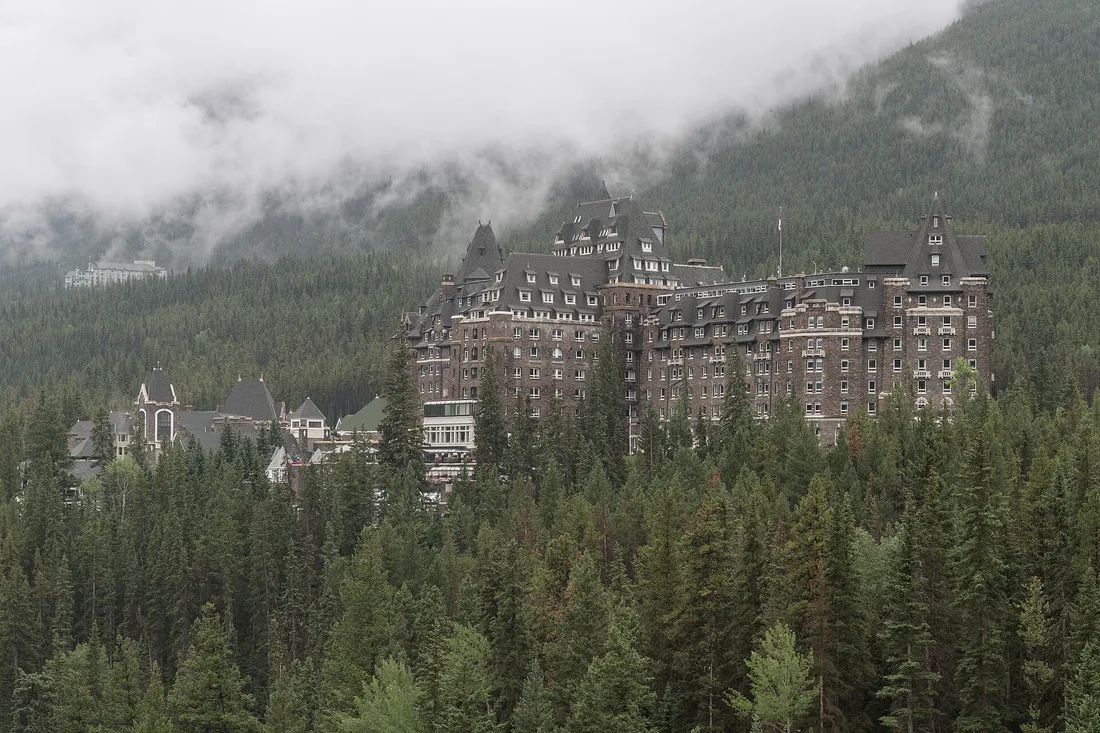
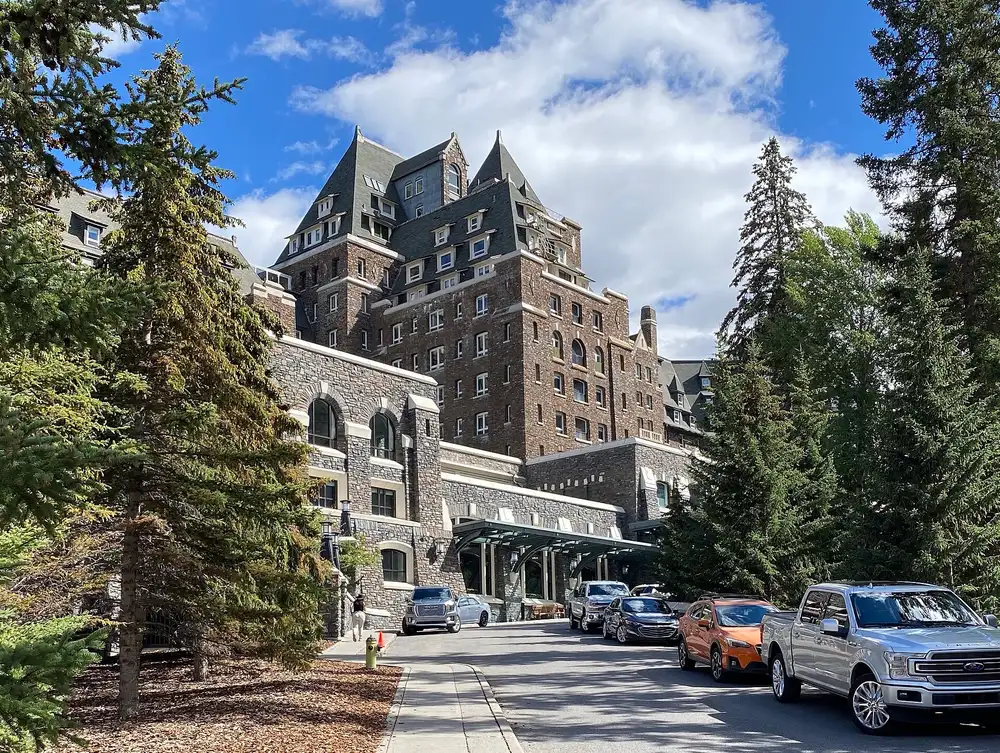
At the top end, the Fairmont Banff Springs and the Rimrock Resort are the landmarks; in the middle sit a dozen perfectly good lodges along Banff Avenue and the river; at the bottom there are hostels within walking distance of the same restaurants. The gap between the cheapest bed and the most expensive room in Banff is wider than in almost any Canadian town of its size.
Canmore: outside the gates
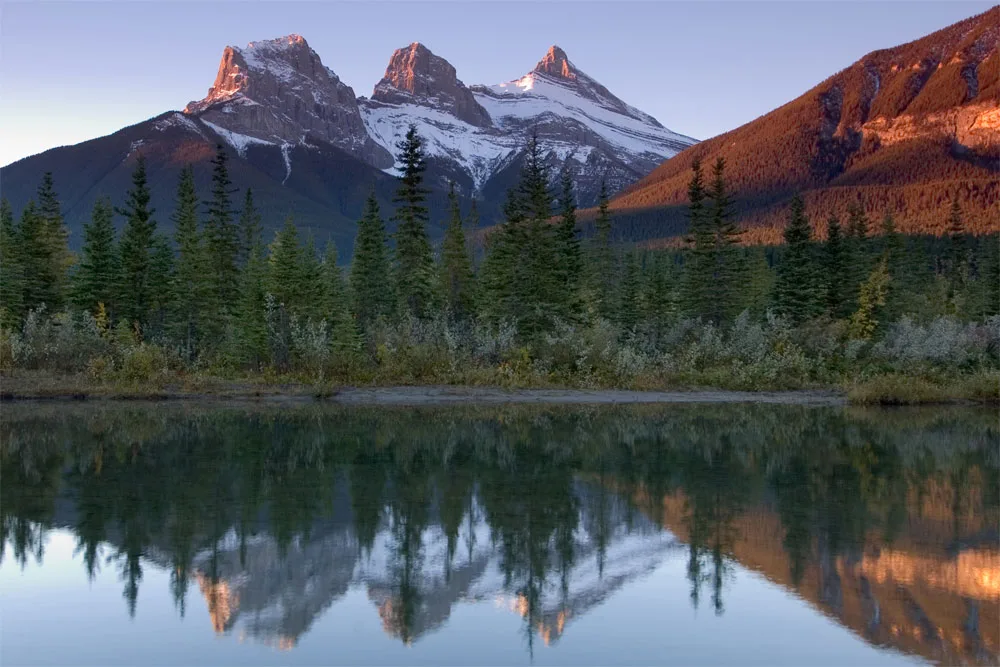
Canmore sits east of the park boundary, which is the whole argument. You don’t need a Parks Canada pass to sleep there, rooms and rental apartments cost meaningfully less than the equivalent in Banff, the restaurant scene is good, and the town has a life of its own rather than a season. The fuller Canmore base guide - Grassi Lakes, Roam Route 3 and when Banff town is still worth it - is in Canmore.
The transit link is better than most visitors expect. Roam Route 3 runs between downtown Canmore and downtown Banff for C$6 an adult, C$3 for youth and seniors, free for children, with a C$15 adult day pass. That’s a real alternative to driving in and hunting for a space.
The cost is about 25 minutes each way, every day. Over a week of park days that’s close to six hours in the car, which is a fair trade for the saving but not a free one. Days that start at Lake Louise or on the Icefields Parkway feel noticeably longer from Canmore.
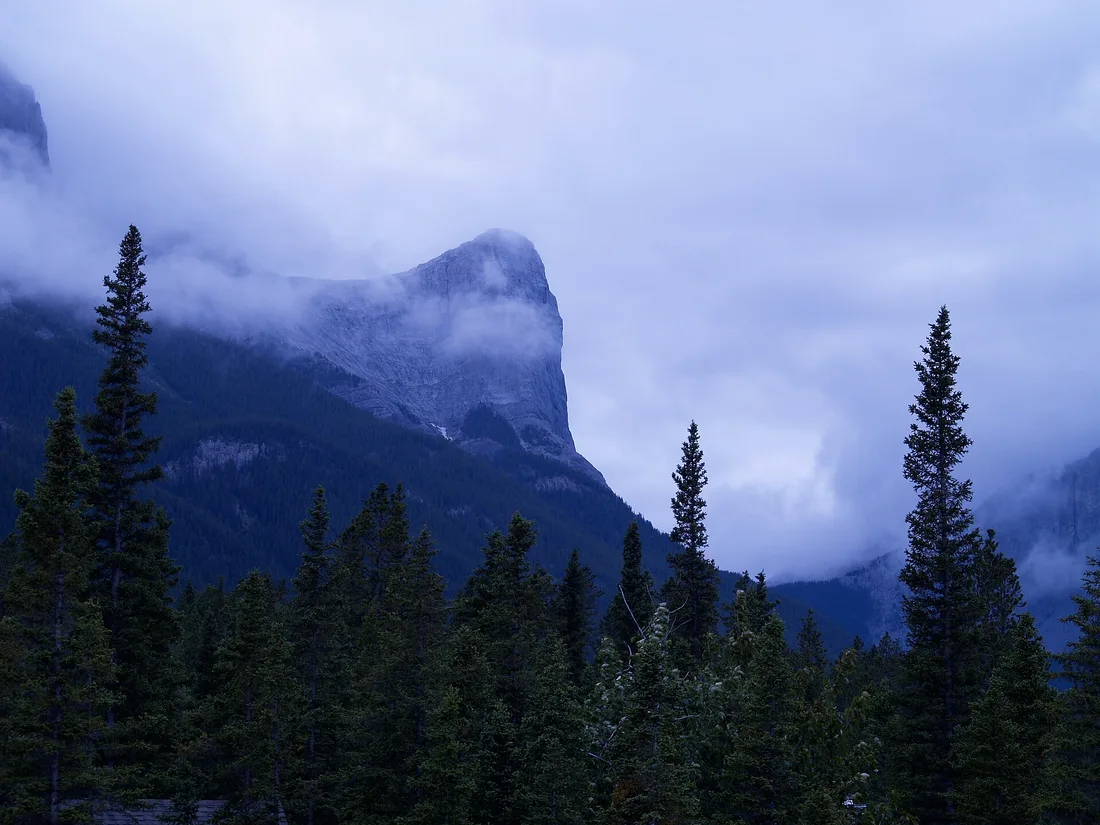
One trap worth naming, because “no park fees in Canmore” is repeated everywhere and isn’t true. Kananaskis Country starts on Canmore’s doorstep, and parking anywhere in it needs an Alberta Kananaskis Conservation Pass: C$15 a day or C$90 a year, registered to a plate. Rental cars aren’t exempt, the fine is C$150 plus a 20% surcharge, and plates are scanned in the parking lots. Canmore saves you the federal pass only if you never park on the provincial side.
Lake Louise: waking up next to the lakes
The hamlet is tiny - a small mall, a handful of hotels, a campground, a ski hill. There’s no evening to speak of and the restaurant choice is thin enough that people drive back to Banff for dinner, which rather defeats the purpose.
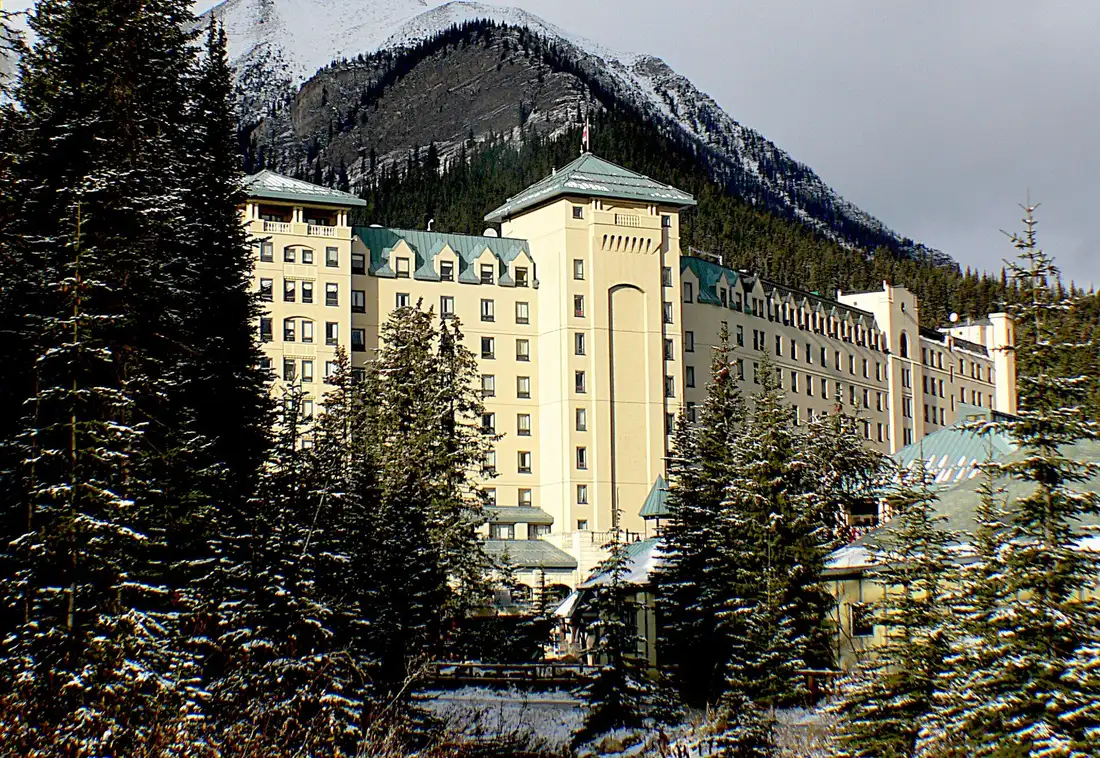
What you buy is timing. Guests at the Chateau walk out to the lakeshore before the shuttles arrive and after they stop, which is the difference between a photograph and a queue. Guests at Moraine Lake Lodge get the same on the one lake nobody can drive to. That’s a real product and it’s priced accordingly.
Note the limit of it: staying at the Chateau doesn’t get you a car up Moraine Lake Road. The closure applies to everyone except shuttles, licensed operators and registered guests of the Moraine Lake lodge itself. Two lakes, two different privileges.
Lake Louise makes obvious sense in winter, when the ski area is on your doorstep and the frozen lake with its skating rink is a two-minute walk. In July it makes sense only if you’re the kind of traveller who genuinely gets up at five. How the shuttle, the C$42 lot and the Alpine Start actually work once you’re there is in Lake Louise: parking, shuttles and trails.
What you have to book besides the room
This is where Banff trips go wrong. The room is the easy part.
Park entry. C$12.25 per adult per day, C$24.50 for a family or group of up to seven in one vehicle, free for under-18s. The annual Discovery Pass at C$167.50 for a family beats daily tickets from the seventh day, so a week-long trip is already the break-even point. 2026 had a window: admission to every Parks Canada place was free from 19 June to 7 September 2026 under the Canada Strong Pass, with 25% off Parks Canada camping; from 8 September 2026 the rates above apply again. Parking, camping reservation fees, the hot springs and guided tours weren’t included.
Shuttle seats. Parks Canada shuttles run to Lake Louise Lakeshore from 15 May to 12 October and to Moraine Lake from 1 June to 12 October, at C$12.75 adult, C$6.00 senior and C$4.00 youth plus a C$3.50 online booking fee. Seats opened on 15 April 2026, but only 40% of them went that day. The other 60% are released at 8 am MDT two days before departure, and that second window is the one you should actually plan around. Parks Canada says outright that walk-ups aren’t recommended.
Parking, if you insist on driving to Lake Louise. C$42 per vehicle, and the lots fill before sunrise in summer. In 2025 the shuttles carried 1,069,351 trips and 115,019 vehicles still used Moraine Lake Road, almost all of them buses and tour operators.
Campsites. In 2025 Banff recorded 292,033 front-country site-nights and every front-country campground was fully booked. Reservations open months ahead.
Camping as the budget base
Camping is the one way to stay inside the park cheaply, and two grounds are open year-round.
| Campground | 2026 season |
|---|---|
| Tunnel Mountain Village I | 15 May - 5 October |
| Tunnel Mountain Village II | Year-round |
| Two Jack Main | 18 June - 7 September |
| Two Jack Lakeside | 21 May - 5 October |
| Johnston Canyon | 21 May - 21 September |
| Castle Mountain | 18 June - 21 September |
| Lake Louise Hard-sided | Year-round |
| Lake Louise Soft-sided | 29 May - 23 September |
| Mosquito Creek | 11 June - 12 October |
| Waterfowl Lakes | 18 June - 6 September |
Two caveats. The Parks Canada camping page carries a last-modified date of November 2024 even though it lists 2026 dates, so confirm before you drive. And soft-sided sites at Lake Louise mean tents inside an electric fence, because of bears.
When you go changes the answer
Mid-June to mid-September is peak in every sense. Banff took a record 4,515,000 visitors in 2025, up 7.14%, with the summer weeks up 9%. In that window Canmore stops being obviously cheaper, because everything in the valley prices off the same demand.
May and October are the shoulder, and they are the best value of the year: shuttles still run into mid-October, the larches turn gold at the end of September, and rooms in town come back within reach.
November to April is winter. Lake Louise is the strongest of the three bases if you ski, Banff town is the most comfortable if you don’t, and Canmore is the cheapest by a clear margin. Two things stay open all year: Roam Route 8X and the Tunnel Mountain Village II campground. For what the ski season itself involves, from lift-ticket pricing to ice walks, see Banff in winter.
Deciding in thirty seconds
- No car, first visit, want it easy - Banff town.
- Car, four nights or more, want the money back - Canmore.
- Sunrise at the lakes is the reason you came, or you ski - Lake Louise.
- Tight budget, warm months, tent in the trunk - Tunnel Mountain in Banff.
- Travelling with small children - Banff town, because everything is within a short walk when the day falls apart.
Read also
- What to actually do once you’re there: Banff National Park
- The drive north from Lake Louise: Icefields Parkway
- Where most people fly into: Calgary
- Staging the night before Banff: where to stay in Calgary
- The province around it: Alberta travel guide
- Every national park we cover: the parks hub
On the map
The map loads on click - to keep the page lightweight.
The map didn’t load. Check your connection and refresh the page.
Admission and opening hours
- Admission price
- Park entry C$12.25 adult, C$10.75 senior, C$24.50 family/group per day; free for everyone 19 June - 7 September 2026 under the Canada Strong Pass, standard fees again from 8 September 2026. Roam bus Canmore-Banff C$6 adult, Banff-Lake Louise C$12.50 adult. Lake Louise parking C$42 per vehicle.
- Opening hours
- Parks Canada shuttles run 15 May - 12 October 2026 (Lake Louise Lakeshore) and 1 June - 12 October (Moraine Lake); neither runs in winter. Roam Route 3 and Route 8X run year-round.
Fees from parks.canada.ca, roamtransit.com and alberta.ca, checked 24 July 2026. Hotel rates are dynamic and are not quoted here.
Details checked: July 24, 2026
Read also

Before you go · 11 min read
Canada eTA for UK Citizens: Entry Requirements
Verified · September 1, 2026UK air travellers need a CAN$7 eTA. Cost, validity, land exception, refusals and British passport types - checked on canada.ca, 1 Sep 2026.

Before you go · 9 min read
Calgary vs Vancouver: Which Airport for the Rockies
Verified · August 29, 2026Calgary puts Banff 140 km up the road; from Vancouver it's 850 km. What the drop fee, the domestic hop and the thinner route map actually cost you.

Before you go · 10 min read
Quebec City in Winter: Carnival, Ice Hotel, What to Wear
Verified · August 16, 2026Quebec City in winter: Carnival 5-14 Feb 2027, ice hotel from January, February nights -16 C, and what to pack.

Before you go · 8 min read
Canadian Rockies vs Vancouver Island: Which Trip to Take
Verified · August 14, 2026Rockies or Vancouver Island for one week: lakes and Icefields Parkway vs ferry, Victoria and Tofino - pick by trip shape, not Instagram.