Things to Do in Calgary: A Practical Guide
What to do in Calgary in one or two days: the tower, Stephen Avenue, Heritage Park, the Stampede dates, and the day trips the city is really built for.
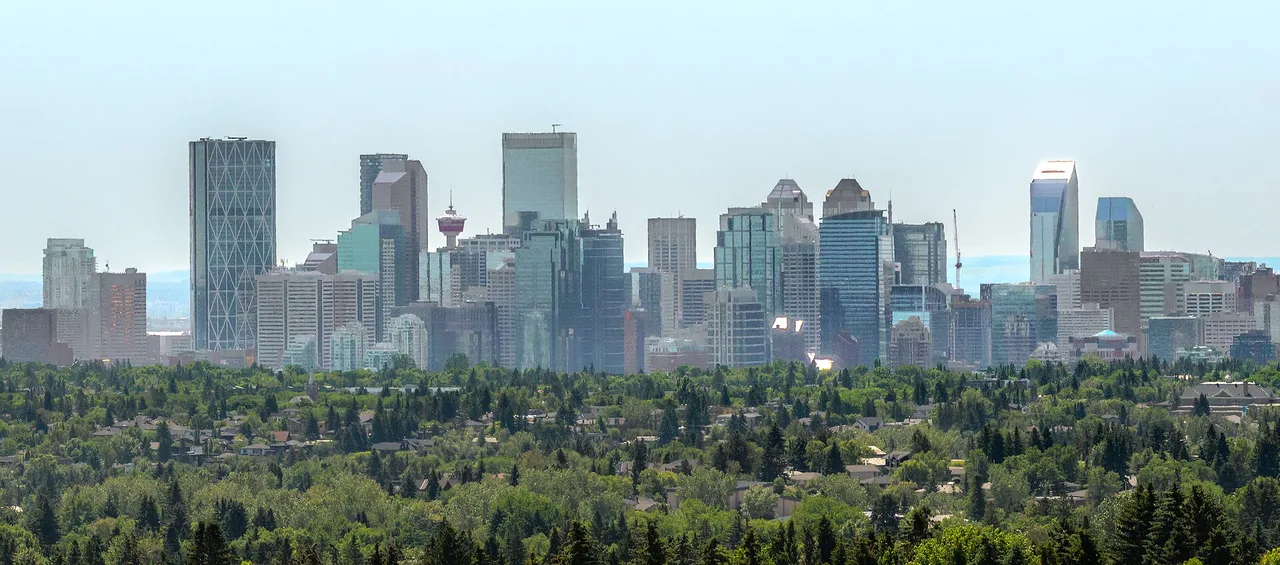
Calgary is a one-to-two-day city that happens to sit 130 km from Banff, and the sensible move is to treat it that way. Give it an afternoon downtown, a morning at Heritage Park, and spend your remaining days on the mountains and the badlands that the city puts within easy reach. The one exception is Stampede week, when Calgary stops being a stopover and becomes the reason for the trip.
The rest of the year the cowboy city of the brochures is mostly a memory kept alive in two or three specific places. That’s not a criticism, just a scheduling fact worth knowing before you book three nights expecting a rodeo.
The Stampede, and when it actually happens
The next Calgary Stampede runs 9-18 July 2027. For those ten days the city dresses up in a way that sounds like a cliche until you see office workers in Wranglers on the CTrain: free pancake breakfasts appear in parking lots across the suburbs, bars put up temporary tents, and hotel rates roughly double.
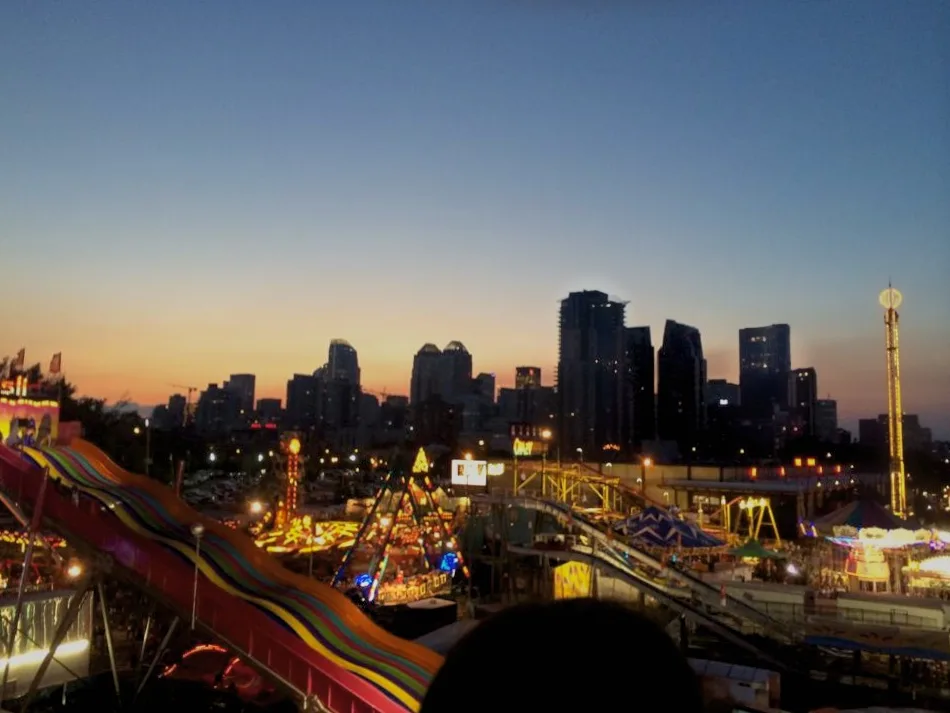
Two things the Stampede doesn’t publish: a gate admission price on its own front page, and an attendance figure. You’ll see “over a million visitors” quoted everywhere; it has no primary source, so treat it as folklore. Buy rodeo and evening show tickets separately and early, and if you’re coming for the mountains rather than the party, plan around that week rather than through it. For tickets, hotel neighbourhoods and the next published dates in one place, see Calgary Stampede.
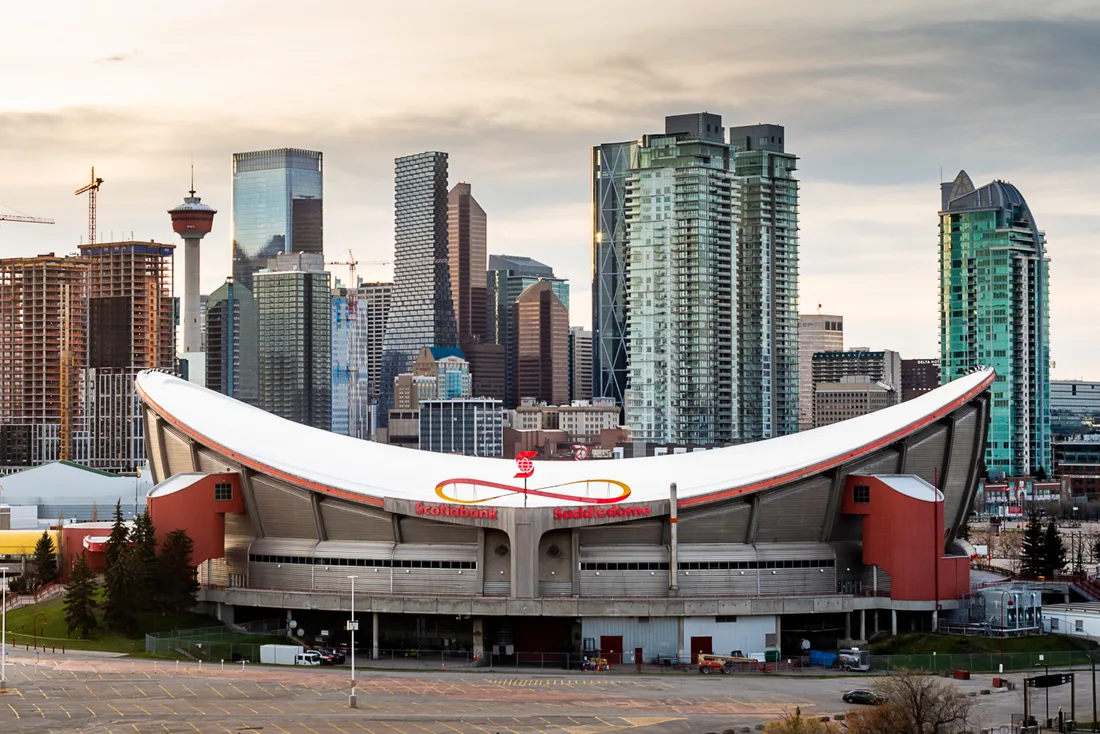
Stampede Park doubles as the home of the Scotiabank Saddledome, the saddle-shaped 1983 arena where the Calgary Flames play from October to April.
Downtown in half a day
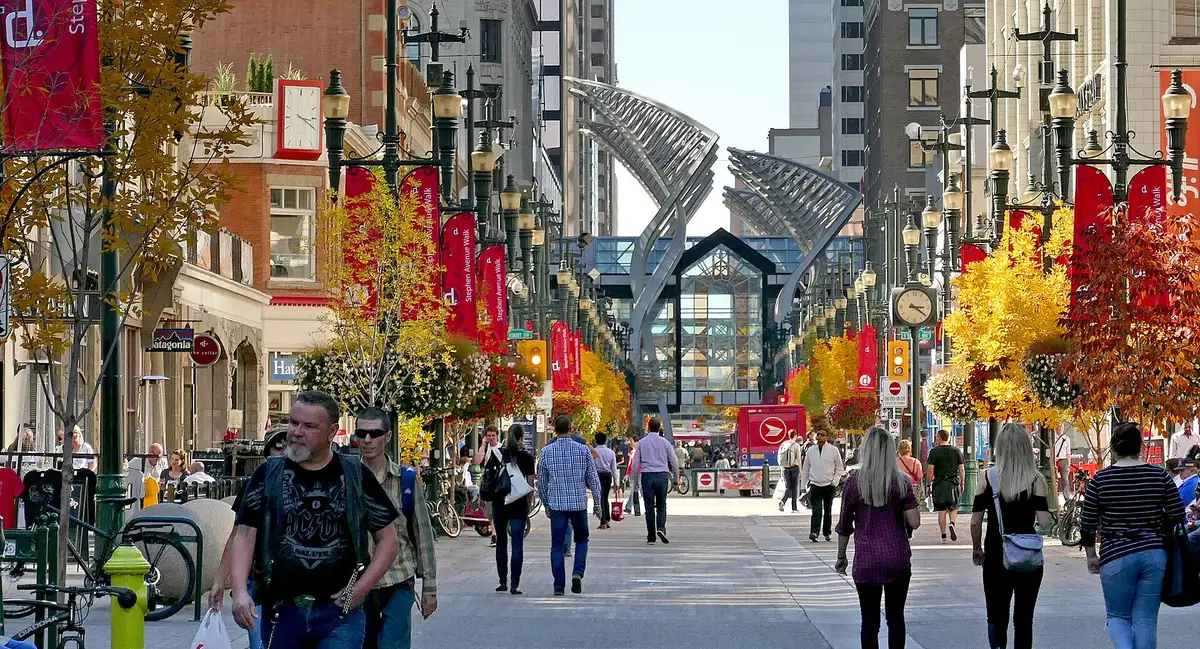
Start on Stephen Avenue, the pedestrianised stretch of 8 Avenue SW that runs through the oldest surviving block in the city. The sandstone facades are the reason it’s a National Historic Site: after a fire in 1886 the city rebuilt in local stone, and enough of it survived the oil-boom demolitions to give downtown a spine.
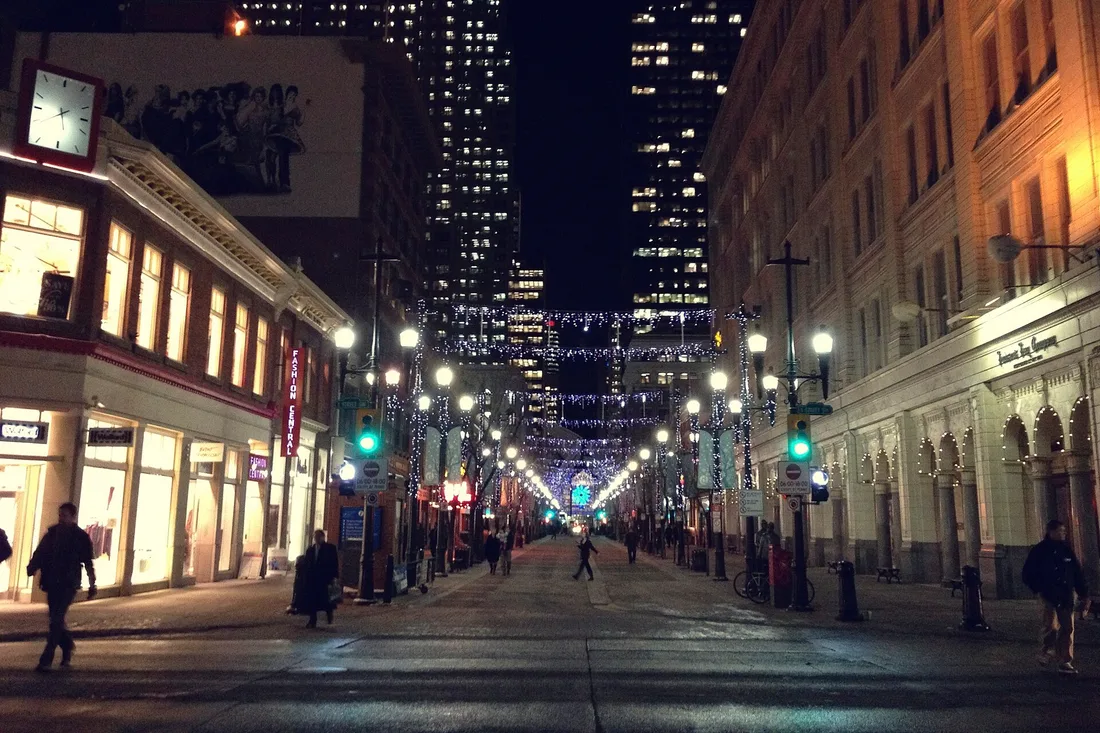
Above your head runs the thing Calgary genuinely does better than anywhere else. Since the first bridge went up in 1969 the Plus 15 has grown to 86 bridges and more than 16 km of enclosed, heated walkway on the second storey of downtown. In January, when the wind comes off the prairie, locals cross ten blocks without a coat. It is worth ten minutes of curiosity even in August, if only to see a city designed around a climate.
Calgary Tower
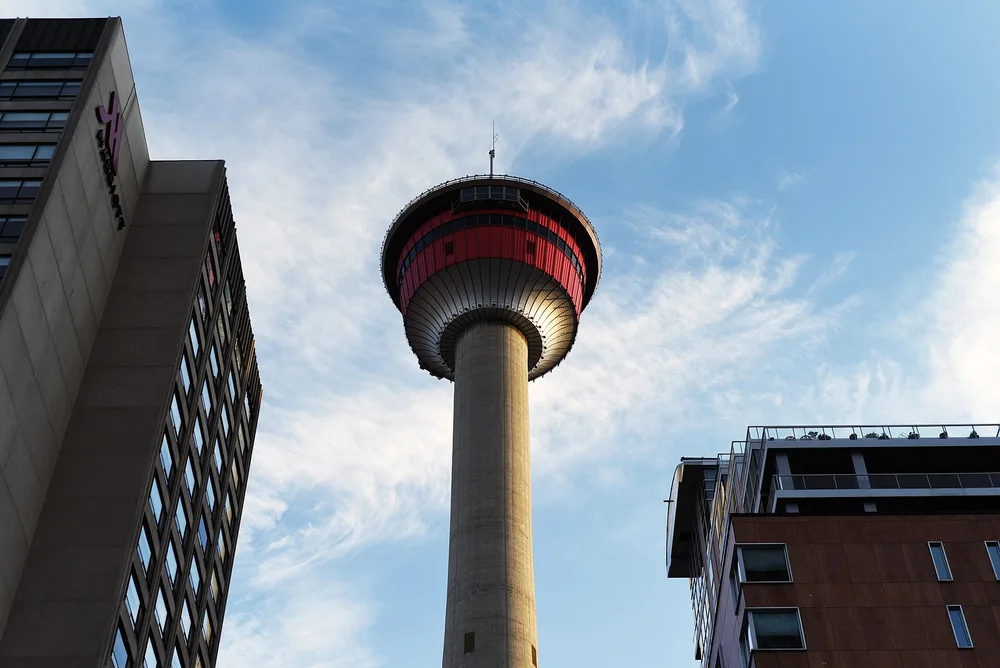
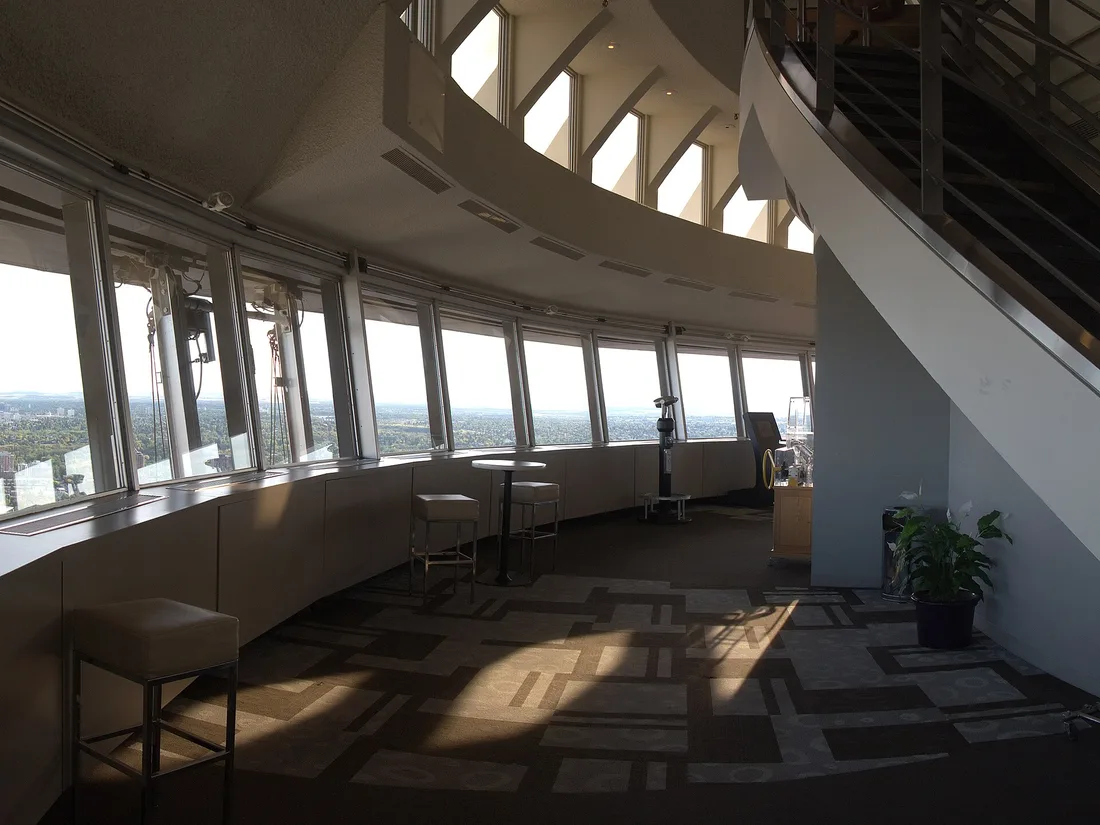
The observation deck has a glass floor section and, on a clear day, a line of Rockies along the western horizon. Hours are 10 am to 9 pm from September to May, extended to 10 pm Monday to Saturday in June, July and August, with the last ride up half an hour before closing. The operator publishes its rates as an image and warns they change by date, so check on the day rather than trusting any figure you read in a guide.
The river, which is the best free thing here
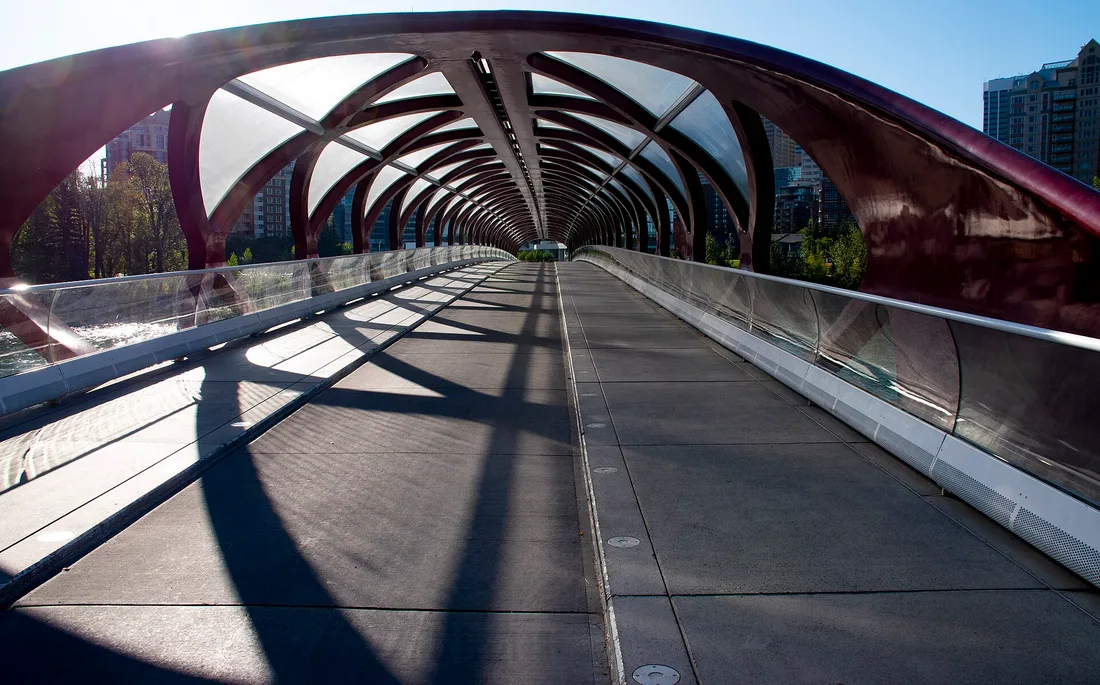
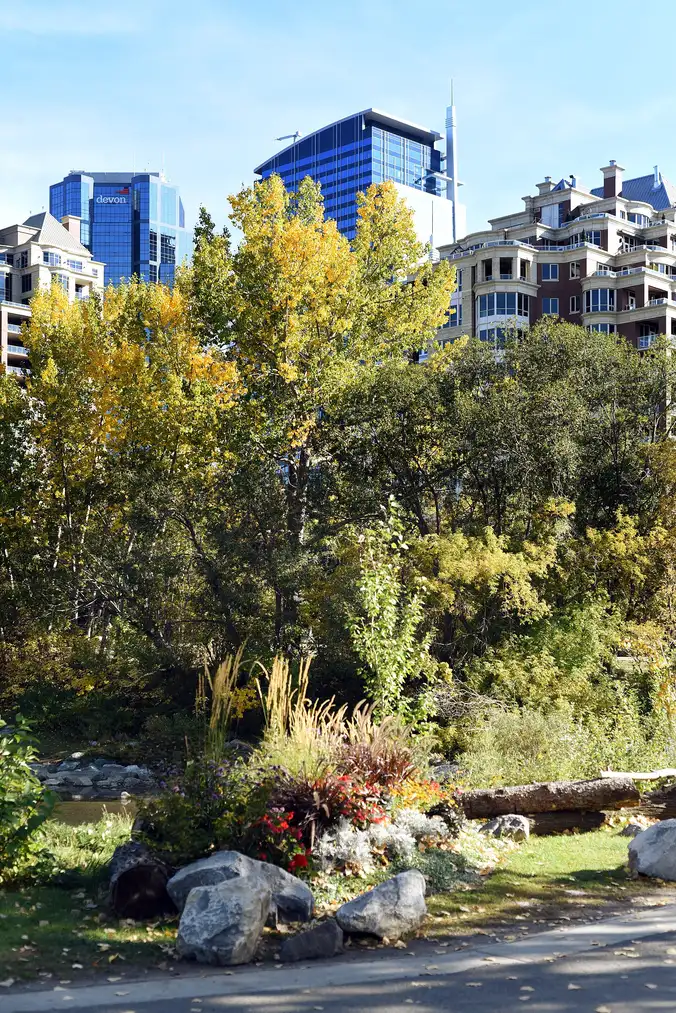
The Bow runs right through the middle of town, and the pathway network along it’s the part of Calgary that locals actually use. Prince’s Island Park sits in the river a few minutes from the office towers, and the Peace Bridge crosses to the north bank in a red helix designed by Santiago Calatrava and opened on 24 March 2012. The City counts roughly 9,000 people a day walking and cycling over it in summer.
East Village and Studio Bell
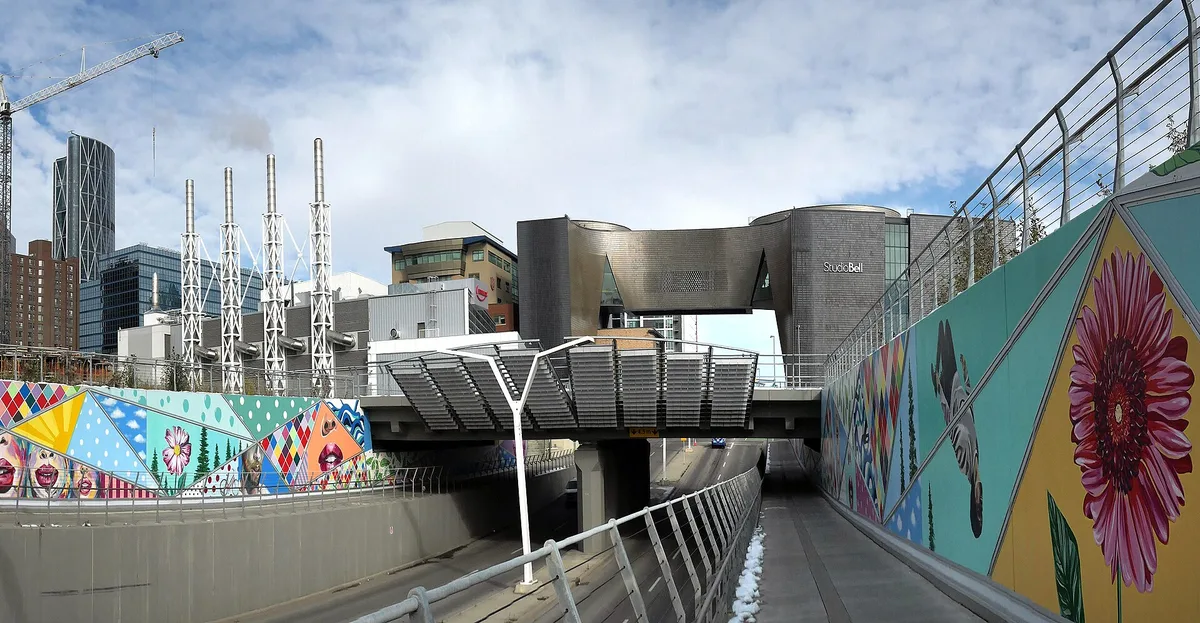
East of downtown, the East Village has gone from derelict to walkable in about fifteen years, and Studio Bell, home of the National Music Centre, is the building that announced it. Nine interlocking towers wrapped in glazed terracotta, built partly over the historic King Eddy blues bar, with recording studios and a collection of instruments inside.
One correction to older guides while you’re planning downtown: the Glenbow is closed for renovation and will reopen under a new name, the JR Shaw Centre for Arts & Culture. No reopening date has been announced, so don’t build a rainy afternoon around it.
Heritage Park, the one that surprises people
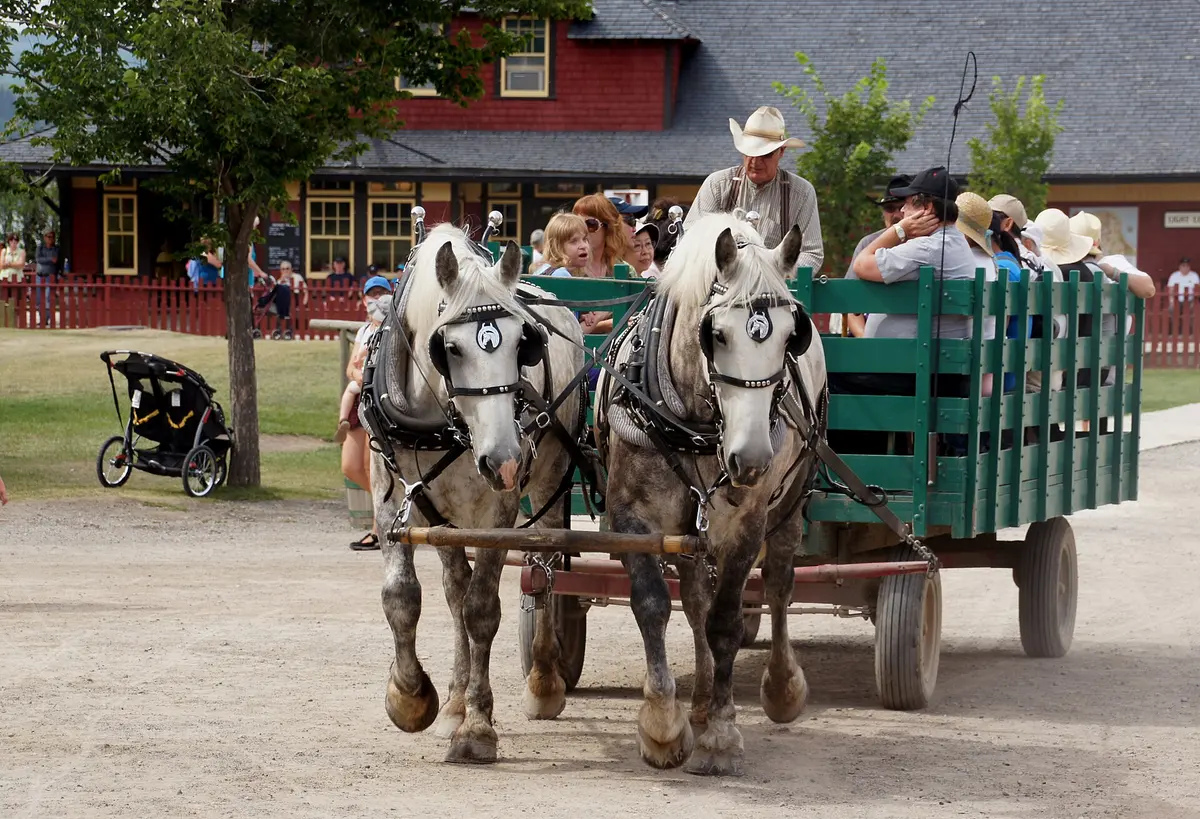
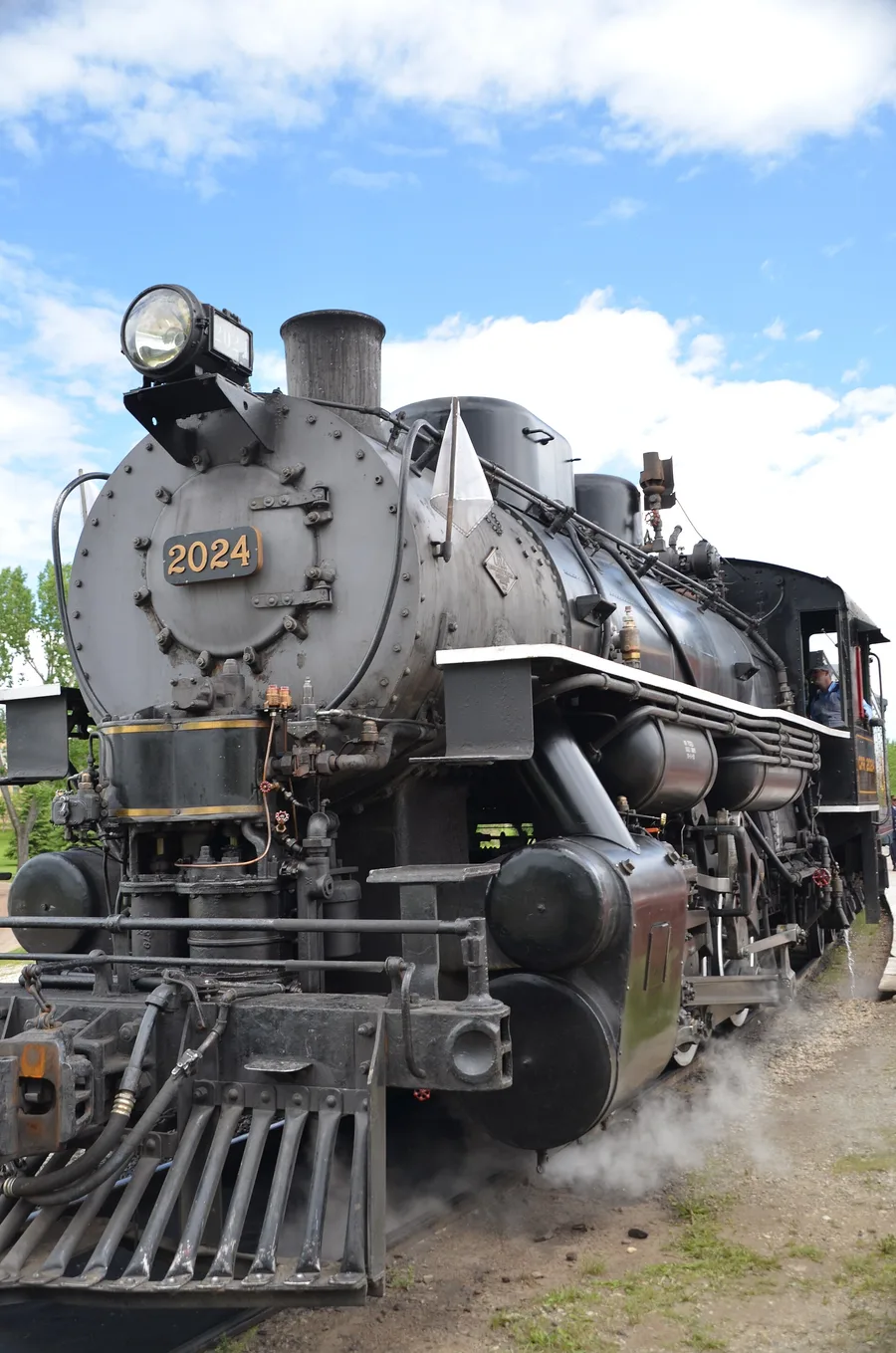
If you only do one paid attraction in Calgary, make it Heritage Park Historical Village on the Glenmore Reservoir. It’s a working village of relocated and reconstructed buildings staffed by people in period clothing, with a steam train doing laps of the site and horse-drawn wagons on the streets. Adults expect to tolerate it for the children and end up staying four hours.
Admission is C$39.95 for adults 16-64, C$31.95 for seniors and C$27.95 for children 3-15, all before GST - the park quotes its prices pre-tax, so add 5% at the till. Under-3s go free.
The season is the catch. The Historical Village opens daily from 16 May to 30 August 2026, then weekends only plus Thanksgiving Monday until 12 October, and it’s closed on 15 July 2026. Outside those dates the Gasoline Alley Museum, the Selkirk Grille and the plaza shops still run year-round, but the village itself is shut.
With children
The Wilder Institute / Calgary Zoo sits on St. George’s Island in the Bow, ten minutes from downtown, and it’s open 364 days a year, 9 a.m. to 6 p.m., with last entry at 5. More than 4,000 animals from over 100 species, and a conservation program that’s the reason for the Wilder Institute name.
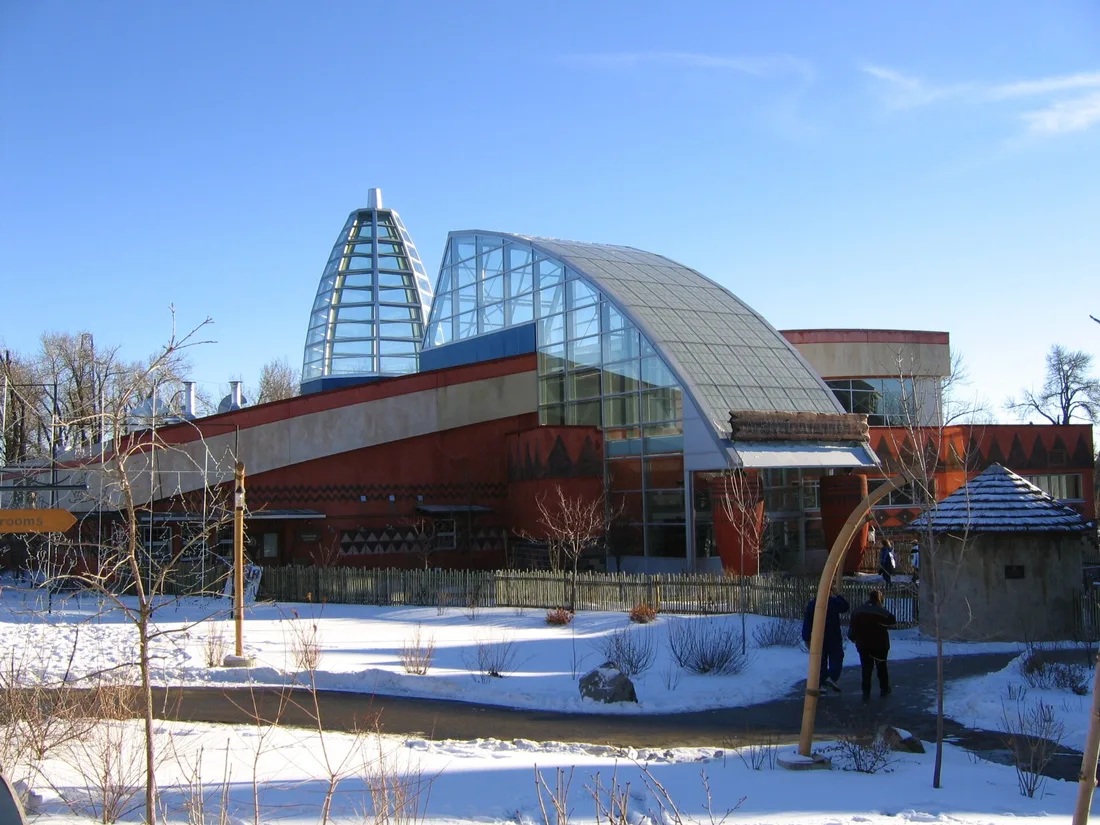
Two practical notes that trip people up. Tickets are priced dynamically, so the same Saturday can cost noticeably more bought at the gate than bought a week out, and there’s no fixed price to quote. And the West Gate is closed, expected to stay closed until at least 2028/2029 while the Imagine Asia zone is built, so ignore any guide that sends you there. Park in the North Lot at 210 St. George’s Drive NE.
Next door, TELUS Spark is the science centre, and out on the western edge WinSport at Canada Olympic Park keeps the 1988 Winter Olympics ski jumps and bobsleigh track in use, with a summer bike park and a winter ski hill inside city limits.
Eating
Alberta beef isn’t a marketing line here, it’s the local default, and steakhouses in Calgary range from white-tablecloth to a booth in a strip mall. Order a Caesar with it: Canada’s clam-based national cocktail was invented here at the Calgary Inn in 1969, so this is the place to drink one. Beyond that, three districts are worth walking rather than driving: Inglewood, the oldest neighbourhood, east of downtown along 9 Avenue SE; Kensington across the river to the northwest; and 17 Avenue SW, known locally as the Red Mile, which is where the city goes out.
We’re not naming individual rooms in this guide, because Calgary restaurants open and close faster than a travel page can be updated and a dead recommendation is worse than none.
Day trips, which is what the city is really for
Banff is 140 km and about 90 minutes from the airport, straight west on the Trans-Canada. That’s close enough for a day trip and much better as a base change; our Banff guide covers the shuttle system you’ll need for the lakes. Entry is C$12.25 per adult per day; the Canada Strong Pass waived it for everyone from 19 June to 7 September 2026, and it’s charged again from 8 September 2026.
Kananaskis Country is nearer, quieter and needs a different ticket. It’s provincial land, not a national park, so your Parks Canada pass is useless there and a Kananaskis Conservation Pass costs C$15 a day or C$90 a year, plate-scanned in the lots (rentals included) and C$150 plus a 20% surcharge if you skip it. Buy it online by 11:59 pm on the day and you’re covered, which has rescued a lot of people.
Drumheller and the Royal Tyrrell Museum are 90 minutes northeast, in the badlands. Adult admission is $25 including tax, and from 15 May to 31 August the museum stays open until 9 p.m. That single fact reshapes the day: leave Calgary after lunch, walk the hoodoos in late-afternoon light, then take the galleries in the evening when the tour buses have gone. Between 19 June and 7 September 2026, under the Canada Strong Pass, under-18s got in free; outside that window the museum’s regular rates apply.
Head-Smashed-In Buffalo Jump, a UNESCO World Heritage Site near Fort Macleod, is the longer southern option and the most rewarding of the four if you have a full day.
Getting around
From YYC, a taxi or rideshare downtown takes 20-30 minutes; Route 300 buses run straight from the terminal to Centre Street for the price of a transit fare. The CTrain is free through the downtown section of 7 Avenue, which is a genuinely useful thing to know if you’re hopping between Stephen Avenue, the tower and Stampede Park. Our guide to Calgary airport to downtown breaks down the bus, taxi and rideshare fares in full, plus the shuttle straight to Banff if the city is just a stopover. Travellers starting in the UK can price the inbound nonstop on London to Calgary flights.
Do you need a car in Calgary itself? No. Do you need one for everything described in the day-trips section? Effectively yes, and picking it up on the day you leave the city saves you two nights of hotel parking. Our guide to renting a car in Canada walks through the winter-tire rules and the drop charge you pick up by leaving the car in Vancouver, and if you do collect at the airport, car rental at Calgary Airport covers the counters and their hours.
When to visit
Late June to early September is the reliable window: warm days, everything open, mountains accessible. Stampede week is its own category. September is quieter and cheaper, and the drive west is at its best. Winter is cold and dry, with chinooks - warm westerly winds that can lift the temperature 15 degrees in a few hours and take the snow off the streets in an afternoon. That volatility is why Calgarians talk about the weather so much.
Read also
- Where to sleep on a Rockies stopover: where to stay in Calgary
- The province around it: Alberta travel guide
- Alberta’s other big city, 300 km north: Edmonton guide
- Ninety minutes west: Banff National Park
- The drive beyond Banff: Icefields Parkway
- Every city we cover: the cities hub
- Every national park we cover: the parks hub
On the map
The map loads on click - to keep the page lightweight.
The map didn’t load. Check your connection and refresh the page.
Admission and opening hours
- Admission price
- Free to walk the downtown and the river pathways. Heritage Park C$39.95 adult, C$31.95 senior, C$27.95 child 3-15, all plus GST. Calgary Tower and the zoo price by date and are not fixed.
- Opening hours
- Calgary Tower 10 am - 9 pm September to May, to 10 pm Monday to Saturday in June-August. Heritage Park Historical Village daily 16 May - 30 August 2026, then weekends to 12 October 2026. Zoo 9 am - 6 pm, 364 days a year.
Prices and hours from the operators own sites, checked 24 July 2026. Calgary Tower publishes its rates as an image and says they vary by date; the zoo uses dynamic pricing.
Details checked: July 24, 2026
Distance
- Vancouver ≈970 km · ~11-12 h by road via the Trans-Canada, or 1 h 30 min by air
- Calgary ≈0 km · Calgary International (YYC) is about 17 km northeast of downtown YYC is the main gateway airport for the Canadian Rockies.
Read also

Cities · 11 min read
Regina: Legislature, RCMP Heritage Centre and Prairie Base
Verified · August 29, 2026Wascana Centre, the Legislature, the Mounties' only training depot and a free T. rex - what Regina actually rewards, plus the road to Saskatoon.

Cities · 10 min read
Whitehorse: Yukon Base for Aurora, Rivers and the Klondike
Verified · August 28, 2026Whitehorse in 2026: SS Klondike grounds open but boat closed, MacBride C$12, Beringia C$6, Miles Canyon and aurora season.

Cities · 9 min read
Things to Do in Saskatoon: River Valley, Wanuskewin & Skies
Verified · August 27, 2026Saskatoon in practice: Meewasin trails, Wanuskewin bison, Remai Modern by donation, and a prairie day trip to Riding Mountain.

Cities · 9 min read
Lunenburg: UNESCO Old Town Guide
Updated · September 2, 2026Old Town Lunenburg from Halifax: UNESCO grid of 1753, painted harbour, Fisheries Museum prices, Bluenose II, and when an overnight beats a day trip.