
Regina: Legislature, RCMP Heritage Centre and Prairie Base
Wascana Centre, the Legislature, the Mounties' only training depot and a free T. rex - what Regina actually rewards, plus the road to Saskatoon.
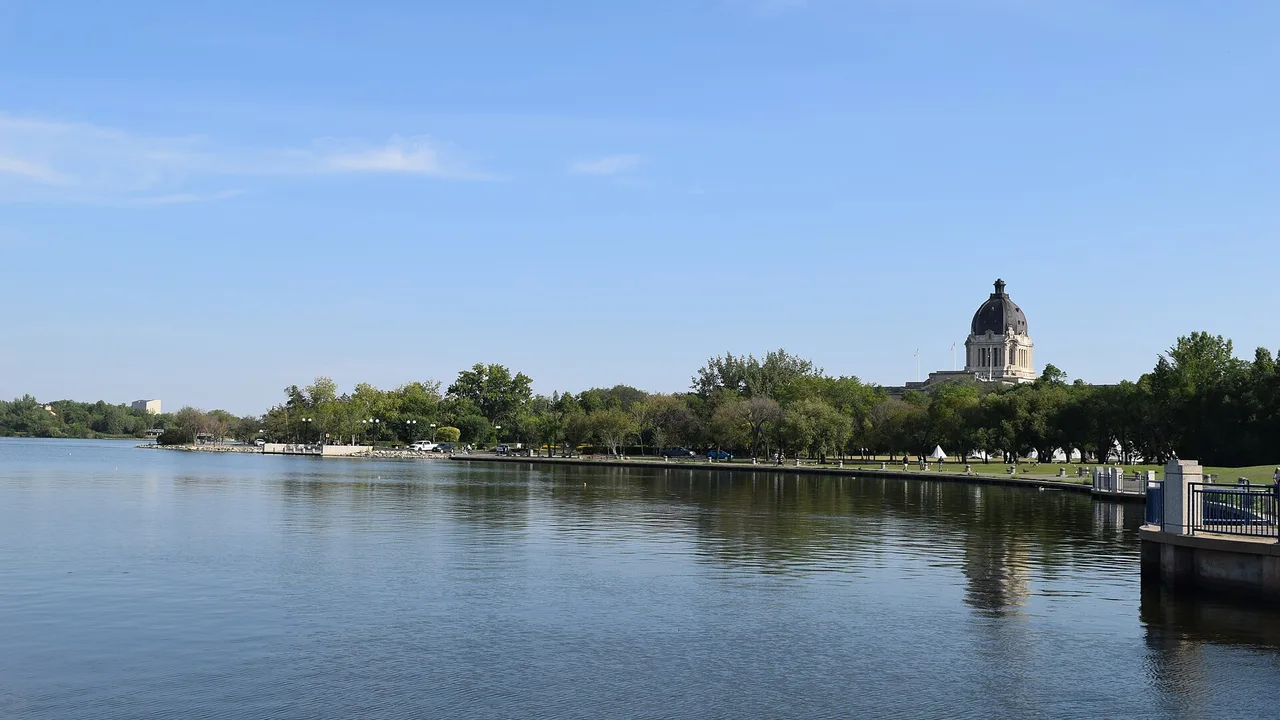
Regina doesn’t have a river. What it has is a creek dammed into an artificial lake, a legislature built to anchor a brand-new capital, and the RCMP’s only cadet training academy. The 2021 census counted 226,404 people in the city, 249,217 across the wider metro area - a prairie capital built around institutions, not a waterway, which makes it a genuinely different stop than Saskatoon, 260 km north on the South Saskatchewan River.
The short version: give Regina a full day for Wascana Centre, which includes the Legislature and the Royal Saskatchewan Museum, where there’s no ticket price at all and a life-size T. rex cast waiting. Add a half-day for the RCMP Heritage Centre if you care how the Mounties actually trained. Everything else - Government House, the MacKenzie Art Gallery, downtown itself - is a bonus depending on how much time is left.
Regina wasn’t even Regina until European settlers arrived. Indigenous people called the site oskana ka-asastēki, “bone piles,” after the bison remains that gathered here; settlers translated that plainly as Pile of Bones. The rename came in late 1882, when Princess Louise, Queen Victoria’s daughter and wife of the Governor General, suggested honouring her mother instead, Regina being Latin for “queen.” The new town became capital of the North-West Territories the following year, and when Saskatchewan became a province in 1905, Regina had to wait one more year, until 1906, before it was formally named the provincial capital.
Wascana Centre, the park built around government
Wascana Centre is Regina’s answer to a river: 1,900 acres of urban parkland wrapped around a 150-hectare artificial lake, with 8.7 km of paved pathways and another 5.6 km of natural trail. The whole thing was planned in 1962 around five deliberate goals: the seat of government, education, cultural arts, recreation and environment. That’s why the park doesn’t just hold the Legislature. It also houses the Royal Saskatchewan Museum, the Saskatchewan Science Centre and the MacKenzie Art Gallery, and it runs more than 400 events a year, from the Queen City Marathon to a summer Dragon Boat Festival.
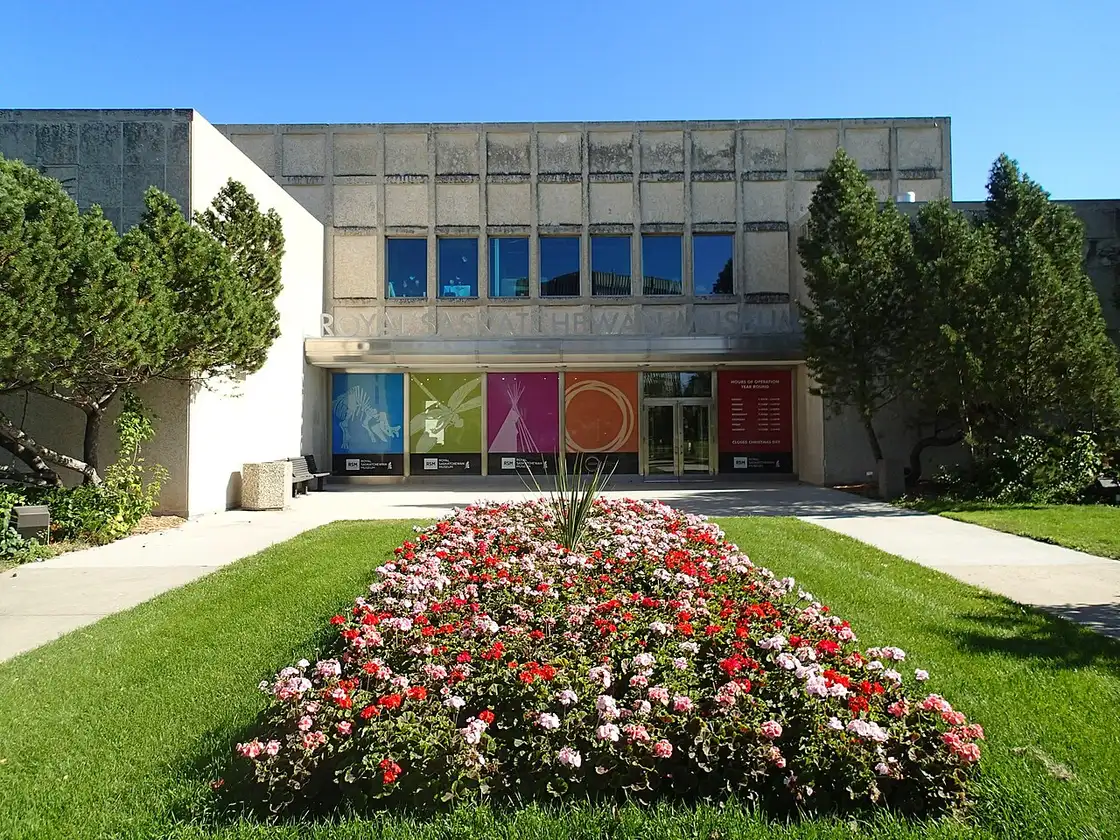
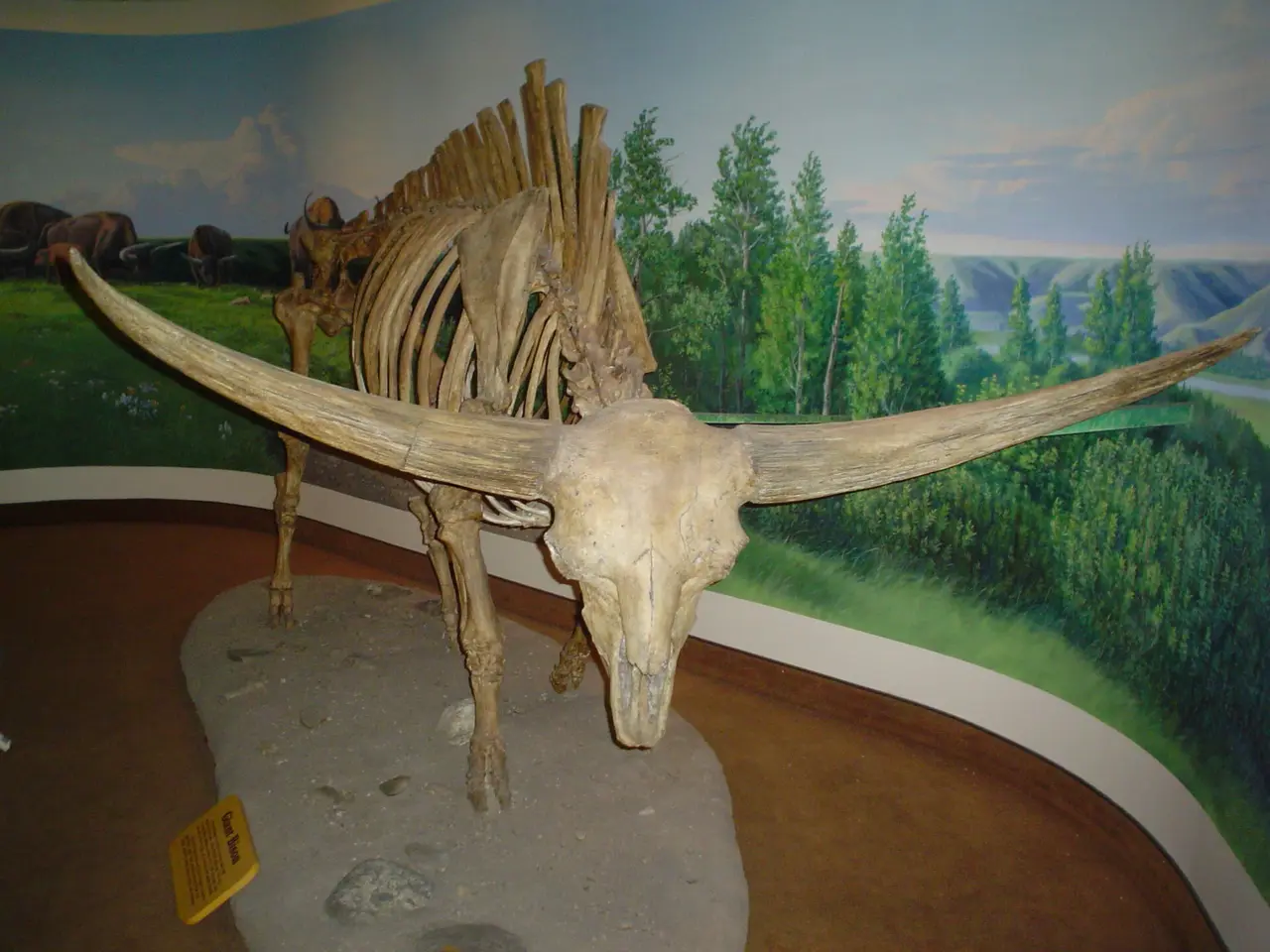
The Royal Saskatchewan Museum, founded in 1906 as the province’s first museum, has no admission charge - its own visitor page says admission is by donation and suggests $5 a person - and its biggest draw isn’t subtle: a life-size cast of Scotty, the world’s largest known T. rex, unveiled in the museum’s two-storey CN T.rex Gallery in 2019. The actual fossil was dug up in southwestern Saskatchewan, not Regina, and the museum also runs the T.rex Discovery Centre out at the dig site in Eastend, so what you’re seeing here is the cast, not the bones themselves, alongside the museum’s natural-history dioramas of the province’s ecozones.
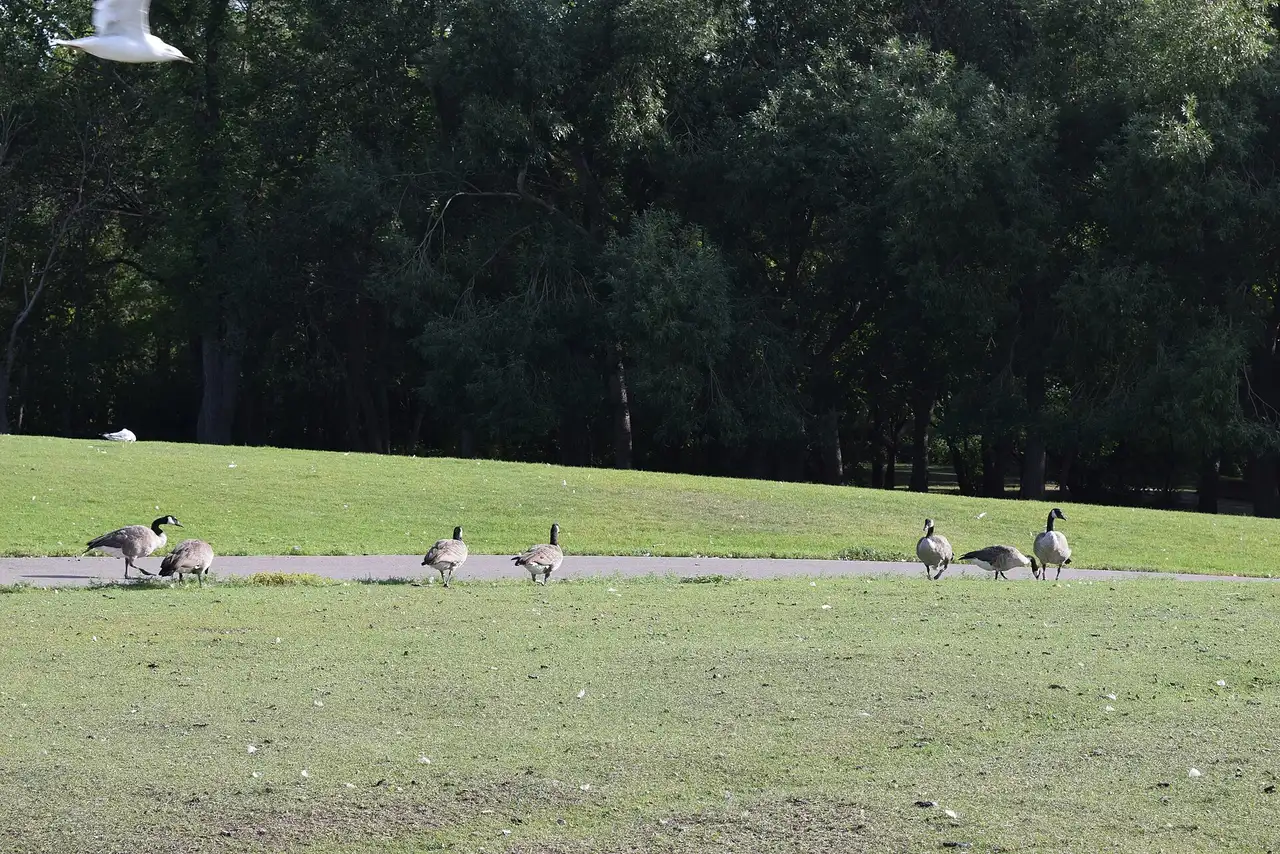
Walk the lake loop in an afternoon and you’ll pass most of what makes Regina worth the stop without needing a car. The MacKenzie Art Gallery, worth a note on its own, charges $12 general admission, tax included, and members plus anyone 17 and under go free. It’s closed Mondays, runs a normal 10 am-5:30 pm Tuesday, Wednesday and Friday, and stays open until 9 pm on Thursdays if you’d rather see it after a full day outside.
Touring the Legislature
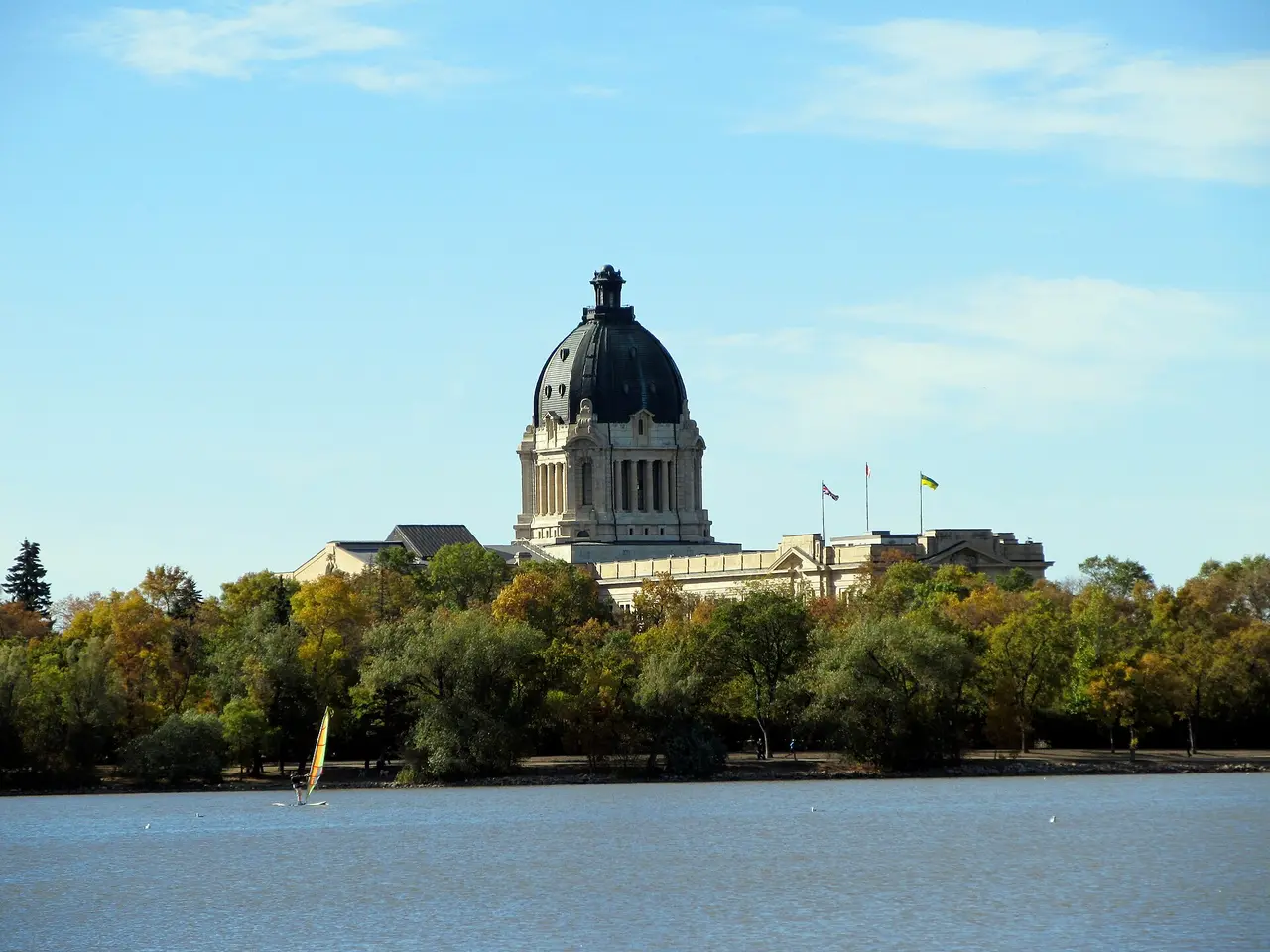
The Saskatchewan Legislative Building took four years to build, starting 31 August 1908, and the Legislative Assembly sat in its new chamber for the first time on 25 January 1912. It cost $1.8 million at the time, designed by the Montreal firm E. & W.S. Maxwell and built by Peter Lyall & Sons, and the style deliberately mixes English Renaissance with French Beaux-Arts, faced in cream Tyndall stone shipped in from Manitoba.
Tours are free, offered in English or French, and run every 30 minutes from 9 am to 5 pm through the summer season, Victoria Day weekend to Labour Day weekend, with the last tour starting at 4:30. That’s the summer schedule; the day after Labour Day weekend ends - 8 September in 2026 - the building switches straight to a slower winter cadence, tours only once an hour and the last one starting at 4. It’s closed four days a year: Good Friday, Christmas Day, Boxing Day and New Year’s Day. Groups of ten or more should book ahead rather than show up expecting a slot.
The only classroom the Mounties have
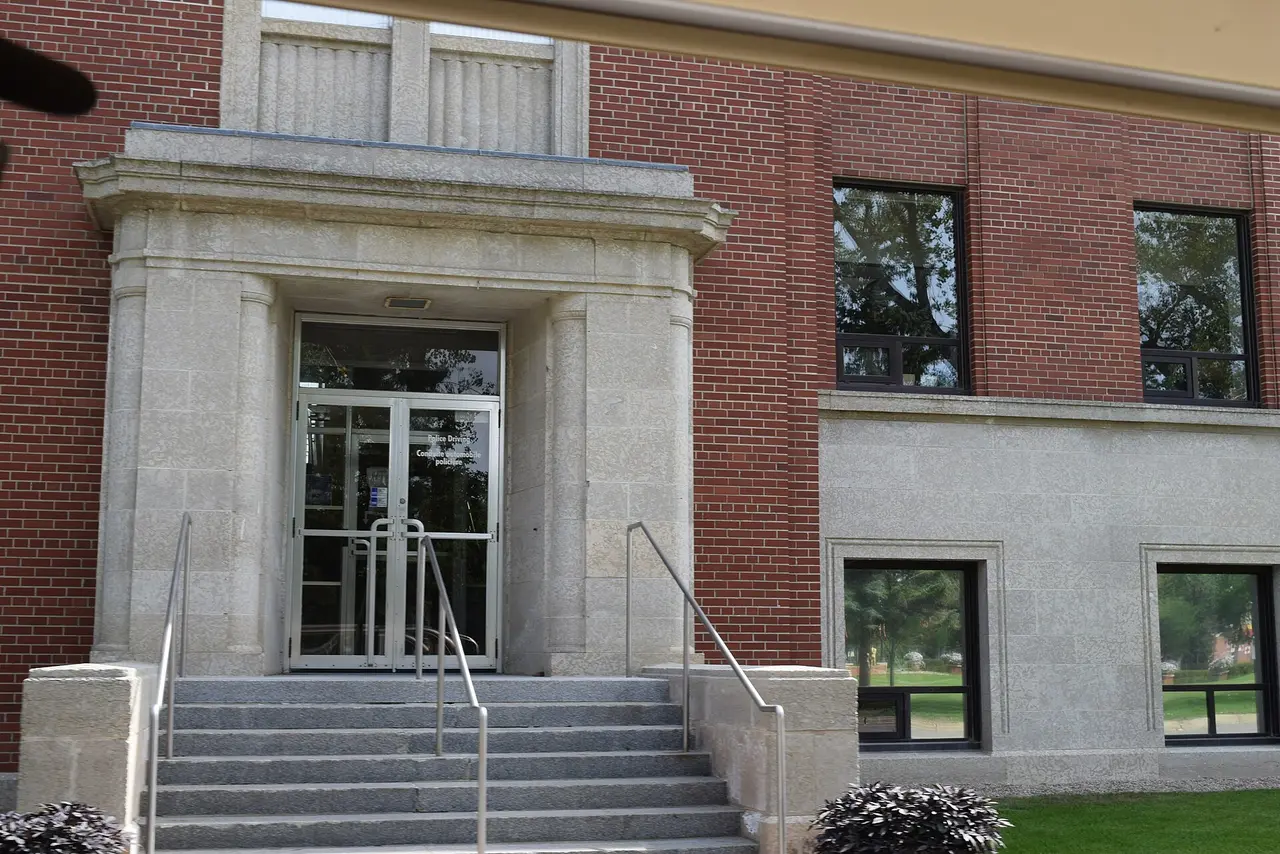
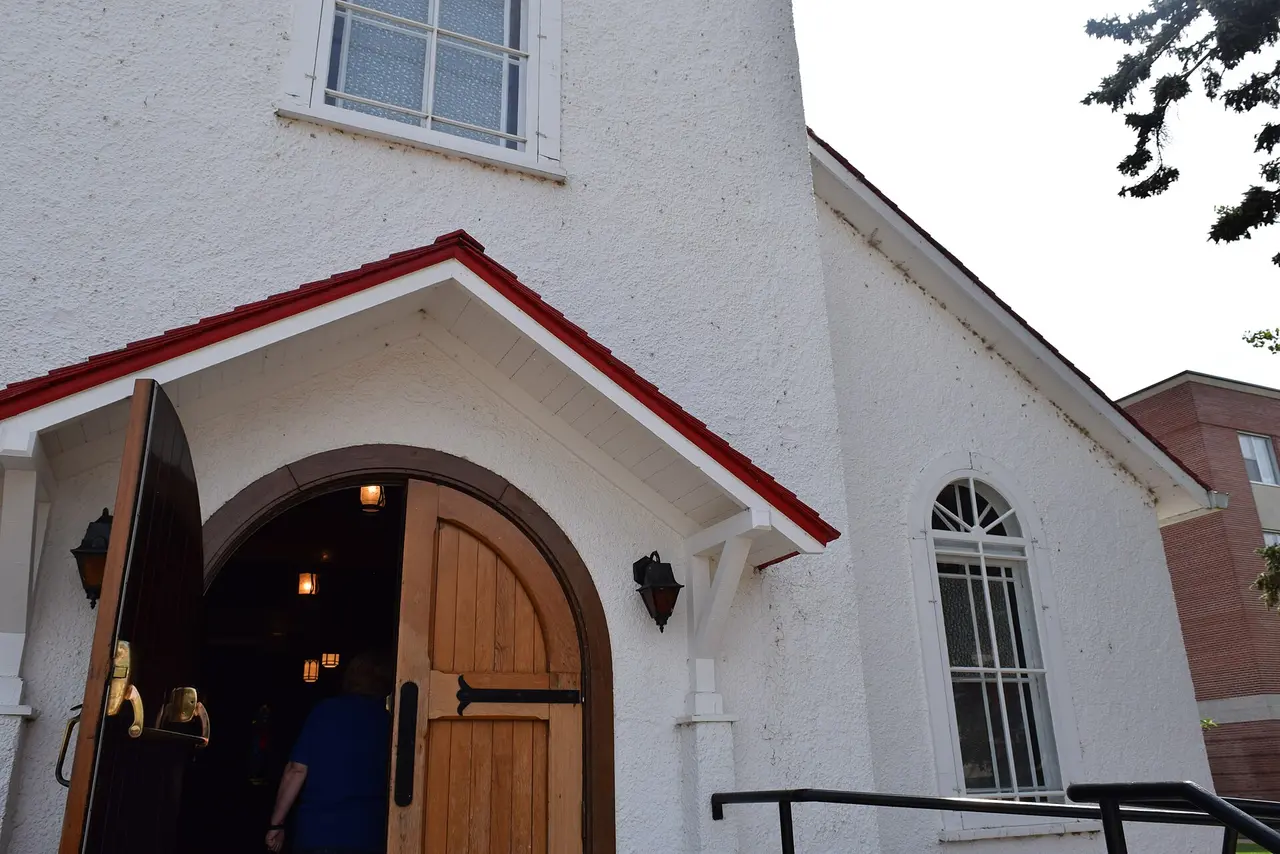
Every cadet who wants to become a Mountie today trains at Depot Division, on the west side of the city. The RCMP calls it their oldest division, training members here since 1885, and it remains the force’s only cadet academy. That’s not a branch office or a regional training centre - it’s the single depot for the entire national police force, which makes Regina an odd kind of company town: a real share of what the RCMP does starts on this one property.
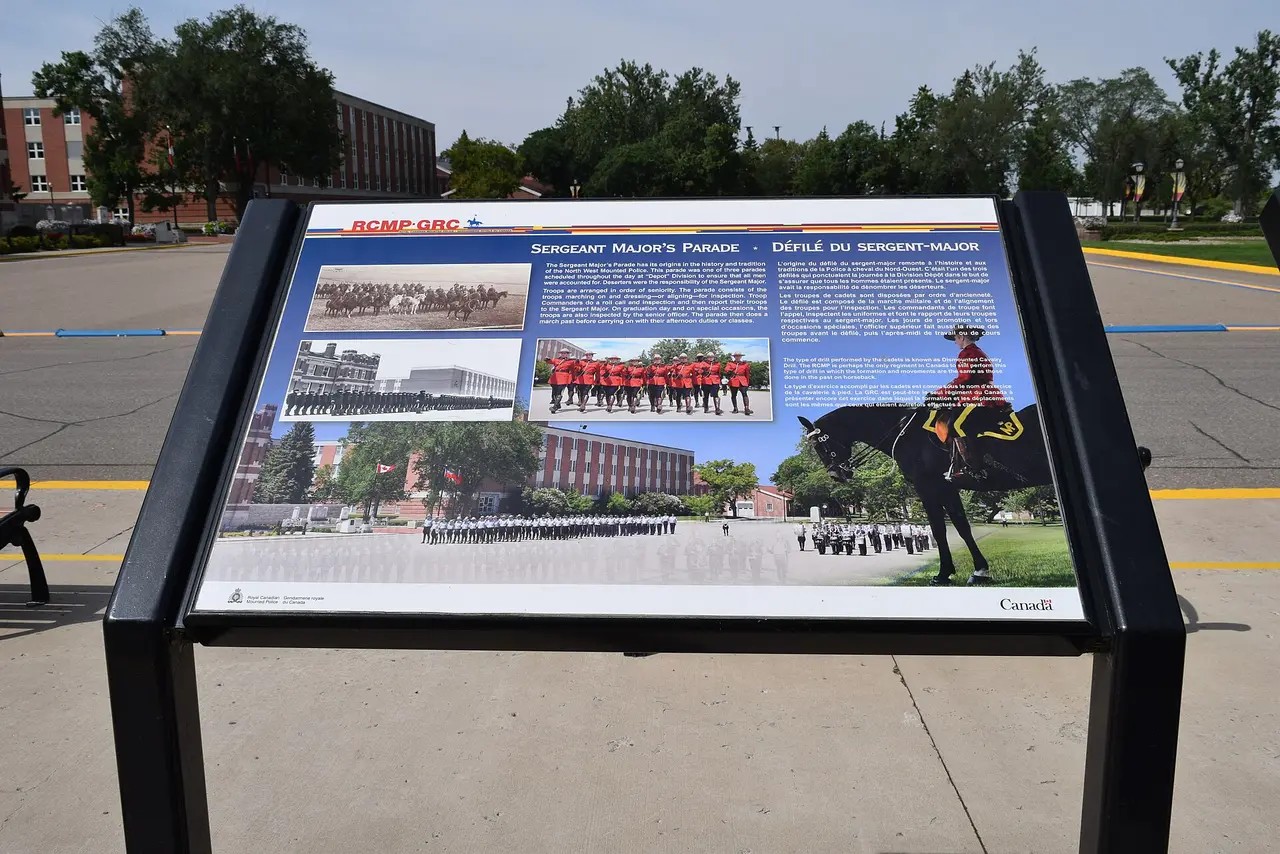
The Sergeant Major’s Parade itself runs daily as part of cadet training, but the only way the public watches it in person is a guided trolley tour through the RCMP Heritage Centre - and that tour’s 2026 season, Tuesday to Friday from 2 June to 28 August, closed the day before this was published. RCMP Depot also runs a Sunset Ceremony each July: four dates in 2026 (1, 7, 14 and 21 July), gates at 5:30 pm, free. By late August those are behind you too. What’s still ahead this year is the RCMP National Memorial Service, held the second Sunday of September on the Parade Square - 13 September 2026, gates open 8 am, free - the one Depot event a visitor can still plan around this season.
Inside the RCMP Heritage Centre
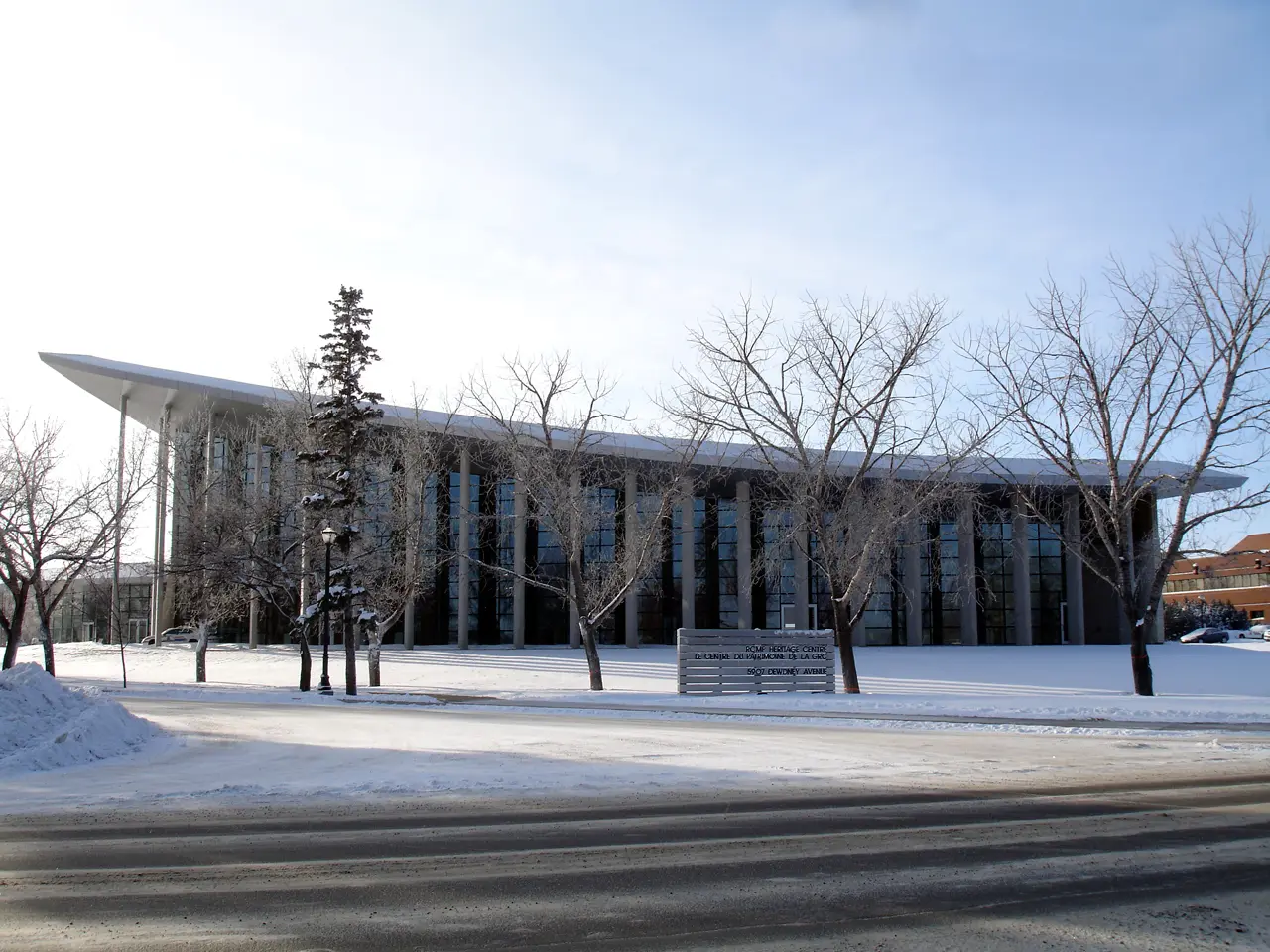
Next door to the working academy sits the RCMP Heritage Centre, designed by the internationally known Canadian architect Arthur Erickson and built to tell the force’s history through six exhibits and a driving simulator, no wall of glass cases in sight. It opened in the mid-2000s as a replacement for the old RCMP Centennial Museum on the same site.
2026 admission runs $10 for an adult, $8 for a senior, $8 for a student with ID, $8 for a youth aged 12 to 17, $6 for a child aged 5 to 11, free for anyone 4 and under, and $30 for a family of two adults and two children, plus applicable taxes on top - unlike the MacKenzie’s $12, which already has tax folded in. Hours follow the same long-weekend convention as the Legislature, not a coincidence so much as the shared local standard for switching seasons: 10 am to 5 pm daily through summer, then 11 am to 5 pm daily starting 8 September. A trip planned for early September should check both venues’ hours before assuming the longer summer day still applies.
Government House and the park’s other stops
Government House, the restored Victorian mansion that once housed the Lieutenant Governor of the North-West Territories and, later, Saskatchewan, sits a short drive from Wascana Centre. Admission is free, with suggested donations of $6 for adults and $3 for children; it’s open daily 9 am to 5 pm in summer (Victoria Day to Labour Day), then closed Mondays and open Tuesday to Sunday 9 am to 4 pm outside that stretch. It’s a smaller stop than the Legislature or the RCMP sites, worth an hour if you’re already nearby but not worth a dedicated trip by itself.
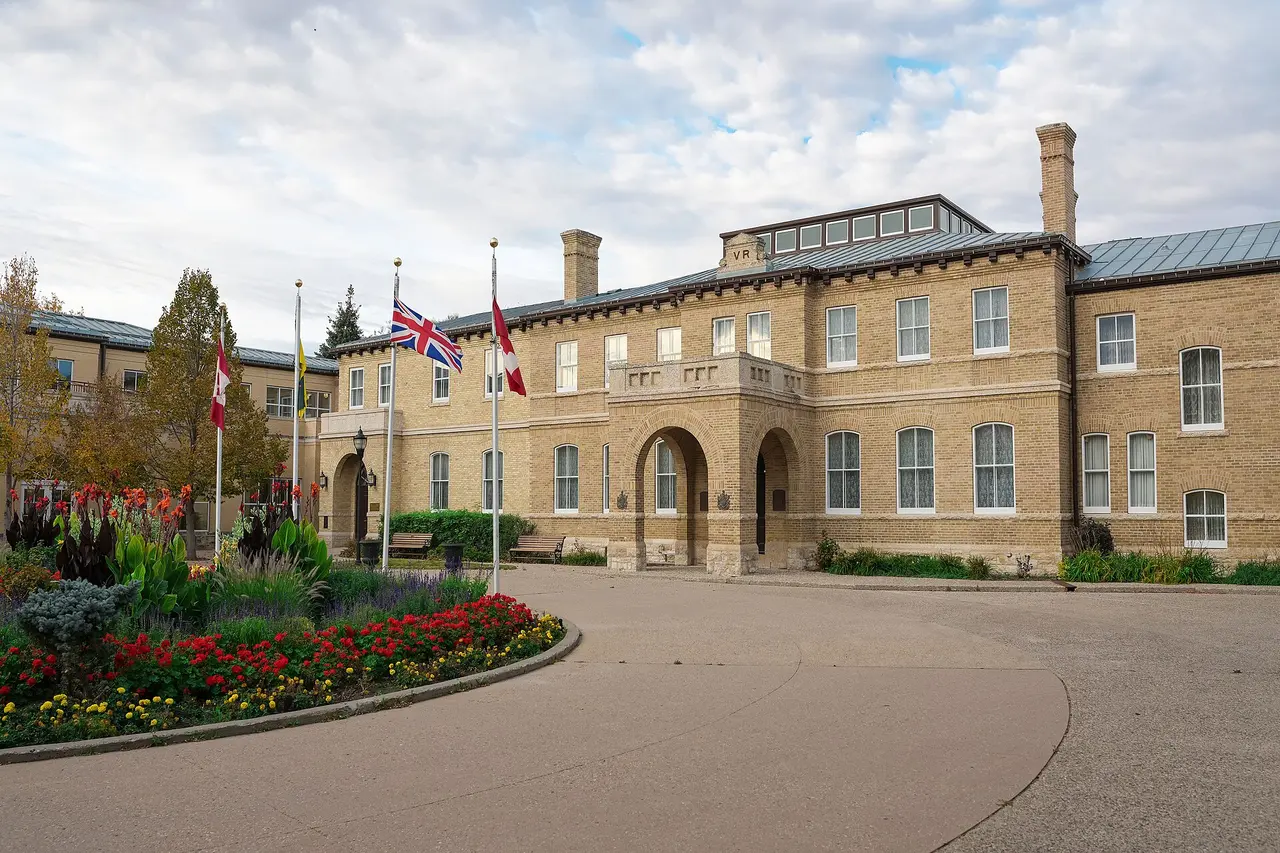
Between the museum stops, downtown Regina itself is a compact, walkable grid, more a place to eat and sleep between the institutions than a sight to plan around on its own.
Regina or Saskatoon, and the drive between them
Picking one Saskatchewan base comes down to what each city is built around: Saskatoon gives you a river city built around trails, a modern art gallery and Wanuskewin’s six thousand years of Indigenous history. Regina gives you the institutions - the seat of government, the RCMP’s only training ground, and a park built to hold both. Neither makes the other redundant, and the drive between them is a manageable link, not a wasted detour: roughly 260 km on Highway 11, about three hours.
Regina International Airport (YQR) sits close to downtown, a matter of minutes, not a long transfer. Its route map is smaller than the name promises but wider than people assume: the airport’s own list runs eight Canadian destinations and eight international ones. Two of the international routes fly year-round, Denver on United and Minneapolis on the WestJet-Delta codeshare, and the rest are winter sun - Las Vegas, Phoenix, Cancun, Mazatlan, Puerto Vallarta, Punta Cana, with a weekly WestJet run to Los Cabos added from 14 December 2026. The useful distinction isn’t domestic versus international, it’s that nothing here crosses an ocean. Coming from Europe, Asia or Australia, you’ll change at Calgary, Toronto or Vancouver and finish on a short domestic hop; coming from the US, you may not have to change at all. Either way, a fly-in, drive-out trip covering both Saskatchewan cities is realistic on one visit: land in one, drive the three hours to the other, fly home from wherever’s easier. If time only allows one, pick Regina for the history and the institutions, Saskatoon for the outdoors and the river; if you’ve got three or four days, Saskatchewan’s provincial guide lays out how the wider map, Grasslands included, connects to whichever city you land in first.
On the map
The map loads on click - to keep the page lightweight.
The map didn’t load. Check your connection and refresh the page.
Admission and opening hours
- Admission price
- Royal Saskatchewan Museum: no ticket price, admission by donation, $5 per person suggested. Legislature tours free. RCMP Heritage Centre 2026: adult $10, senior (60+) $8, student $8, youth (12-17) $8, child (5-11) $6, 4 and under free, family (2 adults + 2 children) $30, plus applicable taxes. MacKenzie Art Gallery: general admission $12 (tax included), free for members and youth 17 and under. Government House: free, donations of $6/$5/$3/$15 suggested.
- Opening hours
- Legislature tours: summer (Victoria Day weekend-Labour Day weekend) every 30 min, 9am-5pm, last tour 4:30pm. RCMP Heritage Centre: summer season (May long weekend-8 September) 10am-5pm daily. MacKenzie Art Gallery closed Mondays, Thu to 9pm.
Both venues switch to reduced winter/regular-season hours the day after Labour Day weekend - 8 September 2026 - not a week later. The summer schedule above is what applies at this article's publish date. Confirm before you travel.
Details checked: August 29, 2026
Read also

Cities · 10 min read
Whitehorse: Yukon Base for Aurora, Rivers and the Klondike
Verified · August 28, 2026Whitehorse in 2026: SS Klondike grounds open but boat closed, MacBride C$12, Beringia C$6, Miles Canyon and aurora season.

Cities · 9 min read
Things to Do in Saskatoon: River Valley, Wanuskewin & Skies
Verified · August 27, 2026Saskatoon in practice: Meewasin trails, Wanuskewin bison, Remai Modern by donation, and a prairie day trip to Riding Mountain.

Cities · 9 min read
Lunenburg: UNESCO Old Town Guide
Updated · September 2, 2026Old Town Lunenburg from Halifax: UNESCO grid of 1753, painted harbour, Fisheries Museum prices, Bluenose II, and when an overnight beats a day trip.

Cities · 9 min read
St. John's, Newfoundland: Signal Hill and Icebergs
Updated · September 3, 2026St. John's in two or three days: Signal Hill, the Battery, iceberg season on the Avalon, Cape Spear and George Street - plus how to arrive via Halifax.