
Lunenburg: UNESCO Old Town Guide
Old Town Lunenburg from Halifax: UNESCO grid of 1753, painted harbour, Fisheries Museum prices, Bluenose II, and when an overnight beats a day trip.
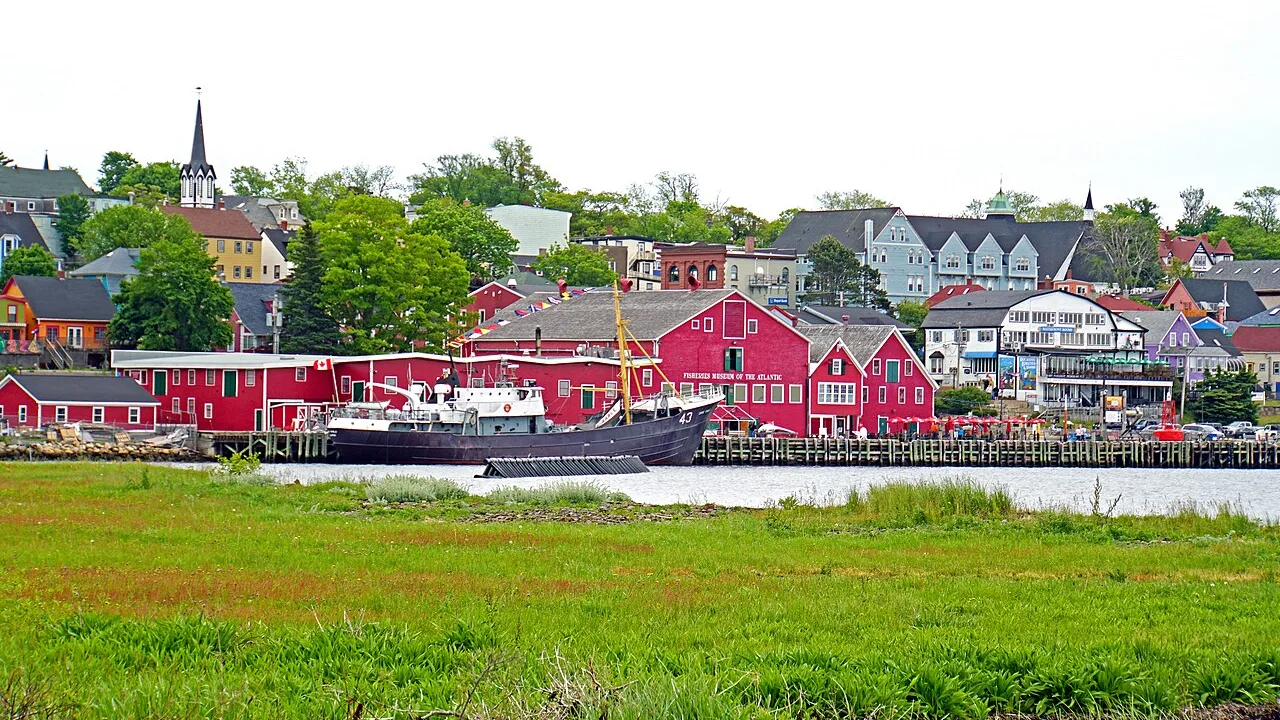
Old Town Lunenburg is a harbour town painted in primary colours: a UNESCO street grid from 1753, a waterfront of fishing vessels and museum wharves, and Bluenose II at the dock when she’s in port. Tourism Nova Scotia puts it about 90 minutes from Halifax along the Lighthouse Route. One focused day covers the harbour, the Fisheries Museum and a Bluenose sighting if she’s home; an overnight is when dinner and empty evening streets matter more than the drive clock.
This is not Peggy’s Cove with more shops. Peggy’s Cove is a granite headland and a lighthouse. Lunenburg is a whole town that still uses its harbour. If you’re building the wider province loop, start from the Nova Scotia guide and treat this page as the South Shore deep dive.
One day or an overnight
One day covers the waterfront, the museum and a slow walk up the hill streets. Two days lets you add Mahone Bay, about 11 km north on Highway 3, where three waterfront churches stand side by side on one curve of shoreline. Stay overnight in town for the streets after the day-trippers leave. Parking fills on summer weekends - arrive before 10:00 or plan to walk from a lot on the edge of the old town.
The overnight trade is the one people miss. Day-trip buses dump groups at noon and collect them by 16:00. If you’ve booked a room above the harbour, that last stretch of afternoon is when the light hits the clapboard and you can hear gulls instead of tour commentary. Compare harbour hotels and B&Bs on Trip.com before summer weekends sell out - inventory in the UNESCO core is small.
The UNESCO grid and painted streets
UNESCO inscribed Old Town Lunenburg in 1995, calling it the best surviving example of a planned British colonial settlement in North America. The 1753 grid still governs the street pattern: straight lines climbing the hill from the harbour, wooden houses built close together, and dormers that mark the local style.
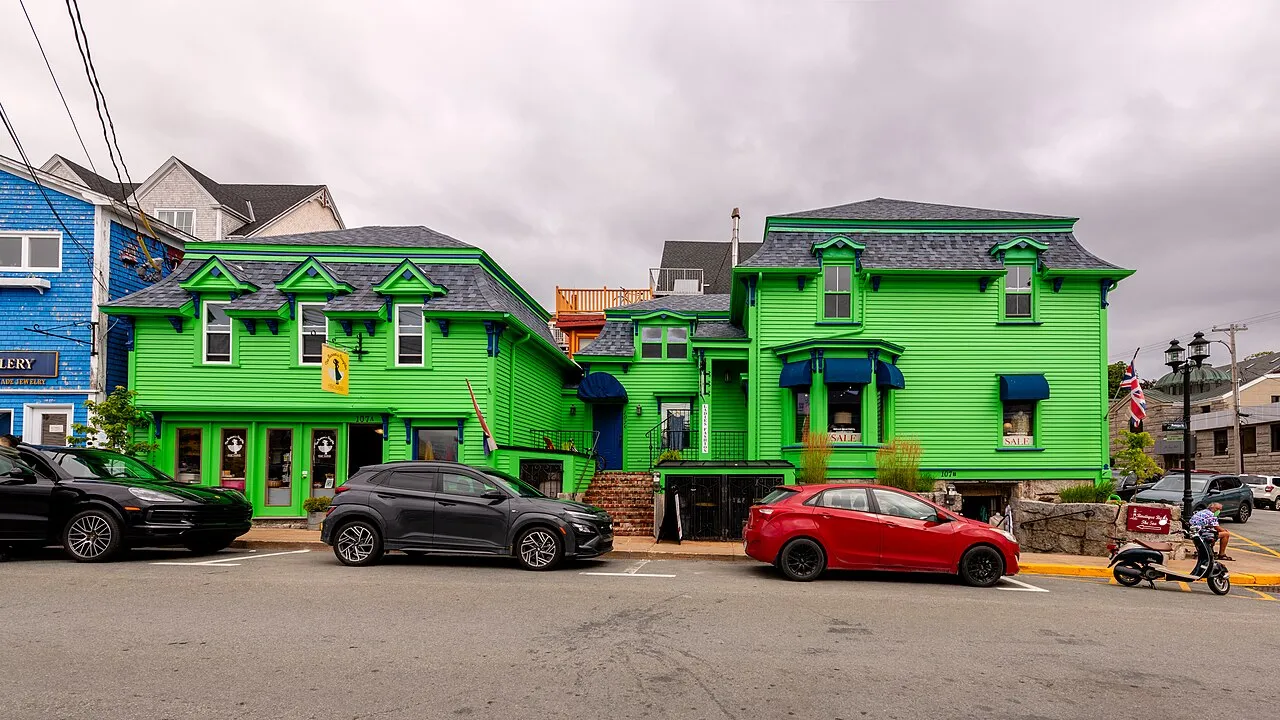
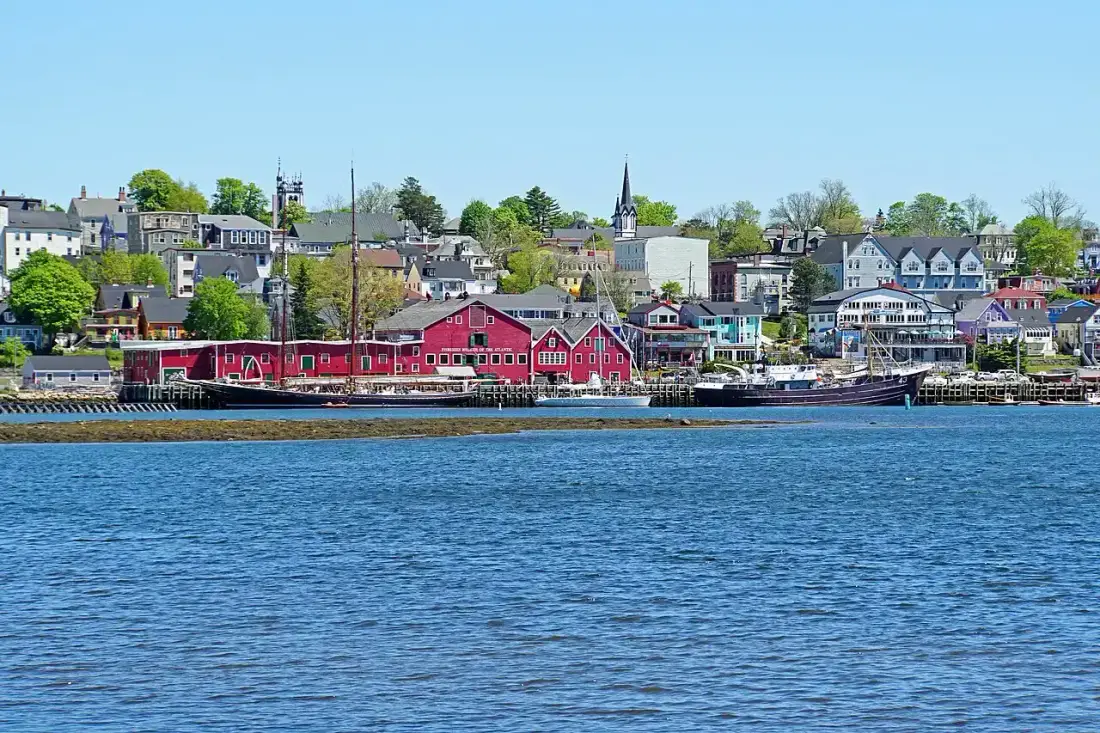
Walk up one street and down the next rather than looping the waterfront twice. The grid is the attraction. Don’t treat private porches as photo sets; the town lives here year-round.
Bluenose and Bluenose II
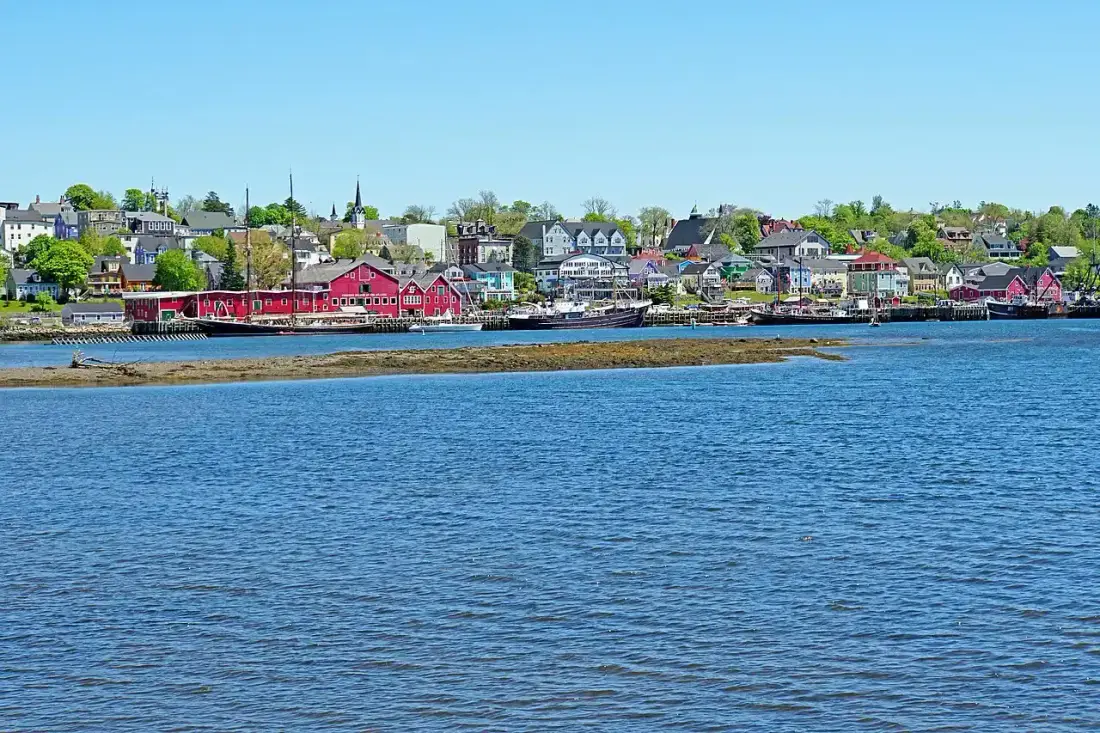
Lunenburg built the original Bluenose on 26 March 1921 - the racing and fishing schooner that has sat on the Canadian dime for nearly a century. She struck a reef off Isle aux Vache, Haiti, on 28 January 1946. What sails from this harbour today is Bluenose II, a replica launched in 1963 from the same Smith and Rhuland yard (Nova Scotia Archives dates the launch 23 July 1963), later gifted to the provincial government in 1971 as Nova Scotia’s sailing ambassador. When she’s in port, the black hull against the red museum buildings is the town’s defining photograph.
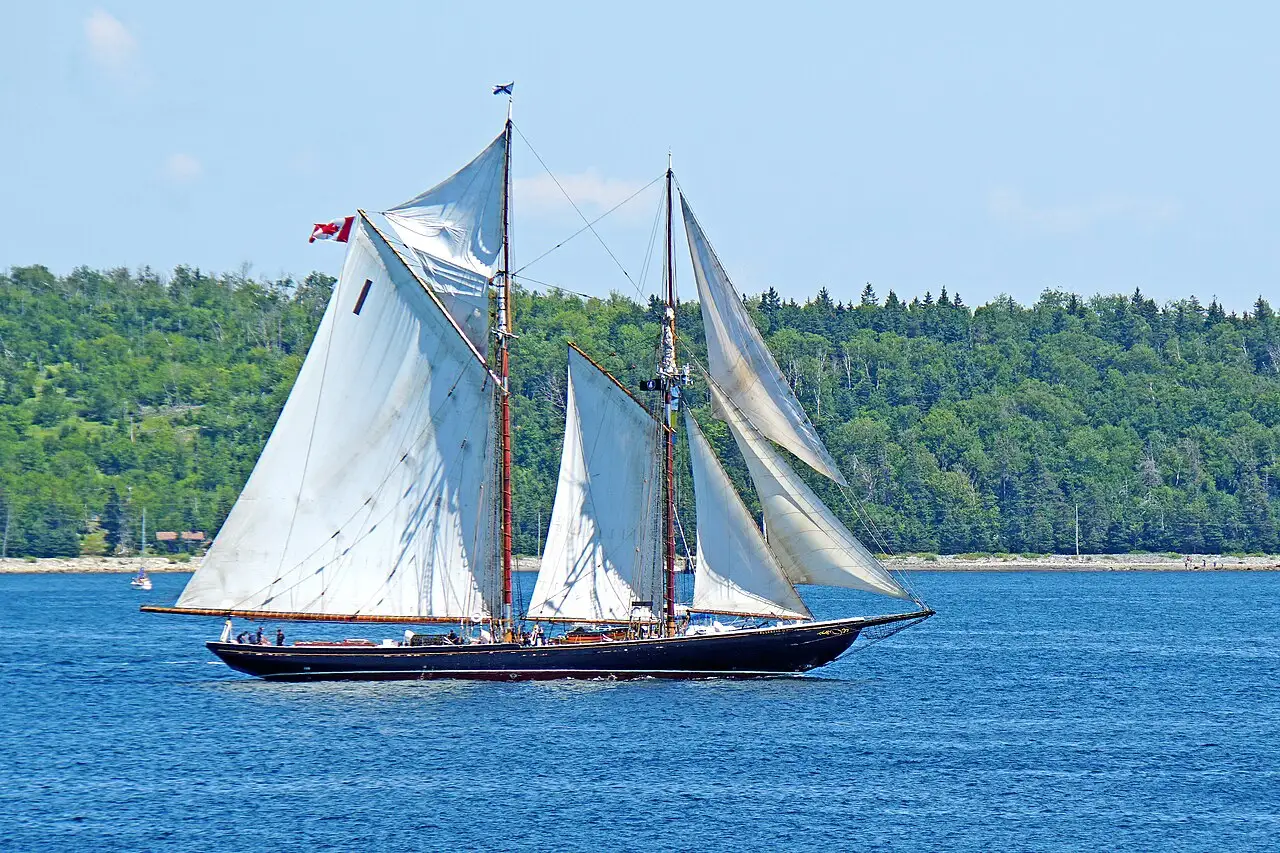
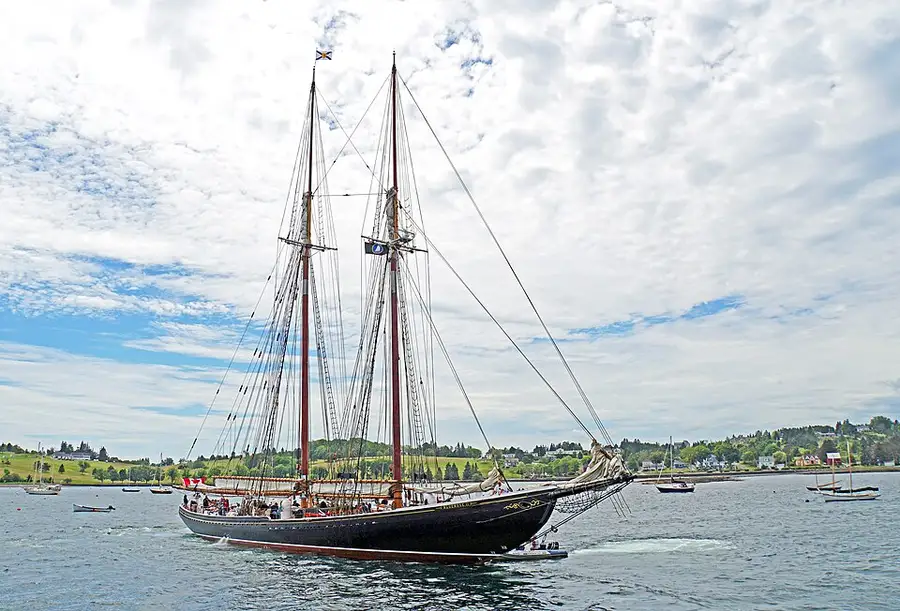
Her schedule shifts with maintenance and events - check bluenose.novascotia.ca the week before you visit instead of assuming she’ll be at the pier. If she isn’t, the harbour still photographs; you just won’t get the dime ship in the frame.
The Fisheries Museum of the Atlantic
The Fisheries Museum of the Atlantic sits at 68 Bluenose Drive on the working wharf. Inside, exhibits trace the Grand Banks fishery, trawler life and the town’s boat-building past. Plan at least two hours; rushing the vessel decks is the regret people write about later.
Admission in 2026 is C$15 for adults, C$12 for seniors 60+, C$9 for college and university students, C$4 for youth 6 to 17, and free for children 5 and under; a family ticket is C$32. Hours run 9:30 to 17:00 daily. The museum closes for the season on Saturday 24 October 2026 - confirm on fisheriesmuseum.novascotia.ca/visit if you’re travelling near that date. From 19 June to 7 September 2026, the Canada Strong Pass made admission free for ages 17 and under and 50% off for ages 18 to 24; from 8 September 2026 the full prices above apply. On-site parking is C$5 per hour, capped at C$25 per day.
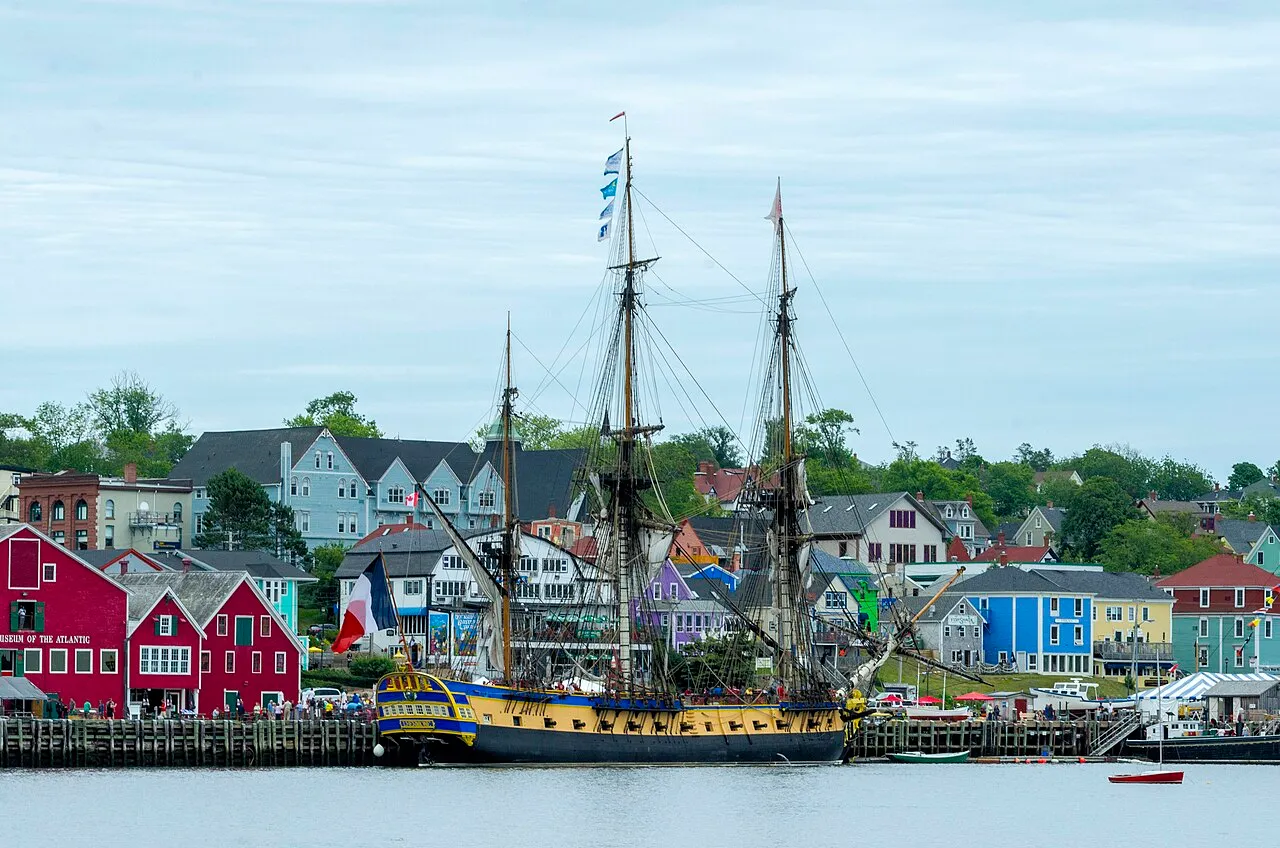
Daily talks - lobster lore, the Bluenose saga, scallop demos - rotate through the afternoon. They’re short and worth catching once; check the board at the entrance when you arrive.
St. John’s Anglican Church
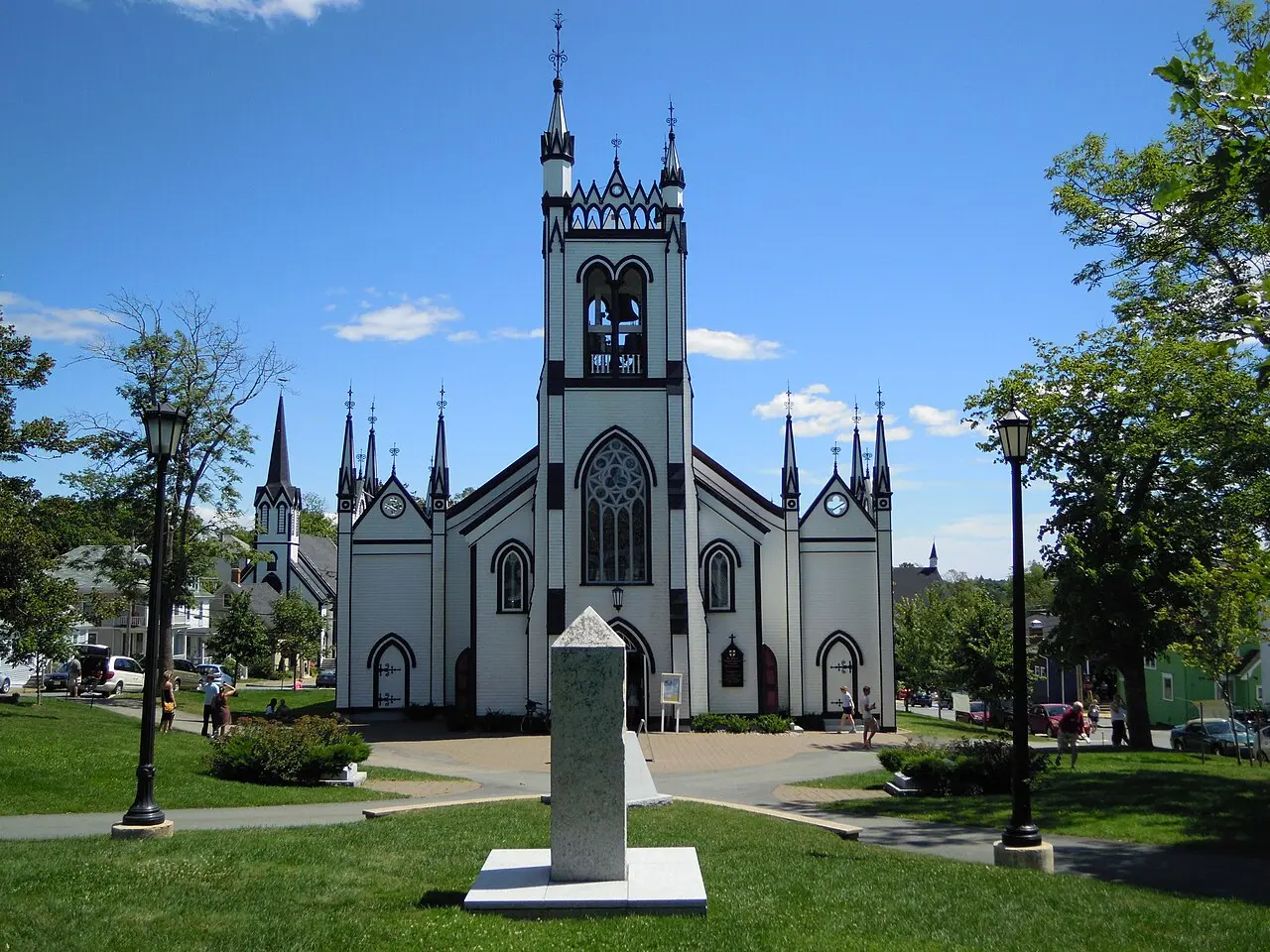
On the hill above the harbour, St. John’s Anglican Church is the punctuation mark you use to orient yourself on the grid. If you can see the tower, you’re not lost. Look closer and the joke is that none of it is stone: this is Carpenter Gothic, a style that renders in wood everything a cathedral would carve in masonry, right down to the shingle cladding. The frame came from a dismantled Boston chapel in 1754, which puts it among the oldest wooden churches in Canada, and what you see now is a reconstruction - fire gutted it on the night of 31 October 2001 and it was reconsecrated in 2005.
The harbour walk after the buses leave
The waterfront path links the museum, the schooner berth and the hill streets in one short loop. Late afternoon light turns the harbour gold, and that’s when the day-trip buses start leaving - the best hour for photographs and a quieter beer on the patio.
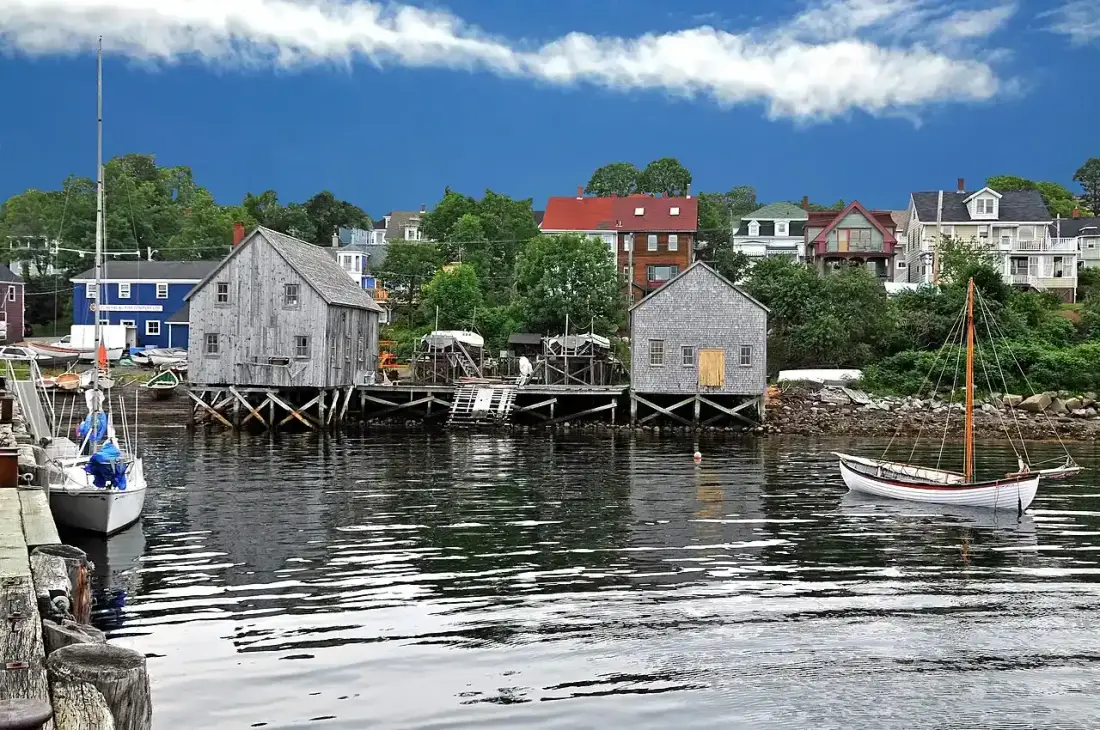
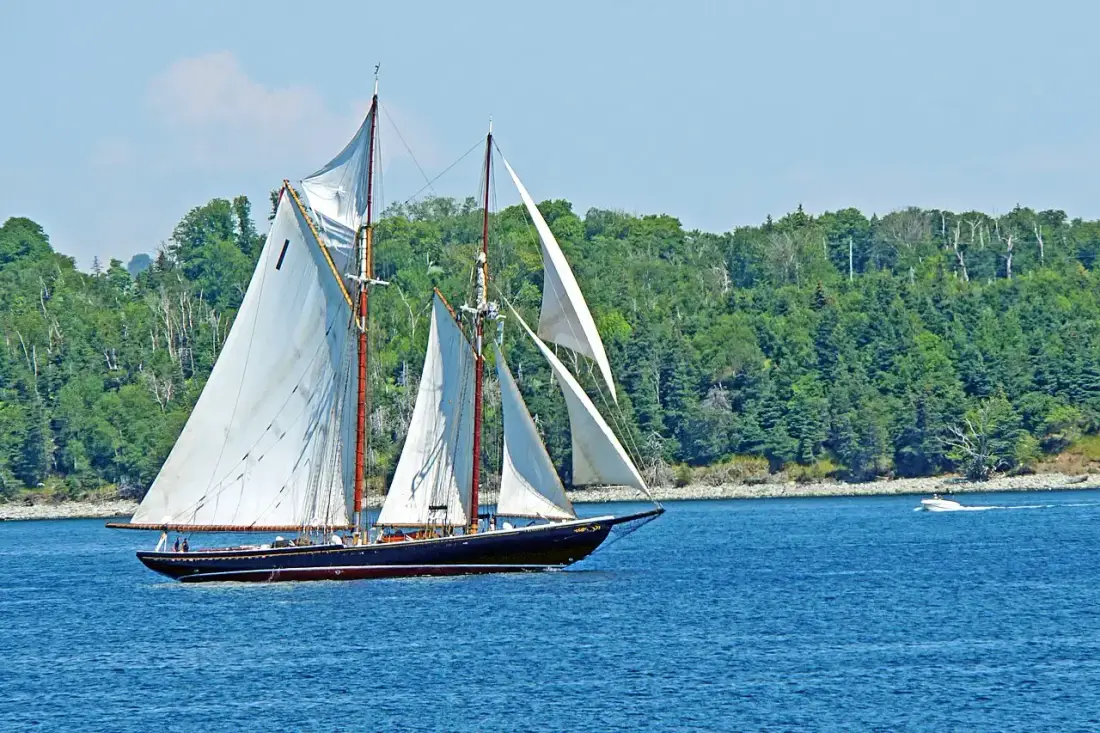
Lunch on the waterfront is fine; dinner after 18:00 is quieter. If you’re day-tripping from Halifax and short on time, eat before you walk the upper streets - restaurants fill when the noon buses arrive.
Getting there from Halifax
Tourism Nova Scotia calls the drive about 90 minutes from Halifax along the Lighthouse Route, and says a car is the practical way in. Once you’re here, the historic core is walkable; a vehicle helps if you’re adding Blue Rocks, Mahone Bay or a beach. There is no train. Guided South Shore day tours from Halifax are the other common option if you don’t want to drive.
For a Halifax base, where to stay in Halifax breaks down the hill versus waterfront trade. The airport to downtown hop lands you in the city first; pick up a car when the Lighthouse Route day starts. Trying to glue Peggy’s Cove, Lunenburg and a Halifax dinner into one calendar day usually means you photograph two places and enjoy neither - pick one postcard day, save the other for tomorrow.
If you’re building a longer Atlantic Canada itinerary, Lunenburg sits naturally between Halifax and the Marine Atlantic ferry at North Sydney for St. John’s. After the South Shore, Cape Breton is a separate base - Cape Breton Highlands isn’t a same-day encore. For airport choice on an inbound flight, see which airport for Canada.
Day trip or sleep in town
Day trip from Halifax if you’ve got one free day and a car: leave by 09:00, museum first, grid walk after lunch, back on the highway before dinner. Sleep in Lunenburg if you can spare the night - you’ll get the empty evening streets, a second look at Bluenose II if she’s sailing the next morning, and an easier start toward Mahone Bay without the Halifax rush hour twice.
Either way, the town is small enough that you won’t miss the core. The mistake is treating it as a ten-minute photo stop on the way to Peggy’s Cove. Give it three hours minimum, or the UNESCO label stays an abstract plaque instead of a place you’ve actually walked.
One practical habit: decide before you leave Halifax whether this is a photograph day or a museum day. Trying to do both at full depth plus a scenic detour usually means you rush the ticket desk and skip the harbour walk that made you come. If the schooner schedule looks empty and the sky is flat grey, lean into the Fisheries Museum and a long lunch - you’ll still have seen the UNESCO grid properly.
Read also
- The capital and usual base: Halifax
- Beds in the gateway city: where to stay in Halifax
- YHZ ground transport: Halifax airport to downtown
- The province loop: Nova Scotia travel guide
- The island city beyond the ferry: St. John’s guide
- Flying in from abroad: which airport for Canada
On the map
The map loads on click - to keep the page lightweight.
The map didn’t load. Check your connection and refresh the page.
Read also

Cities · 11 min read
Regina: Legislature, RCMP Heritage Centre and Prairie Base
Verified · August 29, 2026Wascana Centre, the Legislature, the Mounties' only training depot and a free T. rex - what Regina actually rewards, plus the road to Saskatoon.

Cities · 10 min read
Whitehorse: Yukon Base for Aurora, Rivers and the Klondike
Verified · August 28, 2026Whitehorse in 2026: SS Klondike grounds open but boat closed, MacBride C$12, Beringia C$6, Miles Canyon and aurora season.

Cities · 9 min read
Things to Do in Saskatoon: River Valley, Wanuskewin & Skies
Verified · August 27, 2026Saskatoon in practice: Meewasin trails, Wanuskewin bison, Remai Modern by donation, and a prairie day trip to Riding Mountain.

Cities · 9 min read
St. John's, Newfoundland: Signal Hill and Icebergs
Updated · September 3, 2026St. John's in two or three days: Signal Hill, the Battery, iceberg season on the Avalon, Cape Spear and George Street - plus how to arrive via Halifax.