
Where to Stay in Halifax: Waterfront, North End & Beyond
Halifax by area: downtown, Argyle noise, Spring Garden, the North End food strip and Dartmouth across the water, plus the 3% levy and 14% HST on your bill.
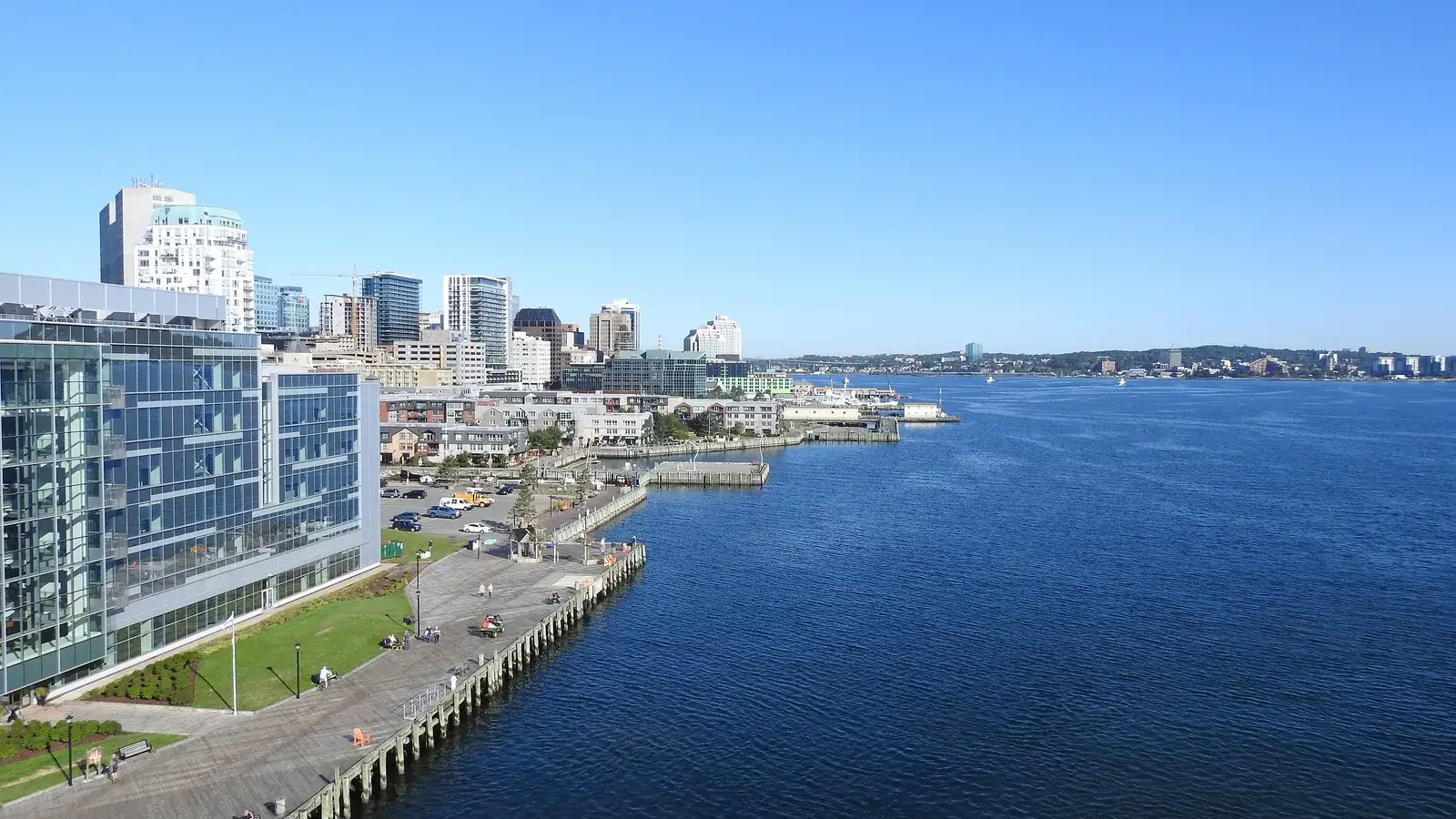
For a first visit, stay downtown between the waterfront and Spring Garden Road. Halifax’s whole visitor half fits in a band about eight blocks wide, so a central room means you walk to the Citadel, the boardwalk, Pier 21 and dinner without touching a car or a bus. Two upgrades on that answer are worth knowing about: the North End if you came to eat, and Dartmouth across the harbour if you’d rather look at the skyline than stand in it.
What actually decides the address here isn’t distance, because everything is close. It’s the hill and the noise. The old town climbs steeply from the water up to the Citadel, so a room “six blocks away” can mean six blocks uphill with a suitcase, and a room on Argyle Street means a patio crowd under your window until the bars close.
The short version
| Area | To the boardwalk | Good for | The catch |
|---|---|---|---|
| Downtown waterfront | 0-5 min flat | First visit, no car, everything walkable | Priciest, and cruise-ship days are busy |
| Argyle and Grafton | 5 min | Dinner and bars at the door | Loud on Friday and Saturday nights |
| Spring Garden Road | 10-12 min, slight hill | Shops, the Public Gardens, quieter evenings | You walk downhill to the water and back up |
| South End | 20-25 min | Quiet Victorian streets, Point Pleasant Park | Almost nothing open at night |
| North End | 25-30 min, or a C$3 bus | The city’s best eating, real neighbourhood | Not walkable to the sights after a long day |
| Dartmouth | 12-minute ferry | Value, the view back at Halifax | You’re across water, and the last boat back is 11:45 p.m. |
| Bedford, Burnside, airport | Drive | Cheap parking, early flights | You have a car and a commute, not a stay |
Downtown and the waterfront
This is the default for good reason. The Harbourwalk runs about 3.8 km along the water, the Citadel sits at the top of the slope above it, Pier 21 is at the southern end, and the ferry terminal, the transit hub and most restaurants are inside that rectangle. If you’ve got three days in Halifax and no car, book here and stop optimizing.
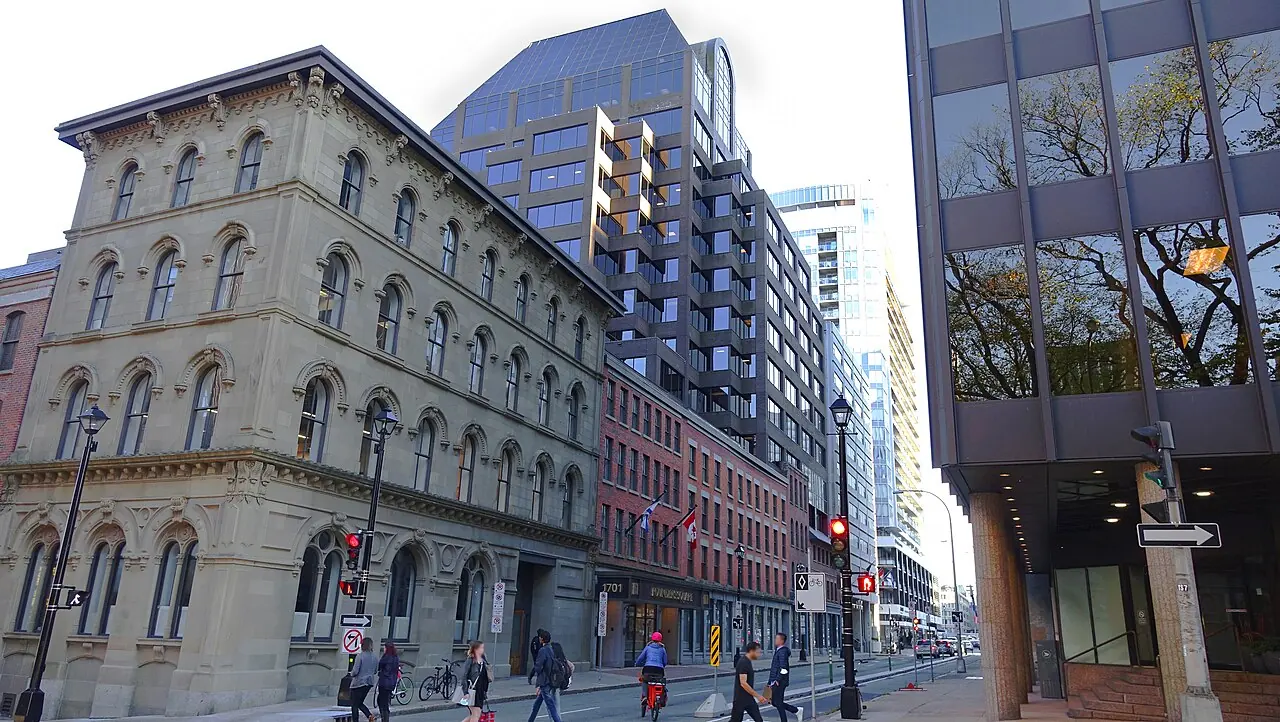
Two things to weigh. First, the waterfront is where cruise ships tie up, and on a two-ship day the boardwalk between the terminals and the Maritime Museum is shoulder-to-shoulder from mid-morning. It thins out by dinner. Second, ask which side of the hotel your room faces: a harbour view is genuinely nice here, and it usually costs more than the same room facing a parking structure.
The Argyle Street question
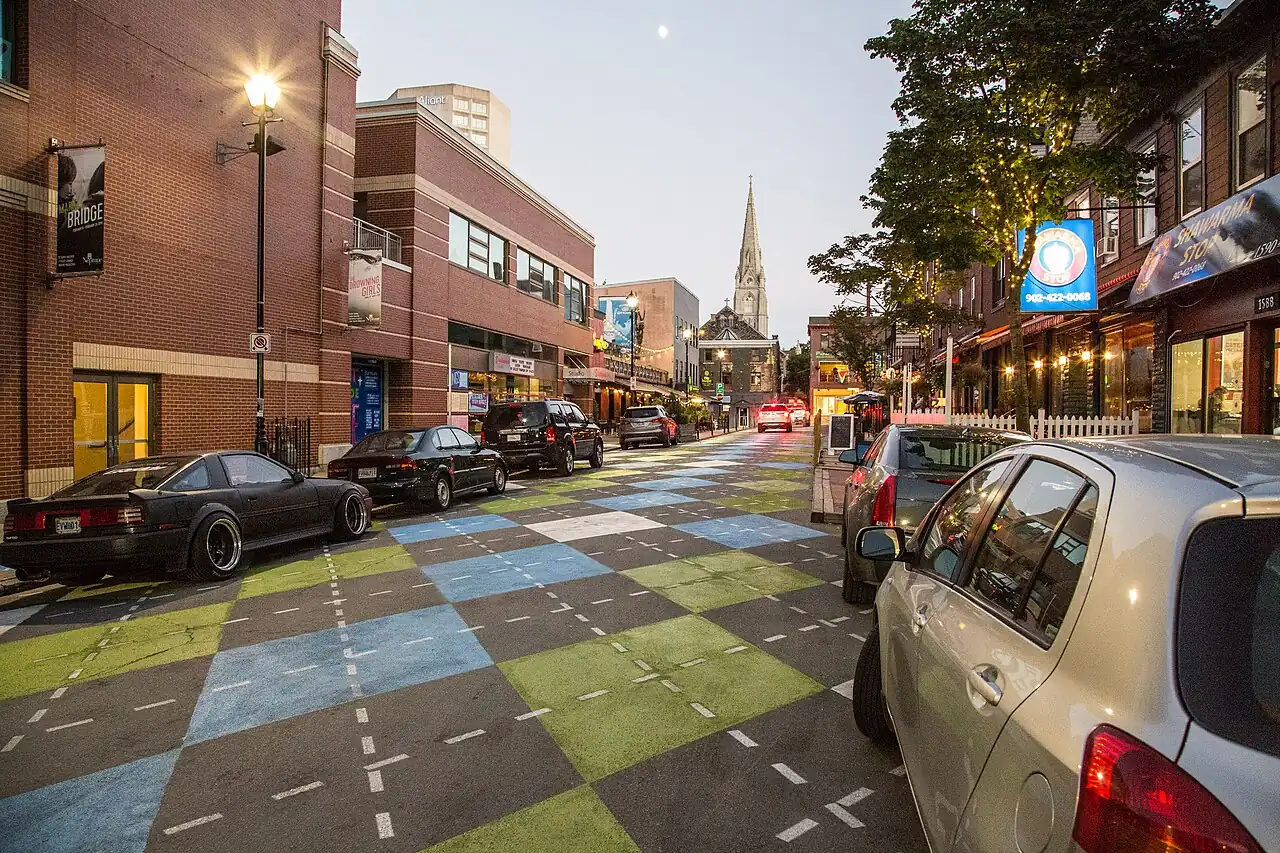
Argyle and Grafton are the two blocks where Halifax goes out. Patios spill onto a street laid with a giant argyle pattern in the pavers, and on a summer Saturday the noise runs late. If that’s your idea of a good night, book right on top of it. Anyone travelling with children, or landing off an overnight flight, should stay three or four streets south, which is still a five-minute walk to the same restaurants.
Spring Garden Road: the calmer central option
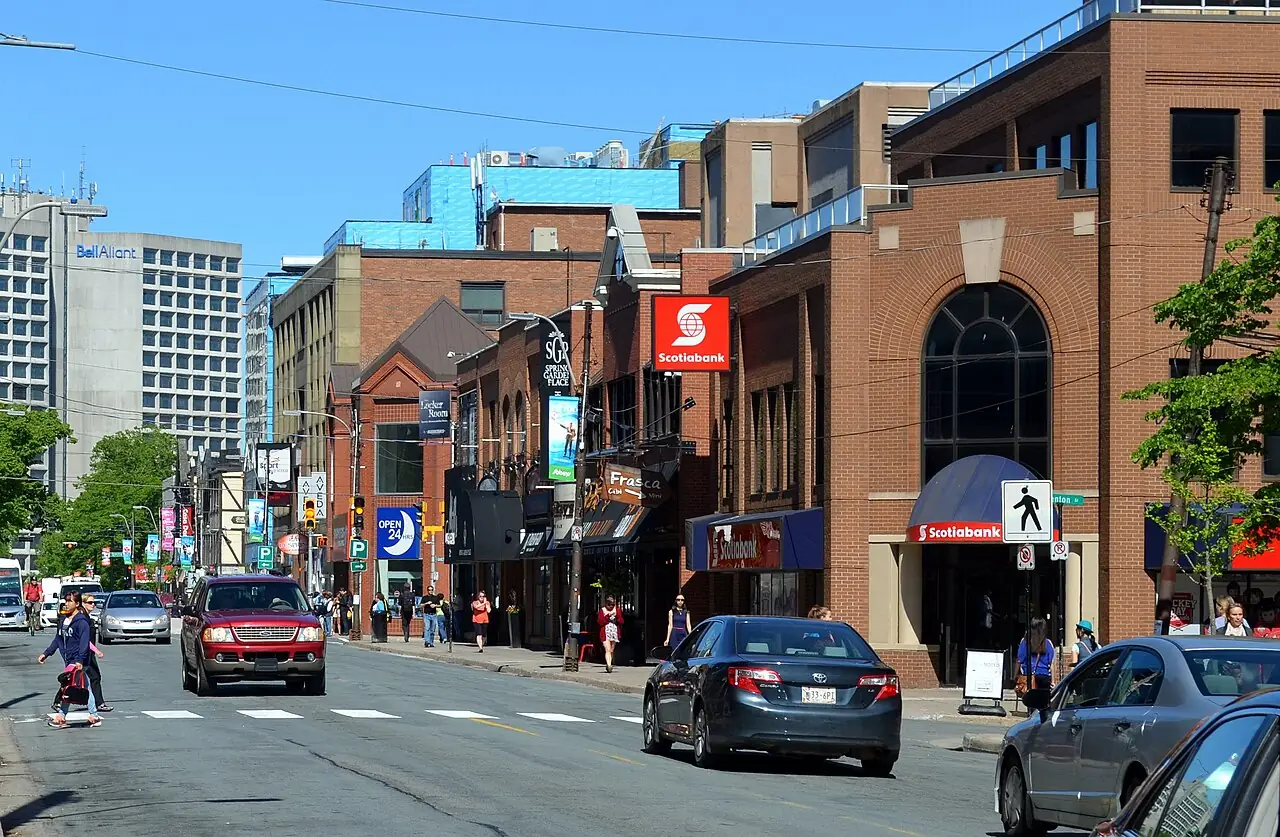
A few blocks uphill and south, Spring Garden Road is the shopping street, with the Public Gardens at its western end and the Citadel a short walk north. Evenings are quieter than Argyle, you’re still ten minutes from the water, and this is the strongest area for anyone who wants a central base without a bar under the window.
The catch is elevation. You’ll walk down to the harbour and back up again, several times a day, and Halifax’s hill is steeper than it looks in photographs. If knees or luggage are a factor, stay lower.
The North End: where the food went
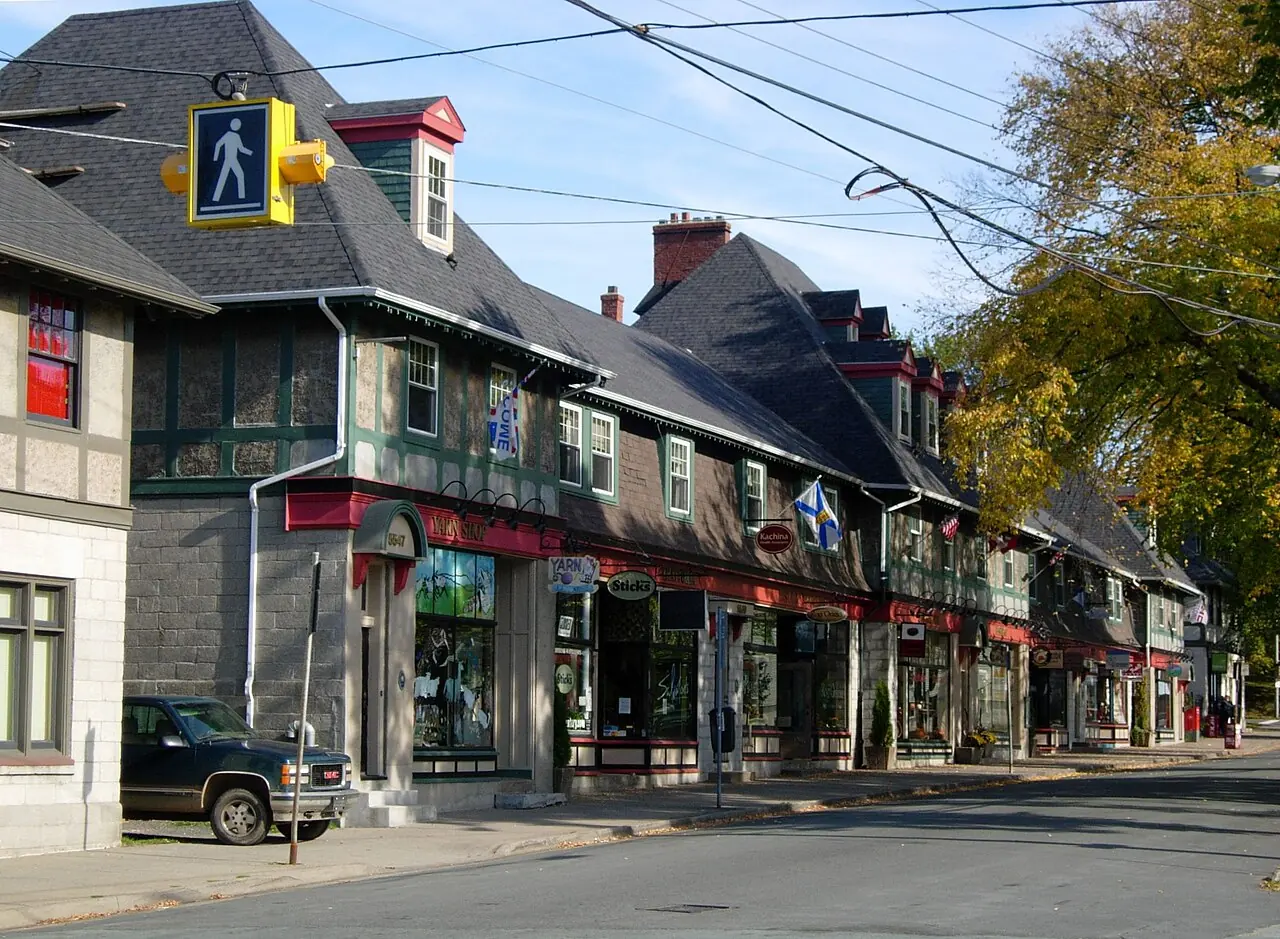
Agricola and Gottingen Streets are where Halifax’s kitchens, bakeries and small bars have concentrated over the past decade, and the North End is where residents send you when you ask where to eat. It’s also the part of the city with the most history under it. The Hydrostone, ten short parallel streets of row houses on grassy boulevards, was built to rehouse families whose homes were destroyed by the 1917 explosion that flattened this end of the peninsula. The name comes from the material: pressed concrete blocks faced with crushed granite to look like cut stone, chosen because it wouldn’t burn like the wood-frame houses that came before it. It’s now a National Historic Site with a small market strip of shops and cafes.
Booking here works if you accept the geography: it’s a 25 to 30 minute walk to the boardwalk, or a C$3 bus ride, and the last stretch home is uphill. What you get in exchange is a neighbourhood where you eat well without booking, at prices below the waterfront. The city’s food story, donair included, is in our Canadian food guide.
The South End: quiet, green and a little dull
South of Spring Garden the city turns residential: big wooden Victorian houses, the universities, and Point Pleasant Park at the tip of the peninsula, where the harbour opens to the Atlantic. Rooms here are guesthouses and small inns rather than towers, and the area is genuinely lovely on a summer morning.
Be honest about the evenings. There’s very little open past dinner, and you’ll walk twenty-five minutes back from downtown or take a bus. This is the right base for a longer, slower stay, for anyone visiting a student, or for people who came for the park and the water rather than the bars.
Dartmouth: the contrarian pick that keeps winning
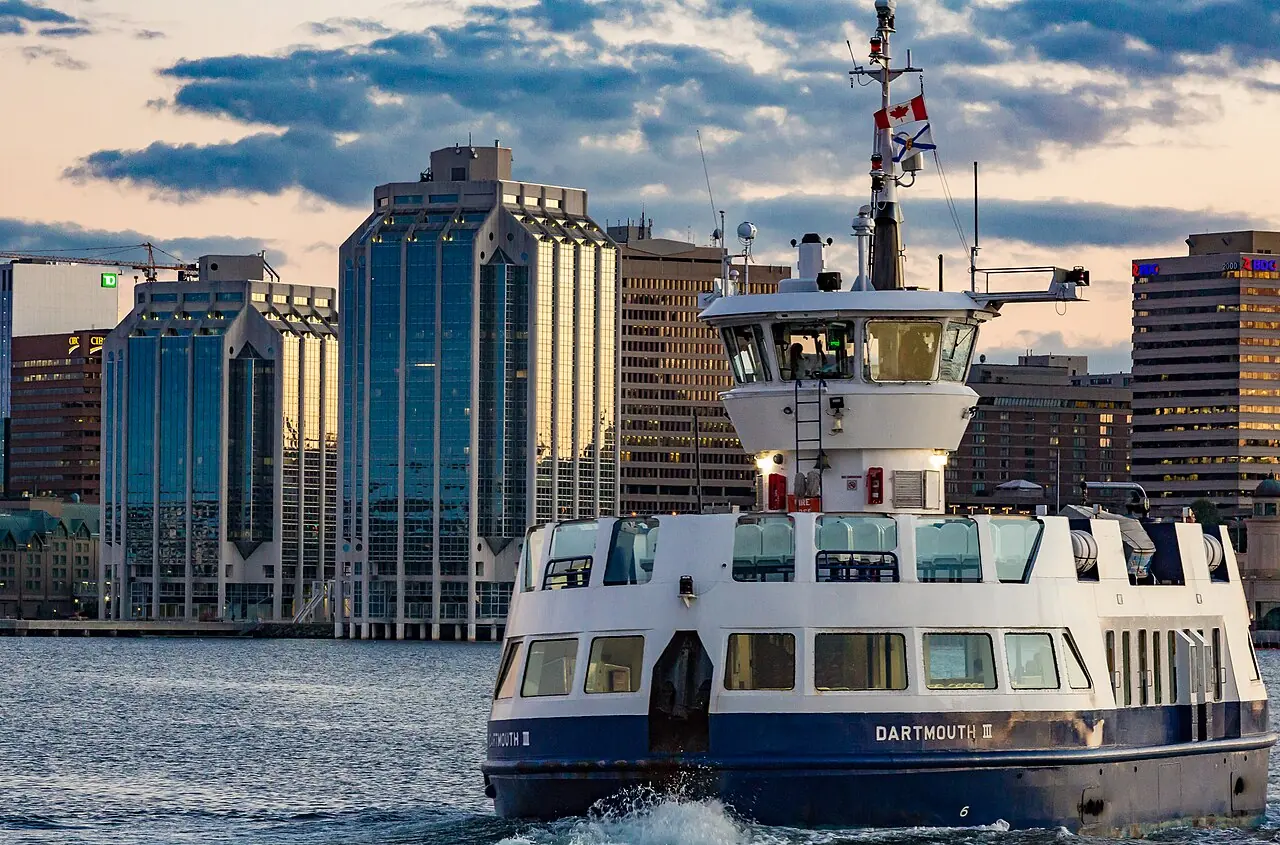
Across the harbour, Dartmouth has quietly become the value answer. Rooms cost less than the same standard downtown, the restaurants around Alderney Landing and Portland Street are good, and you get the thing Halifax visitors photograph but can’t see from inside it: the skyline, lit up, across the water.
The connection is better than newcomers expect. The Alderney ferry crosses in 12 minutes, runs every 15 minutes on weekdays until about 8 p.m. and every 30 minutes outside that window and all weekend, and costs the standard C$3 fare with children under 13 free. It’s a commuter service that happens to be one of the best-value harbour cruises in Canada.
The limit is the timetable: the last boat back to Dartmouth leaves Halifax at 11:45 p.m., and holidays run reduced service. If your plan involves late nights downtown, either budget for a taxi around the harbour or stay on the Halifax side.
Bedford, Burnside and the airport strip
These are car decisions, not city decisions. The airport is roughly 35-40 km from downtown, and airport-area hotels make sense for exactly one thing: a flight before about 7 am. Bedford and the Burnside side of Dartmouth put you next to the highways with free parking, which suits a family driving the province, but it puts a 20 to 30 minute commute between you and every reason you came to Halifax.
If a car is part of the trip anyway, price the parking before you book downtown: central hotels charge for it nightly and it’s rarely included. Our car rental guide covers the fees that show up at the counter, and the Nova Scotia guide has the driving distances for the rest of the province.
The public option from the airport is Regional Express Route 320, which runs to Scotia Square downtown for C$4.75 in cash, with tickets also sold 24/7 at the Ground Transportation Booth in Arrivals. Allow about 55 minutes: the published timetable has the 5:45 am departure reaching Scotia Square at 6:40. It goes roughly every half hour at peak, hourly the rest of the day and hourly at weekends, so check it against your landing time before you dismiss the taxi. Flat-rate zones, the airport surcharge and rideshare pickup are in Halifax airport to downtown.
What the bill actually comes to
Two things get added to the rate you were quoted.
- A 3% marketing levy, charged by the municipality on every night sold since October 2023, and collected directly by most booking platforms since autumn 2024.
- 14% HST. Nova Scotia cut the rate from 15% on 1 April 2025, and plenty of published examples, including the municipality’s own, still show the old number.
Worked through: a C$200 room picks up C$6 of levy, and 14% HST on the resulting C$206 is C$28.84, so you pay C$234.84. That’s about 17.4% on top of the headline rate, which is worth doing in your head when you compare a C$230 downtown room against a C$180 room in Dartmouth. Parking, where it applies, is extra again.
Short-term rentals: what a legal listing looks like
Halifax tightened this up, and the rules are unusually clear for travellers who care whether their booking is legitimate.
An entire-home rental in a residential neighbourhood is only legal if it’s the host’s own home - the place they actually live, rented out while they’re away. Secondary suites and backyard suites don’t qualify. If nobody lives in the unit, it’s a commercial short-term rental, permitted by zone, including the zones that allow hotels - in practice mostly downtown and specific commercial streets, with some rural areas permitted separately. Renting a room with the host on site is allowed in residential zones, typically up to three bedrooms.
On top of that, the province’s Short-term Rentals Registration Act has required annual registration on the Tourist Accommodations Registry since 30 September 2024, and registration depends on proving the municipal rules are met. Practical version: a listing that shows a registration number is on the right side of all this. A whole apartment on a quiet residential street with no host and no number probably isn’t, and enforcement risk lands on your booking, not on theirs.
When Halifax runs out of rooms
Summer is the squeeze, roughly late June to early September, and it stacks: cruise season, festival season and the Tattoo week all land inside it, and the convention centre downtown can fill the core on an ordinary Tuesday. Early September adds university move-in, when families take every room near the campuses in the South End.
The flip side is that this is a genuinely cheap city off-season. Late autumn and winter rates drop hard, the museums and restaurants stay open, and the only real loss is the Public Gardens, which close for the season, and the harbour patios. If your dates are flexible and you don’t need to swim, October and November are the value months.
Three mistakes people make booking Halifax
Booking by distance instead of by slope. The map makes everything look equally close, and it is, but there’s a hill in the middle. Ten flat blocks along the water beat five blocks straight up it.
Treating Dartmouth as “out of town”. It’s twelve minutes and C$3 from the waterfront, with a better view and lower rates. The only real constraint is the last ferry.
Booking a car with a downtown room and then not using it. The core is walkable and Peggy’s Cove is a half-day run, as our Halifax city guide lays out, so pick up the rental the morning you leave for the Cabot Trail or the South Shore instead of paying to store it for three nights. The running totals for a trip like this are in our Canada trip cost breakdown.
On the map
The map loads on click - to keep the page lightweight.
The map didn’t load. Check your connection and refresh the page.
Read also

Before you go · 11 min read
Canada eTA for UK Citizens: Entry Requirements
Verified · September 1, 2026UK air travellers need a CAN$7 eTA. Cost, validity, land exception, refusals and British passport types - checked on canada.ca, 1 Sep 2026.

Before you go · 9 min read
Calgary vs Vancouver: Which Airport for the Rockies
Verified · August 29, 2026Calgary puts Banff 140 km up the road; from Vancouver it's 850 km. What the drop fee, the domestic hop and the thinner route map actually cost you.

Before you go · 10 min read
Quebec City in Winter: Carnival, Ice Hotel, What to Wear
Verified · August 16, 2026Quebec City in winter: Carnival 5-14 Feb 2027, ice hotel from January, February nights -16 C, and what to pack.

Before you go · 8 min read
Canadian Rockies vs Vancouver Island: Which Trip to Take
Verified · August 14, 2026Rockies or Vancouver Island for one week: lakes and Icefields Parkway vs ferry, Victoria and Tofino - pick by trip shape, not Instagram.