
Things to Do in Halifax
Halifax in two or three days: the Citadel and its noon gun, the waterfront and Pier 21, the 1917 explosion, Titanic graves, donair and Peggy's Cove.
Halifax packs a walkable downtown against one of the world’s great natural harbours: a star-shaped hilltop fort with a gun fired at noon, a 3.8 km waterfront boardwalk, and Pier 21, the immigration shed that was Canada’s Ellis Island. Two or three days is about right - one for the Citadel and the waterfront, one for Pier 21 and the Public Gardens, and half a day out to Peggy’s Cove. It’s also the birthplace of the donair, the city’s official food, and it carries two of the country’s hardest histories: the 1917 explosion that levelled its north end and the Titanic dead it buried in 1912.
Halifax is the usual jumping-off point for Cape Breton Highlands.
That mix is what makes the city stick. It’s small enough to walk, old enough to have real history under it, and salty enough that a working port, a naval base and a fishing culture are all still visible from the boardwalk. Start on the hill, because everything else runs downhill from it to the water.
How many days you need
Two days covers the essentials: the Citadel and the waterfront on one, Pier 21 and the Public Gardens on the other. Three days gives you the half-day run out to Peggy’s Cove and time for the museums to breathe. The downtown core is compact and walkable; you only really need a car for the day trip and the province beyond. For where to base yourself, see where to stay in Halifax - the hill and the ferry timetable matter more than the map suggests.
The Citadel and the noon gun
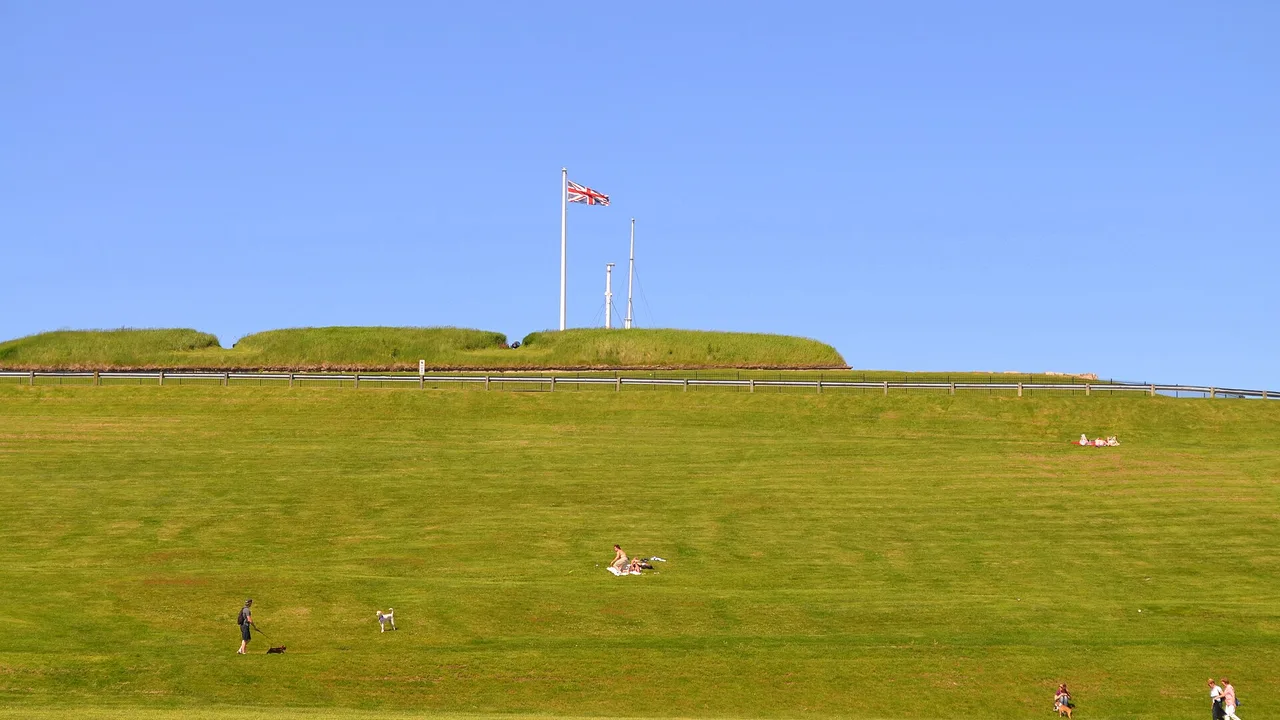
The Halifax Citadel is the anchor: a star-shaped fort, Fort George, sitting on the hill in the middle of downtown with the harbour laid out below. Its living history is set in 1869, staffed by re-enactors of the 78th Highlanders in kilts and the 3rd Brigade Royal Artillery, and the moment to time your visit around is the Noon Gun - a cannon fired at exactly 12:00, a tradition kept up every day since at least 1856.
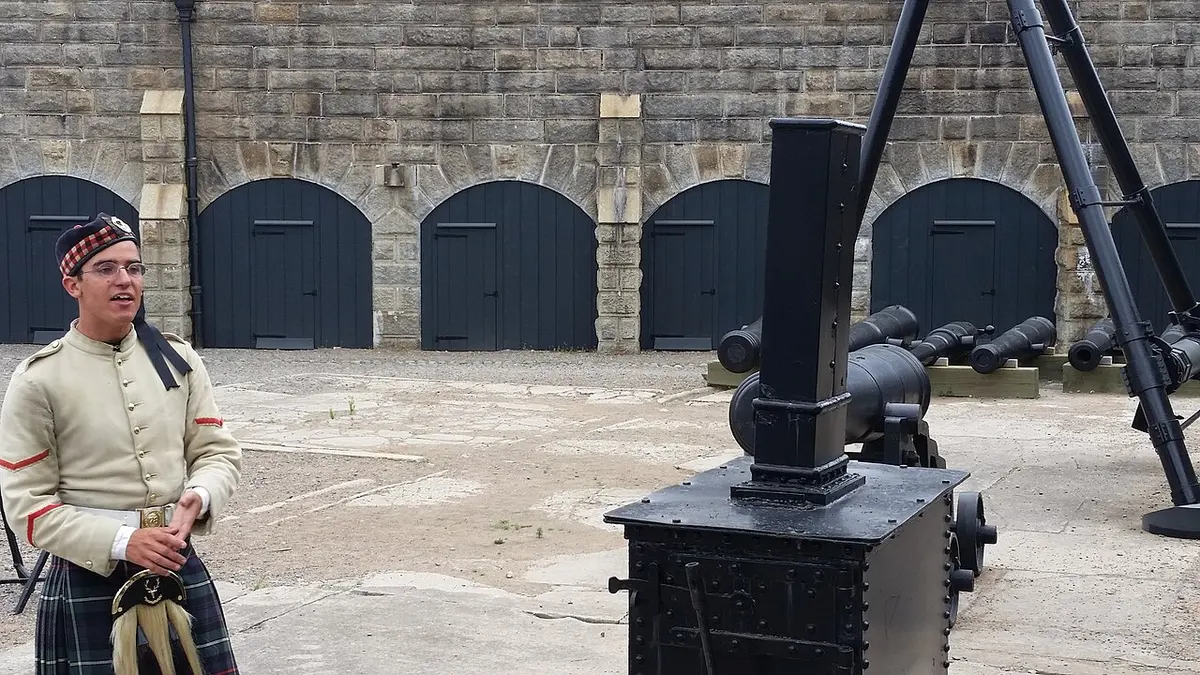
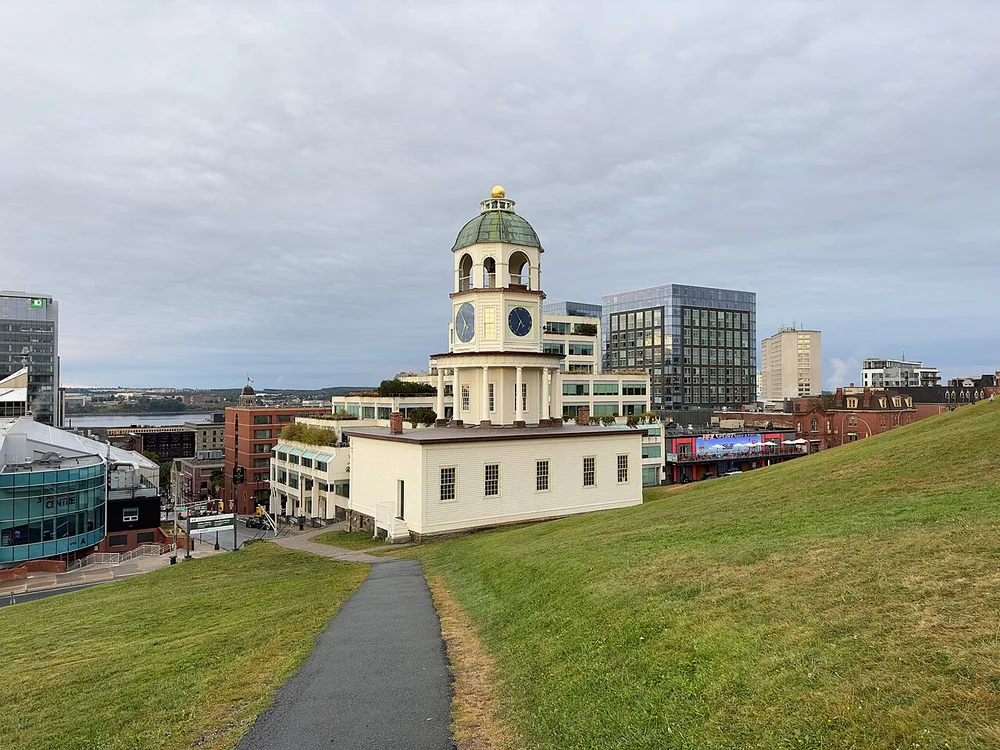
Programs and services run daily, 9 am to 5 pm, from 7 May into the autumn. Parks Canada’s own pages disagree on the 2026 end date: the Citadel’s hours page says 5 November, its main page 31 October, so it’s worth checking the hours page if you’re visiting in that last week. Admission is C$22 for an adult and C$18.75 for a senior, with anyone 17 and under free; the Canada Strong Pass waived it for everyone from 19 June to 7 September 2026. The grounds stay open year-round, but outside the program season the interior rooms, the exhibits and the upper ramparts close. On the harbour-facing slope stands the Old Town Clock, the city’s landmark timepiece, which has kept time since 1803.
The waterfront
Downhill from the clock, the Halifax Waterfront Boardwalk runs 3.8 km along the water - patios, buskers, COWS ice cream and the docks where the harbour tours leave. It’s the city’s default evening stroll, and it doubles as a working waterfront: ferries to Dartmouth, tall ships in summer, and the odd navy grey hull all pass in front of you.
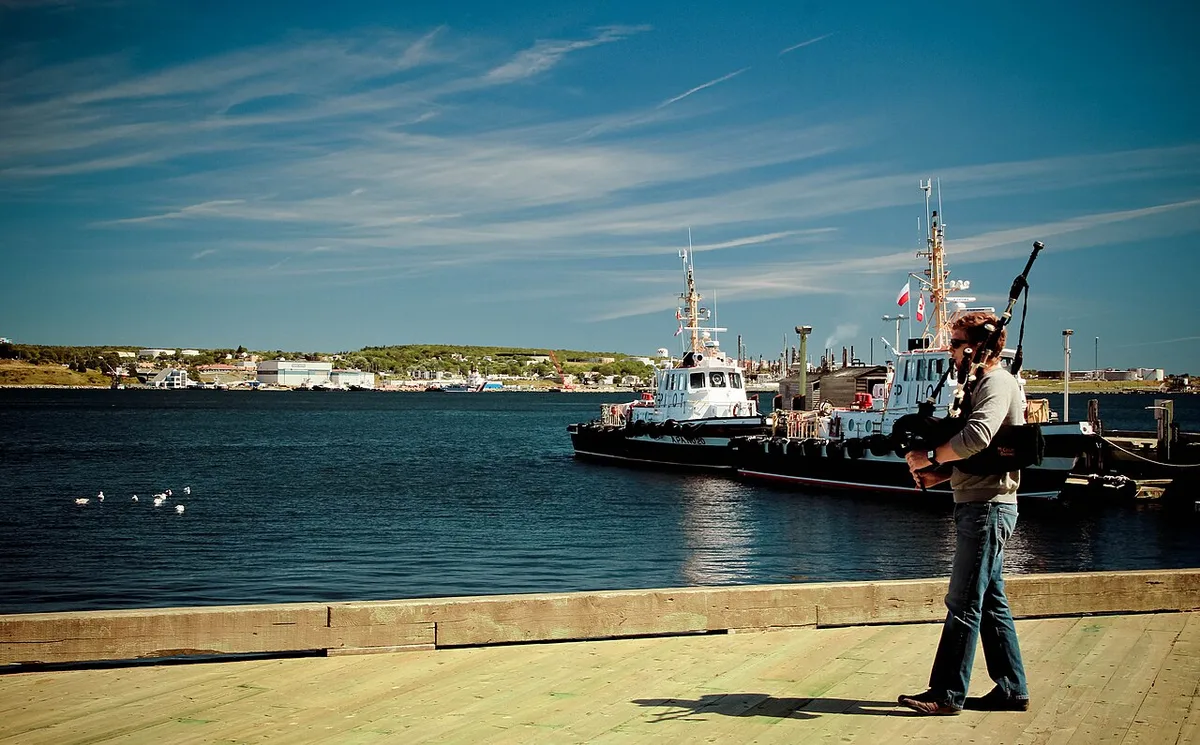
The best-loved character on the boardwalk is Theodore Too, a full-size version of the smiling tugboat from the Canadian children’s show, which runs harbour cruises in summer and is catnip for kids.
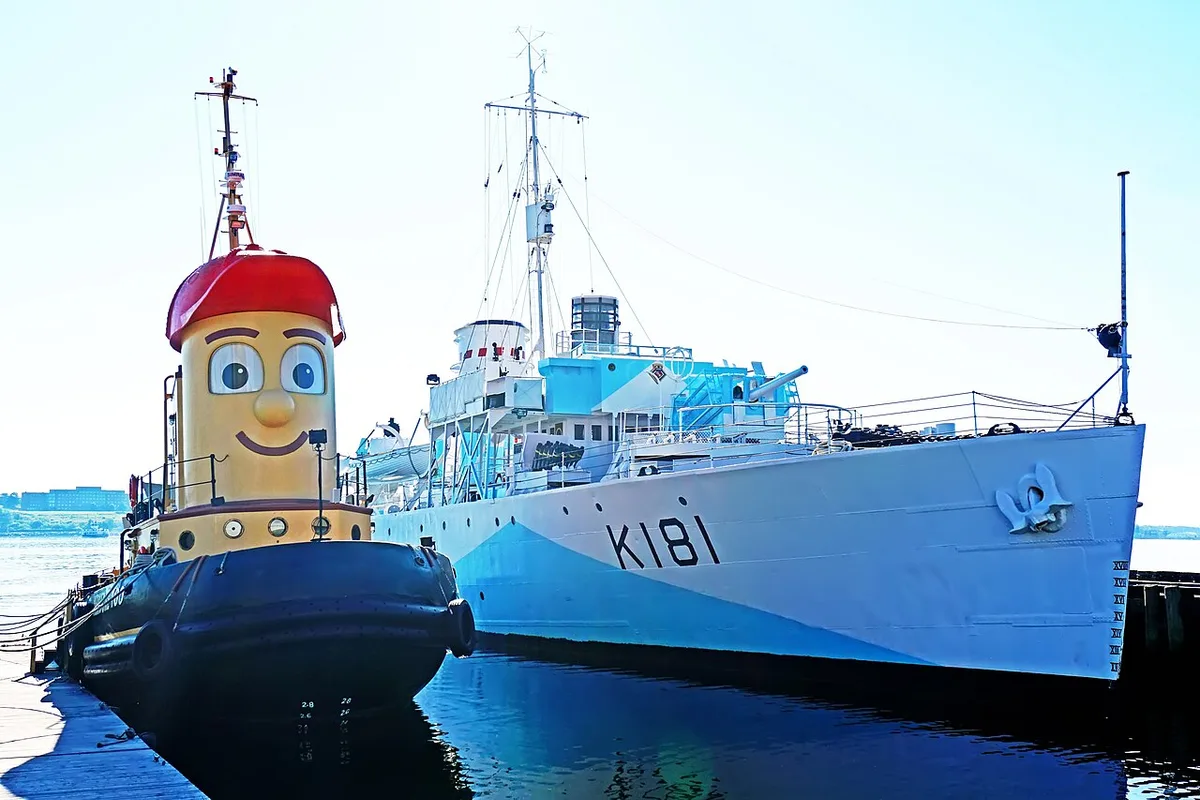
The Maritime Museum of the Atlantic is the one to go inside for. It tells the harbour’s stories - the Halifax Explosion and the Titanic among them - and its collection ranges from small craft to a hall of ship models and a working lighthouse lens.

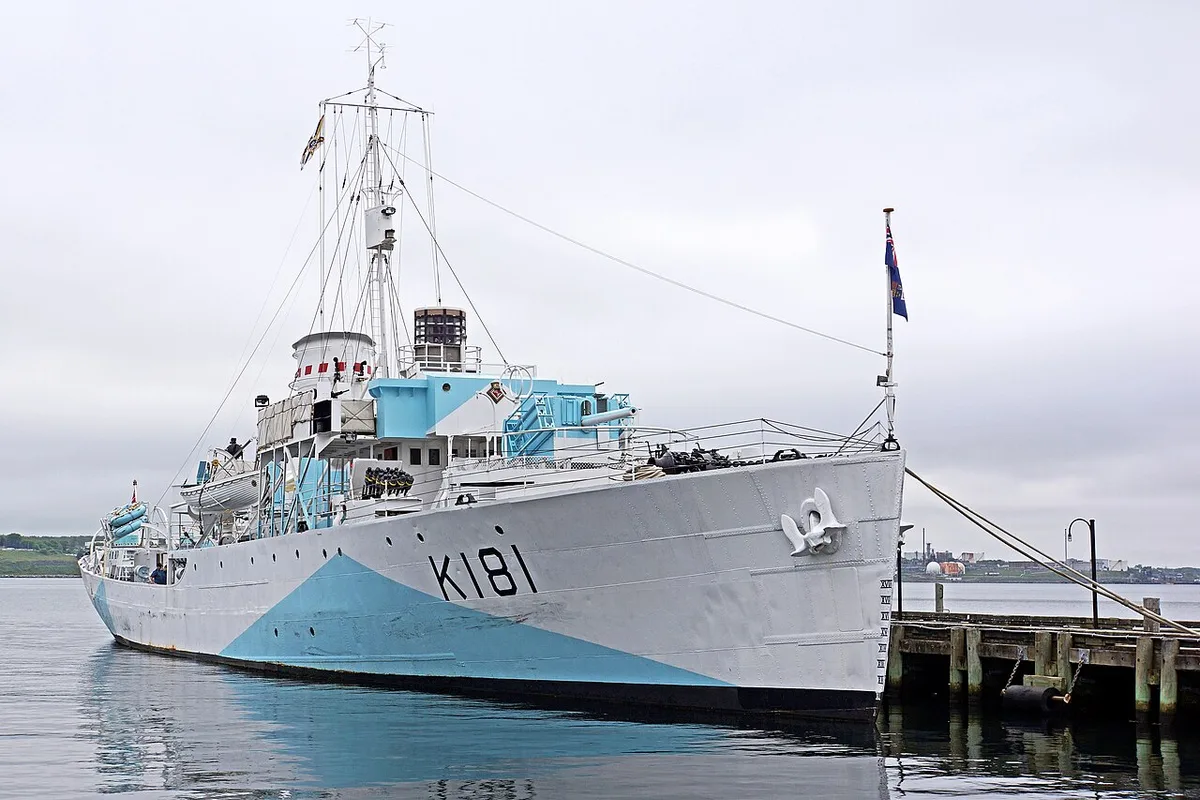
Moored just outside it’s HMCS Sackville, a restored Second World War corvette that serves as Canada’s Naval Memorial - the last survivor of the small, tough escort ships that shepherded convoys across a U-boat-infested Atlantic.
Pier 21 and Canada’s immigration story
A little further along the water, Pier 21 was the shed where a nation walked in. Between 1928 and 1971 it was the point of entry for about one million immigrants and the departure point for nearly 500,000 soldiers heading to the Second World War, which earned it the tag “Canada’s Ellis Island.” It became a National Historic Site in 1996 and reopened as a national museum, the Canadian Museum of Immigration, on 1 July 1999. Adult admission is C$19.00, and if any of your own family reached Canada by sea, the records room here’s where the visit turns personal.
The Public Gardens and downtown
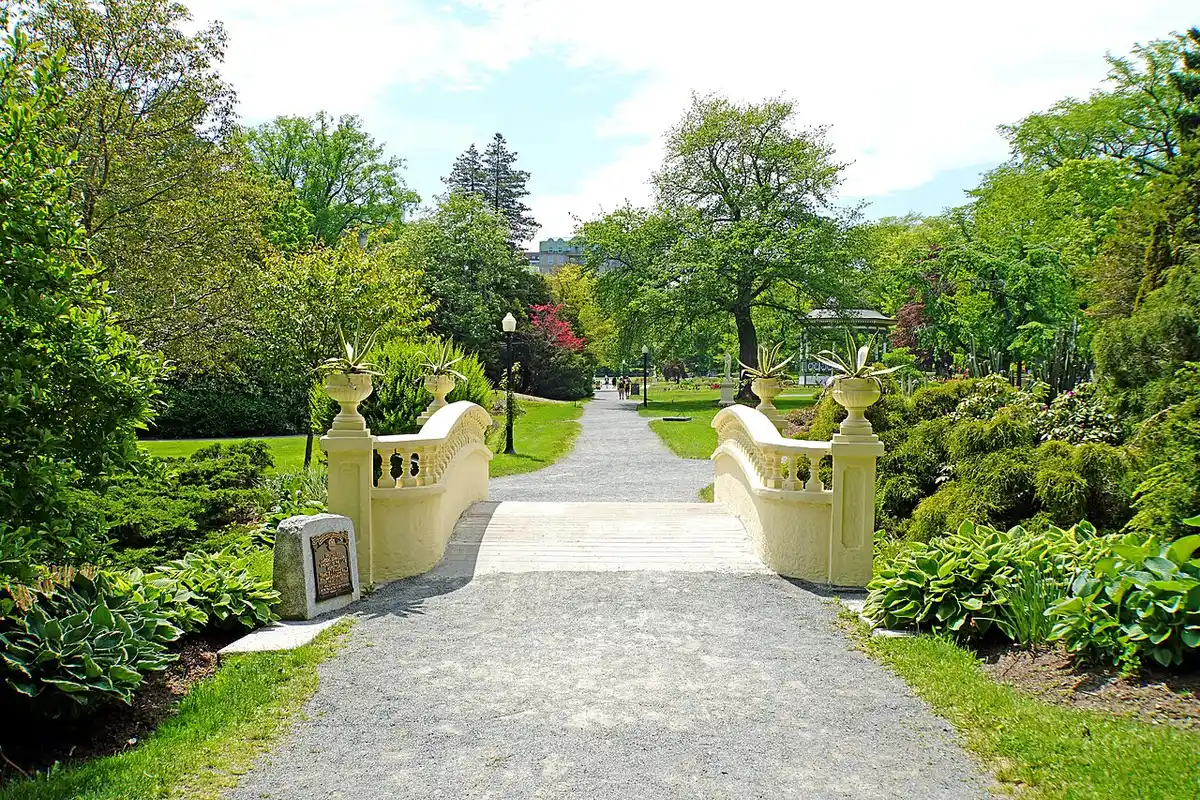
For a change of register, the Halifax Public Gardens are a formal Victorian garden two blocks from the shops - tree-lined paths, fountains, a bandstand and Griffin’s Pond, formally opened in 1867. They’re free, gated, and closed over winter, and they’re the calmest green in the city centre.
The 1917 explosion and the Titanic graves
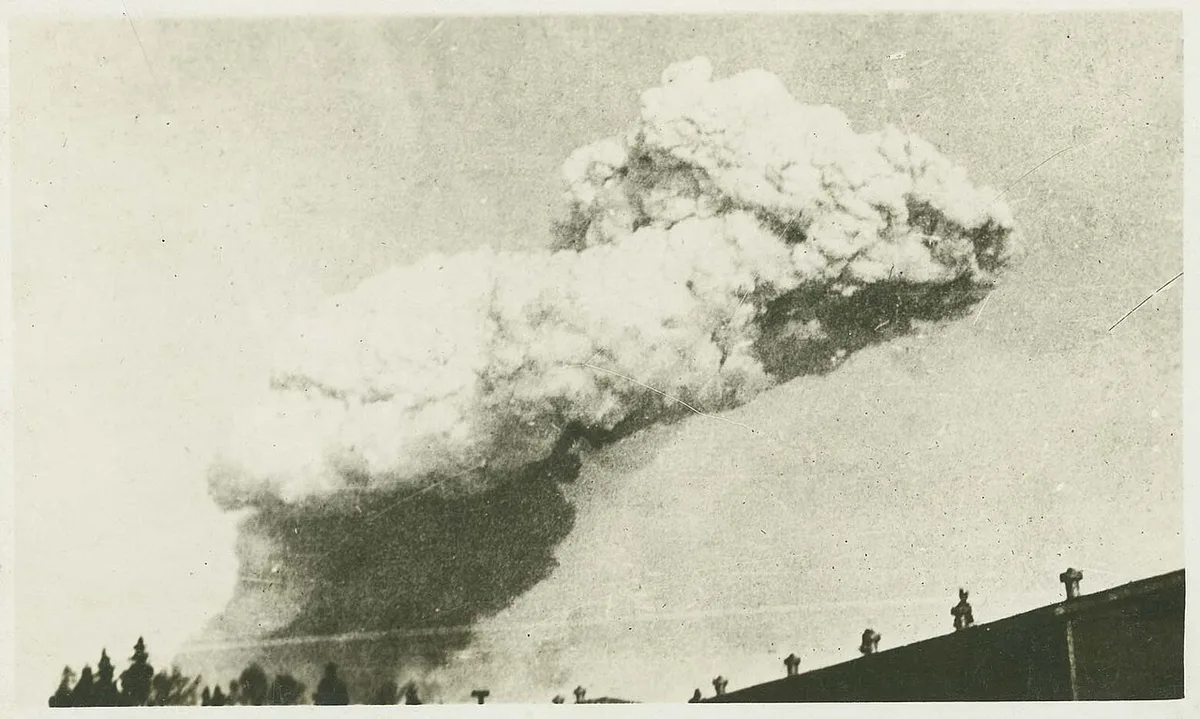
Halifax carries two of the country’s hardest histories, and they’re separate events people often blur together. The first is the Halifax Explosion. On the morning of 6 December 1917, the French munitions ship Mont-Blanc, loaded with roughly 2,300 tons of picric acid and hundreds of tons of other explosives, caught fire after a collision in the Narrows and, about twenty minutes later, detonated with the force of some 2.9 kilotons of TNT - the largest human-made explosion in history until the atomic bomb. At least 1,782 people were killed and about 9,000 injured, and the north-end district of Richmond was flattened. Boston sent relief within hours, and Nova Scotia still ships Boston a Christmas tree every year in thanks.
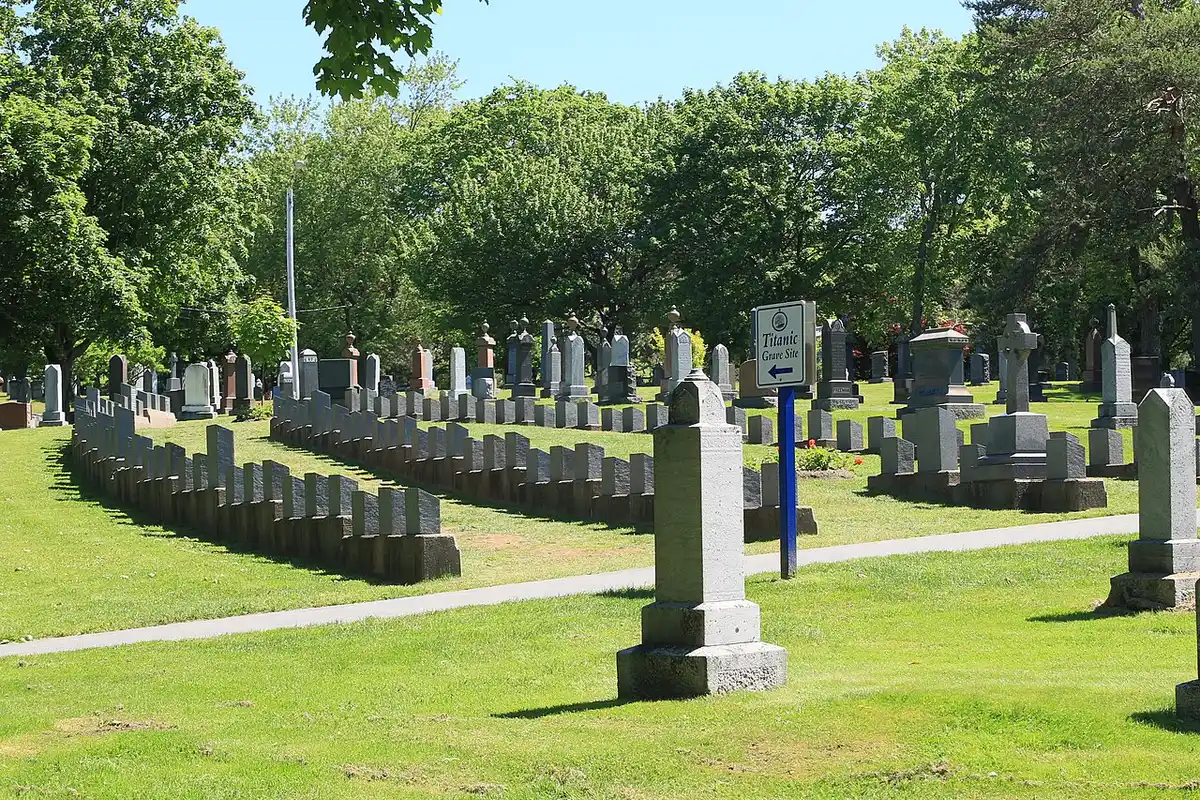
The second, five years earlier, is the Titanic. When the ship went down on 15 April 1912, Halifax was the base for recovering the dead, and 121 Titanic victims are buried at Fairview Lawn Cemetery, their grey stones set in curving rows. The Maritime Museum of the Atlantic holds artifacts recovered from the water.
Eat a donair
One thing you have to try: the donair, spiced beef on a spit, sliced into a warm pita and doused in a sweet garlicky condensed-milk sauce that sounds wrong and tastes right. Halifax made it the city’s official food in 2015, and it’s late-night fuel more than a sit-down meal. We give it the full treatment, sauce recipe and all, in the Canadian food guide.
Day trip: Peggy’s Cove
Forty-five minutes southwest, Peggy’s Cove is the postcard: a red-and-white lighthouse from 1915, often called the most photographed in Canada, on a shelf of wave-polished granite.
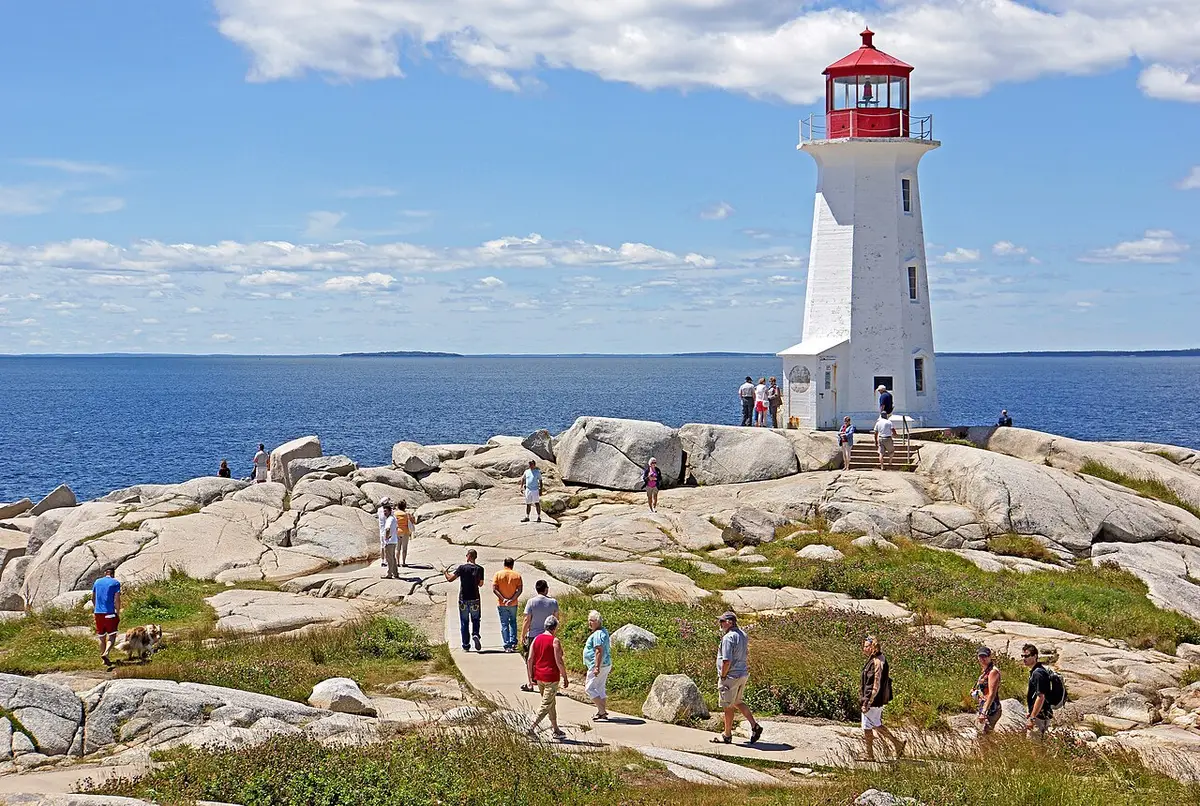
This is the classic Halifax day trip, so one blunt warning comes with it. The lower band of black, sea-soaked granite is where people are killed most years: a rogue wave lifts them off and the cold water does the rest. There’s now a raised deck to hold you back, so stay on the dry, pale rock above the waterline, which is the better vantage regardless.
Getting there and around
Halifax Stanfield International (YHZ) is Atlantic Canada’s main airport, roughly 35-40 km from downtown. Our Halifax airport to downtown guide covers Bus 320, flat-rate taxis and rideshare on that run. The historic core - Citadel, waterfront, gardens - is genuinely walkable, so you can go carless for the city itself and pick up a rental only for Peggy’s Cove and the rest of the province. Our guide to renting a car in Canada covers the details.
Halifax is also the gateway to the rest of the region: it’s the natural start for the wider Nova Scotia loop, the South Shore run to Lunenburg, the ferry toward St. John’s, and the long drive up to Cape Breton and the Cabot Trail.
Read also
- Picking an area to sleep in: where to stay in Halifax
- The province the city opens onto: Nova Scotia travel guide
- The island drive it leads to: the Cabot Trail
- The donair, done properly: Canadian food, what to try
- Renting wheels for the day trip: renting a car in Canada
On the map
The map loads on click - to keep the page lightweight.
The map didn’t load. Check your connection and refresh the page.
Read also

Cities · 11 min read
Regina: Legislature, RCMP Heritage Centre and Prairie Base
Verified · August 29, 2026Wascana Centre, the Legislature, the Mounties' only training depot and a free T. rex - what Regina actually rewards, plus the road to Saskatoon.

Cities · 10 min read
Whitehorse: Yukon Base for Aurora, Rivers and the Klondike
Verified · August 28, 2026Whitehorse in 2026: SS Klondike grounds open but boat closed, MacBride C$12, Beringia C$6, Miles Canyon and aurora season.

Cities · 9 min read
Things to Do in Saskatoon: River Valley, Wanuskewin & Skies
Verified · August 27, 2026Saskatoon in practice: Meewasin trails, Wanuskewin bison, Remai Modern by donation, and a prairie day trip to Riding Mountain.

Cities · 9 min read
Lunenburg: UNESCO Old Town Guide
Updated · September 2, 2026Old Town Lunenburg from Halifax: UNESCO grid of 1753, painted harbour, Fisheries Museum prices, Bluenose II, and when an overnight beats a day trip.