
Calgary Airport to Downtown and Banff: Shuttle, Bus, Taxi
YYC to downtown Calgary by Route 300 (C$4.00), taxi (~C$40-45) or rental - which one fits your bags, your hour and your budget in 2026.
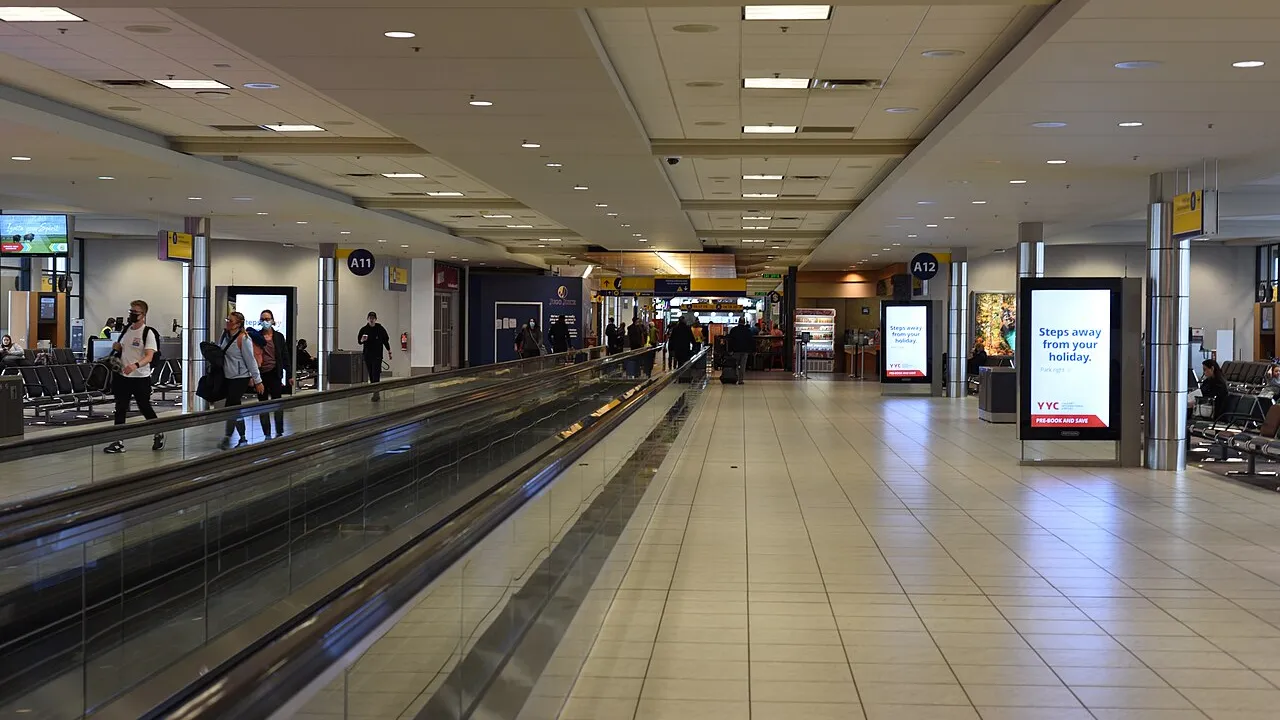
Two very different trips start at the same curb. Getting downtown from YYC is a C$4.00 transit ride or a roughly C$40-45 taxi, both under half an hour. Getting to Banff instead means skipping the city altogether - a shuttle from around C$89, a rental car for the 130 km drive, or a private transfer - and none of those routes touch downtown Calgary at all. Sort out which trip you’re actually on before you pick a curb to stand at.
Downtown or Banff: the short version
| Trip | Way | Price | Best for |
|---|---|---|---|
| Downtown | Route 300 bus | C$4.00 single / C$12.65 day pass | light bags, no rush |
| Downtown | Taxi | ~C$40-45 on the meter + C$4.60-5.10 fee | groups, luggage, late flights |
| Downtown | Uber / Lyft | dynamic + the same airport fee as taxis | when the app beats the meter |
| Downtown | Airport sedan | flat C$68.75 + C$11 fee | a fixed price, more comfort |
| Banff | shuttle, bus or rental | see Calgary to Banff | the mountain leg has its own page |
| Banff | Rental car | day rate + fuel, 140 km drive | flexibility, side trips en route |
| Banff | Private transfer | fixed, booked ahead | odd hours, skipping the shuttle stop |
There’s no dedicated train to YYC - Calgary’s LRT doesn’t reach the airport - so every downtown option is a bus or a car, and every Banff option involves a highway. The choice comes down to luggage, timing and how much you want to drive, not speed.
Trip one: into the city
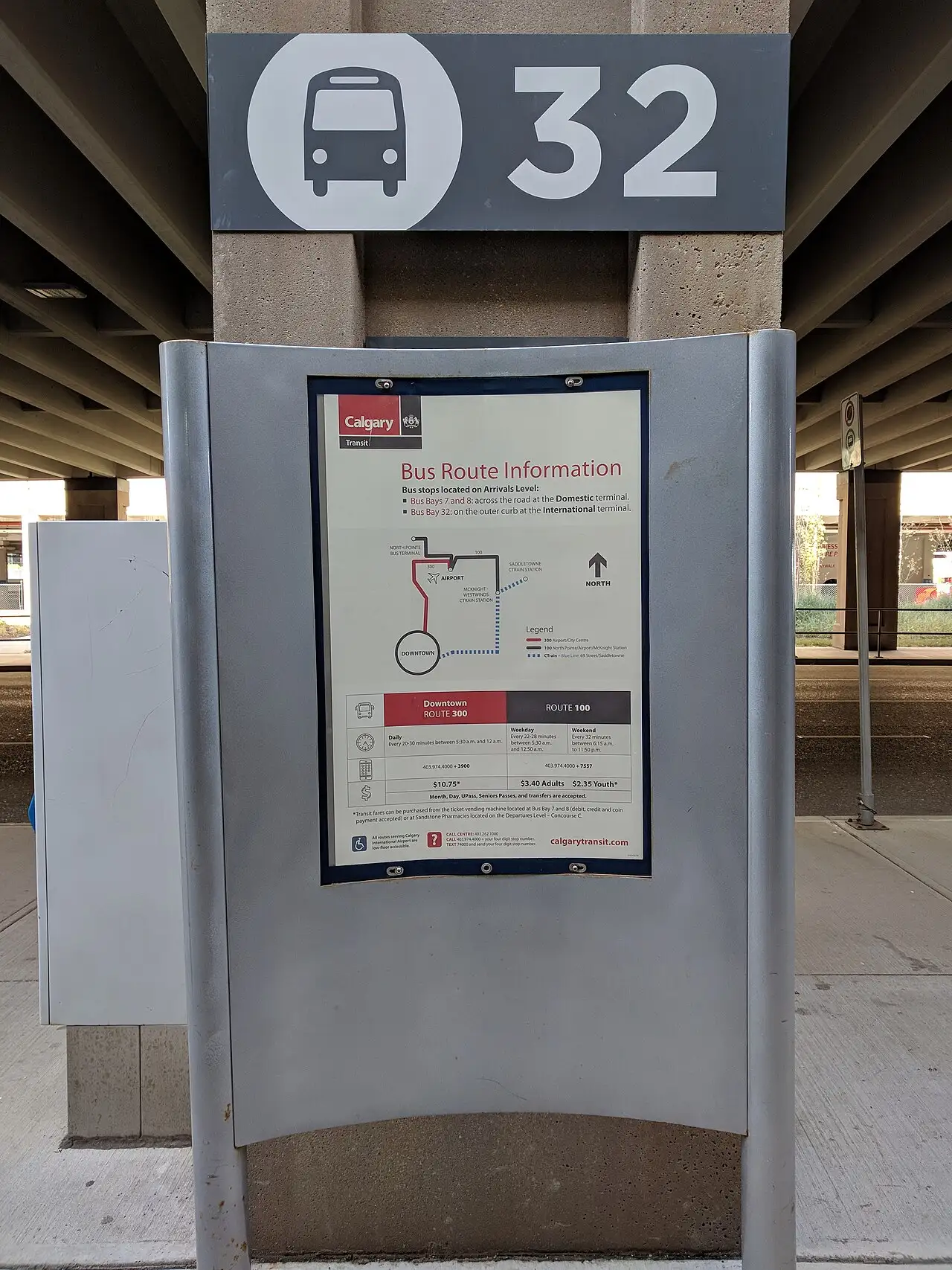
Route 300 is the only bus that actually reaches downtown, and it’s worth knowing that before you board the wrong one: Calgary Transit also runs Route 100 from the same terminal, but that one connects to Saddletowne LRT Station on the Blue Line and North Pointe Bus Terminal - useful if you’re headed to the city’s northeast or transferring onward through the LRT network, but it won’t put you on Centre Street. Route 300 will: the airport’s own site describes it as “a rapid transit bus with limited stops” running straight into the downtown core.
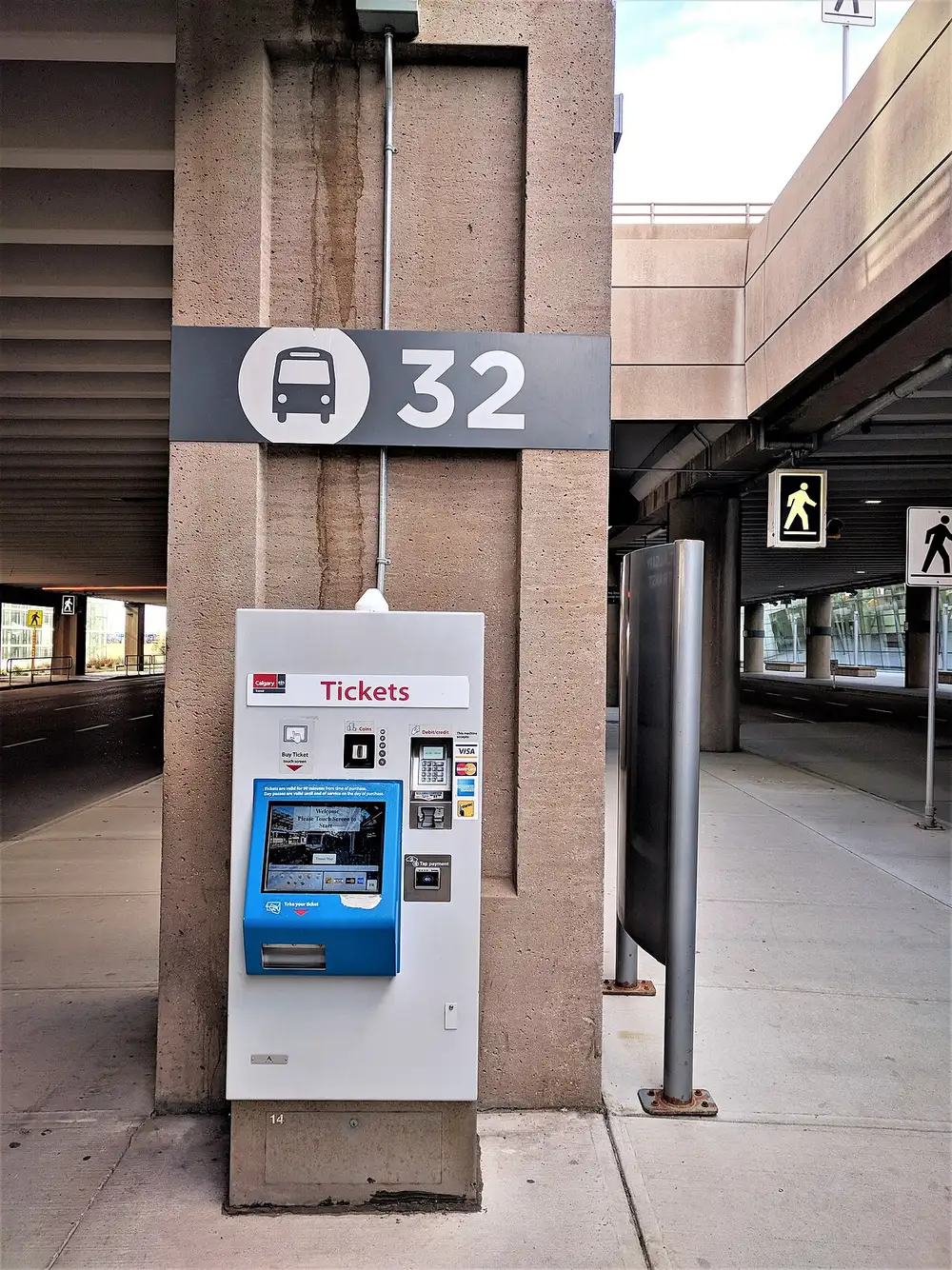
Calgary Transit runs two stops at YYC: one at the Domestic Terminal, reached by crossing the roadway at Door 2 toward Pillar 7 (bays 7 and 8), and one at the International Terminal, through Door 15 on the Arrivals level toward Pillar 32. Tickets come from vending machines at both stops (debit, credit or cash), or buy one in advance at the 7-Eleven near Door 11 if you’d rather not fumble with a machine after a long flight. The fare is Calgary Transit’s standard rate: C$4.00 for a single ride, good for 90 minutes of transfers, or C$12.65 for a day pass if you’re planning to move around the city more than once. Children 12 and under ride free. The route runs through the day into the evening - check the board at the stop or the Transit app the moment you land for the next departure, since Calgary Transit’s own live schedule isn’t something to plan around from a printed interval days in advance.
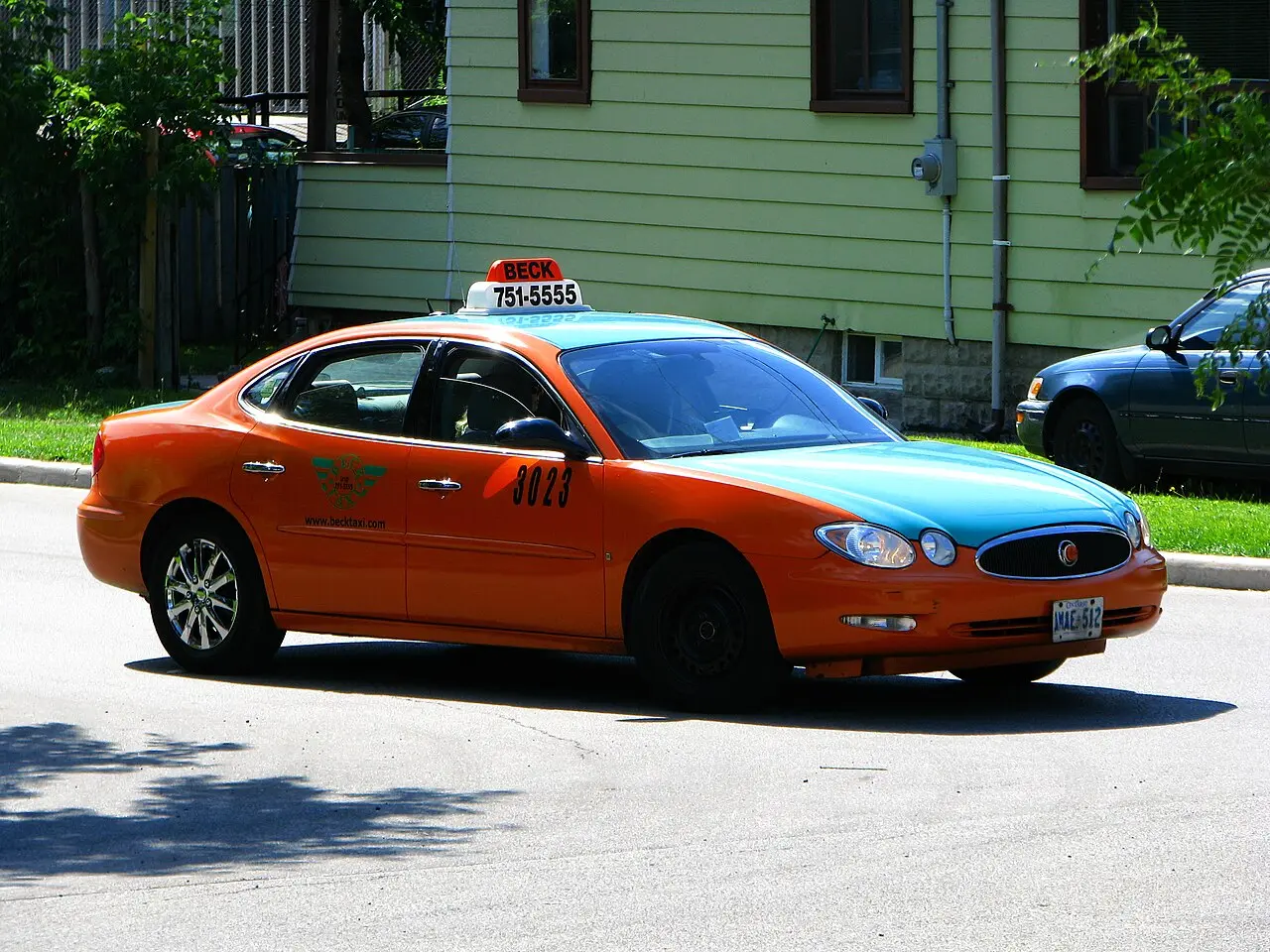
Airport taxis run on the meter, regulated by the City of Calgary, and the airport’s own guidance puts a normal-traffic fare to downtown at roughly C$40 to C$45. On top of that, YYC adds an Airport Access Fee - C$5.10 outbound (picking up at the terminal), C$4.60 inbound (dropping off anywhere on the airport campus), both plus GST; that’s the current figure, superseding an older 2023 press release that quoted lower numbers, so don’t trust a screenshot from a few years back. Stands sit on the Arrivals level at Doors 1, 9 and 15, cars take 4-5 passengers, and vans are on hand for anyone travelling with more bags than a trunk can swallow; two named operators run the stands, Associated Cab and Checker Cabs, both wheelchair accessible.
If you’d rather not deal with the meter at all, airport sedans wait right next to the taxis at Doors 2, 11 and 15: a flat C$68.75 to downtown plus an C$11 access fee. Do the math before you assume that’s close to a taxi, though - a sedan runs C$79.75 with its fee against a metered taxi’s roughly C$45.10-50.10, a gap of about C$30 to C$35. You’re paying for the fixed price and the nicer car, not for a bargain. Uber and Lyft are the only ride-apps the airport authorizes, picking up at Arrivals Doors 3, 12 or 15 (Departures Doors 5 and 11 handle overflow at peak times) and charging the same C$5.10/C$4.60 access fee as taxis, plus C$7.24 for XL and C$4.00 for the airport’s Green tier. Check the app at the baggage belt against the C$40-45 taxi benchmark rather than assume either one wins by default - a quiet weekday afternoon tends to favour the app, a Friday evening with the Stampede in town rarely does.
Trip two: past the city, straight to Banff
If Calgary is just where you land, none of the above applies - Banff sits 140 km and about 90 minutes west on the Trans-Canada Highway, and downtown Calgary isn’t on the way. Three ways to make that trip:
A rental car is the most flexible, and it’s a straight highway drive with no transfers to plan around - useful if Lake Louise, Kananaskis or a ski hill is also on the list, since none of those are reachable by shuttle either. Landing between October and April, check what winter tires the counter is offering before you sign: Alberta’s chinooks can lift the temperature 15 degrees in a few hours and take the snow off the streets for an afternoon, but the next system behind it can just as easily bring the ice back.
The Banff Airporter runs a scheduled shuttle direct from the terminal, and it’s a real business with its own published fares rather than a third-party estimate: C$88.90 one-way or C$177.80 return for an adult, C$80.01/C$160.02 for seniors, C$44.45/C$88.90 for a child, and free under 5 (GST not included, and fuel surcharges can apply). Departures start at 10:00 and run close to hourly through the afternoon to 18:30, then thin out to two-hour gaps for the last three runs - 18:30, 20:30 and 22:30 - and each one reaches Banff about two hours after it leaves, so don’t just add the 90-minute drive time to the departure board or you’ll be half an hour out. Budget 45 minutes after a domestic landing or a full hour after an international one before you reach their desk; miss that window and you’re on the next departure, not the one you booked, which stings more in the evening when “next” is two hours away instead of one.

A private transfer is the third route, priced and booked ahead like the shuttle but door to door rather than on a fixed timetable - worth it for odd arrival times or a group that would rather not sit through the shuttle’s stop in Canmore.
Picking your ride
Heading into the city with light bags, Route 300 is the obvious pick - cheapest by a wide margin, and it drops you right on Centre Street. Landing with a group, a stack of luggage, or after a flight that’s worn you down, the taxi buys back your patience for a predictable amount; the airport sedan only makes sense if the fixed price and the nicer seats matter more to you than the roughly C$30-35 it costs over a taxi. If Banff or the Rockies is the actual destination, decide between the shuttle’s fixed schedule and a rental car’s freedom before you clear the doors - there’s no bus that splits the difference, and if you’re arriving in the evening, check the shuttle’s actual departure times rather than assume it runs hourly all night. Whichever way you’re heading, our guide to driving in Canada covers the winter-tire rules that apply the moment you’re on that highway.
Read also
- Sorting a base in the city: where to stay in Calgary
- What Calgary itself is for: things to do in Calgary
- The park at the other end of that highway: Banff National Park
- Comparing YYC, YYZ and YVR before you book: which airport to fly into Canada
- The province in between: Alberta travel guide
On the map
The map loads on click - to keep the page lightweight.
The map didn’t load. Check your connection and refresh the page.
Read also

Transport · 13 min read
Toronto to Montreal: Train, Bus, Flight or Drive
Verified · September 5, 2026Toronto-Montreal 2026: VIA averages 5h13 over 538 km, Megabus runs 8-13 coaches a day from Union, about 545 km to drive, or a 1h20 flight to YUL.

Transport · 9 min read
Ottawa Airport to Downtown: Line 4, Bus 105 and Taxi
Verified · September 4, 2026YOW to downtown: O-Train Line 4 plus Line 2 for C$4.10, Route 105 around the clock, and Ottawa metered taxi rates with the airport pickup fee.

Transport · 12 min read
London to Calgary Flights: The Rockies Shortcut
Verified · August 31, 2026Air Canada and WestJet fly London Heathrow to Calgary nonstop. What the schedule looks like, how fares move, and why this ticket fits a Banff-first trip.

Transport · 10 min read
London to Vancouver Flights 2026: Airlines and Fares
Verified · August 30, 2026Nonstop London-Vancouver runs on BA and Air Canada from Heathrow and Gatwick. What moves the fare, when it softens, and when to book.