
Driving in Canada for Visitors: Licence & Distances
Visitor licence rules by province, real intercity kilometres, winter tires in brief, and how to share the road with moose and bears.
Visitors can drive in Canada on a valid home licence for weeks or months - the window depends on the province, not on a single federal rule - and the harder part is usually the map. Toronto to Montreal is about five and a half hours; Calgary to Vancouver is a full mountain day; Toronto to Vancouver is closer to forty-five hours of driving if you never sleep. Moose, elk and the odd bear share those roads whether your paperwork is perfect or not.
Choose the car only after checking drop fees, young-driver surcharges and the tire marking fitted to the vehicle; our renting a car in Canada guide covers those booking decisions. Once the keys are yours, the priorities are provincial licence rules, realistic daily distances, legal winter equipment and enough stopping room when wildlife reaches the road.
What licence you need
Canada doesn’t issue a national visitor driving permit. Each province and territory sets how long a foreign licence is enough. For a typical holiday of two or three weeks you’re fine almost everywhere with a valid home licence. Stretch the trip toward three months, or hop provinces, and the rules diverge.
| Where you drive | Visitor window (home licence) | IDP notes |
|---|---|---|
| Alberta | Up to 1 year | Strongly recommended if licence is not in English; carry IDP and original |
| British Columbia | Tourist stay up to 6 months | New residents have a separate 90-day switch rule - that is not the tourist rule |
| Ontario | Under 3 months on home licence alone | Past 3 months: IDP from your home country (cannot buy one in Ontario) |
| Quebec | 6 consecutive months | Past 6 months as a visitor: international driving permit from the issuing country |
Sources and dates are in the article footer. Rules change - check the province page before you travel.
Two practical catches trip people up. An International Driving Permit is a translation, not a licence on its own; police and rental desks want both documents. And the CAA is the only body in Canada authorised to issue an IDP, so you can’t fix a missing permit after you land - buy it at home before you fly. Alberta states that plainly; Ontario and Quebec say the same thing in different words.
If your trip is Banff, then Vancouver, then a late swing through Ontario and Quebec, plan the longest provincial window you’ll hit, not the friendliest one. Alberta’s year looks generous until you spend week eleven on Ontario roads without an IDP.
How far cities really are
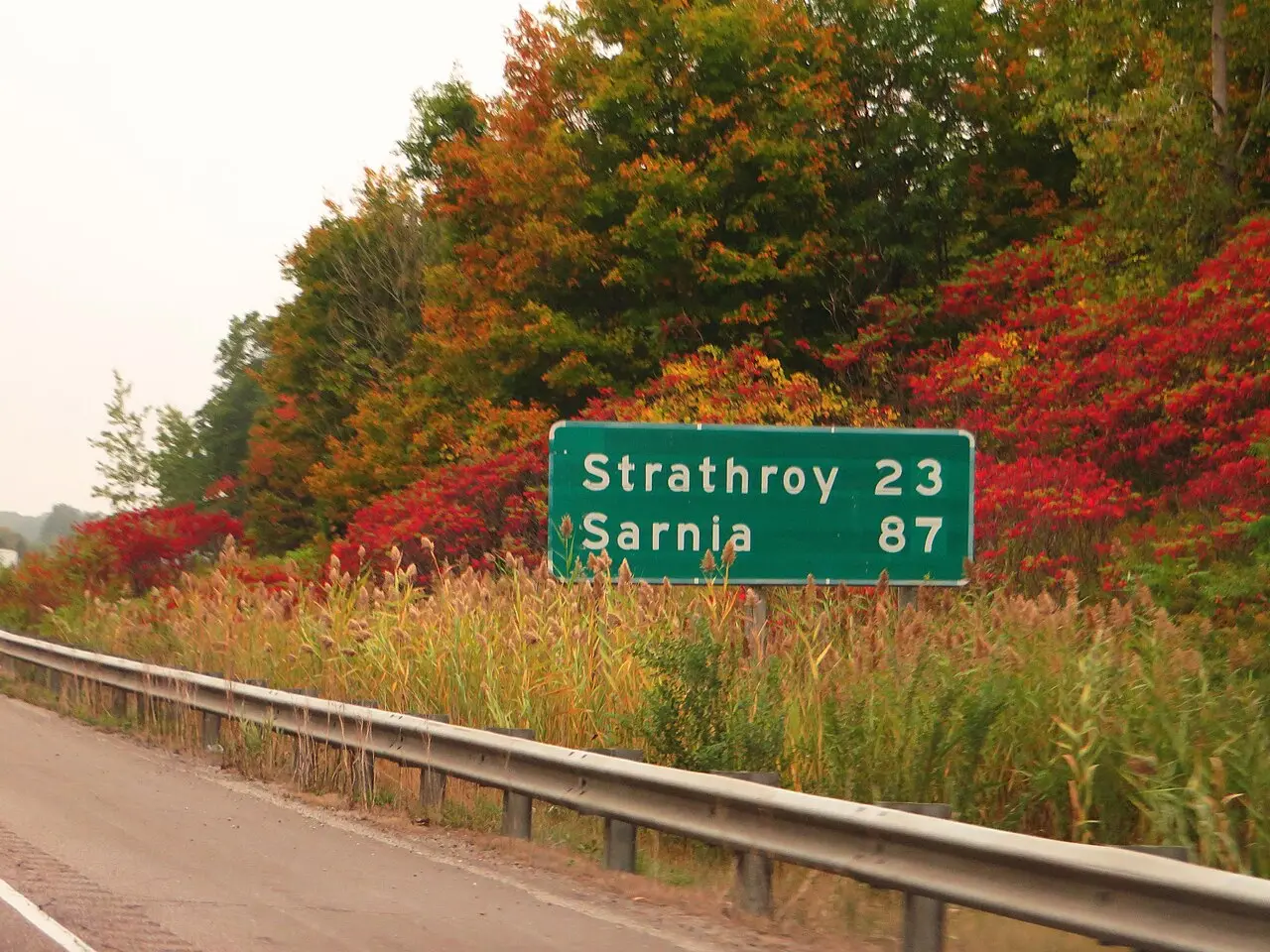
Canadian maps flatten drives that eat a day. Plan legs by hours and fuel stops, not by how short the line looks on a phone.
| Route | Rough road distance | Continuous driving (approx.) |
|---|---|---|
| Toronto - Montreal | about 545 km | about 5.5 hours |
| Toronto - Ottawa | about 450 km | about 4.5 hours |
| Calgary - Banff town | about 130 km | about 1.5 hours |
| Calgary - Vancouver (main Trans-Canada route) | about 970-1,000 km | about 10-12 hours without sightseeing |
| Montreal - Halifax | about 1,320 km | about 13+ hours |
| Toronto - Vancouver | about 4,400-4,500 km | about 45+ hours |
These are approximate road kilometres from published city tables; your exact route and weather will move the numbers. The point is the shape: eastern city hops are weekend-sized; Rockies-to-coast is a full day; coast-to-coast is a holiday, not a transfer.
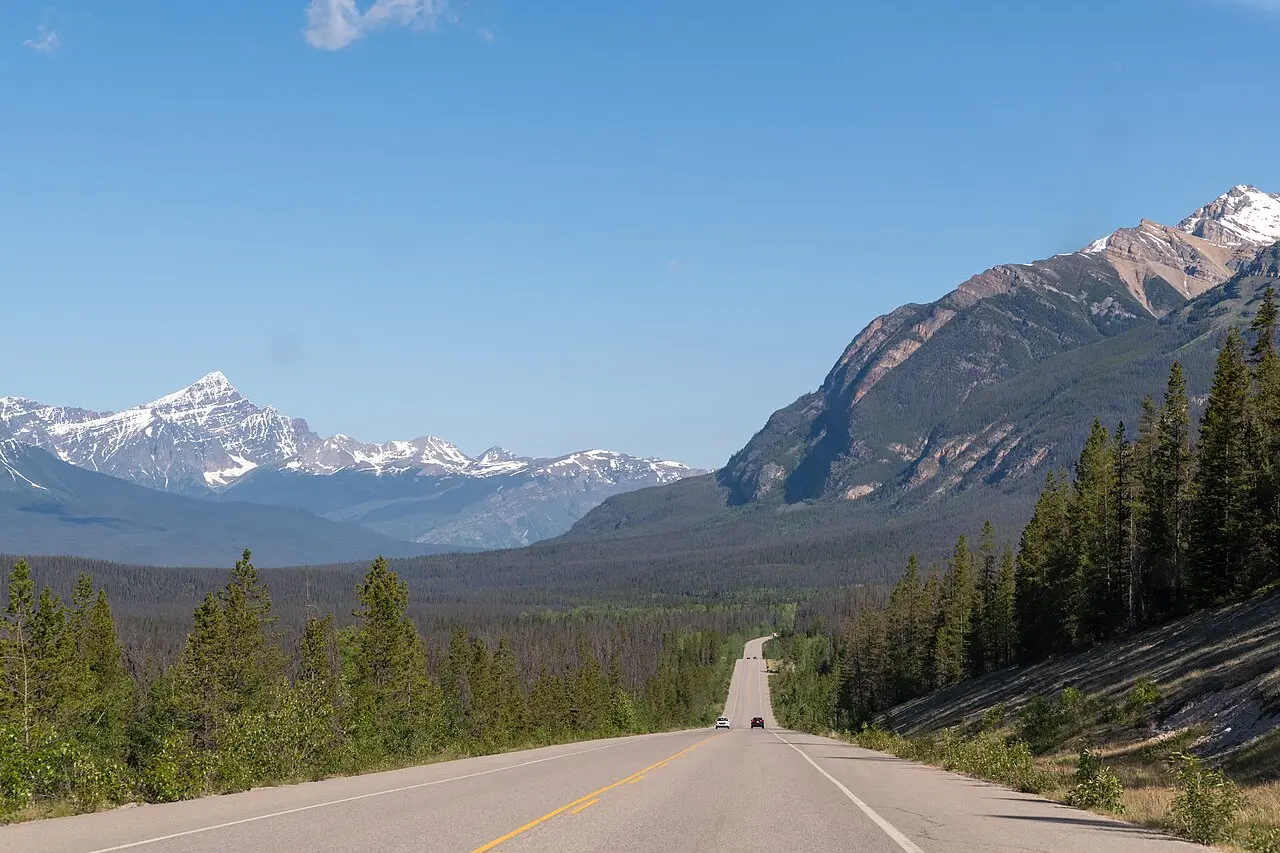
A useful planning rule is to treat six hours as a long day if you want daylight for trailheads, and eight hours as a hard day in the mountains when weather or wildlife slow you down. The Icefields Parkway between Lake Louise and Jasper looks like a short green line and routinely eats most of a careful day once you stop for viewpoints.
Winter tires without the rental-desk deep dive
There’s still no single national winter-tire law. Three rulebooks matter on visitor routes, and they don’t agree.
Quebec (1 December to 15 March) requires winter tires on vehicles registered in Quebec - rentals included - and only the alpine three-peak snowflake (or studs) counts; a plain M+S marking has not been enough since 2014. Fines run roughly C$200 to C$300. The law follows registration, not where you happen to be driving that afternoon.
British Columbia ties the rule to signed routes, mostly 1 October to 30 April, accepts M+S or snowflake with enough tread, and fines passenger cars about C$121.
The Icefields Parkway wants snow tires or chains from 1 November to 1 April under Parks Canada rules, with either snowflake or M+S accepted. Parks Canada doesn’t publish a fine amount the way the provinces do.
Alberta and Ontario have no province-wide winter-tire statute. That’s not the same as safe ice. For sidewall symbols, rental-desk wording and the Quebec-vs-BC trap in one place, use the renting guide - this page won’t re-litigate every marking.
Wildlife on the road
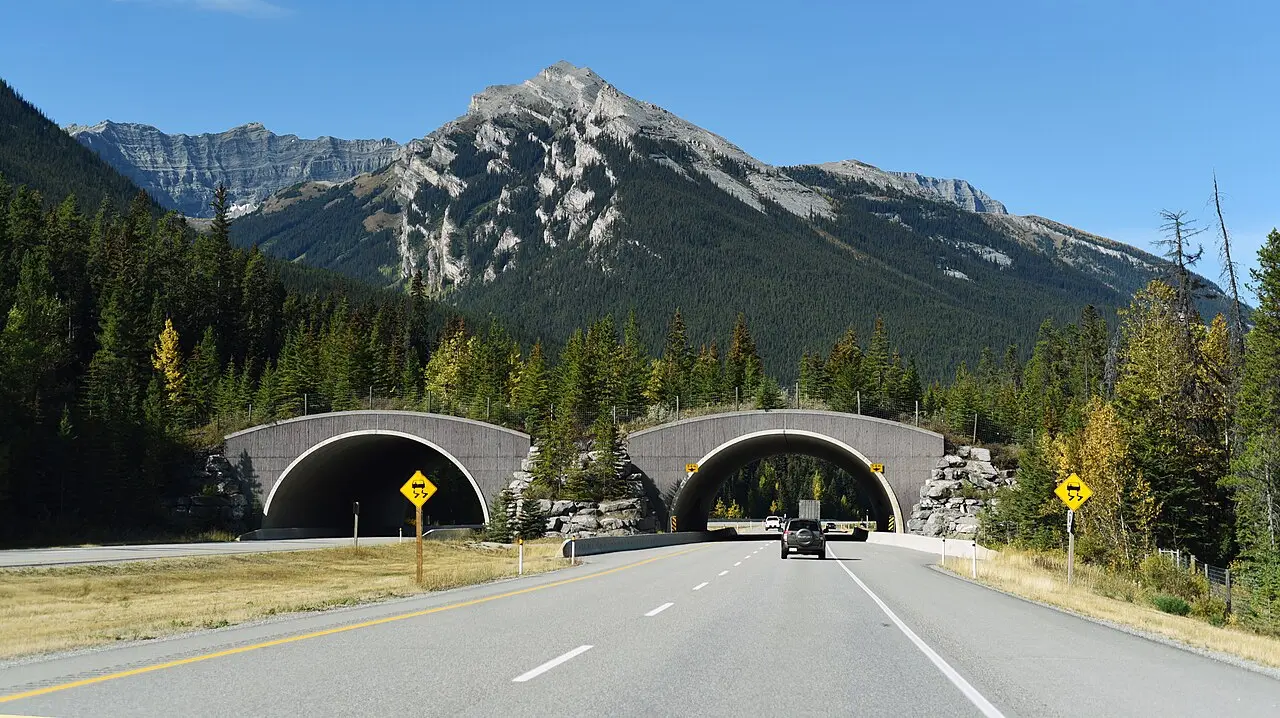
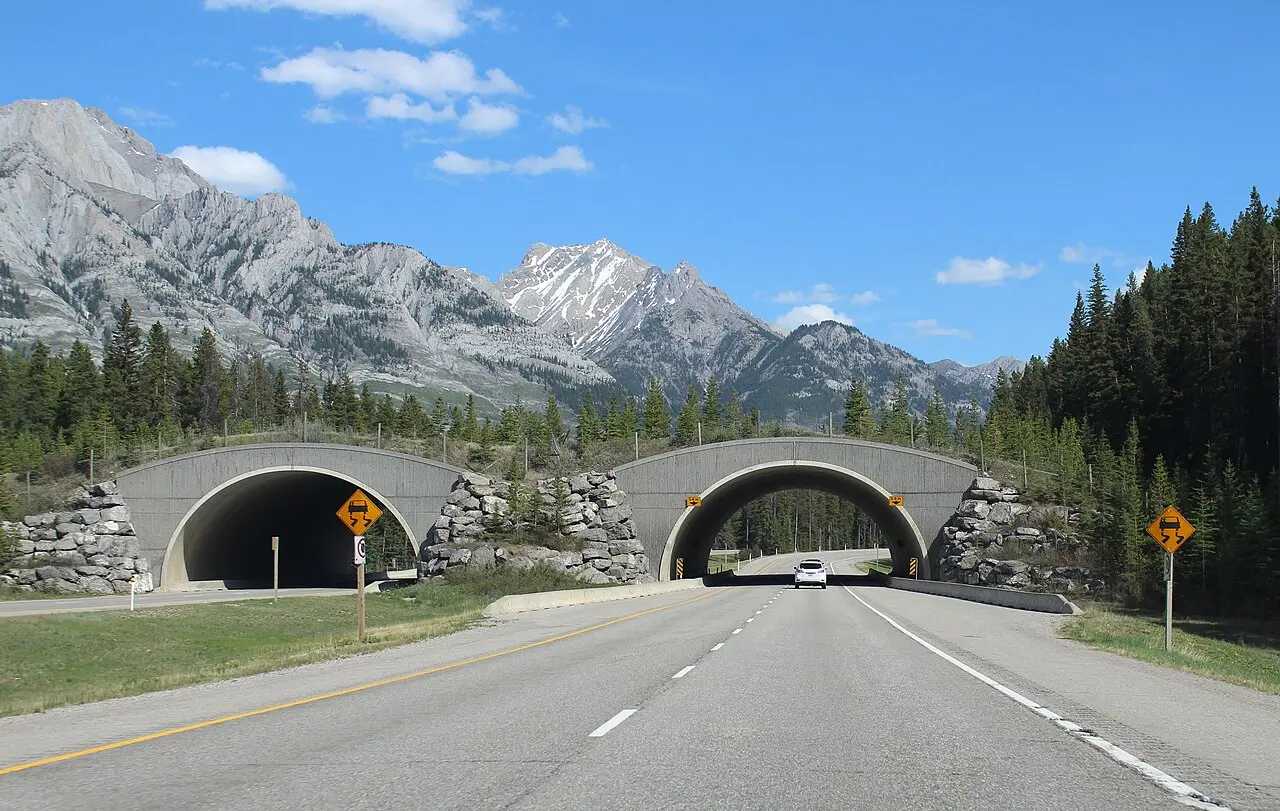
Roads are a leading cause of human-caused wildlife deaths in Canada’s national parks. In Banff, fencing and wildlife crossings have cut collisions by more than 80 percent, and Parks Canada still tells you animals can be on or near any park road. The posted ceiling on major Banff routes is 90 km/h (about 56 mph) and 60 km/h on secondary roads unless a sign says otherwise.
If you see an animal on the shoulder, slow down, stay in the vehicle, and flash your hazards for the car behind you. Where there’s one animal, expect more. Dawn and dusk are the worst windows for visibility and for animal movement. Stopping in a travel lane for a photo is how pile-ups start; pull fully off only if it’s safe, watch briefly, then move on when a jam forms.
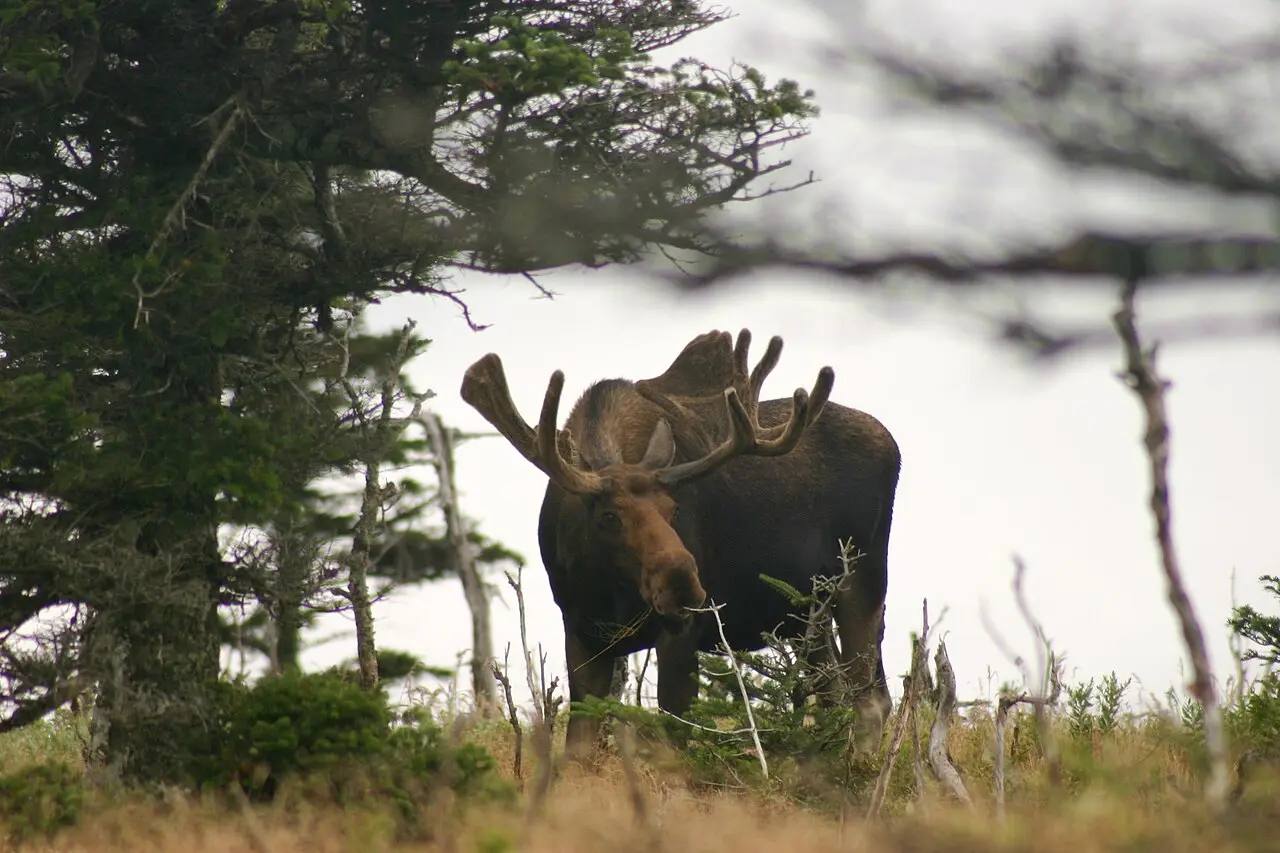
Moose are the heavyweights of Canadian roadside risk - tall, dark, and often active when light is poor. You’ll see moose-crossing signs in places like Cape Breton, northern Ontario and parts of Quebec and New Brunswick for a reason. Elk and bighorn sheep own Banff and Jasper verges in high season. Bears appear on mountain highways too; stay sealed in the car and don’t feed, entice or crowd them. In Banff National Park that behaviour can mean a court date and fines up to C$25,000. Report bear, cougar, wolf or coyote sightings to Banff Dispatch at 403-762-1470.
Road habits that catch visitors
Drive on the right. Speed limits and distance signs are in kilometres. Seat belts are mandatory. Right turns on red are generally allowed after a full stop unless a sign forbids them. In Quebec, the turn is prohibited across the entire island of Montreal; elsewhere, signs can prohibit it at specific intersections or times.
Empty stretches are real. In winter the Icefields Parkway has no services for its whole length - fill the tank and download an offline map before you leave the last town. Around Toronto, Highway 407 bills by camera; on a rental that often arrives later as toll plus an admin fee, which the renting guide covers in more detail.
City cores are the opposite problem. Downtown Toronto, Montreal and Vancouver punish casual drivers with parking prices and one-way mazes; transit works there. The clean pattern for many trips is: land, take the train or transit into town (see Toronto Pearson to downtown or Vancouver airport to downtown), then pick up the car on the day you leave for the mountains.
What to do before you turn the key
- Confirm the visitor licence window for every province you’ll sleep in, and get an IDP at home if any of them ask for one.
- Price the rental with winter tires and one-way fees visible - renting a car in Canada walks through that checklist.
- Build the itinerary in hours, with fuel stops on empty parkways, and keep park speeds at the posted 90 km/h ceiling in places like Banff.
- Pack medical travel cover separately from the rental waiver if you want hospital bills handled; driving liability and your health are different products.
Do those four and Canada drives the way the brochures promise: long views, honest distances, and wildlife that you watch from inside the car instead of from a ditch. Arrive via the right gateway with which Canadian airport to choose, and if national parks are the point of the drive, price the Parks Canada Discovery Pass before you hit the gate.
Read also

Transport · 13 min read
Toronto to Montreal: Train, Bus, Flight or Drive
Verified · September 5, 2026Toronto-Montreal 2026: VIA averages 5h13 over 538 km, Megabus runs 8-13 coaches a day from Union, about 545 km to drive, or a 1h20 flight to YUL.

Transport · 9 min read
Ottawa Airport to Downtown: Line 4, Bus 105 and Taxi
Verified · September 4, 2026YOW to downtown: O-Train Line 4 plus Line 2 for C$4.10, Route 105 around the clock, and Ottawa metered taxi rates with the airport pickup fee.

Transport · 12 min read
London to Calgary Flights: The Rockies Shortcut
Verified · August 31, 2026Air Canada and WestJet fly London Heathrow to Calgary nonstop. What the schedule looks like, how fares move, and why this ticket fits a Banff-first trip.

Transport · 10 min read
London to Vancouver Flights 2026: Airlines and Fares
Verified · August 30, 2026Nonstop London-Vancouver runs on BA and Air Canada from Heathrow and Gatwick. What moves the fare, when it softens, and when to book.