
Toronto to Montreal: Train, Bus, Flight or Drive
Toronto-Montreal 2026: VIA averages 5h13 over 538 km, Megabus runs 8-13 coaches a day from Union, about 545 km to drive, or a 1h20 flight to YUL.
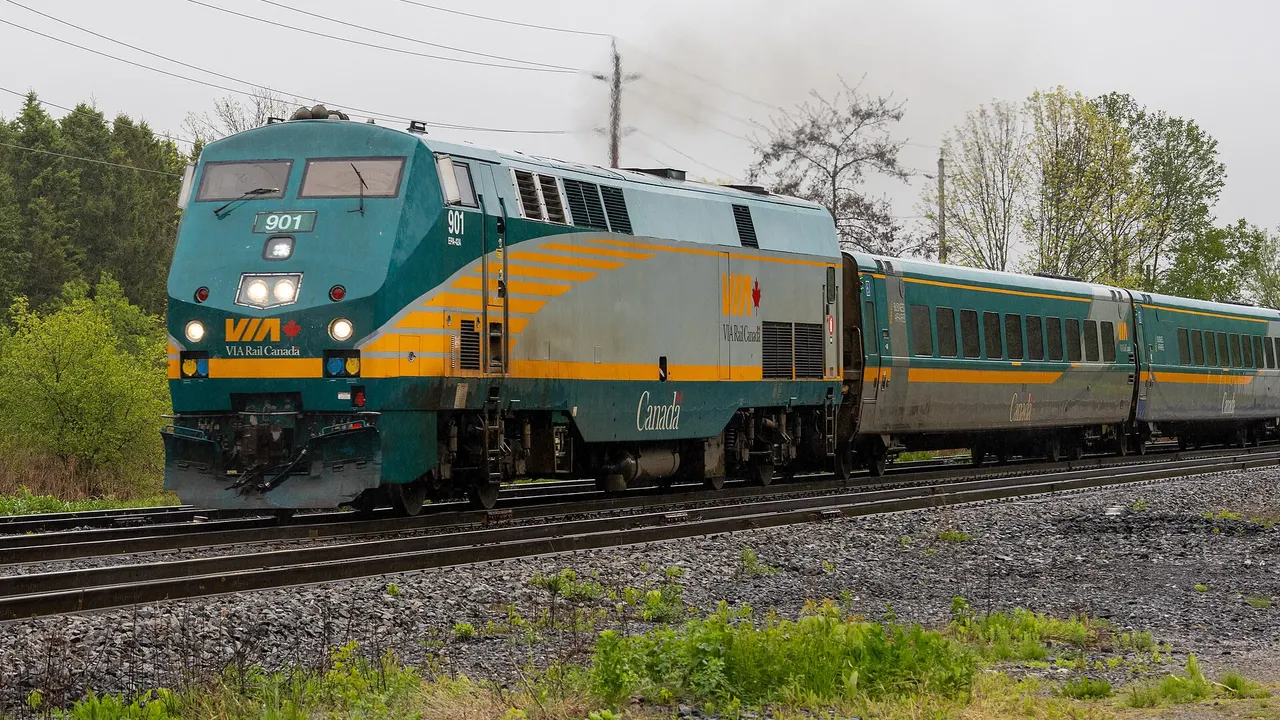
Toronto to Montreal breaks down to four real choices once you check live numbers instead of marketing headlines. VIA Rail averages 5 hours 13 minutes over 538 km with 40 departures a week - the figure the railway actually publishes, not its fastest sample. Megabus is the busiest coach on the corridor, with 8 to 13 direct coaches a day from Union depending on the weekday, running roughly 6h40 to 7h30; Orléans Express sells the same corridor but only three of its listed departures still reach Montreal at all. Driving the 401 covers about 545 km, roughly 5.5 hours behind the wheel, and flying is the short leg at 1h15 to 1h25 gate to gate - though not every flight out of Billy Bishop lands where you’d expect. Figures below were checked on 5 September 2026, and Megabus’s again on 13 September, after its timetable change.
One number here has already turned over: VIA’s Canada Strong Pass discount is finished. Both its travel window and its ticket-purchase window closed at 23:59:59 ET on 7 September 2026, and VIA’s own offer page now reads “The Canada Strong offer is no longer available.” Every “kids ride free” line still sitting on older blogs is history, so price ordinary fares. For neighbourhood-level planning, Toronto and Montreal cover the two cities on their own pages, and Canada by train zooms out to the full Corridor network. Heading further east instead? Toronto to Quebec City picks up where this one stops.
Four ways to cover 538 km
| Way | How often | Real time | Watch for |
|---|---|---|---|
| VIA Rail | 40 departures a week | 5h13 average (range 4h56-5h28) | That average is for this direction; the return trip averages 5h21 |
| Megabus | 8-13 direct coaches a day from Union, fewest on Tuesday and Wednesday | roughly 6h40-7h30 from Union | Most also stop at Scarborough GO, so the planner lists them twice |
| Orléans Express | 3 departures a day still reach Montreal, none on Wednesday | 7h20-8h31 on those three | Its “under 8 hours” headline is for the Montreal-to-Toronto direction |
| Fly (YYZ or YTZ to YUL) | dozens of flights daily | 1h15-1h25 gate to gate | Some Billy Bishop departures land at Montréal-MET, not YUL |
| Drive (Highway 401) | your own schedule | about 545 km, roughly 5.5 hours | 407 ETR bills the plate plus an admin fee afterward |
Nothing here is permanently the cheapest. Coach fares, VIA’s Escape bucket and calendar airfares all move independently of each other and of the date you’re actually pricing, so check your own day on each operator rather than trust what won last month.
VIA Rail: the average beats the fastest sample
There’s no single scheduled time to quote for this route. VIA runs the Corridor multiple times a day, every departure with its own duration, and the number it actually publishes is an average across all of them: 5 hours 13 minutes over 538 km, with samples on the same page running from 4h56 up to 5h28. Worth knowing: that average is specific to the Toronto-to-Montreal direction. The return leg averages 5h21 - close enough that it rarely changes a plan, but worth checking if you’re pricing the trip home on its own. You board at Toronto Union and step off at Gare Centrale, already downtown, with no forced connection on this pair - unlike itineraries that route through Quebec City. Most Corridor cars carry Wi-Fi, useful for the laptop crowd this route attracts.

Know what actually gets you on board before you build a trip around a ticket. VIA requires ID in its original physical form only - the railway is explicit that “digital images, scanned copies, or photocopies will not be accepted.” For a foreign visitor that means a passport, a US permanent resident card, an enhanced driver’s licence or a NEXUS card. An ordinary UK or Australian driving licence isn’t on that list, so pack the passport even for a same-day round trip.
Canada Strong Pass, now closed: through the 2026 summer season, VIA let children and youth 17 and under ride free in Economy with code CANADAFAM when travelling with a paying adult, and cut Escape and Economy fares 25% for riders 18-24 with code CANADA1824. Economy Plus was excluded either way, Escape bookings under the offer were online-only, and no citizenship or residency test was attached. Both the travel window and the ticket-purchase window closed at 23:59:59 ET on 7 September 2026, and VIA’s offer page now states that the Canada Strong offer is no longer available. From 8 September 2026 it is ordinary fares again. The codes are worth knowing only so you can recognise out-of-date advice quoting them.

Outside the promotion, Escape pricing isn’t fixed either - VIA’s fine print reserves the right to move fares and schedules at any time, and the sticker price shown doesn’t include sales tax. A fare a friend quotes from a trip last spring tells you nothing about yours. Escape only makes sense once your dates can’t move: it’s the tightest, cheapest fare class VIA sells, with the least room to change your mind. The moment a plan gets shaky, stepping up to Economy or Business buys back that flexibility.
The bus market: Megabus, Orléans Express and the FlixBus gap
Megabus is the most frequent bus on this corridor, not the operator with nothing to quote. The timetable it brought in on 9 September 2026, checked against its live journey planner for dates into late October, runs direct coaches from the Union Station Bus Terminal (81 Bay St, inside CIBC Square) to St-Antoine O. @ Mansfield in downtown Montreal 8 times a day on Tuesdays and Wednesdays, 10 on Thursdays, 11 on Saturdays and Mondays and 13 on Fridays and Sundays, taking roughly 6h40 to 7h30. The planner can make that look like 15 to 25 departures, because most of those coaches pick up again at Scarboro GO (330 Borough Dr) 30 to 50 minutes later and each pickup is listed as its own journey. The same double count sits behind Megabus’s marketing page, which advertises “up to 25 services per day” and a 6h25 fastest time - that fastest run boards at Scarborough, not Union, so it isn’t the number a downtown traveller actually gets. Megabus has already reworked this timetable more than once in 2026, so price the live engine for your own date rather than trust the numbers above.

Onboard, Megabus’s own site promises free device charging at every seat - a reasonable baseline, even if any individual outlet can be a coin flip. Two large suitcases plus a stroller can still turn a cheap fare into a bay-side wrestling match, so weigh luggage before you celebrate the lowest number on screen.
Orléans Express, run in part with Red Arrow, sells this corridor too, and its own front page promises “Montreal to Toronto in under 8 hours” - read that as the reverse direction. Toronto to Montreal is a different story: of the seven departure columns Orléans lists from the Union Station Bus Terminal, only three still reach downtown Montreal, and none of the three run on Wednesday. The survivors: 08:30 to 17:01 (8h31), 11:15 to 19:45 (8h30) and 14:15 to 21:35 (7h20) - two of the three land past the operator’s own eight-hour promise for this direction. Two more listed columns, 09:00 and 12:00, carried an expired “until 17 August” legend when this was checked. Two others, 16:30 and 19:00, terminate in Ottawa and never reach Montreal despite sitting on the same schedule grid. Every surviving run transfers at Ottawa’s VIA station. Orléans also offers free Wi-Fi, capped at 200 MB every six hours on a cellular connection that can slow down in weak-coverage stretches, and it can vanish entirely if the company substitutes a vehicle for that run. Plan the trip as if it might not be there.
FlixBus, checked 5 September 2026: the carrier’s own search returned no rides on the Toronto-Montreal pair for several September and October 2026 dates, and its popular-routes list doesn’t advertise this hop either. Until the live engine actually shows a departure for your day, there isn’t one to book.
All three booking engines take standard international Visa and Mastercard, so a UK or Australian card works fine at checkout - that part, at least, isn’t a trap.
Flying to Montreal: the short leg with two Montreal airports
Flying covers the shortest single leg, and it’s the one whose real-world time stretches the most once you count both ends. Nonstop Toronto Pearson (YYZ) to Montréal-Trudeau (YUL) runs about 1h20 to 1h25 gate to gate on Air Canada and Porter; nonstop Billy Bishop (YTZ) to YUL runs about 1h15 to 1h17. Those are block times, not minutes in the air - taxi and climb eat the rest.
Here’s the catch specific to Billy Bishop: not every Montreal-bound departure lands at YUL. The live departures board on 5 September 2026 showed a mix of flights to Montreal-Trudeau and to Montréal-MET - the marketing name for Saint-Hubert Airport (YHU), a commercial terminal on Montreal’s South Shore, in Longueuil, roughly 16 km east of downtown, that only started scheduled passenger flights in June 2026. The two airports aren’t interchangeable once you land: YUL has the STM 747 running to the métro network around the clock, while MET has no equivalent transit link, just taxis and rideshare from a terminal still building its reputation. Check which Montreal airport your ticket actually names before you assume the easy bus applies.

That sub-90-minute figure only covers time in the seat. Add up the ride out to whichever airport, security, the wait to board, the taxi-and-climb already counted above, a bag off the carousel, then the trip from the terminal into the city - even the short YYZ-YUL hop can eat half a working day once all of that stacks up, and which airport you land at matters just as much as how long you were airborne. Land at YUL and the STM 747, flat-rate taxis and rideshare pickup are covered in full on Montreal airport to downtown; land at MET and budget a taxi instead, since none of that page’s transit options reach it.
Driving the 401: real distance, tolls and one-way math
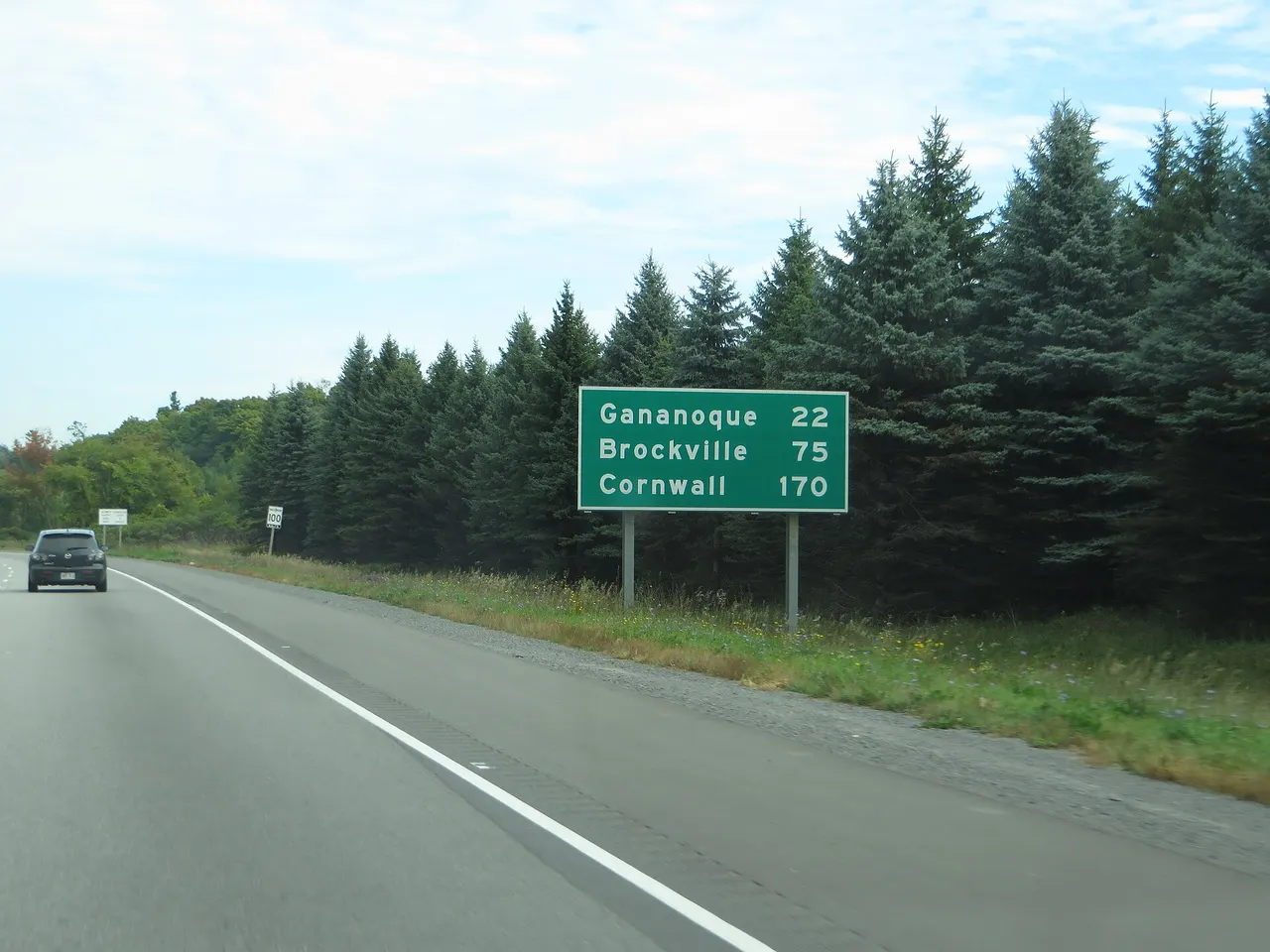
The drive is really just one road by another name: Highway 401 out of Toronto, past Kingston, into Quebec toward Montreal. Routing figures consistent with this network’s own driving guides put the trip at about 545 km, roughly 5.5 hours behind the wheel in clear conditions - a Friday afternoon or a winter storm adds an hour or two on top of that. Drivers who’d rather buy their way past the worst GTA merging can take the 407 ETR for part of the route. It’s a fully electronic toll road, and a rental car bills it back to you afterward as the toll plus a separate administration fee, not just the toll.
One genuinely good number for anyone renting one-way: unlike the well-known Calgary-to-Vancouver drop fee, at least one major agency waives the one-way charge entirely between Toronto, Montreal and Quebec City. Our one-way car rental guide has the full picture on how these fees work elsewhere in the country - on this specific corridor, you’re not paying extra just to leave the car in a different city.
Group math changes the arithmetic more than any Kingston stopover does. Three Megabus fares at the C$59.99 to C$83.99 most seats showed in the planner come to roughly C$180 to C$250 one way, less if you catch one of its occasional C$14.99 seats; split a compact rental three ways instead and you’re adding about C$85 in highway fuel on top of a day rate that moves with demand, so price your own quote - but the combined total often lands at or under three coach tickets once the drop fee is zero. Bags are the other variable a coach doesn’t reward: a full trunk beats wrestling suitcases past an overhead rack every time. And the 401 already passes Kingston roughly halfway to Montreal, so a car buys the option of turning one leg into two stops without booking a second ticket.
What tips the decision
None of these four wins by default, and the right pick usually comes down to what you’re optimizing for rather than which mode looks cheapest on paper. A solo traveller with a laptop and a fixed meeting gets more from VIA’s predictable 5h13 than from chasing a marginally cheaper coach seat - Gare Centrale is already downtown, and there’s no security line eating the morning.

A group of two or three watching every dollar should price Megabus and Orléans Express for the actual date first, since fares and schedules on both move week to week, then check whether an early VIA Escape still beats them once the calmer ride is worth something. Flying only wins the day when the calendar is genuinely tight and you’ve already added both airports to the total - and only after confirming which Montreal airport the ticket actually names, since YUL and Montréal-MET aren’t the same trip once you land. Driving earns its cost the moment Kingston, a road-trip pace or three passengers change the arithmetic, especially now that the one-way drop fee on this specific corridor isn’t the tax it is heading west out of Calgary. Once the neighbourhood is fixed, where to stay in Montreal sorts Old Montreal versus downtown versus the Plateau without another spreadsheet.
Whichever way you book, the two numbers most likely to bite are dated: VIA’s Canada Strong Pass discount has already closed, and Megabus moved this corridor to a new timetable on 9 September 2026, so check departures for your own date. Price your actual travel date on the live engine, not the numbers printed above, and the corridor stops being four competing marketing pages and becomes one straightforward choice.
On the map
The map loads on click - to keep the page lightweight.
The map didn’t load. Check your connection and refresh the page.
Read also

Transport · 9 min read
Ottawa Airport to Downtown: Line 4, Bus 105 and Taxi
Verified · September 4, 2026YOW to downtown: O-Train Line 4 plus Line 2 for C$4.10, Route 105 around the clock, and Ottawa metered taxi rates with the airport pickup fee.

Transport · 12 min read
London to Calgary Flights: The Rockies Shortcut
Verified · August 31, 2026Air Canada and WestJet fly London Heathrow to Calgary nonstop. What the schedule looks like, how fares move, and why this ticket fits a Banff-first trip.

Transport · 10 min read
London to Vancouver Flights 2026: Airlines and Fares
Verified · August 30, 2026Nonstop London-Vancouver runs on BA and Air Canada from Heathrow and Gatwick. What moves the fare, when it softens, and when to book.

Transport · 9 min read
Edmonton Airport to Downtown: Bus 747, Taxi & Rideshare
Verified · August 27, 2026YEG to downtown Edmonton: Route 747 for C$6 (no ETS transfers), flat taxi C$62, and where Uber picks up: Door 10.