
Toronto Airport (YYZ) to Downtown: UP Express, TTC & Taxi
Toronto Pearson to downtown: UP Express fares and times, the C$3.30 TTC route, flat-rate airport taxis, night buses and where ride shares wait.
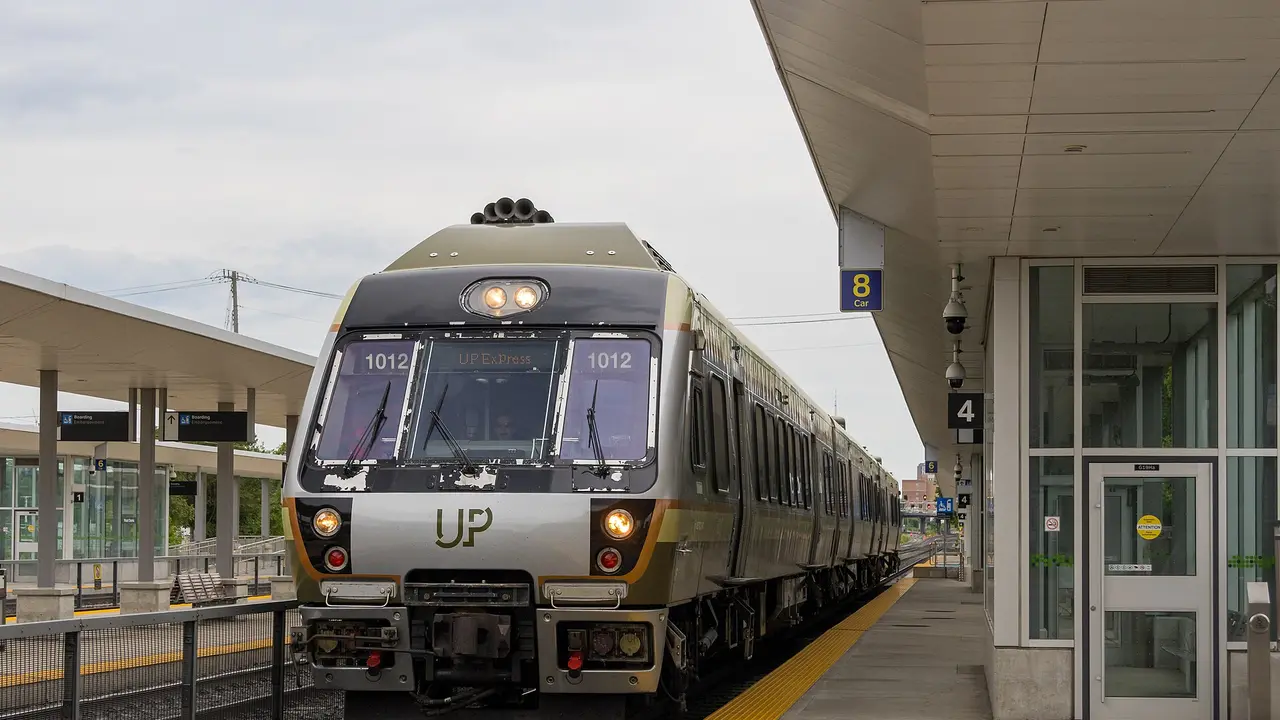
The UP Express train is the quickest way from Toronto Pearson to downtown: 28 minutes to Union Station, a train every 15 minutes, and C$9.25 for an adult who taps a PRESTO or contactless card instead of C$12.35 for a printed ticket. The cheapest is the TTC, where the 900 bus to Kipling station plus the subway costs one C$3.30 fare and eats roughly an hour of your day. Airport taxis and limos don’t run a meter at all; they run a fixed zone fare, which is why they usually win for three or four people with real luggage.
Connecting onward? Toronto to Quebec City covers the train options.
One rule trips up almost everyone who tries to be clever about connections. Ontario’s One Fare program makes your TTC leg free when you connect to GO Transit, and it sounds like it should apply to the airport train, but the TTC’s own page says plainly that UP Express isn’t part of it. Ride the subway to a UP station and you pay both fares in full.
The options side by side
| Option | Time | What you pay | Best for |
|---|---|---|---|
| UP Express | 28 min to Union | C$9.25 tap / C$12.35 ticket | solo travellers, couples, tight schedules |
| TTC 900 bus + subway | about an hour | C$3.30, one fare | budget trips, light bags |
| TTC Blue Night bus | 60-75 min | C$3.30, one fare | 2 a.m. to 5 a.m. arrivals |
| Taxi or limo | depends on the 401 | fixed zone fare, no surge | groups, suitcases, late nights |
| Uber or Lyft | same roads | dynamic, check the app | when it undercuts the flat fare |
| Private transfer | same roads | fixed, booked ahead | red-eyes, families, first visits |
| Rental car | same roads | rate plus city parking | only if you’re leaving town |
There’s no honest single number for the drive. A run that takes half an hour on a quiet Sunday can take well over an hour on a weekday afternoon, and the TTC’s own timetables show the scale: its 52A bus is scheduled at about 50 minutes off-peak against about 75 at peak.
UP Express: the 28-minute default
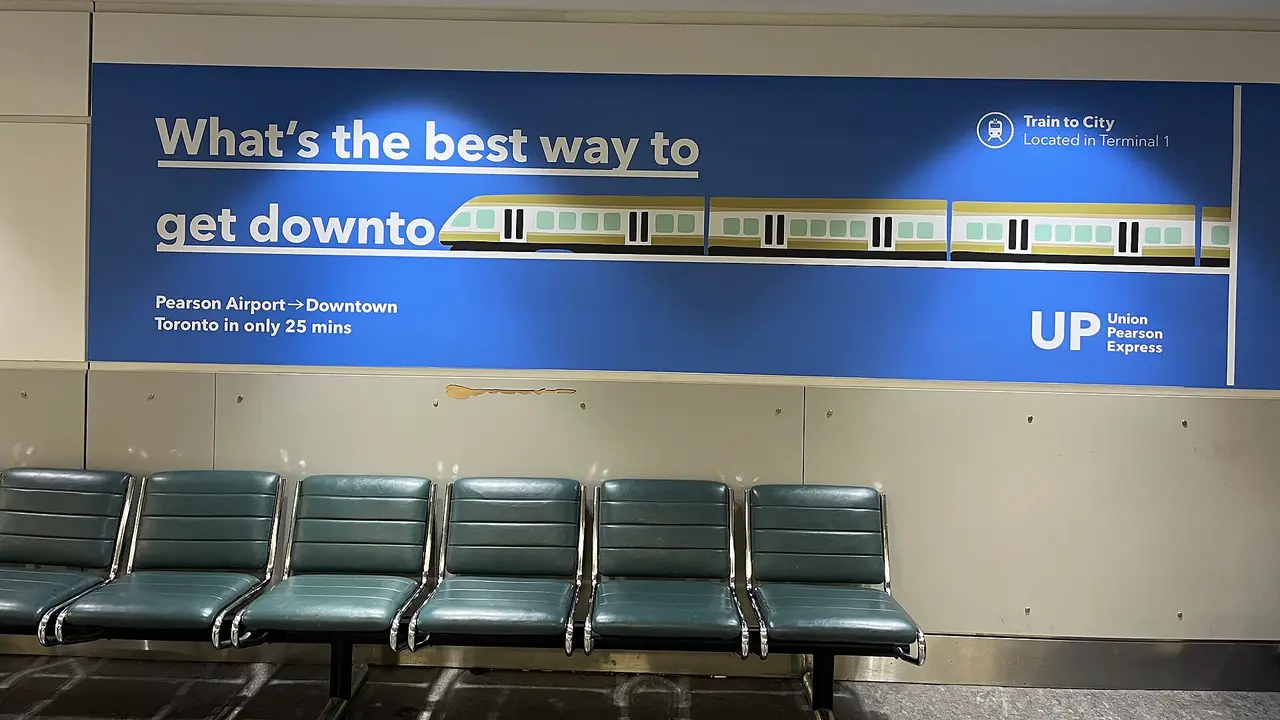
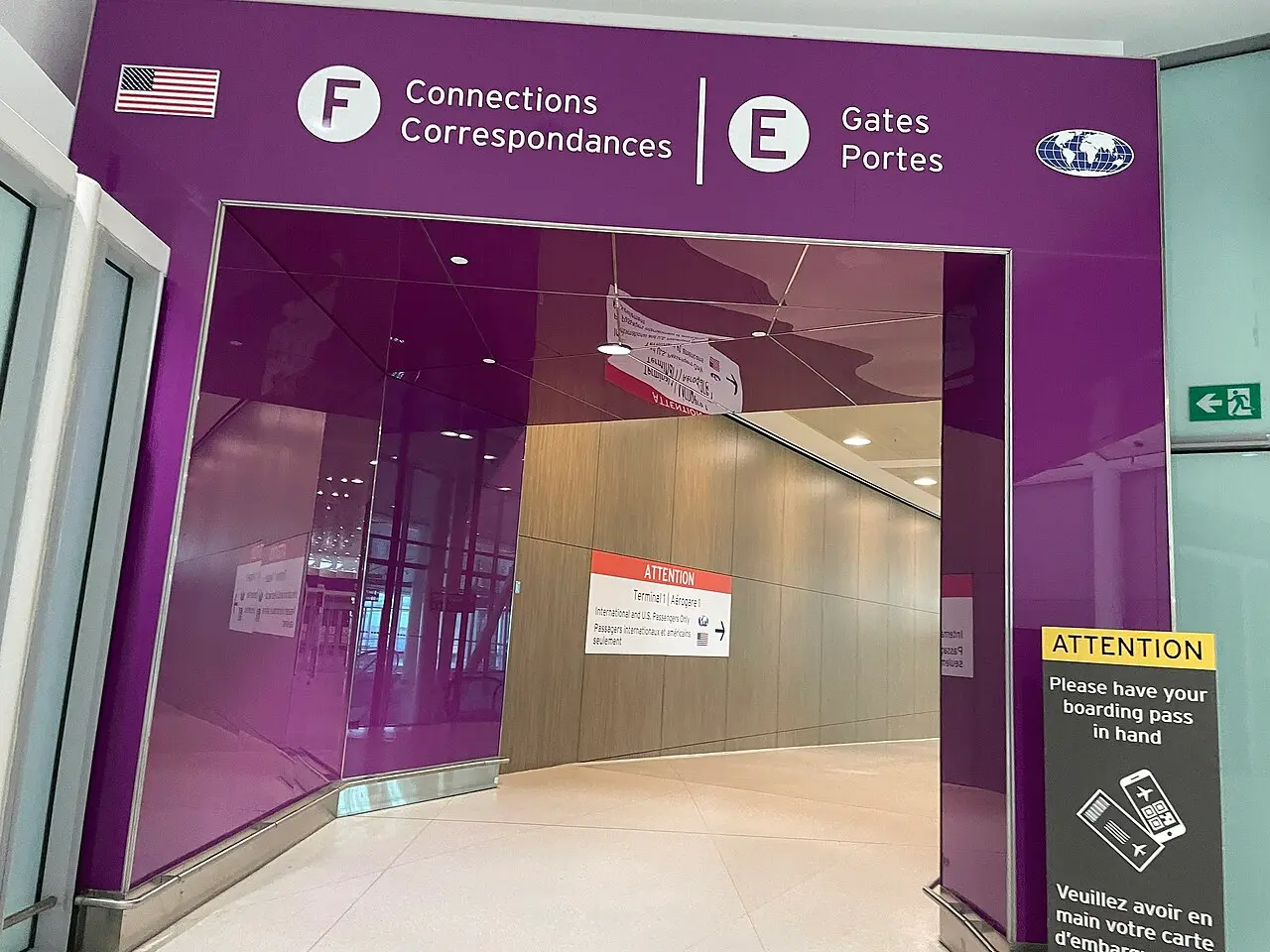
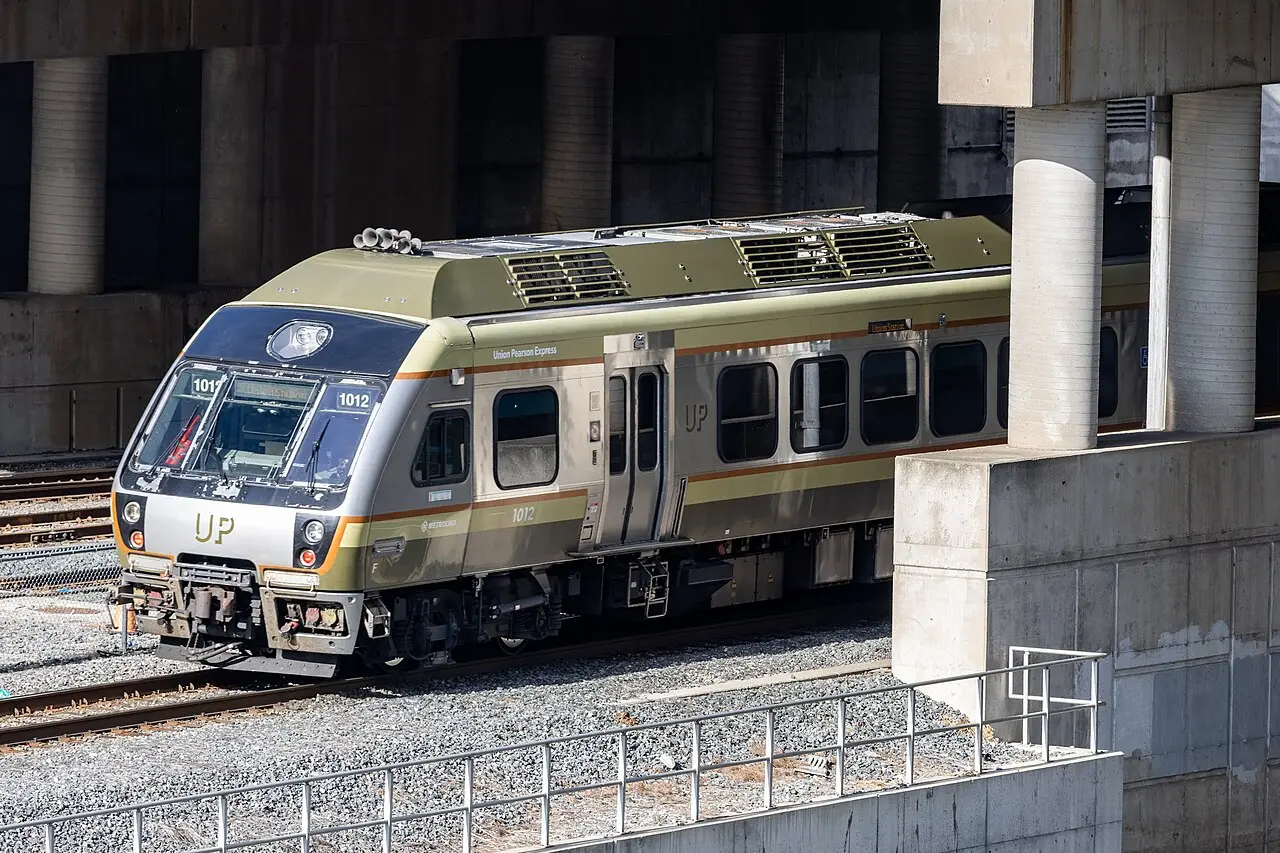
The train leaves from a station inside Terminal 1, right next to the Terminal Link train that shuttles between Terminals 1 and 3. If you land at T3, that’s your first move: follow signs to the Link train, ride it to T1, and the UP platform is there. Trains run every 15 minutes, the first leaves Pearson at 05:27 on a weekday and the last at 00:54, and going the other way the first train out of Union is at 04:55 with the last at 01:00.
Fares are where people quietly overpay. Tap a PRESTO card or a contactless debit or credit card and an adult pays C$9.25; buy a paper ticket at the machine and it’s C$12.35 for exactly the same seat. Children 12 and under travel free. Seniors pay C$5.80 and youth or post-secondary students C$7.41, but only on a PRESTO card, because a contactless bank card is always charged the adult fare. For a senior couple that’s C$11.60 with the right card against C$18.50 with the wrong one, on a single ride.
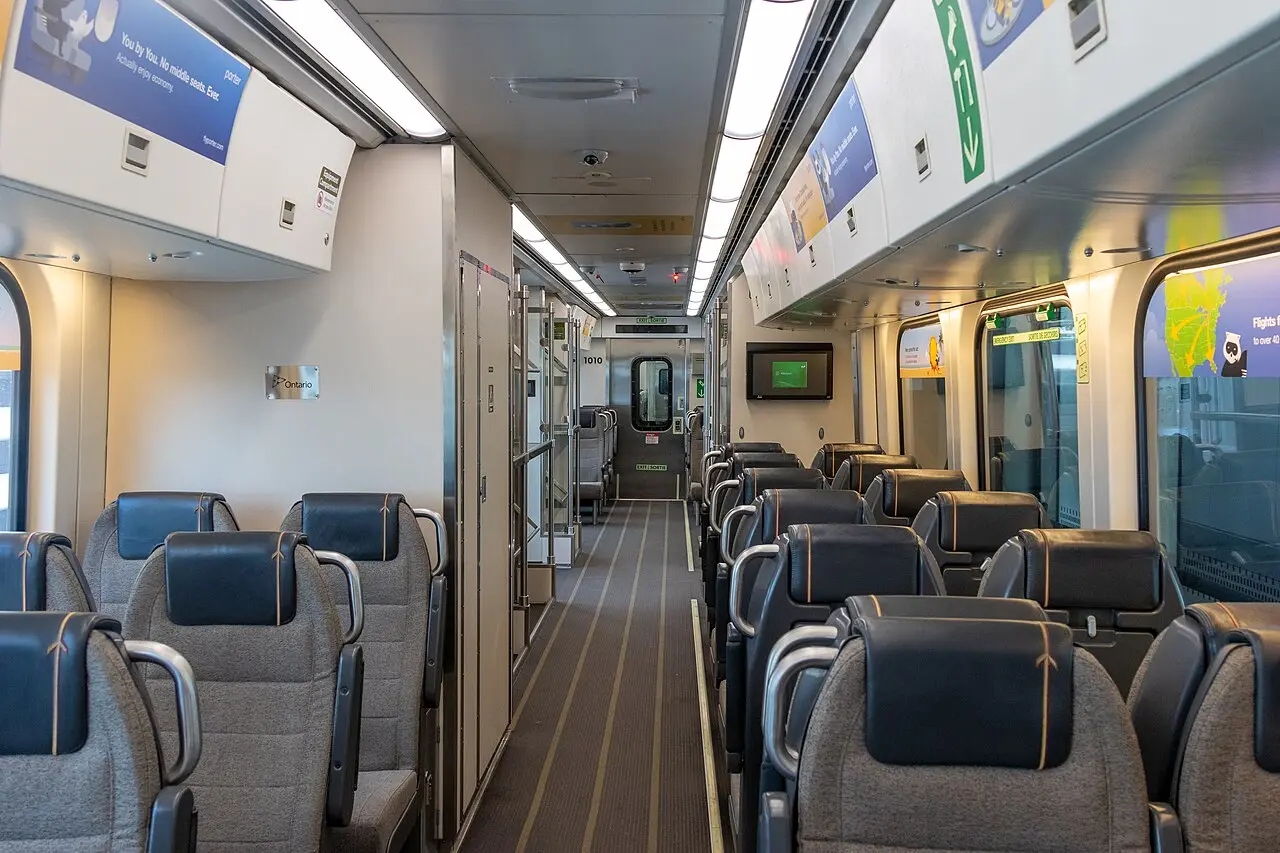
Union Station puts you on the subway at the foot of the financial district, one streetcar from most hotels between the waterfront and Queen Street. Staying near Bloor or out east, you’ll still have a subway ride at the end, and that ride is a separate fare.
Get off at Bloor if you’re staying in the west end
Here’s the part nobody mentions in the arrivals hall: UP Express charges by distance, so the intermediate stops cost less than riding all the way to Union. Union is already the CN Tower and waterfront district; an adult fare to a station short of Union runs C$4.71 to C$5.02 on PRESTO, roughly half the downtown fare.
Bloor station sits at 1456 Bloor Street West, and Metrolinx is candid about the connection: the walk to Dundas West subway station is outdoors, along Bloor and Dundas West, and takes about five minutes. For anyone staying around Ossington, Dundas West, Little Italy, Roncesvalles or High Park, getting off at Bloor is shorter, cheaper and you’ll save doubling back on Line 2. In February, with a big suitcase and slush on the sidewalk, those five outdoor minutes feel longer than they read.
The One Fare trap
Ontario’s One Fare program covers the TTC, GO Transit, Brampton Transit, Durham Region Transit, MiWay and York Region Transit, and on those connections the TTC portion of your trip costs nothing in either direction. UP Express is specifically excluded, in the TTC’s words, “as there are added technical requirements” - don’t expect a discount.
The practical result: a subway ride to Bloor followed by a UP train to the airport costs C$3.30 plus the UP fare, with no discount for combining them. Two more details are worth knowing before you tap - you’ll want both. The free transfer only works with a PRESTO card, PRESTO in Google Wallet, or a debit or credit card, so paying cash or using a PRESTO ticket forfeits it. And the transfer window is two hours, or up to three hours from your first tap onto GO.
The C$3.30 route: the 900 bus
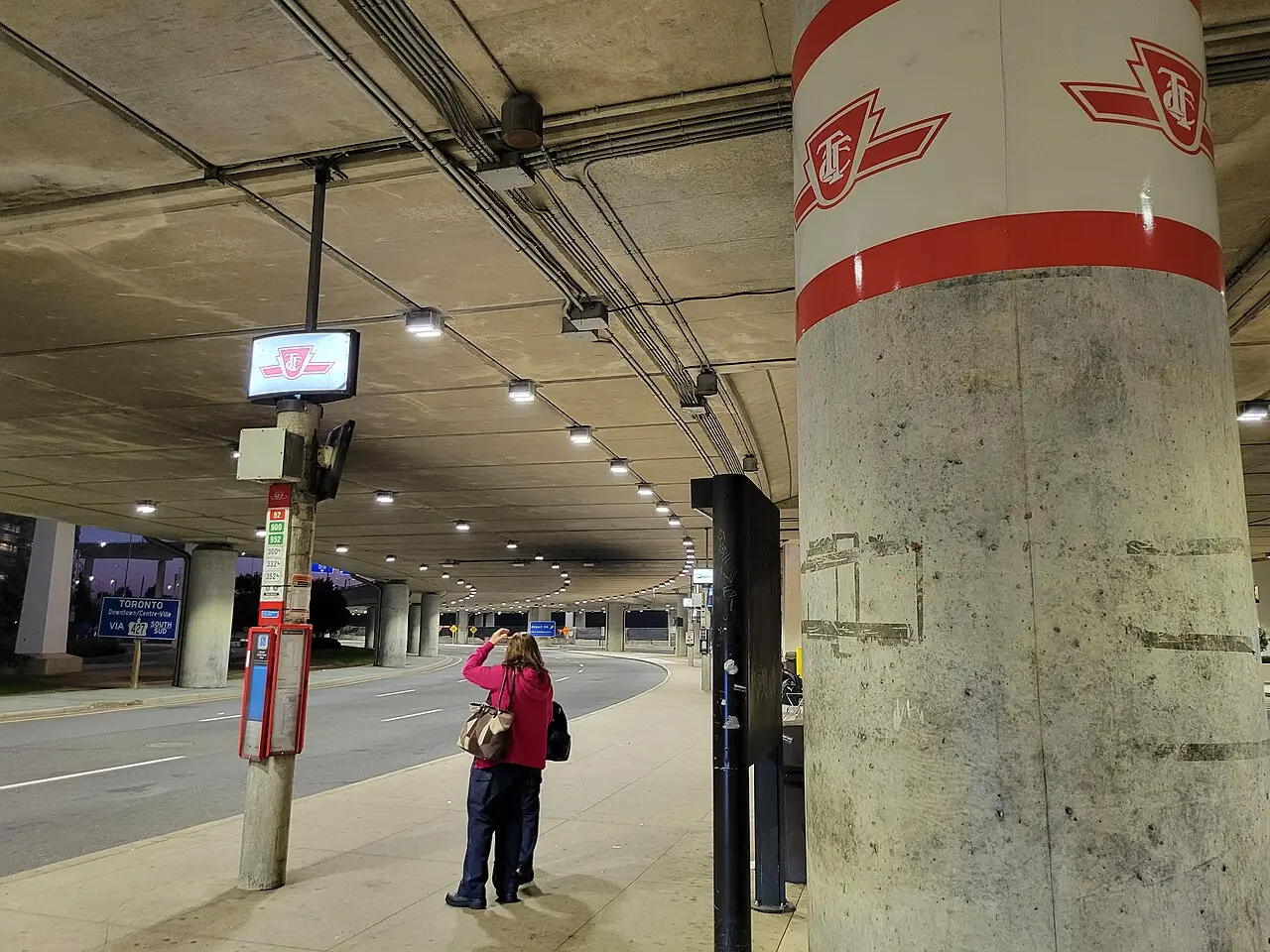
The 900 Airport Express runs between the airport and Kipling station on Line 2, and the TTC schedules it at 20 to 25 minutes. It picks up at Terminal 1 on the ground level and Terminal 3 at arrivals, it has luggage racks, and it runs from about 5:30 a.m. to 2 a.m. Monday to Saturday, starting later on Sunday at about 8:15 a.m. Because the bus and the subway are one system, the whole trip to downtown is a single C$3.30 fare, and children under 12 ride free with you - that’s the bargain route.
Budget an hour door to door. Kipling is the western end of Line 2, so you’ll get a seat, but you’re crossing the whole city to reach Union: a fine trade at C$3.30 with a backpack, a poor one with two big suitcases at rush hour.
Staying uptown near Line 1 rather than downtown? The 52A Lawrence West goes to Lawrence West station instead, and the TTC quotes about 50 minutes off-peak against about 75 at peak. There’s also a 952 express version in weekday peak periods.
Taxis and limos: a fixed fare, not a meter
Toronto’s airport taxis and limos work differently from the ones you flag down on a city street. Fares from Pearson are flat rates by zone, set by the airport authority, with no surge pricing, and the drivers take major credit cards. A limo is a black car costing roughly 10% more than a taxi for the same trip.
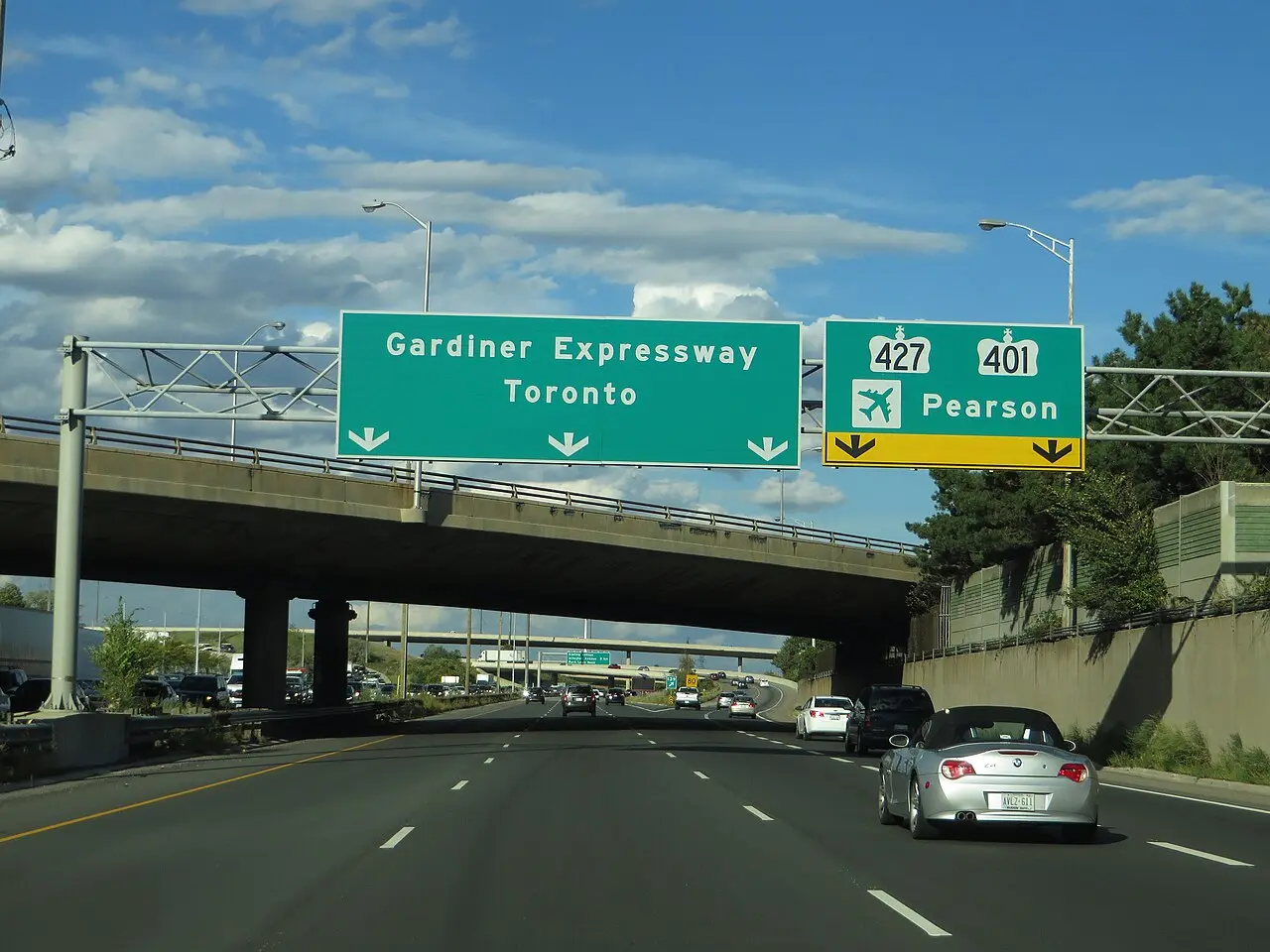
Two charges are worth knowing about. A C$15 surcharge can be added once per trip for four or more checked bags or oversized items, or for five or more passengers, and the driver has to tell you about it before leaving the curb. And if your destination lies outside the zone map, the trip is metered at C$1.90 per kilometre instead of running on a flat rate.
We don’t print a dollar figure for the downtown zone here, because the tariff belongs to the airport and it moves. Check Pearson’s own taxi and limo estimate tool before you fly, or read the posted rate card at the stand and confirm the fare with the driver before your bags go in the trunk. What you can count on is that the fare is per car and doesn’t move with the traffic.
Uber and Lyft: look for a door letter
Ride shares don’t collect where you walk out. At Terminal 1 they wait along the ground-level curb outside doors P, Q, R and S, with Lyft and Hopp in zone 3 and Uber in zones 4 and 5; at Terminal 3 the pickup is outside doors B and D on the Arrivals level. Your app tells you which zone; walking out of the wrong door with a luggage cart is the classic first-visit mistake.
The pricing model is the difference that matters. A taxi from Pearson is a fixed zone fare whatever the hour; a ride share is whatever the algorithm says at 11 p.m. on a Friday when four wide-bodies land together. Check the app at the baggage belt, then walk past the ride-share zone to the taxi stand if the app is higher.
Landing after midnight
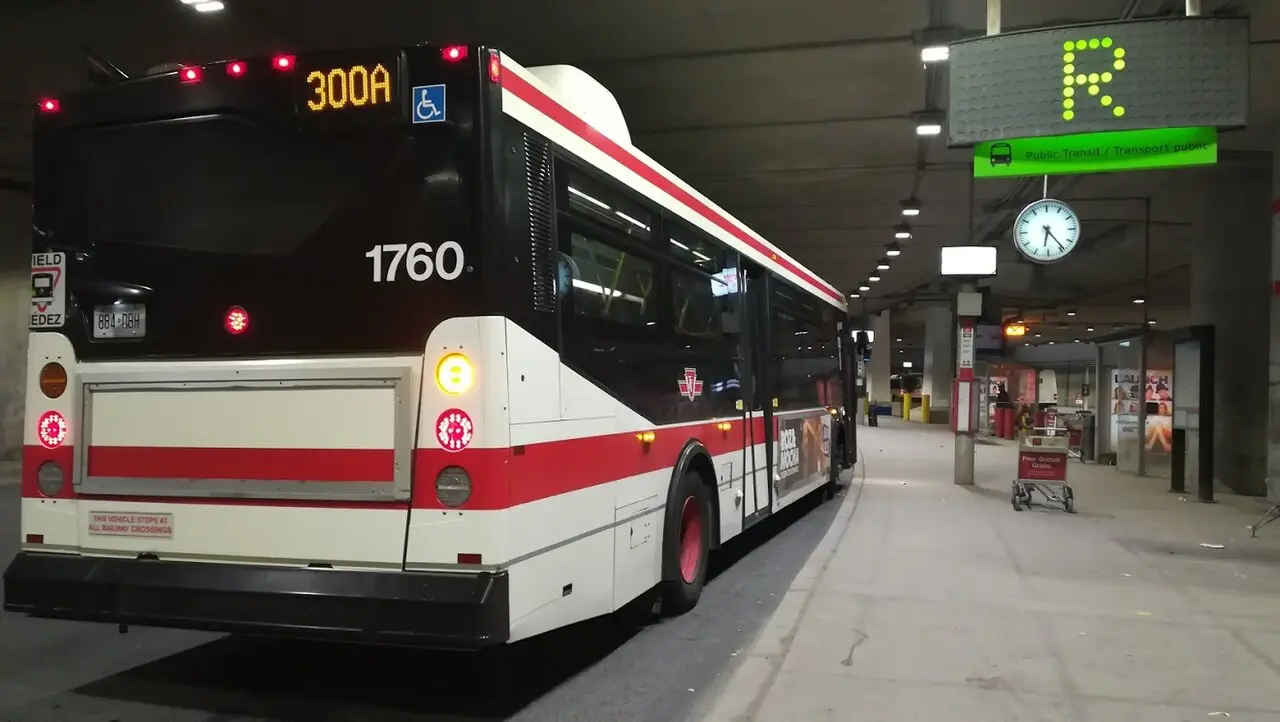
The last UP Express leaves Pearson at 00:54 on a weekday, and the 900 keeps going until about 2 a.m., a little past 2 on Sunday. After that the TTC’s Blue Night network takes over, and it does reach the airport: the 300A Bloor-Danforth and the 352 Lawrence West both run from roughly 2 a.m. to 5 a.m., each taking about an hour into town, and the 334A Eglinton connects to Kennedy station from about 1:30 a.m.
Those buses are a lifeline if you’re broke and a poor trade if you’re not: an hour on a night bus with luggage after a transatlantic flight costs more in misery than the taxi saves in dollars, and the flat fare is the same at 3 a.m. as at 3 p.m. because there’s no surge.
Should you pick up a rental at Pearson?
Do the parking arithmetic first. A hotel in the core charges for overnight parking every night the car sits there, and on a five-night trip with two days of driving you pay for three nights of storage plus the rental days you don’t use. The local habit is the other way round: stay downtown car-free, then pick a car up from a city branch on the morning you leave for Niagara, Prince Edward County or Muskoka. If you do rent at Pearson on day one, car rental at Toronto Pearson maps Terminal 1 versus Terminal 3 counters and the Terminal Link hop to Viscount for near-airport fleets. Before you book either way, renting a car in Canada sets out the winter tire question and the deposit rules.
If you’re flying into Billy Bishop instead
Toronto’s second airport sits on an island at the foot of Bathurst Street, minutes from the office towers. A complimentary shuttle bus runs to Union Station every 15 minutes and takes about 15 minutes; on foot, the pedestrian tunnel to the mainland takes six minutes or less, with moving walkways for your bags, and the ferry across the gap is free for pedestrians, every 15 minutes from 05:15 to 00:07.
So when a short-haul flight costs about the same into either airport, the island one saves you the better part of an hour and the train fare on top.
Reading the arrivals hall
Two details decide it once you’re standing there with your bags. The first is your hotel’s postal code: anything within a subway stop of Union rewards the UP Express, anything out towards Ossington, Dundas West or High Park rewards getting off at Bloor for roughly half the fare, and anything uptown makes the 52A to Line 1 less silly than it looks. The second is the clock: after 00:54 the train is gone, and the choice narrows to the 900, a Blue Night bus or a car.
The fare math tilts one way. A flat zone fare covers the car; the train charges per head, with no One Fare discount to soften it. Check the posted zone fare against the train fares for your whole party before you join either line. Add the Line 2 to Line 1 change at St George with a suitcase, near the end of subway service, and a taxi or a booked transfer stops looking like a splurge.
Our guide to where to stay in Toronto weighs the neighbourhoods around Union against the ones that need a subway ride at the end, and things to do in Toronto picks up once your bags are down.
Read also
- Picking a base near the train: where to stay in Toronto
- What to do once you’re in town: things to do in Toronto
- The same question on the other coast: Vancouver airport to downtown
- Comparing YYZ against YVR, YUL and YYC before you book: which airport to fly into Canada
- Whether you need a car in Ontario at all: renting a car in Canada
- Long-distance rails from the same station: Canada by train
On the map
The map loads on click - to keep the page lightweight.
The map didn’t load. Check your connection and refresh the page.
Read also

Transport · 13 min read
Toronto to Montreal: Train, Bus, Flight or Drive
Verified · September 5, 2026Toronto-Montreal 2026: VIA averages 5h13 over 538 km, Megabus runs 8-13 coaches a day from Union, about 545 km to drive, or a 1h20 flight to YUL.

Transport · 9 min read
Ottawa Airport to Downtown: Line 4, Bus 105 and Taxi
Verified · September 4, 2026YOW to downtown: O-Train Line 4 plus Line 2 for C$4.10, Route 105 around the clock, and Ottawa metered taxi rates with the airport pickup fee.

Transport · 12 min read
London to Calgary Flights: The Rockies Shortcut
Verified · August 31, 2026Air Canada and WestJet fly London Heathrow to Calgary nonstop. What the schedule looks like, how fares move, and why this ticket fits a Banff-first trip.

Transport · 10 min read
London to Vancouver Flights 2026: Airlines and Fares
Verified · August 30, 2026Nonstop London-Vancouver runs on BA and Air Canada from Heathrow and Gatwick. What moves the fare, when it softens, and when to book.