Alberta Travel Guide: What to See and How Long
Alberta beyond the Rockies: six UNESCO sites, the badlands, park fees after the 2026 free-entry window, the pass rental cars still need, and when to go.
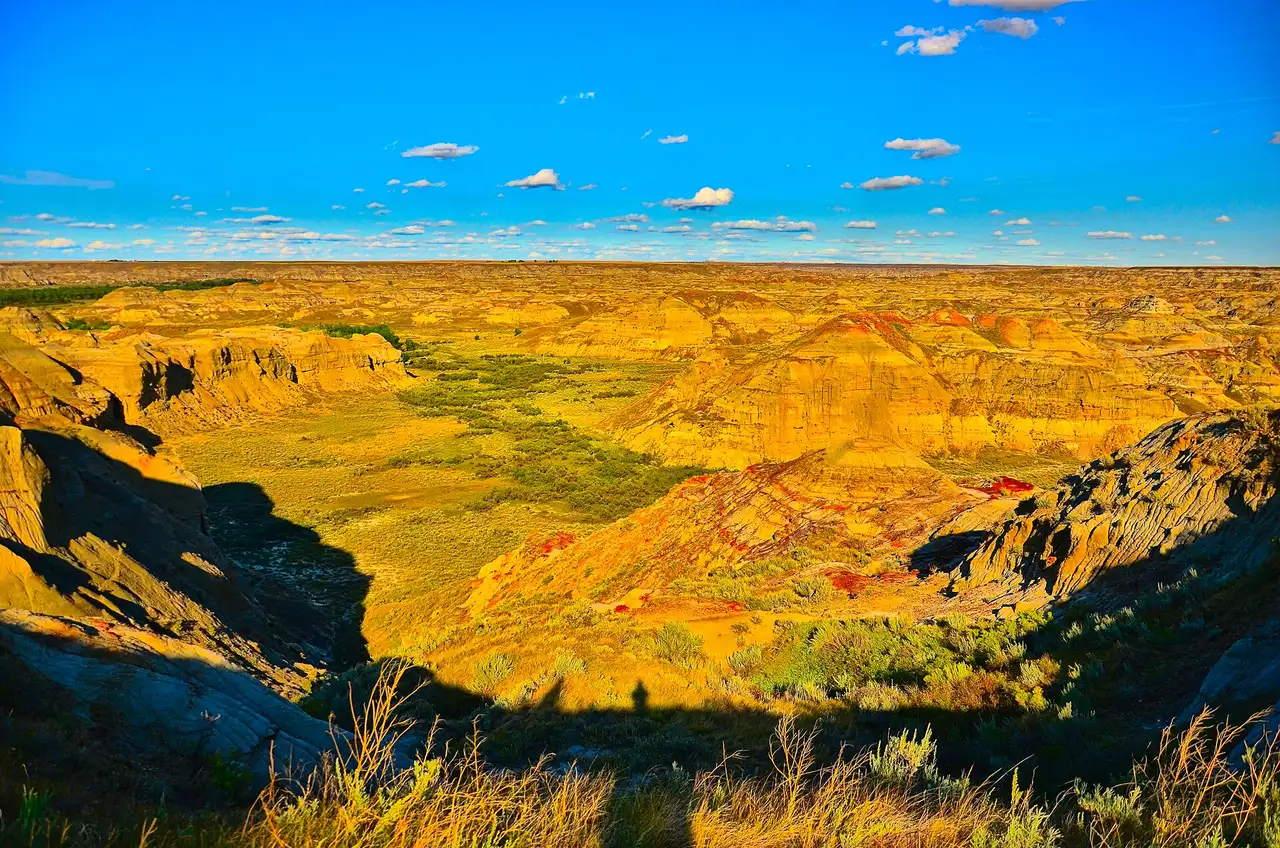
Alberta is two vacations wearing one licence plate. The Rockies get the photographs, but the province also holds the badlands where more than 150 complete dinosaur skeletons have come out of the ground, and six UNESCO World Heritage Sites, more than any other province in Canada. Seven days is the honest minimum for the mountains alone, ten if you want the south as well, and September beats July on almost every measure that matters.
The shape of the place explains the itinerary. The Rockies run down the western edge, so everything mountainous sits within two hours of Calgary or four of Edmonton. East of that the land drops into foothills, then wheat, then the strange eroded gullies of the Red Deer River. North of Edmonton it turns to boreal forest and keeps going for another 700 km. Most visitors never leave the western strip, which is fine, but it is worth knowing what you’re skipping.
Six World Heritage Sites, and only one is the Rockies
| Site | Inscribed | What it is |
|---|---|---|
| Dinosaur Provincial Park | 1979 | badlands quarry near Brooks, 150+ complete skeletons |
| Head-Smashed-In Buffalo Jump | 1981 | Blackfoot hunting cliff used for nearly 6,000 years |
| Wood Buffalo National Park | 1983 | 44,807 km2, the largest national park in Canada |
| Canadian Rocky Mountain Parks | 1984 | Banff and Jasper, plus Yoho and Kootenay in BC |
| Waterton Glacier International Peace Park | 1995 | shared with Montana, on the US border |
| Writing-on-Stone / Áísínai’pi | 2019 | Blackfoot rock art in the Milk River valley |
Five of the six are outside the mountains, and four of them are in the southern third of the province, within a day’s driving loop of each other. That’s the trip almost nobody plans and the reason Alberta rewards a second visit.
How long you need
Five days covers Calgary and Banff without a rush, with one day for the town and gondola, one for the Lake Louise end, and one for Kananaskis or Johnston Canyon.
Seven days is the number that works. It buys Calgary, Banff, the drive north and two nights in Jasper, which is the difference between seeing the Icefields Parkway and driving past it.
Ten days and up lets you swap one of those mountain nights for the badlands, or head south to Waterton and the two Indigenous heritage sites near it. If you already know the Rockies, the southern loop is the better week.
The Rockies, briefly
This is the part every other guide expands, so here it’s compressed. Banff is the busiest national park in the country, with 4,558,171 visits in the 2025-26 fiscal year, and the two lakes everyone comes for are now shuttle-only or parking-lot roulette. Jasper is quieter, wilder and still rebuilding after the 2024 wildfire, with two headline sights closed for the whole 2026 season. Between them runs the Icefields Parkway, 232 km of glacier valley that Parks Canada suggests you give a full day.
Entry to any of them costs C$12.25 per adult per day or C$24.50 for a family or group of up to seven in one vehicle, with under-18s free. The annual Discovery Pass is C$83.50 and pays for itself on day seven.
One 2026 date to know: under the Canada Strong Pass, Parks Canada waived admission at every one of its places from 19 June to 7 September 2026, with 25% off Parks Canada camping; from 8 September 2026 the standard fees apply again (adult C$12.25 a day in the mountain parks, C$24.50 for a family or group, youth 17 and under free year-round). Read what the pass didn’t cover before you build a budget around any repeat. Parking, camping reservation fees, guided tours and the hot springs at Banff and Miette were all still charged, and the museum and VIA Rail discounts attached to the same program went by age, not to everyone.
The pass drivers keep getting fined for
The mountains between Calgary and the park gate aren’t a national park. They’re Kananaskis Country, run by the province, and parking there needs an Alberta Kananaskis Conservation Pass: C$15 a day or C$90 a year for up to three vehicles, registered to a licence plate.
Your federal park pass does nothing here. The sting is that a rental gets no free ride either: the permit rides on the plate, the plate is photographed in the lots, and arriving without one costs C$150 plus a mandatory 20% surcharge. The one reprieve, for anyone who learns this too late, is that the pass sells online until 11:59 pm on the day of the visit itself.
The badlands
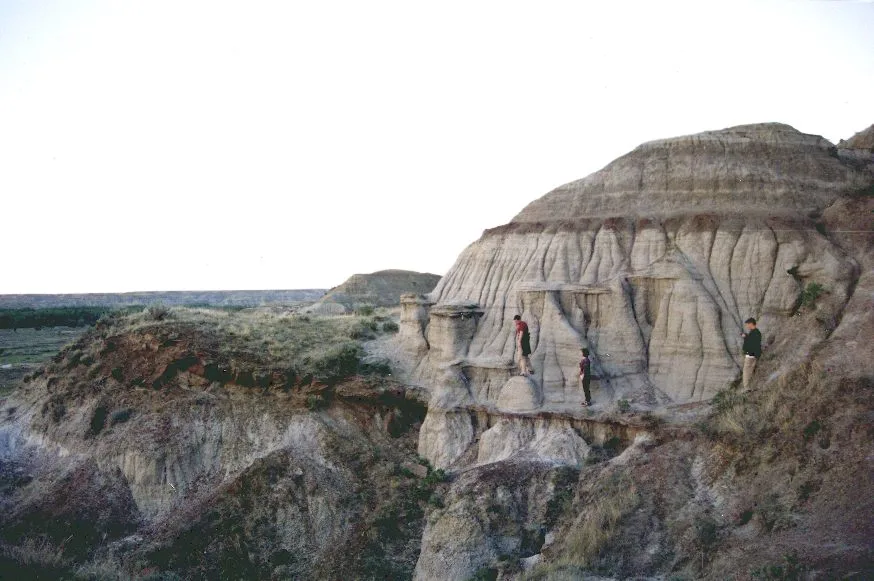
Ninety minutes northeast of Calgary the prairie splits open into the Red Deer River valley, and the temperature climbs a couple of degrees as you drop into it. This is the richest late-Cretaceous fossil ground on earth, and it’s not subtle about it.
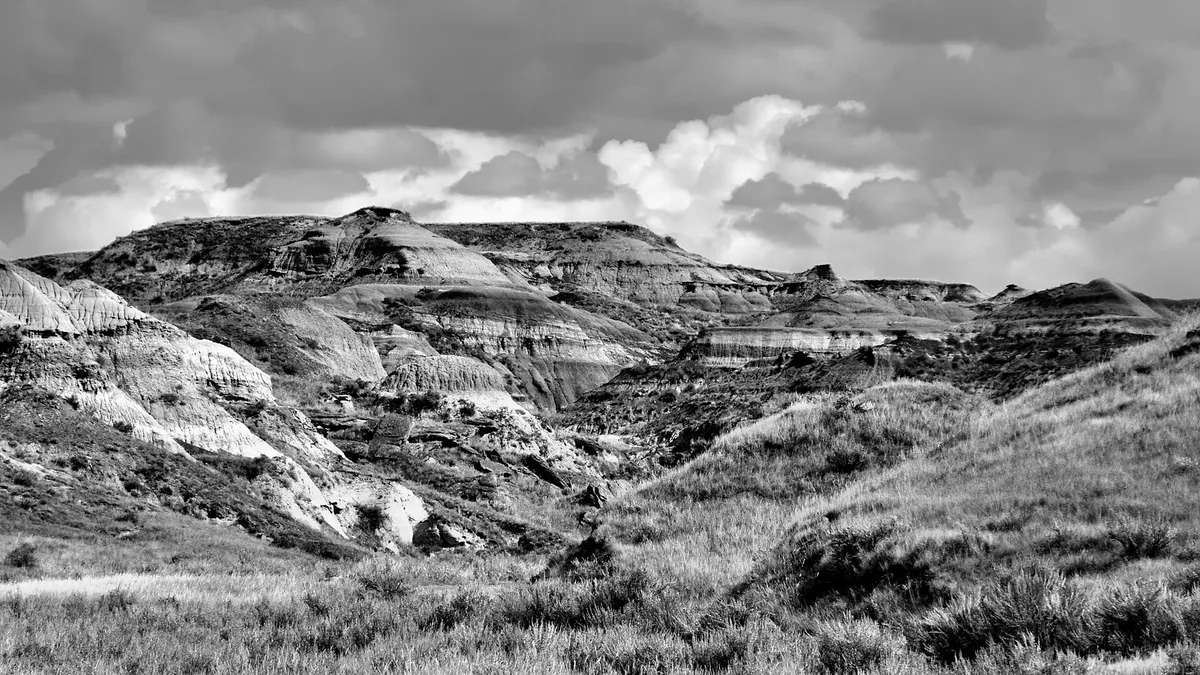
Drumheller is the base: a small town strung along the valley with a fossil museum, hoodoo viewpoints and a suspension bridge left over from the coal era. The Royal Tyrrell Museum is the reason to come, and its summer hours are the trick most day-trippers miss. From 15 May to 31 August it stays open until 9 p.m., so you can drive out from Calgary after lunch, walk the hoodoos in the afternoon light and take the museum at 7 p.m. with the tour groups gone. Adult admission is $25, seniors $16, youth 7-17 $12, tax included; between 19 June and 7 September 2026, under the Canada Strong Pass, under-18s were free and 18-24s paid $12.50 with photo ID; outside that window the regular rates above apply.
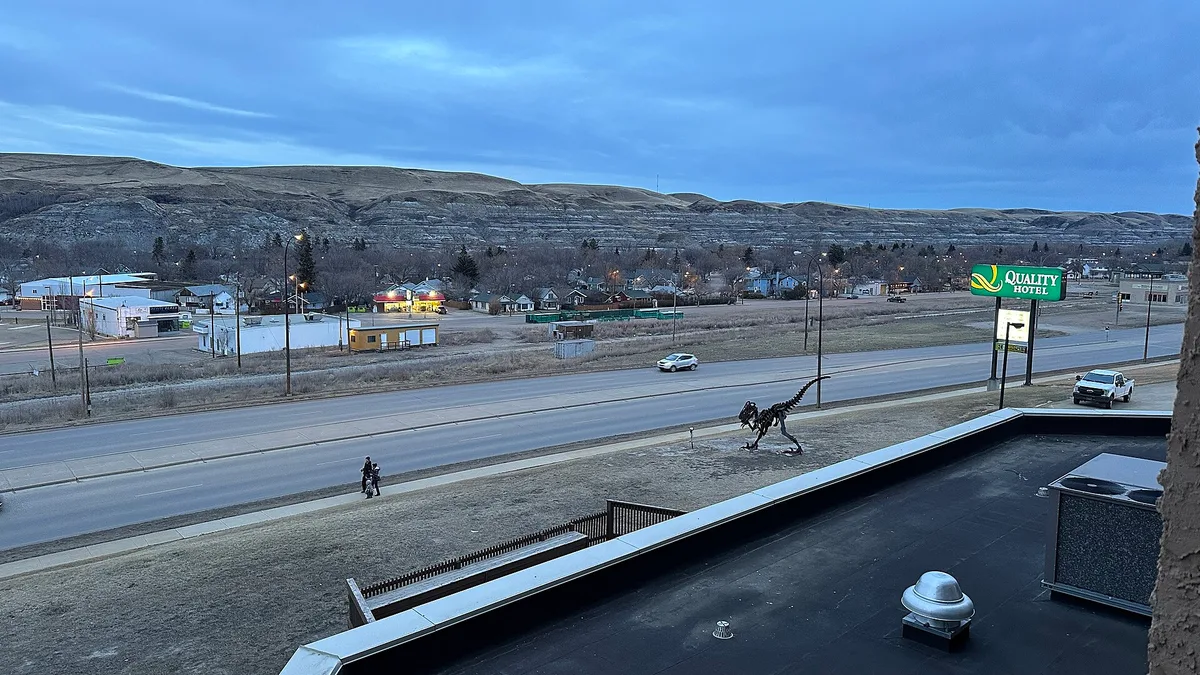
Dinosaur Provincial Park, two and a half hours further east near Brooks, is the World Heritage site itself and a different experience: fewer facilities, guided fossil hikes into restricted zones, and a campground in the bottom of the valley. Book the guided walks well ahead, because the restricted areas can’t be entered any other way.
The south, where the history is the attraction
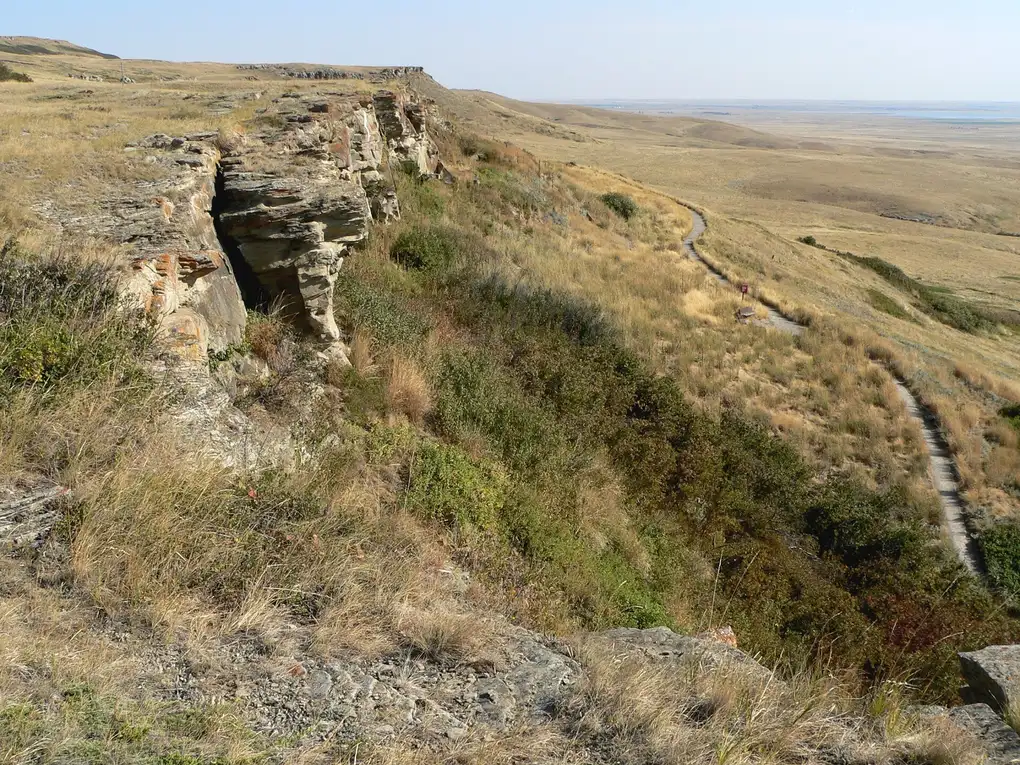
Head-Smashed-In Buffalo Jump, near Fort Macleod, is a sandstone cliff that Blackfoot hunters used for nearly 6,000 years, driving bison herds over the edge along carefully built drive lanes. The interpretive centre is cut into the hillside so it barely shows from below, and it’s told from a Blackfoot perspective rather than an archaeological one. Give it three hours, not one.
Writing-on-Stone / Áísínai’pi, on the Milk River near the Montana line, holds the largest concentration of rock art on the North American plains and joined the World Heritage list in 2019. Access to the main archaeological preserve is by guided tour only.
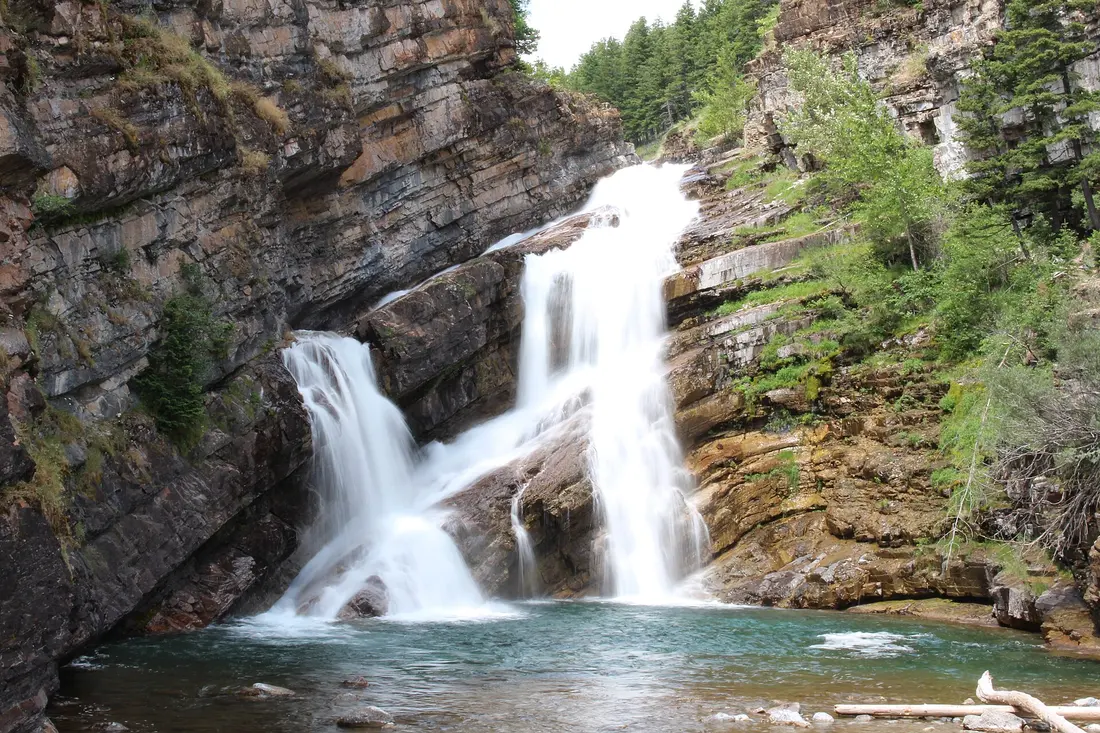
Waterton Lakes is the third stop on that loop and the one that surprises people: the Rockies here rise straight out of flat prairie with no foothills at all, and the townsite is small enough that most of it’s walkable. It shares its World Heritage listing with Glacier National Park across the US border. Our Waterton Lakes guide covers Red Rock Canyon, the hikes and the Prince of Wales Hotel in full.
Calgary and Edmonton
Calgary is the gateway: about 1.5 million people (a 2026 estimate, since the city stopped running a civic census in 2020), an international airport 140 km and 90 minutes from Banff, and the Stampede taking over ten days each July. Most trips start and end here. For a one-night stop before the mountains, our where to stay in Calgary guide sorts downtown, Beltline, Kensington and the airport strip, Calgary airport to downtown covers the curb at YYC, and Calgary to Banff compares the Airporter, Brewster Express and a rental once the mountains are the point. If Banff town rates are the problem, Canmore is the cheaper Bow Valley base just east of the park gate.
Flying into YEG? See Edmonton airport to downtown for Route 747 and taxi fares. Edmonton is the one people write off too fast, and there’s a practical reason not to. It’s 370 km from Jasper against Calgary’s 404 km, and the drive is flat highway rather than mountain road. If the Rockies half of your trip is Jasper-weighted, flying into Edmonton and out of Calgary can save a day of backtracking; compare the complete open-jaw fare for your exact dates before booking. Our Edmonton guide covers what to do with a day or two in the city itself, and where to stay in Edmonton sorts downtown, Old Strathcona and the airport strip.
The north, and the aurora
North of Edmonton the province turns into boreal forest, oil sands towns and eventually Wood Buffalo National Park on the Northwest Territories border, at 44,807 km2 the largest national park in the country and one of the biggest dark-sky preserves anywhere.
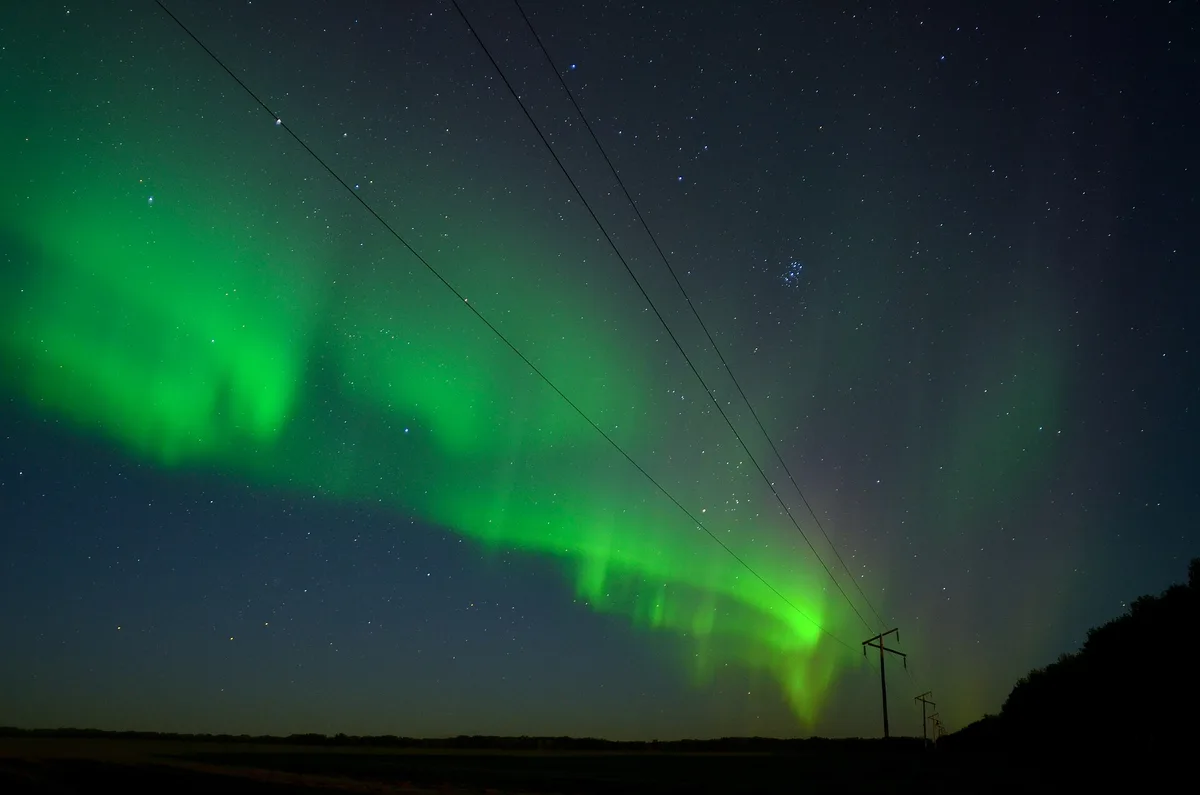
Aurora season runs roughly from late August to April, when the nights are long enough and dark enough. Nobody can promise you a display on a given date, and any operator who does is selling a lottery ticket. Jasper, a designated Dark-Sky Preserve, gives you a decent chance without a 12-hour drive north, and it has the advantage of something to do in the daytime.
When to go
September is the local answer. Trails and shuttles are still running, the mid-summer crush drops off after Labour Day, larches turn gold in the last week of the month, and hotel rates fall noticeably.
July and August deliver the warmest weather, the longest days and every facility open, along with full parking lots and a real chance of wildfire smoke greying out the mountains for a few days.
June brings loud waterfalls, wildflowers and lakes that may still be part-frozen at altitude. October to April is ski season, ice-walk season and the quiet half of the year: three ski areas around Banff, frozen waterfalls, and roads that need proper tires. Our Banff in winter guide breaks down the ski hills, the shuttle fares and the 2027 festival dates.
Getting around and what it costs
You want a car. Rail and bus links between the mountain towns exist but they’re thin, and the badlands and the south have almost nothing.
Two driving rules matter more than the rest. On the Icefields Parkway, snow tires or chains are required from 1 November to 31 March, and at any other time snow or ice covers the road, as a Parks Canada requirement, and there are no fuel stops on that road in winter. Inside national parks the limit is 90 km/h, enforced, and wildlife on the verge is the reason for it. If you’re visiting on a foreign licence, you can drive on it for up to a year, but arrange an International Driving Permit at home first: CAA is the only authorised issuer in Canada, so it can’t be sorted out after you land.
One quiet saving runs through the whole trip. Alberta is the only province with no sales tax of its own - you pay the 5% federal GST and nothing on top, where most provinces stack a provincial layer over it. On two weeks of hotels, fuel and restaurant meals, that gap is real money.
Budget roughly: C$150-220 a night for a mid-range mountain hotel in summer, C$90-140 in the shoulder, C$60-100 a day for food if you mix restaurants with supermarket lunches, and C$70-110 a day for a compact rental before fuel. Park fees are the smallest line on the list, even at the full C$12.25 adult daily rate.
Read also
- The park most people come for: Banff National Park
- Its quieter neighbour, and what’s open there in 2026: Jasper National Park
- Townsite, valley lodges or Hinton: where to stay in Jasper
- Calgary city or airport to the mountains: Calgary to Banff
- The road between them, stop by stop: Icefields Parkway
- Every national park we cover: the parks hub
- Every province and territory: the provinces hub
On the map
The map loads on click - to keep the page lightweight.
The map didn’t load. Check your connection and refresh the page.
Read also

Provinces · 9 min read
British Columbia Travel Guide: The Five Trips
Updated · September 14, 2026British Columbia is bigger than France and Germany combined: the five realistic trips, how many days each needs, the ferry to the island and when to go.

Provinces · 10 min read
Manitoba Travel Guide: Bears, Belugas and Winnipeg
Updated · July 24, 2026Why Manitoba is two trips: walkable Winnipeg and the Forks, and Churchill, the fly-in north for polar bears, belugas and the northern lights.

Provinces · 8 min read
New Brunswick Travel Guide: Fundy and Two Tongues
Updated · September 14, 2026New Brunswick, the Bay of Fundy province: Hopewell Rocks and record tides, Saint John, Fredericton and Canada's only bilingual province.

Provinces · 9 min read
Newfoundland and Labrador Travel Guide
Updated · September 14, 2026Newfoundland and Labrador in 7 to 10 days: St. John's, Gros Morne's mantle rock, the Vikings at L'Anse aux Meadows, icebergs and whales.