
Waterton Lakes: Red Rock Canyon, Hikes & Prince of Wales
Waterton Lakes 2026: Red Rock Canyon, the Prince of Wales Hotel, hikes from 20 minutes to 8 hours, current fees, and the campground still closed.
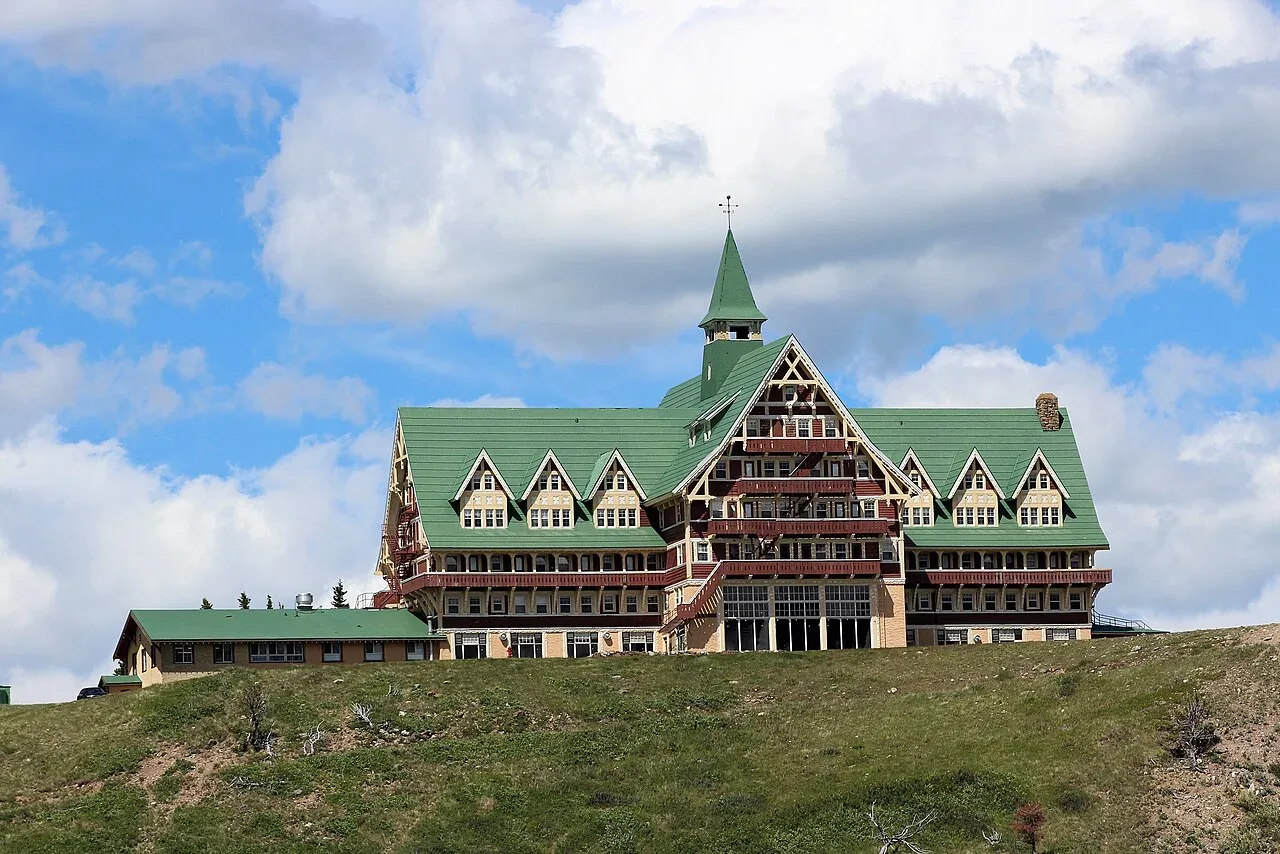
Waterton Lakes is the park where the Rockies stop the prairie cold, with no foothills to soften the change, and it’s small enough to see most of it over a long weekend. Red Rock Canyon is a free twenty-minute loop, the Prince of Wales Hotel has stood on its bluff since a winter so violent it blew the building off its own foundation, and the whole park shares a UNESCO listing with Glacier National Park across the US border. It also carries one lingering scar from a 2017 wildfire that burned close to 40 per cent of the park: one of its three campgrounds still hasn’t reopened, nine years on.
The park sits at the very bottom of Alberta, and the abruptness of the landscape is the whole appeal. Elsewhere in the Rockies you get a long build-up of foothills before the peaks show up; here you can be looking at grain elevators on flat ranchland, turn around, and see a 2,940 m summit rising with nothing in between. At 505 km2, Waterton is the smallest park in the Canadian Rockies grouping, smaller than Kootenay and a fraction of Banff, which means the list of essential stops is short enough to actually finish.
Where the prairie hits the mountains
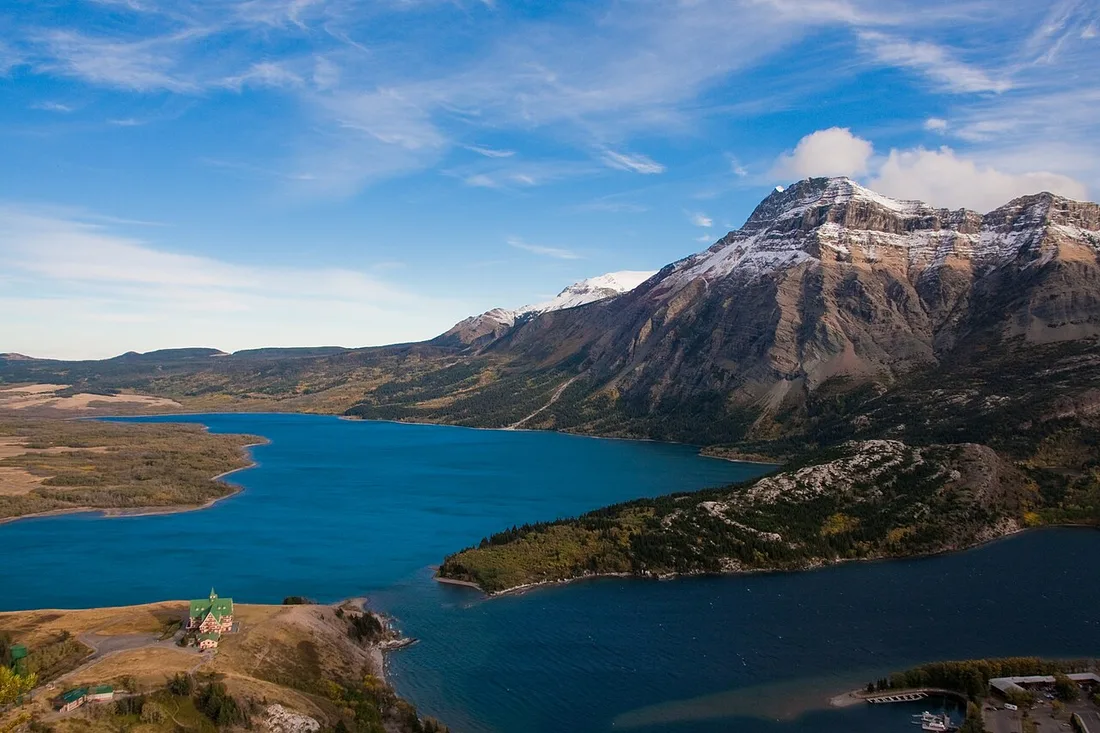
Parks Canada’s own line for this place is blunt: “the prairies of Alberta meet the peaks of the Rocky Mountains.” It was protected as a small forest reserve in 1895 and grew to its current 505 km2 as Canada’s fourth national park. Upper Waterton Lake, the long finger of water the townsite sits on, is the deepest lake anywhere in the Canadian Rockies at 148 m, and Mount Blakiston, at 2,940 m, is the highest point in the park. The Blackfoot name for the lake, Paahtomahksikimi, translates as “the inner sacred lake,” which tells you the reverence for this place goes back a lot further than the 1927 hotel does.
You don’t need a car to see the townsite version of that geography. A 3.2 km loop covers the main streets and the lakefront, and it’s flat enough for anyone.
Red Rock Canyon, and the parkway that gets you there
Red Rock Canyon itself is almost embarrassingly easy: a 0.7 km paved loop, about twenty minutes, with layered red, green and cream argillite walls on both sides. It’s the kind of stop where the drive matters more than the walk, and the drive is Red Rock Parkway, which is seasonal. It closes to vehicles in late October and reopens in spring once the road is cleared - in 2026 that was 7 May - though walkers and cyclists can use it all winter if they don’t mind the cold.
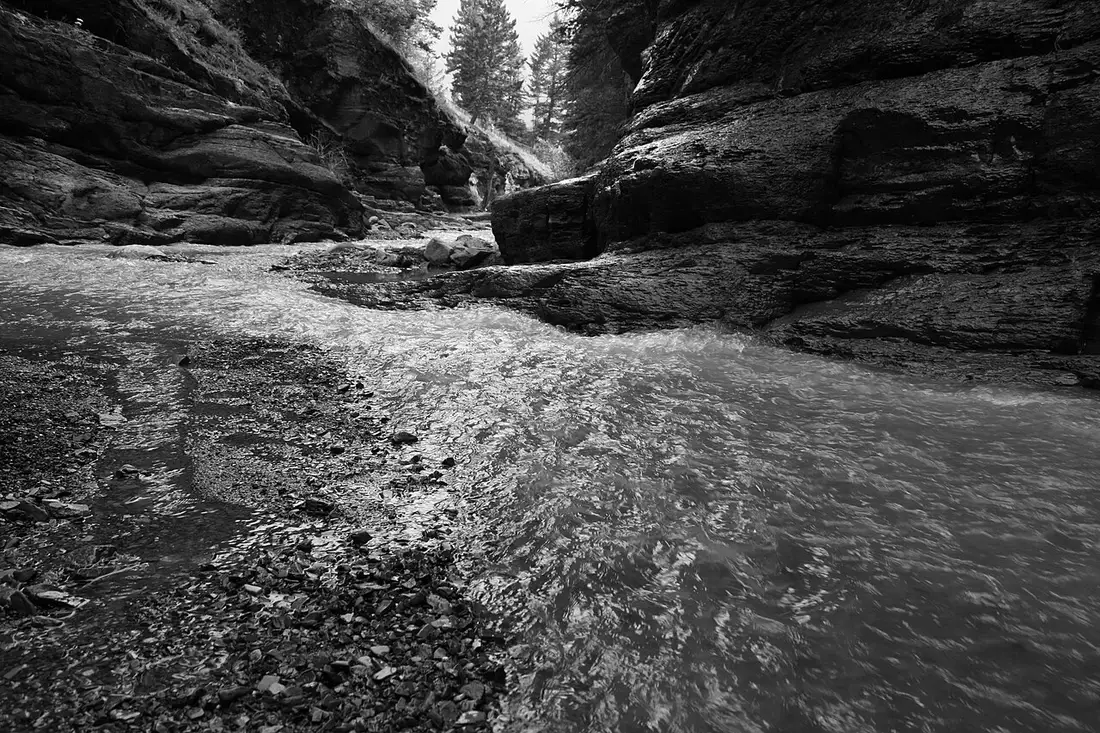
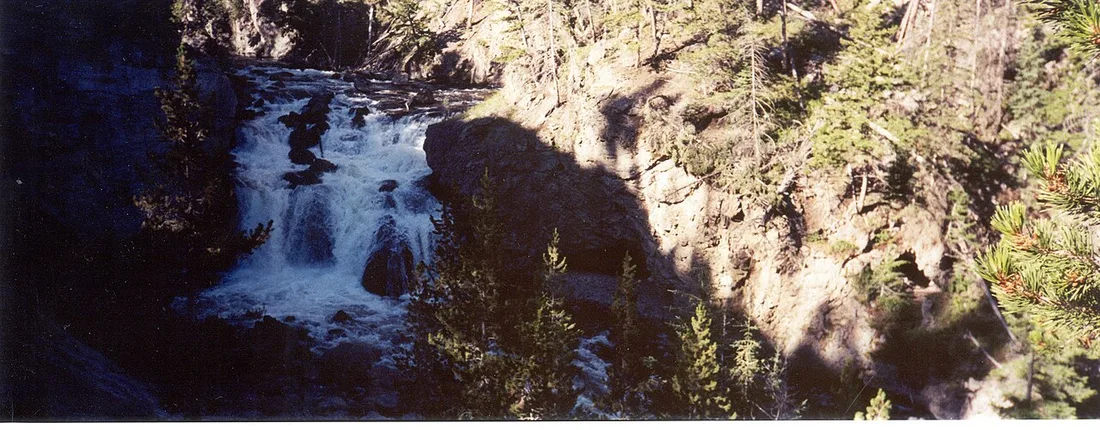
The canyon’s four footbridges have all been replaced or rehabilitated recently, with new decking and a plaza added at the day-use area, so the version you’ll walk is noticeably tidier than photos from a few years back. Keep walking past the canyon itself and a short spur reaches Blakiston Falls, a wider, quieter waterfall that most of the parking-lot crowd never bothers with.
The hikes, from twenty minutes to eight hours
Waterton’s trail list runs the whole range, and Parks Canada rates every one of them, which makes planning honest rather than guesswork.
| Trail | Distance | Elevation gain | Difficulty |
|---|---|---|---|
| Bear’s Hump | 2.8 km return | 225 m | Moderate |
| Prince of Wales Loop | 2 km loop | minimal | Easy |
| Cameron Lakeshore | 3 km return | minimal | Easy |
| Bertha Lake (Falls at 5.2 km) | 10.4 km return | 460 m | Moderate |
| Rowe Lakes (lower) | 8 km return | 350 m | Moderate |
| Crypt Lake | 17.2 km return | 675 m | Difficult |
| Carthew-Alderson | 20.1 km one-way | 650 m | Difficult |
Bear’s Hump is the one everyone does: steep for its short length, but only an hour round trip, and the payoff is the whole townsite, the lake and the Prince of Wales laid out below you.
Crypt Lake is the trail people fly here for. It needs a fifteen-minute boat shuttle across Upper Waterton Lake to a landing most visitors will never otherwise see, then a route that squeezes through a tight tunnel onto a ledge above a cliff before it opens onto the lake itself. Book the boat through Waterton Shoreline Cruise Co. well ahead in July.
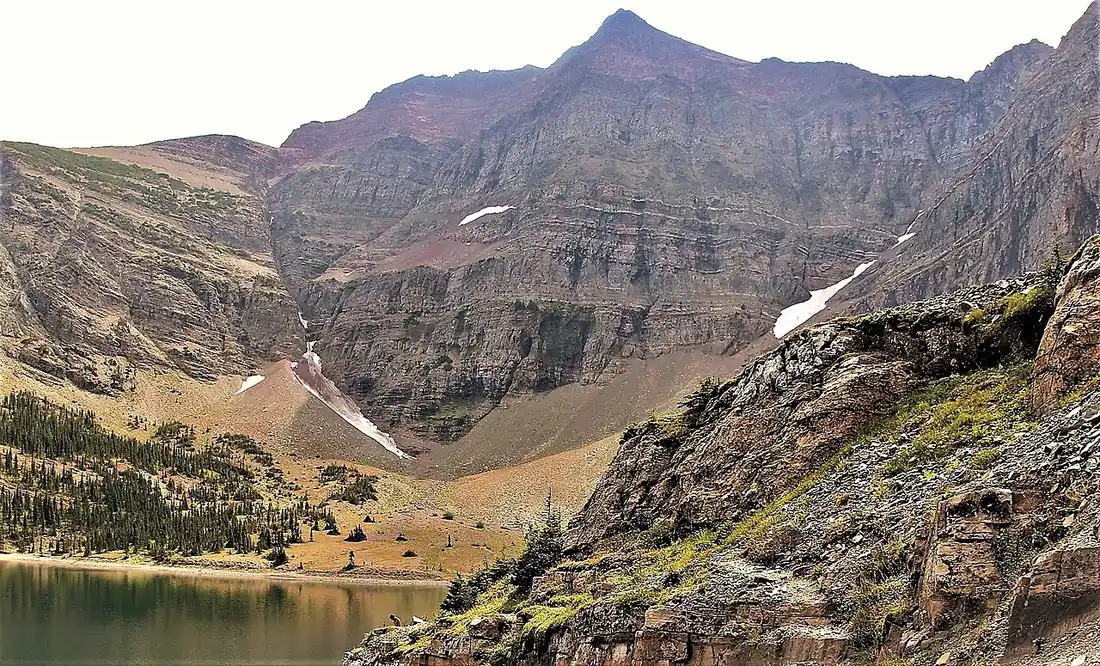
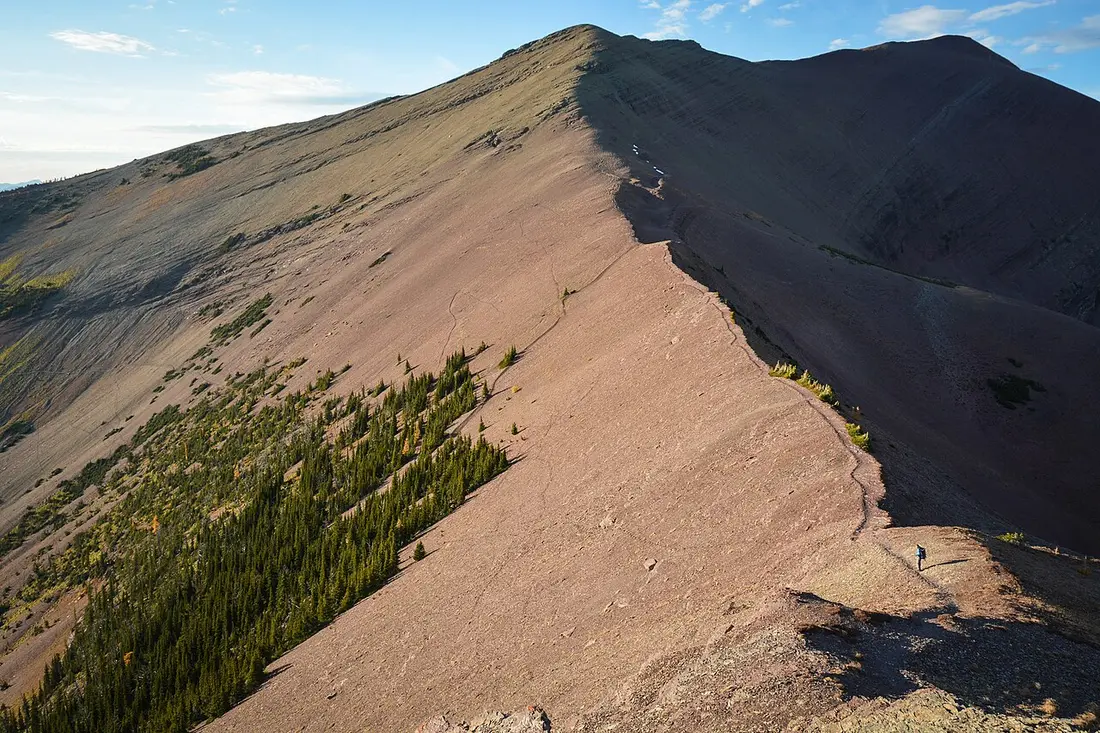
Carthew-Alderson is the classic one-way traverse: start at Cameron Lake, climb to Summit Lake with views over the Carthew Lakes and the prairie beyond, then descend all the way to Cameron Falls in the townsite. Because it’s point-to-point, you’ll need a shuttle or a second vehicle at Cameron Lake, not a there-and-back plan.
The Prince of Wales Hotel
The hotel that photographs the whole park was nearly finished off before it opened. It went up in 1926 and 1927 through what Parks Canada calls one of Waterton’s windiest and snowiest winters, and on 10 December 1926 hurricane-force winds estimated at 145 km/h shifted each wing of the unfinished building about 7.5 cm off its foundation. It opened to the public on 25 July 1927 anyway, named for the Prince of Wales who would later, briefly, become King Edward VIII.
What you see today is a rustic timber-frame structure Parks Canada describes as resembling “a giant alpine chalet,” seven storeys tall, with a lobby lit by two-storey windows facing the lake that’s worth stepping into even if you’re not staying the night. It was designated a national historic site in February 1993 for its architecture and its role in mountain tourism. The hotel runs a daily Afternoon Tea from 11 a.m. to 3:30 p.m., reservations required through OpenTable, and non-guests are welcome; the operator lists it from around $68 for an adult and $34 for a child under 12, though the page doesn’t specify CAD or USD, so confirm the exact cost when you book. For 2026 the hotel operates 11 May through 12 October.
Where to stay and the pass that actually pays off
The townsite itself is tiny: a handful of lodges and motels, most of them booked out through July and August. There’s no shortage of day visitors, since roughly 500,000 people come through the park each year, but overnight capacity is genuinely limited, so book ahead rather than assuming you can find a room on arrival.
On admission, the date is the whole story. Under the Canada Strong Pass, admission to every Parks Canada site, this one included, was free from 19 June to 7 September 2026 and camping was 25 per cent off, but reservation fees, fishing permits and guided programs were still charged. Inside that window you didn’t need to buy anything to get in.
From 8 September 2026 you’re back to paying: C$12.25 a day for an adult, or the Discovery Pass at C$83.50, which is worth doing the math on if Waterton is one stop on a bigger trip. It pays for itself against the daily rate on day seven and is valid at every Parks Canada site, not just here. If you’re only doing Waterton on its own for a day or two, the daily rate is simpler.
The peace park across the border
Waterton’s UNESCO status isn’t its own; it’s shared. In 1932, Waterton and Glacier National Park in Montana were jointly declared the Waterton-Glacier International Peace Park, a symbol of the peace between the two countries, and in 1995 that combined park was inscribed as a single UNESCO World Heritage Site. Waterton had already picked up its own UNESCO Biosphere Reserve designation in 1979, Canada’s second ever and the first Canadian national park in that programme, and in 2017 the joint peace park became an International Dark Sky Park, the first Dark Sky designation anywhere to straddle a national border.
None of that changes the border crossing itself: what you need to cross into Glacier depends on your citizenship and changes without much warning, so check the current rules in our Canada eTA and visas guide and against the official government source before you plan a same-trip visit to both sides.
The wildfire you’ll still notice
The Kenow wildfire tore through the park in September 2017, burning more than 19,000 hectares, close to 39 per cent of the park, and damaging an estimated 80 per cent of the trail network. The west side of Upper Waterton Lake took the worst of it, including the approaches to Bertha Lake and Bear’s Hump, and both ends of the Carthew-Alderson Trail burned as well. Crypt Lake and the Wishbone-Vimy Peak trail came through largely untouched, which is part of why Crypt Lake still feels like the park’s flagship hike.
The federal government put C$20.9 million into recovery, and most of what you’ll walk through today looks rebuilt rather than scarred: Red Rock Canyon’s bridges are new, the trails around it are repaved. The one visible exception is Crandell Mountain Campground, still closed nine years on. Its first reconstruction stage wrapped up in 2021, and Parks Canada’s own line on stage two is honest about the uncertainty: “plans for stage two are still being determined and will be shared in due course. No completion date has been set.” If you were counting on it, plan around Townsite Campground instead, which runs year-round, or the backcountry sites.
How Waterton fits into an Alberta trip
There’s no bus, shuttle or train into Waterton from anywhere. You drive, and Calgary is the usual starting point, roughly 270 km and about three hours south down Highway 2 and secondary roads. That’s a genuine day’s commitment each way, which is exactly why most visitors fold Waterton into a longer southern Alberta loop rather than a standalone trip: pair it with Head-Smashed-In Buffalo Jump and Writing-on-Stone, both covered along with the rest of the province’s UNESCO sites in our Alberta travel guide.
If your trip already runs through Banff, Kootenay or the Icefields Parkway, treat Waterton as a deliberate detour rather than a drive-by. One booking detail worth planning around: Waterton’s 2026 campground reservations went live Tuesday 3 February at 8 am MT, nine days before Banff’s frontcountry release on 12 February, so if you’re chasing sites at both parks, set the earlier alarm first. Townsite Campground itself runs year-round regardless of either launch date; the full release calendar for every Rockies park is in camping in Canada, and once you’re here, renting a car in Canada covers the paperwork you’ll need for the drive down and back.
On the map
The map loads on click - to keep the page lightweight.
The map didn’t load. Check your connection and refresh the page.
Admission and opening hours
- Admission price
- Daily admission 2026: adult C$12.25, senior C$10.75, youth 17 and under free, family or group C$24.50. Annual admission: adult C$60.50, senior C$51.50, family or group C$120.75. Parks Canada Discovery Pass (all sites, one year): adult C$83.50, senior C$71.50, family or group C$167.50. Backcountry camping C$15.00 per person per night, free for youth 5 and under. Admission to every Parks Canada place was free 19 June to 7 September 2026 under the Canada Strong Pass, with 25% off camping (reservation fees, fishing permits and guided programs still charged); standard fees again from 8 September 2026.
- Opening hours
- The park is open year-round. Red Rock Parkway closes to motor vehicles in late October and reopens 7 May 2026 (open to walkers and cyclists all winter). Akamina Parkway closes between Little Prairie and Cameron Lake in early November and reopens 14 May 2026; the Townsite-to-Little Prairie stretch stays open for winter access. Townsite Campground runs year-round; the rest of the frontcountry and backcountry sites are seasonal.
Fees and dates are from parks.canada.ca, checked 5 August 2026. Closures, fire bans and campground status change - check the park bulletins page before you drive down.
Details checked: August 5, 2026
Read also

National parks · 11 min read
Point Pelee: Birding, Monarchs and Canada's Southern Tip
Verified · August 29, 2026Point Pelee in practice: the shuttle to the Tip, monarch season timing, Festival of Birds dates, 2026 fees, and why free admission ended before the peak.

National parks · 8 min read
Kluane: Icefields, Flightseeing and Mount Logan
Verified · August 28, 2026Kluane National Park 2026: Kathleen Lake trails, C$30 camping, Rocking Star flights from C$250, and Mount Logan at 5,959 m.

National parks · 7 min read
Riding Mountain National Park: Bison, Clear Lake & Highlands
Verified · August 27, 2026Riding Mountain in 2026: Lake Audy bison from your car, Clear Lake beaches, Wasagaming camping fees and the drive from Winnipeg.

National parks · 8 min read
La Mauricie National Park 2026: Parkway, Lakes & Camping
Verified · August 26, 2026La Mauricie NP: two hours from Montreal or Quebec City. 2026 gate C$10, 64 km Parkway, camping from C$33.75, Navette Nature shuttles.