
Things to Do in Quebec City: Old Quebec and Beyond
Quebec City: walking walled Old Quebec, the Chateau Frontenac and Dufferin Terrace, Montmorency Falls, the Côte-de-Beaupré and the 2027 Winter Carnival.
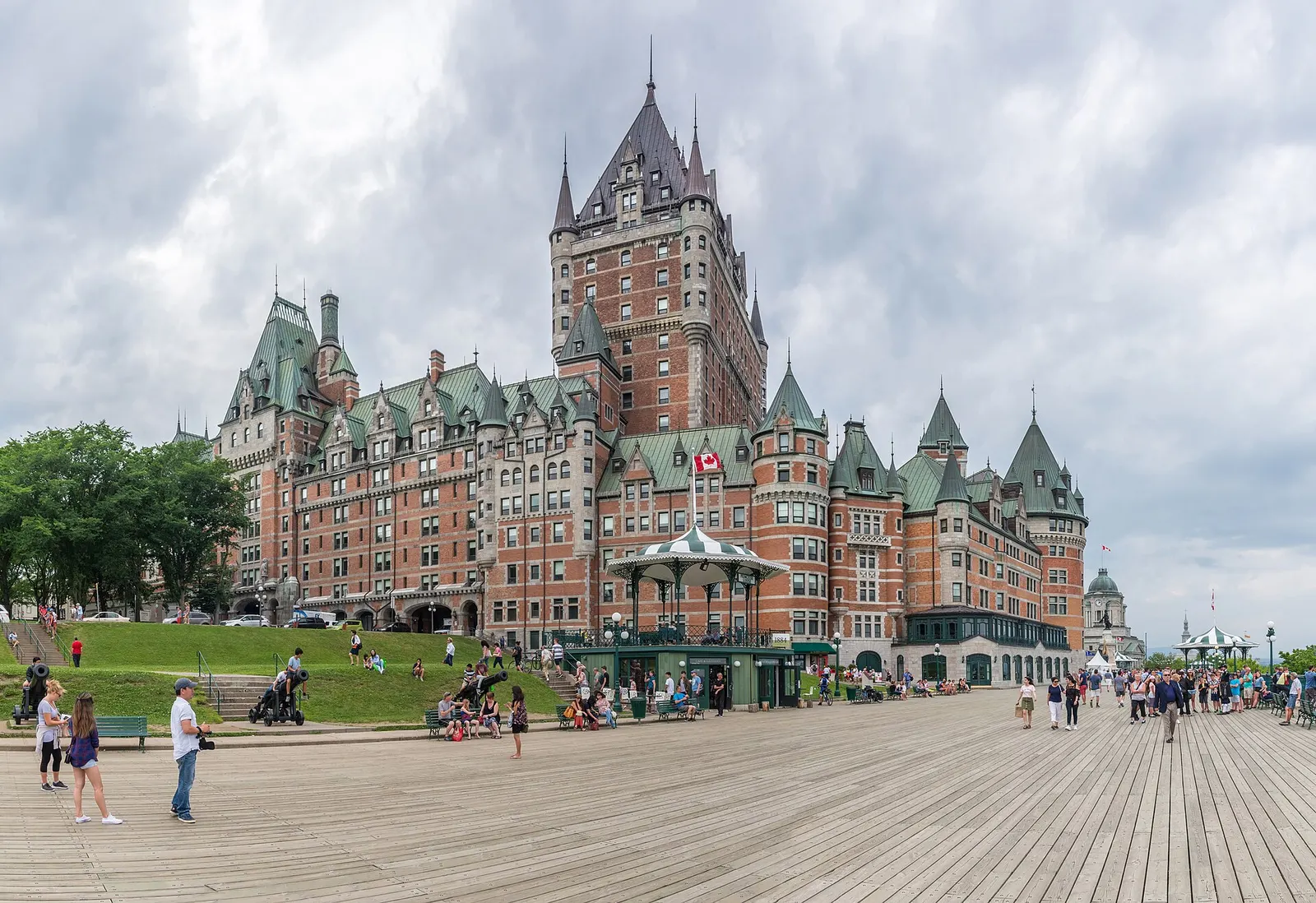
Quebec City is the closest thing North America has to a walled European town, and the good news for a visitor is that the best of it’s small, free and walkable. Old Quebec, the historic core UNESCO added to the World Heritage List in 1985, splits into an Upper Town on the cliff and a Lower Town by the river, and two unhurried days will cover both on foot - or a single well-timed one, walked stop by stop in our Old Quebec in a day guide. It’s the one place in this country where the fortifications, the cobbles and the French are the real thing rather than a theme, and it’s the reason many people come to the province at all.
Come for a season as much as a sight, because this is a city that changes character through the year. In summer it’s terraces, street performers and the ramparts warm underfoot; in February it throws what its organizers call the biggest winter carnival in the world. Plan around which version you want, then let the old town do the rest, because inside the walls you can put the map away and just wander.
Old Québec: what the UNESCO listing means
The listing isn’t marketing. UNESCO calls Old Québec “an exceptional example of a fortified colonial town, by far the most complete north of Mexico,” and the walls are the proof: Quebec still has its full ring of ramparts. You can walk the top of them, pass through stone gates like the Porte Saint-Louis, and trace the whole circuit of the Upper Town in an hour.
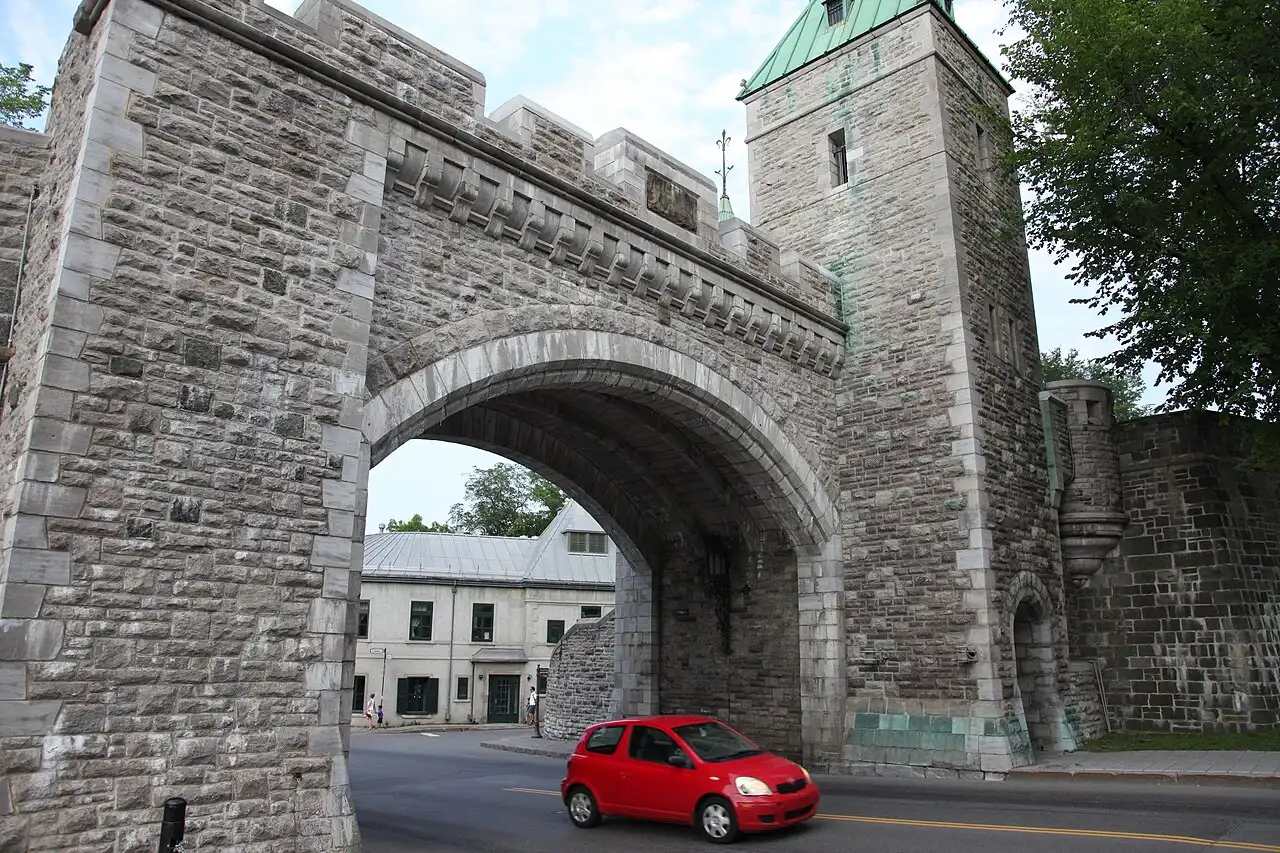
The district covers about 135 hectares in two levels: the Upper Town on the heights of Cap Diamant, behind the walls, and the Lower Town below, gathered around the old harbour square of Place Royale. Getting between the two, up and down the cliff, is half the fun of the place.
The Château Frontenac and Dufferin Terrace
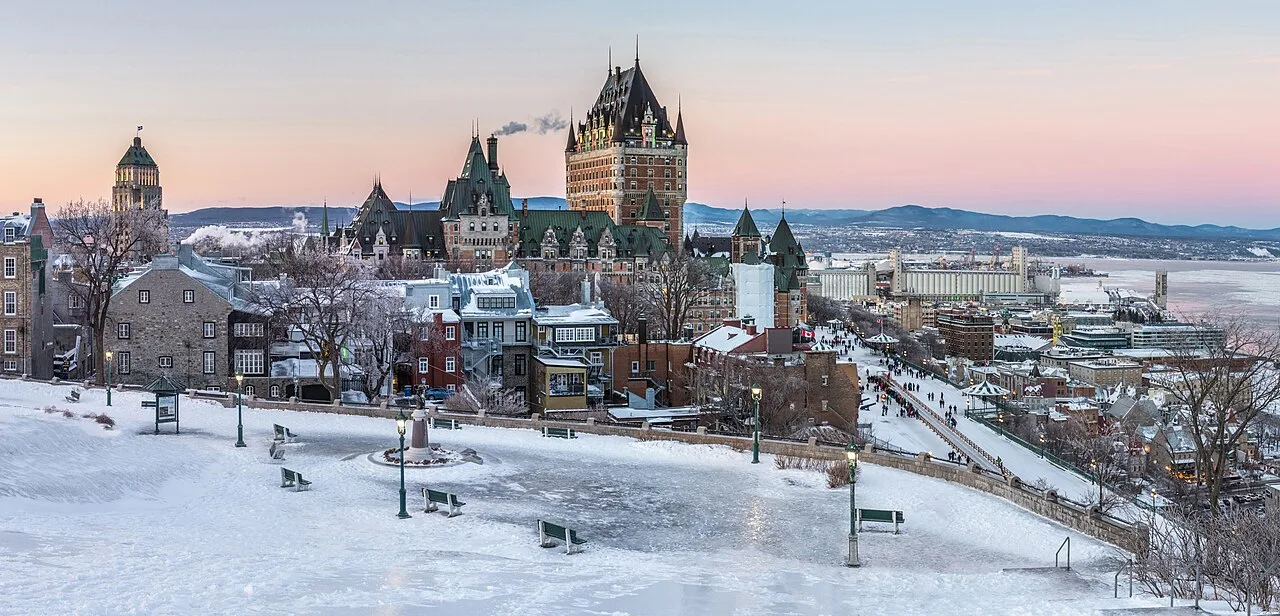
The building on every postcard is the Château Frontenac, the enormous copper-roofed railway hotel that stands over the Upper Town like a castle. You don’t have to stay in it or tour it to enjoy it; the free move is to walk the Dufferin Terrace, the long wooden boardwalk that runs along the cliff at its foot. From there the view opens over the St Lawrence and the Lower Town, and in summer street musicians work the promenade. It’s the first place to head and the best place to get your bearings.
Give the terrace an hour and you have half the old town in view. Old cannons line the wall along it, the ferries cross to Lévis below, and a path climbs from the far end toward the Plains of Abraham, so the Château makes a natural hinge between the two big open spaces of the Upper Town. At night it’s floodlit and quieter, and the walk back along the terrace is one of the simplest pleasures in the city.
Quartier Petit-Champlain and Place Royale
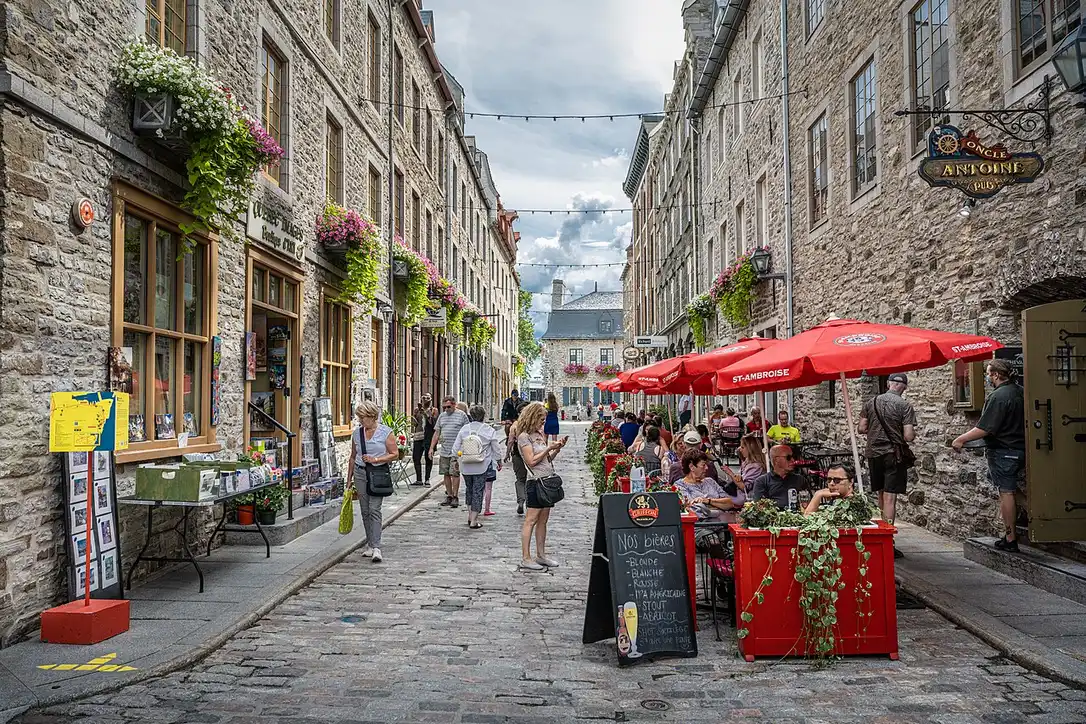
Down in the Lower Town, the Quartier Petit-Champlain is often billed as the oldest commercial street in North America and is, without argument, the most photographed lane in the city: narrow, cobbled and lined with shops under steep roofs. It’s touristy and it’s still worth it, especially early or late when the crowds thin.
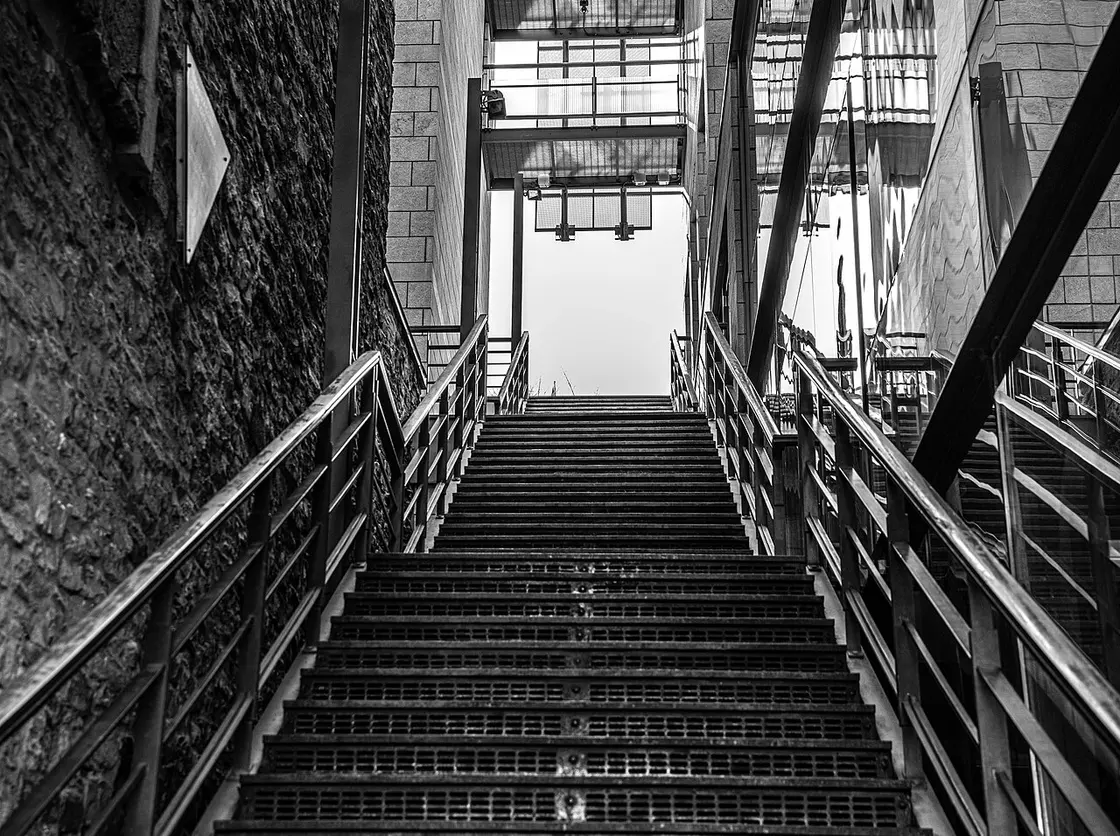
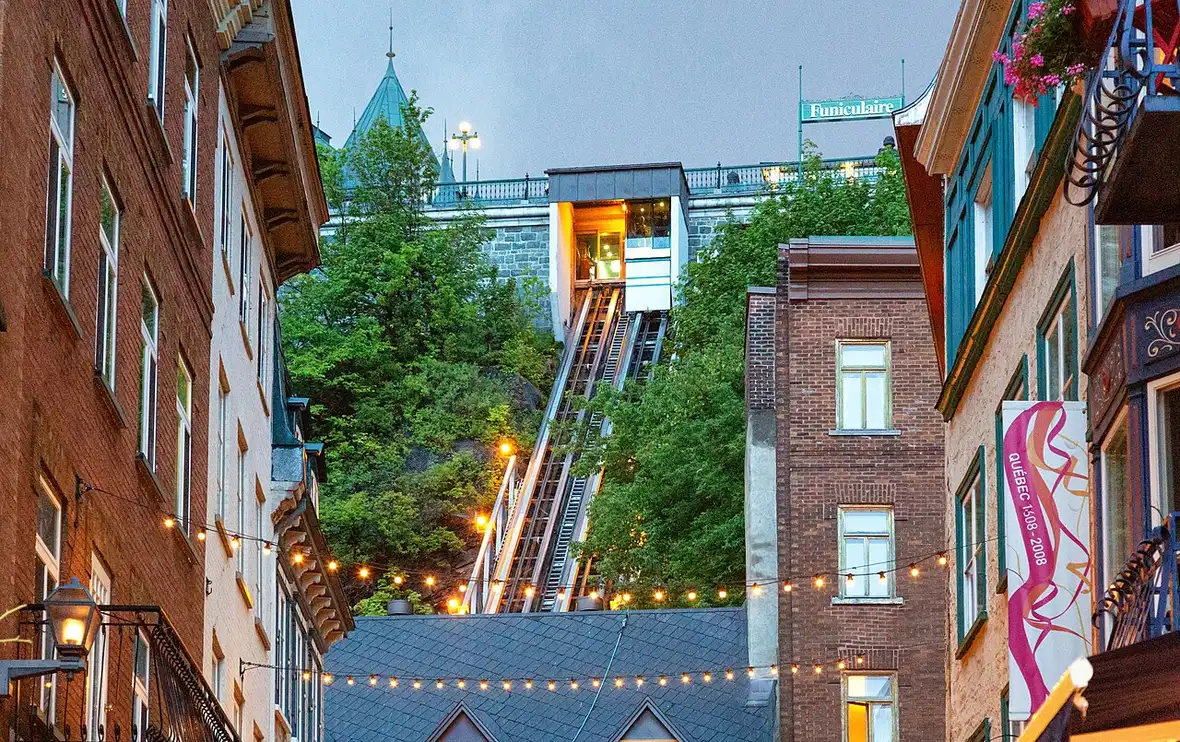
Getting between the Upper and Lower Town is its own small decision. The free and steep way is on foot down the Escalier Casse-Cou, the “breakneck stairs,” which are exactly as advertised. The easy way is the funicular, a little cliff railway that runs beside the Château and drops you straight into Petit-Champlain, worth the small fare on tired legs or in the cold.
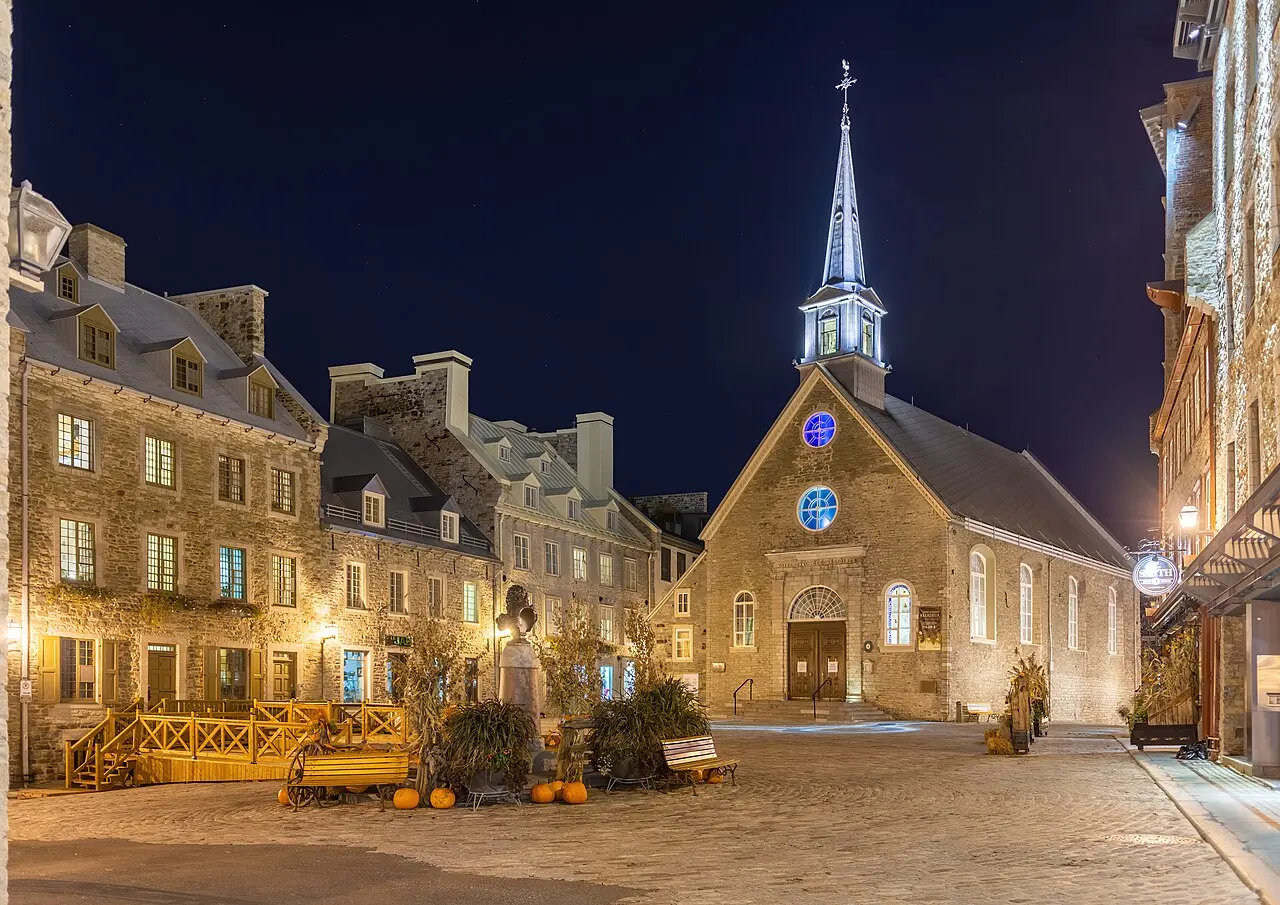
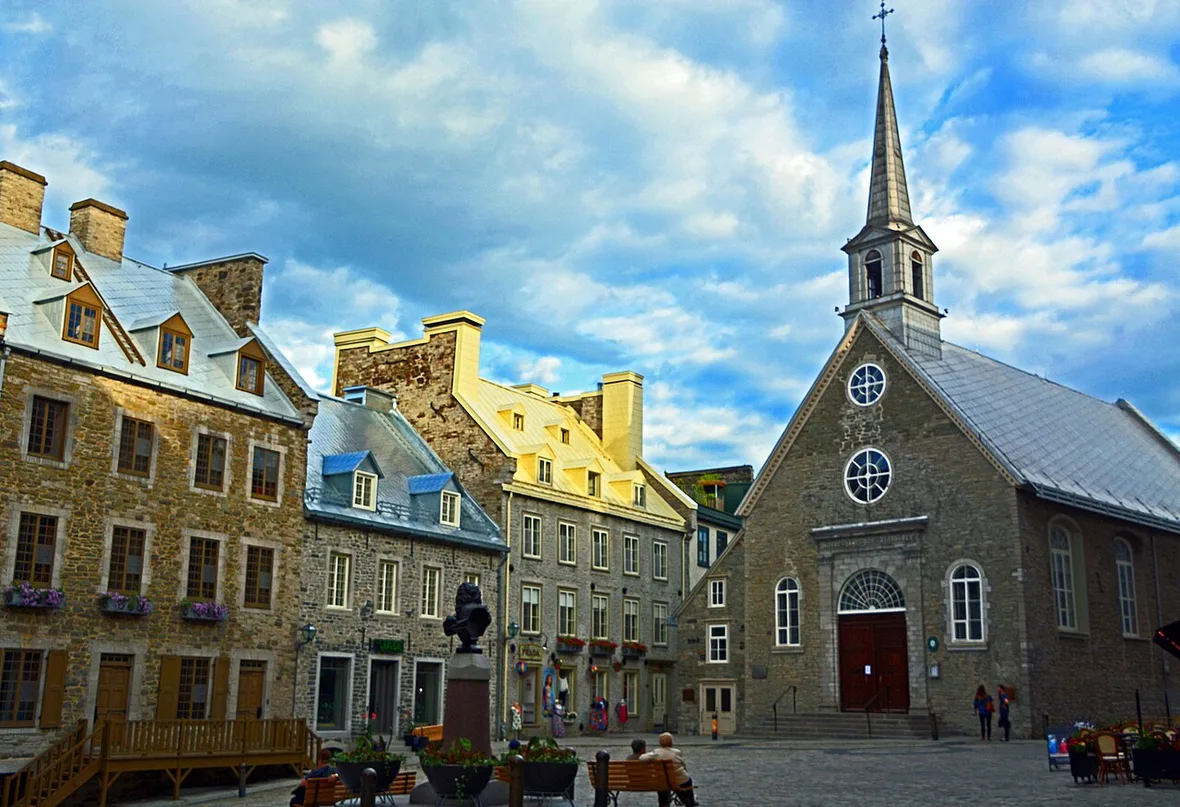
At the heart of the Lower Town is Place Royale, the cobbled square where the French colony began, with the small stone church of Notre-Dame-des-Victoires on one side. It’s at its best after dark, lit and quiet once the day boats have gone.
The Citadelle and the Plains of Abraham
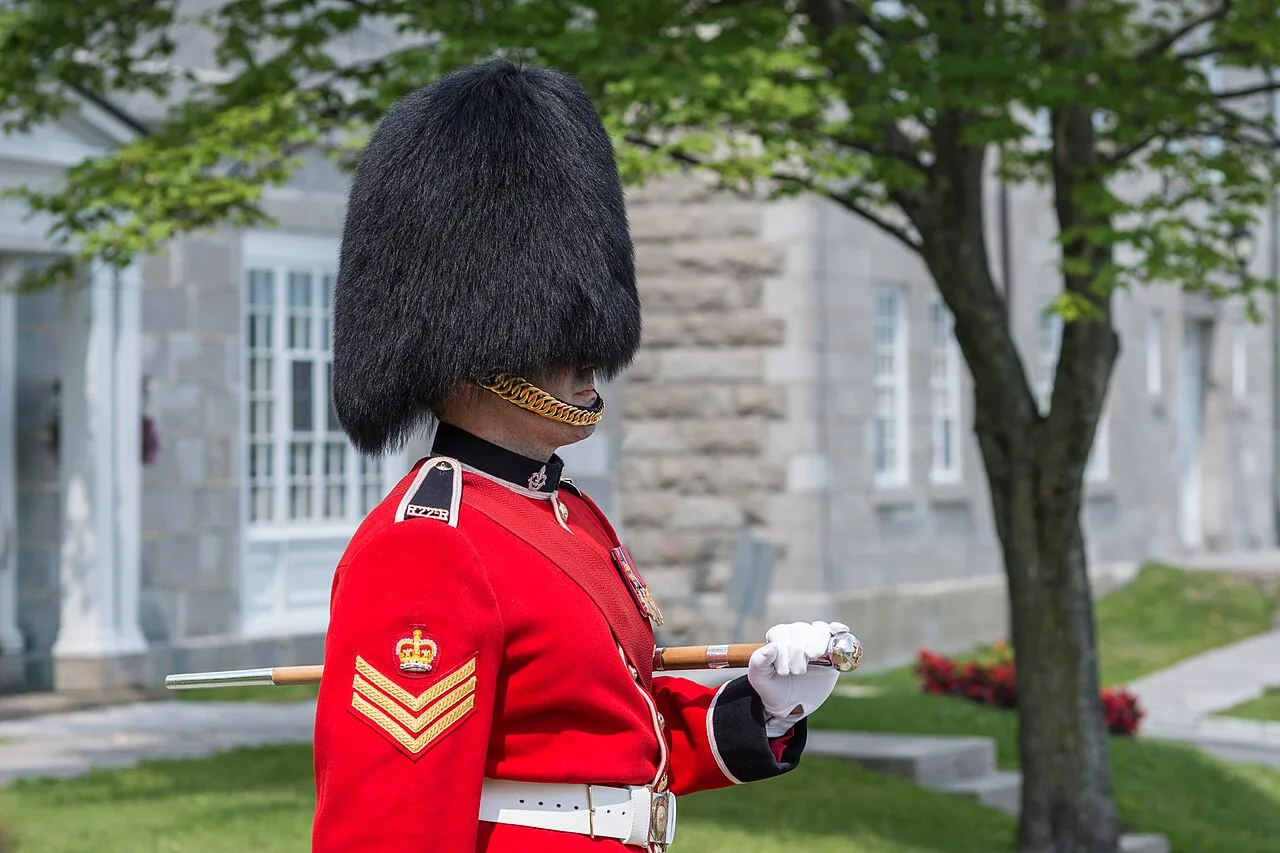
At the highest point of the walls sits the Citadelle, a star-shaped fortress that’s still an active army base, home to the French-speaking Royal 22e Régiment. On summer mornings the regiment performs the Changing of the Guard in red tunics and bearskins - in 2026 the season ran 24 June to 30 August - a free-to-watch piece of ceremony worth timing your morning around. Just outside the walls stretch the Plains of Abraham, now a big clifftop park but once the battlefield where the fate of French North America was decided in 1759; today it’s where the city walks its dog and holds its festivals.
Day trips along the Côte-de-Beaupré
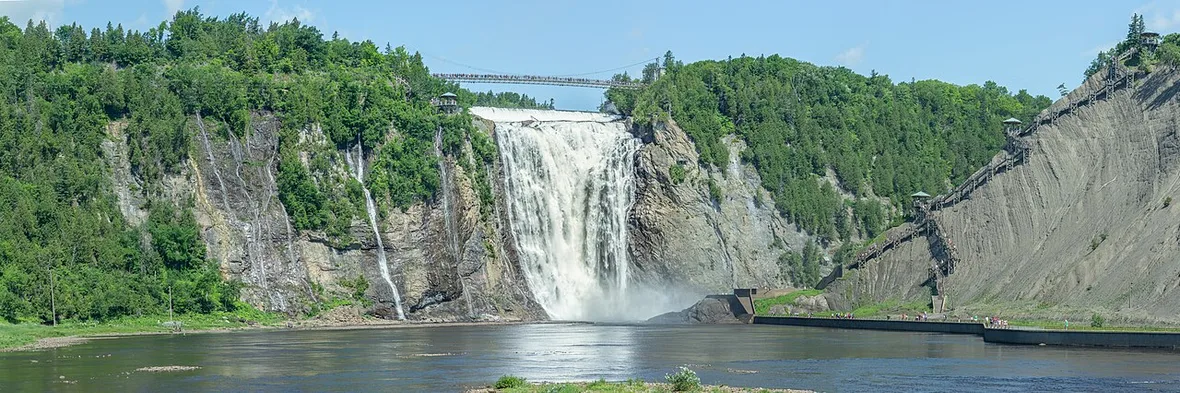
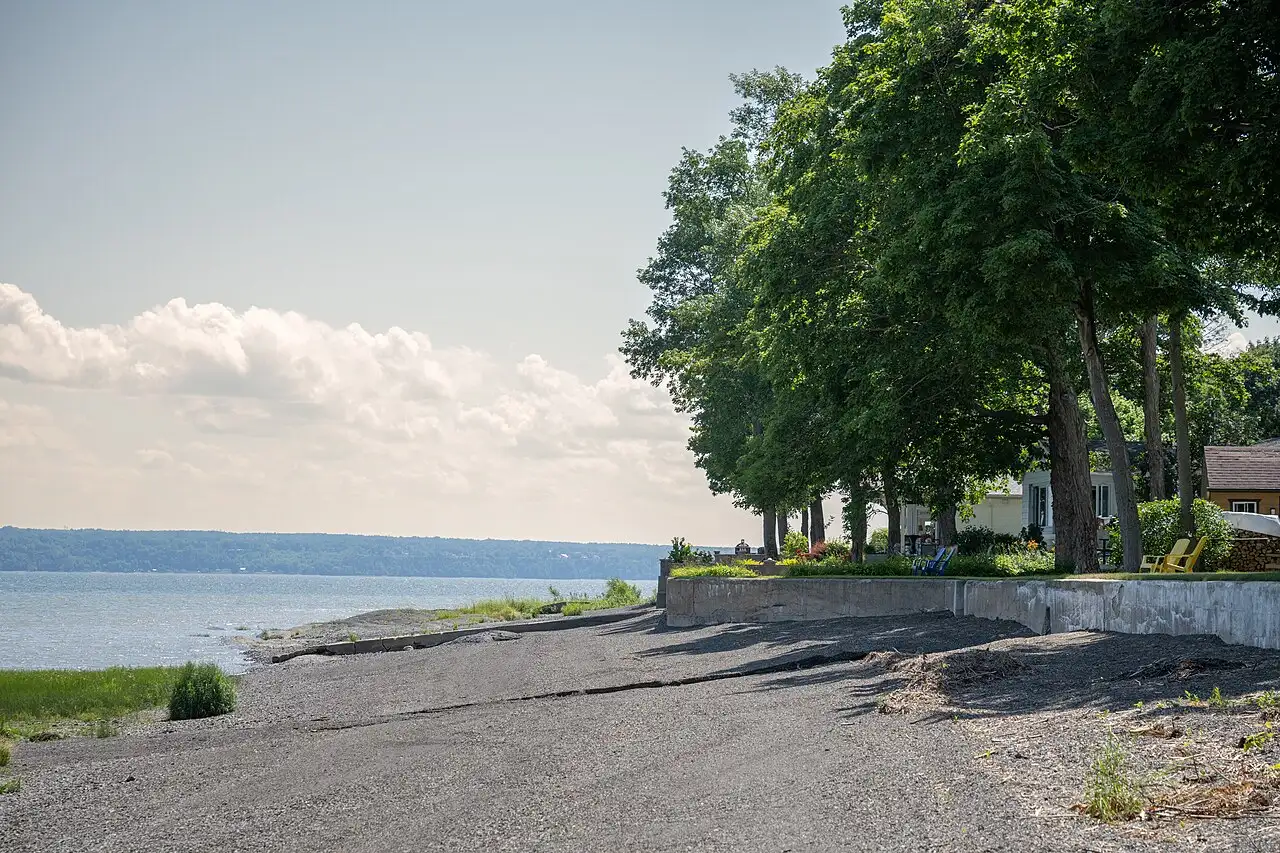
When you’ve done the old town, the best half-day out is the loop east along the Côte-de-Beaupré, the old shore road that runs from the city toward Mont-Sainte-Anne. You’ll want a car or a tour for it, but the distances are short and the three stops chain together neatly. First is Montmorency Falls, a single tall cascade that drops straight into the St Lawrence at the edge of town; a footbridge crosses the lip and a cable car and a staircase climb the side, so you can look at it from above, below or across. Then comes Île d’Orléans, a farm island in the river reached by one bridge, all old houses, orchards, cider and strawberries in season. Furthest out is the great basilica of Sainte-Anne-de-Beaupré, a major pilgrimage church that rises out of the countryside with surprising scale.
Quebec City in winter
This is the city that most rewards a cold-weather trip, and the reason to plan one is the Carnaval de Québec - that’s what the organizers call the largest winter carnival in the world. The next edition runs 5 to 14 February 2027, and its fixtures are Bonhomme, the snowman mascot, his ice palace, two night parades, and snow and ice sculptures set up through the old town. If you can only see Quebec City once, a bright February day inside the snowy walls is a strong argument over a summer one - you’ll feel the difference.
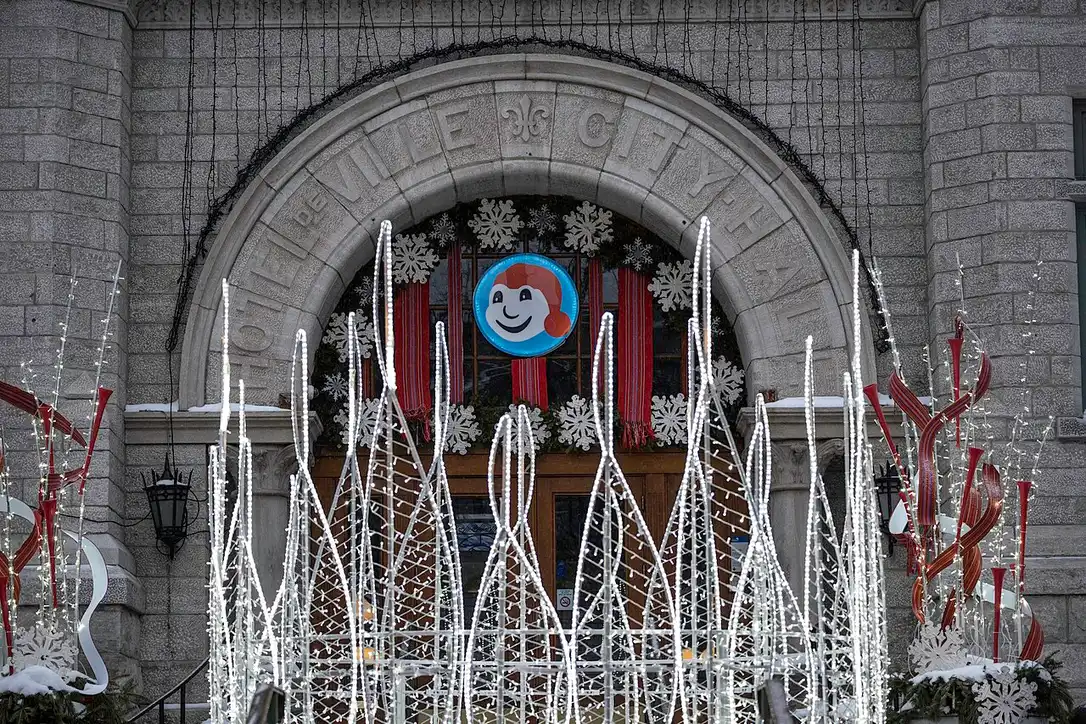
Even without the carnival, winter suits the place: the Château under snow, a toboggan run set up beside the Dufferin Terrace, and the Lower Town lanes strung with lights. Dress for real cold, plan more indoor stops, and it’ll still work. Carnival dates, ice-hotel tickets and a packing list for standing outside are in Quebec City in winter.
When to visit
Summer, from June to September, is the easy season: warm, everything open, the guard changing and the terrace full - you won’t fight for a café seat the way you will in winter. September and October add autumn colour on Île d’Orléans and the Côte-de-Beaupré without the peak crowds. February is for the Carnaval and the snow. The stretch to be wary of is late autumn and the thaw, when it’s cold, grey and short of both the summer buzz and the winter magic.
Getting there and around
Quebec City is the eastern end of the main Quebec corridor, about three hours by road from Montreal and reachable by train or bus if you would rather not drive - the mode-by-mode breakdown is in Montreal to Quebec City; inside the old town you’ll not want a car at all, because the streets are narrow, parking is dear and everything worth seeing is within a walk. The city is more French-speaking than Montreal, but its tourist heart is used to English visitors and the tourist board runs full English service. For how the language question actually plays out across the province, and what a few words of French buy you, see our Quebec travel guide.
Read also
- One day, walked in the right order, dodging the cruise crowds: Old Quebec in a day
- The half-day trip east of the city: Montmorency Falls
- Picking a base inside or outside the walls: where to stay in Quebec City
- The province around the city, and the straight word on French: Quebec travel guide
- The big bilingual city upriver: things to do in Montreal
- The national capital to the west: things to do in Ottawa
- Every city we cover: the cities hub
On the map
The map loads on click - to keep the page lightweight.
The map didn’t load. Check your connection and refresh the page.
Admission and opening hours
- Admission price
- Old Quebec is free to walk: the ramparts, Dufferin Terrace, Place Royale, the Petit-Champlain streets. Paid extras change by date and are sold online: the Citadelle, tours of the Château Frontenac and the funicular between the Upper and Lower Town. Prices were not published to check on 24 July 2026 and are not quoted here.
- Opening hours
- Changing of the Guard at the Citadelle runs Wednesday to Sunday at 10 a.m., 24 June to 30 August 2026 (except 1 and 3 July, weather permitting). The Carnaval de Québec runs 5 to 14 February 2027. Most of the old town is outdoors and open year-round.
Citadelle ceremony dates from lacitadelle.qc.ca; Carnaval dates from carnaval.qc.ca. Many official prices were behind booking widgets and are not quoted. Checked 24 July 2026.
Details checked: July 24, 2026
Read also

Cities · 11 min read
Regina: Legislature, RCMP Heritage Centre and Prairie Base
Verified · August 29, 2026Wascana Centre, the Legislature, the Mounties' only training depot and a free T. rex - what Regina actually rewards, plus the road to Saskatoon.

Cities · 10 min read
Whitehorse: Yukon Base for Aurora, Rivers and the Klondike
Verified · August 28, 2026Whitehorse in 2026: SS Klondike grounds open but boat closed, MacBride C$12, Beringia C$6, Miles Canyon and aurora season.

Cities · 9 min read
Things to Do in Saskatoon: River Valley, Wanuskewin & Skies
Verified · August 27, 2026Saskatoon in practice: Meewasin trails, Wanuskewin bison, Remai Modern by donation, and a prairie day trip to Riding Mountain.

Cities · 9 min read
Lunenburg: UNESCO Old Town Guide
Updated · September 2, 2026Old Town Lunenburg from Halifax: UNESCO grid of 1753, painted harbour, Fisheries Museum prices, Bluenose II, and when an overnight beats a day trip.