
Where to Stay in Quebec City: Old Town or Outside the Walls
Where to stay in Quebec City: what a room inside the walls really buys, the cheaper streets a block outside, where a car fits, and how winter changes it.
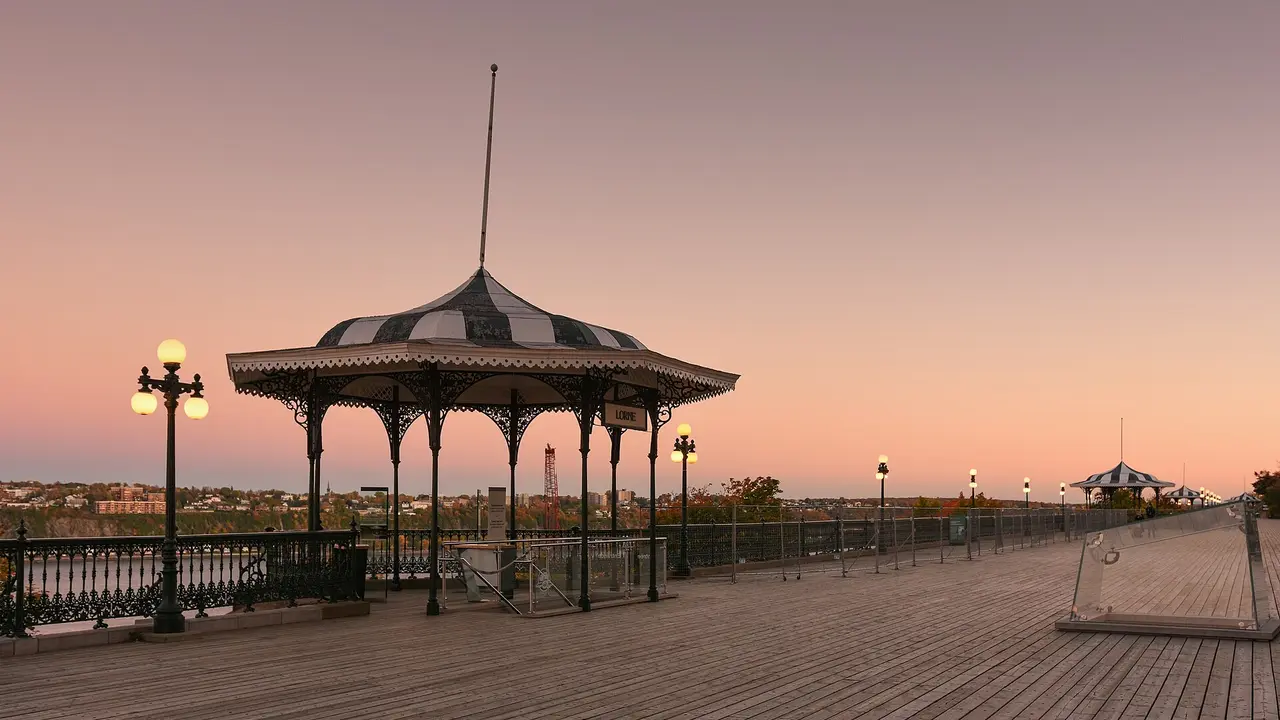
On a short first visit, stay inside the walls of Old Quebec: the walled Upper Town around the Château Frontenac and Rue Saint-Jean is where the city you came to see actually is, and everything else costs you a hill. Stay one block outside, in Saint-Jean-Baptiste or on the edge of Saint-Roch, and you’ll pay noticeably less for a room you can still walk home to. Bring a car and the calculation flips: the old town is a miserable place to park, and a base with a garage or a spot out by the bridges saves you both money and swearing.
The wall isn’t a metaphor here. Quebec City is built on a cliff, with the fortified Upper Town on top, Petit-Champlain and the Old Port squeezed underneath, and a set of very steep streets and staircases joining them. Your suitcase, your knees and your February footing all care about which side of that drop you sleep on, and no booking site will mention it.
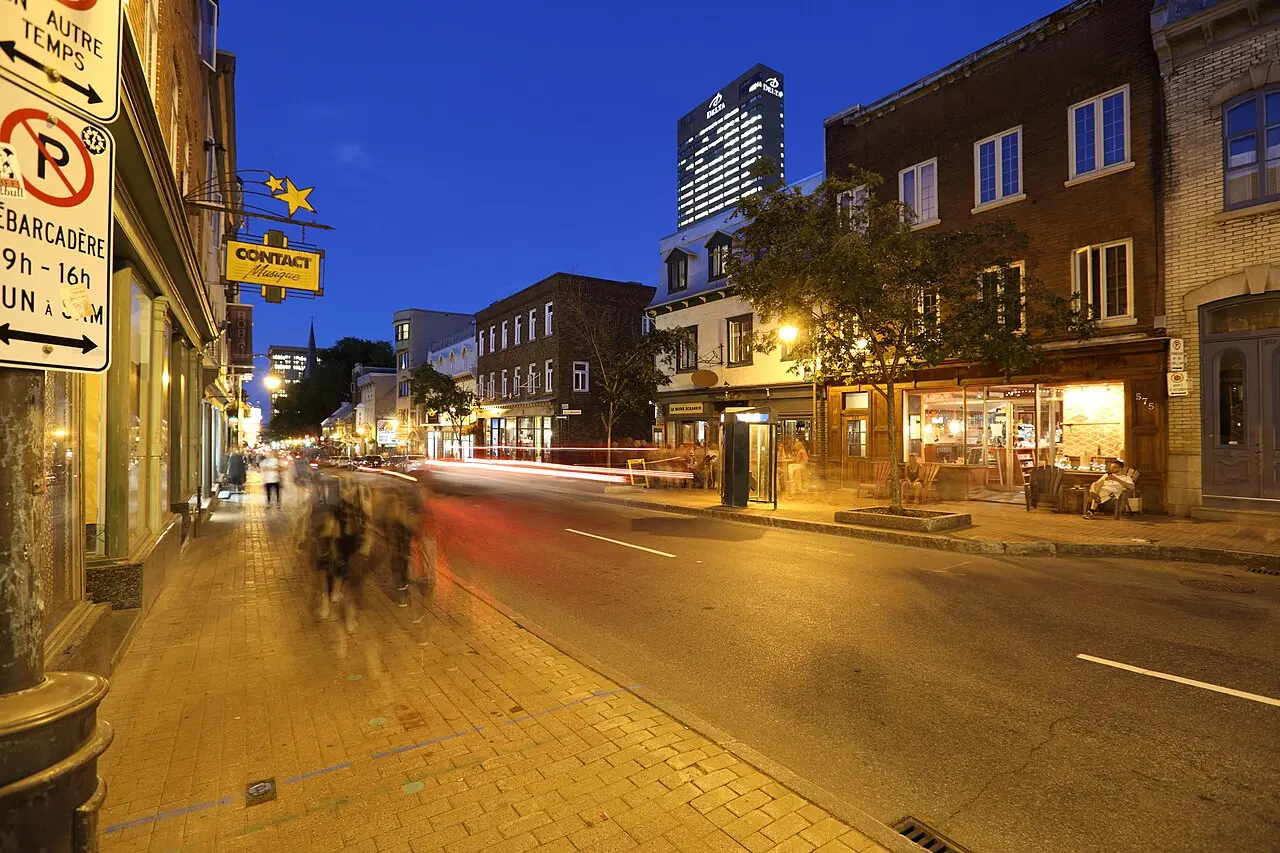
Three questions that settle it
Are you driving? If yes, filter for hotels with their own parking and read the nightly charge before you book, or base yourself outside the walls entirely. If no, the old town is yours and you can ignore half of what follows.
Which season? In July the whole city is walkable and the Old Port is the place to be. Between December and March the hills ice up, the funicular and the stairs matter, and a room with an elevator and an indoor way to breakfast is worth more than a view.
First visit or fifth? First-timers should pay for the address inside the walls and accept the smaller room. Anyone who already knows the postcard should look at Saint-Roch, where the same money buys a bigger room and a much better dinner.
Inside the walls: what the address really buys
The walled Upper Town is the reason people come. You step out of the door onto stone streets, the Château Frontenac is at the end of the block, Terrasse Dufferin gives you the river, and the whole of Old Quebec is walkable end to end. Hotels here are mostly small, historic and expensive, and the rooms are often smaller than the price suggests: sloping ceilings, no elevator, a heritage building that can’t be rebuilt to modern layouts.
That’s the honest trade. You’re buying a location and an atmosphere, not floor space. For two or three nights in summer it’s absolutely worth it, and the mornings before the tour buses arrive are the best hours of a Quebec City trip. For a week, or a family that needs space, it starts to feel expensive for the space you get.
One practical warning about heritage charm: ask specifically whether the hotel has an elevator and how many steps stand between the street and reception. Plenty of the pretty places have neither the elevator nor a flat approach.
The lower town: Petit-Champlain and the Old Port
Down at the bottom of the cliff, Petit-Champlain is the prettiest few streets in Canada and the Old Port around Bassin Louise is flatter, breezier and much less cramped. Staying down here is lovely, and it comes with a permanent commute upward: the funicular, the Escalier Casse-Cou or the long ramp of Côte de la Montagne, every single time you want the Château, the terrasse or the restaurants of Rue Saint-Jean.
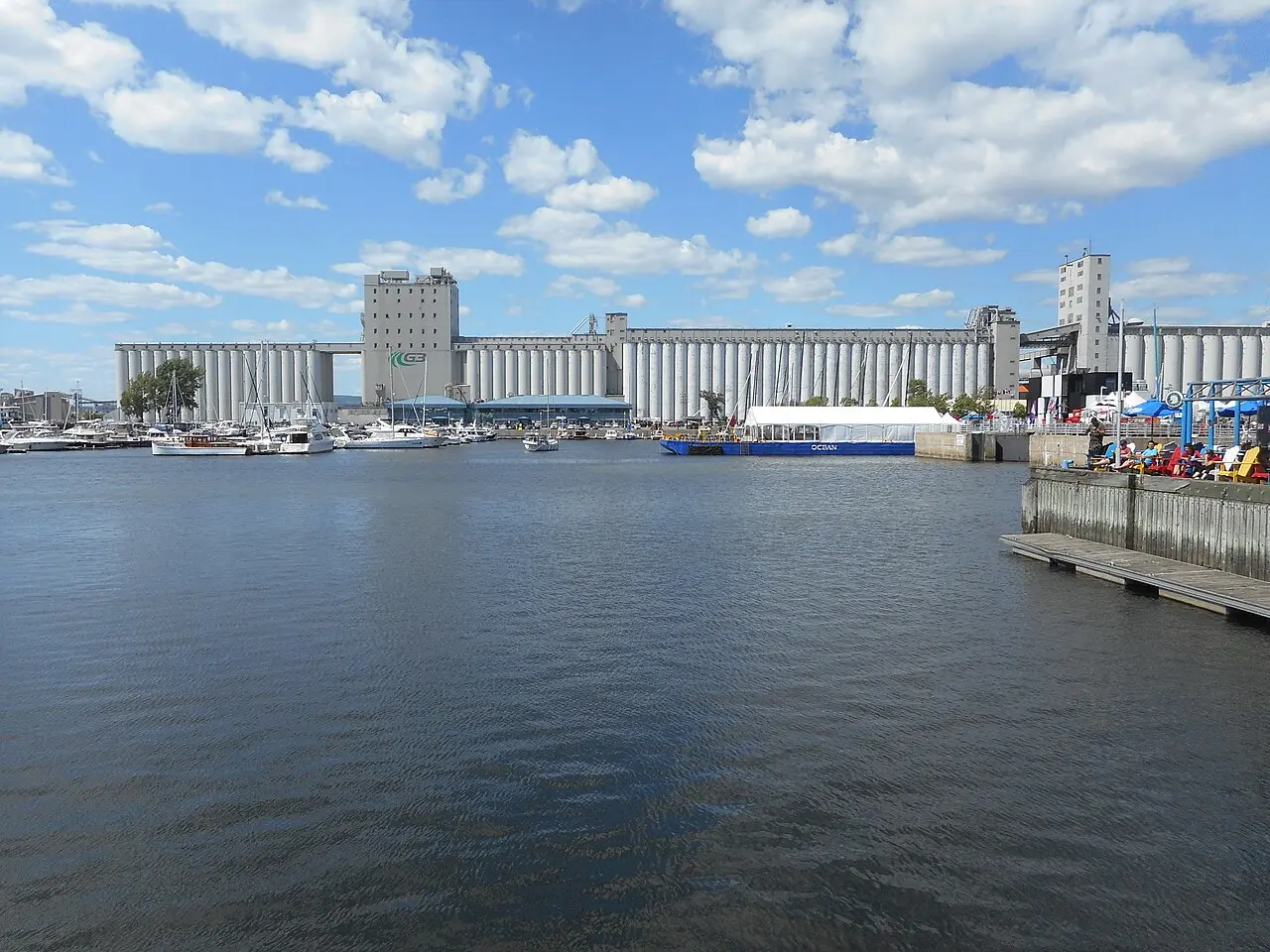
The funicular costs a small per-ride fare and runs on its own hours, so check the price and the last departure at the door rather than assuming it’s part of the city’s transit. If you’re arriving by train or spending your days at the market and the port, the lower town is a genuinely good base. If your itinerary is upstairs, you’ll climb it several times a day.
Saint-Jean-Baptiste: one block outside, a different price
Walk out through the gate at the top of Rue Saint-Jean and you’re in Saint-Jean-Baptiste, which is the address to aim for if you want the old town without the old town’s rates. It’s a residential neighbourhood of coloured houses, bakeries, bars and small guesthouses, it’s five minutes on foot from the walls, and the rooms are bigger and cheaper for the simple reason that they’re outside the postcard.
The catch is the topography again. Saint-Jean-Baptiste sits on the slope, so some streets and staircases down towards Saint-Roch are steep enough to be a genuine effort with luggage, and in an ice storm they’re closer to a sport. Look at where exactly the address sits on the hill before you book.
Saint-Roch: better dinner, lower rate
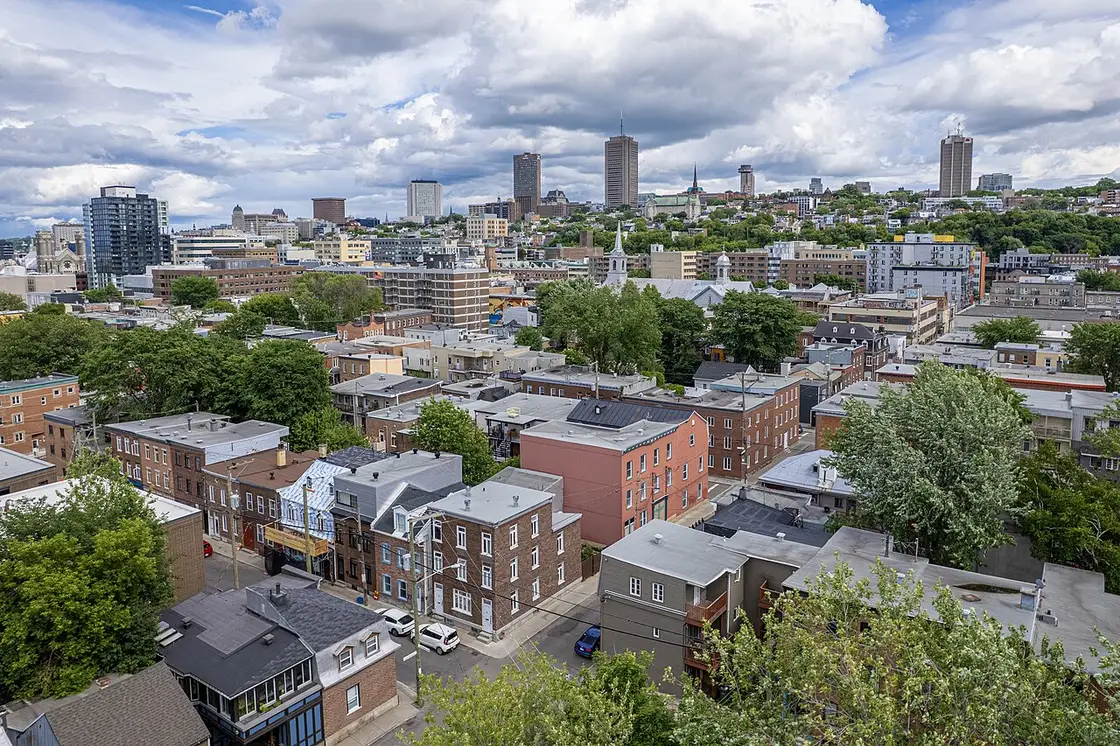
Saint-Roch is the lower-town neighbourhood that locals actually go out in: Rue Saint-Joseph and the streets around it hold the city’s best concentration of restaurants, microbreweries and coffee, and the hotels are newer, larger and cheaper than anything inside the walls. For a second visit, a longer stay, or anyone who plans their day around dinner rather than ramparts, this is the smart base.
What you give up is the wake-up view and the ten-second walk to the ramparts. Old Quebec is a bus ride or a determined uphill walk away, and while the district has been transformed over the past two decades, it thins out fast towards the elevated road, so a street that looks central on a map can feel bleak on foot after dark. Pick your street rather than just your price.
Grande Allée and Montcalm: space, and the Plains at the door
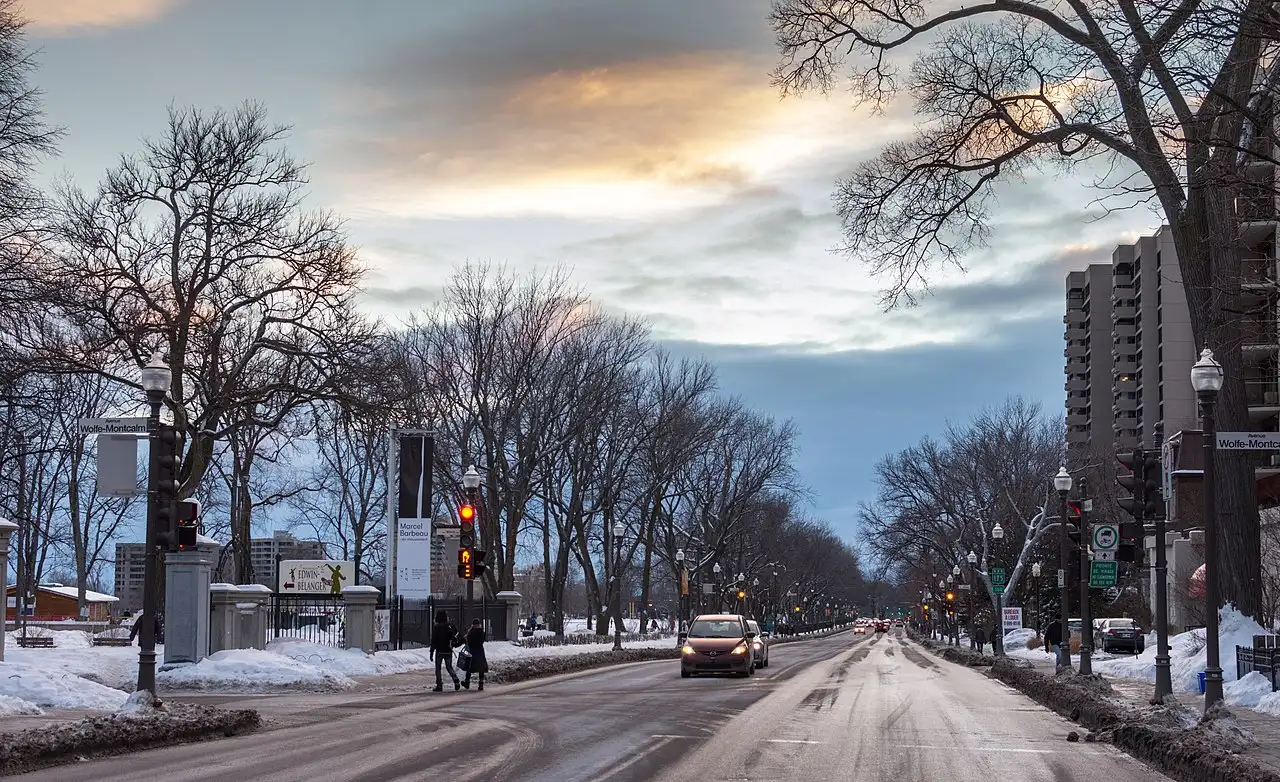
Grande Allée leaves the walls at Porte Saint-Louis and runs west past the parliament through Montcalm, and it’s the compromise address: full-size hotels with actual parking, terraces that fill up on summer evenings, the Plains of Abraham as your backyard, and Old Quebec still walkable in about the time it takes to finish a coffee. It’s flat, which after two days of the cliff you’ll appreciate more than you expect.
This is the strongest option for families and for anyone travelling with a car who still wants to walk into the old town. The trade is that Grande Allée near the walls is also the city’s late-night strip, so a room on the front of a building can be loud on a Saturday in summer.
The car question, honestly
Quebec City is the place where a rental car turns from a convenience into a liability faster than anywhere else in eastern Canada. The old town’s streets are narrow, one-way and heavily pedestrianized in summer, and street parking inside the walls is scarce and time-limited. If you’re driving, do one of two things: book a hotel with its own garage and read what it charges per night, or stay outside the walls where parking is normal, and walk or bus in.
If your Quebec City stop is bookended by long drives, Sainte-Foy, out towards the bridges, is the honest answer nobody puts in a guide: it’s ordinary, it’s a highway suburb, and it’s where the chain hotels have parking, easy access to the Charlevoix or Montreal roads, and a bus into town. Book it for the logistics, not the evening. Before you commit to a car at all, renting a car in Canada covers the winter tire rules and the deposit conditions that catch visitors out.
What winter does to your choice
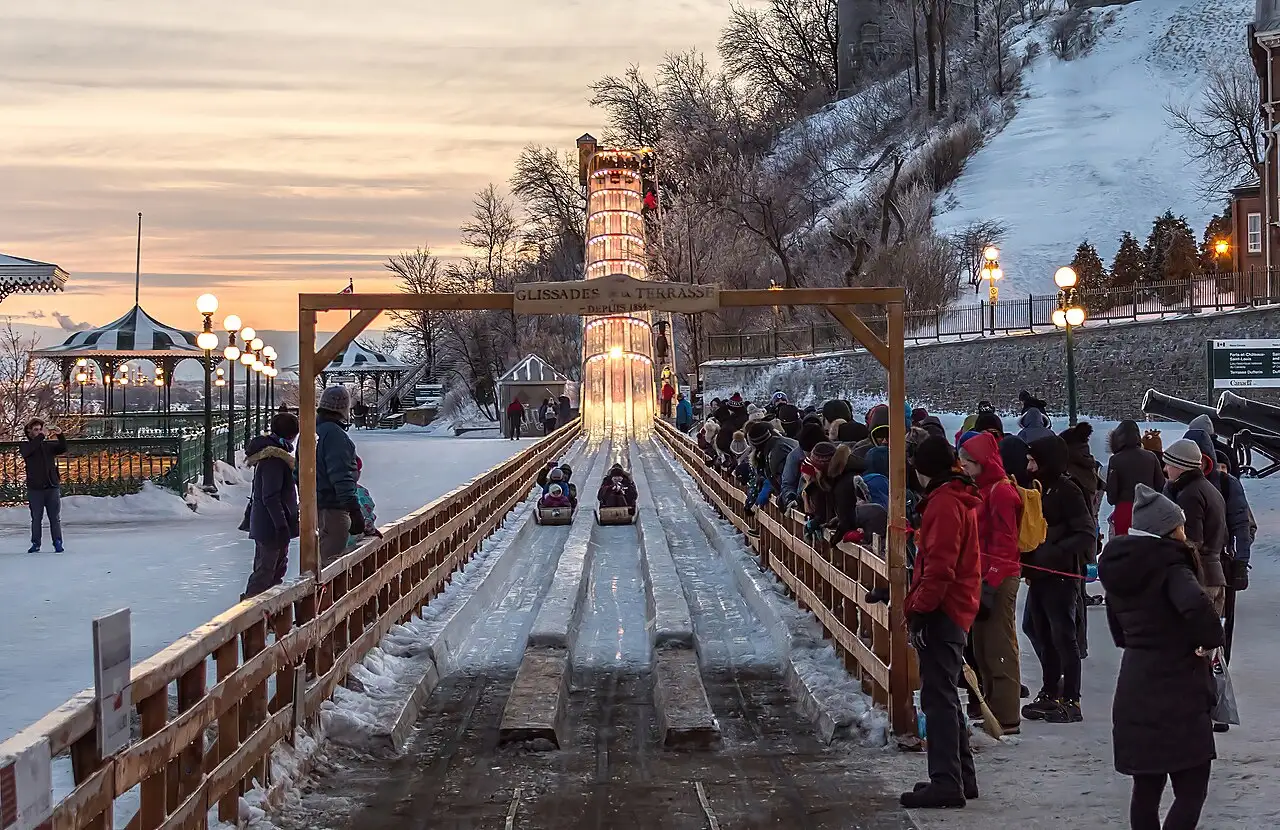
Quebec City in winter is the best version of itself, and it’s also the season when the geography bites. The staircases between the upper and lower towns get icy, the slopes of Saint-Jean-Baptiste stop being a shortcut, and the ten-minute walk you’d cheerfully do in July becomes a careful twenty. In deep winter, staying inside the walls is worth paying for, because everything you want is on the flat top of the cliff.
The date to plan around is Carnaval de Québec, which runs 5 to 14 February 2027. Rooms inside the walls sell out for it months ahead and rates climb accordingly, and the same is true of the big July festival weekend. If your trip is flexible, the last week of January or the first week of March gives you the same snowbound old town at a fraction of the Carnaval rate.
While you’re comparing rates, remember what lands on the bill: Quebec charges a 3.5% tax on lodging on the price of the room, and the 5% GST and 9.975% QST are then calculated on top of the total. Compare quoted rates before tax and you’ll misjudge the difference between two hotels by more than the difference itself.
Arriving by train, plane or ferry
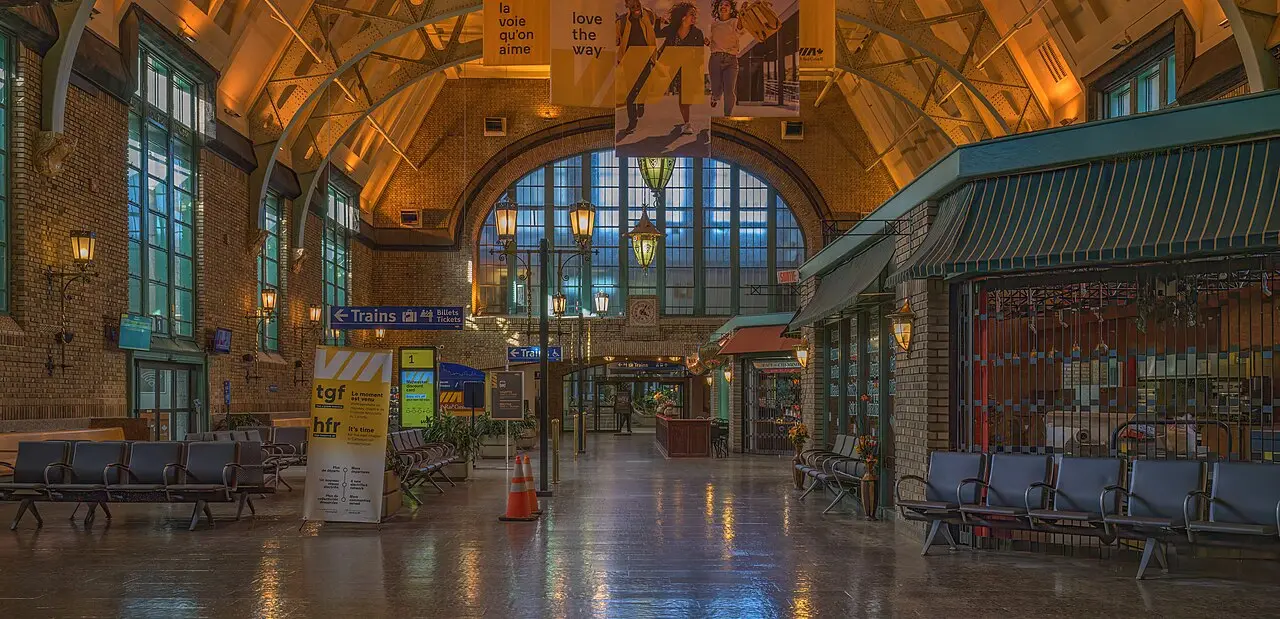
Trains from Montreal take about three and a half hours and run 34 times a week, and they arrive at Gare du Palais in the lower town, a flat walk from the Old Port and Saint-Roch and an uphill haul to the Upper Town. If you’re coming by rail with luggage, that’s a real argument for a lower-town room on your first night, and the rest of the network, fares included, is in our guide to Canada by train.
Flying in, the airport is 16 km out, about 25 minutes by car, and the taxi runs on a posted flat rate rather than a meter: C$41.40 by day and C$47.60 between 11 p.m. and 5 a.m., plus a C$0.90 fee and taxes. That night window matters more than it sounds, because a lot of evening flights land inside it. The cheap alternative is the bus: RTC route 80 runs from the airport to downtown via the Les Saules terminus, and route 76 goes to Sainte-Foy, where the high-frequency 800 and 801 take over. The cash fare is C$4.00, exact change, and the timetable is thin enough that it’s worth checking RTC before you count on it. With bags in January, take the taxi and accept the night rate.
One last trick that costs almost nothing: the Lévis ferry. It’s C$4.25 for an adult, takes about 12 minutes, and runs from 06:00 until 02:20. The view of the cliff, the Château and the Old Port from the middle of the St Lawrence is the best in the city, and if rooms inside the walls are impossible on your dates, a night on the Lévis side with a late ferry back is a workable plan B rather than a defeat.
Matching the base to the trip
Two or three nights in summer, no car, first visit: inside the walls, and pay for it. A week, or a second visit: Saint-Roch or Saint-Jean-Baptiste, where the room is bigger and dinner is better. Family with a car: Grande Allée or Montcalm, flat ground and parking that exists. Deep winter or Carnaval: inside the walls if you can get it, because the hills are the thing that will spoil your day. Driving through between Montreal and Charlevoix: Sainte-Foy for one night, and no guilt about it.
Once you’ve picked a base, things to do in Quebec City covers what each district puts on your doorstep, and if you’re pairing the city with the rest of the province, our Quebec travel guide has the distances to Charlevoix, the Gaspé and the Eastern Townships. If you’ve only got one day before you move on, Old Quebec in a day lays out a walking order that dodges the cruise crowds, and Montmorency Falls is the natural half-day trip once you’ve done the old town on foot. Doing both cities on one trip? Where to stay in Montreal uses the same logic three hours down the line.
Read also
- What to do once you’ve dropped your bags: things to do in Quebec City
- One day, walked in the right order, dodging the cruise crowds: Old Quebec in a day
- The half-day trip east of the city: Montmorency Falls
- The province beyond the two cities: Quebec travel guide
- The same decision in Montreal: where to stay in Montreal
- Season by season, including the quiet winter weeks: best time to visit Canada
- Ten days of eastern cities by rail: eastern Canada itinerary
On the map
The map loads on click - to keep the page lightweight.
The map didn’t load. Check your connection and refresh the page.
Read also

Before you go · 11 min read
Canada eTA for UK Citizens: Entry Requirements
Verified · September 1, 2026UK air travellers need a CAN$7 eTA. Cost, validity, land exception, refusals and British passport types - checked on canada.ca, 1 Sep 2026.

Before you go · 9 min read
Calgary vs Vancouver: Which Airport for the Rockies
Verified · August 29, 2026Calgary puts Banff 140 km up the road; from Vancouver it's 850 km. What the drop fee, the domestic hop and the thinner route map actually cost you.

Before you go · 10 min read
Quebec City in Winter: Carnival, Ice Hotel, What to Wear
Verified · August 16, 2026Quebec City in winter: Carnival 5-14 Feb 2027, ice hotel from January, February nights -16 C, and what to pack.

Before you go · 8 min read
Canadian Rockies vs Vancouver Island: Which Trip to Take
Verified · August 14, 2026Rockies or Vancouver Island for one week: lakes and Icefields Parkway vs ferry, Victoria and Tofino - pick by trip shape, not Instagram.