Eastern Canada Itinerary: 10 Days by Train
A 10-day eastern Canada itinerary by VIA Rail: Toronto, Niagara, Ottawa, Montreal and Quebec City, at a slower pace than the two-week route.
Ten days is the right length to do eastern Canada slowly and by train, riding VIA Rail from Toronto through Ottawa and Montreal to Quebec City with a day trip out to Niagara along the way. This is the eastern corridor done properly, with two and three nights in each city instead of one, and without the Rocky Mountains; if you want the mountains too, the two-week Canada route glues the west and the east together. You don’t need a car for any of it, and you’re better off without one.
The whole corridor is joined by a single railway, and every station sits in the middle of its city, so the train beats flying door to door and spares you the misery of driving into four downtowns. The extra days are the entire point. They buy you a museum morning in Ottawa, a food afternoon in Montreal, a full day at Niagara and a rest day when you need it, rather than the forced march that the same five cities become when you try them in a week.
How this trip works: the train, not a car
The single decision that makes this trip easy is to leave the car at home - that’s the move, and our guide to Canada by train has the fares and classes behind it. A rental only earns its keep on a trip like this if you’re driving somewhere the rail line doesn’t reach; between four station-centre cities, it’s dead weight that costs you a parking search every night. Ontario and Quebec punish a car with tolls, downtown parking and one-way streets, and reward VIA Rail, which drops you steps from your hotel in each city and never asks you to find the car again until you’re leaving it behind. The Corridor is frequent and comfortable, with Economy fares that are cheap if you book ahead and a Business class with meals if you’d rather pay for the extra room. None of the three legs is long by Canadian standards: the ride to Ottawa runs 444 km and roughly four and a half hours, Ottawa to Montreal is a shorter 185 km at around two, and the last stretch to Quebec City covers 270 km in about three and a half. Book the seats early for the best fares, since the cheap Escape tickets sell first and the prices climb as the train fills.
The one place you might want wheels is a Niagara day trip, and even there you don’t need them: GO Transit runs from Toronto to Niagara year-round, and the local WEGO bus links the station to the falls. Every way of making that day work, with times and costs, is compared in our Toronto to Niagara day trip guide.
The pace: three nights here, two there, never one
Ten days across four cities works out to 3-2-3-2, with Niagara folded into the Toronto stay as a day trip instead of a stop of its own, and that split isn’t arbitrary. Toronto and Montreal get three nights each because they’re the two cities with enough going on to fill two full sightseeing days apiece before you’ve even left room for a meal you were looking forward to. Ottawa and Quebec City get two because a compact capital and a walled old town both show their best face inside forty-eight hours, and a third night in either buys diminishing returns you’d rather spend in Montreal.
If a leg does run short - a delayed train, a rained-out afternoon - cut inside a city rather than cutting a city outright. Toronto’s easiest trim is the second museum day: the ROM and the AGO can wait for a return trip, but skip the CN Tower and you’ll regret it all the way down the corridor. In Ottawa, keep Parliament Hill and the Rideau Canal and let a second museum go rather than rushing both. Quebec City barely has slack to give up; two nights there is already the tight end of comfortable, so if that leg eats into the day, take the hours out of Montreal and leave the old town alone.
Days 1 to 3: Toronto, then Niagara as a day trip
Give Toronto three nights at the start. Day one’s the waterfront and the tower: the CN Tower is C$47 for general admission before tax, and the upper deck, correctly called The Top and not the SkyPod, is C$12 more. Add the St. Lawrence Market, the brick lanes of the Distillery District and, if the weather holds, the ferry to the Toronto Islands for the skyline view back. Day two is for museums and neighbourhoods, the ROM and the AGO, Kensington Market and Graffiti Alley, all of which the Toronto city guide lays out in full.
Day three is the Niagara day trip already covered above: leave early, since neither GO nor WEGO publishes a door-to-door time, and plan on a full day out - a half-day add-on never works. Once you’re there, two facts save confusion: the wide, curved Horseshoe Falls sits on the Canadian side, and the smaller American Falls sit across the gorge in New York, not really worth the detour on a short day. The tunnels behind the sheet of water, Journey Behind the Falls, run year-round at C$33 and are the one paid stop worth keeping if time is tight. The Toronto to Niagara day trip guide compares every way of doing the day, and the Niagara Falls guide covers the Canadian side stop by stop.
Day 4 and 5: on to Ottawa
Take a morning train on day four - the ride to Ottawa is the trip’s longest sit, 444 km and roughly four and a half hours by rail - and spend the afternoon settling in along the Rideau Canal or the ByWard Market. Ottawa is a compact capital, and two nights is genuinely enough; book yourself into the ByWard Market if you want dinner and a late walk within reach, or Centretown if you’d rather sleep early and still cover Parliament Hill on foot, a choice our where to stay in Ottawa guide weighs in more detail. Parliament Hill climbs above the river on one side of downtown, the Rideau Canal locks drop toward the water on the other, and the ByWard Market sits between them, close enough that you can cover all three without touching transit.
Across the river in Gatineau, the Canadian Museum of History, and back on the Ottawa side, the Canadian War Museum, are both back to regular admission now that the Canada Strong Pass season has closed, C$25 and C$23 for an adult - though both still let everyone in free every Thursday from 5 to 7 pm, a better-kept secret than the pass ever was. A day and a half here’s plenty, and the Ottawa city guide fills in the detail.
Days 6 to 8: Montreal
The shortest hop of the trip gets you into Montreal with an afternoon still ahead of you, 185 km from Ottawa in under two hours. Three nights, not two, is what actually separates this route from the one-night-per-city version: you get a full spare day with nothing booked, to spend however the weather or the mood decides. Base yourself in the Plateau or Mile End if food is the point of the stop, or closer to Old Montreal and the Old Port if you’d rather walk to the sights than to the smoked meat; our guide to where to stay in Montreal weighs up both.
If the free day gets swallowed by a late train or a rained-out morning, keep Mount Royal and Old Montreal and let the Mile End half of the food crawl go; it travels least well onto a tight schedule anyway. The Montreal food guide maps the full bagel-to-poutine route, and the Montreal city guide covers the rest.
Days 9 to 10: Quebec City
The last train of the trip covers 270 km, roughly three and a half hours from Montreal, saved for last on purpose so the walled old town is the closing image rather than the opening one. Nothing else on this corridor looks like Vieux-Québec: no other walled city in North America north of the Mexican border has kept its ramparts standing, and Petit-Champlain below them, stone houses stacked on narrow lanes under the Château Frontenac, is worth every photo taken of it. Two nights, split between the boardwalk and the lower town, is the right length; any less and you’re choosing between the Dufferin Terrace at sunset and the short trip out to Montmorency Falls, and both deserve the visit. The Quebec City guide has the full walking routes, and where to stay in Quebec City weighs a room inside the walls against one in the newer streets below them.
Getting home closes the last train-versus-car question of the trip, except this one’s about planes. Quebec City’s own airport, YQB, is small enough that most long-haul connections route through a bigger hub first; riding the VIA train back to Montreal-Trudeau instead - the same 270 km, the same three and a half hours - trades one more night on a train for a much longer list of direct flights home.
What it costs
Flights and hotels are what actually move this budget, and both change too fast to pin down here - don’t treat any blog total as a quote. The costs that hold still are the small ones: the CN Tower at C$47, Niagara’s Journey Behind the Falls at C$33, a Montreal day pass at C$11.25, an Ottawa museum ticket at C$23 to C$25, and VIA Rail seats that reward booking weeks out. The Canada Strong Pass has ended: from 19 June to 7 September 2026 it let under-18s into those museums free, halved the ticket for 18 to 24s and gave under-18s free train travel with an adult, while adults paid the prices above throughout. The numbers here assume full-price admission. Add up an economy run at it, budget rooms and hostels, Economy train seats and market lunches, and excluding international flights it settles near C$1,800 a person - a hotels-and-restaurants version runs well past double that. Train fares and the Montreal and Quebec hotel bills are what actually push the total up or down, and both reward booking early.
When to go
Late spring and autumn are the sweet spots on this corridor - that’s when the trip breathes. May, June, September and October give you comfortable days, lighter crowds than midsummer, and, in late September and October, the maple colour along the St Lawrence that the region is famous for. July and August are warm and full of festivals but busiest and dearest, and in 2026 the Strong Pass window overlapped the peak. Winter turns it into a different, harder trip: shorter days and cold, but Quebec City in the snow, with the Carnaval and the lit old town, is a genuine reason to come, as long as you pack for it. Whenever you travel, US, UK and Australian visitors should confirm the entry rules before booking.
Shorten it, extend it, or run it backwards
This is the version of eastern Canada built for ten full days, but the route flexes in three directions if your dates don’t match that.
Shorter. Cut to seven days by dropping Ottawa: run Toronto with the Niagara day trip, then Montreal, then Quebec City, and you keep the spine of the trip while losing the least. Don’t try to keep all five stops inside a week; you’d spend the time saved on trains and hotel check-ins rather than on the places themselves.
Longer. If ten days on the eastern cities leaves you wanting the mountains too, this route is exactly half of the two-week Canada route, which glues a Rockies loop onto the same four cities and the same Niagara day. Book that version outright rather than trying to bolt Banff onto the end of this one; the flight between Calgary and Toronto is the piece that makes the combination work, and it needs its own planning.
Backwards. The whole itinerary runs just as well in reverse. If your cheapest long-haul flight lands in Montreal, or you’re coming up from the United States, start in Quebec City and work west to Toronto - the trains, the nights and the Niagara day all fall the same way, just in the other order. Either way, book the VIA seats and the Montreal and Quebec City rooms first, because those are what sell out.
Route day by day
- Days on the road
- 10
- Distance
- ≈899 km
- Budget from
- 1800 CAD
- Best season
- May, June, July, August, September, October
The route at a glance
-
Toronto
Route startstop ≈4320 min
Three nights to start: the CN Tower (general admission C$47, taxes extra; the top level is "The Top", not a SkyPod), St. Lawrence Market, the Distillery District and the island ferry, plus a museum day and a Niagara day trip.
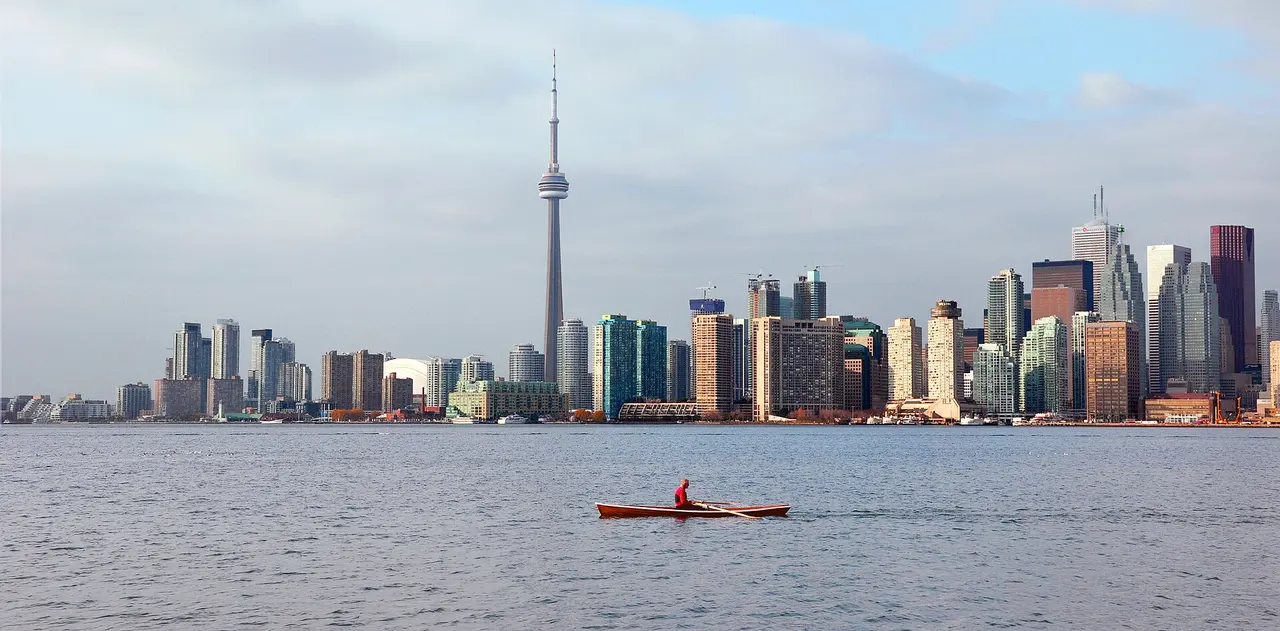
Photo: chensiyuan · CC BY-SA 4.0 · Wikimedia Commons ( source) -
Niagara Falls
130 km from the startstop ≈600 min
Skip the rental car for this leg: GO Transit's train from Union Station meets the local WEGO bus for the final stretch to the water, and parking here costs more than the fare. Stand on the Canadian side for Horseshoe Falls, the wide curved one. On a short day, Journey Behind the Falls, C$33 an adult and open all year, is the one paid stop worth keeping.
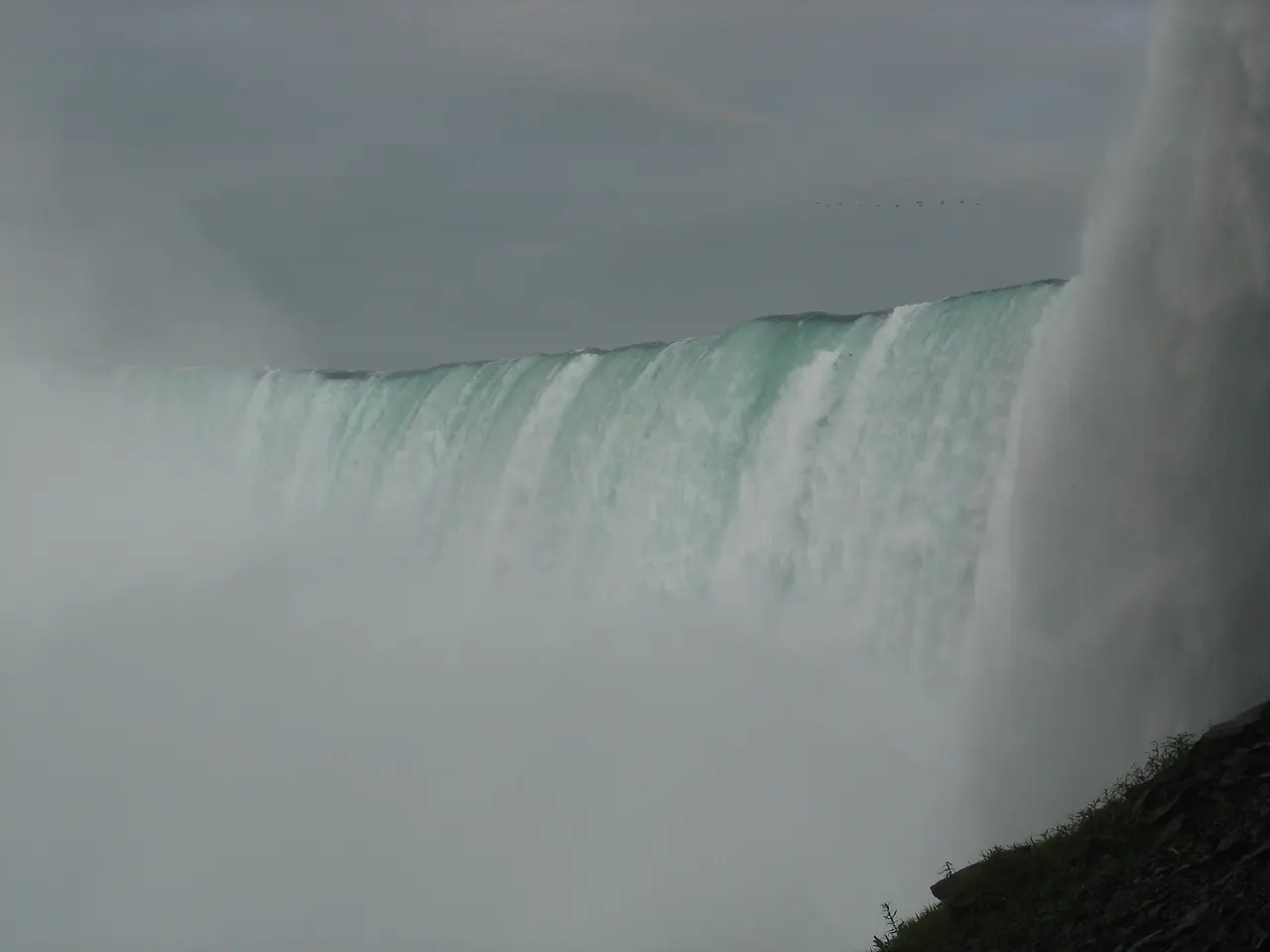
Photo: Tanbir Ahmed · CC BY-SA 3.0 · Wikimedia Commons ( source) -
Ottawa
444 km from the startstop ≈2880 min
The VIA Rail run from Toronto covers 444 km in roughly four and a half hours, easily the trip's longest sit. Two nights is enough for a compact capital: Parliament Hill, the Rideau Canal locks and the ByWard Market fill the first day, a Gatineau museum morning the second. Regular museum admission applies again now that the Canada Strong Pass season has closed.
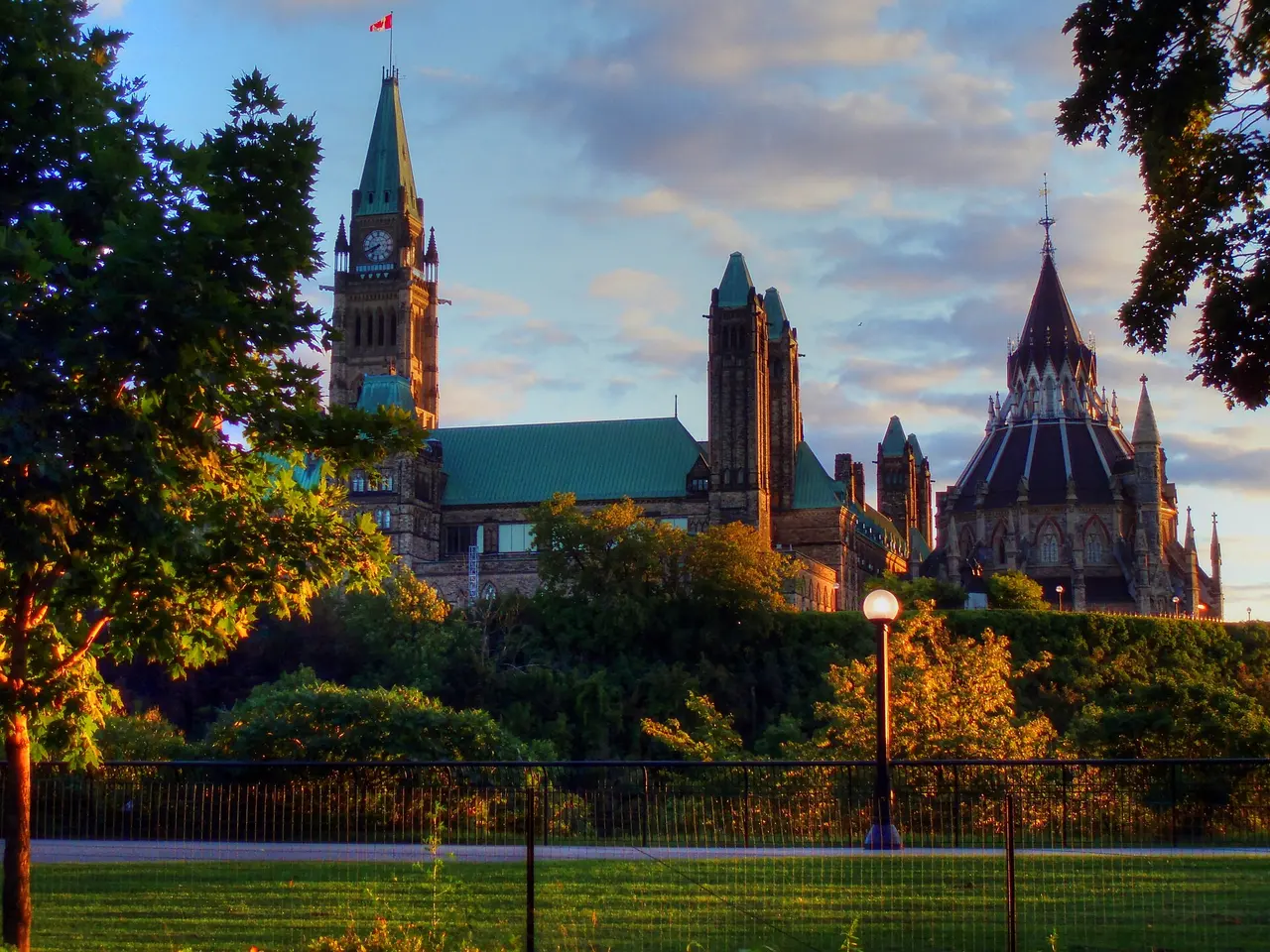
Photo: Sylvain Pastor · CC BY-SA 3.0 · Wikimedia Commons ( source) -
Montreal
629 km from the startstop ≈4320 min
Two hours south from Ottawa, 185 km down the same VIA line. Three full nights here rewards the slow pace this corridor is built for: Old Montreal, Mount Royal and a Plateau food crawl all fit without rushing. If a day gets eaten by weather or a late train, drop the Mile End half of the food walk and keep Old Montreal and the mountain; those two carry the city on their own.
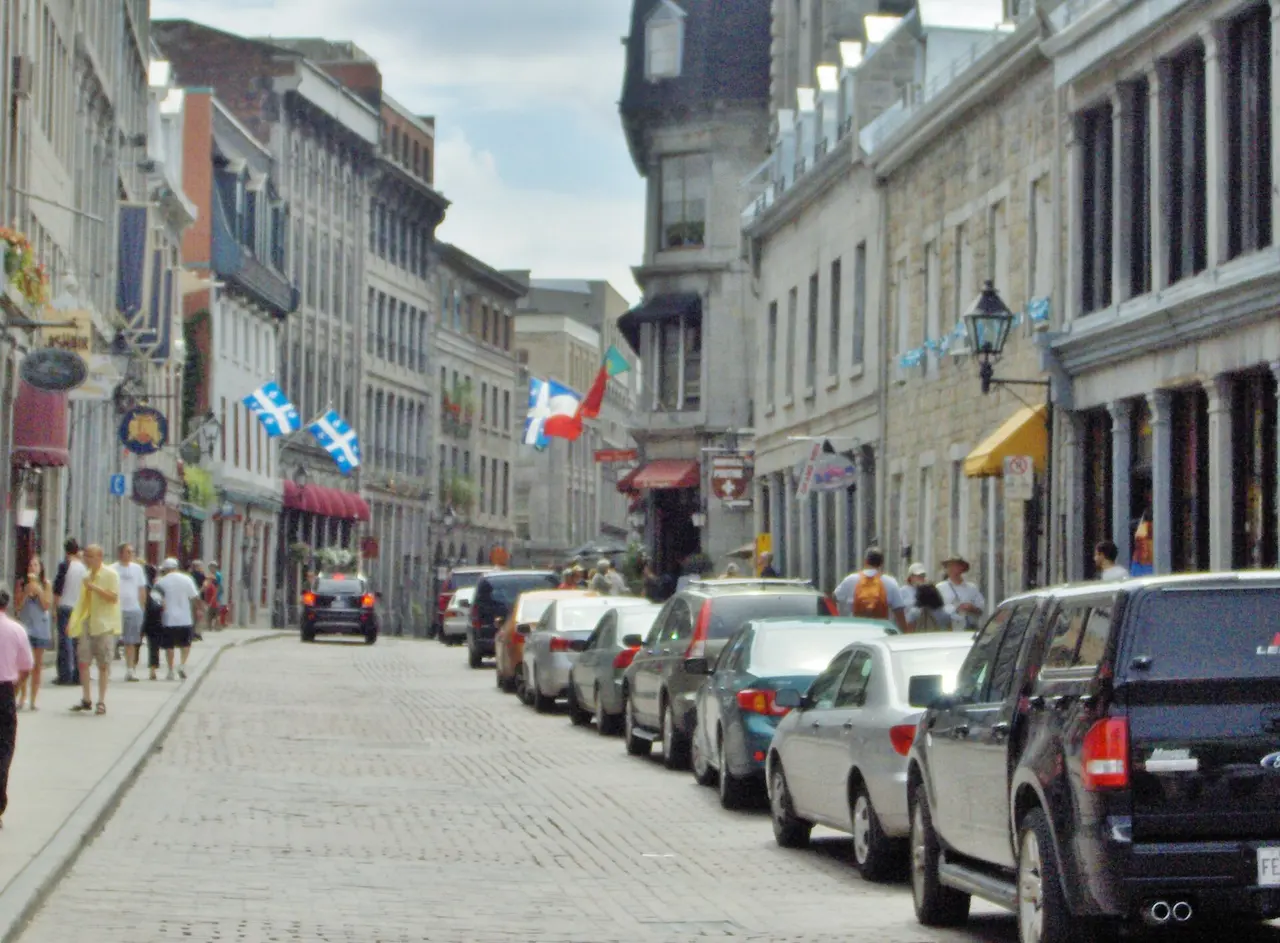
Photo: Richard Mc Neil · CC BY 3.0 · Wikimedia Commons ( source) -
Quebec City
899 km from the startstop ≈2880 min
The last train ride of the trip, 270 km and roughly three and a half hours from Montreal. Two nights inside or just below the walls is enough to see Petit-Champlain and walk the Dufferin Terrace without a rushed morning. Flying out of YQB usually means a connection; riding back to Montreal-Trudeau instead opens up direct long-haul options Quebec City's own airport doesn't have.
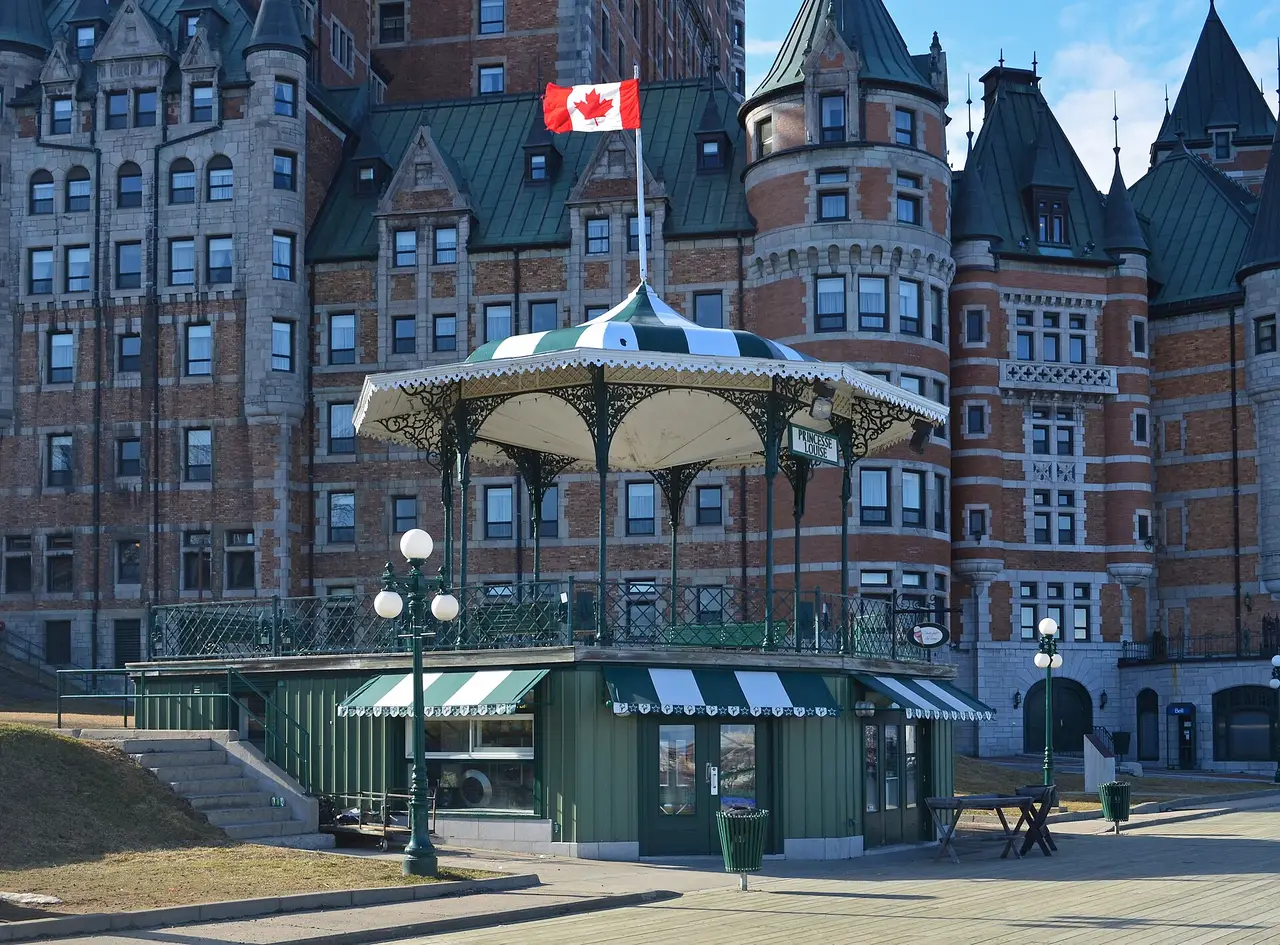
Photo: Selbymay · CC BY-SA 3.0 · Wikimedia Commons ( source)
Route map
The map with stops loads on click - to keep the page lightweight.
The map didn’t load. Check your connection and refresh the page.