Quebec Travel Guide: Beyond the Two Cities
Quebec beyond Montreal and Quebec City: whales at Tadoussac, the Gaspe Peninsula, Mont-Tremblant, how many days you need and a straight word on French.
Quebec is the French-speaking piece of North America, and the mistake most first-timers make is treating it as a two-city trip. Montreal and Quebec City are the obvious start, and three or four days will show you both, but the province is enormous, and its best arguments for coming are out past the cities: whales at Tadoussac, a fjord you can sail into, and a peninsula of sea cliffs at Gaspé. On the question that stops a lot of people booking, the short answer is no, you don’t need to speak French, but a few words and a little patience go a long way outside the tourist zones.
Grasp the scale before you plan anything. Quebec drew 65.5 million visitors in 2024, a record year, and the province is far larger than a week can hold. A sensible first trip is the two cities plus one outing into the landscape; the full loop of the province is a two-week road trip with a car, not a long weekend. So the useful decision isn’t “what to see in Quebec” but “how far out of the cities am I willing to drive.”
Montreal and Quebec City: start here, then leave
Almost every Quebec trip begins in Montreal, and it should. It’s the big bilingual city, the food, the festivals and the easiest landing, and two or three days there’s the standard opening. The airport is the main gateway for the whole province, so most itineraries start with a night or two in the city before they go anywhere else - our guide to getting from Montreal-Trudeau into downtown covers the bus, taxi and Uber options for that first ride in.
Then run downriver to Quebec City, about 280 km and three hours east, for the walled old town that’s the reason many people come to the province at all. Give it two days. Between and around the two cities there’s more than enough for a first visit, but the point of this guide is what happens when you keep going, because that’s where Quebec stops looking like anywhere else in Canada.
The Laurentians and Mont-Tremblant
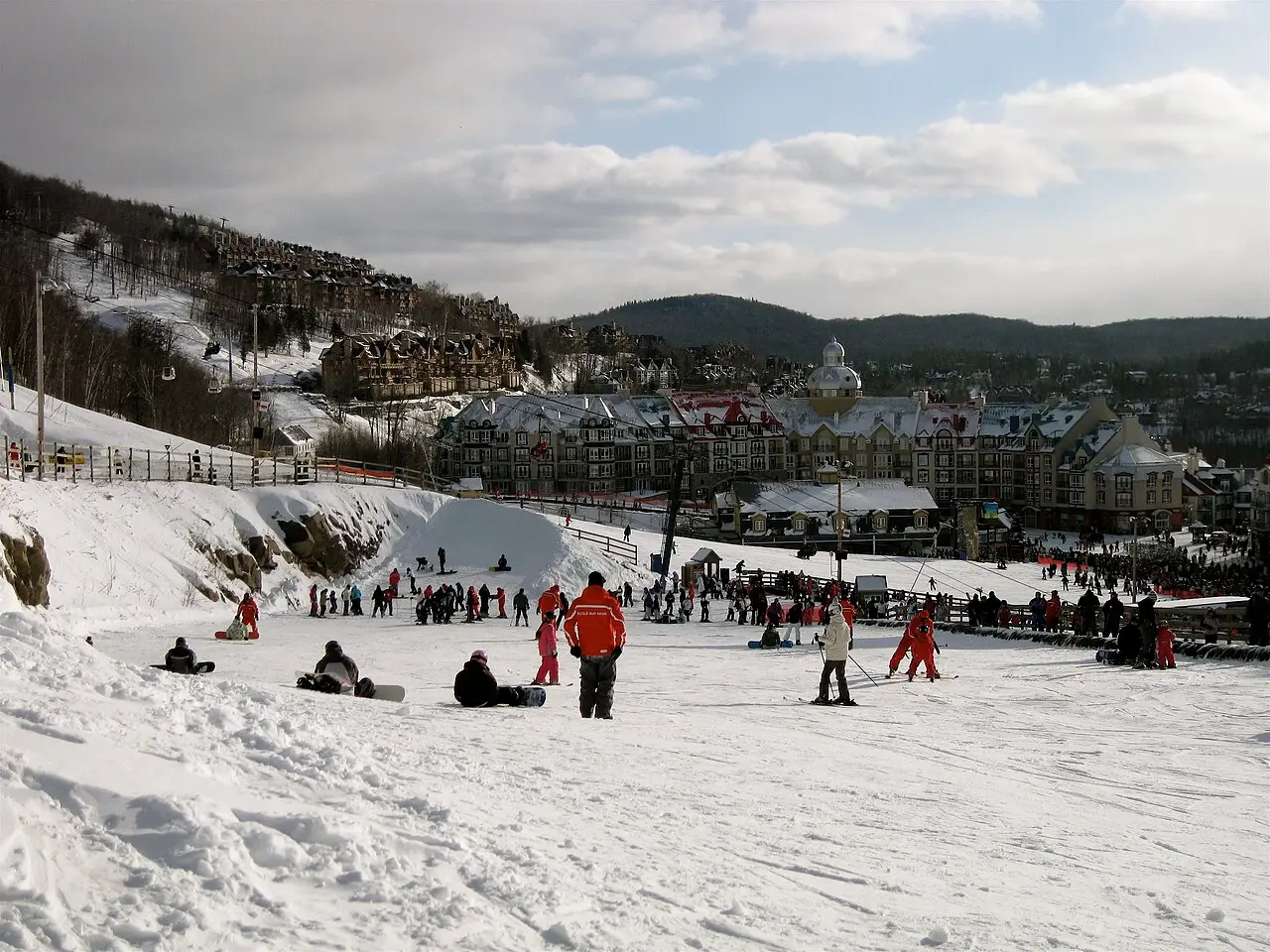
An hour and a half northwest of Montreal, the Laurentians are the city’s nearest mountains and its oldest vacation country. The name you’ll see everywhere is Mont-Tremblant, and it is worth knowing that it means two different things. One is Station Mont Tremblant, a private four-season resort with a pedestrian village of shops, restaurants and hotels stacked up the foot of a ski hill; it’s polished, busy and easy, and a cabriolet lift links the upper and lower village. The village, the gondola and the fact that downtown Saint-Jovite is a different pin are in the Mont-Tremblant city guide.
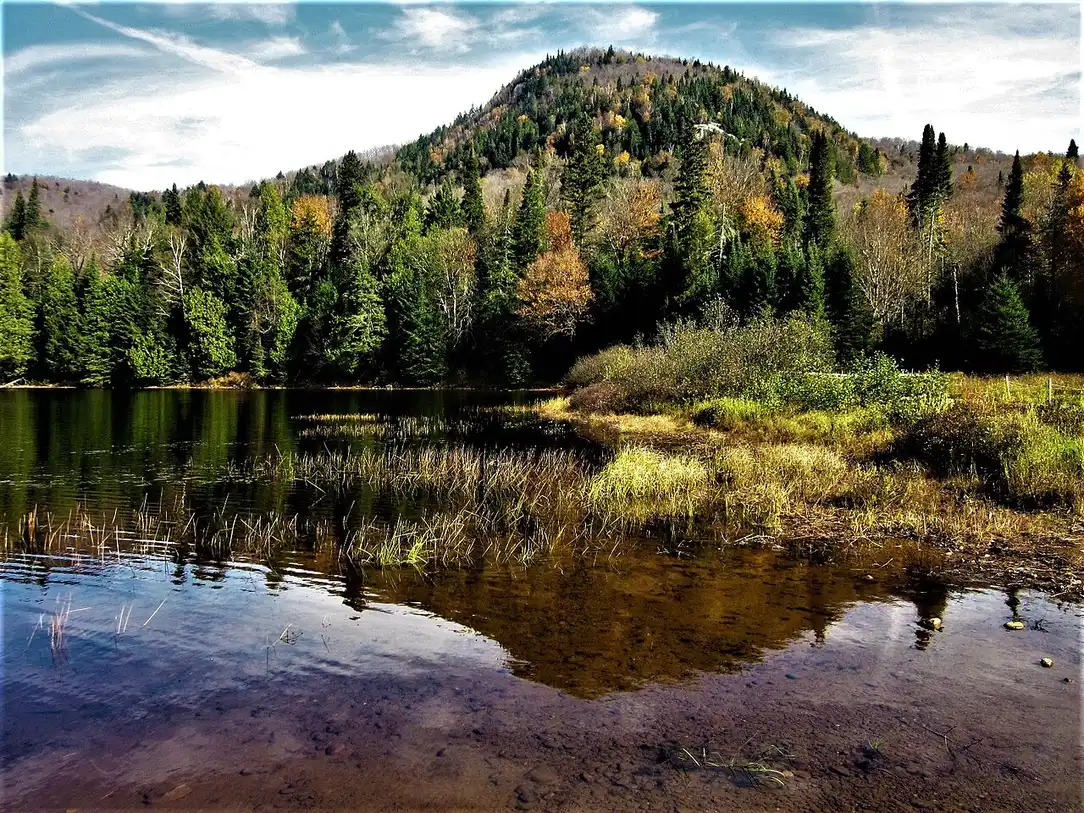
The other Mont-Tremblant is the national park, and it’s a genuinely different place: Parc national du Mont-Tremblant, Quebec’s first national park, opened in 1895 and covering about 1,510 square kilometres of forest and hundreds of lakes. This is the wild side, run by the provincial agency Sépaq, for canoeing, hiking and camping rather than shopping. One reason to make the drive: in 2023 it was certified an International Dark Sky Park, the first in Quebec, so a clear night here’s a real one, with the Milky Way rather than a resort glow.
Whales at Tadoussac and the Saguenay Fjord
If you do one thing outside the cities, make it this. Where the Saguenay Fjord empties into the St Lawrence, the cold, plankton-rich water pulls in whales, and the village of Tadoussac sits right at the meeting point. Parks Canada, which co-manages the Saguenay-St. Lawrence Marine Park here, calls it “one of the best places in the world for whale watching,” and the estuary is prime habitat for belugas, the small white whales that live here year-round. On a summer trip you might also see minke, fin and humpback whales, though nobody guarantees which. Sailing dates, fares and the small print behind those guarantees are in our guide to whale watching in Canada.
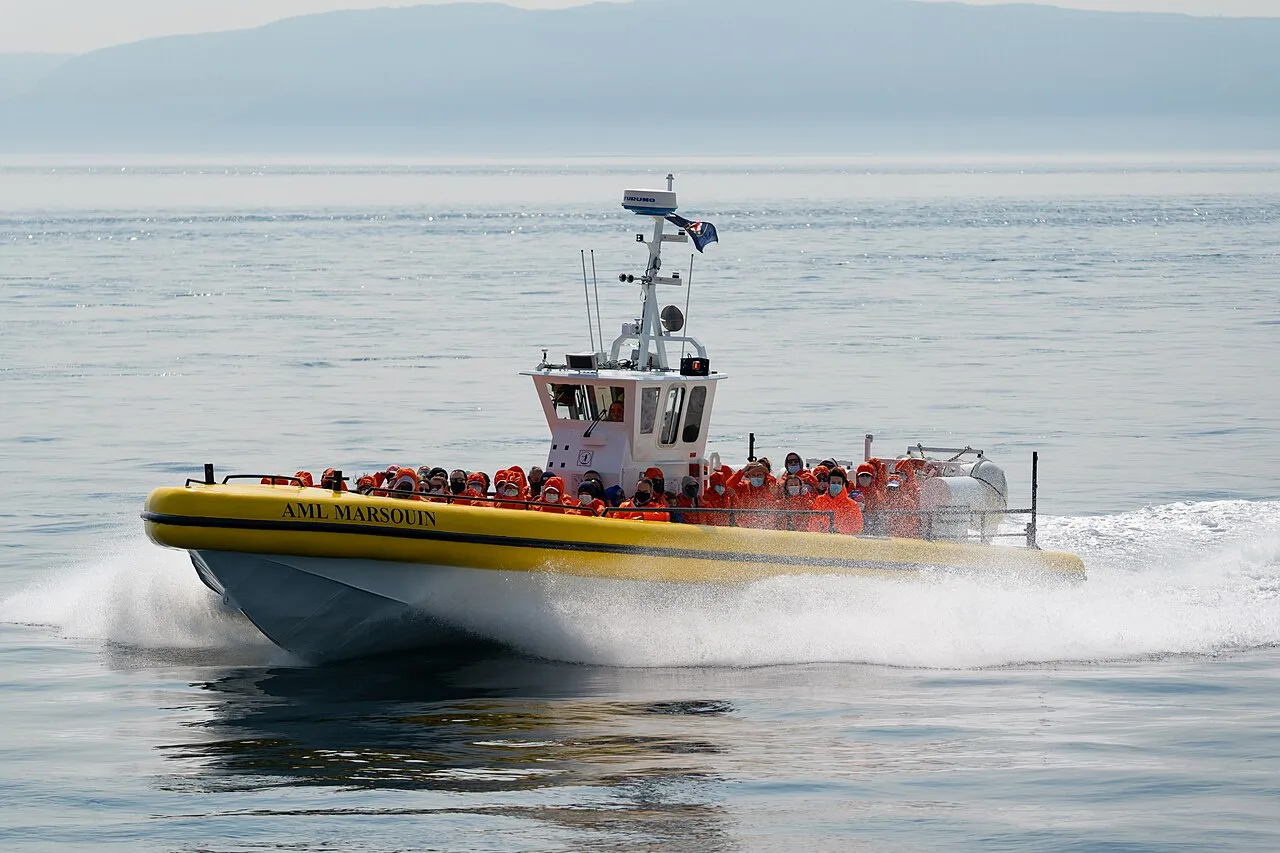
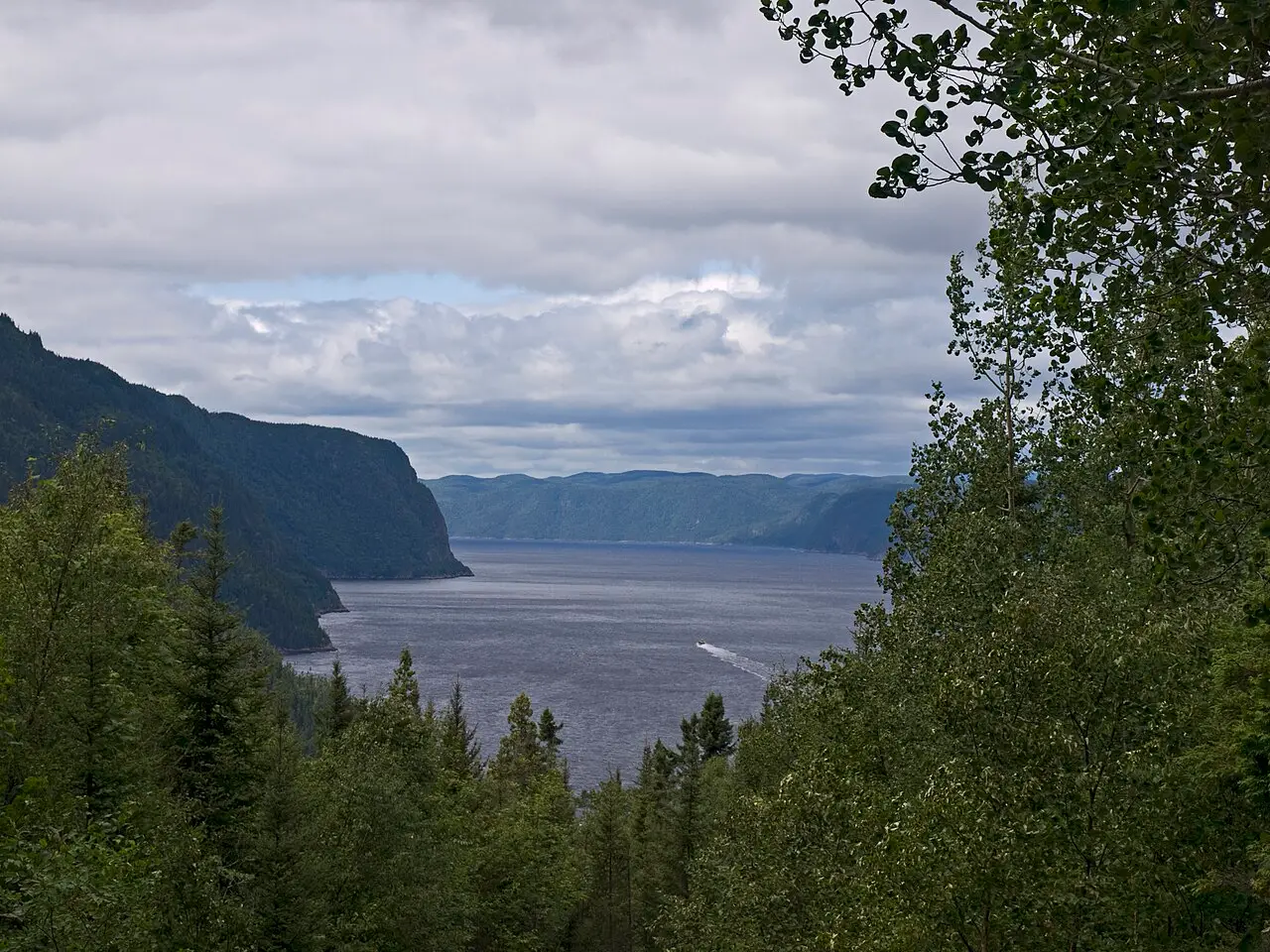
Tadoussac is also the gateway to the fjord itself, one of the few navigable fjords on this side of the world, walled by cliffs and dotted with quiet villages like L’Anse-Saint-Jean. You reach it by a short car ferry across the mouth of the Saguenay, which runs free as part of the provincial road; the crossing alone, with seals in the water and the cliffs ahead, is worth the wait in the queue.
The Gaspé Peninsula: a trip, not a day out
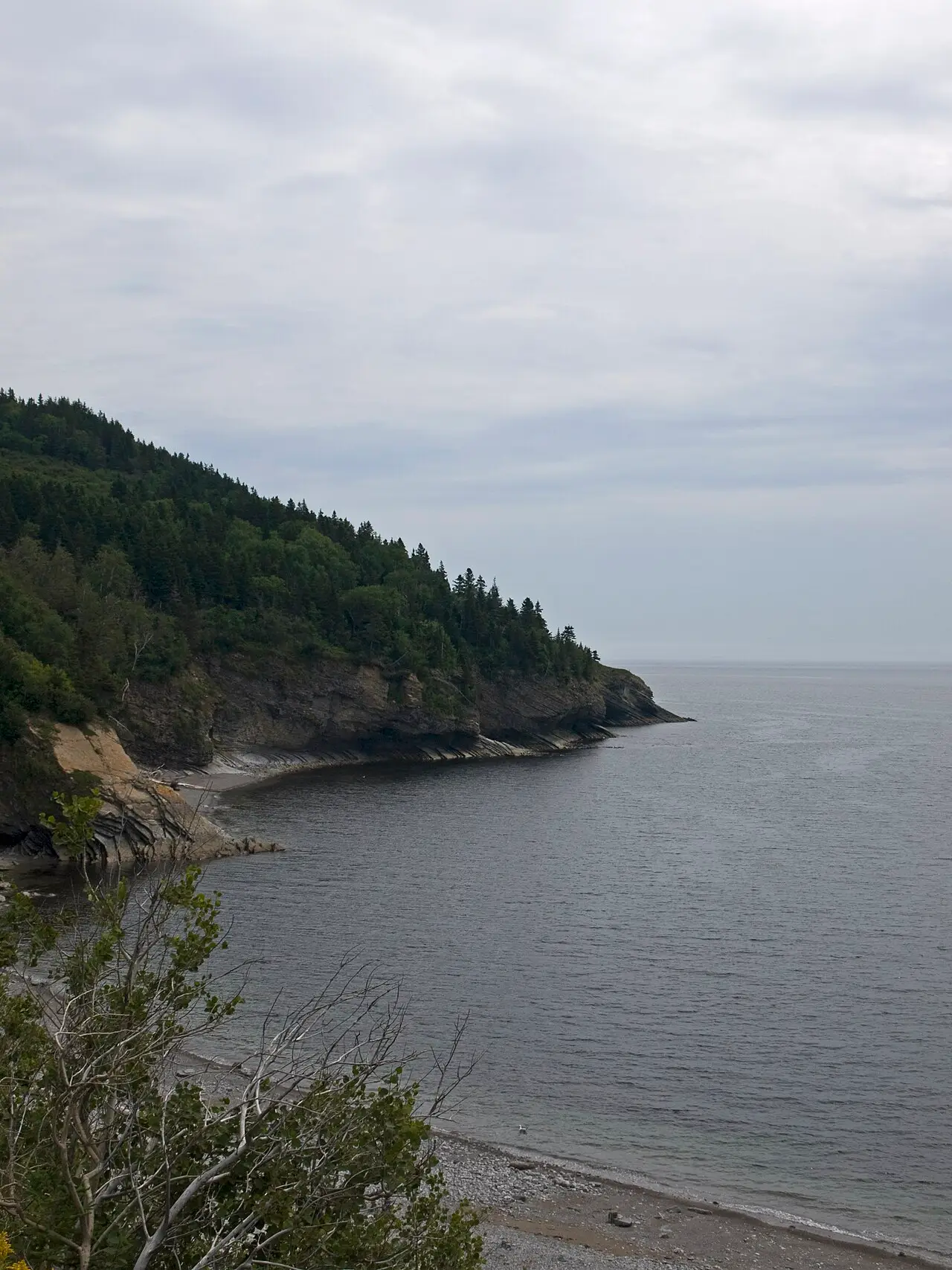
The Gaspé is the far eastern arm of Quebec, and it’s where the province turns into open sea. Be realistic about the distance first: the tip of the peninsula is many hundreds of kilometres from the cities, and the loop around it’s a seven to ten-day trip on its own, not a detour. If you have the time, it’s the finest driving in the province.
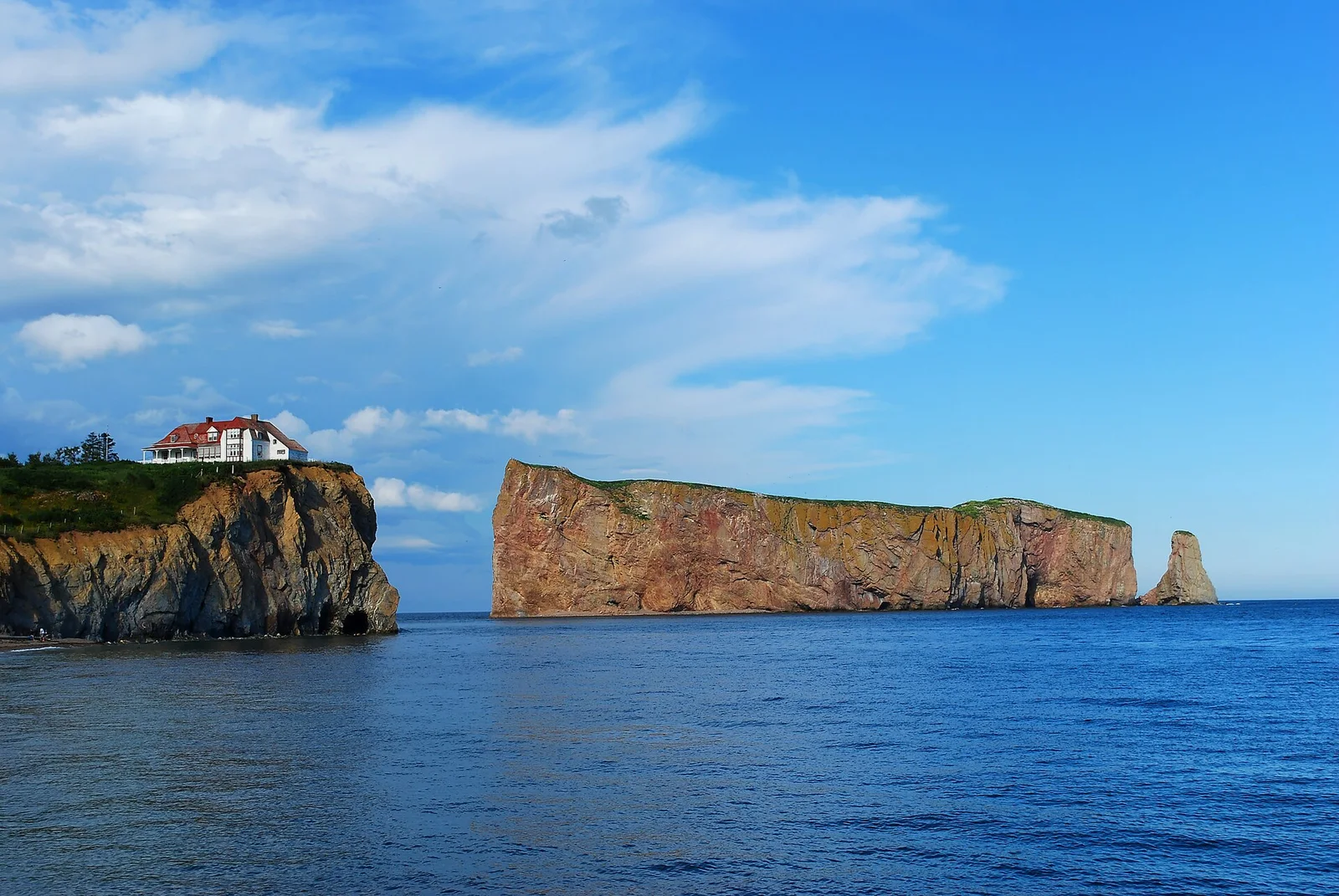
Two sights anchor it. Forillon National Park fills the very end of the peninsula with almost 245 square kilometres of sea, cliffs and forest, its trails running out to the lighthouse at Cap-Gaspé where the land simply stops. Further down the coast, Percé Rock, the great slab of limestone on the cover of this guide, stands offshore from the town of Percé; you can’t walk to it, but a boat rounds it on the way to Île Bonaventure.
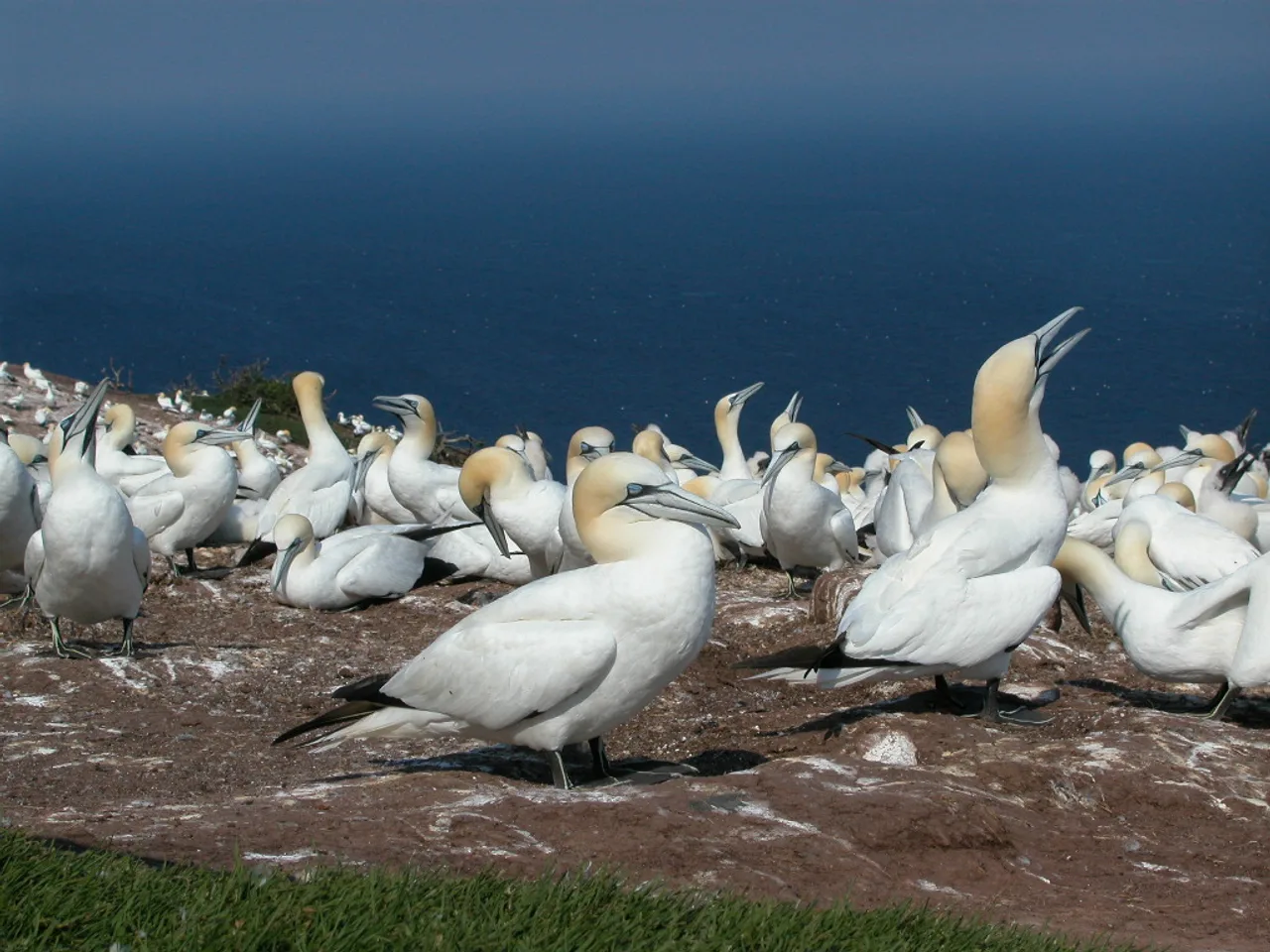
The island is the payoff. Its eastern cliffs hold one of the world’s largest and most accessible colonies of northern gannets, tens of thousands of big white seabirds packed onto the rock, and the walk to the colony puts you close enough to hear it. The boats run from roughly early June to mid-October, so this is a summer sight.
Charlevoix and the Eastern Townships
Two smaller regions round out the province, one on each side of the St Lawrence. On the north shore between Quebec City and Tadoussac, Charlevoix is a coast of rolling farmland and painters’ light, centred on the gallery town of Baie-Saint-Paul and the resort of La Malbaie; it doubles as another whale-watching coast and a serious food region. It makes a natural two-day stop on the way to the fjord.
South of Montreal, near the US border, the Eastern Townships (Cantons-de-l’Est in French) are gentler country: lakes, covered bridges and Quebec’s first wine region, based around the town of Magog on Lake Memphrémagog. Come in September and October for the harvest and the colour. Neither region is a headline sight on its own, but each turns a city trip into a proper look at the province.
A straight word about French
This is the question the province gets asked most, so here’s the straight version. French is the sole official language of Quebec, in law, and the province has leaned into that: since June 2025 the sign rules require French to be clearly more prominent than any other language, so menus and storefronts read more French than they did on the photos in older guides. That law aims at businesses, not at you, and it puts no obligation on a visitor.
In practice, the two cities and the main tourist areas serve you in English without a second thought. Out in the villages of the Gaspé, Charlevoix and the Saguenay, English thins out, and that’s where a little effort pays off. Learn to open with “Bonjour,” have a translation app for signs and menus, and treat French as the courtesy of the place rather than a barrier. Almost everyone meets that halfway, and the trip is warmer for it.
How many days do you need
It comes down to how many days you can spare. Four days gets you Montreal and Quebec City, and no more - don’t pretend otherwise. A week lets you add one landscape outing, and the best single choice is Tadoussac for the whales and the fjord - you’ll reach it from Quebec City in a long half-day’s drive. Two weeks, with a car, opens the full circuit: the two cities, Charlevoix, the Saguenay and the long run out to the Gaspé and back. The Gaspé loop alone eats seven to ten days, so fit it in only if the trip is built around it.
When to visit
Summer, from June to August, is the season everything runs: the whales are in, the ferries and parks are open, and the Gaspé is drivable - you’ll have the freest schedule then. September and October bring the colour to the Laurentians, Charlevoix and the Gaspé, and are among the best weeks of the year to come. Winter is for the ski hills and the city carnival rather than the back roads, many of which go quiet. And spring has a ritual worth timing a trip around: the temps des sucres, the maple-syrup season of March and April, when the sugar shacks, the cabanes à sucre, open in the countryside for long tables of ham, eggs, beans and syrup poured over snow.
Getting around
Inside Montreal and Quebec City you don’t want a car; both are walkable and both have transit. Everywhere else in this guide, a car is the tool that makes the trip possible, because the fjord, the Gaspé and the Townships have little or no transport of their own. The VIA Rail corridor links the two cities comfortably if you’re staying urban, but for the landscape you drive. If you’re renting, our guide to renting a car in Canada covers the winter-tire rules Quebec enforces in the cold months and the one-way fees that catch people arriving from Ontario.
The Canada Strong Pass and the national parks
Summer 2026 had a real saving, with the usual asterisk. Under the Canada Strong Pass, admission to Parks Canada places, which in Quebec means Forillon and the Saguenay-St. Lawrence Marine Park among others, was free from 19 June to 7 September 2026, with 25% off Parks Canada camping; from 8 September 2026 the standard fees apply again. Read what it didn’t do, though, before you build a trip around any repeat: parking still costs money, camping still needs a reservation, and it didn’t touch the Sépaq provincial parks, which run their own separate fees. Treat it as a bonus on a trip you were taking anyway, not a reason to rush the Gaspé.
Read also
- Cliffs and whales at the tip of the Gaspé: Forillon National Park
- The big bilingual city most trips start in: things to do in Montreal
- The walled old town downriver: things to do in Quebec City
- The capital next door in Ontario: things to do in Ottawa
- The province to the west: Ontario travel guide
- Every province and territory: the provinces hub
On the map
The map loads on click - to keep the page lightweight.
The map didn’t load. Check your connection and refresh the page.
Read also

Provinces · 12 min read
Alberta Travel Guide: What to See and How Long
Updated · September 14, 2026Alberta beyond the Rockies: six UNESCO sites, the badlands, park fees after the 2026 free-entry window, the pass rental cars still need, and when to go.

Provinces · 9 min read
British Columbia Travel Guide: The Five Trips
Updated · September 14, 2026British Columbia is bigger than France and Germany combined: the five realistic trips, how many days each needs, the ferry to the island and when to go.

Provinces · 10 min read
Manitoba Travel Guide: Bears, Belugas and Winnipeg
Updated · July 24, 2026Why Manitoba is two trips: walkable Winnipeg and the Forks, and Churchill, the fly-in north for polar bears, belugas and the northern lights.

Provinces · 8 min read
New Brunswick Travel Guide: Fundy and Two Tongues
Updated · September 14, 2026New Brunswick, the Bay of Fundy province: Hopewell Rocks and record tides, Saint John, Fredericton and Canada's only bilingual province.