
Churchill Polar Bears: Tours, Season & Costs
How to see polar bears in Churchill: the October-November season, tundra buggy day rates, getting there without a road and what a trip really costs.
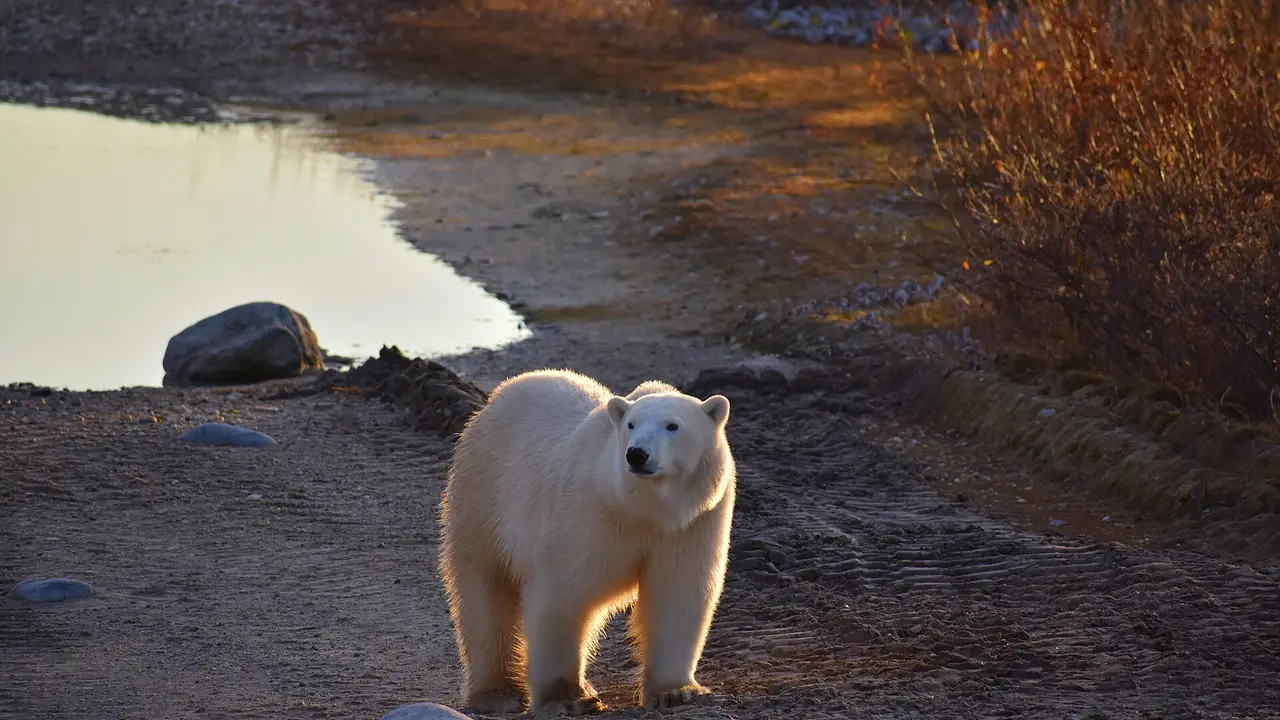
Churchill’s polar bear season is October and November, and the reason is sea ice: hundreds of bears gather along the shore of Hudson Bay waiting for it to re-form so they can head out and hunt seals. Viewing is from high-wheeled tundra vehicles, and the sticker price to know is Great White Bear Tours’ 2026 individual rate of C$630 per person per day, tax included. The rest of the budget goes on getting there, because no road reaches Churchill.
Which is why the day rate turns out to be the smallest decision you make here. You fly from Winnipeg or take a train that runs twice a week and takes the better part of two days, so a “day with the bears” is really a four to six day trip with weather risk baked in. Get the shape of it right and the cost stops being a shock.
When to go, and why the calendar is really an ice forecast
Bears come to this stretch of coast because Churchill sits on their route to the ice. Through the summer they’re stranded ashore, living off reserves; as the water cools, they drift toward the cape and wait. Frontiers North, which has run tours here since 1987, puts it plainly: hundreds of bears gather near Churchill through October and November, waiting for the first sea ice.
The practical consequence is that the end of the season is set by the weather rather than by a date on a website. When the bay freezes, the bears walk out onto it and the show is over for the year. Since the calendar is really an ice forecast, the safe booking is the middle of the season rather than either edge of it. Go in the first days of October and the bears may still be scattered along the coast; leave it to the end of November and you need the bay to stay open long enough for them still to be waiting on shore. The sun also sits low all day at this latitude by then, which is why the photographs from here look the way they do.
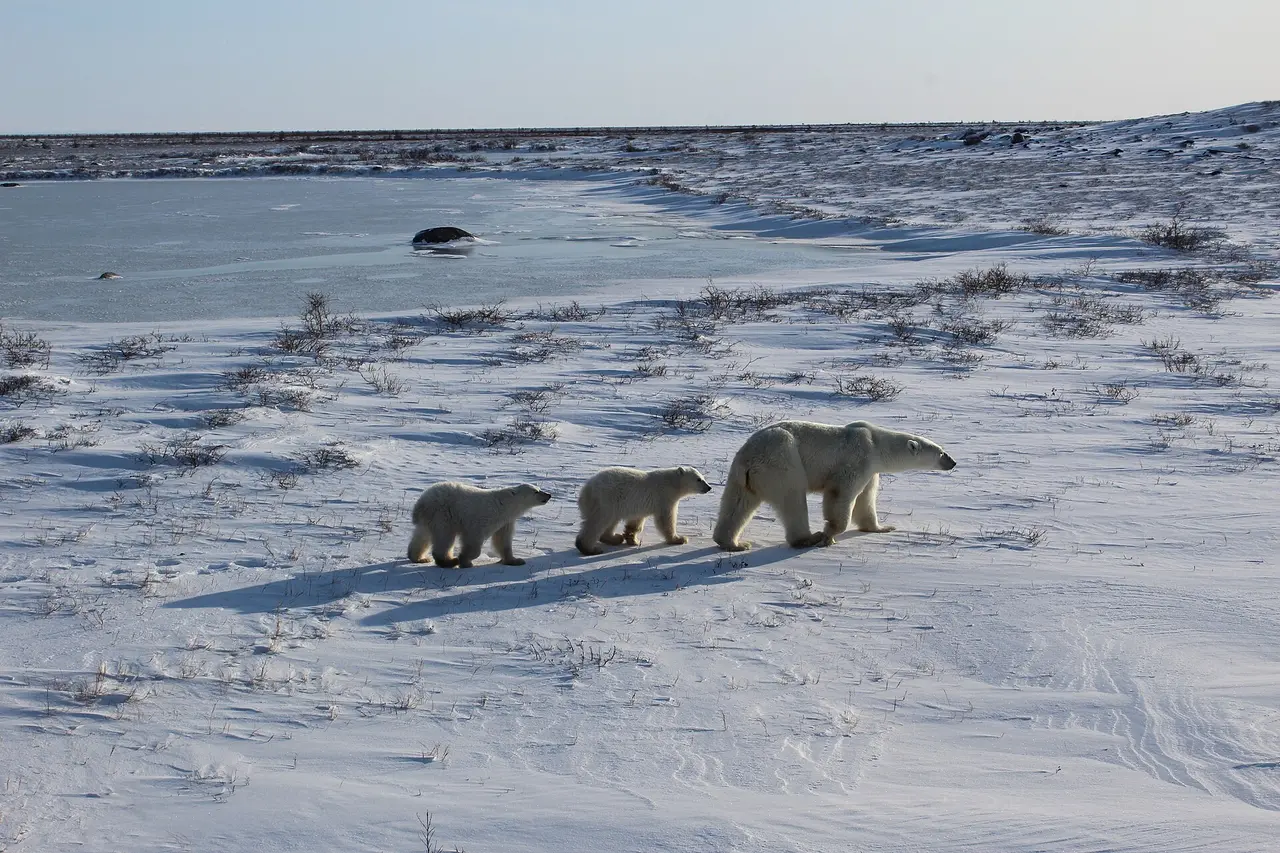
It’s worth knowing what the science says, because operators rarely lead with it. A government aerial survey flown in 2021 put the western Hudson Bay population at 618 bears, down from 842 in the 2016 survey, and the researchers reported numbers have fallen by close to half since the 1980s. Those are estimates with wide margins rather than a headcount, and there are still plenty of bears on this coast in the autumn. But the trend is the reason a lot of people move this trip up their list.
What a day on a tundra vehicle is like
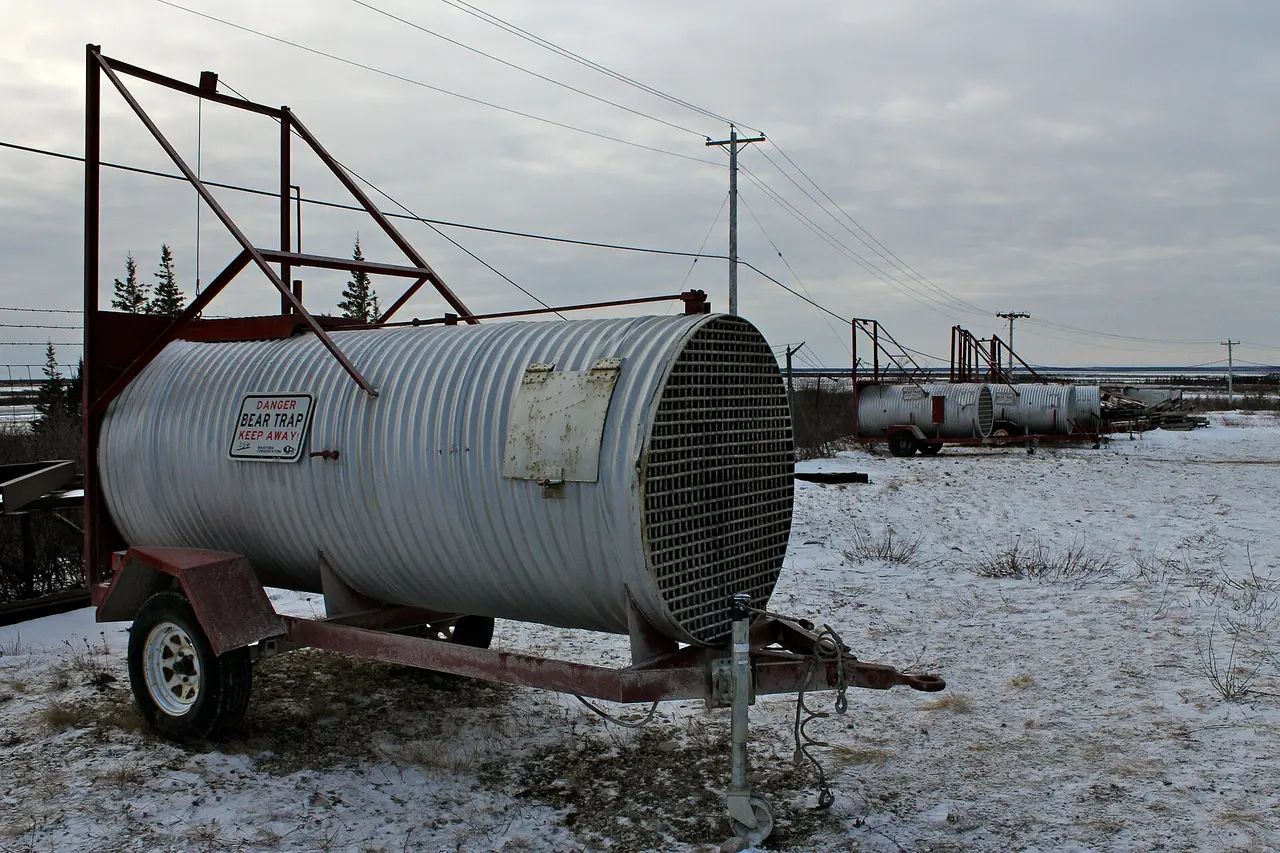
The vehicles are the whole system: bus-sized, high off the ground on enormous tires, heated, with a washroom on board and an open viewing deck at the back. They aren’t buses with big wheels so much as mobile hides. You’re above an animal that is genuinely dangerous on foot, which is why nobody gets out.
The rhythm is long and slow. Great White Bear Tours collects you from your hotel between 07:00 and 07:15 and gets you back around 16:00, with lunch on board, in their case coffee or tea, stew and dessert. In between you crawl across the tundra at walking pace looking for bears, and you can’t schedule the good moments: a bear asleep in the willows for an hour, then one that walks straight up to the wheels to sniff you. Bring more camera battery than you think, because the cold eats it.
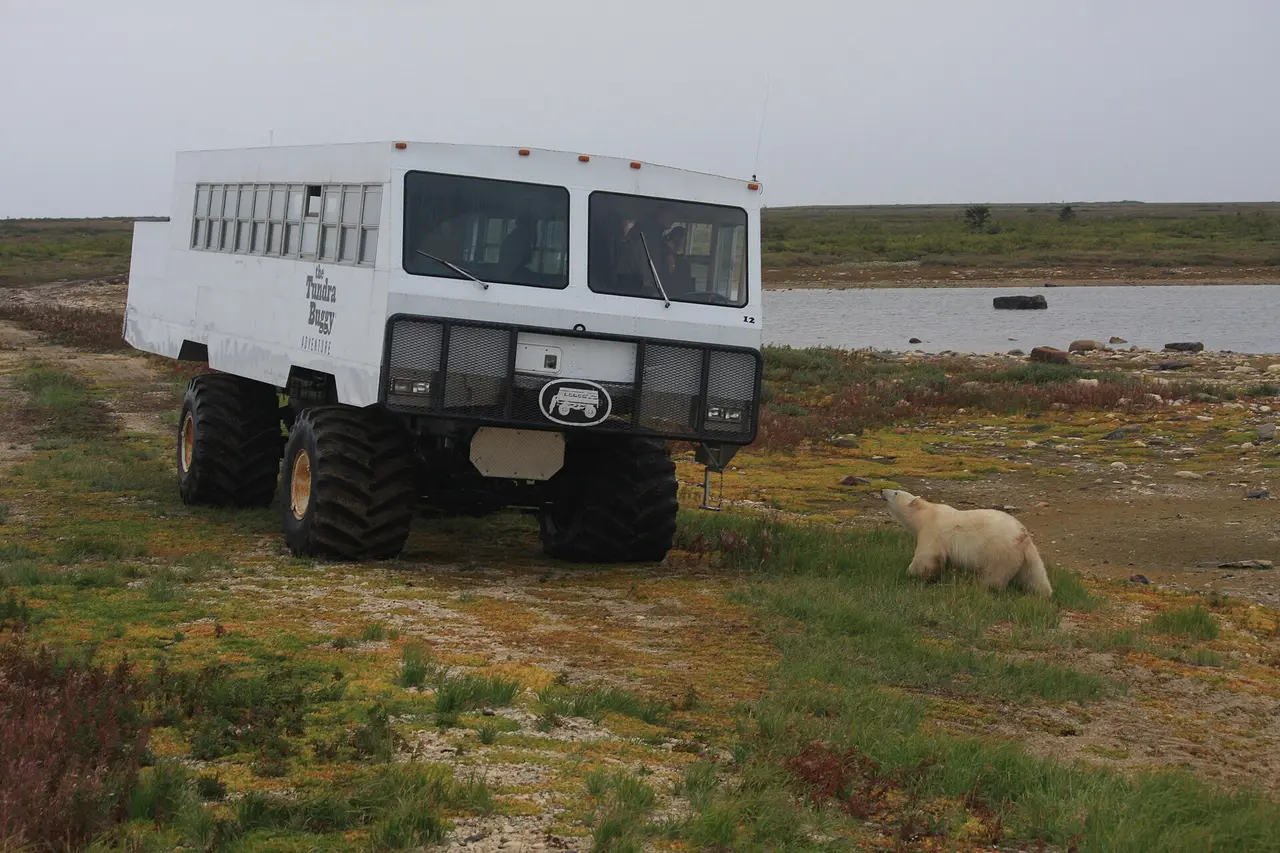
Access is controlled. The best bear ground is inside the Churchill Wildlife Management Area, and only permit holders can drive there; Frontiers North says it holds the majority of those permits. This matters when you compare tours, because it decides where a vehicle can actually go, not just how nice the seats are.
What the trip actually costs
Two shapes of purchase exist, and mixing them up is the usual budgeting mistake.
| What you buy | Typical shape | 2026 price |
|---|---|---|
| Day tour, booked separately | You arrange your own flights and hotel | C$630 per person per day, tax included (Great White Bear Tours) |
| Multi-day package | 5 to 8 days, return airfare from Winnipeg, rooms and meals included | Quoted per person by the operator; invoiced in CAD (Frontiers North) |
The day rate is the part people quote at each other, and it’s the smaller half of the bill. Add return airfare from Winnipeg, a hotel in a town with very few rooms, meals in a place where everything arrives by air or rail, and two or three tour days to give yourself a fair chance, and the total lands in a different bracket entirely. Packages exist because the logistics are awkward, and they’re priced as one number including flights, so compare like with like.
One more line in the fine print: Great White Bear’s tours are non-refundable and non-transferable and are paid in full at booking. Weather can cancel a flight in either direction, which is the argument for insurance rather than optimism - our guide to travel insurance for Canada sets out what a trip-cancellation clause actually covers.
So is a day on the tundra worth C$630? If bears are the reason you’re coming to Canada, yes, and the comparison that matters isn’t with a cheaper wildlife tour - it’s with the airfare you’ve already committed to. Nobody flies to Churchill and skips the buggy. If you’re curious rather than committed, this is the wrong trip: it’s a cold, slow, expensive day in a vehicle with a real chance of seeing very little, and the substitutes people reach for aren’t substitutes. Sea North’s beluga boat in July is C$180 plus GST, which sounds like the budget version of the same trip and isn’t - different animal, different season, and you’re on warm open water instead of frozen ground. The polar bear enclosure at Winnipeg’s zoo is a decent primer and no kind of replacement. Nothing in the south prepares you for the moment a wild bear stands up against the wheels.
Getting there: plane, train, or one of each
No road reaches Churchill. Parks Canada says so plainly, and Travel Manitoba lists exactly two ways in.
Flying is the fast way in. Calm Air is the scheduled carrier north out of Winnipeg, and if you’re on a package, the flights are usually inside the price. Check schedules directly, since fares and timings aren’t published as fixed tables.
The train is the cheap, slow, romantic option. VIA Rail runs Winnipeg to Churchill twice a week, 1,694 kilometres timetabled at an average of 1 day, 20 hours and 55 minutes, with train 693 leaving Winnipeg at 12:05. Two days each way is a large bite out of a vacation to spend on a train, which is why the smartest version of this trip is the hybrid: take the train up, watch the boreal forest thin into tundra, then fly back in a couple of hours. Frontiers North sells exactly that, as its Classic Churchill Polar Bear Adventure By Train, and our Canada by train guide has the route if you’d rather assemble it yourself. Do it in that order, too. The slow leg belongs on the way in, while the landscape is still news.
Where you sleep: town or tundra
The town’s own list runs to eight hotels and inns plus eleven B&Bs and rentals. Five of the hotels publish a room count, and those five add up to 102 rooms: Lazy Bear Lodge 33, Churchill Hotel 25, Seaport 21, Blueberry Inn 15, Iceberg Inn 8. Sit with that number, because it explains bear season better than any brochure will. A town this size can’t absorb a surge, so beds go months ahead. The tour price isn’t what rations this trip - the beds are.
Staying in town is the default and the sociable one: you eat where the other people who spent the day doing the same thing eat, and you can walk out in the evening, within reason.
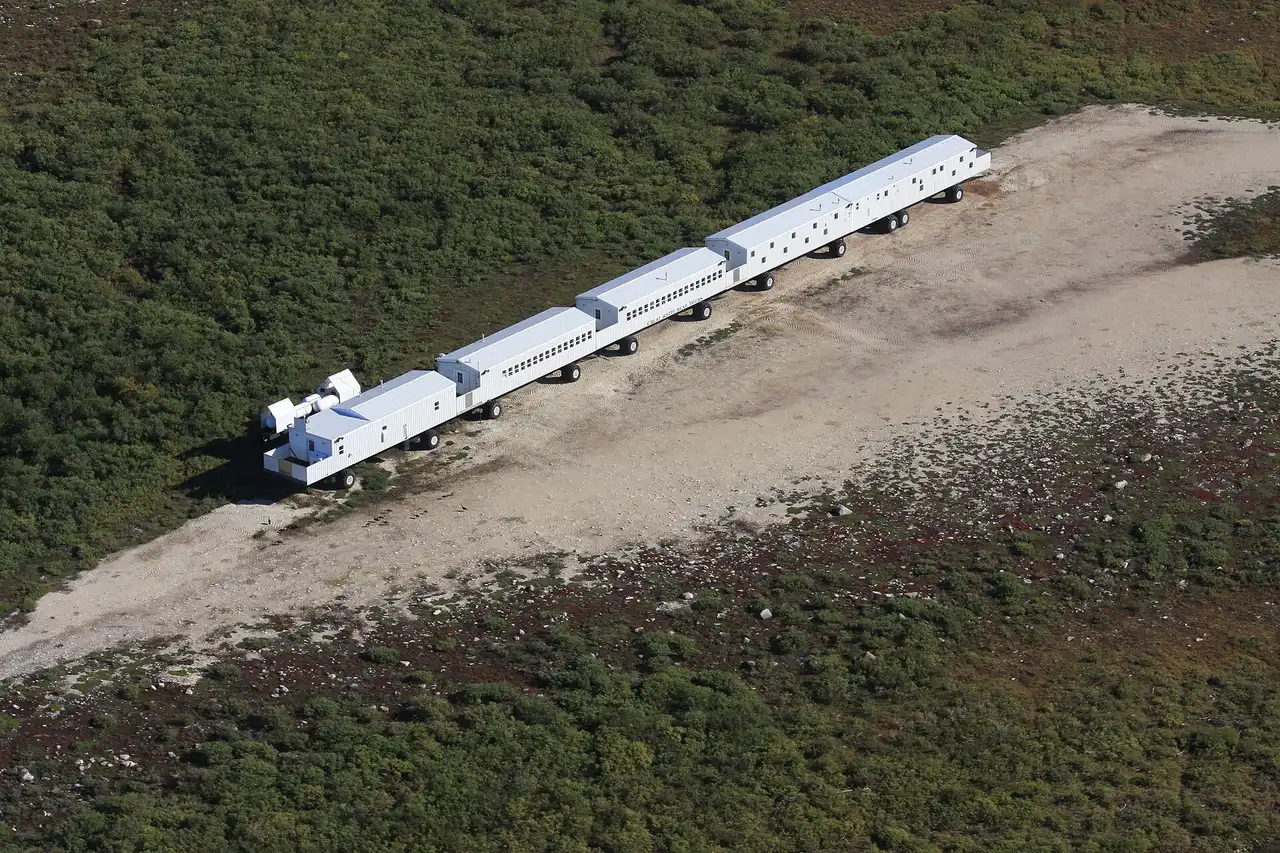
The alternative is the Tundra Buggy Lodge, which Frontiers North parks deep inside the Churchill Wildlife Management Area at Polar Bear Point - linked units towed out for the season, where you sleep on the tundra with the animals outside. The operator sells it on time rather than comfort: it “eliminates daily commute times to and from town”, so viewing starts at first light instead of after an hour’s drive out. It costs more and it books out earliest. What you give up is the town, the restaurants and the option of changing your mind over breakfast.
Polar Bear Alert: the rules the town lives by
Nowhere else in Canada is a wildlife hotline this ordinary. Parks Canada asks anyone who sees a bear to call 204-675-BEAR (2327) right away. Officers then use aversive conditioning to move the animal on: loud noisemakers, and occasionally paint balls or rubber bullets, all designed to keep bears wary of people rather than comfortable near them. Bears that refuse to leave are captured and held, then either lifted out by helicopter or released onto Hudson Bay once the ice has formed.
Two things follow for visitors. If you hear cracker shells going off, that’s a hazing operation, not a celebration: get inside, and stay clear of officers working a bear. And the town’s edges are not a place to wander at dusk with a camera. The tours put a wall of steel between you and an apex predator for a reason; on foot you have nothing.
What else the same trip can buy
November nights up here are long and dark, and Churchill sits under the auroral oval, so a bear trip can turn into an aurora trip on a clear evening.
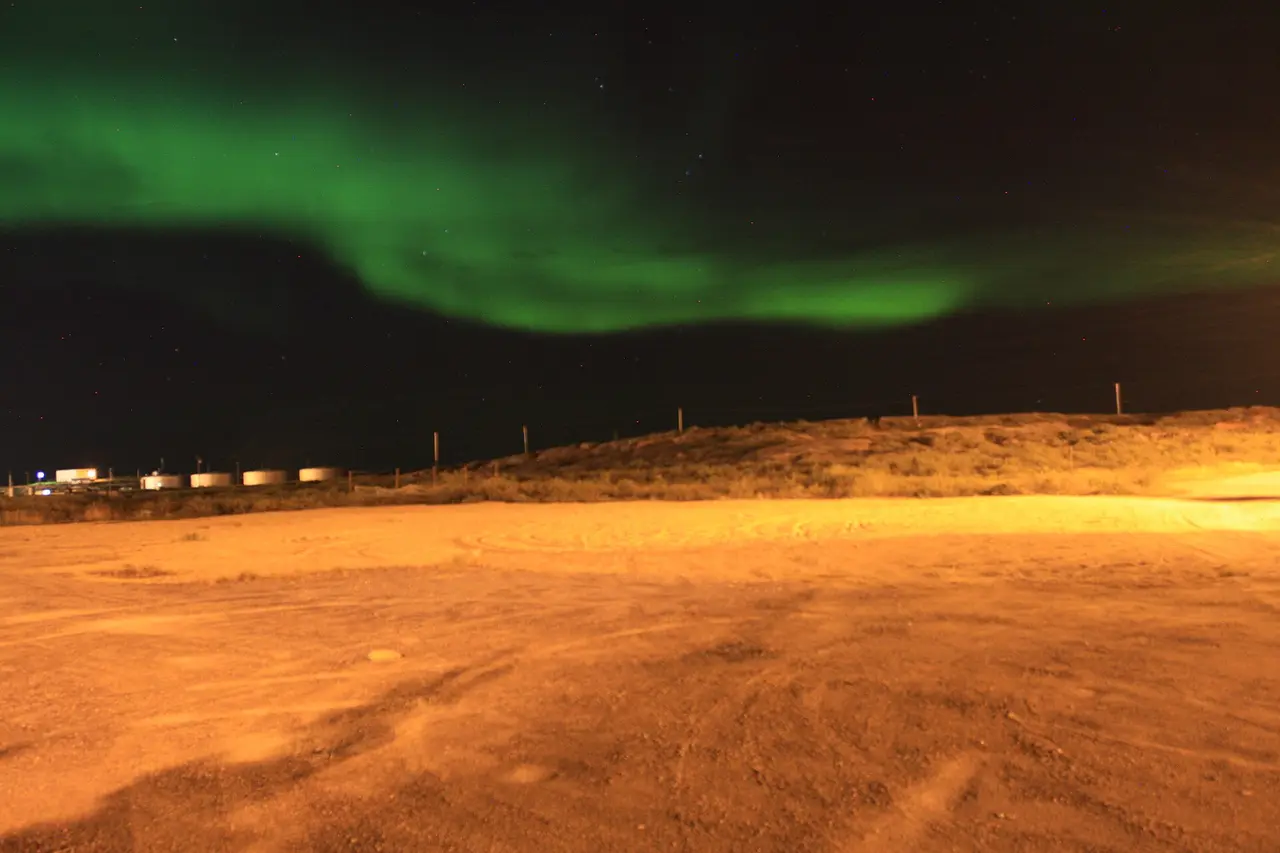
Set your expectations from the numbers rather than the brochures: Travel Manitoba claims lights on up to 300 nights a year but names February and March as the peak, and our northern lights in Canada guide explains why the forecast only works an hour or two ahead.
Come back in July or August instead and the same water fills with beluga whales, thousands of them in the Churchill River estuary, watched from boats, Zodiacs and even paddleboards. It’s a completely different trip in the same town at under a third of the price, and our guide to whale watching in Canada sets it against the coasts down south. It’s also the one wildlife trip in this town where you’re allowed to get in the water rather than stay above it.
South of town, Wapusk National Park protects one of the world’s largest polar bear maternity denning areas. It’s not somewhere you casually visit: access is by tour only, and Parks Canada recorded 78 visits in 2024-25, which tells you everything about this coast.
Seats sell out before rooms do
If your dates are fixed, book the tour first and fit the flights around it. A spare hotel room is easier to find late than a spare seat on a buggy, and the operators run a finite number of vehicles against a world’s worth of demand for the same six weeks.
Give yourself two tour days if the budget stretches. Bear viewing is wildlife viewing: one grey, quiet day happens, and the second day is your insurance policy. And pack for real cold, with wind coming off a bay that’s about to freeze - proper boots, a hat that covers your ears, gloves you can work a camera in, and more layers than the heated cabin suggests you’ll need. Our Manitoba guide sets the trip against the province’s other half, and every route north runs through Winnipeg, where you’ll have a spare evening whether you planned one or not. Plan it rather than endure it. Weather owns this trip at both ends, and the delay people fail to budget for is the one at the southern end, sitting in a Winnipeg hotel waiting for a window to fly north.
Read also
- The province, season by season: Manitoba travel guide
- The city every trip north starts in: things to do in Winnipeg
- The train that gets you here: Canada by train
- Belugas, orcas and the coasts compared: whale watching in Canada
- Why the aurora forecast is short: northern lights in Canada
- Cancellation cover for a non-refundable trip: travel insurance for Canada
On the map
The map loads on click - to keep the page lightweight.
The map didn’t load. Check your connection and refresh the page.
Admission and opening hours
- Admission price
- Great White Bear Tours lists a 2026 individual tundra vehicle day tour at C$630 per person per day, tax included, lunch included, non-refundable. Multi-day packages from Frontiers North are quoted per person and include return airfare from Winnipeg, rooms and meals.
- Opening hours
- Bear season runs October and November. A day tour picks up at your hotel between 07:00 and 07:15 and returns about 16:00.
Operator rates change season to season and sell out months ahead - confirm current prices and availability directly with the operator.
Details checked: July 28, 2026
Read also

What to see · 13 min read
Skylon Tower: Tickets, Observation Deck and Dining
Verified · October 3, 2026Skylon Tower from C$18 per adult online before tax (October 2026): deck or dinner, day or night, and when eating upstairs beats buying the ride.

What to see · 12 min read
Jasper SkyTram: Tickets, Season and the Summit Trail
Verified · October 2, 2026Is the Jasper SkyTram worth it? Seven minutes up to 2,263 m, the 1.4 km summit trail, cloud and cold at the top, and how the 2026 season ends.

What to see · 7 min read
Saguenay Fjord 2026: Cliffs, Ferries & Two Parks
Verified · August 26, 2026Saguenay Fjord: Sépaq park from C$10.30, Marine Park lookouts, Baie-Éternité trails, Tadoussac ferry. Whale boats in our other guide.

What to see · 10 min read
Thousand Islands: Boat Cruises, Boldt Castle and the Border
Verified · August 24, 2026Thousand Islands cruises from Gananoque or Rockport: scenic hours without a passport, or Boldt Castle on Heart Island with US entry docs.