Canada Fall Colours: Live Maps, Reports & When to Go 2026
Algonquin averages 27 September, Cape Breton peaks in October, Rockies larches turn late September. Live trackers and the fall colour map, explained.
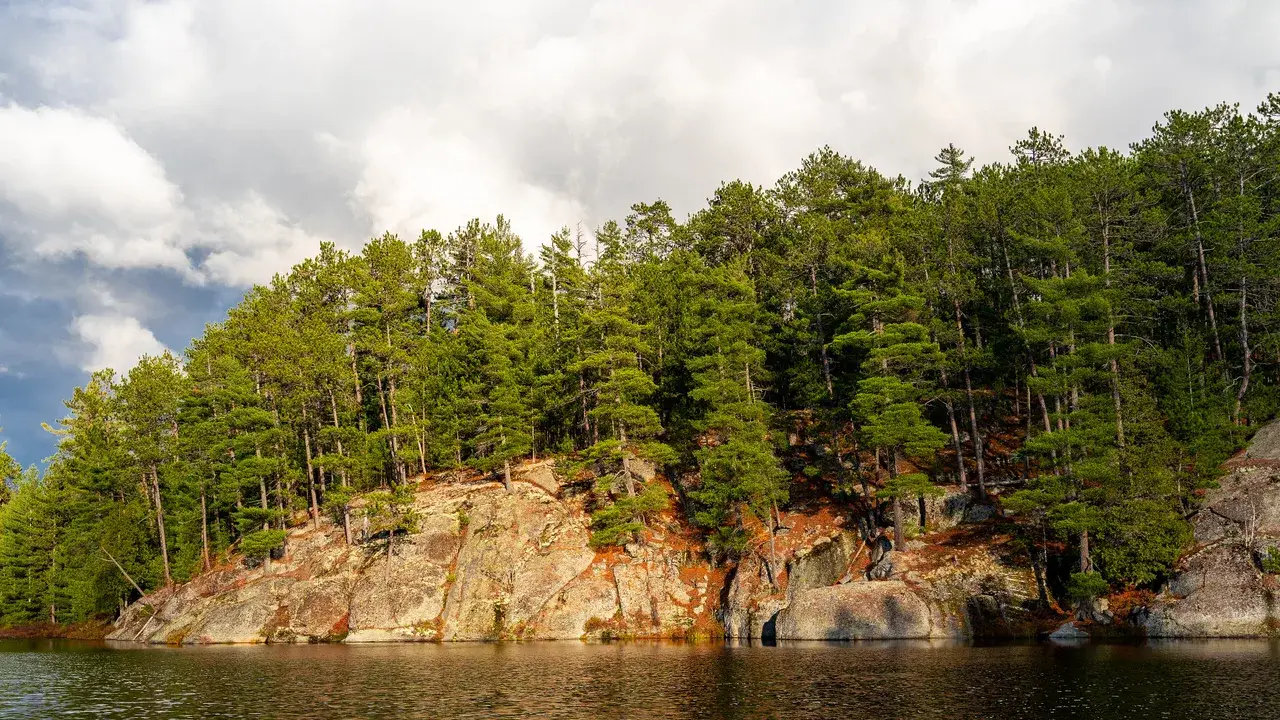
In eastern Canada the maples peak between the last week of September and mid-October, and the single safest week is the one straddling the end of September and the start of October. Cape Breton runs a week or two behind Algonquin, and on the island’s own dates behind most of Quebec too. The Rockies do something else entirely: their gold comes from alpine larches in the last week of September, and it has nothing to do with maples at all.
As of 21 September 2026, the trackers backed that timing up. Algonquin’s own fall colour report said the week of the 21st “should offer good Sugar and Red Maple fall colour at the canopy level”, right after the season’s first below-freezing night on the 19th, with understory maples, poplar and tamarack still behind the canopy. Ontario Parks’ report put a number on it: Algonquin at 30% colour change, still green-dominant, 0% leaf fall. Quebec’s live map refreshes weekly; on our 22 September check the last update was dated the 17th and the next was promised for the 24th. That’s a snapshot of one week in September, not a prediction for your dates, so open the trackers yourself in the week you travel.
The Friends of Algonquin Park have tracked the sugar maple peak for decades, and the historical average in the western Highway 60 corridor is 27 September - but the earliest on record is 15 September 1982 and the latest 9 October 1996. That’s a spread of more than three weeks, longer than most people’s vacation. So the useful skill isn’t picking a perfect weekend six months out. It’s knowing which places hold colour longest, and reading the official trackers again in the days before you drive.
How the colour wave moves across Canada
Two things push the wave: latitude and elevation. Colour arrives first in the north and on high ground, then works down and south - which is why a hillside can be finished while the lakeshore below is still green.
Species matter just as much, and this is the part that buys you extra weeks. Red maples go first, from mid-September, especially on thin soils and around wetlands. Sugar maples - the classic scarlet - follow in the last week of September and the first week of October. Then the yellows: beech, birch and poplar right through October. Last comes the tamarack, a conifer that drops its needles, turning deep golden-yellow in mid to late October.
Stack that up and the country runs a rolling six-week season rather than one perfect weekend. Miss the maples and you haven’t missed autumn - you’ve swapped red for gold and lost the crowds.
Ontario: Algonquin, and the parks Ontario Parks sends you to instead
Algonquin Provincial Park is the country’s fall colour headline, and the reason is the Highway 60 corridor: hardwood ridges rising straight off lakes, lookouts a short walk from the road. Outstanding colour runs mid-September to mid-October, with the sugar maple peak typically in the last week of September or the first week of October.
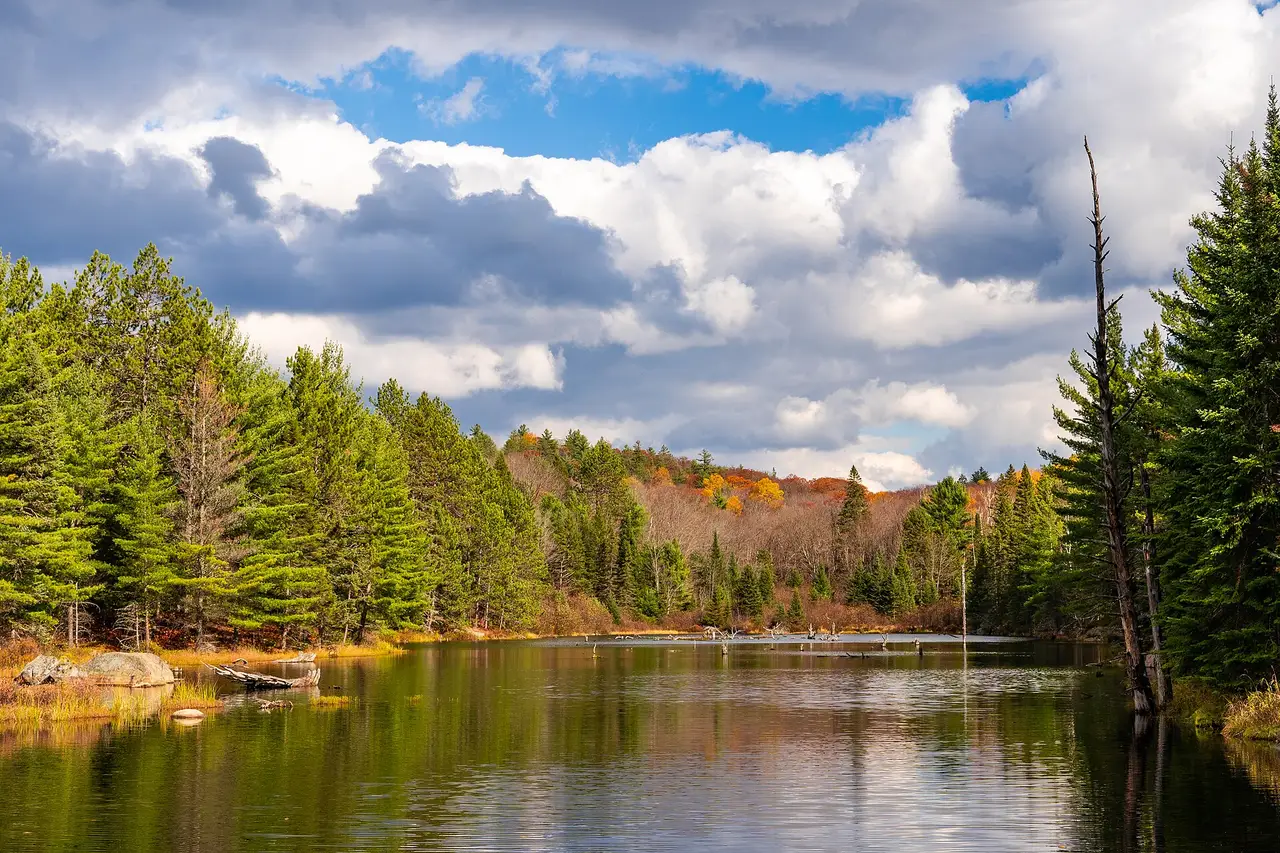
You’ll need a daily vehicle permit, bookable online or by phone up to five days ahead - the park doesn’t sell them in person - and Ontario Parks is explicit that permit sales are capped and can sell out, which on a sunny Saturday at peak is a real risk, not a theoretical one. Camping holds up better than you’d think: several developed campgrounds close in early September, but most stay open until late October, and Mew Lake is the only one open year-round.
The most useful advice comes from Ontario Parks itself, which admits its famous parks get swamped in fall and names quieter alternatives in its own guide: instead of Algonquin it suggests Driftwood or Arrowhead, and a little farther north, Restoule and Mikisew. Don’t expect them to run on Algonquin’s clock, though. On the same 21 September report date that had Algonquin at 30% colour change, Arrowhead read 20% with 10% leaf fall already down, and Driftwood and Restoule 10%. That isn’t a reporting lag. The Friends of Algonquin Park give the reason: the park sits higher than the country around it, up to almost 600 m above sea level, so its colour traditionally arrives earlier, often weeks ahead of places like Ottawa. That makes the Ontario Parks list a timing tool as well as a way around the crowds: if you miss Algonquin’s peak, the lower parks around it usually colour up later.
Farther north, the Algoma highlands above Lake Superior turn earlier than the south, and the classic way in is the Agawa Canyon Tour Train, a 10-hour round trip out of Sault Ste. Marie. From 15 September to 18 October 2026 every seat costs C$170, whatever your age, and the railway calls 15 September to 14 October its peak season, so book those dates early.
The golden encore, or why mid-October still works
Ontario Parks has a name for the second act: the golden encore. It takes hold roughly a week after the maple peak and can carry through much of October, sometimes into early November. Beech turns gold-yellow, birch and poplar glow against the dark conifers, then the tamaracks go - and the agency’s own writers call that hue the most beautiful natural colour seen at any time of year in Algonquin. As of 21 September, both were still on schedule rather than early: poplar was still green to yellow-green, with its best colour usually landing in early October, and tamarack was still green, with its best colour expected in mid-October.
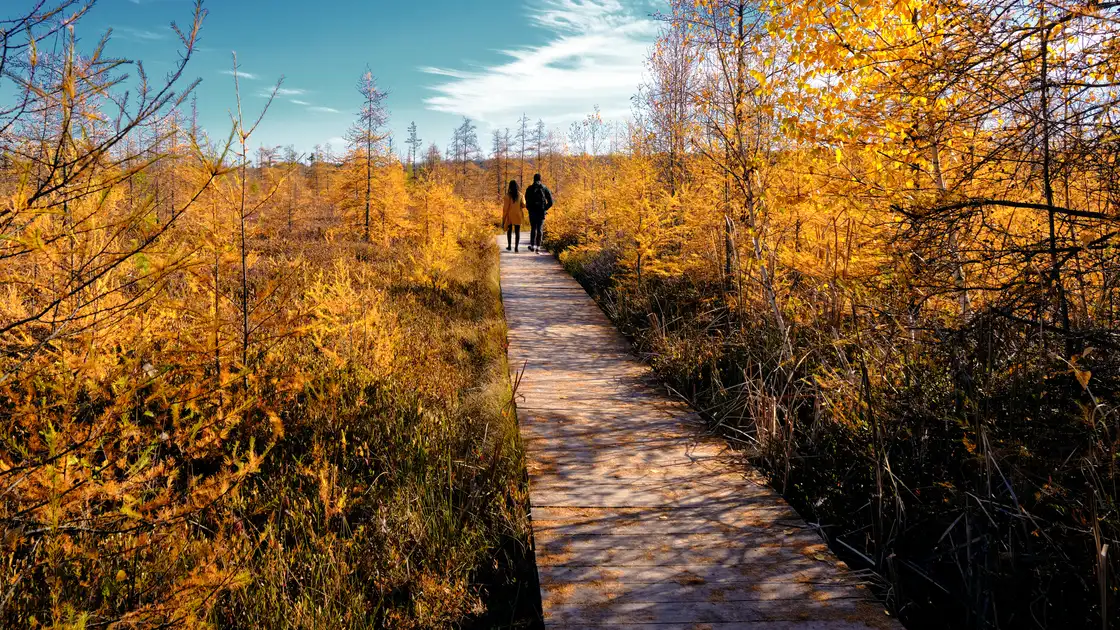
This is the single most useful thing to know if your dates land in October. Nobody sells package tours around beech and tamarack, and a bog boardwalk in the third week of October beats the same park at maple peak with three hundred cars in it. Quieter isn’t empty, though: Algonquin’s Highway 60 day permits still sold out on 19 and 20 October in 2024, so buy yours ahead even that late.
Ottawa and Gatineau Park: colour without a car
Gatineau Park is the easiest big autumn hit in the country to reach without driving. The National Capital Commission runs a free shuttle from 16 May to 25 October 2026, six days a week with no service on Wednesdays, roughly every 30 minutes, with extra buses added from 1 to 25 October; after that the shuttle stops for the winter and the park is car-and-foot only. There’s no reservation system and seats go first come, first served, so on a peak Saturday you line up rather than book.
Three details turn that into a plan. On weekends and holiday Mondays the shuttle starts from downtown Ottawa-Gatineau, first departure from Pindigen Park at 9:10 am; on weekdays it runs instead from the Montcalm Rapibus station in Gatineau. The last bus back leaves the Visitor Centre in Chelsea at 4:45 pm, earlier than most people assume, and that’s what strands day-trippers. And Thanksgiving Monday, 12 October 2026, counts as a holiday Monday, so it runs the weekend pattern from downtown rather than the weekday one - on the busiest colour weekend of the year, check that before you walk to the wrong stop.
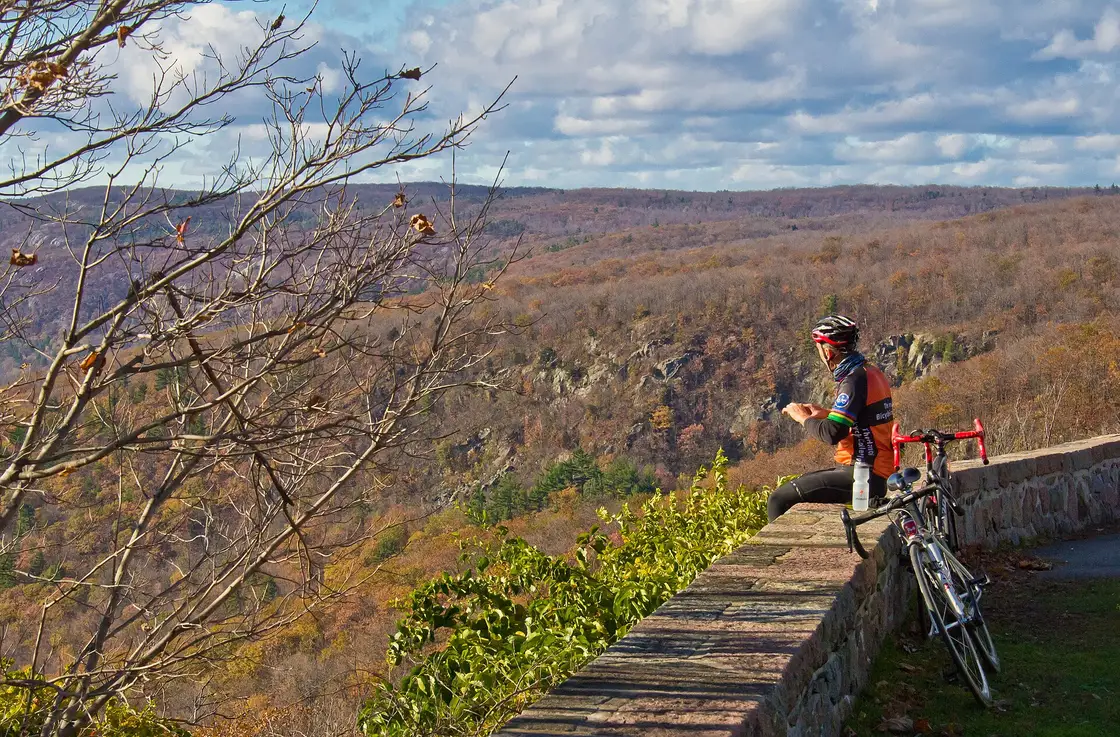
Pair it with Mer Bleue on the other side of the city, an NCC conservation area with a 1.2 km interpretive boardwalk over a bog roughly 7,700 years old, protected under the Ramsar Convention. The bog mat carries black spruce and tamarack, which is exactly why it peaks late. Parking is free. Two very different afternoons, no rental car, one city.
Quebec: the province with the best live map
Quebec’s colour runs from mid-September to the end of October, and its practical advantage is Tourisme Quebec’s interactive fall colours map, which tags individual parks and regions with a status, from mid-point through near peak to final glimmers. It refreshes weekly and prints the date of its last and next update, so if you check it the day before you drive, you’ll learn more than anything written here can tell you.
Tourisme Quebec also publishes a regional forecast for 2026: peak colour in the first week of October for the Laurentians and around Quebec City, the second week for Charlevoix, the second to third week for the Outaouais, and the third week for Sutton and Mont-Orford in the Eastern Townships. Use the forecast to pick the region and the weekly map to pick the day. If you’re flying into Montreal or Quebec City with a week of flexibility, that pairing turns “somewhere in the Laurentians” into a specific valley.
Three regions are worth pointing the car at. The Laurentians north of Montreal go first, and the one to aim for is Parc national du Mont-Tremblant - Quebec’s first national park, about 1,510 square kilometres of forest and lakes run by Sepaq, and a certified Dark Sky Park since 2023, so a clear October night pays you twice. South of the city, the Eastern Townships are gentler country around Magog and Lake Memphremagog, with Quebec’s first wine region attached; harvest and colour land together there in September and October. And on the north shore between Quebec City and Tadoussac, Charlevoix puts rolling farmland against the St Lawrence, with Baie-Saint-Paul and La Malbaie as bases - it doubles as a whale coast, which is the argument for driving that far. Check each against the official map the week you travel: those three don’t turn on the same day. For a base in the Laurentians, our Mont-Tremblant guide covers the village and the park; between Montreal and Quebec City, La Mauricie National Park is the quieter lake-country alternative.
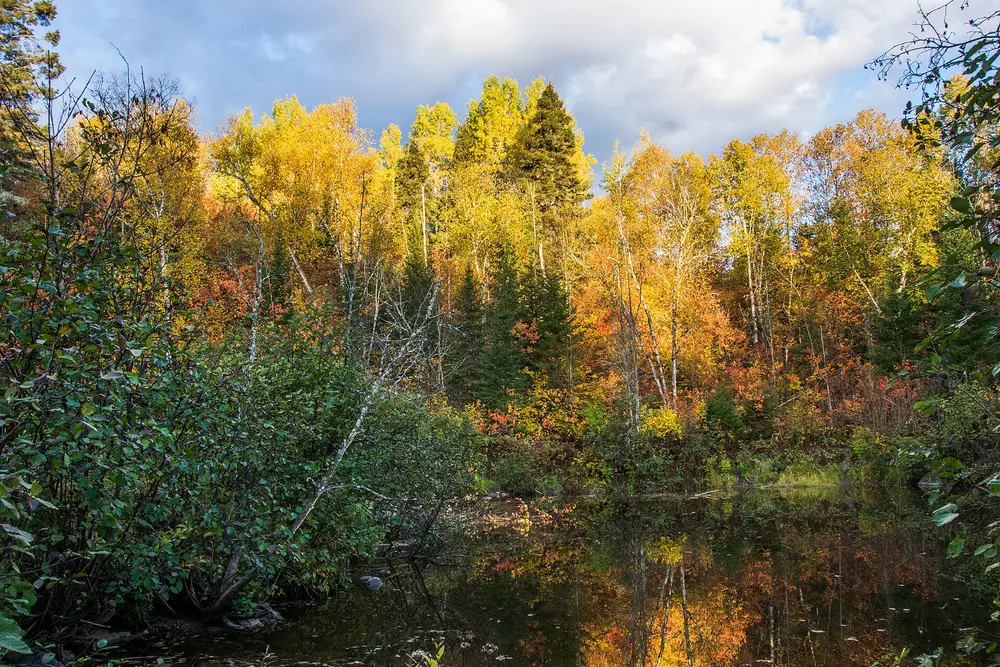
The rest of the trip is well covered elsewhere on this site: our Quebec guide works through the regions beyond the two cities, and Ontario does the same for the lakes and Algonquin country.
Cape Breton: the Cabot Trail, and the festival that fills the island
Cape Breton runs later than Algonquin, and it’s one more reason not to write off a mid-October trip. The two official tourism bodies time it a little differently: Tourism Nova Scotia puts the Cabot Trail at its best in early to mid-October and the national park usually in early October, while Destination Cape Breton, the island’s own tourism organization, gives 10 to 23 October, with the south coast usually first and the north later, the reverse of the usual order. On the island’s dates that puts it behind most of Quebec; on the province’s, the park turns about when the Laurentians and Quebec City do. Parks Canada publishes no peak date for Cape Breton Highlands National Park, so take those as windows and watch Tourism Nova Scotia’s Leaf Watch.
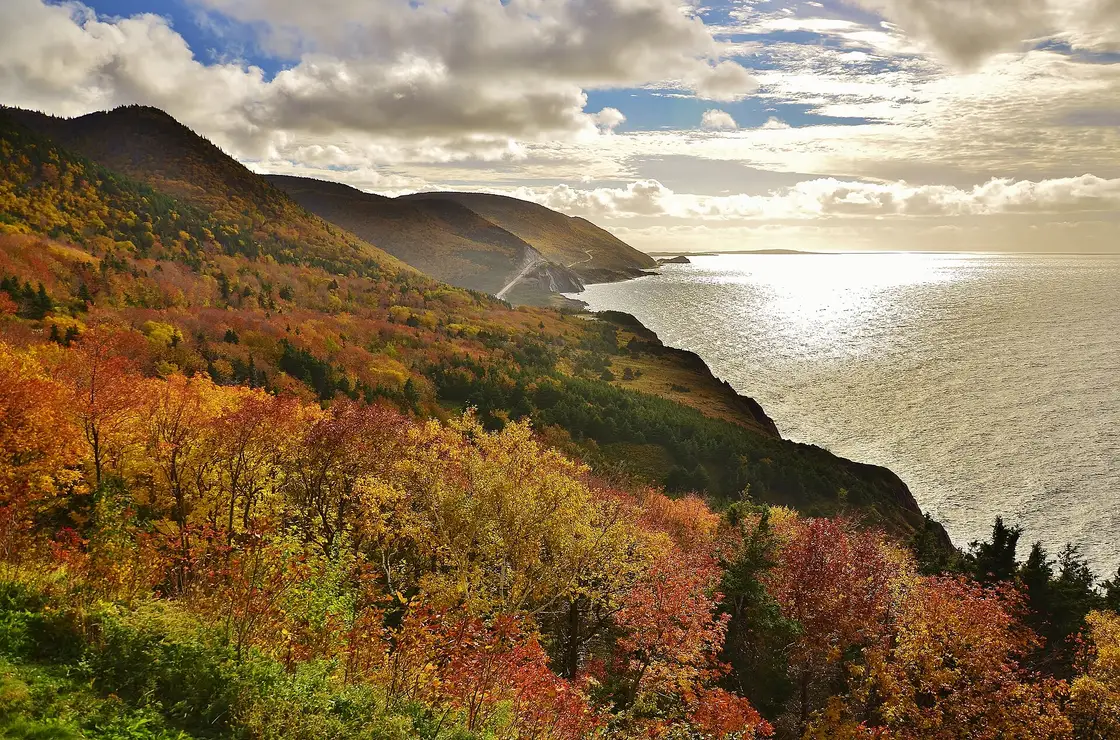
Then there’s the timing you can’t ignore. The Celtic Colours International Festival runs 9 to 17 October 2026, nine days, 52 concerts plus hundreds of community events spread across the island rather than one town. It overlaps both windows, which is the point - and it means rooms in Baddeck, Cheticamp and Ingonish go long before the leaves turn. Book that week early or plan around it. The driving itself is in our Cabot Trail route guide, the wider province in the Nova Scotia guide.
The Rockies turn gold too, on their own schedule
Out west there aren’t any maple forests worth flying for. The Rockies have the alpine larch instead, a high-elevation conifer that goes brilliant gold before dropping its needles, and above Moraine Lake it turns in the last week of September - two to three weeks ahead of Ontario’s tamaracks lower down.
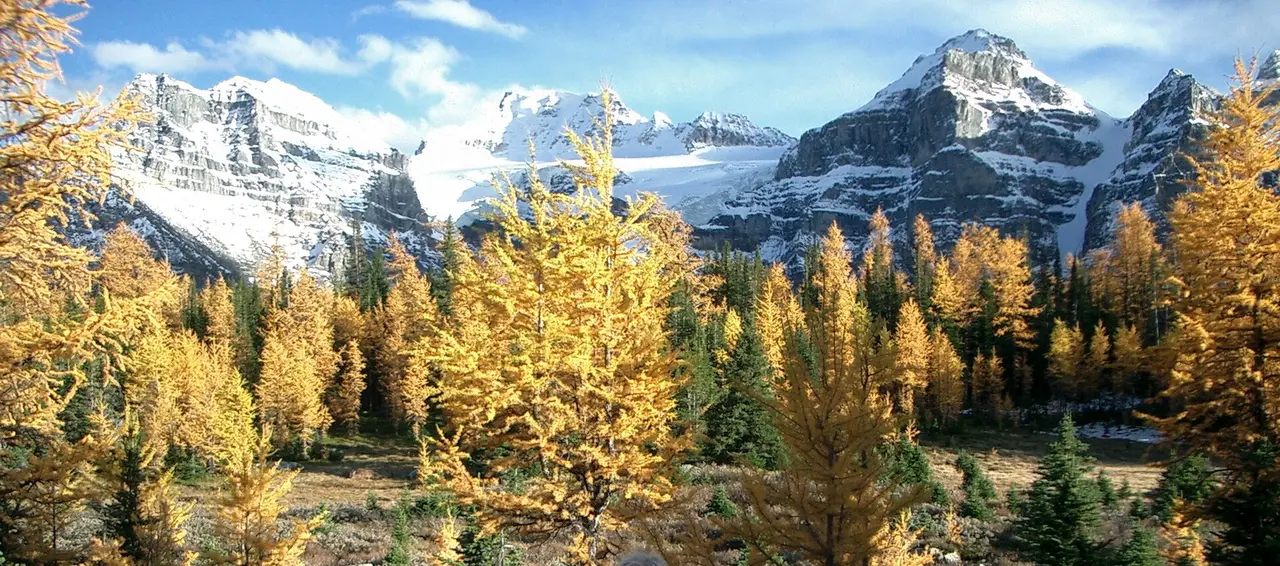
The access rules are stricter than anything in the east. Moraine Lake Road is closed to personal vehicles year-round: you get up there on a Parks Canada shuttle, with a licensed commercial operator, as a registered guest of Moraine Lake Lodge, or on a road bike if you’re experienced. In 2026 the Parks Canada shuttle runs 1 June to 12 October (weather permitting), the Lake Louise Lakeshore one 15 May to 12 October, and 60% of seats are released at 8 am MDT two days before departure. Our Banff guide has the fares and booking rules.
Now notice the date. The shuttles stop on 12 October 2026, which is Thanksgiving Monday - the busiest travel weekend of the autumn is also the last one the shuttle runs. Late larch hikers and the long-weekend crowd chase the same last seats, which is why that week’s tickets go first.
The Thanksgiving trap
Canadian Thanksgiving falls on Monday 12 October 2026, the second Monday of October, and it’s a statutory holiday in most of the country. That long weekend sits in the middle of the colour window in Ontario, Quebec and the Maritimes, and every Canadian who wants a leaf weekend takes it at once.
In practice: rural inns and cabins book out months ahead, park gates hit their permit caps, and the small towns along the Cabot Trail and the Highway 60 corridor fill up. If your dates are flexible, take the Tuesday to Thursday on either side instead - same trees, a fraction of the traffic, midweek rates.
How to read the fall colour map and reports
Four official sources beat any forecast article, this one included - but only if you read them the way the people running them intend.
- Ontario Parks’ fall colour report lists the provincial parks one entry at a time, and each entry carries a report date, a dominant colour and a percentage for colour change and leaf fall, rather than a single leaf icon. The catch: those report dates aren’t synchronized. On our 22 September check, Algonquin’s entry was dated the 21st, Mikisew’s the 16th, and a few parks hadn’t filed since early September. A park showing 10% colour change might simply not have been checked recently rather than be behind, so read the report date before you compare two parks against each other.
- The Friends of Algonquin Park report is one of the longest-running colour records in the country, updates through the season, and is the source of that 27 September average.
- Tourisme Quebec’s fall colours map runs on a steady weekly cadence, prints the date of its last and next update, and tags sites with a status; its separate regional forecast gives the expected peak week for each region.
- Nova Scotia’s Leaf Watch names the best viewing spots in the province, but unlike the other three it doesn’t publish a live per-region status - useful local knowledge, not a real-time tool.
Book flexible accommodation for a target week, then watch the trackers from ten days out and again the day before you leave. Shift your drive by 100 km rather than your dates by a week - colour moves across the map faster than a hotel booking does.
What I would actually book
One week and you want the postcard: aim at the last week of September in Algonquin or the first week of October in the Laurentians or around Quebec City, midweek, with a rental car and a loose plan. Dates stuck in mid-October: stay in Quebec for Charlevoix, the Outaouais or Sutton and Mont-Orford, which Tourisme Quebec forecasts for the second and third weeks, go east to Cape Breton, or lean into the golden encore in Ontario, where beech and tamarack carry another two weeks. Flying into Calgary rather than Toronto: forget maples and book a Moraine Lake shuttle for late September while the larches are up.
One honest caveat: a wet, windy week strips a hillside in two days and no tracker predicts it. That’s the argument for building a trip around a region rather than a single lookout, and for weighing the seasonal trade-offs in the best time to visit Canada before you fix dates. If the drive is the trip, the best Canada road trips covers the routes through this colour, and renting a car in Canada covers the paperwork.
Read also

Before you go · 11 min read
Canada eTA for UK Citizens: Entry Requirements
Verified · September 1, 2026UK air travellers need a CAN$7 eTA. Cost, validity, land exception, refusals and British passport types - checked on canada.ca, 1 Sep 2026.

Before you go · 9 min read
Calgary vs Vancouver: Which Airport for the Rockies
Verified · August 29, 2026Calgary puts Banff 140 km up the road; from Vancouver it's 850 km. What the drop fee, the domestic hop and the thinner route map actually cost you.

Before you go · 10 min read
Quebec City in Winter: Carnival, Ice Hotel, What to Wear
Verified · August 16, 2026Quebec City in winter: Carnival 5-14 Feb 2027, ice hotel from January, February nights -16 C, and what to pack.

Before you go · 8 min read
Canadian Rockies vs Vancouver Island: Which Trip to Take
Verified · August 14, 2026Rockies or Vancouver Island for one week: lakes and Icefields Parkway vs ferry, Victoria and Tofino - pick by trip shape, not Instagram.