
Niagara-on-the-Lake: Wineries, Theatre and Day Trip Guide
Niagara-on-the-Lake wineries, Shaw Festival dates and Fort George: what to do 20 km from the falls, and how to get there in 2026.
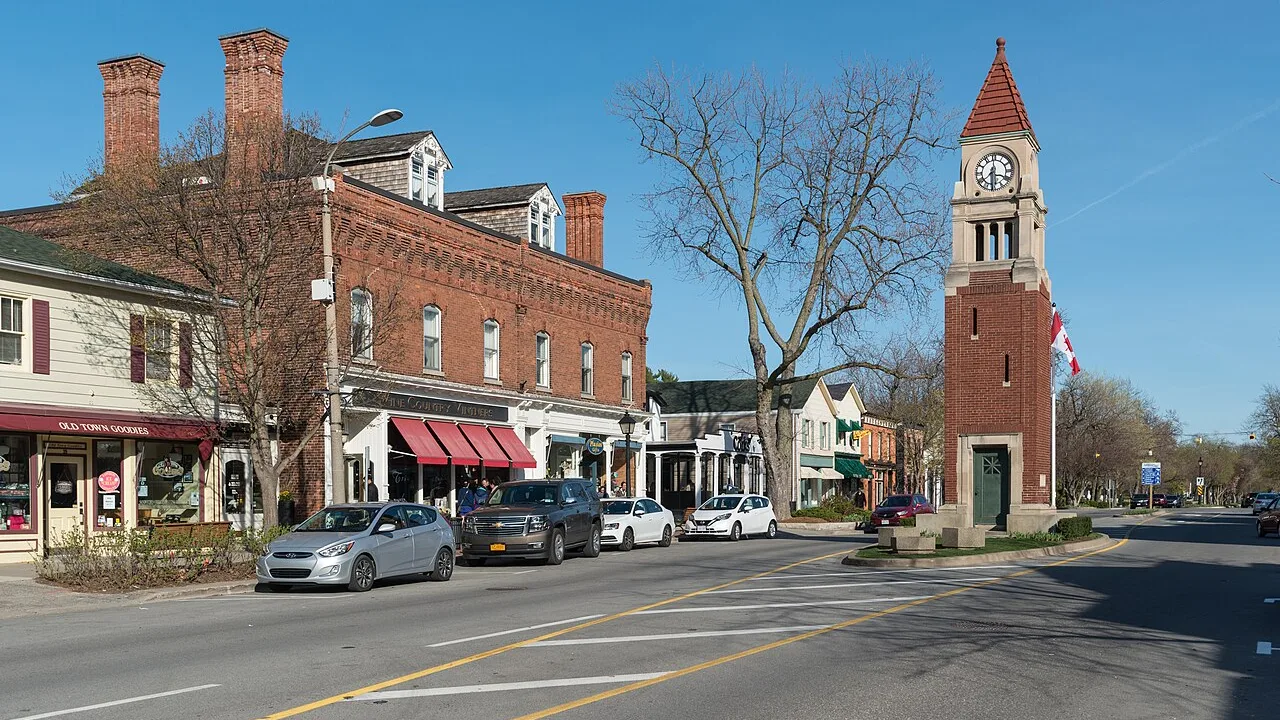
Twenty minutes up the Niagara Parkway from the falls, the crowds thin out and the day turns into a completely different one: three wineries close enough to walk between, a theatre festival running three stages from April into October, and a fort with a genuinely brutal chapter in the winter of 1813. If you came for the water, that’s a separate trip - Niagara Falls is twenty minutes south and its own guide covers it in full, including the Niagara Falls Pass math if you’re combining both in one visit.
Smaller than it looks, and not the falls
The town itself is small: 19,088 people at the last census, a number that’s grown 9% since 2016 while most of small-town Ontario shrank. Most of that population is spread across villages inland - Virgil, St. Davids, Queenston - and what visitors actually see is the historic core, Old Town, plus Chautauqua, a residential pocket between One Mile Creek and the lake where the streets fan out from a hub like spokes. Locals call it “SHAW-tauqua,” after the generations of festival staff who’ve rented rooms there.
Niagara-on-the-Lake also holds a small piece of trivia that surprises people who grew up nearby: it’s the only town in Canada with a lord mayor, rather than a plain one, and the local golf course is often billed as the oldest still in continuous use anywhere in North America. Neither fact changes your day here, but both are the kind of thing that comes up over dinner if you stay past dark.
The wineries actually inside town limits
Niagara Peninsula wine country runs well past this town, out toward Beamsville and Vineland, but three of the most-visited names sit inside Niagara-on-the-Lake itself, close enough to loop by bike.
Jackson-Triggs, at 2145 Niagara Stone Road, runs an Estate Tour daily through the season (Sunday to Thursday 11am-6pm, Friday and Saturday to 7pm) for $35 a person - $15 for guests 13 to 18, free under 12 - and walk-in tastings need no booking. The winery also hosts an open-air amphitheatre for summer concerts, so a quiet tasting afternoon isn’t guaranteed if something’s on the bill.
Inniskillin, a few minutes away at 1499 Line 3, is the name most tied to Canadian icewine, and its public tour runs the same $35, with standalone tastings priced $25 to $30 depending on what’s poured. Tours leave on a fixed schedule - 11:30am, 1:30pm and 3:30pm Sunday through Friday, hourly on the half hour from 11:30am on Saturday - so it’s worth building the rest of the day around those times rather than showing up and hoping.
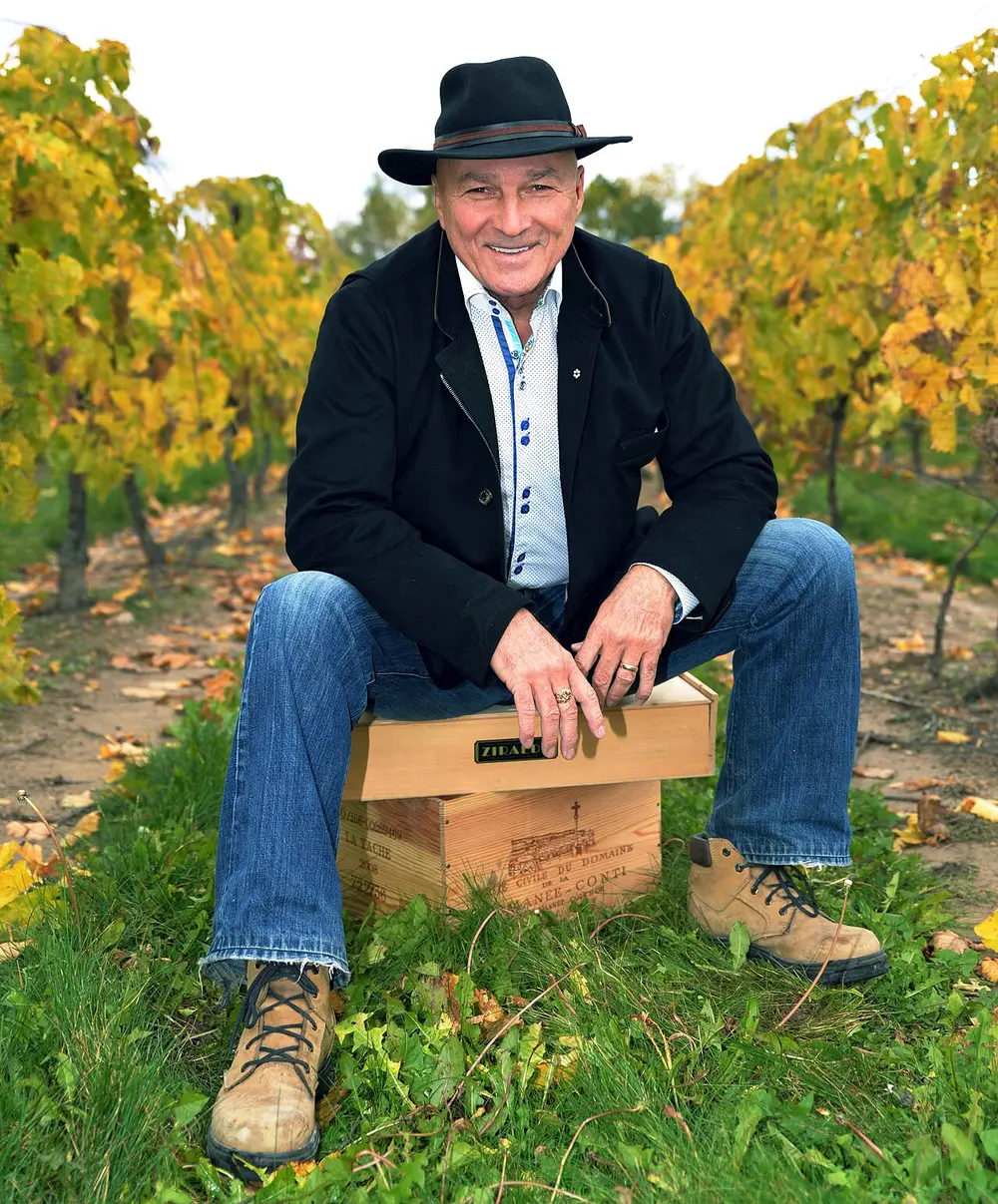
Peller Estates, at 290 John Street East, is the pick if you want a sit-down meal to go with the glass: its Winery Restaurant runs lunch and dinner daily, and the 10Below Icewine Lounge chills a private room to minus ten so the wine is tasted the way it’s actually meant to be served. Peller doesn’t post its own tour pricing the way its neighbours do, so call ahead if a specific time slot matters to your day.
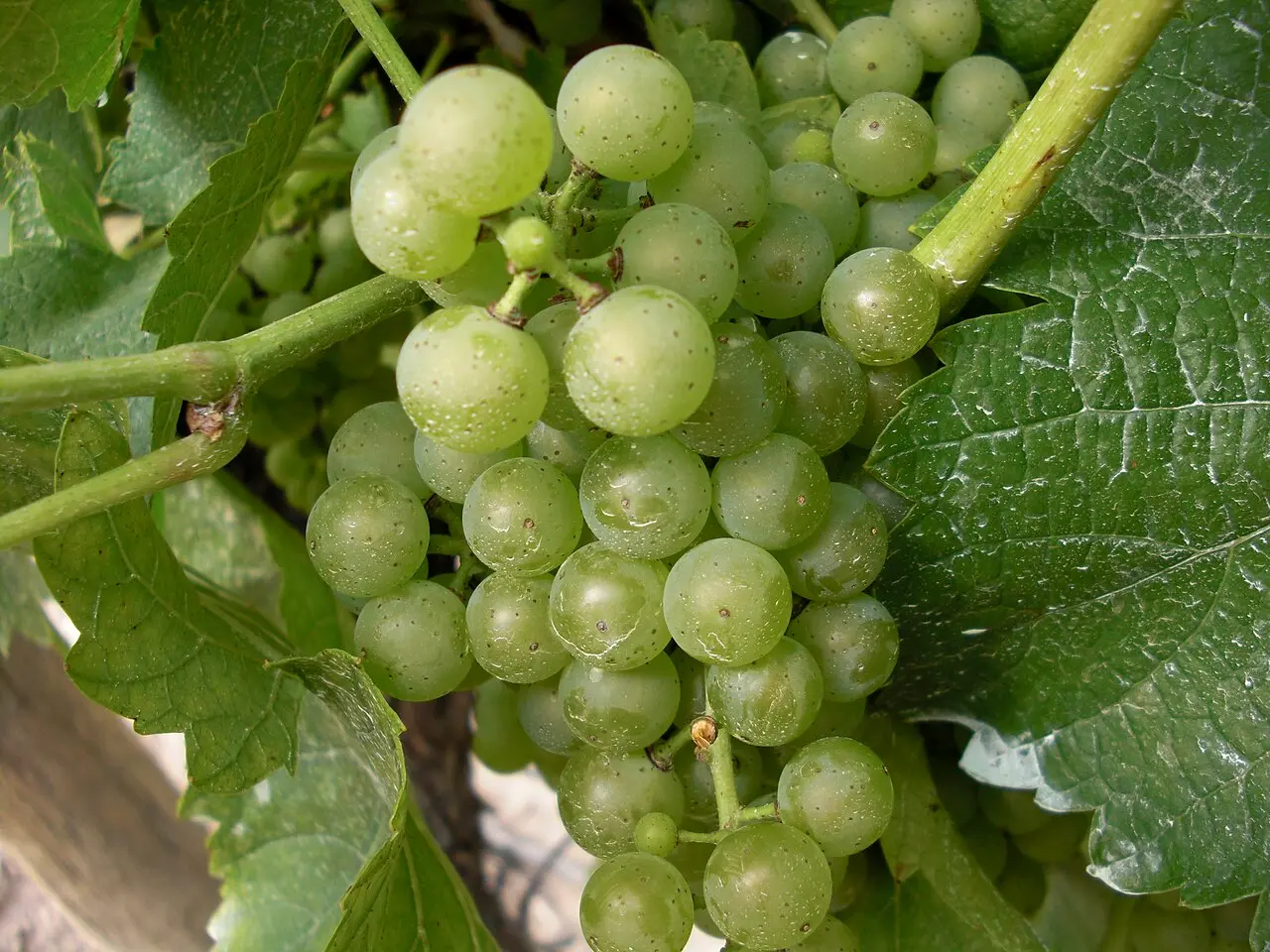
None of the three is more than a ten-minute drive from the others, and outfitters on Queen Street run shuttle and bike tours between them if you’d rather not nominate a driver for the day.
Shaw Festival, three stages and an eight-month season
The town’s other headline draw is named for George Bernard Shaw, and it runs across three venues: the Festival Theatre, the Court House Theatre and the Jackie Maxwell Studio Theatre. Between them, the 2026 season doesn’t really stop from spring to autumn - Funny Girl runs at the Festival Theatre from 24 April to 3 October, Amadeus joins it there from 8 July, Sleuth holds the Court House from 2 April to 9 October, and Heartbreak House takes the Studio from 20 June to 3 October. A separate holiday programme, Cinderella and A Year with Frog and Toad, runs November into December for anyone visiting in the cold months.
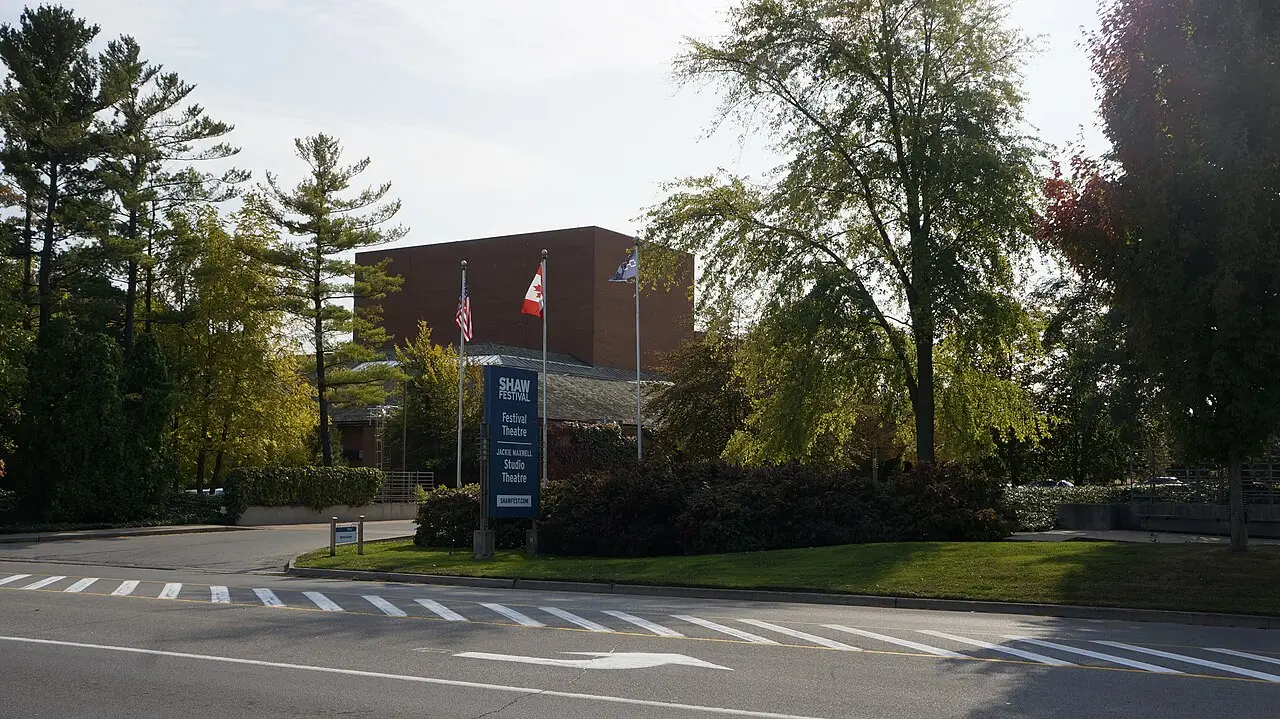
What the festival doesn’t do is publish a flat ticket price anywhere on its site - it varies by show, by seat and by date, and every booking runs through its own online flow rather than a quoted number. Budget for it like proper theatre, not a matinee, and pick the actual show you want rather than whichever slot looks cheapest, since you won’t know the difference until you’re checking out.
Queen Street, built twice
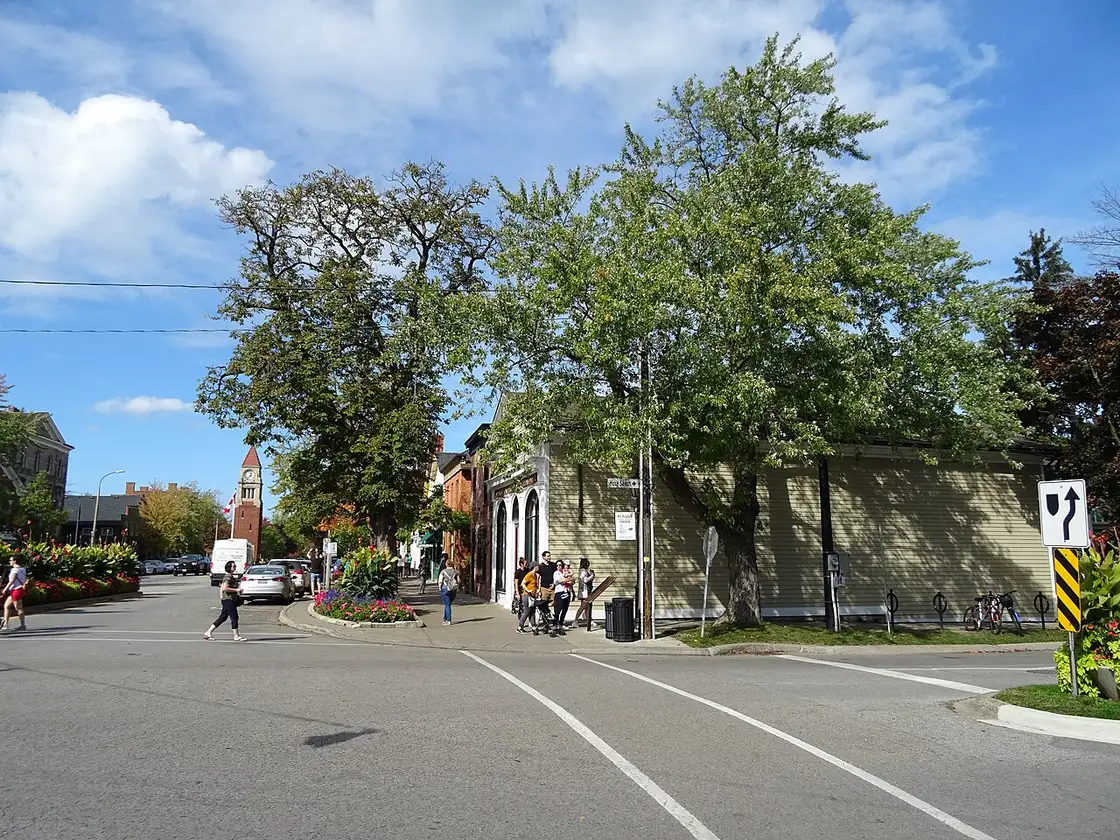
Walk Queen Street today and it looks like it’s always been this way, which is almost the opposite of true. Most of what’s standing was rebuilt after the winter of 1813 - a story that belongs properly to Fort George below - and the street’s oldest survivors are prized specifically because so little else made it through.
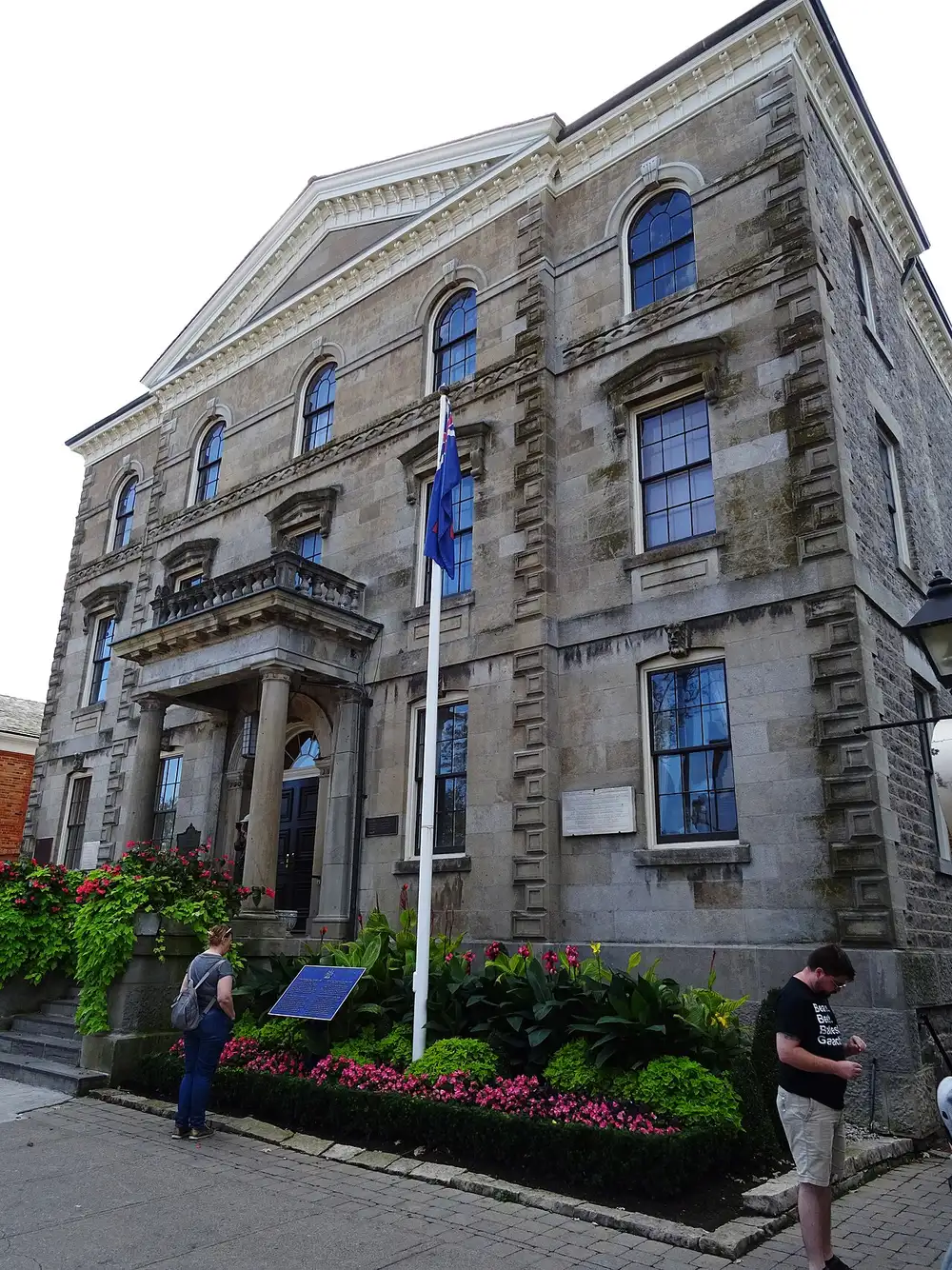
The Niagara Apothecary, at 5 Queen Street, is the standout: a working 19th-century pharmacy turned small museum, with the original counters and glass still in place. A couple of doors down, the Old Court House at 26 Queen Street did duty as the town hall and county courthouse before Niagara Region’s government moved elsewhere, and its plaques tell a slice of the town’s legal history most guides skip entirely - including a marker for the Law Society of Upper Canada, founded here in 1797, when Niagara-on-the-Lake briefly outranked York as the seat of colonial power.
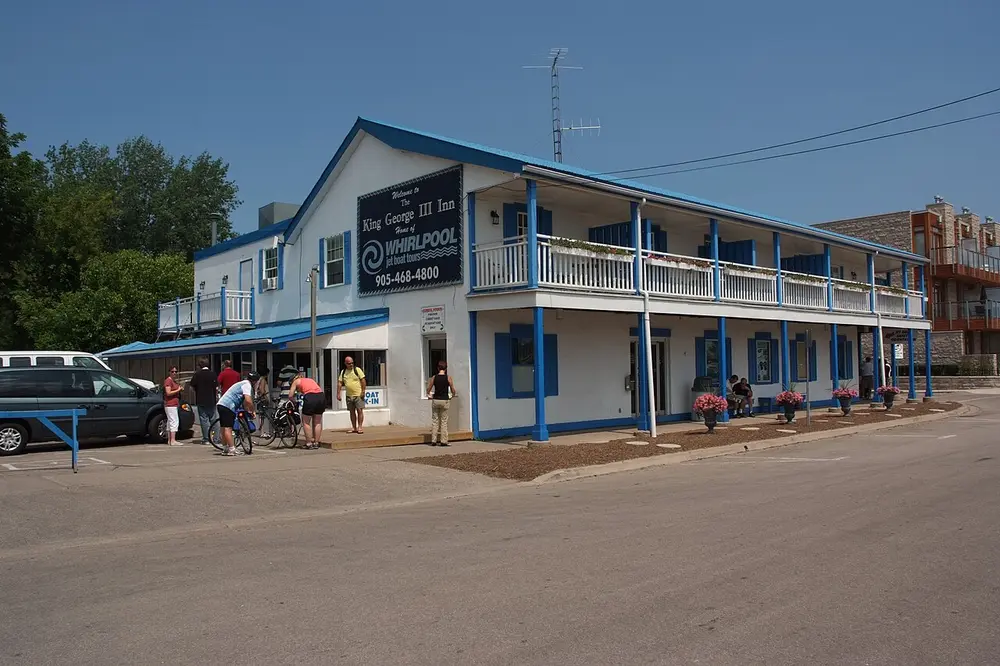
Off the main strip, look for the George III Inn, a heritage brick building a short walk from Queen Street that’s kept its name and its shape while the businesses inside it changed hands more than once. It’s a decent gauge of the town’s approach to preservation: the facade stays put, whatever’s happening behind it.
Fort George, and the winter that ended Newark
The reason Queen Street had to be rebuilt sits a seven-minute walk away, at 51 Queen’s Parade. Fort George went up between 1796 and 1799, after Jay’s Treaty forced Britain to hand Fort Niagara, across the river, to the Americans - leaving the British without a post on this side and Newark, as the town was then called, briefly serving as the first capital of Upper Canada until the seat moved to York (now Toronto) in 1797.
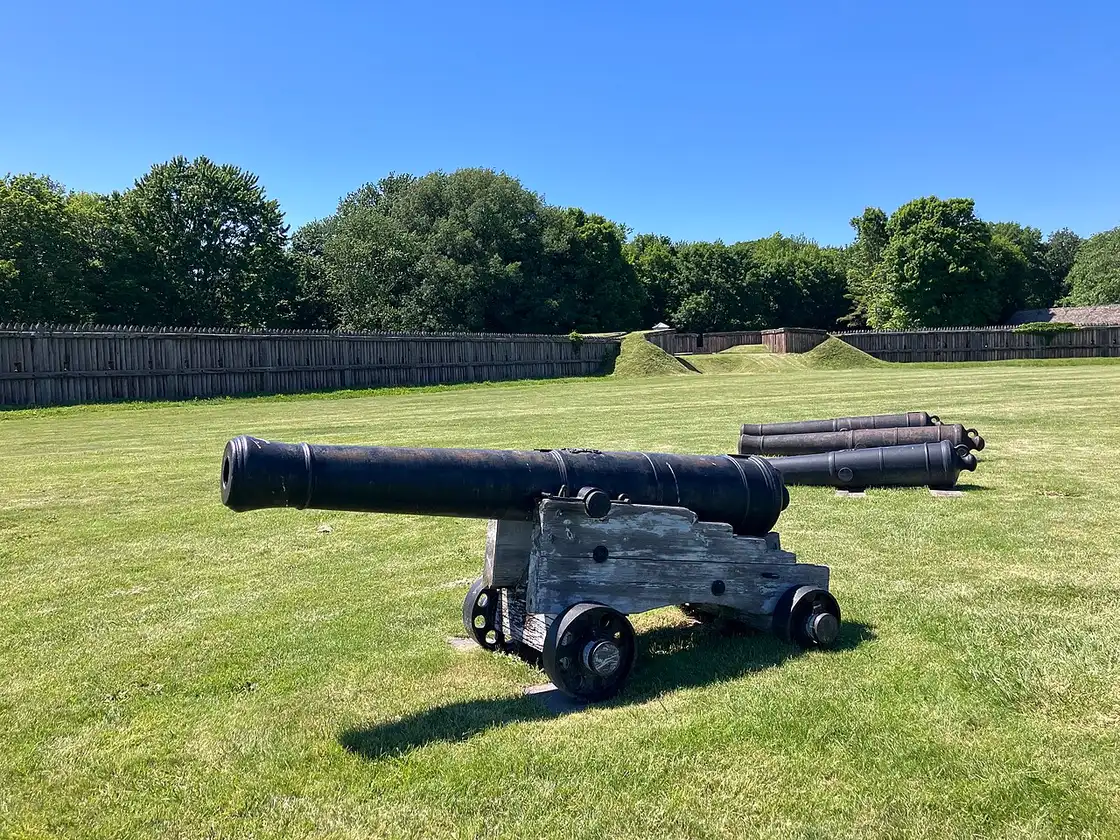
The fort fell to American forces in May 1813, and the occupation that followed lasted roughly seven months. Before the Americans withdrew that December, in freezing weather, they burned Newark to the ground - a decision that left the town’s women and children homeless overnight and is still the reason locals talk about the “burning of Newark” as its own historical event, separate from the wider war. The town rebuilt around Queen Street afterward, and took its current name a few decades later.
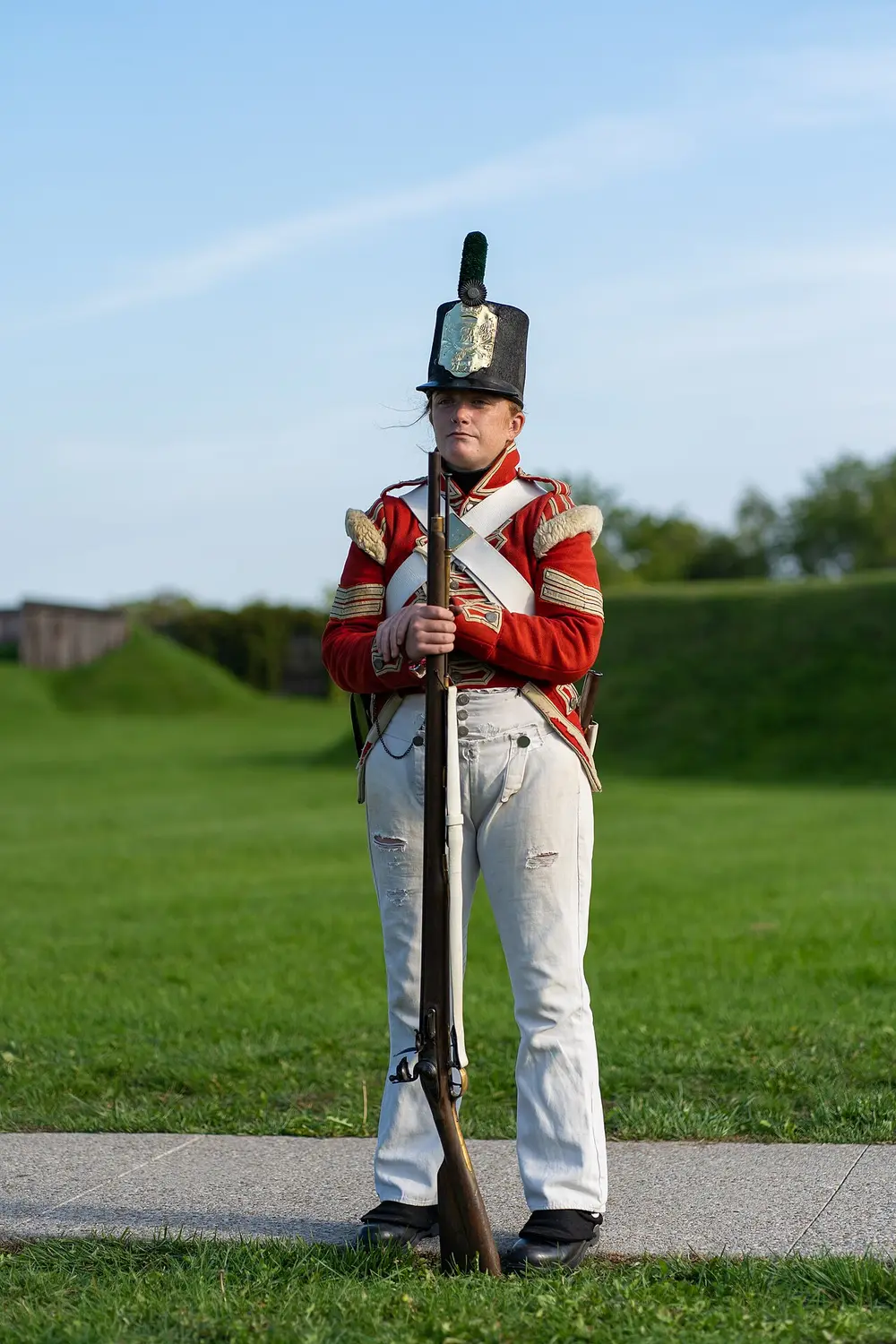
For 2026, Fort George is open daily from 10am to 5pm between 16 May and 6 September; outside that window it drops to weekends only in spring (from 4 April) and Wednesday through Sunday in autumn (until 1 November), with tickets stopping at 4:15pm each day. Admission is $14.75 for an adult and $12.50 for a senior, youth free, and it was one of the sites covered by the Canada Strong Pass free-admission window, 19 June to 7 September 2026 - the same federal program that waived entry at national parks across the country that summer; from 8 September 2026 the prices above apply again.
Getting here, and getting back to the falls
By car, it’s the Niagara Parkway the whole way - a scenic, toll-free drive of about 20 km that follows the Niagara River north from the falls. Without a car, the WEGO Orange Line connects at the Floral Clock, where it meets the Blue and Green lines that serve the falls attractions, and runs out to Queenston Heights Park, the Laura Secord Homestead, McFarland House and Fort George. It operates for the season - 4 April to 3 October in 2026, nothing in winter - and the one detail that catches people out: the Orange Line stops running earlier in the day than the Blue and Green lines do, so check your return time before you settle in for a long lunch.
If you’re coming from Toronto rather than the falls, our day trip planning guide covers GO Transit, VIA and driving in full - a rental car is the only option that gets you here and back on your own schedule, since neither GO nor VIA run this far up the Parkway.
Where to sleep, and when to come
Rooms in Old Town go for a premium and fill first on any Shaw Festival weekend; anyone on a tighter budget usually ends up a short drive out toward the highway instead. Wine season and theatre season overlap for most of the summer and into early autumn, which is also the town’s busiest and priciest stretch. If you’d rather skip the crowds and still catch a wine event, the Niagara Icewine Festival takes over Queen Street each January - it ran two weekends in 2025, 17-18 and 24-25 January - for a cold-weather version of the same wine-town atmosphere, minus the summer traffic.
Basing yourself by the falls instead and driving up for the day is the other common split - see where to stay in Niagara Falls for Fallsview vs Clifton Hill vs the quieter town rate.
Read also
- The water itself, twenty minutes south: Niagara Falls, Canadian side
- Comparing the ways to reach the region from Toronto: Toronto to Niagara Falls day trip
- Boat tickets and timing for the falls themselves: Niagara Falls boat tour
- The province this all sits in: Ontario travel guide
- Every city we cover: the cities hub
On the map
The map loads on click - to keep the page lightweight.
The map didn’t load. Check your connection and refresh the page.
Admission and opening hours
- Admission price
- Queen Street and the free viewpoints cost nothing. Fort George 2026: adult $14.75, senior $12.50, youth free. Jackson-Triggs and Inniskillin estate tours both $35/person. Shaw Festival ticket prices vary by show and are not posted as a flat rate.
- Opening hours
- Fort George: 16 May-6 September 2026 daily 10am-5pm; from 7 September 2026 the shoulder season runs Sat-Sun or Wed-Sun only. Jackson-Triggs and Inniskillin open daily through the season, roughly 11am-6/7pm. Shaw Festival season runs April to early October, with a separate November-December holiday run.
Winery and Fort George prices from the operators' own sites, checked 19 August 2026. Shaw Festival does not publish ticket prices online - book through shawfest.com for the current rate on your date.
Details checked: August 19, 2026
Read also

Cities · 11 min read
Regina: Legislature, RCMP Heritage Centre and Prairie Base
Verified · August 29, 2026Wascana Centre, the Legislature, the Mounties' only training depot and a free T. rex - what Regina actually rewards, plus the road to Saskatoon.

Cities · 10 min read
Whitehorse: Yukon Base for Aurora, Rivers and the Klondike
Verified · August 28, 2026Whitehorse in 2026: SS Klondike grounds open but boat closed, MacBride C$12, Beringia C$6, Miles Canyon and aurora season.

Cities · 9 min read
Things to Do in Saskatoon: River Valley, Wanuskewin & Skies
Verified · August 27, 2026Saskatoon in practice: Meewasin trails, Wanuskewin bison, Remai Modern by donation, and a prairie day trip to Riding Mountain.

Cities · 9 min read
Lunenburg: UNESCO Old Town Guide
Updated · September 2, 2026Old Town Lunenburg from Halifax: UNESCO grid of 1753, painted harbour, Fisheries Museum prices, Bluenose II, and when an overnight beats a day trip.