Toronto to Ottawa: Train, Bus, Drive or Fly
Toronto-Ottawa 2026: VIA averages 4h 32m over 444 km, Megabus from Union about 5h35, a 450 km drive on 401/416, or roughly an hour gate to gate.
Four ways cover the 444 km between Toronto and Ottawa, and none of them wins automatically. VIA Rail averages 4 hours 32 minutes with 54 departures a week - the figure the railway itself publishes, not the fastest sample time a blog post likes to quote. Megabus advertises 5 hours 5 minutes, but that headline run leaves from a Scarborough stop, not Union Station; board downtown instead and budget 5h35 to 6h45. Driving the 401 then the 416 covers about 450 km in 4.5 to 5 hours when the road behaves. Flying is the shortest single leg - under 70 minutes gate to gate - and carries the longest list of add-on time once you count both airports.
Figures below were checked on 24 August 2026, several of them against live booking engines and airport departure boards rather than marketing copy. City context sits in Toronto and Ottawa; the wider rail network is in Canada by train.
Four modes, four different mornings
| Mode | Realistic time | The trade-off |
|---|---|---|
| VIA Rail | 4h 32m average (54/week); published samples run 4h08-5h00 | Calm ride, no security line, price moves with the calendar |
| Megabus, boarding at Union | 5h35-6h45; the 5h05 headline leaves from Scarborough instead | Usually the cheapest seat, definitely the longest ride |
| Drive (401/416) | ~4.5-5 h, ~450 km in clear weather | Kingston on the way, your own schedule, parking once you land |
| Fly (YTZ or YYZ to YOW) | ~1 h gate to gate | Fastest single leg, most add-on time either side |
There’s no fixed cheapest line here. Book a VIA Escape seat early enough and it can undercut every other option; wait too long and a coach promotion or a calendar-fare flight can flip the ranking entirely. Use the table to narrow the field, then price your date on each.
Option 1: VIA Rail
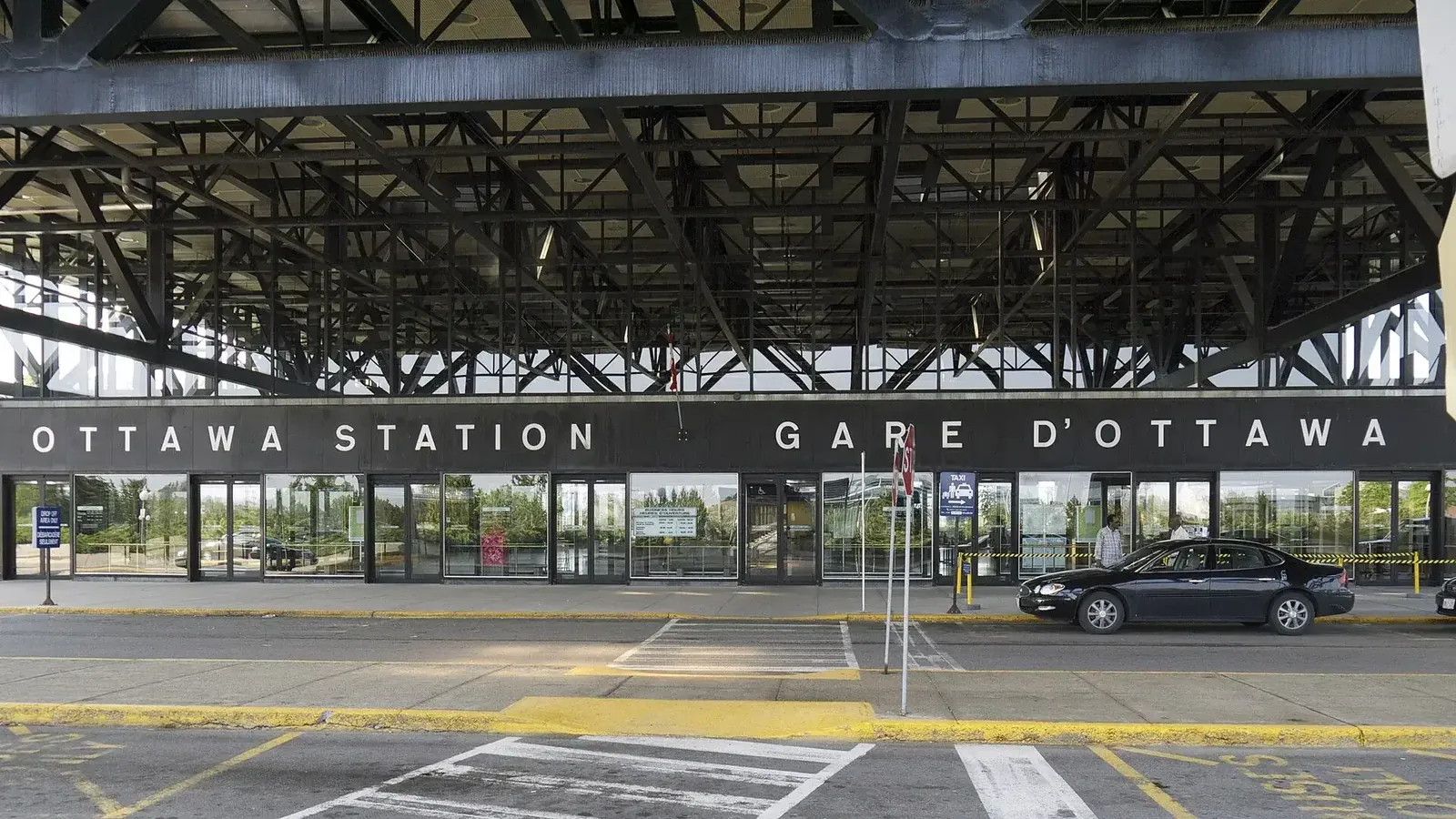
VIA doesn’t publish one scheduled time for this run - it runs roughly nine departures a day, each with its own duration, and states an average rather than picking a single number to advertise. That average is 4 hours 32 minutes over 444 km. The fastest published sample, train #646, does it in 4h08; the slowest regular sample, #52, takes a full 5 hours. You board at Toronto Union, and you get off at Ottawa’s station on Tremblay Road - not downtown, but on the O-Train network and a short ride from ByWard or Centretown.
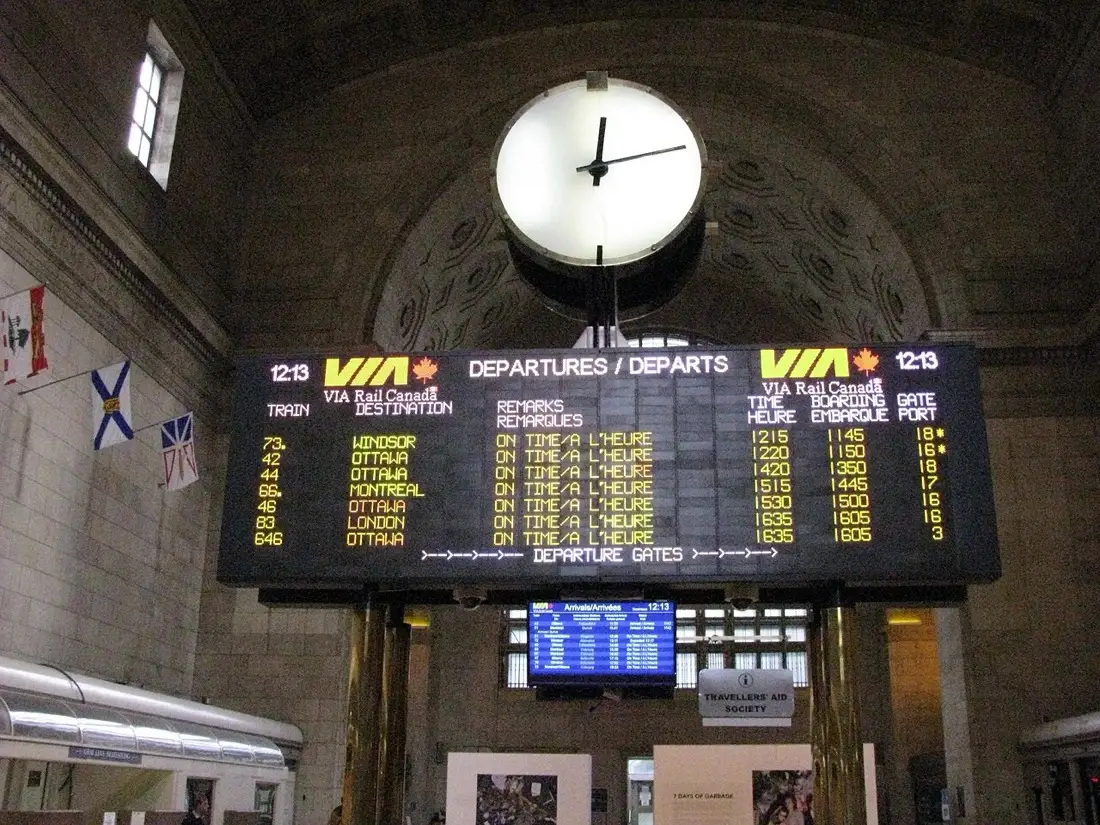
Don’t treat a single Escape fare as fixed. VIA’s own footnote says prices exclude sales taxes and that fares and schedules can change without notice, so a number copied from an old blog post is already wrong. Book Escape only when your dates won’t move - it’s the cheapest bucket and the least forgiving one - and pay the difference for Economy or Business the moment your plans get shaky.
Canada Strong Pass, summer 2026: in the window that ran 19 June to 7 September 2026, VIA carried children and youth 17 and under free in Economy when they travelled with a paying adult, and cut Escape and Economy fares by 25% for riders aged 18 to 24. Both the travel window and the ticket-purchase window closed at 23:59:59 ET on 7 September 2026, and the discount never reached Economy Plus - from 8 September 2026 it’s ordinary fares again, full stop.
Winter is where the fixed timetable earns its keep: a January squall that turns the 401 into a parking lot barely touches a train that only has to stay on its own rails. The opposite risk shows up in summer, when long weekends and festival dates at both ends of the corridor empty out the cheap seats first - book ahead rather than assuming a seat will be waiting.
Option 2: Megabus and the other coaches
Megabus’s own marketing says “as little as 5 hours 5 minutes” and “up to 30 services a day.” Both numbers describe the whole route map, and the route map isn’t only Union Station - Megabus also boards in Scarborough (330 Borough Dr, beside GO Transit), and the 5h05 trip runs from there, not downtown.
Board at the Union Station Bus Terminal and the picture changes. A morning departure leaves room for a morning at the CN Tower before you climb on. Checking the live booking engine across four separate dates in late August and early September 2026 turned up five to eight departures a day specifically from Union - 06:15, 08:00, 10:00, 10:30, 12:30, 14:30, 17:00 and 23:30 on a normal Wednesday - running 5h35 to 6h45, not five hours anything. The earliest, 06:15, was also the fastest at 5h35. That’s still real frequency for a coach and real savings against the train on a fixed date; it just isn’t the number on the homepage.
Read your ticket before you plan the last kilometre. Megabus sells this route with two different Ottawa endpoints: Waller St at Laurier Ave, the operator’s default and a walkable stretch from the University of Ottawa and ByWard, or St Laurent Station - Platform E, well east of downtown. FlixBus and Rider Express also run this corridor - price your own date with each operator rather than assuming last month’s fare still stands.
Option 3: fly into YOW
The flight covers the shortest single leg of the four, and it’s the one most likely to get its duration misquoted. Nonstop Billy Bishop (YTZ) to Ottawa Macdonald-Cartier (YOW) runs roughly 57 to 63 minutes of scheduled gate-to-gate time on Porter and Air Canada; nonstop Pearson (YYZ) to YOW runs about 65 minutes. Both are block time, not time in the air - the aircraft itself is airborne for less than that on a 351 km hop, and the gap is taxi and climb.
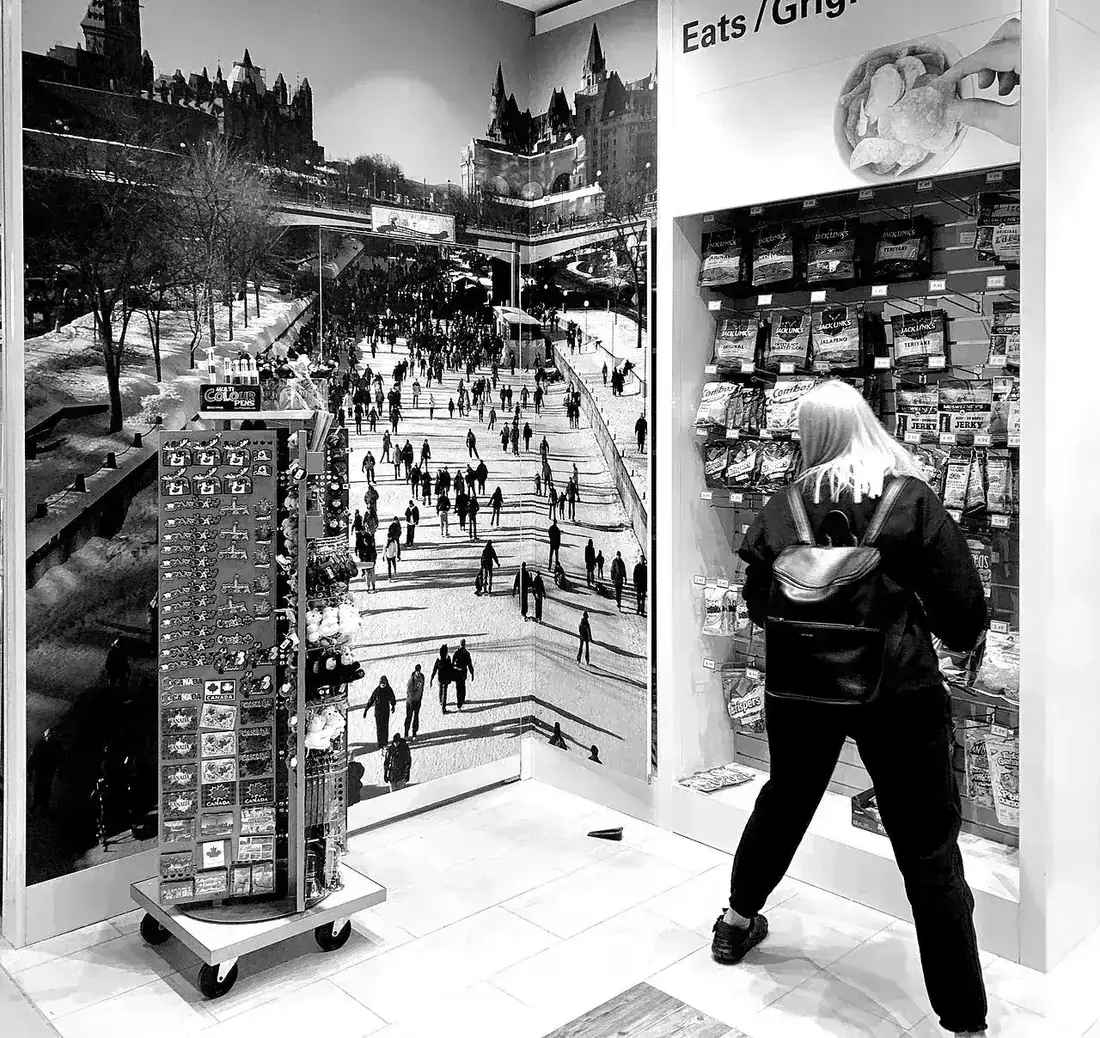
The sub-70-minute number stops meaning much once you count everything around it. Getting to Pearson or the island airport, clearing security, boarding, the flight itself, waiting for a checked bag, then finding a way from YOW into town - stack those up and a one-hour flight easily eats three to four hours of your actual day. Fly at 7 a.m. and you can still be checking into a hotel while the first VIA departure is boarding; fly at 6 p.m. instead and the same “one-hour flight” can land you in Ottawa closer to midnight than dinner.
Weigh the whole day, not the ticket. A flight only earns its price once you’ve added both airport ends to VIA’s scheduled time for the same dates and the two totals still favour the plane.
Option 4: drive Highway 401 and 416
Everyone means the same road when they say they’re driving: out of the Toronto area on Highway 401, heading east past Kingston, then north on Highway 416 for the run into Ottawa. Call it 450 km, and budget 4.5 to 5 hours behind the wheel on a day when nothing goes wrong - a Toronto Friday afternoon or a January storm will happily add another hour or two to that. The 407 ETR shadows part of the GTA stretch for drivers who’d rather pay to skip the worst of the merge - it’s fully electronic, so a rental car just bills the plate afterward and nobody has to rent a transponder.
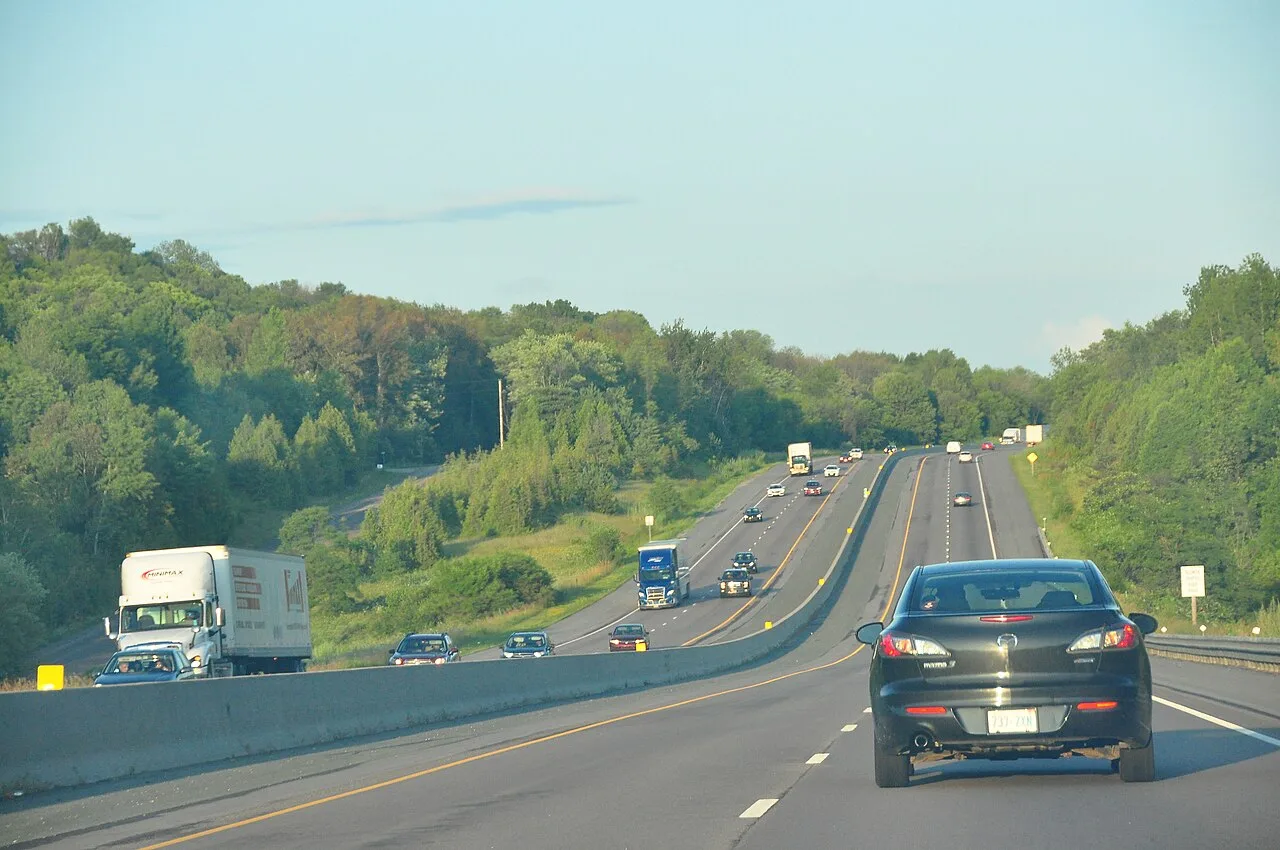
A car earns its cost once Ottawa isn’t the only stop. Kingston’s waterfront and Fort Henry sit almost exactly on the route, a Thousand Islands detour is a short backtrack, and luggage that would fight a coach’s overhead rack rides free in the trunk. Split a compact three ways and it can beat three one-way coach fares before you’ve paid for fuel. Doing the trip solo and staying entirely inside Ottawa’s core, on the other hand, usually costs more in downtown parking than it saved on the road.
If Kingston is the destination and not just a pit stop, our Kingston guide sits on the same highway - don’t try to fold a fort morning into a same-day Ottawa round trip.
The last kilometre in Ottawa
None of the four options ends at your hotel door. VIA’s station sits on Tremblay Road, east of the core, on the O-Train network but still a ride from ByWard or Centretown. Megabus’s default drop-off, Waller St at Laurier Ave, is actually the closer of its two Ottawa endpoints - walking distance from the University of Ottawa and a short hop from ByWard - but the same route also sells arrivals at St Laurent Station, well east of downtown, so read the ticket. YOW sits south of the city with its own taxi rank and rideshare pickup.
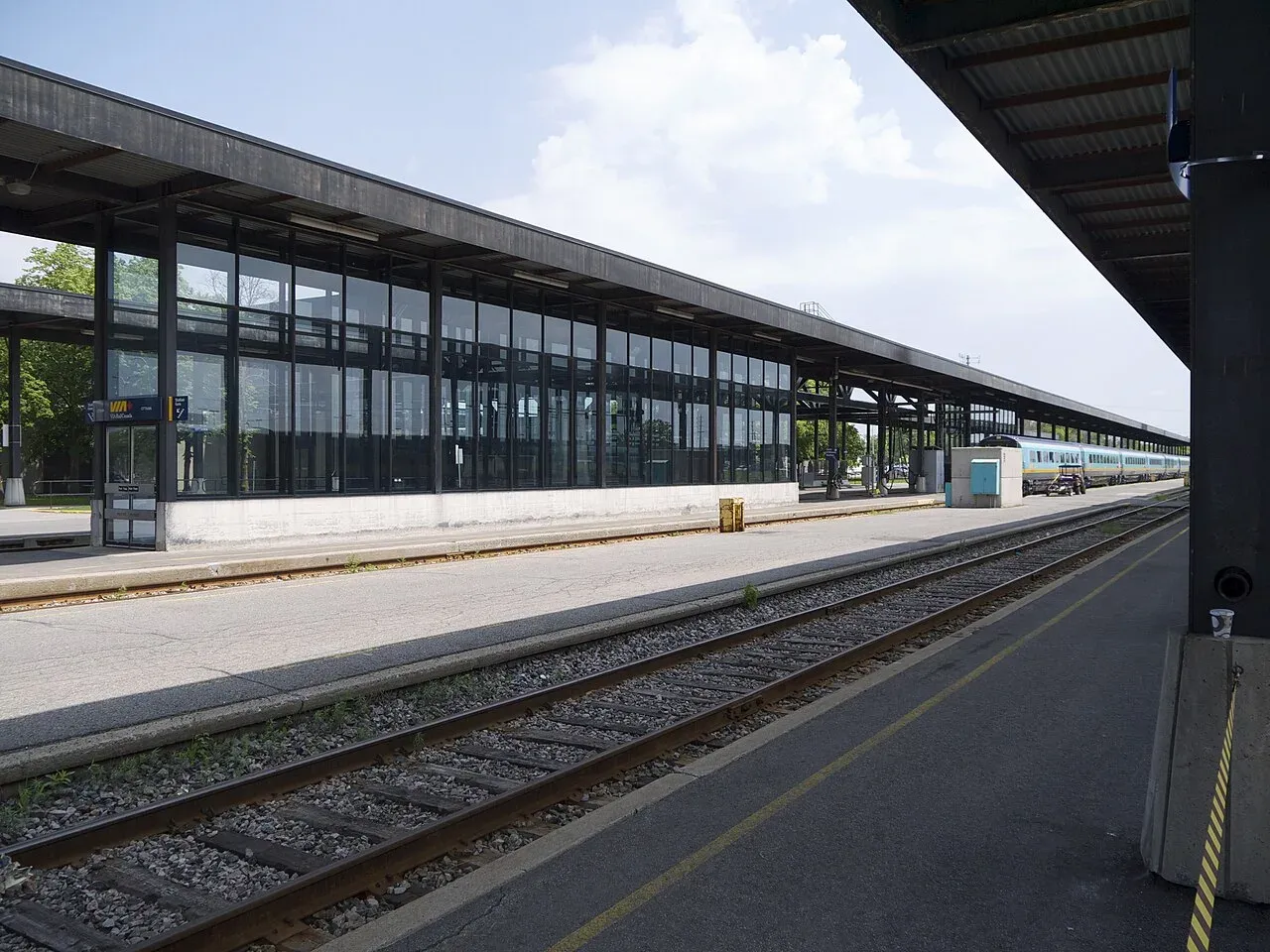
The genuinely new option here: Ottawa’s O-Train now reaches the airport. Line 4’s airport link opened in January 2025, connecting at South Keys to Line 2 and on to Line 1 for downtown - a fare and two transfers instead of an automatic taxi, if you’re travelling light. Full step-by-step from the terminal is on Ottawa airport to downtown. Coach and VIA arrivals stay simpler: OC Transpo buses and a taxi rank both work from Tremblay Road and from Waller Street.
Budget a taxi, rideshare or a car booked ahead if you’re carrying more than a backpack, arriving after dark, or travelling with kids - especially off a late coach or a flight that lands once the trains have thinned out for the night. Once the neighbourhood is fixed, where to stay in Ottawa sorts ByWard versus Centretown versus Gatineau without another spreadsheet.
Book in this order
- Fix the Ottawa bed first. A ByWard or Centretown room on a busy weekend disappears faster than a Corridor Escape seat, and the address decides whether station walking distance is worth paying for.
- Price VIA and Megabus for your actual dates before you look at flights - compare Union departures only, not the Scarborough headline number. With Escape inventory still open, the train usually wins on comfort per dollar.
- Add a flight only once the calendar is genuinely tight. Price the door-to-door total, including the O-Train or a taxi from YOW, not the sub-70-minute gate-to-gate figure by itself.
- Drive if Kingston, luggage or a third passenger changes the arithmetic. Leave the GTA before the Friday crawl builds, or budget the 407 without pretending it’s free.
Run that sequence once and the corridor stops being four separate guesses - it becomes one decision about your dates, made in the right order.
On the map
The map loads on click - to keep the page lightweight.
The map didn’t load. Check your connection and refresh the page.
Read also

Transport · 13 min read
Toronto to Montreal: Train, Bus, Flight or Drive
Verified · September 5, 2026Toronto-Montreal 2026: VIA averages 5h13 over 538 km, Megabus runs 8-13 coaches a day from Union, about 545 km to drive, or a 1h20 flight to YUL.

Transport · 9 min read
Ottawa Airport to Downtown: Line 4, Bus 105 and Taxi
Verified · September 4, 2026YOW to downtown: O-Train Line 4 plus Line 2 for C$4.10, Route 105 around the clock, and Ottawa metered taxi rates with the airport pickup fee.

Transport · 12 min read
London to Calgary Flights: The Rockies Shortcut
Verified · August 31, 2026Air Canada and WestJet fly London Heathrow to Calgary nonstop. What the schedule looks like, how fares move, and why this ticket fits a Banff-first trip.

Transport · 10 min read
London to Vancouver Flights 2026: Airlines and Fares
Verified · August 30, 2026Nonstop London-Vancouver runs on BA and Air Canada from Heathrow and Gatwick. What moves the fare, when it softens, and when to book.