
Car Rental at Vancouver Airport (YVR): On-Site or Downtown
Renting a car at Vancouver Airport (YVR): the eight on-site brands, off-airport shuttles, downtown branch hours and how the BC winter-tire rule works.

Rent at YVR if the car leaves Vancouver with you, and downtown if you’re spending your first days in the city. The airport authority lists eight brands with counters in the parkade across from the terminal: Avis, Alamo, Budget, Dollar, Enterprise, Hertz, National and Thrifty. Four more, Europcar, Routes, SIXT and West Coast Car Rental, send a shuttle to the curbside courtesy zones. The part with a calendar on it is tires: on BC’s signed highways winter tires are required from 1 October to 30 April (31 March on some). An M+S tire, which most rentals carry, meets the rule, and anything better is a question for your brand’s YVR office when you reserve.
Getting to your hotel by train, taxi or transfer is covered in the YVR to downtown guide.
Eight counters, one parkade
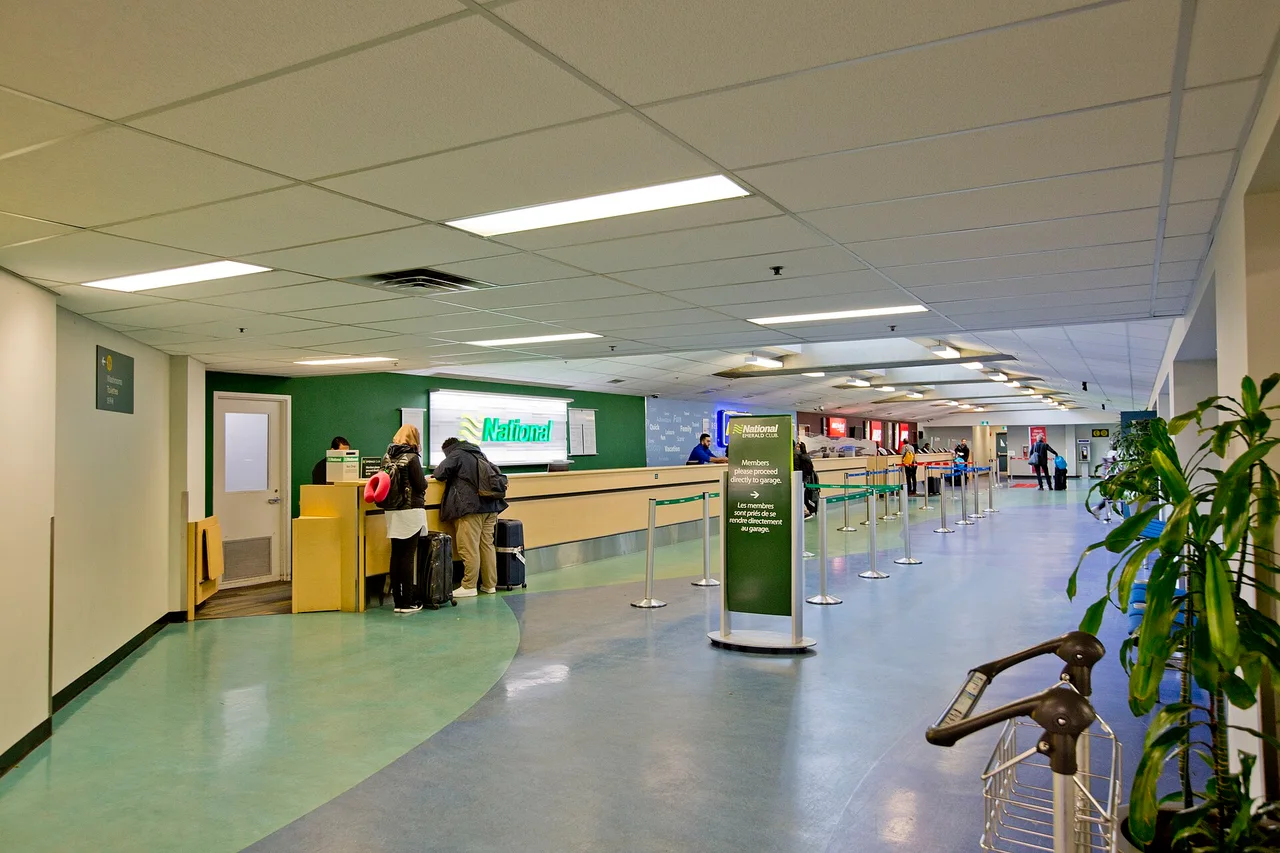
YVR’s own page puts the rental facilities “just steps from the YVR terminal on the ground floor of the parkade”, so you cross the road rather than catch a shuttle. Enterprise describes the walk step by step. Domestic passengers leave baggage claim by the ramp or escalator and cross the street to the parkade’s P0 level; international passengers cross from the customs exit straight to P0, where the booth is ahead of them. Other brands give their own directions, so follow your brand’s instructions over the nearest rental sign.
Counters keep hours, which matters if you land late. On 17 October 2026 Enterprise listed 6:30 am to 11:59 pm daily, Hertz 6 am to midnight and Avis 6 am to 1 am. A flight that lands after your brand closes means collecting in the morning. Returns are easier than pickups: Avis shows a 24-hour drop-off, and both Avis and Enterprise describe parking, locking the car and leaving the keys in a drop box when the desk is shut.
One practical note from the airport authority: if you need a wheelchair-accessible vehicle, give the rental company 48 hours’ notice.
On-site, off-airport or downtown
| Option | Where you collect | Hours on 17 Oct 2026 | Works when |
|---|---|---|---|
| On-site brand | Parkade across from the terminal | About 6 am to midnight or 1 am | You’re driving out of Vancouver on arrival day |
| Off-airport brand | Shuttle from the curbside courtesy zones | Check with the brand | The quote is lower and you have time for a shuttle |
| Downtown or city branch | Avis at Hornby and Georgia, Budget on Cambie | From 8 am to about 5 pm, Budget shorter on weekends | You pick up the morning you leave the city |
All four off-airport brands collect from the Courtesy Shuttle Zones outside Departures Level 3, and the airport’s shuttle page has you call West Coast, Routes or SIXT for the bus on the direct-dial phones on that level. The airport doesn’t post their hours or shuttle frequency, so ask the brand when you compare quotes.
Downtown pickup: fewer fee lines, shorter hours
Part of the airport price is the airport. Avis Canada’s fees page explains that airports charge rental companies a concession fee that’s a percentage of the revenue earned at that location, and that the company recovers it from renters as a “Concession Recovery Fee or Premium Location Surcharge”. It also lists a Customer Facility Charge, which airports impose to pay down the bonds that built or improved the rental facilities. A downtown branch isn’t an airport location, so check that those two lines are missing from its quote. Price the same class for the same dates at both places and read the fee lines, not the headline rate.
The bigger saving is usually days. Spend three nights in Vancouver first and a car collected at the airport spends all of them parked, with the daily rate running and any hotel parking charge on top. The Canada Line covers the airport leg, and Vancouver covers the city. For a single afternoon behind the wheel, the airport’s page also lists Evo car share, with pickup and drop-off in designated zones at Templeton Station and the Park N’ Fly lot. Evo has to approve you first, though: with a licence from outside BC you send it a two-year driving record from your licensing authority, approval takes a few business days, and there’s a one-time C$35 (about US$25) registration fee.

Hours are the trade-off. City branches keep office hours. Avis at Hornby and Georgia listed Monday to Thursday 8 am to 5 pm, Friday 8 am to 6:30 pm and Saturday and Sunday 8 am to 5 pm. Budget on Cambie Street listed Monday to Friday 8 am to 4:30 pm, Saturday 8 am to 3 pm and Sunday 8 am to 1 pm. A Sunday-afternoon pickup at Budget’s branch means a closed door, so for a weekend start check the branch’s hours against your plan or collect at the airport, where Enterprise, Hertz and Avis keep their counters open until about midnight or later.
Winter tires in BC: how the rule works
The rule is easy to misread because it follows signs, not the calendar alone. The province marks designated highways with regulatory signs, and on those routes winter tires or chains are required from 1 October to 30 April. For select highways that don’t cross mountain passes or heavy-snow areas, the requirement ends on 31 March instead. Police can turn you back and fine you for ignoring a sign; the passenger-vehicle fine is C$121 (about US$85).
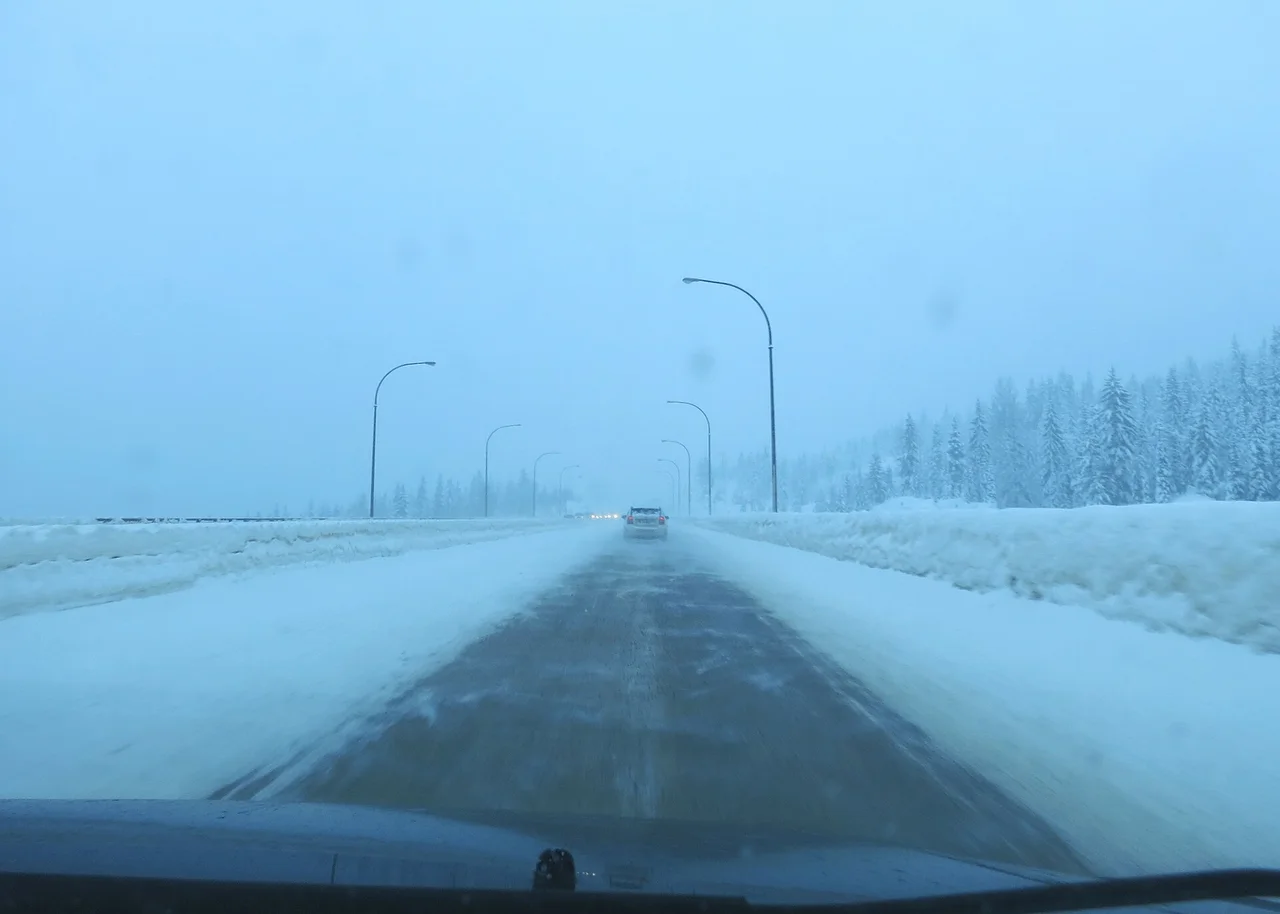
For a rental from YVR, three consequences follow.
- The airport and the city aren’t signed. The province says drivers aren’t required to use winter tires in many areas along the coast, and its South Coast map draws the roads from YVR to downtown, Richmond and the North Shore as undesignated; the Ministry doesn’t put route signs inside municipal boundaries unless the municipality asks. Ski hills set their own rules, though. On pages read on 17 October 2026, Cypress Mountain says winter tires are required on Cypress Bowl Road from 1 October to 30 April, and Mt Seymour says every vehicle going up between 1 October and 31 March needs winter tires marked with the snowflake or M+S, with its attendants free to deny access.
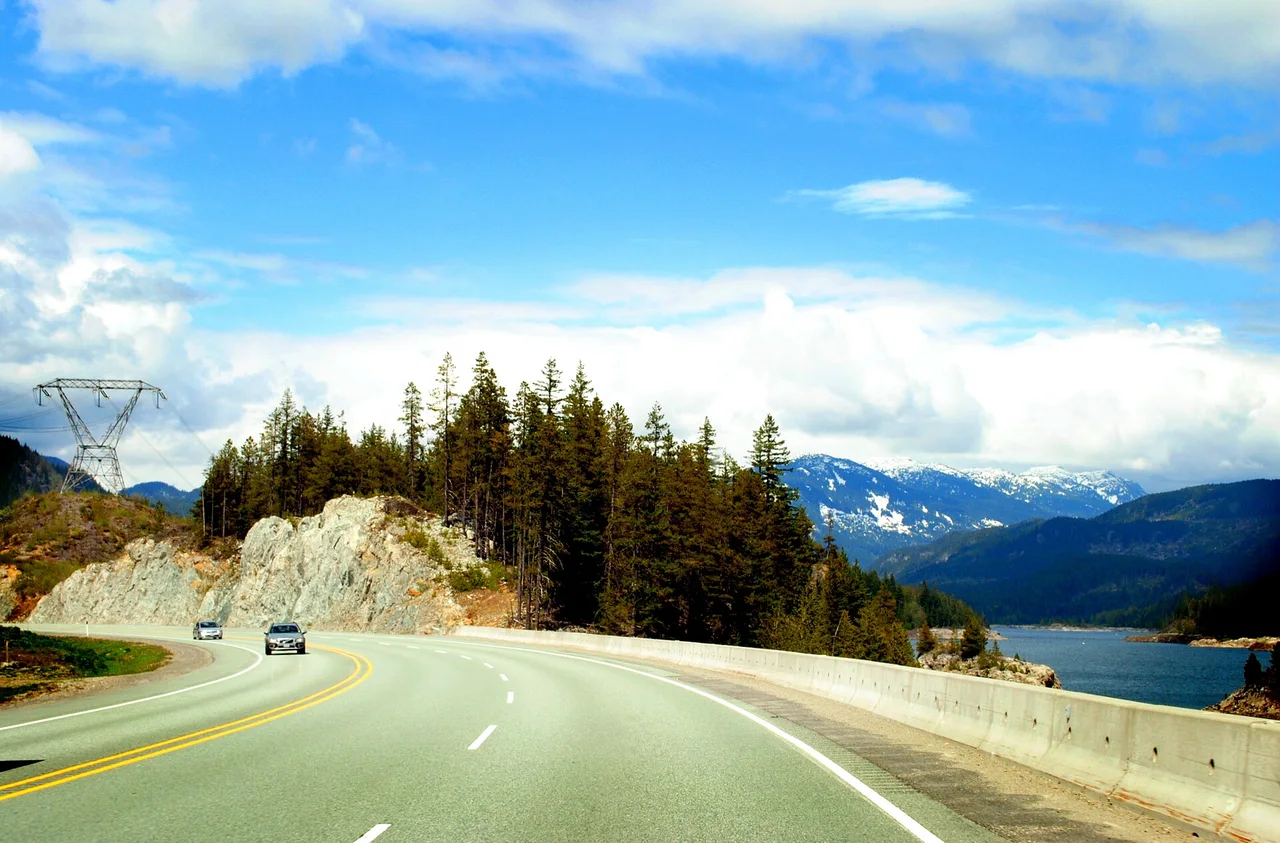
- The designated lines start outside the metro area. On the same map, Highway 99 from Horseshoe Bay through Squamish and Whistler to Pemberton is on the shorter 31 March calendar, and Highway 1 up the Fraser Canyon from Hope is too. A day trip to Whistler in December is a signed drive. Heading east instead, the Coquihalla (Highway 5) and Highway 3 out of Hope stay on the full 30 April calendar.
- Visitors aren’t exempt. All out-of-province vehicles and rentals have to follow the same rule.
What a YVR rental will have on its wheels
A legal winter tire has at least 3.5 mm of tread and is marked either with the letters M and S or with the three-peak mountain snowflake. M+S is the legal minimum. The snowflake, which includes all-weather tires, grips better on snow and ice. Summer tires aren’t allowed on signed routes in the designated months, and chains on summer tires don’t count as a substitute.
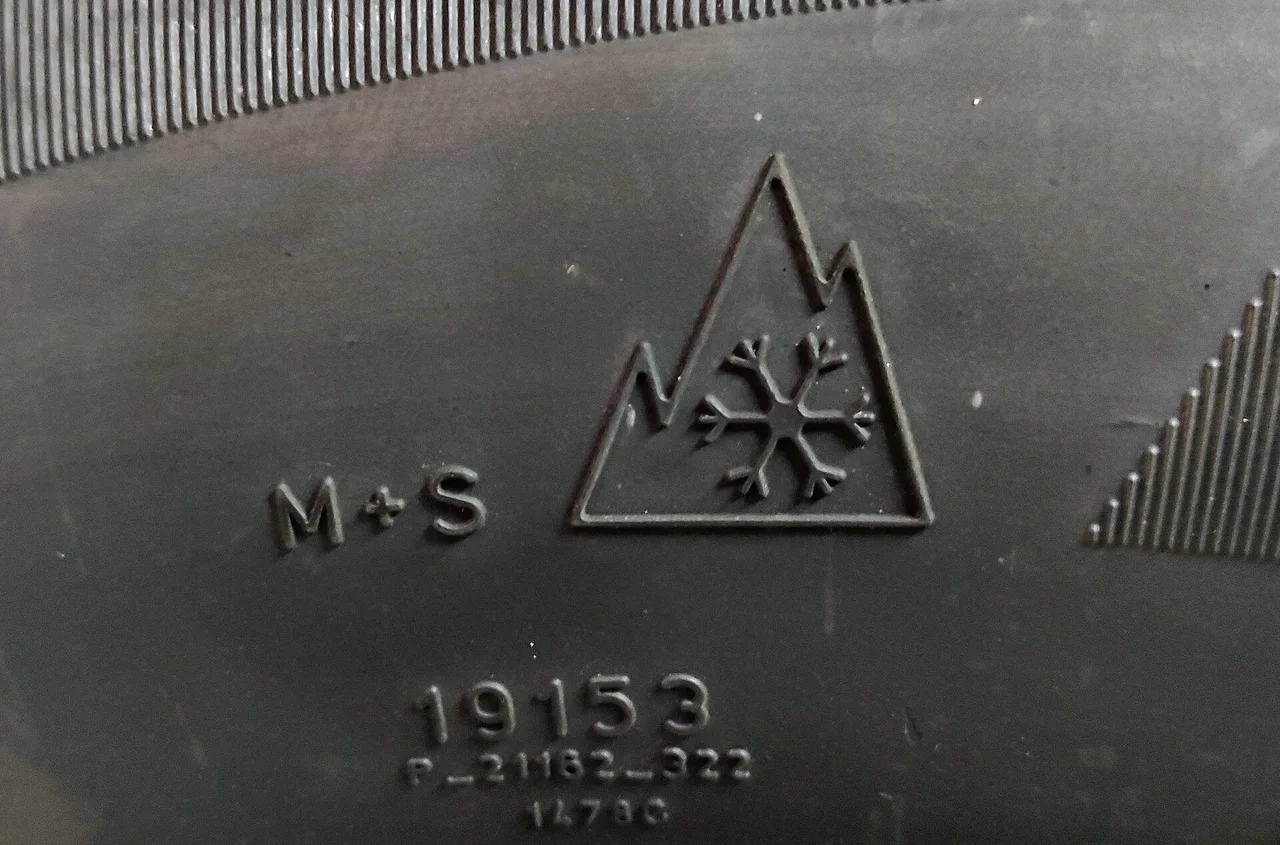
The province’s guidance for renters is plain: most rental vehicles carry M+S tires, which meet the minimum, but if you’re travelling beyond Greater Vancouver or Greater Victoria it’s a good idea to make sure the car has winter tires. Because M+S already satisfies the rule, the reason to ask for something better is grip, not legality. On the brand side, Enterprise’s YVR page says winter tires are offered during certain months and depend on availability at the location, and tells you to contact the rental office directly for availability and price. Avis says it does offer cars with “snow tires” and to check with the pickup location. Enterprise doesn’t offer chains or traction devices.
So the plan is two checks. Ask the YVR office about winter tires when you reserve, because availability is decided at the location and the counter on arrival day may have none left. Then look at the sidewall of the car you’re handed: M+S or the snowflake, and no summer tire.
An email for your brand’s YVR office
If your trip includes a signed route between 1 October and 30 April (31 March on Highway 99 to Whistler), send a short email to the YVR office of your brand and keep the reply with the booking:
I’m booking a mid-size car from [date] to [date] and will drive Highway 99 to Whistler. Please confirm which tire marking the car will carry (M+S or three-peak snowflake), whether winter tires are available for my dates and what they cost, and what time your counter closes on the day I land.
For licence rules, young-driver surcharges and one-way fees across Canada, renting a car in Canada is the place to start, and British Columbia sets the province’s seasons against the roads you’ll drive.
On the map
The map loads on click - to keep the page lightweight.
The map didn’t load. Check your connection and refresh the page.
Read also

Car rental · 12 min read
Car Rental at Calgary Airport (YYC): Counters, Tires, Fees
Verified · October 22, 2026Renting a car at Calgary Airport (YYC): where the Rental Car Centre is, counter hours from 7 am, winter tire rules west of the city and return fees.

Car rental · 9 min read
Car Rental at Toronto Pearson (YYZ): Terminal 1 vs 3
Verified · September 3, 2026YYZ car rental: on-site counters in both garage Level 1s, Terminal Link to Viscount for off-airport fleets, and when to skip the car.

Car rental · 13 min read
One-Way Car Rental in Canada: The Calgary-Vancouver Drop Fee
Verified · August 22, 2026One-way Calgary to Vancouver: the one operator that actually publishes a drop fee, the Alberta-BC winter myth, and the BC tire rule the route crosses into.

Car rental · 13 min read
RV Rental in Canada: Costs, One-Way Routes & Tips
Verified · August 1, 2026What an RV rental in Canada really costs: the C$7,500 deposit, kilometre packages, one-way fees that flip by direction, and the arrival-day trap.