Yoho National Park: Banff's Quiet BC Side
Yoho National Park is Banff's quieter BC neighbour: Emerald Lake, Takakkaw Falls, the Burgess Shale and how to win a Lake O'Hara bus seat.
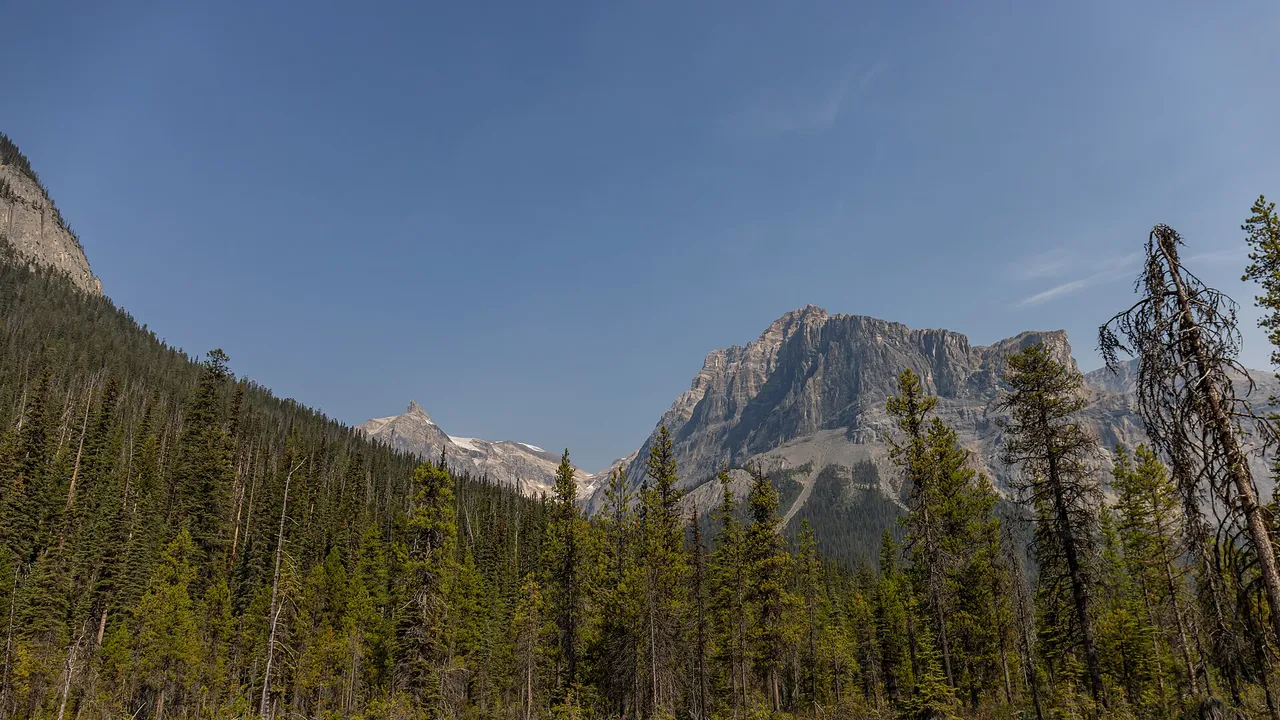
Yoho National Park is the quiet British Columbia side of the Rockies, sharing a boundary with Banff but almost none of its crowds. It holds three things worth crossing the provincial line for: Emerald Lake, one of Canada’s tallest waterfalls, and Lake O’Hara, an alpine basin so protected you have to win a lottery to ride the bus in. The catch is entirely in that last one - crack the Lake O’Hara reservation and Yoho hands you the Rockies with the volume turned down.
Most people who drive the Trans-Canada through the mountains never notice they have left Alberta. The Lake O’Hara trailhead sits barely 12 km from Lake Louise, yet Yoho draws a fraction of the traffic next door - about 683,000 visits in 2024-25 against Banff’s 4.2 million. That gap is the whole reason to come, and most of what follows is about spending a day here without wasting it on the one place you can’t simply turn up for.
Yoho is the easy escape from Banff’s crowds
Yoho lies just across the Alberta-BC boundary from Lake Louise, on the west side of the Kicking Horse Pass, and the Trans-Canada Highway runs straight through the middle of it. The park belongs to the same Canadian Rocky Mountain Parks World Heritage Site as its famous neighbour, which means the same peaks, the same glacier-fed lakes and the same railway history, just far fewer people looking at any of it. The village of Field, a scatter of houses and a couple of cafes beside the river, is the only real settlement and the natural base.
You still need a Parks Canada pass to be here, and the 2026 free-entry summer window (19 June to 7 September) applied exactly as it did in Banff. Rather than repeat the small print, I’ve set all of it out in the Banff National Park guide: the passes, the Canada Strong Pass dates and what the free window did and didn’t cover all carry straight across the boundary.
The roadside big three
Emerald Lake
Emerald Lake is the largest lake in Yoho and the easiest of its sights to reach: a paved road runs right to the shore, where a historic lodge, a canoe dock and a flat trail wait. The colour is the point. Like the park’s other lakes it’s fed by glacial meltwater carrying fine rock flour, which scatters the light into that unreal green, at its strongest in the afternoon sun of high summer. The loop around the lake is about 5 km and almost dead flat, ninety minutes at a stroll, and renting a canoe for an hour is one of the better small splurges in the Rockies. Don’t confuse it with the other Emerald Lake near Carcross in the Yukon; same name, opposite corner of the country.
Takakkaw Falls
Takakkaw Falls is the one that stops conversation. Commonly ranked the second-tallest waterfall in Canada, it drops about 254 m in its main plunge - total-height figures vary between sources, so I’ll not pretend to a single exact number - fed straight off the Daly Glacier above. The name comes from a Cree word for something close to “it is magnificent”, which for once is not tourist-board hyperbole.
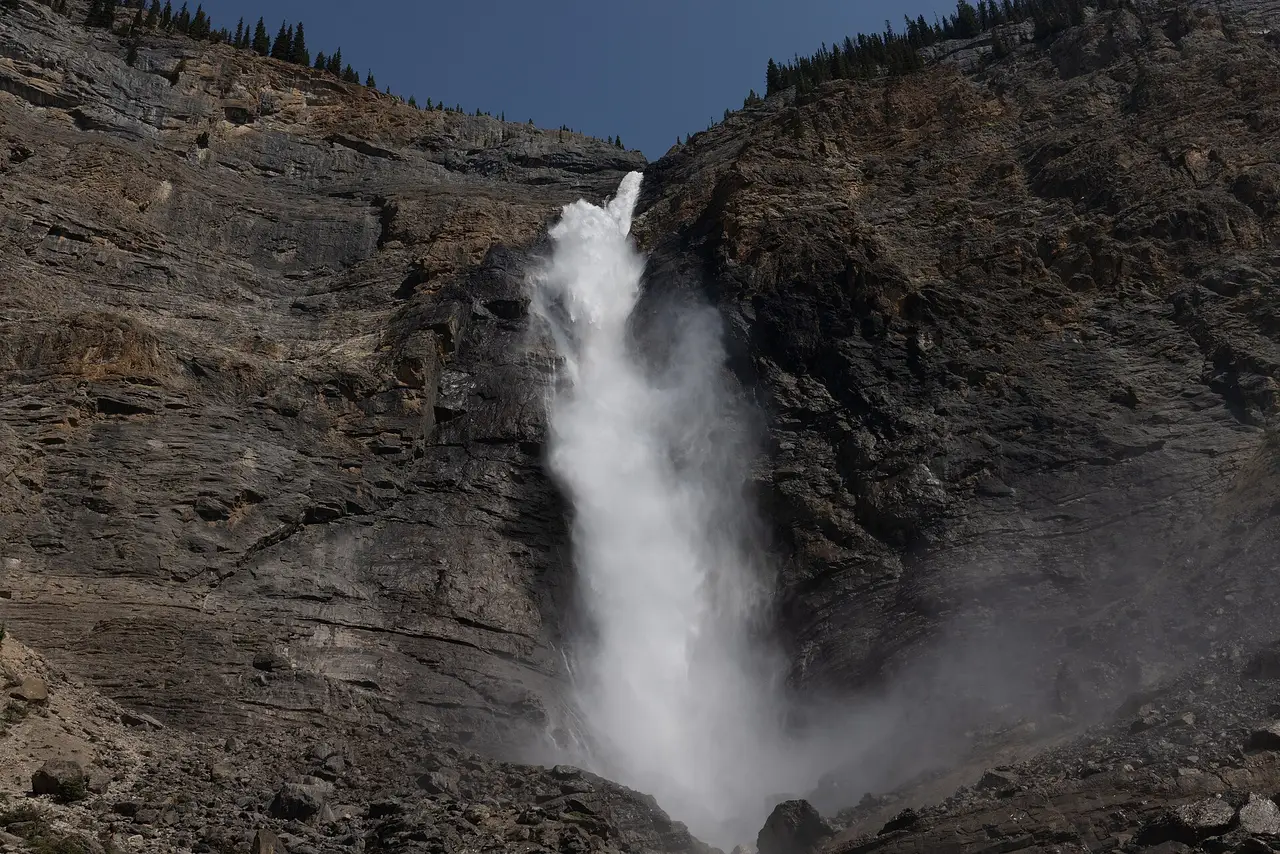
Getting there has a catch. The Yoho Valley Road that climbs to it’s narrow and switchbacked, closed through winter and closed year-round to large RVs and trailers - there’s a hairpin the big rigs simply can’t make. From the parking lot it’s a short, flat walk to the base, close enough to feel the spray.
Natural Bridge and Wapta Falls
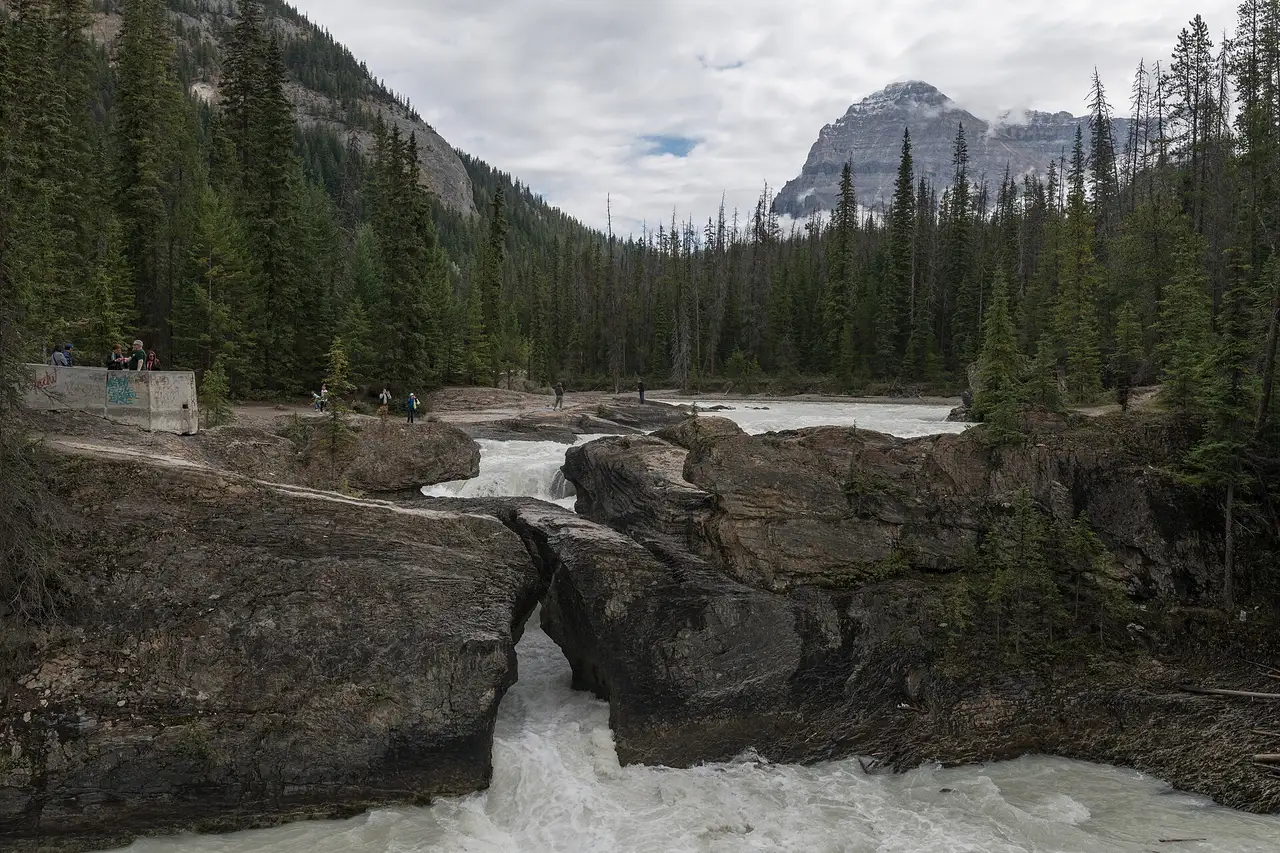
Two more water stops ask almost no effort. The Natural Bridge, on the road toward Emerald Lake, is a slab of rock the Kicking Horse River has bored straight through rather than tumbled over, a two-minute walk from the parking lot and a good leg-stretch on the way to the lake.
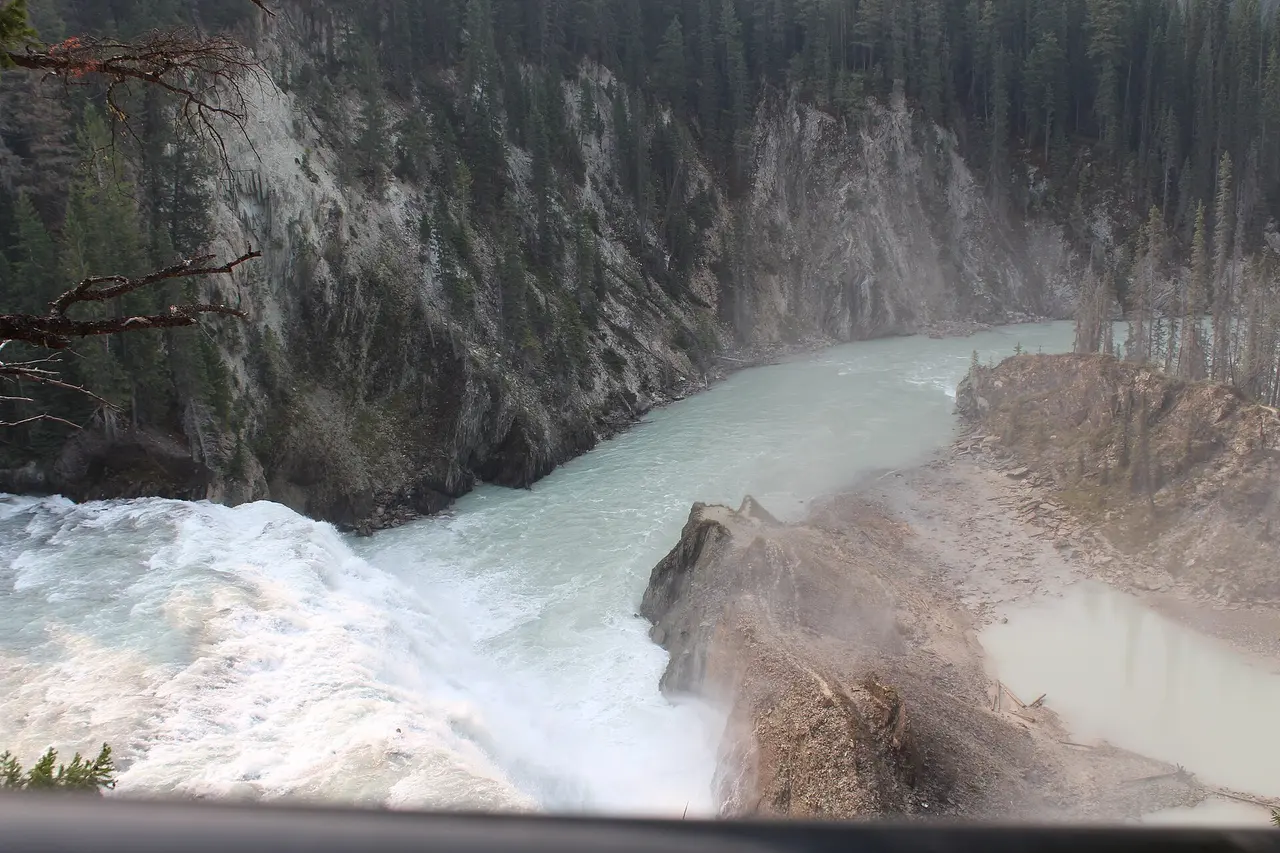
Wapta Falls, at the park’s western end, is the opposite of Takakkaw: not tall but broad, the biggest waterfall on the Kicking Horse River, roughly 18 m high and over 100 m wide, a churning wall of meltwater in spring. It is a walk of about 2.3 km each way. One thing worth carrying: some maps and photos mislabel Wapta as being on the Kootenay River or in Alberta. It’s neither - it’s the Kicking Horse River, in Yoho, in British Columbia.
Lake O’Hara: the one you have to plan for
Lake O’Hara is Yoho’s jewel and its hardest ticket. It is a small alpine lake in a basin at about 2,020 m, ringed by larch and rock walls and laced with one of the finest trail networks in the Rockies, the Alpine Circuit chief among them. Parks Canada protects it by keeping cars out entirely: private vehicles are banned on the 11 km access road.
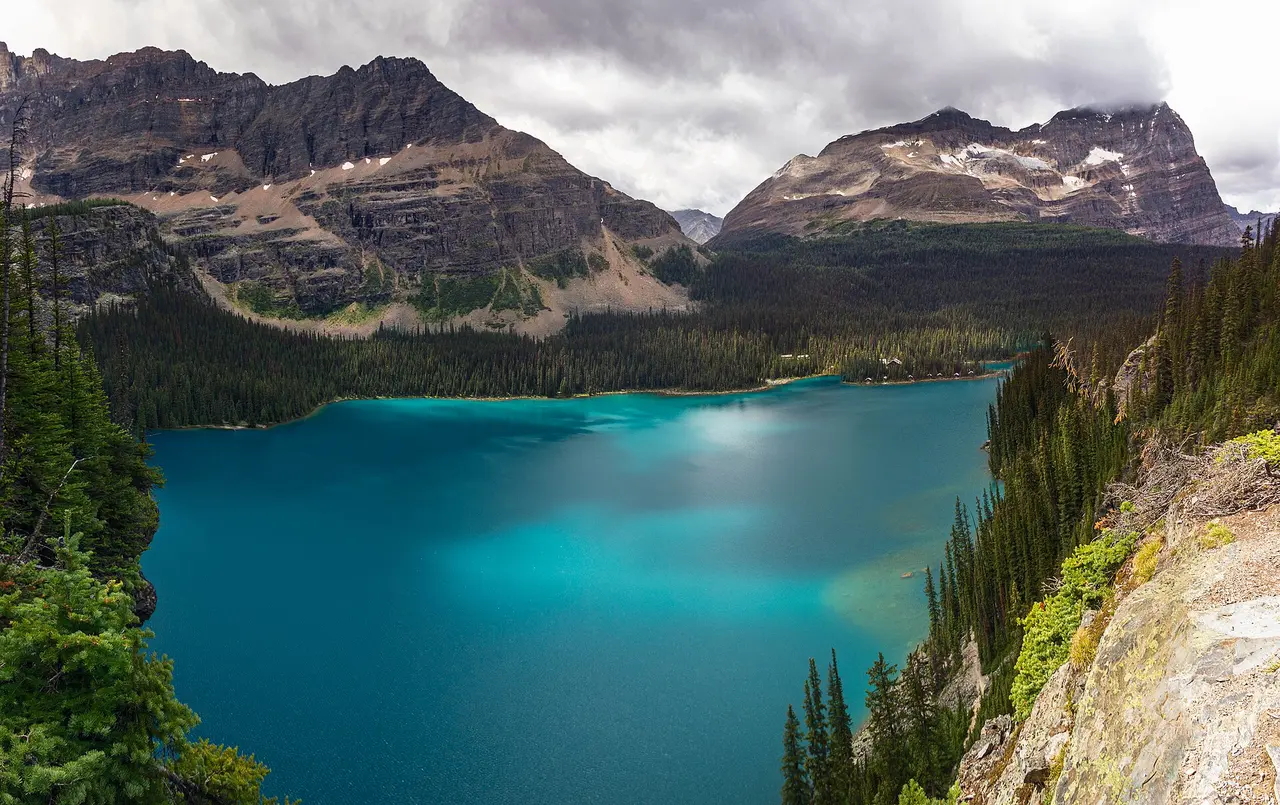
You reach it on a quota shuttle bus that carries up to 42 day-use visitors, plus overnight campers and lodge guests, and those day-use seats are the bottleneck. They’re handed out by a random draw, not first-come-first-served: for 2026 the application window is 2 to 23 March, through the Parks Canada Reservation Service or by phone. You can legally walk the 11 km road in instead, but it’s a long, dull grind on gravel with no guaranteed ride back, and you reach the trailheads with your best hours already spent. This is a place you plan around months ahead, and I have set out the exact steps at the end of this guide.
The Burgess Shale
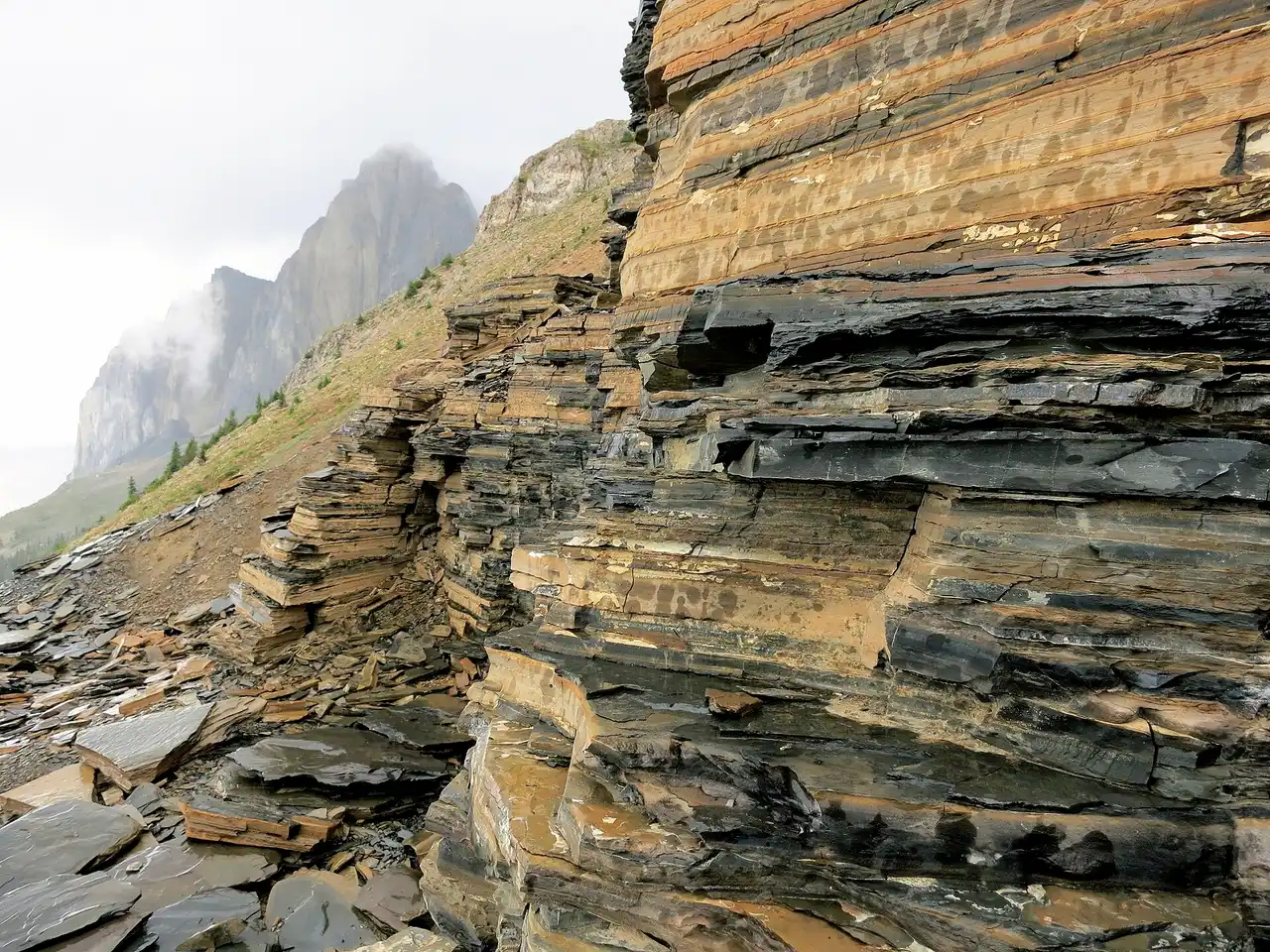
High on the slopes above Field lies one of the most important fossil sites on Earth. The Burgess Shale preserved soft-bodied Cambrian animals - not just shells and bones but whole creatures - in rock about 508 million years old, and what it revealed rewrote the story of early animal life. These aren’t fossils you stumble on: the Walcott Quarry and the Mount Stephen beds are reachable only on guided, reservation-based hikes, and they’re long, steep days out. If the deep history of life is your thing, book one well ahead; if not, knowing it is up there while you stand by Emerald Lake is its own quiet thrill.
The Spiral Tunnels and Field
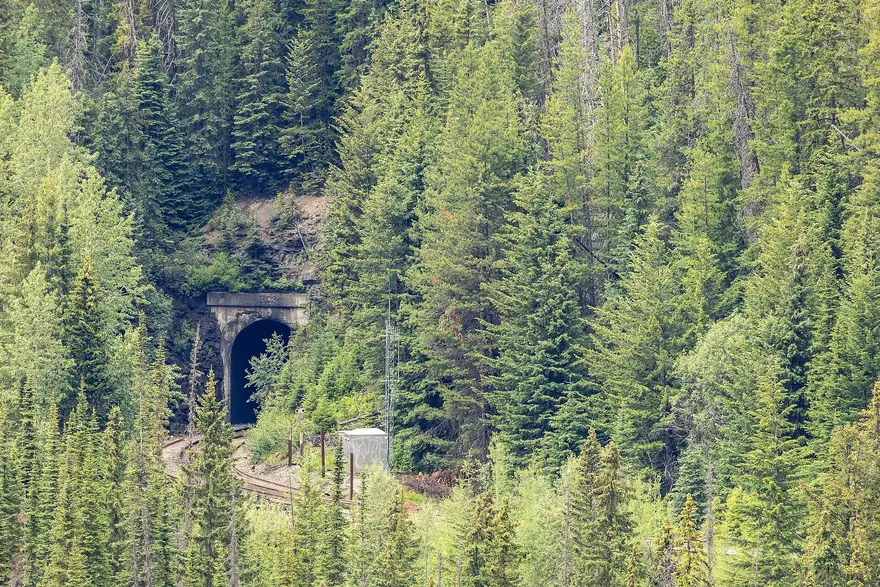
Yoho’s other claim is engineering, not nature. The original railway grade over the Kicking Horse Pass was so brutally steep that runaway trains were a regular disaster, so in 1909 the line was rebuilt into the Spiral Tunnels: two loops bored inside the mountains, so the track gains height gently by curling back over itself. From the Trans-Canada viewpoint, if the timing is kind, you can watch a single freight train long enough to be entering one tunnel and leaving another at the same moment, on two different levels of the mountain.
Field itself is worth a pause. It’s a working railway village more than a resort, with a visitor centre, a couple of good places to eat and the Kicking Horse River sliding past below Mount Stephen. Staying here, or out at Emerald Lake, is what turns Yoho from a rushed detour into a trip of its own.
How to visit: a day trip or a stay
For most people Yoho is a day trip from Lake Louise or Banff, and a good one: Emerald Lake, Takakkaw Falls, the Natural Bridge and the Spiral Tunnels viewpoint fit comfortably into a single day, none of them needing a reservation. That’s the version to plan if Lake O’Hara doesn’t come through. Staying over, in Field or at Emerald Lake Lodge, buys you quiet mornings before the day-trippers arrive over the pass, and it’s the only sane way to do a Lake O’Hara or Burgess Shale day without a pre-dawn drive. If Yoho is one stop on a bigger loop, it drops neatly into a Canadian Rockies road trip alongside Banff and the Icefields Parkway north to Jasper.
How to actually get into Lake O’Hara
The reservation is the one genuinely hard part of a Yoho trip, so here’s the process, start to finish. Check every date against the Parks Canada Lake O’Hara page before you act, because the system shifts a little each year.
- Decide day-use or overnight. Overnight - the campground, or Lake O’Hara Lodge - is booked separately and fills fast. Most visitors want the day-use bus, and that’s what these steps are about.
- Enter the random draw. For 2026, applications are accepted from 2 to 23 March through the Parks Canada Reservation Service (or by phone on 1-877-RESERVE). It is a draw, not a race, so applying on the first morning gives you no edge over the last.
- If you win, you get a bus seat for your chosen date. The day-use bus runs roughly 19 June to 4 October 2026, then nothing until the next season; build the trip around your date rather than the other way round.
- If you lose, you have three honest options: watch for cancellations closer to the day, walk the 11 km road in (a long day, no guaranteed shuttle out), or let it go and spend the day at Emerald Lake and Takakkaw Falls instead, which need no booking and are hardly a consolation prize.
- Whatever you settle on, confirm the current dates, quota and process on the official page before you commit. And remember Yoho sits next to very different country: trade the alpine for temperate rainforest and Pacific surf on the coast at Pacific Rim, the other British Columbia national park in this cluster.
One point applies to every park here: whether you need a visa or an eTA to enter Canada depends on your nationality and changes over time, so check the current rules in our Canada eTA and visa guide and confirm with the official source before you travel.
On the map
The map loads on click - to keep the page lightweight.
The map didn’t load. Check your connection and refresh the page.
Admission and opening hours
- Admission price
- A Parks Canada pass is required, and admission to all Parks Canada places was free from 19 June to 7 September 2026 under the Canada Strong Pass, standard fees again from 8 September 2026 - the same system as neighbouring Banff. Lake O'Hara day-use bus seats are allocated by a separate random draw.
- Opening hours
- Open year-round, though the Yoho Valley Road to Takakkaw Falls is closed in winter and to large RVs and trailers. The Lake O'Hara day-use bus runs roughly 19 June to 4 October 2026, then nothing until the next season.
Fees work as in Banff, and the 2026 Canada Strong Pass applied the same way - see that guide for the fine print. Lake O'Hara draw and bus dates change yearly; confirm at parks.canada.ca before you travel.
Details checked: July 24, 2026
Read also

National parks · 11 min read
Point Pelee: Birding, Monarchs and Canada's Southern Tip
Verified · August 29, 2026Point Pelee in practice: the shuttle to the Tip, monarch season timing, Festival of Birds dates, 2026 fees, and why free admission ended before the peak.

National parks · 8 min read
Kluane: Icefields, Flightseeing and Mount Logan
Verified · August 28, 2026Kluane National Park 2026: Kathleen Lake trails, C$30 camping, Rocking Star flights from C$250, and Mount Logan at 5,959 m.

National parks · 7 min read
Riding Mountain National Park: Bison, Clear Lake & Highlands
Verified · August 27, 2026Riding Mountain in 2026: Lake Audy bison from your car, Clear Lake beaches, Wasagaming camping fees and the drive from Winnipeg.

National parks · 8 min read
La Mauricie National Park 2026: Parkway, Lakes & Camping
Verified · August 26, 2026La Mauricie NP: two hours from Montreal or Quebec City. 2026 gate C$10, 64 km Parkway, camping from C$33.75, Navette Nature shuttles.