
Where to Stay in Victoria: Best Areas & Hotels
Where to stay in Victoria BC: the best areas for a first visit, from the Inner Harbour to James Bay and Oak Bay, plus hotel taxes and the ferry over.
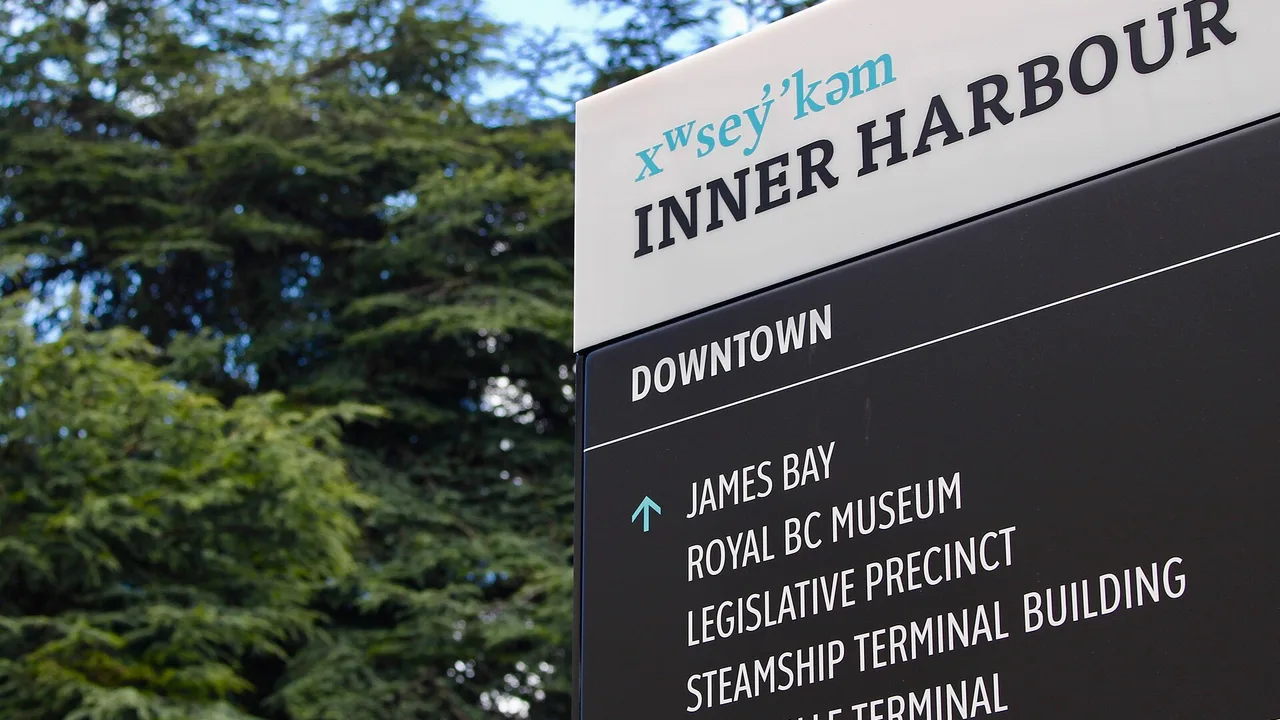
The neighbourhood question matters less in Victoria than it does in most cities, because the whole downtown core is a fifteen-minute walk end to end. What actually decides a booking here is three things that never show up in the nightly rate: how close to the water you want to be, a tax stack that lands near sixteen per cent, and short-term rental licensing tight enough that a listing you find online might not be legal to book.
Once those three are settled, pick by trade-off rather than by map. Want everything on foot and don’t mind paying for it: the Inner Harbour or Old Town. Want the same walkability for less: James Bay, one street back from the water. Want the view rather than the address: Vic West, across the harbour. Want a slower pace or an early ferry and don’t mind a bus ride in: Oak Bay or Sidney.
The areas, ranked by trade-off
| Area | Best for | Price | The catch |
|---|---|---|---|
| Inner Harbour / Downtown | first visit, no car | $$$ | priciest, parking extra |
| Old Town / Chinatown | character, food, nightlife | $$-$$$ | busier on weekend nights |
| James Bay | quiet and central, B&Bs | $$ | fewer big-chain hotels |
| Fairfield / Cook Street | local, leafy, longer stays | $$ | a walk or bus from the harbour |
| Rockland | heritage B&Bs, quiet | $$-$$$ | uphill, residential |
| Vic West / Songhees | the skyline view, walkway | $$-$$$ | across the harbour from the sights |
| Oak Bay | slow, seaside, genteel | $$-$$$ | 10-15 min out, needs the bus |
| Sidney / near ferry | early boats or flights, a car | $-$$ | 25 km north of the city |
That price column is a rough guide, not a quote. Victoria rooms swing hard with the season, and summer, when the whale boats and the gardens both peak, is the expensive end of the year.
The Inner Harbour and downtown: the default first choice
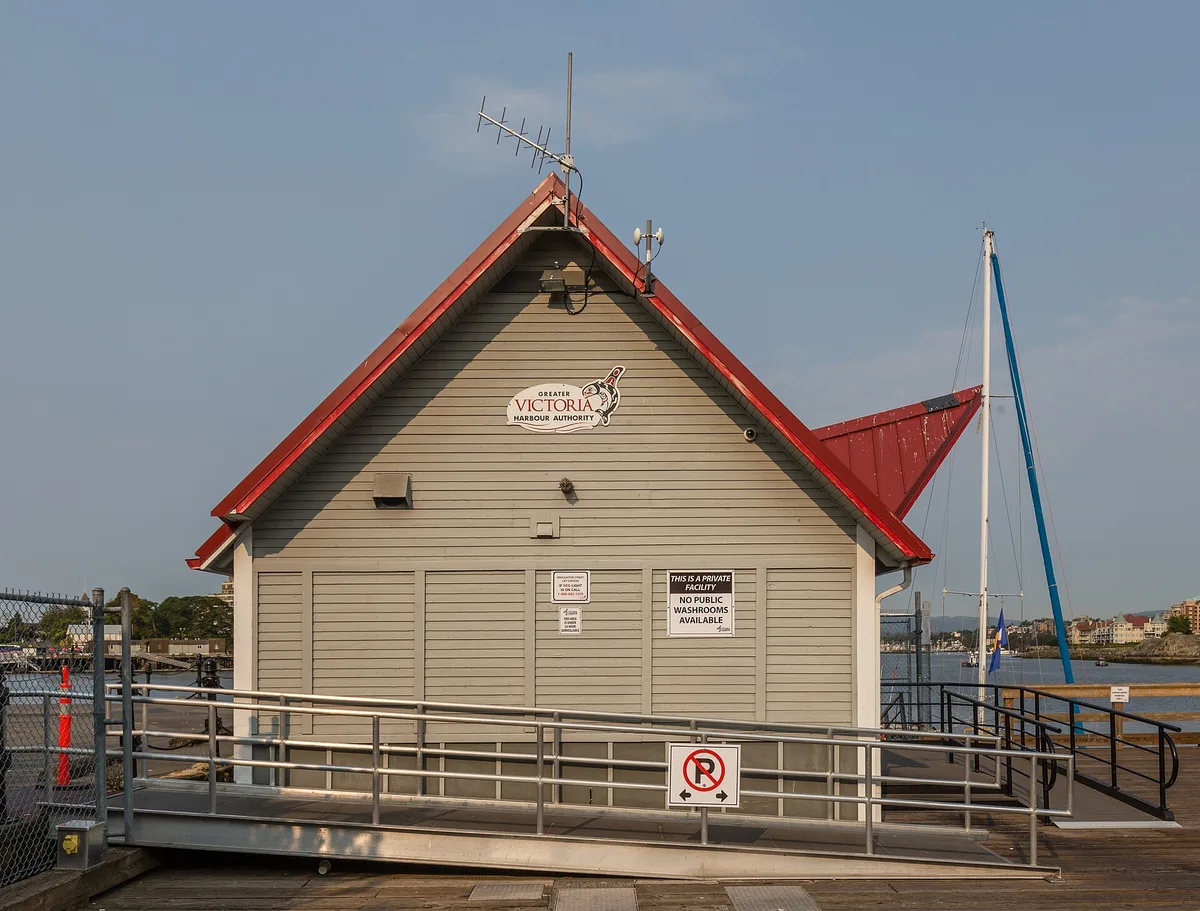
Base yourself here if you arrived without a car, because that’s who this area actually suits: the priciest rooms on the list, with parking charged on top of an already-high rate. What that buys you is everything within a flat walk - the Parliament Buildings, the Fairmont Empress, the Royal BC Museum, Chinatown, and the dock the harbour ferries and whale boats leave from. Two or three nights is about right here; stretch it much longer and the appeal of not touching a car wears thinner than the bill.
If you only want one thing from your hotel, make it a harbour view; the floodlit legislature reflected in the water after dark is the image people take home. Our full Victoria guide covers what sits around the harbour so you can judge how central you actually need to be.
Old Town and Chinatown: character and food
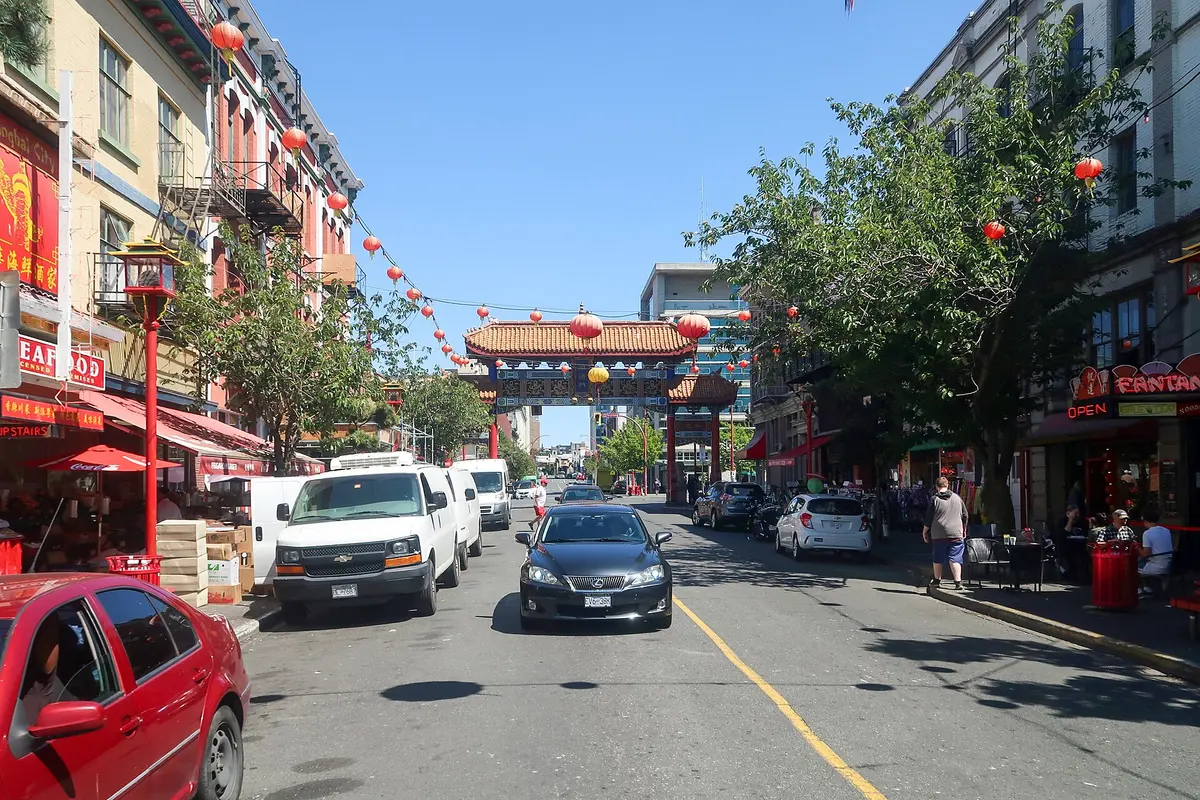
Just north of the harbour, the Old Town is Victoria’s heritage core, all brick warehouses, Johnson Street’s hidden courtyards and the oldest Chinatown in Canada. It has the best of the city’s restaurants and bars and a good stock of boutique hotels in converted heritage buildings, and it’s still a flat five-minute walk to the harbour. The only trade is noise: the blocks around the bars can be lively on a weekend night, so ask for a room off the street if you’re a light sleeper.
James Bay: quiet, central and better value
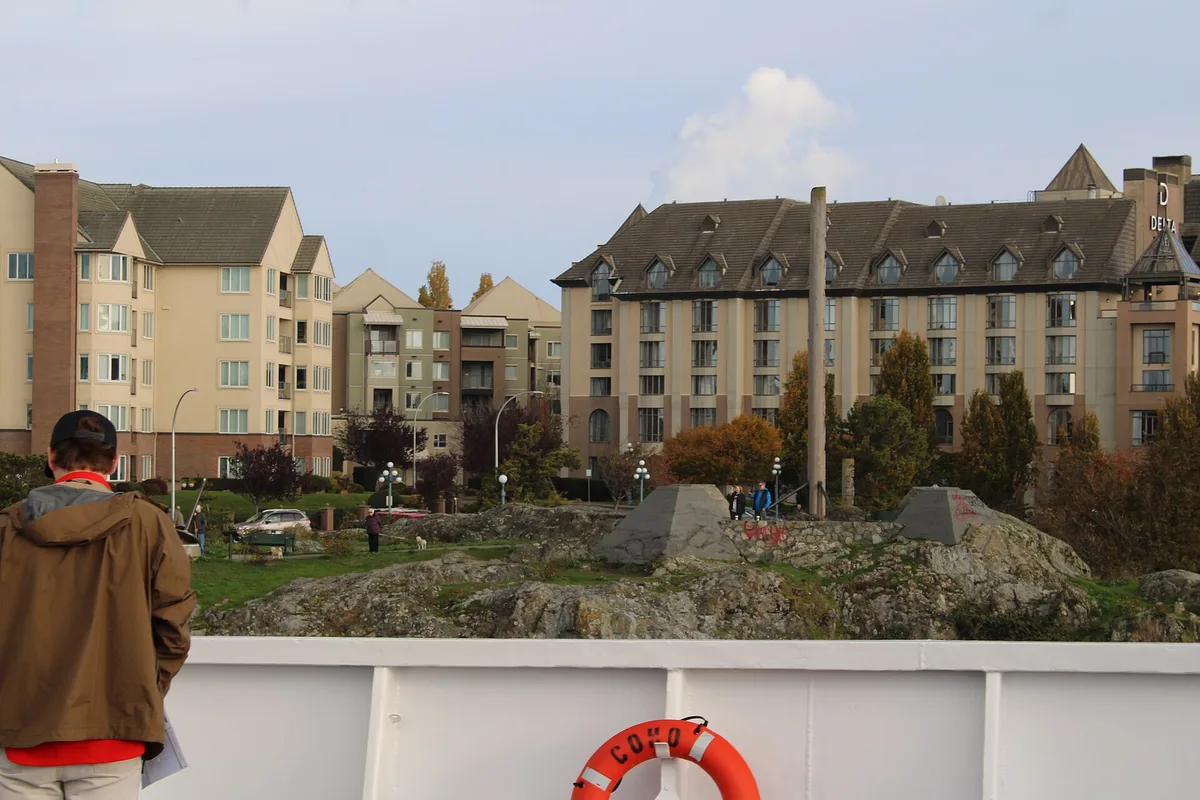
If I had to name the best-value base in Victoria, it is James Bay, the residential neighbourhood wedged between the Inner Harbour and Beacon Hill Park. You’re still a flat ten-minute walk from the legislature, but the streets are quiet, the buildings are heritage houses rather than towers, and the rooms lean toward bed-and-breakfasts and mid-range hotels at gentler rates than the harbourfront. The Coho ferry to Port Angeles in Washington State docks here too, which makes it handy if you’re crossing to or from the United States.
Fairfield, Cook Street Village and Rockland
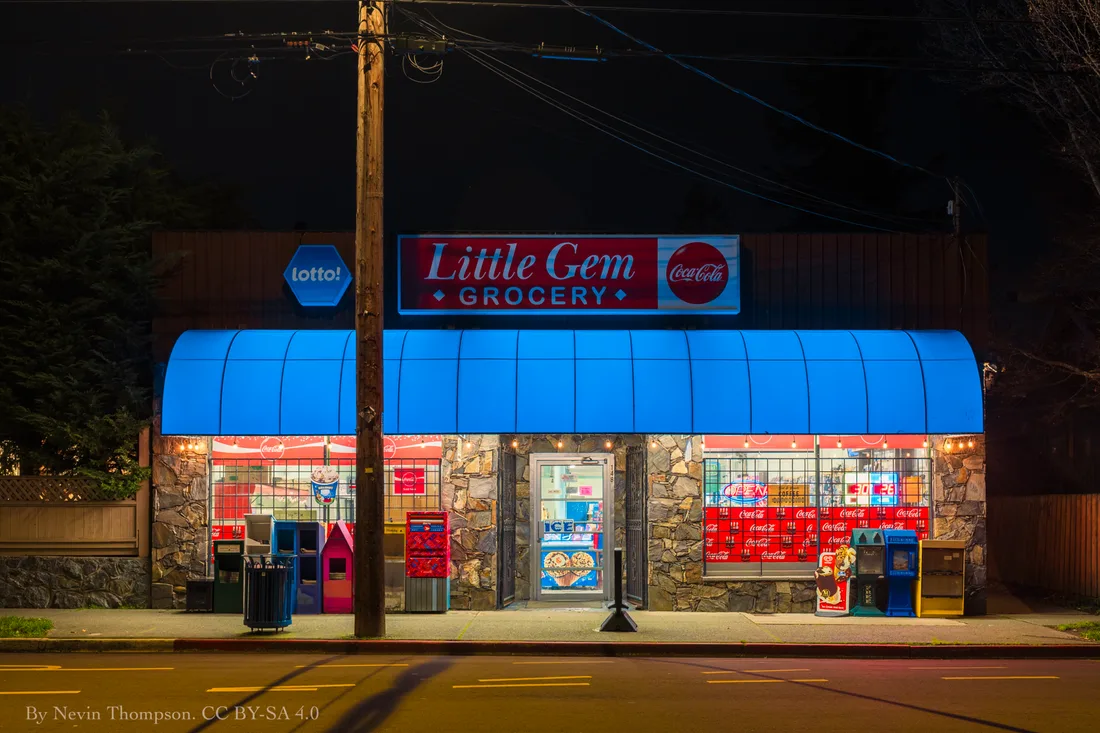
East of downtown, three residential pockets suit a longer or more local stay. Fairfield and Cook Street Village sit on the far side of Beacon Hill Park, leafy and low-rise, with independent cafes and an easy walk down to the Dallas Road clifftop. Rockland, uphill behind them, is the old mansion district around Craigdarroch Castle and Government House, where the accommodation is mostly grand heritage bed-and-breakfasts. All three are quiet and green, and the trade is the same: you’re ten to twenty minutes on foot or a short bus ride from the harbour, so they reward travellers who want a neighbourhood over a front-row seat.
Vic West and Songhees: the view from across the water
Cross to the west side of the harbour and you get the one thing the downtown hotels can’t sell you: the view of themselves. Vic West and the Songhees waterfront line the far shore, with a paved walkway that traces the harbour and looks straight back at the lit-up skyline. A handful of hotels and condo-style stays sit here, and a tiny harbour ferry hops you across to the Empress in a few minutes, so you’re close without being in the thick of it.
Oak Bay and Sidney: slower stays and early boats
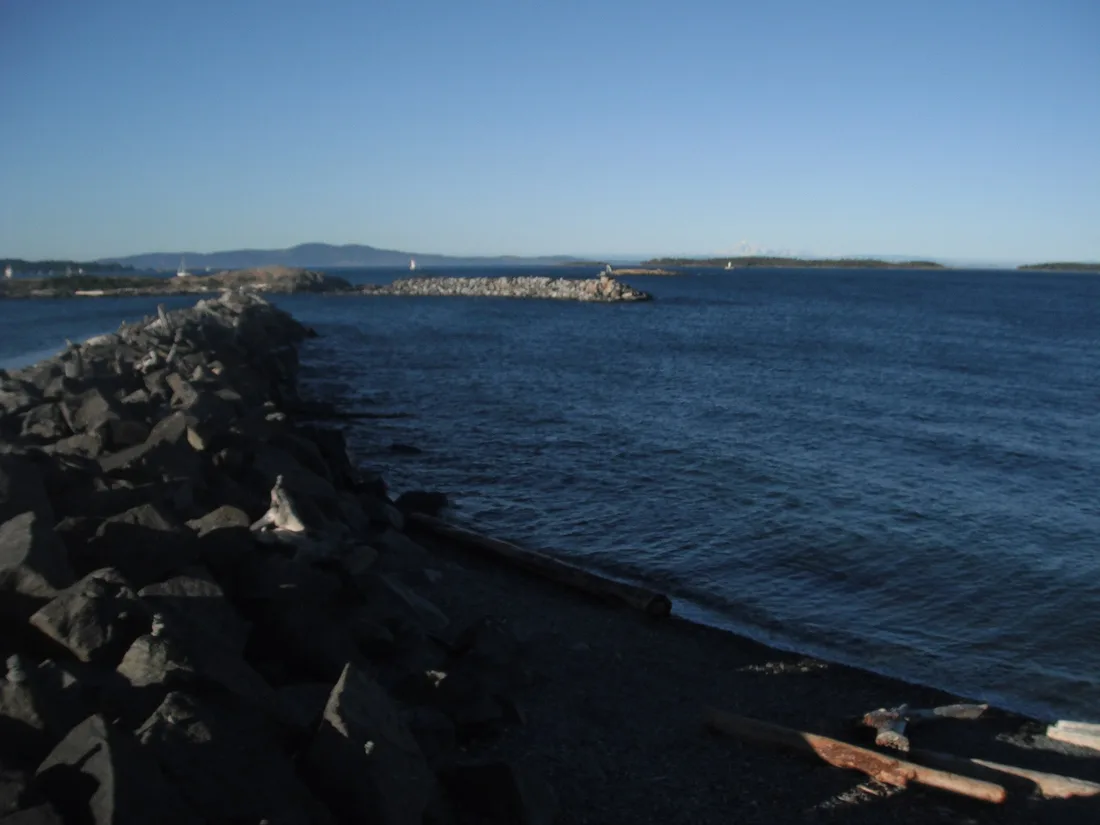
Two places outside the centre are worth knowing. Oak Bay, ten to fifteen minutes east, is a genteel seaside suburb of tearooms, a marina and Willows Beach, sometimes called the district behind the tweed curtain. It’s calm and pretty and made for a slow stay, but you’re on the bus for anything downtown. Sidney, about 25 km north near the Swartz Bay ferry and Victoria’s airport, suits anyone whose trip starts or ends with an early sailing or a late flight, and anyone renting a car to see more of the province - the rooms out here undercut anything downtown.
The tax stack behind the Victoria room rate
Four separate charges land on top of a Victoria room: 8% provincial sales tax on accommodation, a 3% Municipal and Regional District Tax, 5% federal GST, and at some hotels a 1% Destination Marketing Fee. Add them together and a booking runs about sixteen per cent over the advertised rate, seventeen with the marketing fee.
Here is the detail worth carrying, especially if you’re also booking on the mainland. In Victoria the provincial accommodation taxes come to eleven per cent, which is under the twelve per cent line, so the federal GST is charged on the room rate alone and the four charges simply add up. In the City of Vancouver the provincial taxes are higher, GST is charged on a base that already includes them, and there’s an extra Major Events tax on top, so the same nightly rate carries a heavier tax load there. Our guide to where to stay in Vancouver breaks that down; the short version is that Victoria’s taxes are the gentler of the two.
Short-term rentals: the two licences a legal listing has to carry
Victoria stacks two separate approvals on short-term rentals, and the reason a guest should care is enforcement: a listing missing either one can be pulled from the platform between your booking and your arrival. At the provincial level, British Columbia limits a legal short-term rental in Victoria to the host’s principal residence, plus at most one secondary suite or accessory unit on the same lot, and every listing has to display a provincial registration number. The City of Victoria then adds a layer of its own, a municipal short-term rental business licence required for any stay under 30 nights. The two are enforced independently, backed by a provincial registry, platform takedowns and fines, so a place that can’t show both numbers is a booking at risk rather than a bargain. Airbnb hasn’t disappeared from Victoria, but the pool has shrunk to hosts who live on the property they’re renting out - a big part of why a licensed hotel is often the less complicated pick for a short stay.
Both the taxes above and these rental rules shift over time, and provincial and city thresholds have moved more than once - rates and rules change, so confirm before booking.
Getting around, and when to book
Wherever you land, remember that Victoria has no bridge: you arrive by BC Ferries to Swartz Bay or by floatplane into the Inner Harbour, both covered in our Vancouver Island itinerary. Once you’re in, the centre is small and flat and genuinely walkable, so a car is more liability than asset unless you’re driving out to the Butchart Gardens or up-island. Local buses are run by BC Transit rather than Vancouver’s TransLink, so a Compass card from the mainland is no use here; pay the local fare or walk.
On timing, book early for July and August, when the whale season and the gardens pull the crowds and the harbour hotels fill first. May, June and September are the smart shoulder months, cheaper and just as walkable, and Victoria’s mild winters mean an off-season stay still works, with lower rates and the gardens lit for Christmas. Whatever the month, compare a central room including that sixteen per cent tax against a cheaper one further out plus the bus before you decide.
Read also
- What to actually do once you have a base: Victoria travel guide
- The province around the city: British Columbia travel guide
- The island road trip that starts here: Vancouver Island in 7 days
- The mainland comparison and its heavier taxes: where to stay in Vancouver
On the map
The map loads on click - to keep the page lightweight.
The map didn’t load. Check your connection and refresh the page.
Read also

Before you go · 11 min read
Canada eTA for UK Citizens: Entry Requirements
Verified · September 1, 2026UK air travellers need a CAN$7 eTA. Cost, validity, land exception, refusals and British passport types - checked on canada.ca, 1 Sep 2026.

Before you go · 9 min read
Calgary vs Vancouver: Which Airport for the Rockies
Verified · August 29, 2026Calgary puts Banff 140 km up the road; from Vancouver it's 850 km. What the drop fee, the domestic hop and the thinner route map actually cost you.

Before you go · 10 min read
Quebec City in Winter: Carnival, Ice Hotel, What to Wear
Verified · August 16, 2026Quebec City in winter: Carnival 5-14 Feb 2027, ice hotel from January, February nights -16 C, and what to pack.

Before you go · 8 min read
Canadian Rockies vs Vancouver Island: Which Trip to Take
Verified · August 14, 2026Rockies or Vancouver Island for one week: lakes and Icefields Parkway vs ferry, Victoria and Tofino - pick by trip shape, not Instagram.