Kootenay National Park: Radium, Paint Pots & Highway 93
Banff gets 4.5 million visits, Kootenay 578,000. Radium pools from C$19.75, Marble Canyon, the ochre Paint Pots and the closures to know first.
Kootenay is the Rockies park people drive through on the way to somewhere else, and that is exactly what makes it useful. It took 578,263 visits in a year while Banff, its neighbour across the Continental Divide, took 4,558,171 - the same mountains, a fraction of the traffic. What you get for the detour is a hot spring at one end of the road, ochre mineral springs that people have come to for generations at the other, and no shuttle lottery in between.
The shape of the park explains everything about visiting it. Kootenay is a long ribbon of land wrapped around one road, Highway 93 South, running from the Continental Divide down to the village of Radium Hot Springs. You can see the headline stops in a single unhurried day, and almost every one of them is a short walk from a pull-out. There’s a catch worth knowing before you pack, though, and it involves the water.
The park that exists because of a road
Most national parks were drawn around something scenic. This one was drawn around a highway. Under the Banff-Windermere Road Agreement, the federal government agreed to build a road across the mountains, and in exchange British Columbia handed over a strip of land 5 miles - 8 km - deep on either side of it. Parks Canada is direct about the sequence: “The park became a reality in 1920, three years before the road was completed.”
So Kootenay is a thin ribbon wrapped around that road - unofficial sources put it at about 94 km and credit it as the first motor road across this part of the Rockies, though Parks Canada itself publishes neither figure - and the agreement is the reason the park is long and thin rather than a block on the map. It also explains the visiting experience. Everything sits within a few minutes of the pavement, and there’s no shuttle, no reservation lottery and no parking scrum. After Banff and Lake Louise, that’s a genuine relief.
The drive, stop by stop
Coming from Banff, you turn off the Trans-Canada at Castle Junction and cross the Continental Divide into British Columbia. Here are the stops in order, with Parks Canada’s own trail numbers, so you can budget the day honestly.
| Stop | Trail | Elevation gain |
|---|---|---|
| Continental Divide (Fireweed Loops) | 0.5 km and 2 km loops | 20 m |
| Stanley Glacier | 8.4 km return | 365 m |
| Marble Canyon | 1.6 km return | 20 m |
| Paint Pots | 2 km return | 25 m |
| Numa Falls | roadside day-use area | - |
| Kootenay Valley Viewpoint (Cobb Lake) | 5.4 km return | 190 m |
| Olive Lake | 0.5 km return | none |
Add up the short Fireweed loop, Marble Canyon, the Paint Pots and Olive Lake and the whole drive costs you 4.6 km of walking. That’s why Kootenay works as a day out of Banff or Canmore, and why it also works for people who can’t face another 800 m climb.
The Fireweed Loops at the top are worth the ten minutes. The interpretive signs there tell the story of regeneration after the 1968 wildfire, which is the best possible introduction to a park where large stretches of forest are visibly burnt and visibly coming back.
Marble Canyon: the best 1.6 km in the Rockies
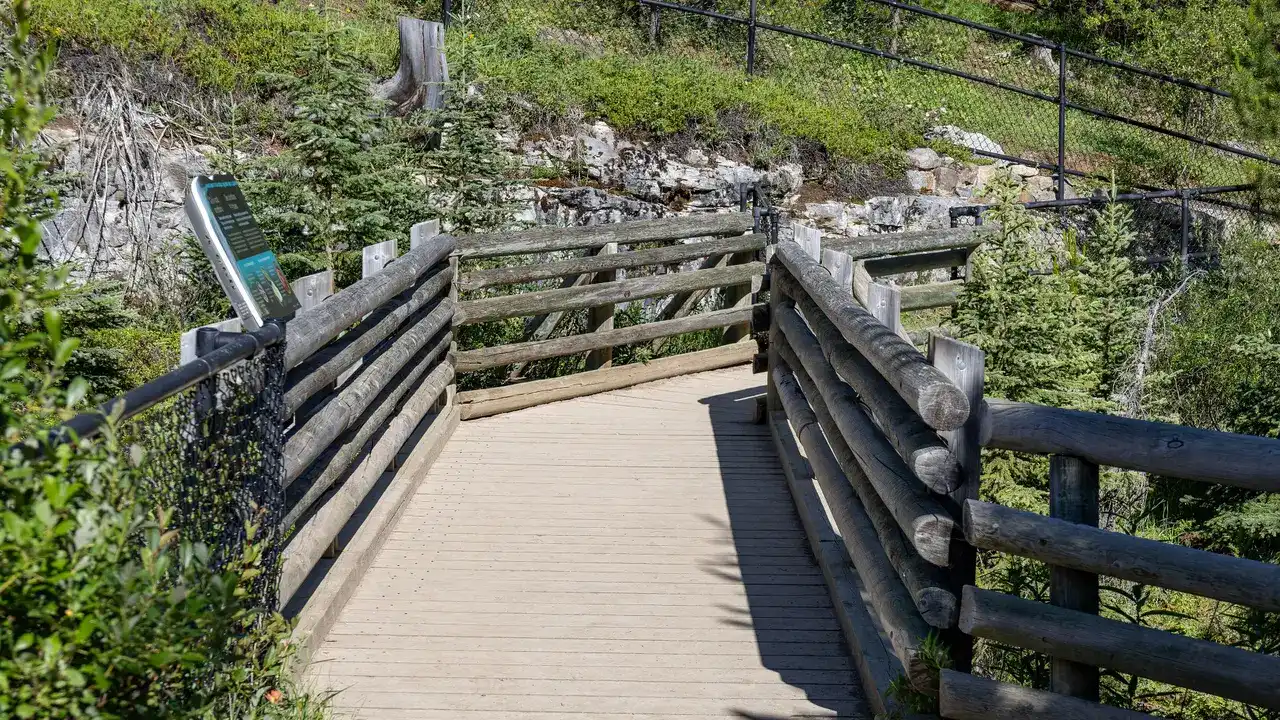
Marble Canyon is a slot gorge crossed by a series of footbridges that put you directly over the water. The trail is 1.6 km return with 20 m of elevation gain, which means anyone can do it, and the payoff is out of proportion to the effort: pale rock walls, water the colour of antifreeze, and a noise level that makes conversation pointless in places.
Two practical notes. The bridges get slick when it rains, and there’s a real drop below them. And this is the stop nearly every through-driver makes, so an early start buys you the bridges to yourself.
The Paint Pots: ochre, and the people who mined it
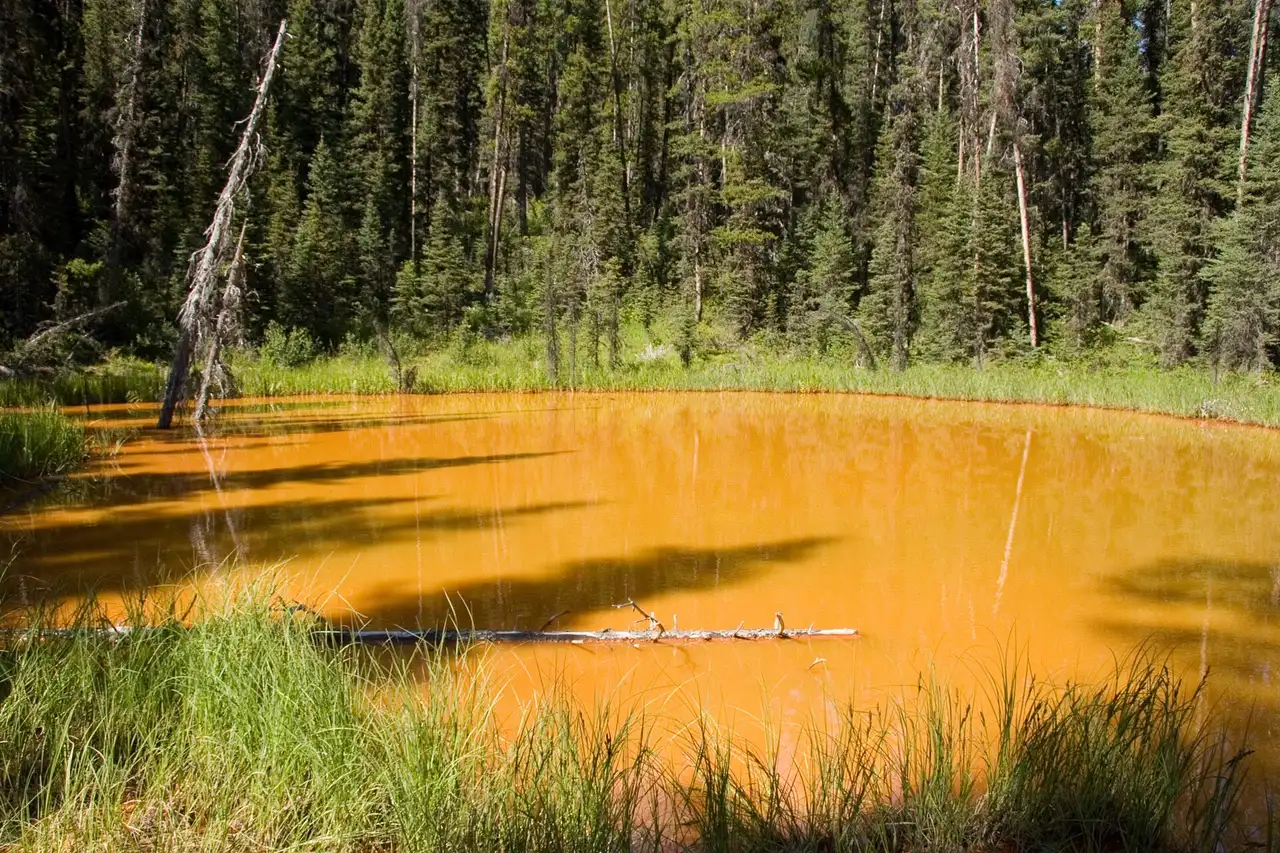
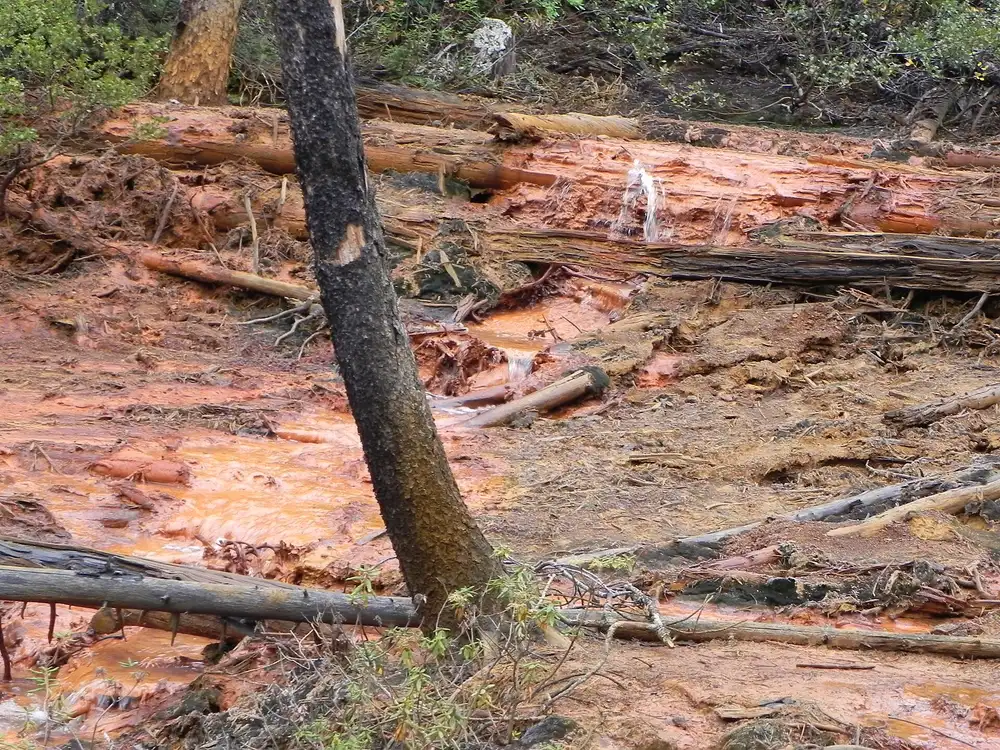
Two kilometres return, 25 m of climbing, and the strangest ground in the park. Parks Canada describes the Paint Pots as “three iron-rich mineral springs that stain the surrounding earth a vibrant ochre colour” - cold springs, not hot ones, where dissolved iron meets the air and rusts.
The colour is only half the story. Parks Canada is clear about what this place is: “The area along Ochre Creek is known as an important source of iron pigment utilized by Indigenous people for generations”, and the park sits within the traditional lands of the Ktunaxa and Secwepemc peoples. Standing on orange ground that people have come to for generations, with a mountain wall behind it, is the kind of stop that stays with you longer than another turquoise lake.
Stanley Glacier, and a cheaper way into the Burgess Shale
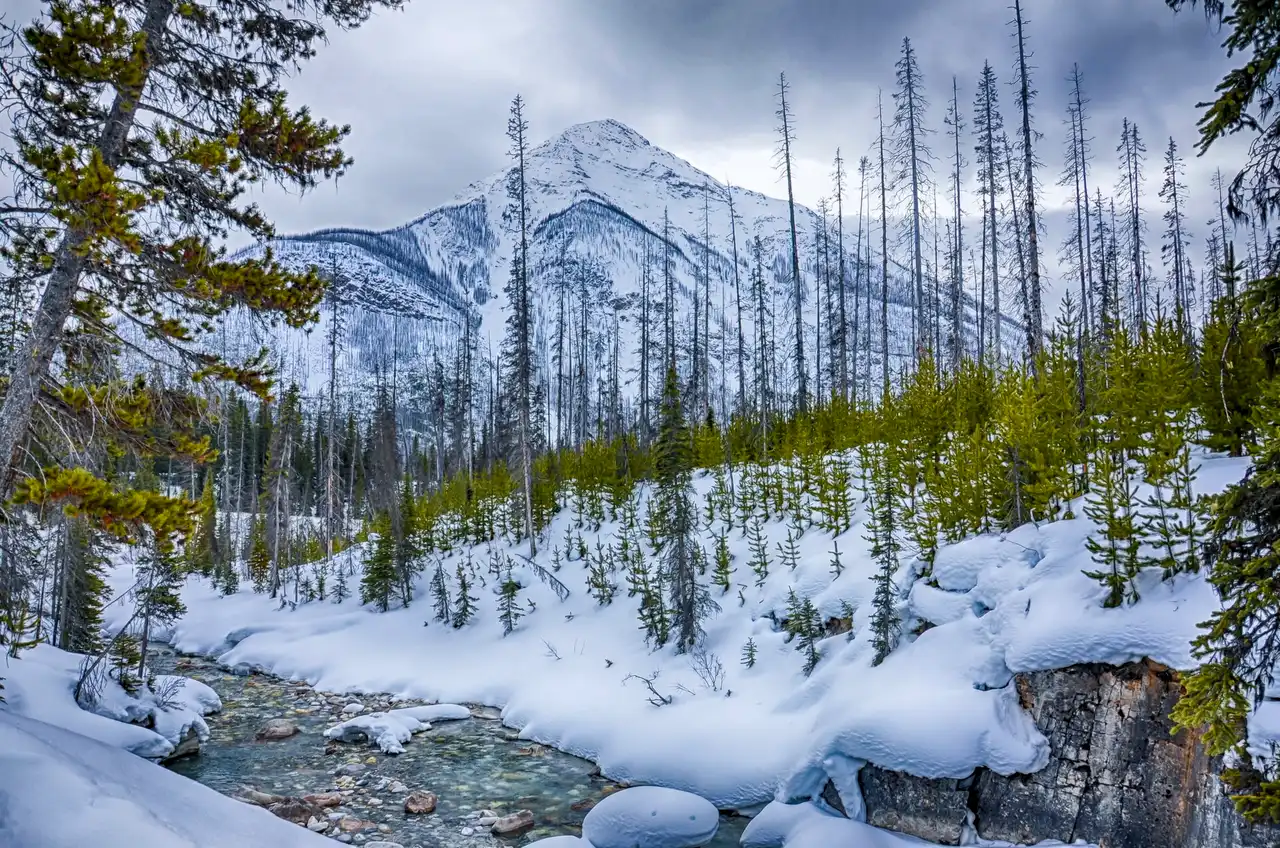
Here’s the thing most Rockies itineraries miss. The Burgess Shale fossil beds are famous in Yoho, but there are Burgess Shale fossils in Kootenay too, in the Stanley Glacier basin, and Parks Canada runs a guided hike to them. The guided version is 10 km, about seven hours, 7:30 am to 2:30 pm, and you have to reserve a place. Without a guide the public trail is 8.4 km return with 365 m of climbing.
The comparison that matters is the rating, not the length. Parks Canada rates Stanley Glacier moderate, while both Yoho fossil hikes are rated difficult: Walcott Quarry is a 24 km, eleven-hour day, and Mount Stephen is 8 km but 7.5 hours of steep ground. So Stanley Glacier is the realistic fossil day for a family or for anyone who doesn’t want to spend eleven hours on a mountainside. The trail itself is open to everybody without a guide - you just won’t know which rocks matter. And to be plain about it: collecting fossils or rocks in a national park is illegal, guided or not.
One piece of small print from the booking page that ruins mornings: buy your park pass the day before. The gates and visitor centres aren’t open at 7:30 am and the guides don’t sell passes.
The trailhead parking is 15 km south of Castle Junction, so it’s the first real hike you reach coming from Banff.
Radium Hot Springs: the soak, and what it costs
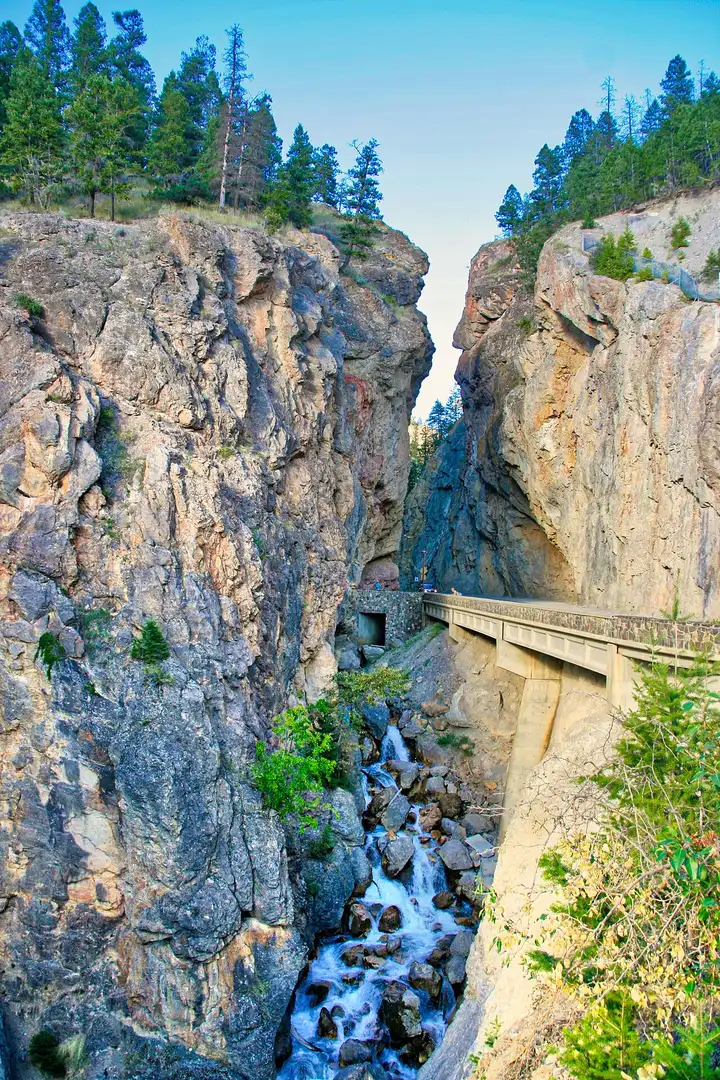
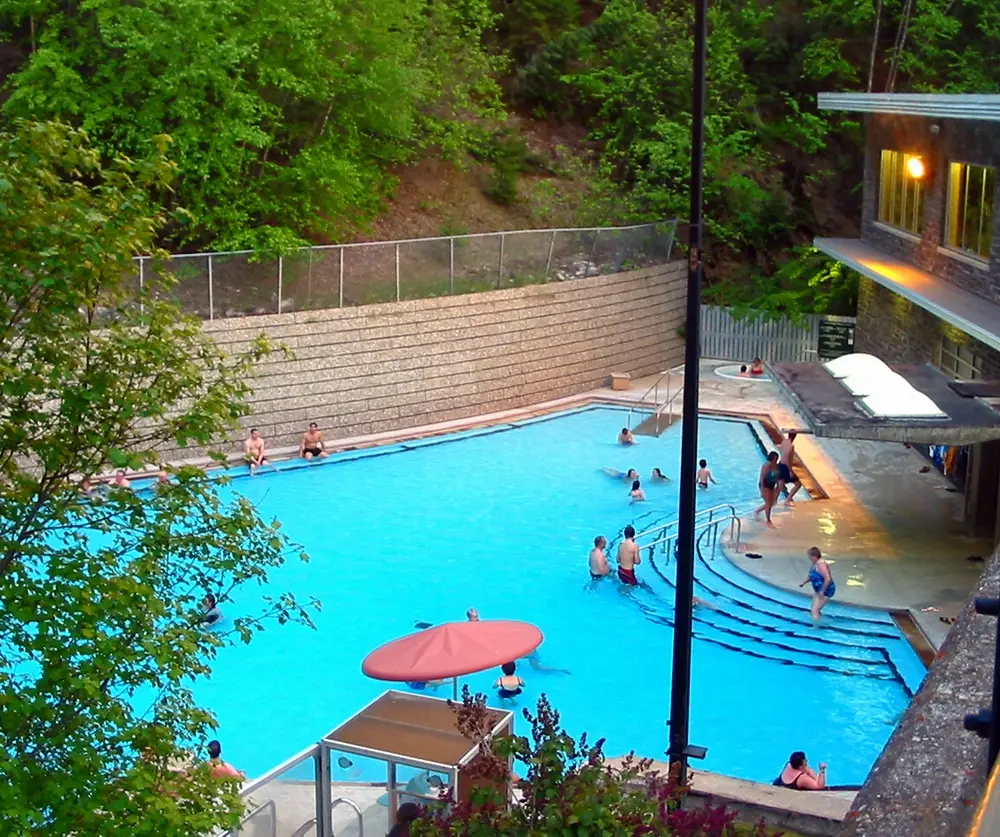
At the southern end the road threads through Sinclair Canyon, a gap in red rock so tight it feels engineered, and immediately below it sit the hot pools. Parks Canada runs them, the water comes out at 37 to 40 degrees, and it’s odourless - no sulphur smell, which isn’t true of every hot spring in the Rockies. There’s a deep cool pool alongside the hot one for anyone who overheats in ten minutes.
The prices, live on the Parks Canada fees page when we checked:
| Ticket | Adult | Senior / youth | Family |
|---|---|---|---|
| Single entry | C$19.75 | C$17.25 | C$64.25 |
| Day pass | C$28.75 | C$25.00 | C$92.50 |
| Annual pass | C$254.50 | C$216.50 | C$753.75 |
Children under 3 go free, and every ticket except the annual pass includes a locker token. The single entry is one soak; the day pass lets you leave, eat lunch and come back, which is worth the extra nine dollars if you’re staying in the village.
The hours are generous in summer and awkward in winter. From May to September the pools open daily 08:30 to 22:00 with last entry at 21:30 - an evening soak after a day on the road is entirely doable. In winter the two pools run different timetables: the hot pool Monday to Friday 11:30 to 21:00 and weekends from 10:30, while the deep pool is shut on weekdays except Friday evening, 18:00 to 21:00. And one detail that catches people every season: admission is sold in person at reception only. There are no advance or online tickets, so on a cold Saturday you line up at the desk like everyone else.
One budgeting trap: the pools are not covered by your park pass, and they weren’t covered by the summer 2026 free-admission window either. The Canada Strong Pass waived national park entry from 19 June to 7 September 2026, with hot springs and parking outside it; from 8 September 2026 the gate fee is back too. Budget the soak separately.
The closures nobody mentions until you arrive
This is the part to read before you load the car, because it’ll change what you pack.
Every waterbody in Kootenay and Yoho is closed to watercraft and angling to 31 March 2027 under the current order, and orders like this get extended - check parks.canada.ca before you pack a rod. That means all lakes, streams and rivers, and it covers canoes, kayaks, paddleboards, rowboats, motorboats and even inflatable toys, plus fishing rods, waders, boots and nets. The reason is aquatic invasive species, whirling disease in particular, after a suspected case turned up in Emerald Lake in 2023. The fines run up to C$25,000 under the Canada National Parks Act. Leave the paddleboard at home; it isn’t a formality.
Two more, current as of early August 2026: a park-wide fire ban was posted on 30 July, and recreational drones are prohibited in the park at all times. Fire bans come and go with the season, so check the park’s alerts page the week you travel - the water closure won’t have changed.
Where to stay, and what it costs
Park admission is the standard national rate: C$12.25 adult, C$10.75 senior, free for youth 17 and under, C$24.50 for a family or group, and the Discovery Pass at C$83.50 for an adult pays for itself on the seventh day - easy to hit if you’re also doing Banff, Jasper or Yoho. Backcountry camping runs C$15.00 per person per night and the permit is valid across all four parks.
Three campgrounds sit inside the park: Redstreak near the village, Marble Canyon and McLeod Meadows. Their 2026 reservations opened on 20 January at 8 am Mountain Time, ahead of Banff’s frontcountry launch, and the Rockies backcountry permits went on sale in a single release on 26 January - the timings and the queue mechanics are set out in camping in Canada.
For a roof, the village of Radium Hot Springs at the south gate is the pragmatic choice, and Invermere, a short drive further south, is the bigger town with more restaurants. Both normally price below anything near Lake Louise, which is the quiet argument for basing here and driving north rather than the other way round.
How Kootenay fits into a Rockies trip
Don’t plan Kootenay as a destination. Plan it as the return leg. The classic loop runs Banff to Lake Louise, over to Yoho and back down Highway 93 South through Kootenay to Radium, which turns a there-and-back drive into a circuit and adds a hot spring at the end of it. Our Canadian Rockies road trip runs the same ground over a week, and the British Columbia guide puts Kootenay in context with the province’s other mountain parks.
Timing is simple enough. Highway 93 South stays open year-round, but Vermilion Pass gets real winter and the walks ice up, so May to October is the sensible window, with September the pick: the trails are dry, the crowds have gone home, and the hot pools are a much better idea at 8 degrees than at 30. The passes, shuttles and crowd management next door are covered in the Banff guide, and if you’re sorting out the driving side of it, renting a car in Canada has the paperwork.
On the map
The map loads on click - to keep the page lightweight.
The map didn’t load. Check your connection and refresh the page.
Admission and opening hours
- Admission price
- Park admission 2026 is the national schedule: adult C$12.25, senior C$10.75, youth 17 and under free, family or group C$24.50; admission to all Parks Canada places was free 19 June to 7 September 2026 under the Canada Strong Pass (which did not cover hot springs), standard fees again from 8 September 2026. Radium Hot Springs pools are charged separately - single entry adult C$19.75, senior and youth C$17.25, family C$64.25; day pass adult C$28.75; annual pass adult C$254.50. All but the annual pass include a locker token.
- Opening hours
- The park and Highway 93 South are open year-round; winter driving conditions apply over Vermilion Pass. Radium Hot Springs pools: May to September daily 08:30-22:00, last entry 21:30; in winter the hot pool runs Monday to Friday 11:30-21:00 and weekends 10:30-21:00, and the deep pool opens Friday evenings 18:00-21:00 and weekends 10:30-21:00. All waterbodies in Kootenay and Yoho are closed to watercraft and angling to 31 March 2027 under the current order, which may be extended; check before you go. Recreational drones are prohibited.
Pool admission is sold in person at reception only - there are no advance or online tickets. Fees, hours and closures change; confirm at parks.canada.ca before you travel, and check the park alerts page for seasonal fire bans.
Details checked: August 4, 2026
Read also

National parks · 11 min read
Point Pelee: Birding, Monarchs and Canada's Southern Tip
Verified · August 29, 2026Point Pelee in practice: the shuttle to the Tip, monarch season timing, Festival of Birds dates, 2026 fees, and why free admission ended before the peak.

National parks · 8 min read
Kluane: Icefields, Flightseeing and Mount Logan
Verified · August 28, 2026Kluane National Park 2026: Kathleen Lake trails, C$30 camping, Rocking Star flights from C$250, and Mount Logan at 5,959 m.

National parks · 7 min read
Riding Mountain National Park: Bison, Clear Lake & Highlands
Verified · August 27, 2026Riding Mountain in 2026: Lake Audy bison from your car, Clear Lake beaches, Wasagaming camping fees and the drive from Winnipeg.

National parks · 8 min read
La Mauricie National Park 2026: Parkway, Lakes & Camping
Verified · August 26, 2026La Mauricie NP: two hours from Montreal or Quebec City. 2026 gate C$10, 64 km Parkway, camping from C$33.75, Navette Nature shuttles.