Western Canada in 10 Days: Rockies to Coast
A 10-day Calgary to Vancouver drive: Banff, Icefields Parkway, Jasper, the Okanagan and the coast - with park fees and booking traps for 2026.
Ten days is enough to drive western Canada as a single story if you accept one hard rule: the Rockies get the first half, the Okanagan gets a real pause, and Vancouver is an ending, not a side quest. Fly into Calgary, rent a car, sleep in Banff and Lake Louise, spend a full day on the Icefields Parkway to Jasper, then drop south into Kelowna before finishing on the coast. This is not the seven-day Rockies loop that turns around in Alberta, and it’s not the two-week trip that flies east afterward - it’s the Calgary-to-Vancouver line with wine country in the middle.
The catch is pacing. If you treat every turquoise lake as mandatory, you’ll arrive in Vancouver exhausted and skip the valley that makes this route different. Book the mountain rooms and the one-way car first; everything else flexes around those two.
How the ten days fit
| Block | Nights | Job |
|---|---|---|
| Banff + Lake Louise | 3 | Town trails, lake day, shuttle bookings |
| Icefields Parkway + Jasper | 2 | Full scenic drive day, then one recovery day |
| Kelowna / Okanagan | 2 | Lake + one serious winery booking |
| Vancouver | 2 | Coast ending, car drop at YVR |
About 1,410 kilometres end to end on this spine. The Alberta section is tightly documented; the Jasper-to-Kelowna and Kelowna-to-Vancouver legs are ordinary provincial highways, quoted below as about times because no carrier sells them as a product. Keep fuel, daylight and wildfire advisories in the plan from June onward.
You don’t need a second rental. Price a Calgary pickup and Vancouver drop and ignore clever mid-trip car swaps unless a quote is absurdly one-sided.
Days 1 to 3: Banff and Lake Louise
Land in Calgary and drive straight to Banff - about 140 kilometres and 90 minutes on a clear run, according to Banff & Lake Louise Tourism. Buy the national park pass before or at the gate; it covers Banff and every other Parks Canada place you enter that day. Day admission is C$12.25 adult / C$24.50 family or group, with under-18s free; the Canada Strong Pass waived it from 19 June to 7 September 2026, and from 8 September 2026 it’s charged again. A Discovery Pass makes sense if you’ll stack many park days.
Give Banff two nights. Walk the townsite, ride or hike Sulphur Mountain, and keep one easy Bow Valley window for Vermilion Lakes or the Bow Falls area when jet lag hits. The denser Banff-only version of this week lives in our Canadian Rockies 7-day itinerary - steal day ideas from it, don’t try to paste the whole thing into this ten-day frame.
Night three belongs near Lake Louise. Parks Canada’s shuttle system is the gatekeeper now: Moraine Lake Road is closed to private vehicles year-round, and Lake Louise / Moraine shuttle seats sell out. Book early, or accept that you may only get one of the two lakes. Either way, one night is enough if the next morning starts the parkway north.
Day 4: Icefields Parkway to Jasper
Lake Louise to Jasper is 232 kilometres. Parks Canada is right to call it a full day, not a transfer. Fill the tank before you leave Lake Louise. Stops write themselves: Bow Lake, Peyto Lake, Crowfoot, the Columbia Icefield area, Sunwapta and Athabasca Falls. Expect long stretches with little or no cell signal - download maps offline before you leave Lake Louise. Saskatchewan River Crossing is the lonely fuel and snack stop in the middle - treat a half tank as empty.
Peyto Lake is the classic early pull-off and earns its own stop on this route because it’s the moment the trip stops feeling like “Banff plus a drive” and starts feeling like the continental divide. Keep the stops short enough that you still roll into Jasper with daylight for groceries and a room check-in. That arrival night is the first of two Jasper nights in the table above.
Day 5: Jasper without pretending 2024 never happened
Jasper is still rebuilding after the 2024 wildfire, which means rooms are scarcer than the scenery suggests. Book early. For 2026, Parks Canada’s open/closed list (read mid-summer and changeable) had Maligne Canyon and the Cavell day-use area closed for the season, while Maligne Lake, Pyramid and Patricia Lakes, the Valley of the Five Lakes and Miette Hot Springs were open. Confirm the live page the week you travel - mid-season flips happen.
Spend this one full day on whatever is actually open: a lake morning, a short hike, hot springs if you want steam after the parkway. Sleep in Jasper again tonight - that is the second Jasper night - then leave early on day 6 for British Columbia. Detail for the Alberta parks alone sits in Banff and Jasper guides; this itinerary only needs you to leave with a working car and a full tank.
Days 6 to 7: the Okanagan reset
The drive Jasper to Kelowna is the tax you pay for adding wine country: about 600 kilometres and roughly seven hours via the Yellowhead and south into the valley. Day 6 is a travel day, not a sightseeing day. Leave Jasper early, pack snacks, and don’t schedule a winery tasting the same evening you arrive. If you route west on Highway 1 through Golden and Revelstoke instead of the Coquihalla shortcut, two small national parks on the pass - Mount Revelstoke and Glacier - reward an overnight; see our Revelstoke and Glacier parks guide.
Kelowna gets two nights (arrival night on day 6, full valley day on day 7) because that’s the minimum for the valley to feel like a destination rather than a bathroom stop. The Okanagan Valley geographical indication holds 196 licensed grape wineries (Wine Growers British Columbia). Book one serious tasting instead of three walk-ins - flagship rooms now price experiences, and Mission Hill’s published Estate Experience is C$80 a person for 90 minutes (19+). Smaller rooms cost less; the point is a reservation, not a scavenger hunt.
BC’s Warn range starts at 0.05 blood-alcohol content. If you’re the driver, you’re the designated spit-cup. Our Okanagan Valley guide covers tasting logistics and the 2024 freeze labelling mess in more depth; this route only needs one booked cellar and a swim or lakeside dinner.
Wider British Columbia context - ferries, Vancouver Island detours you are not taking on this ten-day line - sits in the British Columbia province guide.
Days 8 to 10: Vancouver and out
Kelowna to Vancouver is about 390 kilometres and four to five hours on the Coquihalla when weather behaves. Leave the Okanagan on the morning of day 8. Summer weekend westbound traffic into the Lower Mainland can erase that estimate. Aim to arrive with enough afternoon left for Stanley Park or a neighbourhood walk, not a museum checklist.
Two nights on the coast close the trip (nights after day 8 and day 9). Drop the car at YVR on the morning of day 10 and fly out. If you want a Sea-to-Sky day toward Whistler, steal it from day 9 or 10 only if the weather is clear and you’ve already seen enough of the city - winter readers chasing lifts should open skiing in Canada instead of forcing powder logic onto a summer road trip.
What it costs
An economy version - mid-range rooms booked early, one-way compact car, day passes or a Discovery Pass, picnic lunches - can sit near C$2,200 per person before international flights. Banff and Jasper hotels, plus the one-way rental premium, are the swing factors. Winery experiences and a Columbia Icefield tour stack on top if you add them. None of those line items is a fixed national tariff, so treat the floor as a planning number, not a quote.
When this route works
Late June through mid-September is the clean window: parkway services open, Okanagan tastings in full swing, long daylight. September often feels best - cooler hiking, harvest energy in the valley, fewer school-holiday crowds. May and early October work if you accept snow risk on high passes and shorter tasting hours. Winter turns this into a different trip (tires, daylight, closed parkway viewpoints) and shouldn’t reuse this day plan.
If you only have a week
Cut Kelowna, drive Jasper to Vancouver via Kamloops or the Coquihalla in one long day, and accept that you’ve built a Rockies-to-coast dash rather than a three-landscape trip. If that Kamloops day has slack, Wells Gray sits north of Highway 5 at Clearwater. Or skip Jasper, run Banff for four nights, then Kelowna and Vancouver - you’ll lose the Icefields Parkway, which is the single best drive on the longer version. Don’t try to keep all six stops by sleeping five hours a night; the highway will win.
Route day by day
- Days on the road
- 10
- Distance
- ≈1410 km
- Budget from
- 2200 CAD
- Best season
- June, July, August, September
The route at a glance
-
Banff
Route startstop ≈2880 min
Calgary International to Banff is about 140 km and 90 minutes. Two nights for the townsite, Sulphur Mountain or hot springs, and a Bow Valley day before Lake Louise.
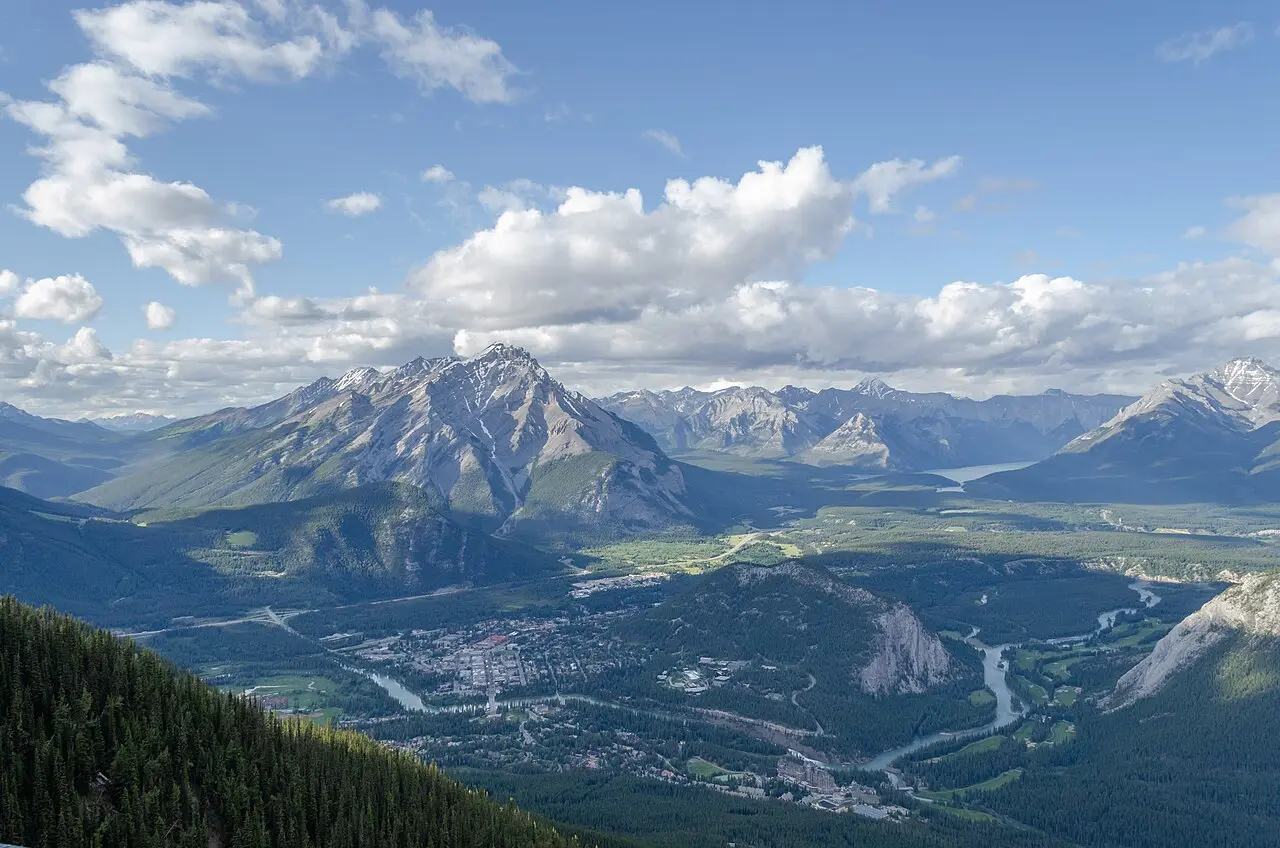
Photo: Ethan Sahagun · CC BY-SA 4.0 · Wikimedia Commons ( source) -
Lake Louise
187 km from the startstop ≈1440 min
One night near the lake. Parks Canada shuttle rules apply; Moraine Lake Road stays closed to private cars year-round.
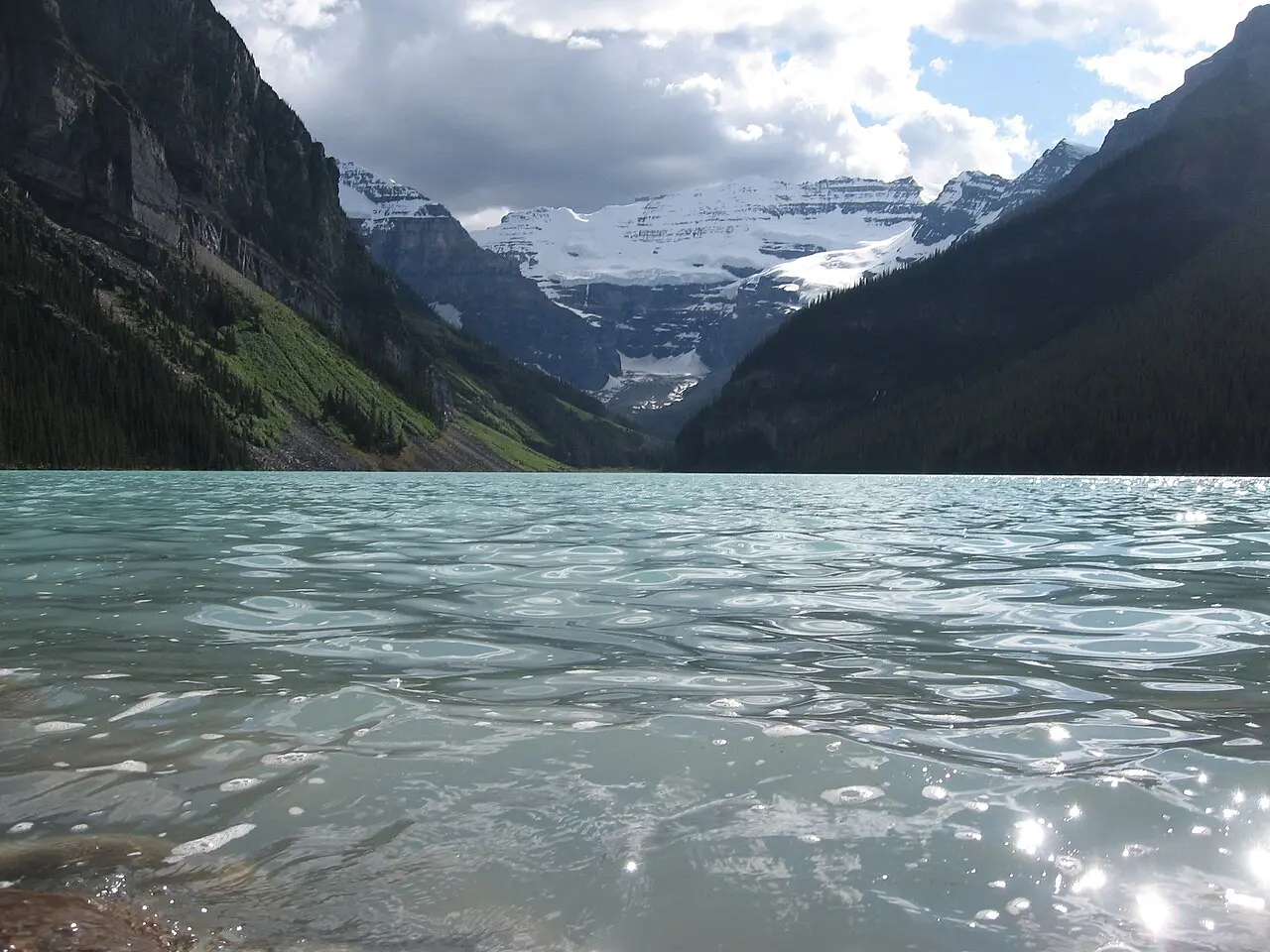
Photo: Bob rulz · CC BY-SA 3.0 · Wikimedia Commons ( source) -
Peyto Lake
230 km from the startstop ≈60 min
Early Icefields Parkway stop on the drive north. Fill fuel at Lake Louise; the next reliable pumps sit at Saskatchewan River Crossing and Jasper.
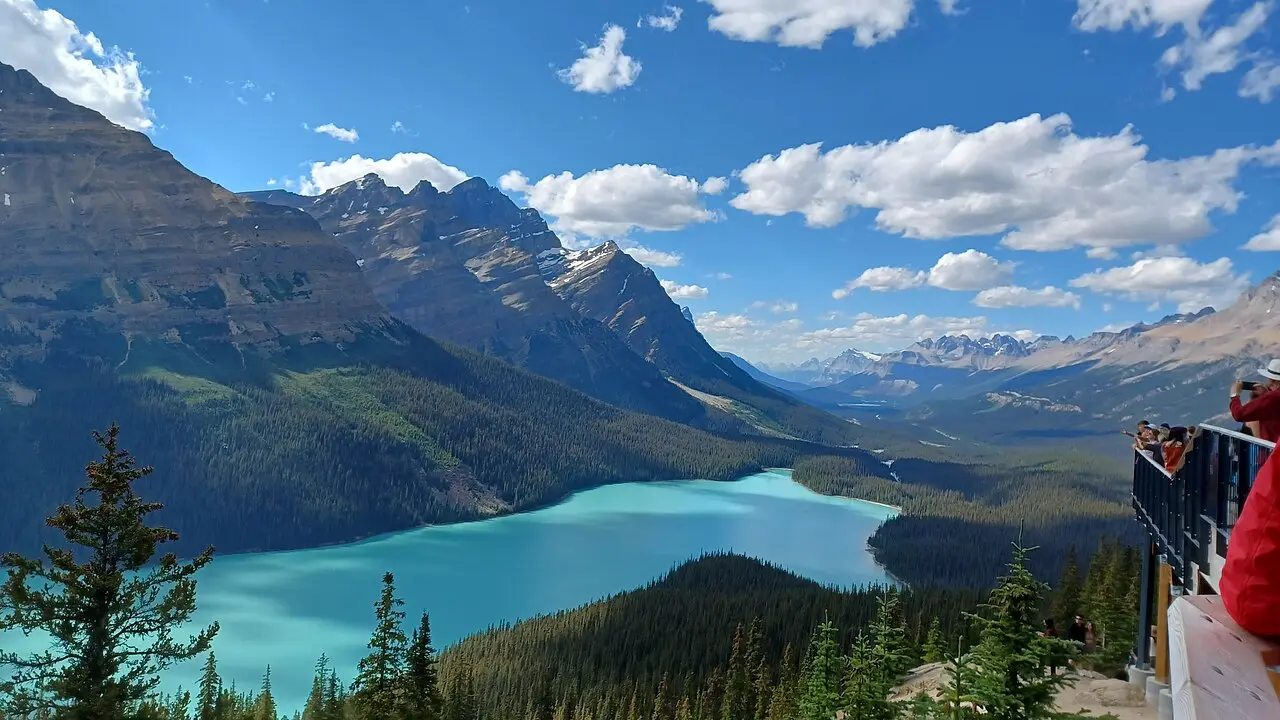
Photo: Suo Edits · CC BY-SA 4.0 · Wikimedia Commons ( source) -
Jasper
419 km from the startstop ≈2880 min
Two nights after a full Icefields Parkway day (Lake Louise to Jasper is 232 km). Confirm 2026 open and closed sites before you plan Maligne Canyon or Edith Cavell.
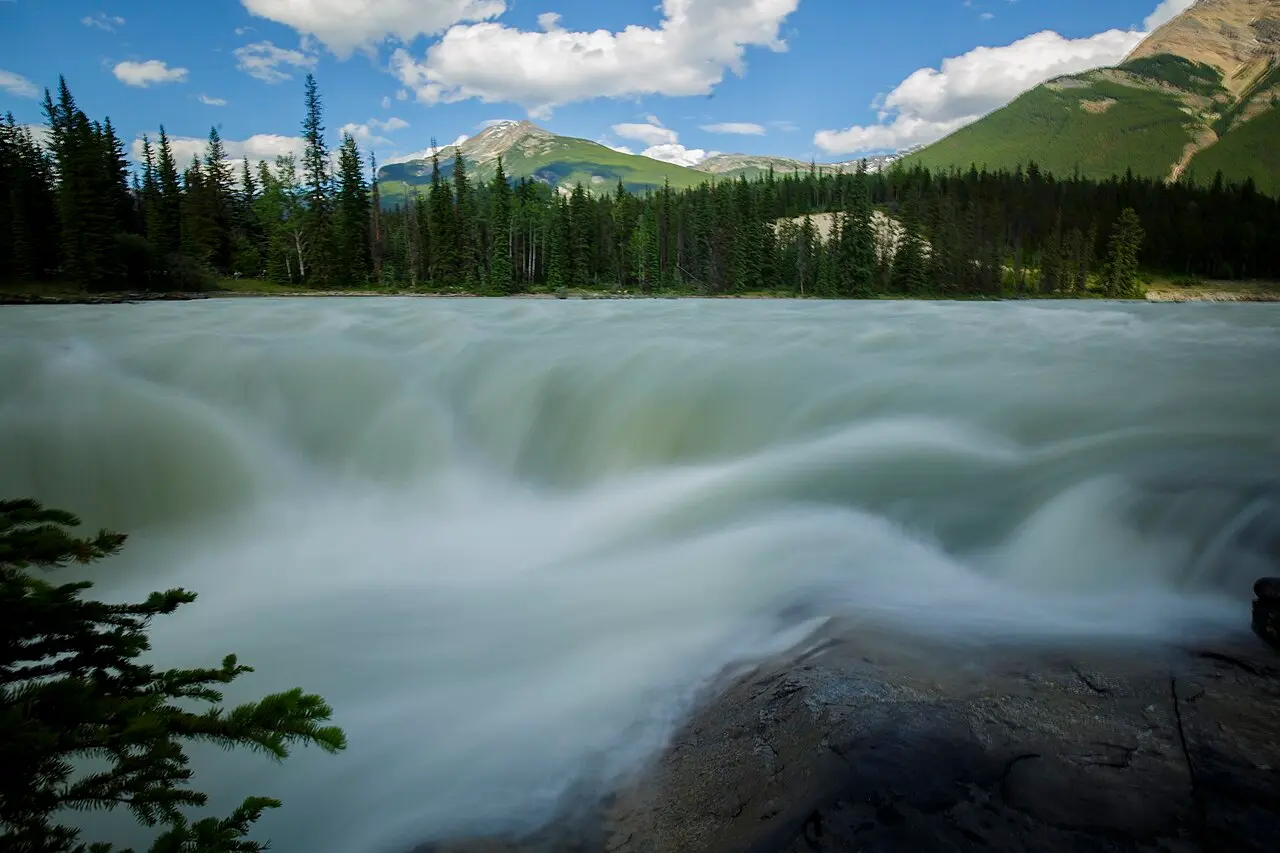
Photo: Thomas Fuhrmann · CC BY-SA 4.0 · Wikimedia Commons ( source) -
Kelowna
1020 km from the startstop ≈2880 min
About 600 km and roughly seven hours from Jasper via the Yellowhead and south into the Okanagan. Two nights for lake time and a booked winery stop.
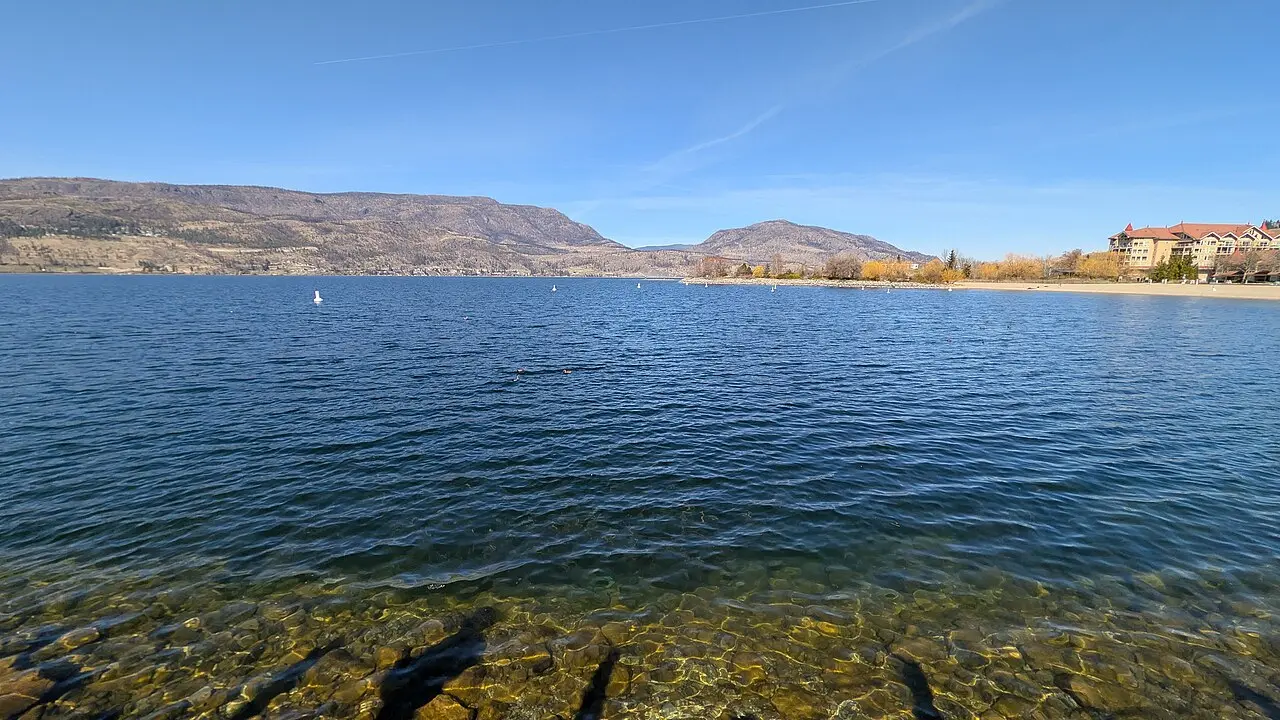
Photo: Joli Rumi · CC BY-SA 4.0 · Wikimedia Commons ( source) -
Vancouver
1410 km from the startstop ≈2880 min
About 390 km and four to five hours from Kelowna over the Coquihalla. Two nights to end on the coast; drop the car at YVR and fly home.
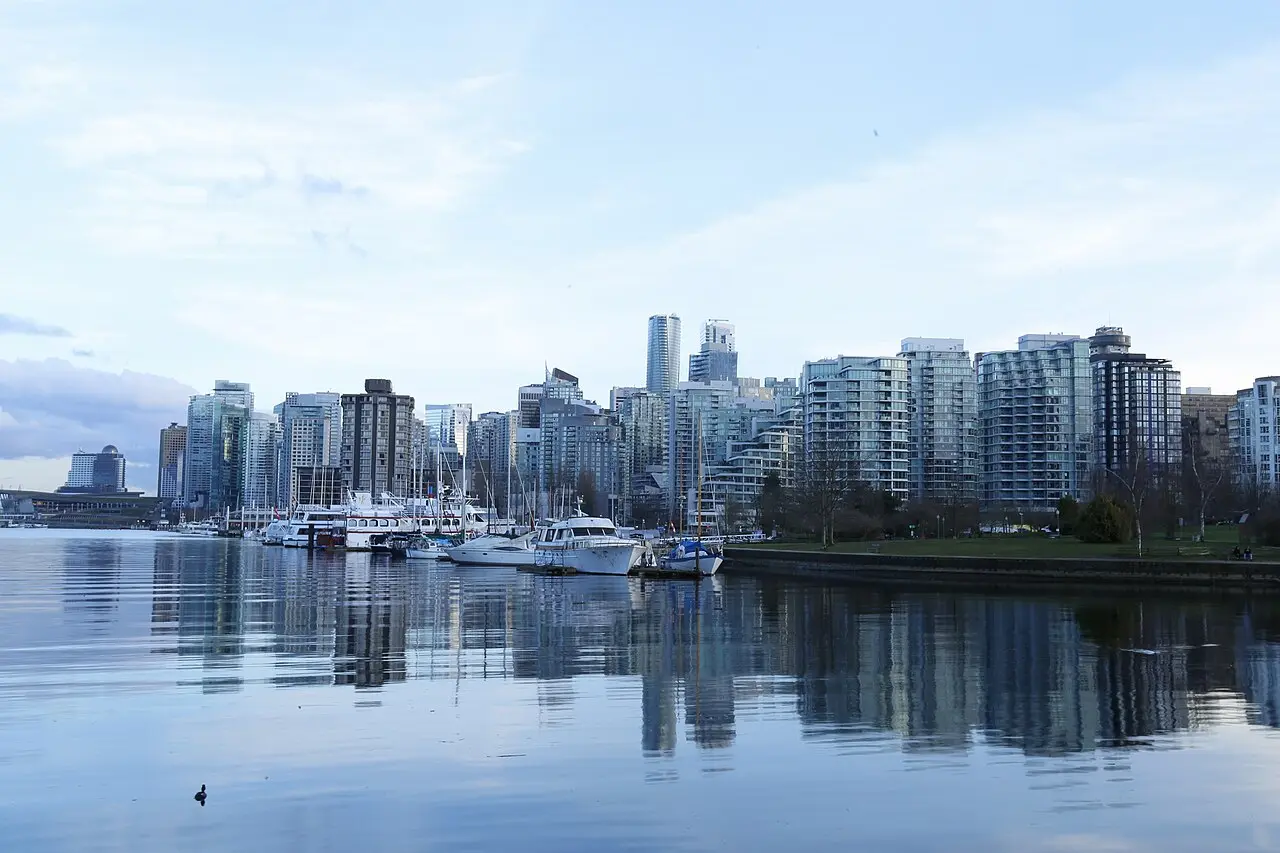
Photo: Ueutyi · CC BY-SA 4.0 · Wikimedia Commons ( source)
Route map
The map with stops loads on click - to keep the page lightweight.
The map didn’t load. Check your connection and refresh the page.