Okanagan Valley: Wineries, Lakes & Kelowna
Canada's biggest wine region, practically: 196 wineries, tastings you now book from C$80, BC's 0.05 driving rule and what the 2024 freeze changed.
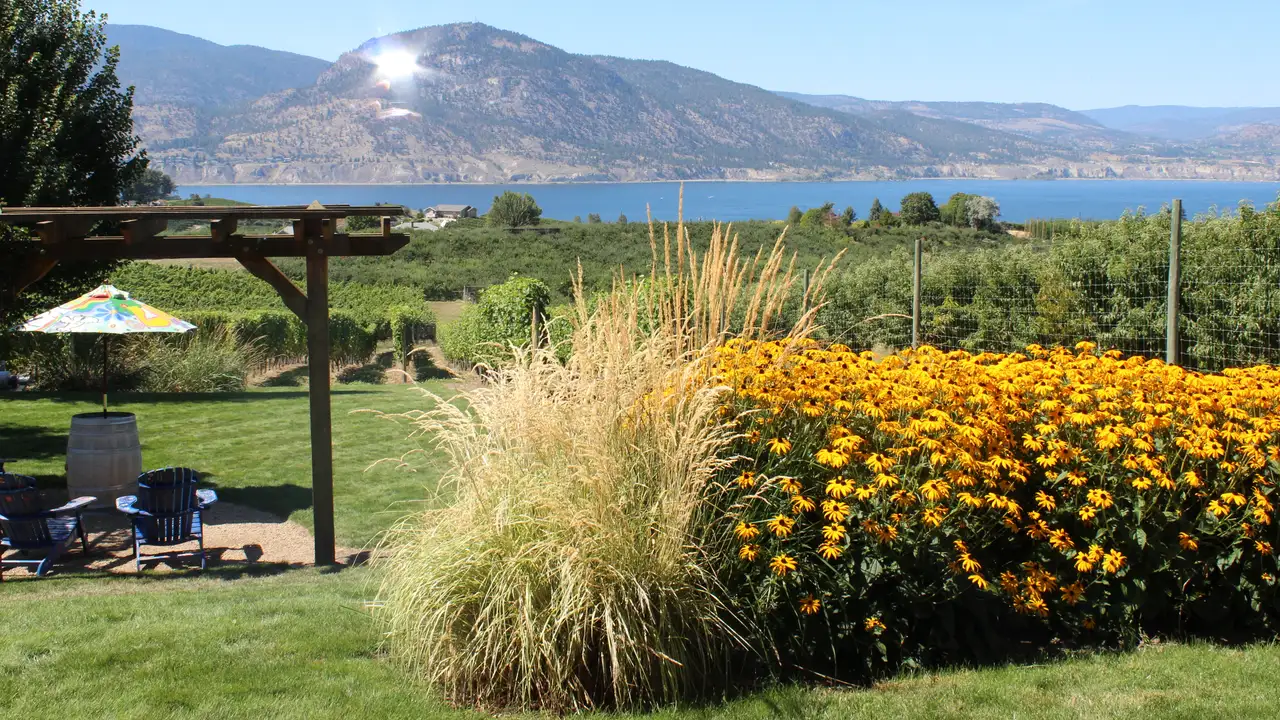
The Okanagan is Canada’s wine country in the literal sense: 196 of British Columbia’s 277 licensed wineries sit in this one valley, strung along 135 km of lake about four hours east of Vancouver. Two things have changed since whatever guide you read last. The flagship tasting rooms now run on reservations rather than walk-ins, starting at C$80 a head, and after the freeze of January 2024 the wine in your glass may legally have been grown outside the province.
That doesn’t make it a worse trip. It makes it a trip you have to book. Kelowna fills up in July, the drive between benches takes longer than the map suggests, and British Columbia’s roadside alcohol rules bite at a level most visitors would consider one drink.
How far the valley is, and how you get there
Vancouver to Kelowna is about 390 km on Highway 5 and Highway 97, and the fast part of that isn’t a valley road at all: the Coquihalla is a proper mountain highway with its own weather. Winter tires or chains are required on most designated BC routes from 1 October to 30 April, with a C$121 fine, and that catches people who assume the Okanagan’s dry heat means an easy drive in shoulder season. The vineyards don’t get snow. The pass you cross to reach them does. If you’re threading Kelowna into a longer Calgary-to-coast drive, our Western Canada 10-day itinerary keeps the valley as a two-night reset after Jasper rather than a day trip from Vancouver.
Flying in isn’t a cop-out either. Kelowna International Airport handled 2,315,432 passengers in 2025, its best year yet, and it sits at the north end of town, which matters when you pick a base. Our Kelowna guide covers the city side of that choice: the lakefront, the beaches and getting around once you’ve landed.
The valley runs north to south, from Vernon down through Kelowna, Peachland, Summerland and Penticton to Oliver and Osoyoos at the American border. End to end is a couple of hours of driving, which is why people think the whole valley fits in a day. You can drive it in a day. You can’t taste your way down it in a day and still get everyone home.
One valley, five bases
Where you sleep decides which half of the wine region you’ll actually see.
| Base | Suits | The trade-off |
|---|---|---|
| Kelowna | first visit, flying in, most restaurants and hotels | busiest and priciest; the good wineries are across the bridge in West Kelowna |
| Penticton | sitting between two lakes, striking distance of Naramata | smaller town, thinner dining |
| Naramata | walking or cycling between tasting rooms | very few rooms, and they go early |
| Oliver and Osoyoos | the hot south end, the big reds, the desert landscape | a long way from the airport |
| Vernon | quieter, SilverStar in winter, Kalamalka Lake | furthest from the southern wineries |
Kelowna picked up an unusual credential in 2025: Canada’s first UNESCO Creative City of Gastronomy, the fifth Canadian city in that network. Read it as a verdict on the restaurants rather than on the wine.
The wine map: eleven sub-regions on one valley floor
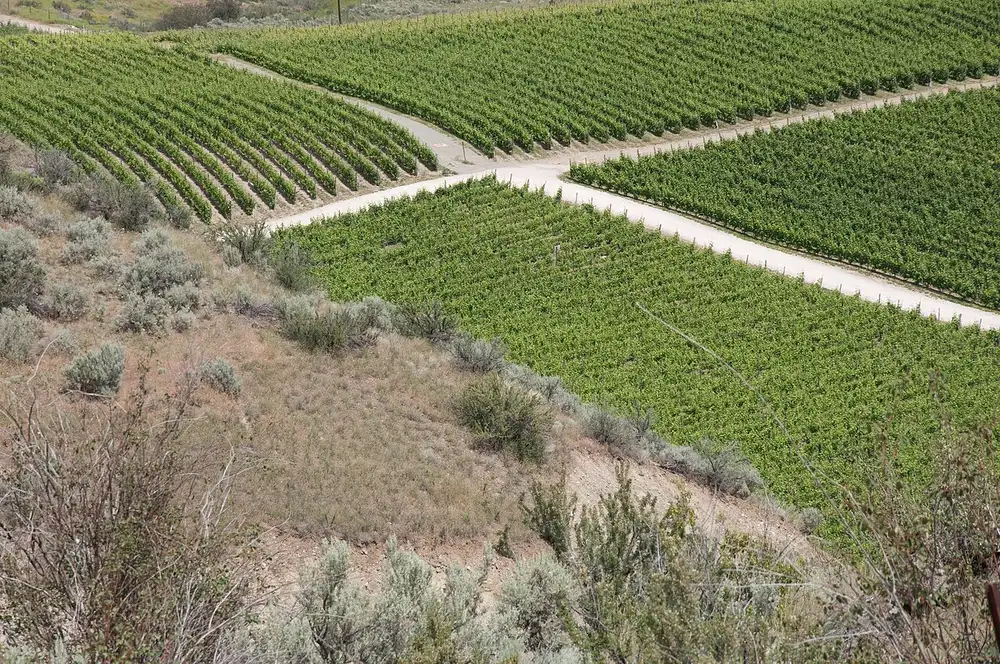
British Columbia has twelve official sub-regions inside its wine appellations, and eleven of them are in the Okanagan: Golden Mile Bench and Golden Mile Slopes, Okanagan Falls, Naramata Bench, Skaha Bench, Lake Country, East and South Kelowna Slopes, and three separate Summerland appellations. The twelfth, Cowichan Valley, isn’t here at all - it’s on Vancouver Island. Eleven appellations in one valley means the name on the label changes faster than anything you can see out of the window.
Province-wide there are 1,234 vineyards and more than 12,681 acres planted, over eighty varieties, and a 56% white to 44% red split. By acreage the whites lead with Pinot Gris, Chardonnay and Riesling; the reds with Merlot, Pinot Noir and Cabernet Sauvignon.
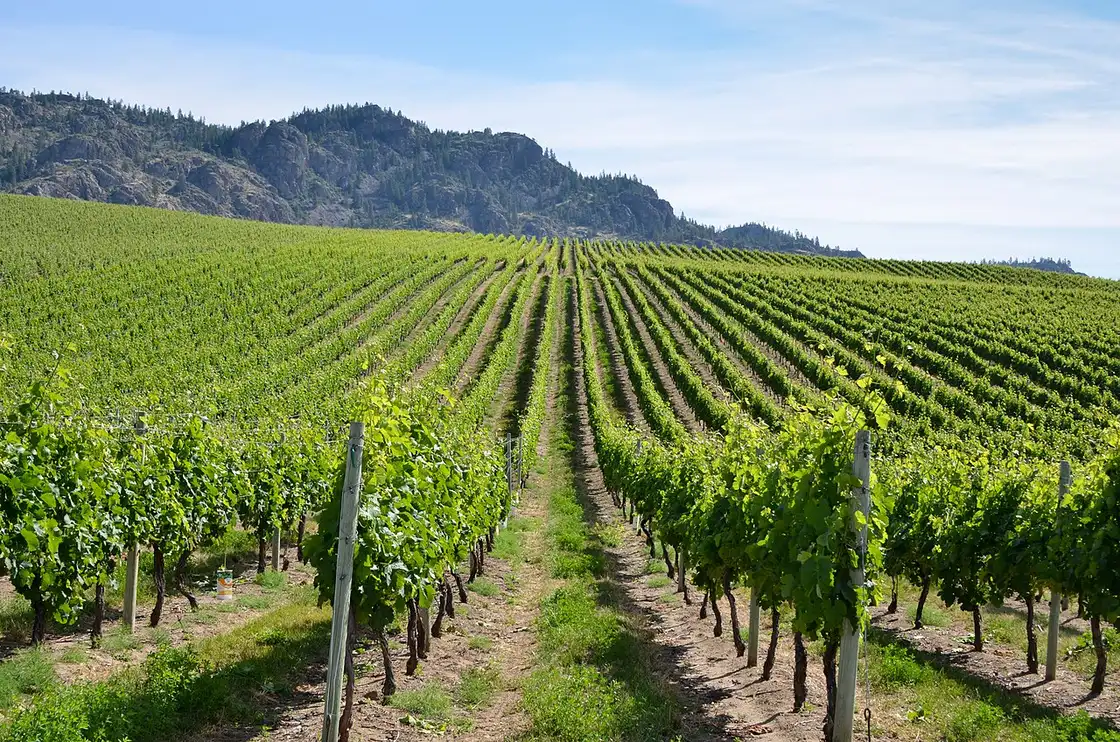
Read the valley as a temperature gradient and those names start to make sense. The south end at Oliver and Osoyoos is hot desert country; the north end at Lake Country and Vernon is cooler and higher; the sub-regions are the industry’s way of telling you which of the two you’re drinking. If you don’t want to learn eleven names, learn that one axis.
What a tasting costs now
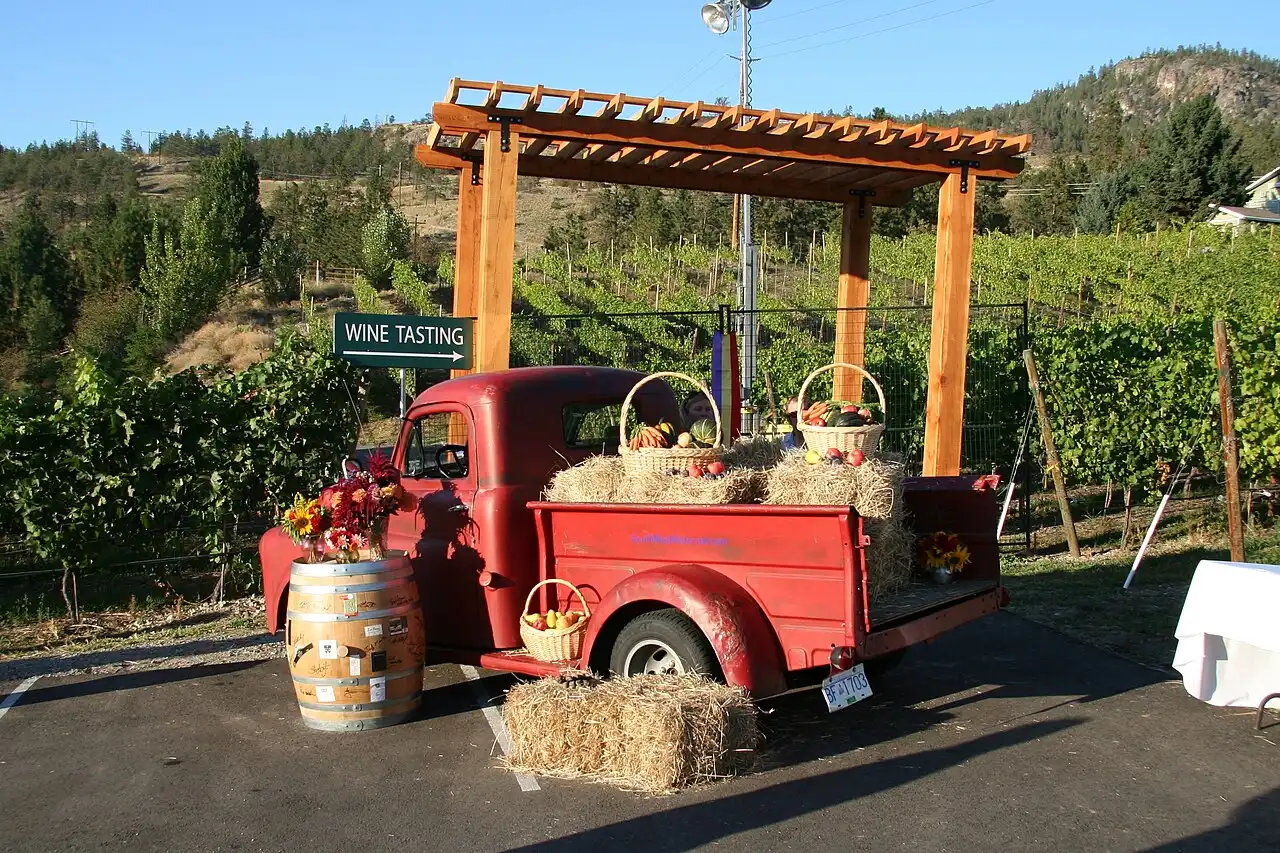
Here is the number that resets expectations. At Mission Hill, the architectural showpiece above West Kelowna, the entry-level guided experience is C$80 per person for 90 minutes, capped at six guests. The collector’s tasting of their flagship red runs C$150, and a private dining experience runs C$500 a head. The estate is open daily 11:00 to 19:00, but access is for members or by reservation, with same-day slots only when they exist. Everything is strictly 19+, the legal drinking age in BC.
Smaller rooms on the benches charge a fraction of that, and some waive the fee if you buy a bottle. Fees vary winery by winery, so check each one’s page, and book the flagships before you leave home in July and August.
Plan wine country like restaurant reservations, not like a free sample bar. Two booked estates plus two or three small rooms is a full, honest day. Six wineries in a day was never a good idea and it isn’t even bookable now.
The freeze that changed what is in the bottle
In January 2024 a cold snap hit the valley hard enough that industry estimates put the loss at 97 to 99 per cent of the 2024 crop. Not a bad year. Effectively no year.
The province’s response is the thing worth knowing before you taste. Wineries were allowed to make wine in BC using grapes or juice grown outside the province while the vines recovered, and that support was extended through the 2025 production year to keep bottles on shelves into 2026. Wine Growers British Columbia said in September 2025 that even after a strong 2025 harvest the province was still more than 10,000 tonnes short of the grapes needed to meet demand.
So two kinds of bottle now sit on the same tasting-room counter: 100% BC wine, mostly from the 2025 harvest onward, and wine crafted in BC from fruit grown elsewhere. The second kind can’t be sold as BC VQA, which needs 100% British Columbia grapes, and Wine Growers BC says those wines are marked to show where the fruit came from. Nobody is hiding anything; you just have to read. If you want the valley itself in the glass, ask which vintage you’re tasting before you ship a case home. A 2024-vintage BC red is the one to ask hardest about.
It also explains the young vines on the replanted blocks, and the people pouring for you will talk about it if you ask.
Driving between wineries is the hard part
British Columbia does not wait for 0.08. If a roadside screening device reads Warn, meaning 0.05 or above, police may take your licence on the spot and issue an immediate prohibition: three days the first time, seven days for a second within five years, thirty days for a third. On three- and seven-day prohibitions police may impound the vehicle; on longer ones they must. A Fail reading gets you 90 days.
Note where that line sits: visitors arrive with 0.08 in their heads, because that’s the criminal number in most of the world, and BC acts well below it. The rule isn’t aimed at wine tourists, but it doesn’t exempt them either, and a rental car impounded on the shoulder of Highway 97 ends the trip.
The workable answers, cheapest first: pick a base you can walk or cycle out of, which is exactly what the Naramata Bench is built for; split the driving so one person tastes and the other doesn’t; or book a driver for the day you plan to taste seriously. Spitting works too, and nobody in a tasting room thinks less of you for it. If the rental is still to book, renting a car in Canada has the licence rules and the winter tire calendar province by province.
The lakes are half the reason to come
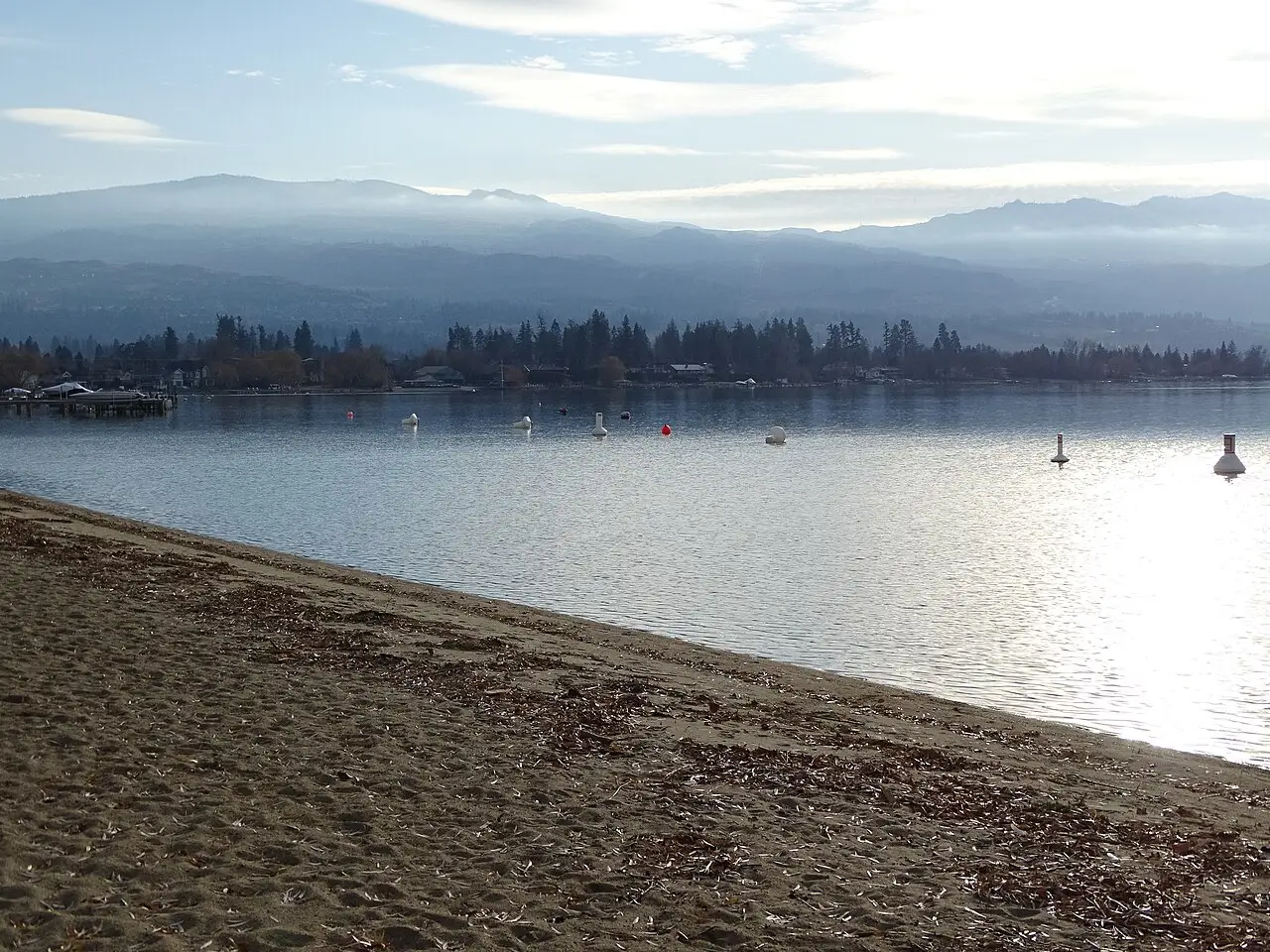
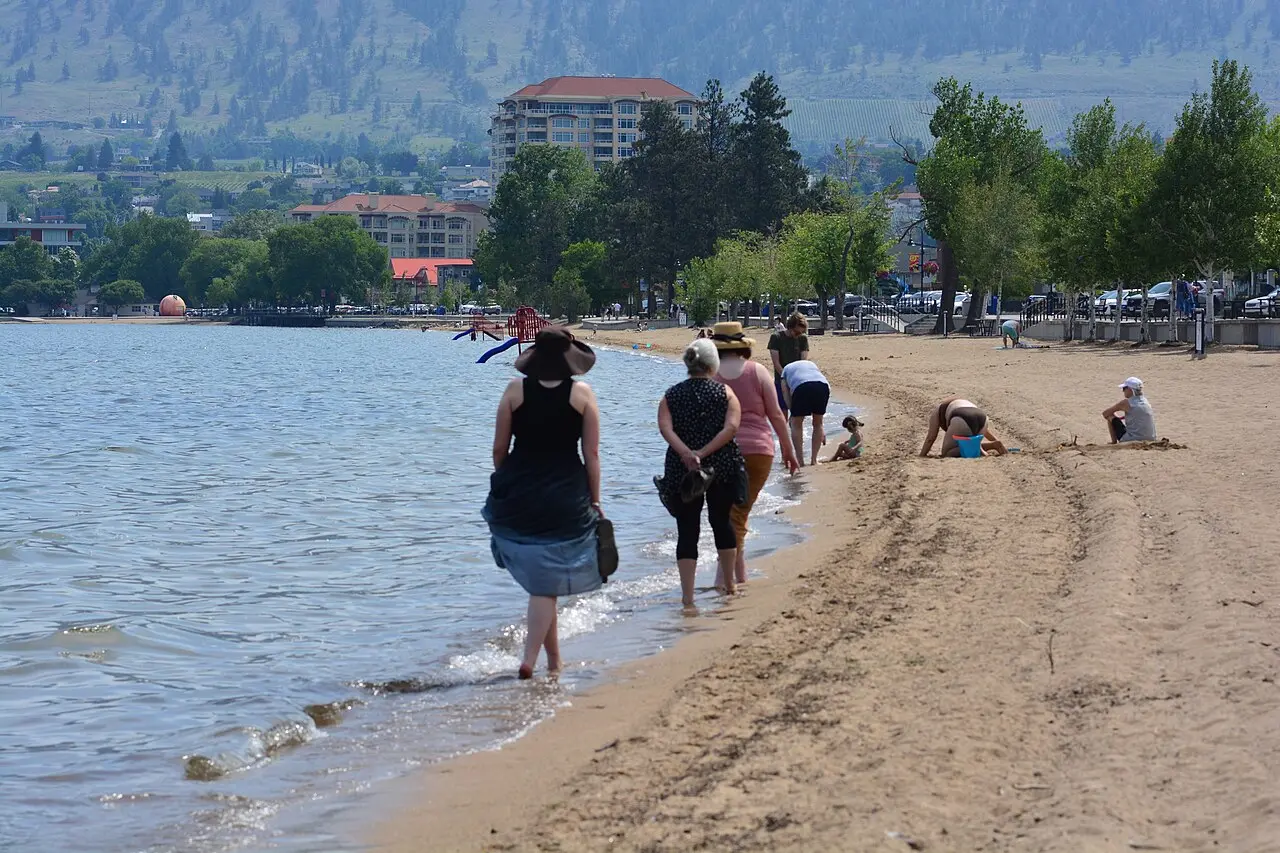
Okanagan Lake is about 135 km long and up to 232 m deep, a fjord lake gouged out by repeated glaciation. It’s warm enough to swim in through the summer, which coastal British Columbia mostly isn’t, and that alone explains why half of Alberta drives over here in August. Penticton sells it best: the town sits on a narrow strip between Okanagan Lake at one end and Skaha Lake at the other, with a public beach on each.
Myra Canyon and the rail trails
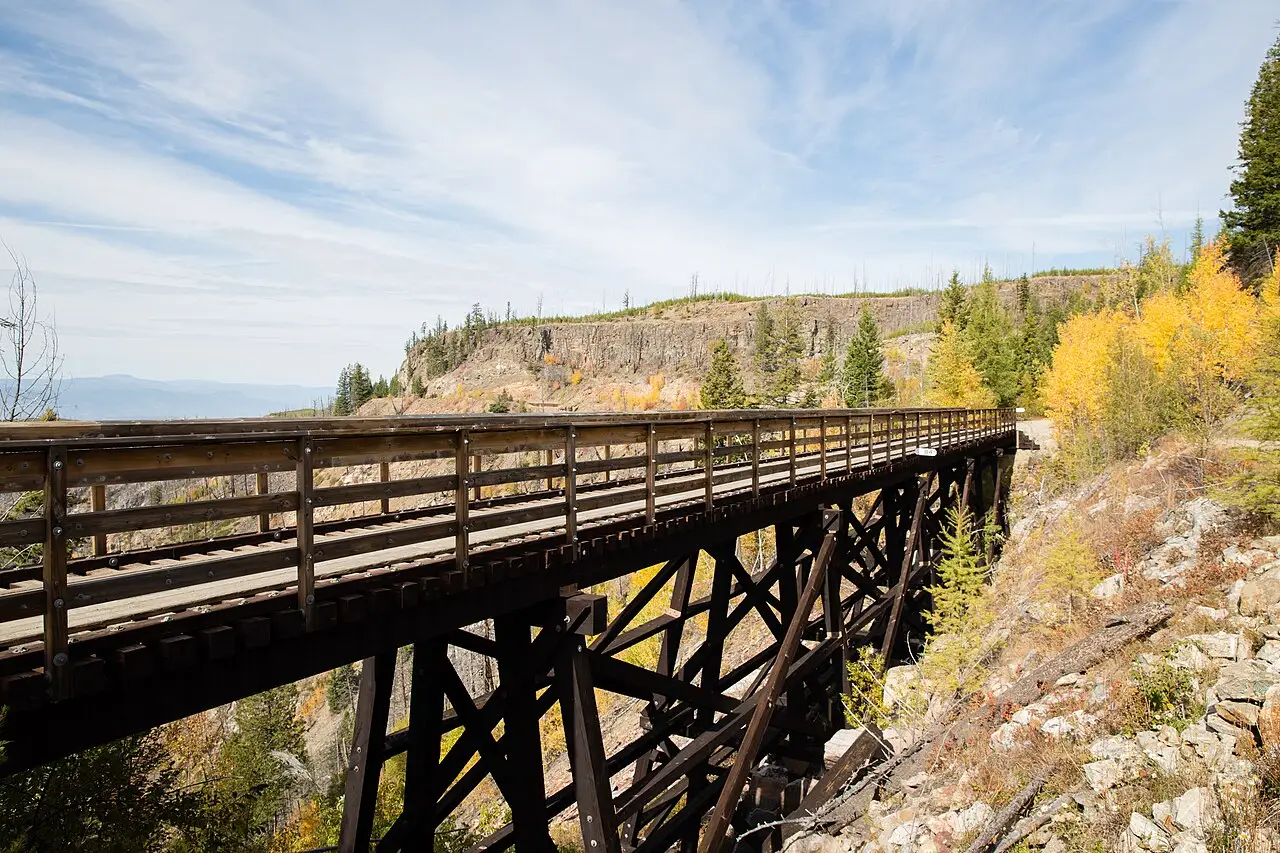
The best half-day in the valley that has nothing to do with wine is the old Kettle Valley Railway grade above Kelowna. Built between 1912 and 1914 and closed to trains in 1978, the Myra Canyon section became a National Historic Site in 2002: 9.6 km of railway roadbed pinned to a canyon wall by trestles and two tunnels. BC Parks puts the ride between the Myra and June Springs access points at 12 km, on a railway grade, so almost flat.
Here’s the part the photo captions leave out. The canyon burned in 2003, and Parks Canada’s own designation lists only four surviving original wooden trestles, numbers 1, 12, 16 and 17, alongside the two steel ones. Twelve of the sixteen timber spans went in the fire. What replaced them took until 2008, paid for out of federal and provincial disaster funding with a local restoration society doing the pushing, so almost everything you cycle across up there is younger than the smartphone in your pocket. Knowing that makes the ride better, not worse.
Parking at kilometre 1 is two narrow pullouts with 11 and 21 spaces and a pair of pit toilets, so arriving early is the difference between riding and reversing back down a forest road. The burn left unstable trees and loose rock off the main trail, with steep drop-offs at Crawford Falls and Devil’s Elbow.
The valley-floor alternative is the Okanagan Rail Trail, and it needs a caveat most listings skip: it’s 52 km when finished and it isn’t finished. Nearly 7 km between Old Vernon Road, north of the airport, and the Kelowna/Lake Country boundary is still undeveloped. The Kelowna section is paved, the Lake Country and North Okanagan sections are packed crushed gravel. Ride it as two good pieces rather than one through-route.
Winter in wine country
Big White sits 56 km southeast of Kelowna, up Highway 33 for 32 km and then Big White Road for another 24, with an airport shuttle of roughly 55 minutes. SilverStar is about 22 km above Vernon, and about 65 km from the Kelowna airport. A jet airport with a ski hill an hour away and a wine region on the drive between them isn’t a combination Canada offers often; where those two hills sit against Whistler and the Rockies resorts is in our skiing in Canada guide.
The catch is the tasting rooms themselves. Winter opening is set winery by winery and there’s no valley-wide schedule: even Mission Hill, which publishes 11:00 to 19:00 daily, still wants a reservation. Check each room the day you go rather than driving out on faith.
When to go
September and October are the valley at its best: harvest is on, the heat’s gone out of the afternoons, and the crowds thin after Labour Day.
July and August are hot, busy and expensive, and they carry a risk worth naming. Wildfire is a normal part of an Okanagan summer. In August 2023 the McDougall Creek fire near West Kelowna triggered a provincewide state of emergency, and the count of Okanagan homes destroyed or damaged reached 189. It doesn’t take a fire anywhere near you, either: smoke drifting in from another valley can flatten the views for days. Check BC Wildfire Service and DriveBC before you set out, and keep August loose.
May and June are quiet and green, with blossom in the orchards. The Okanagan Wine Festivals Society, running since 1980, holds seasonal festivals across the valley; the spring edition ran 1 to 10 May in 2026. Don’t book flights around a year-old date listing, this one included - check the society’s own calendar.
Is the detour worth it
If you’ve got ten days or more in British Columbia and wine, heat or lake swimming is the point, yes: give it three or four days and stay put. Squeeze it into two and half of that is spent on Highway 97.
If you’ve only got a week for the whole province, probably not. Vancouver Island and the coast hand a first-timer more variety per hour, and the Okanagan isn’t a day trip from anywhere. Our British Columbia guide sets out the five separate trips inside the province, and the Vancouver guide covers the city almost everyone flies into first. Come on the second visit instead, when you already know you like the place. Bring an appetite while you’re at it: what to order away from the tasting rooms is in our Canadian food guide.
Admission and opening hours
- Admission price
- Mission Hill Family Estate published 2026 rates: The Estate Experience (private guided tour and tasting with pairings) C$80 per person, 90 minutes, up to 6 guests; Iconic Oculus Experience C$150 per person; Iconic Dining Experience C$500 per person for 6-8 guests. All experiences 19+.
- Opening hours
- Mission Hill winery daily 11:00-19:00; access to the estate is for members or by reservation, with same-day bookings when available.
One flagship winery, quoted as an anchor for what the top tier now costs. Smaller rooms charge far less and some waive the fee with a purchase, but fees vary winery by winery - check each one before you drive out. Prices from operator pages checked 3 August 2026.
Details checked: August 3, 2026
Read also

Food · 11 min read
Canadian Food: What to Try
Updated · July 24, 2026Canadian food is regional, not one cuisine: poutine, butter tarts, Nanaimo bars, the Halifax donair and bannock, and the real story of where each began.

Food · 9 min read
Montreal Food Guide: What to Eat and Where
Updated · July 24, 2026A Montreal food guide to where the icons are: St-Viateur and Fairmount bagels, Schwartz's smoked meat, La Banquise poutine and two great markets.

What to see · 13 min read
Skylon Tower: Tickets, Observation Deck and Dining
Verified · October 3, 2026Skylon Tower from C$18 per adult online before tax (October 2026): deck or dinner, day or night, and when eating upstairs beats buying the ride.

What to see · 12 min read
Jasper SkyTram: Tickets, Season and the Summit Trail
Verified · October 2, 2026Is the Jasper SkyTram worth it? Seven minutes up to 2,263 m, the 1.4 km summit trail, cloud and cold at the top, and how the 2026 season ends.