
Whistler Travel Guide: Winter and Summer
How to visit Whistler: the Sea-to-Sky drive from Vancouver, North America's biggest ski resort, the summer bike park and the Peak 2 Peak gondola.
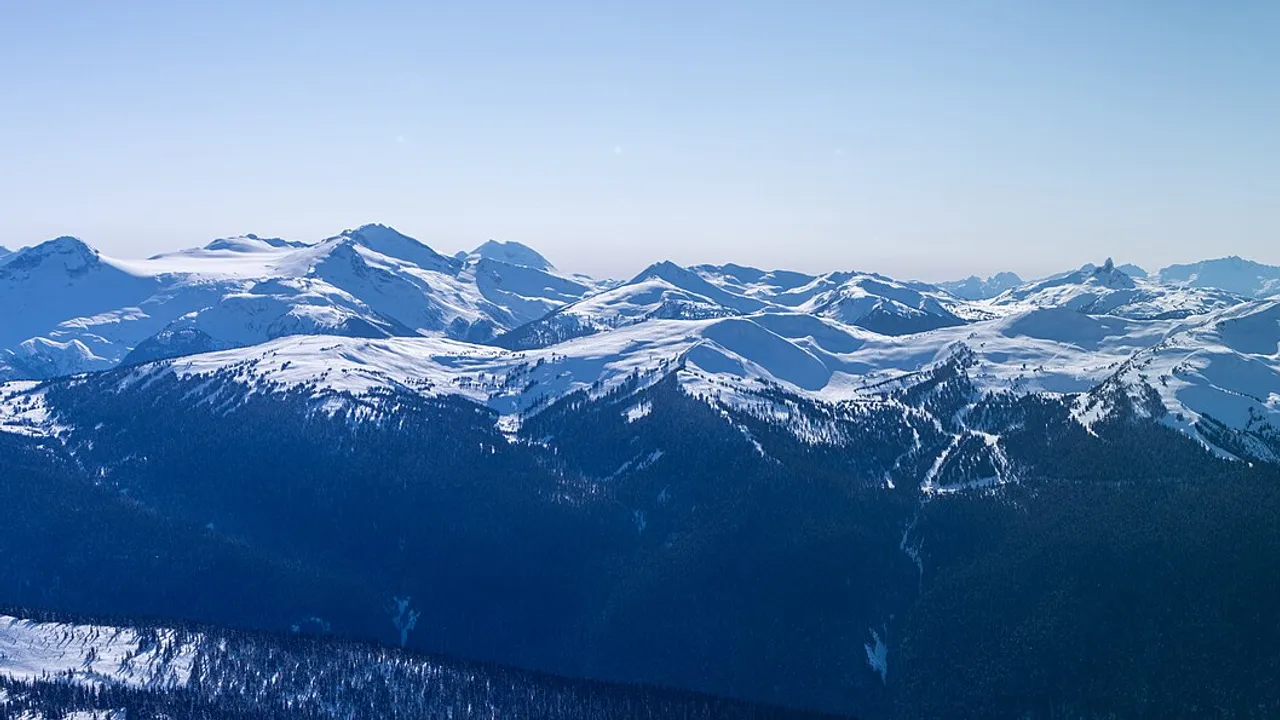
Whistler is North America’s biggest ski resort in winter and a bike-and-hike resort in summer, about two hours up the Sea-to-Sky Highway from Vancouver. That double life is the whole point of the place: the same lifts that carry skiers over three glaciers in January carry mountain bikers and hikers into the alpine in July. Most guides pick one season and ignore the other, which is a mistake, because the answer to “is Whistler worth it” depends entirely on when you go and what you want to do there.
Think of it as two resorts sharing the same mountains. In winter it’s a ski giant; in summer it is a bike park and a web of alpine trails, with warm lakes down in the valley to swim between. Both versions hang off the same first question, which is how you get here - and the answer, the Sea-to-Sky Highway from Vancouver, is a scenic drive in its own right.
Getting to Whistler: the Sea-to-Sky Highway
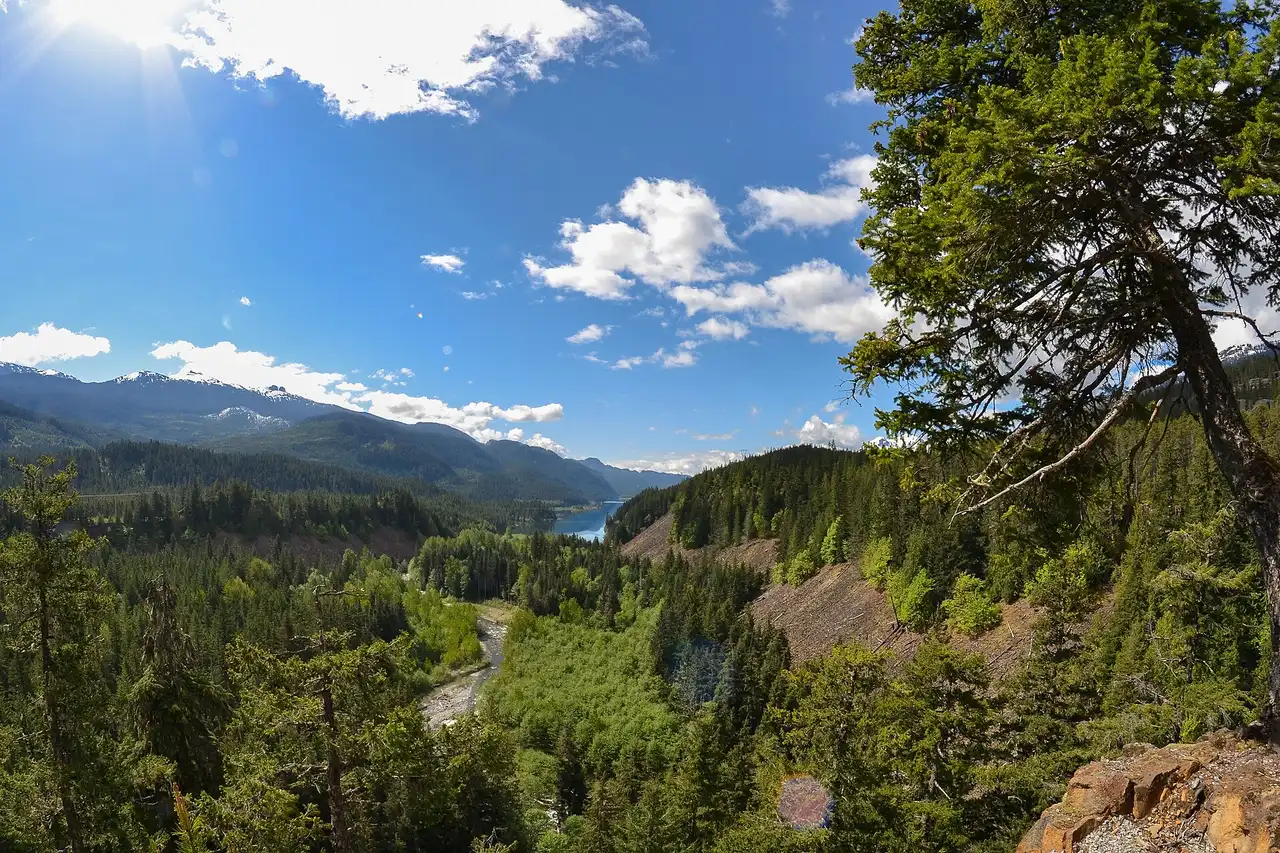
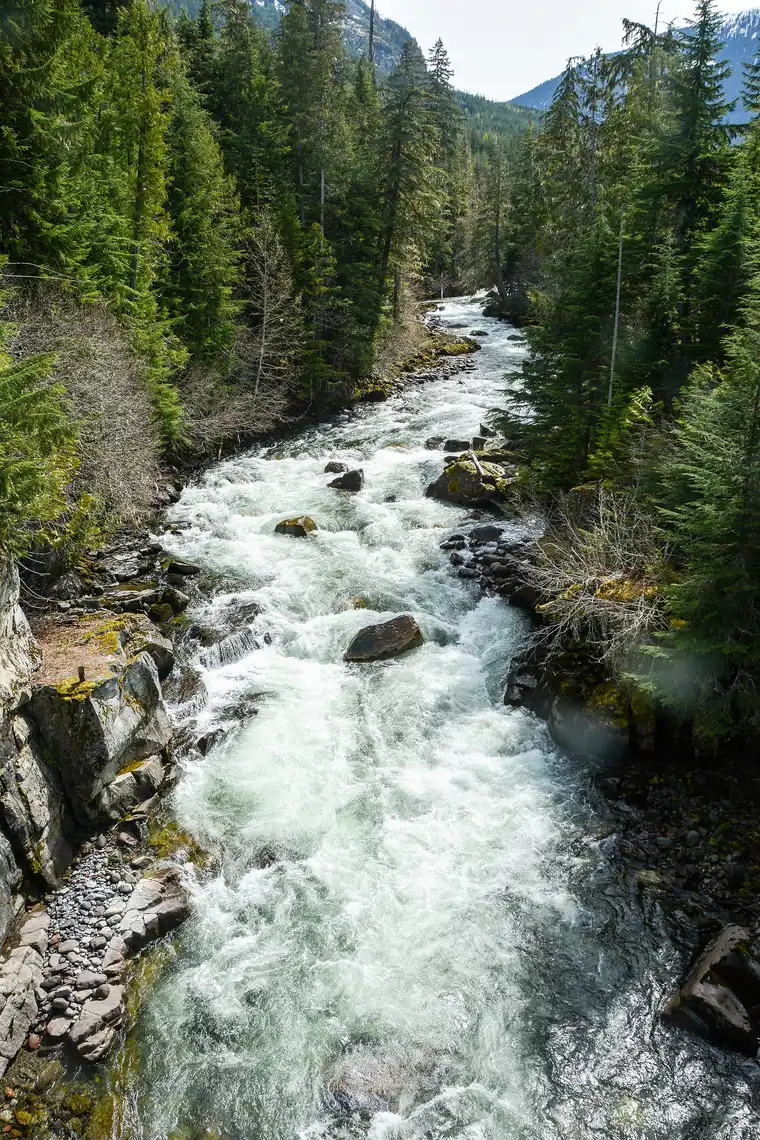
Whistler sits about 120 km north of Vancouver on Highway 99, the Sea-to-Sky Highway, and the drive takes somewhere between an hour and a half and two hours depending on traffic and weather. That word “depending” matters, because Highway 99 is the only road in: a crash, a rockslide or a heavy snowfall can turn the trip into a long wait with no detour around it. Build in slack, especially on a Friday afternoon in ski season when half of Vancouver has the same idea.
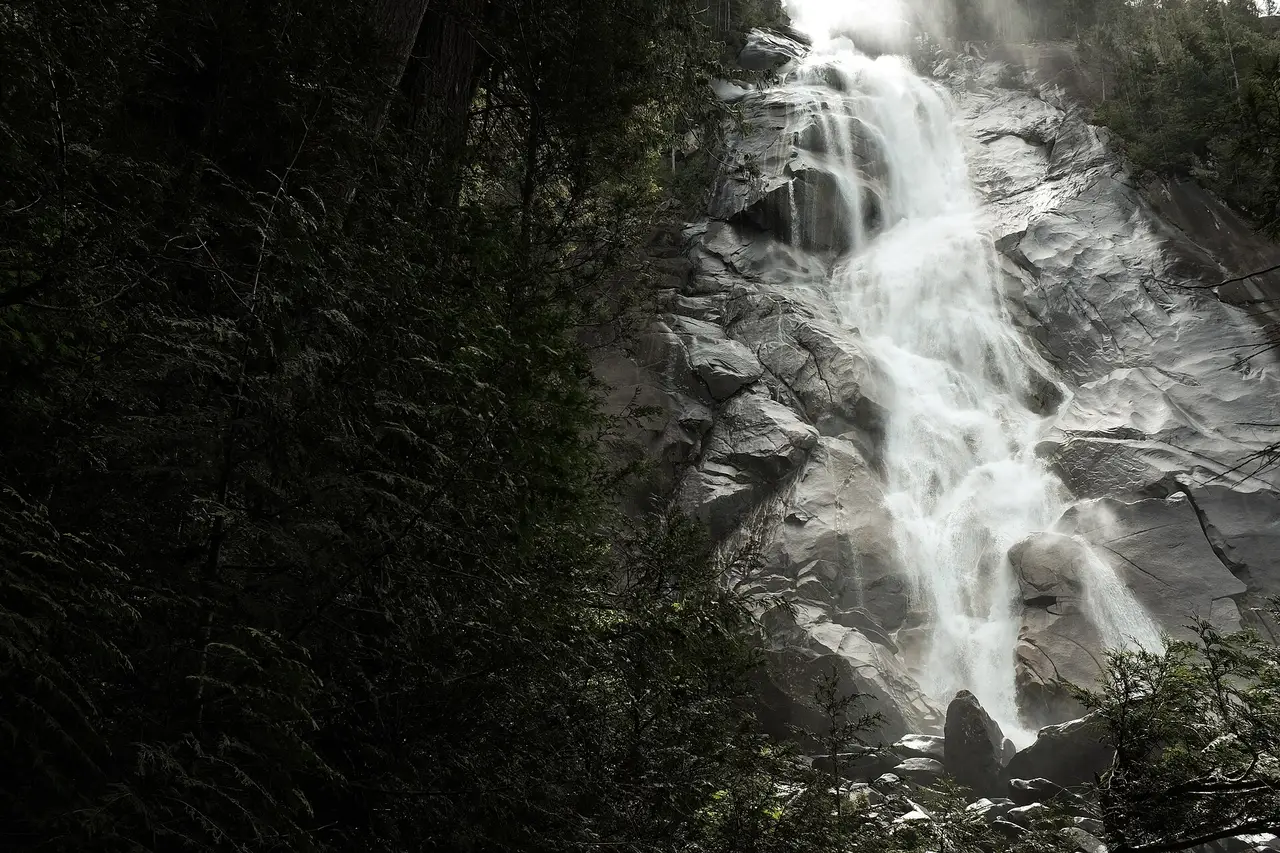
The road itself is part of the trip. Two waterfalls make easy stops on the way up. Shannon Falls drops some 335 m right beside the highway near Squamish, a two-minute walk from the parking lot, and Brandywine Falls plunges in a single clean line into a canyon a little further on.
One rule catches out visitors who rent in Vancouver. From 1 October to 31 March, British Columbia law requires winter tires on the Sea-to-Sky: an M+S marking is the minimum, and the three-peak snowflake grips better on snow and ice. If you’re picking up a car at the airport for a ski trip, confirm it’s legally equipped before you drive off; our guides to British Columbia and renting a car in Canada both spell out the detail. If you’d rather not drive at all, the Vancouver to Whistler shuttle and bus options cover YVR Skylynx, the hotel-drop airport shuttle and when a rental still wins.
Whistler in winter
The mountain: Whistler Blackcomb
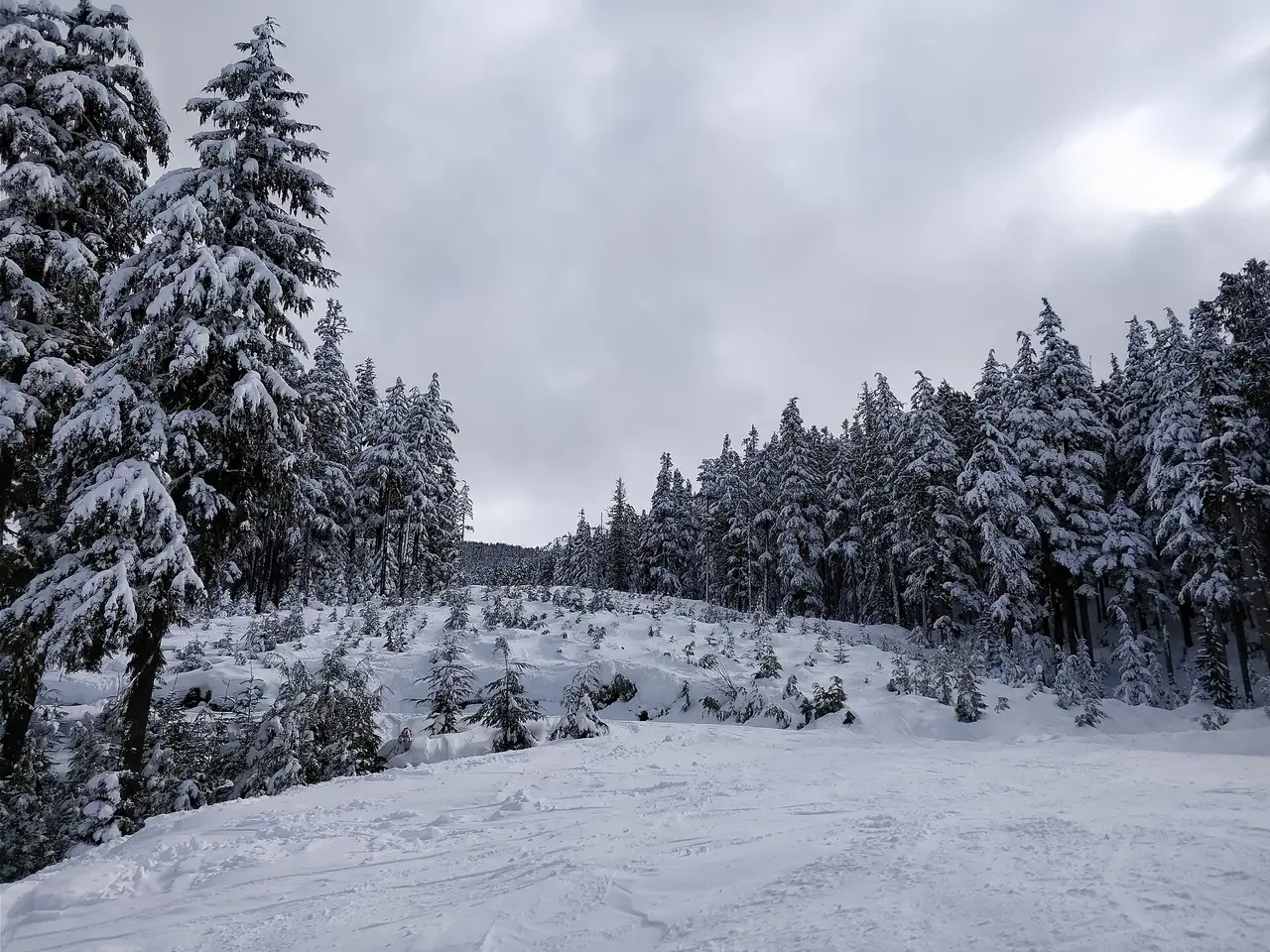
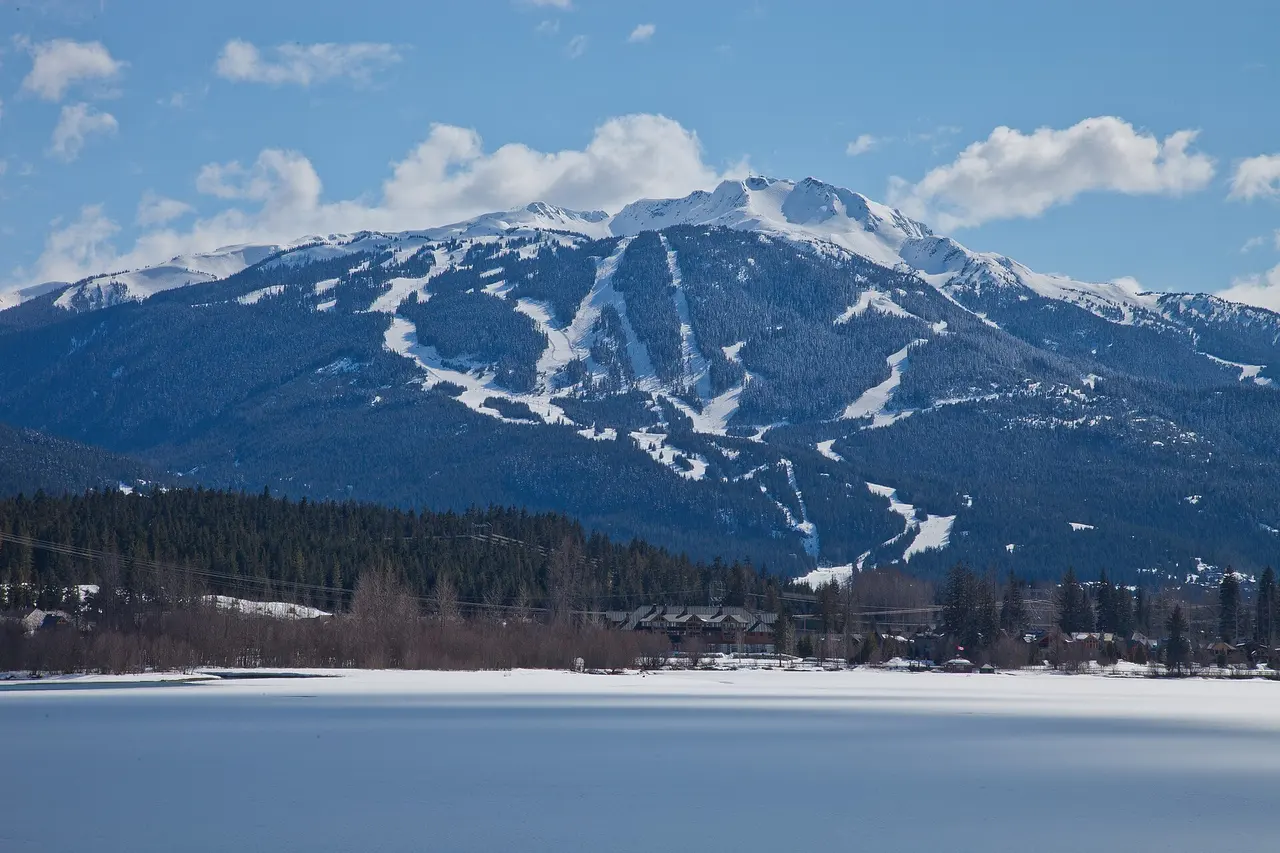
Whistler Blackcomb is the largest ski resort in North America, and the numbers behind that claim are genuinely big: around 8,171 acres of terrain, more than 200 marked runs, sixteen alpine bowls and three glaciers, spread across two mountains standing side by side - Whistler and Blackcomb. It’s owned by Vail Resorts and sits on the Epic Pass, though pass products change every season, so check the current terms rather than trust last year’s - Epic vs Ikon in Canada has the 26/27 launch prices and the Local-pass Whistler day cap. The resort co-hosted the 2010 Winter Olympics with Vancouver, and that pedigree still shows in the sheer amount of lift-served terrain up top.
The village and apres
Down in the valley, Whistler Village is a car-free, purpose-built pedestrian core: you park once and walk everywhere, cobbled lanes running between the lodges, rental shops and restaurants. After the lifts close it turns into one of the liveliest apres scenes in the country, all patios, steamed-up windows and live music. It’s compact enough that you never need the car again until you leave, which is exactly how the resort wants it.
Whistler in summer
When the snow melts, Whistler becomes a different resort entirely, and for anyone who doesn’t ski, arguably a better one.
The bike park and the alpine
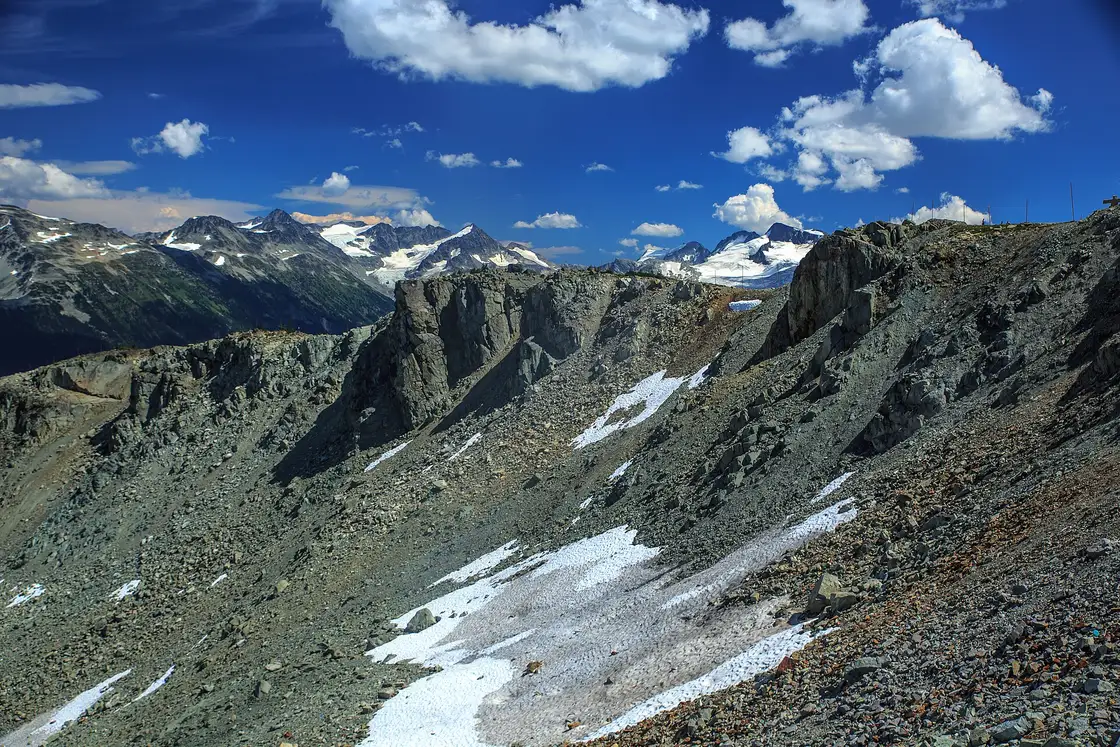
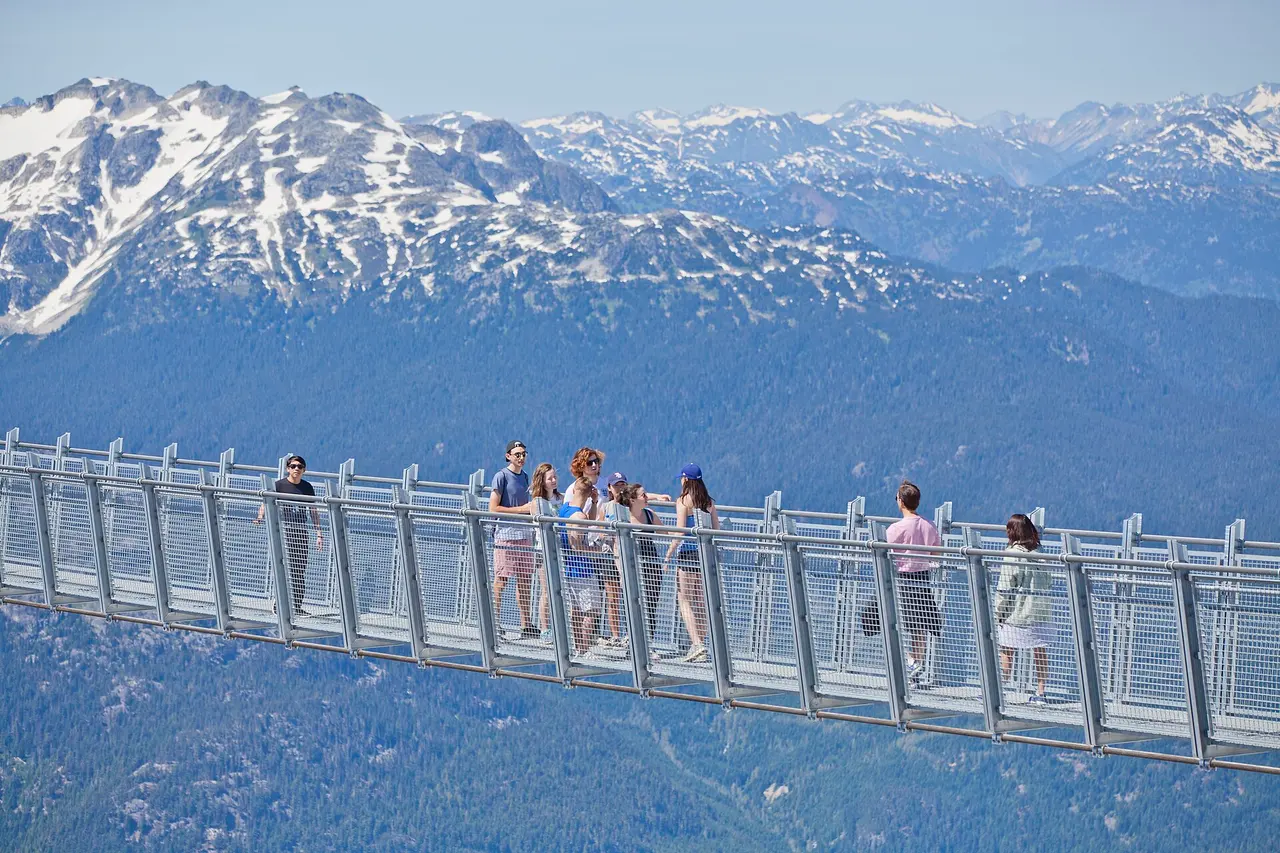
The Whistler Mountain Bike Park is the summer headliner: lift-served downhill mountain biking that pulls riders from around the world, with trails graded from gentle green flow to genuinely terrifying black. It runs as a summer operation, so check the season’s opening dates before you plan around it. Above the bike trails, the same lifts carry hikers and sightseers into the alpine. The High Note trail traverses a ridgeline with the whole valley falling away below, and out on Whistler Peak the Cloudraker Skybridge, a suspension bridge slung across a couloir, hands you a real jolt of exposure for the price of a lift ticket. Published 2026 day rates, rentals and the PEAK 2 PEAK sightseeing ticket are broken out in Whistler in summer.
The lakes and the Valley Trail
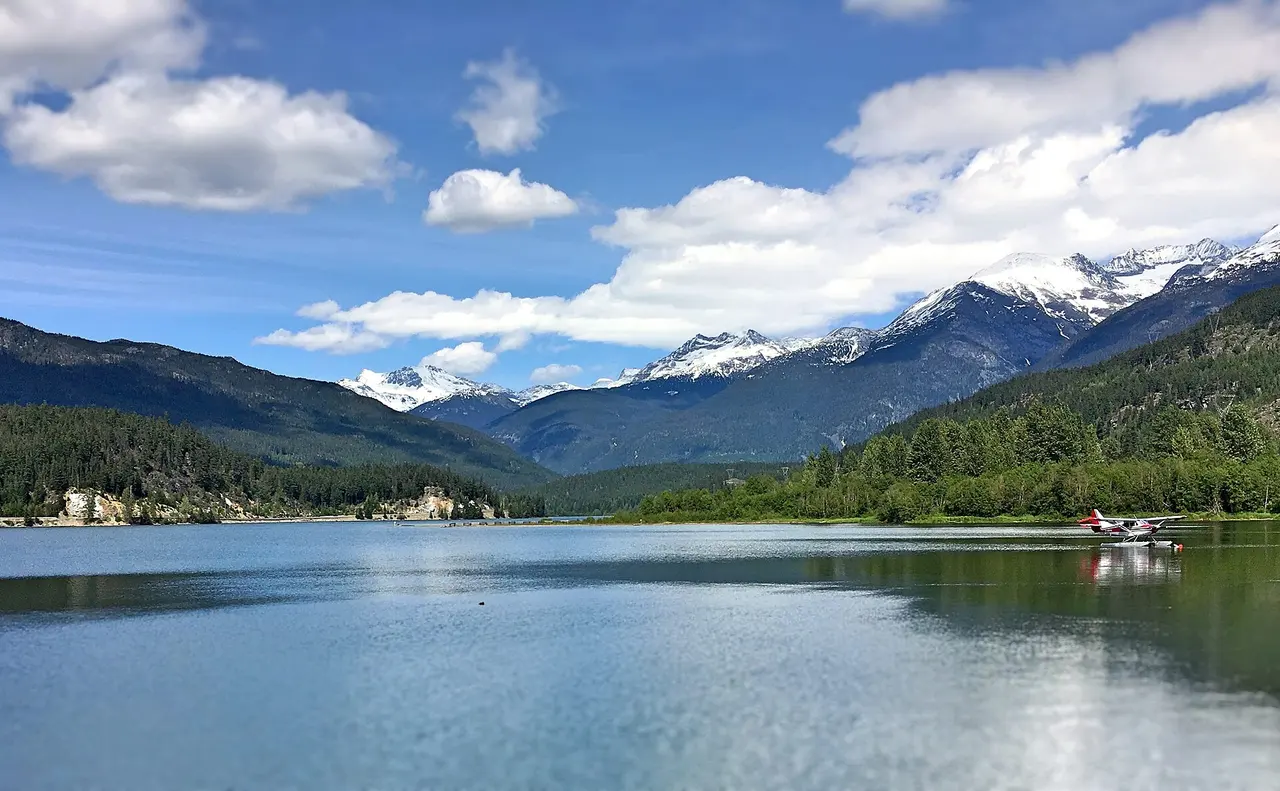
Down in the valley the water takes over. Alta Lake, Green Lake and Lost Lake warm up enough to swim in by midsummer, they rent out paddleboards and canoes, and they’re stitched together by the paved Valley Trail that runs for kilometres without a car in sight. Green Lake gets its startling milky-turquoise colour from glacial rock flour suspended in the meltwater, and it’s the one people photograph from the highway on the way in.
The Peak 2 Peak Gondola
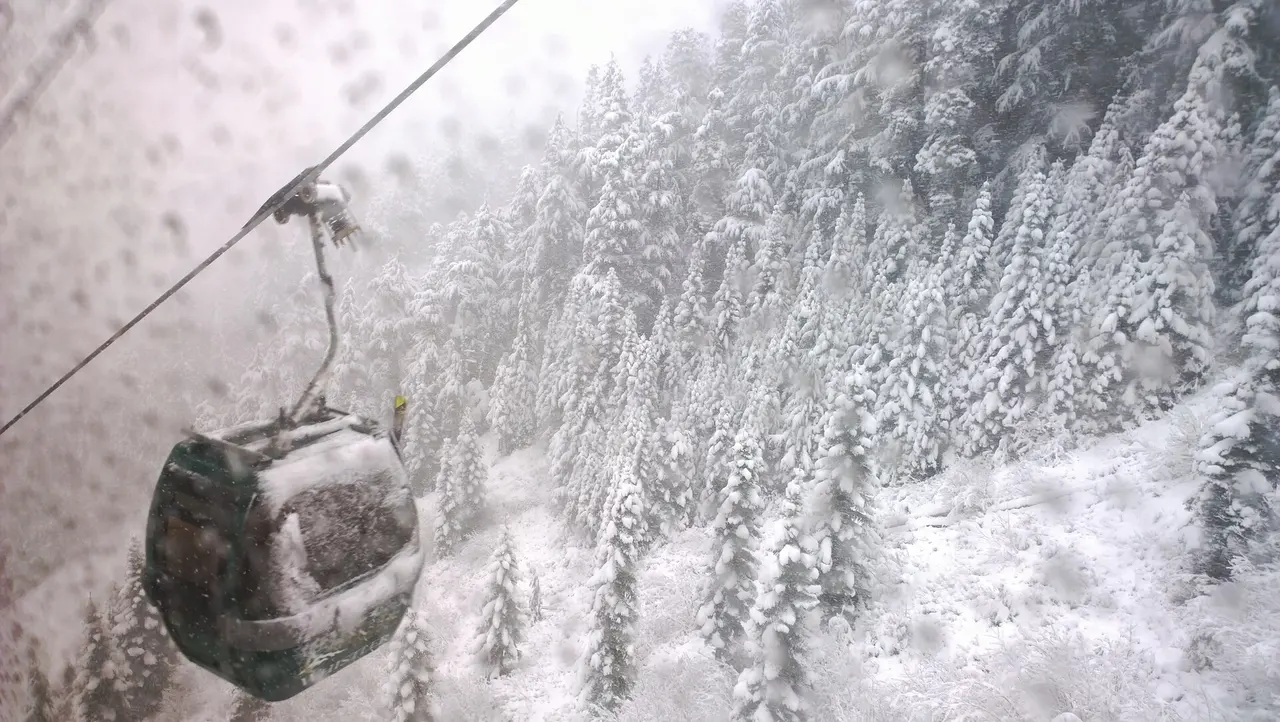
The one ride worth taking in any season links the tops of the two mountains. The Peak 2 Peak Gondola runs a 4.4 km line between Whistler and Blackcomb, and the middle of it’s the headline: a single unsupported span of 3.024 km with the cabins hanging up to 436 m above the valley floor. Doppelmayr Garaventa built it in 2007 and 2008 for around C$51 million, and the crossing takes about eleven minutes.
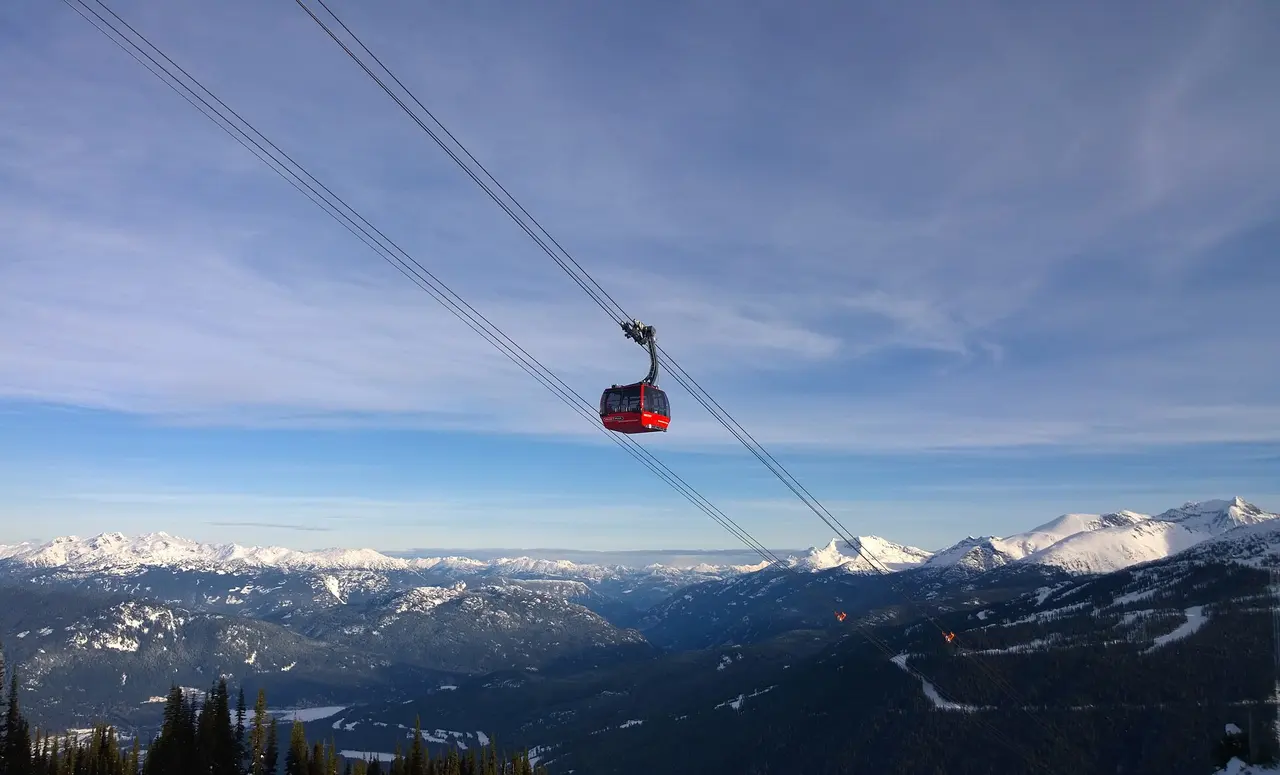
It is worth getting the record right, because the marketing often doesn’t. The gondola held a Guinness world record for the longest unsupported span between cable-car towers until 2017, when Germany’s Zugspitze cable car took that title. What it can still fairly claim is being one of the highest lifts of its kind, and few sightseeing rides anywhere put this much air beneath your feet. In winter it lets you ski both mountains on one ticket; in summer it’s a sightseeing loop in its own right, often with a glass-bottomed cabin if you want the full stomach-lurch. For current ticket prices by season, cabin capacity and an honest read on whether it is worth it on a cloudy day, see our dedicated Peak 2 Peak Gondola guide.
When to go, and how long
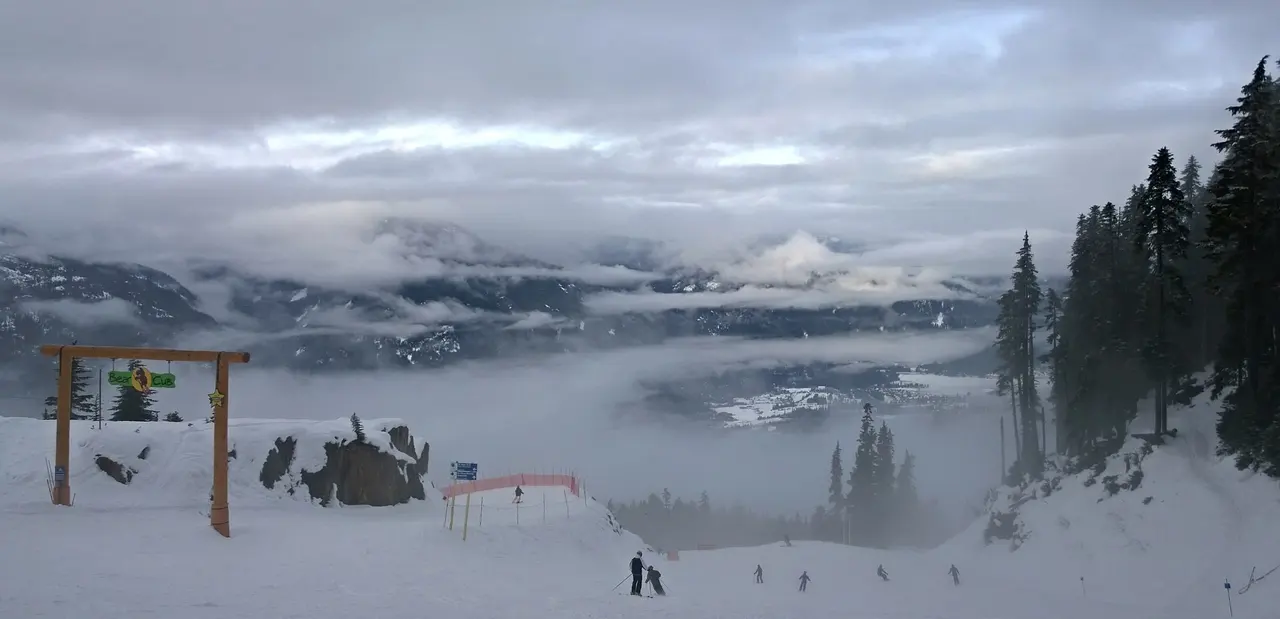
Whistler runs almost the whole year, but the character swings hard with the calendar. The ski season is roughly December to April, at its busiest and priciest over Christmas and spring break. The bike park and the alpine hiking run through summer, roughly June to September. In between sit two quiet shoulder seasons, late spring and autumn, when some lifts close and the village empties but the rooms are cheap and the trails are yours.
Winter or summer? A quick decision
If you have to choose a season, choose by what you want to do rather than by the weather. Winter is the classic Whistler - the snow, the apres, the holiday buzz - and it’s busiest over the Christmas and spring-break weeks. Summer is quieter, cheaper and, for anyone who does not ski, often the better trip, with long days for biking, hiking and swimming. Here is how the two stack up.
| Winter (roughly Dec-Apr) | Summer (roughly Jun-Sep) | |
|---|---|---|
| The draw | Skiing and snowboarding, apres, holiday atmosphere | Bike park, alpine hiking, warm lakes |
| The lifts | Epic Pass on two mountains; Peak 2 Peak links them | Peak 2 Peak sightseeing; the Cloudraker Skybridge |
| Watch out for | Winter-tire law on the Sea-to-Sky; road closures | Bike-park crowds; check opening dates |
| Best for | Skiers, snow-lovers, festive crowds | Bikers, hikers, families, lake days |
However you time it, give Whistler at least two nights; a day trip from Vancouver spends too much of itself on the highway. Once you know how long you’re staying, our where to stay in Whistler guide breaks down the Village, the Upper Village and Creekside so you can pick a base before the room rates move. And if you are pairing the mountains with the coast, the island capital of Victoria makes an easy contrast on the same British Columbia trip. One last thing before you book: whether you need an eTA or a visa to enter Canada depends on your nationality and changes over time, so check our Canada eTA and visa guide against the official source first.
On the map
The map loads on click - to keep the page lightweight.
The map didn’t load. Check your connection and refresh the page.
Admission and opening hours
- Admission price
- Whistler Village is free to explore. Lift tickets, ski passes and the summer Whistler Mountain Bike Park are sold by the resort and priced by date and season - see whistlerblackcomb.com. The Peak 2 Peak Gondola runs year-round.
- Opening hours
- Whistler operates largely year-round: a winter ski season roughly December to April, the bike park and alpine hiking in summer, with quieter shoulder weeks in late spring and autumn.
Pass and lift products change every season; confirm current prices, dates and the Sea-to-Sky winter-tire rule before you travel.
Details checked: July 24, 2026
Read also

Cities · 11 min read
Regina: Legislature, RCMP Heritage Centre and Prairie Base
Verified · August 29, 2026Wascana Centre, the Legislature, the Mounties' only training depot and a free T. rex - what Regina actually rewards, plus the road to Saskatoon.

Cities · 10 min read
Whitehorse: Yukon Base for Aurora, Rivers and the Klondike
Verified · August 28, 2026Whitehorse in 2026: SS Klondike grounds open but boat closed, MacBride C$12, Beringia C$6, Miles Canyon and aurora season.

Cities · 9 min read
Things to Do in Saskatoon: River Valley, Wanuskewin & Skies
Verified · August 27, 2026Saskatoon in practice: Meewasin trails, Wanuskewin bison, Remai Modern by donation, and a prairie day trip to Riding Mountain.

Cities · 9 min read
Lunenburg: UNESCO Old Town Guide
Updated · September 2, 2026Old Town Lunenburg from Halifax: UNESCO grid of 1753, painted harbour, Fisheries Museum prices, Bluenose II, and when an overnight beats a day trip.